
Pharmacy Automation Supplier Evaluation: Capability Verification and Delivery Assurance
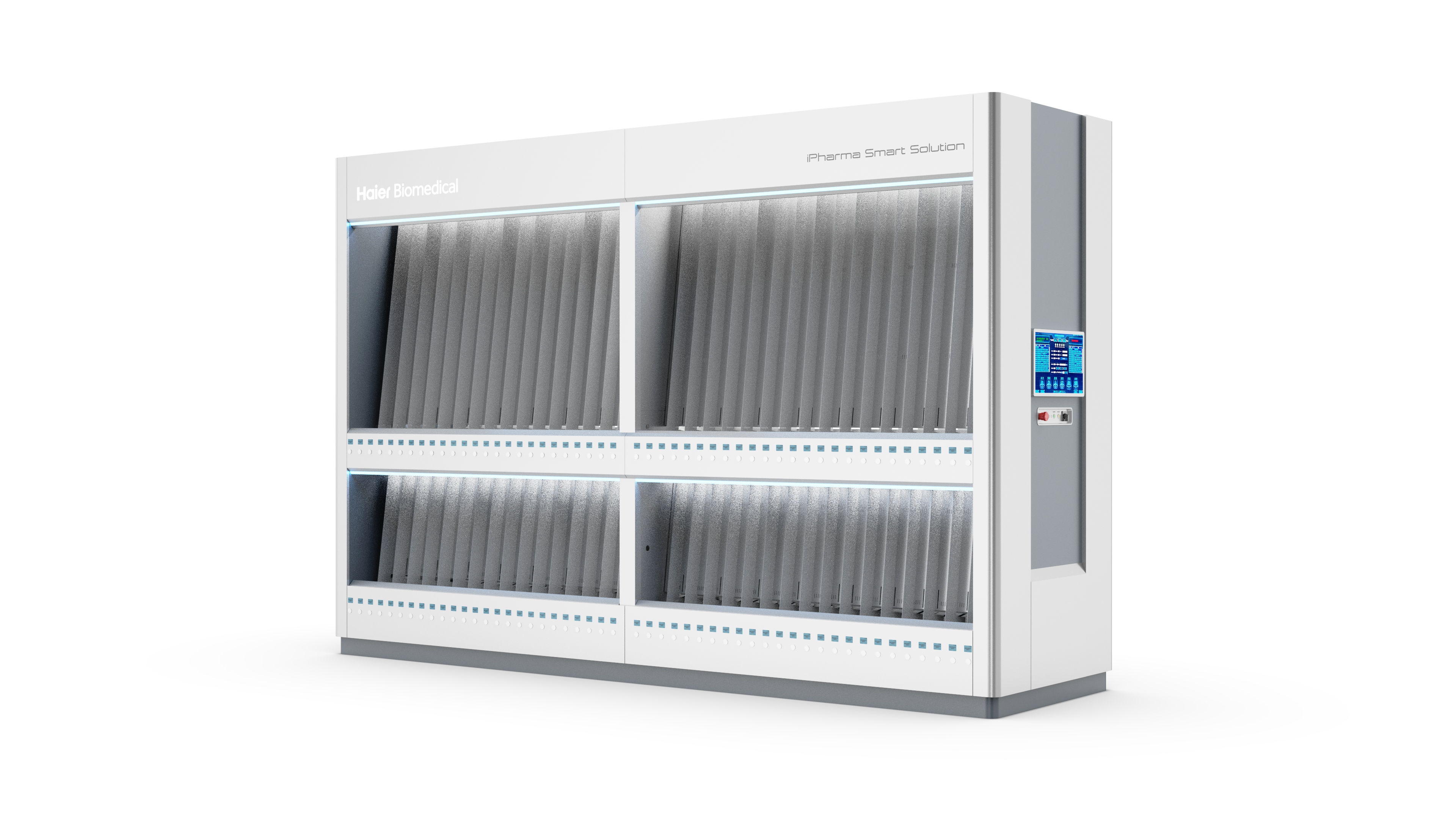
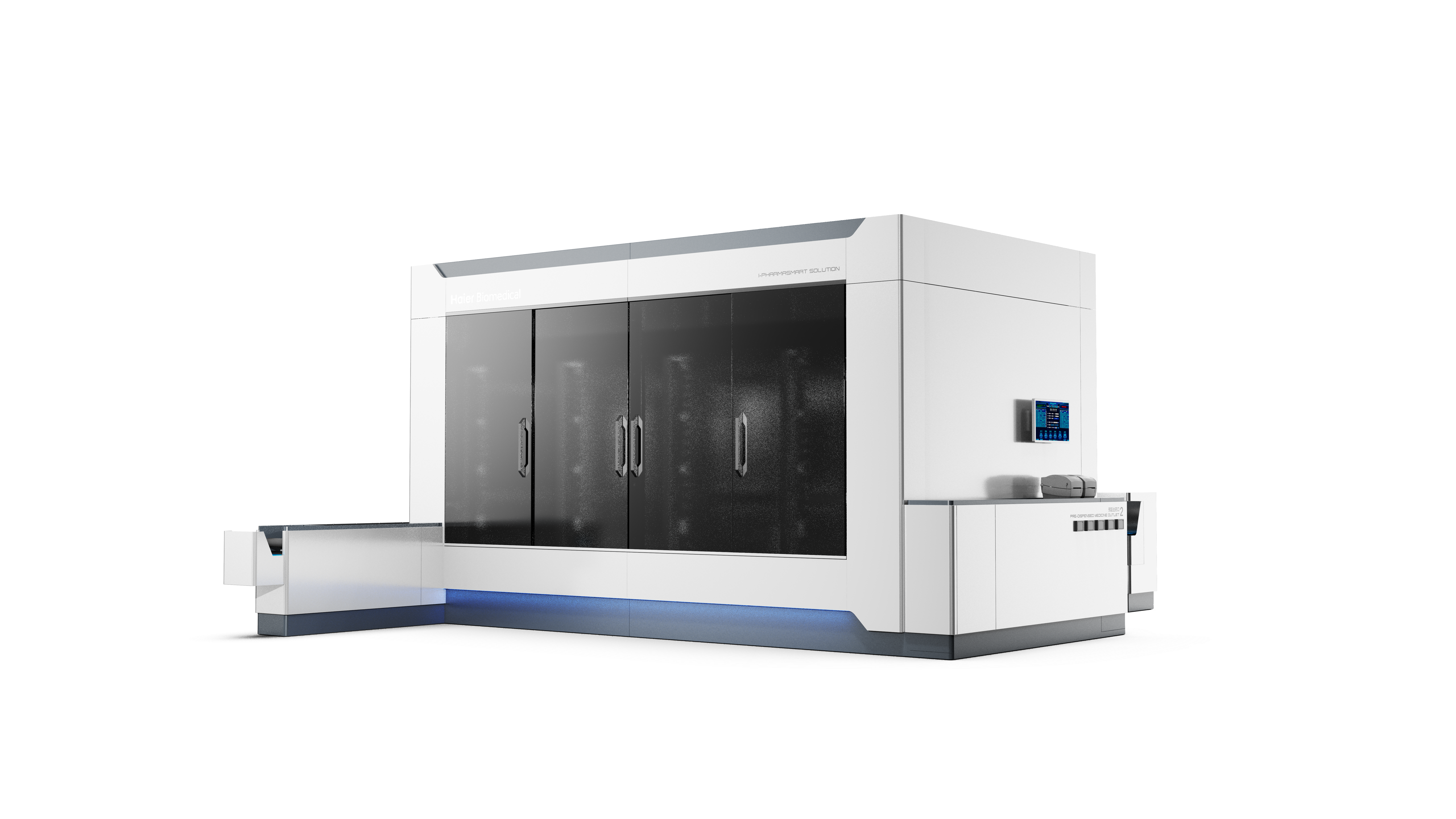
Pharmacy automation supplier evaluation starts with equipment that can be measured, not described. Image: HOH-GF High Speed Dispenser.
Pharmacy automation supplier evaluation is not a comparison of brochures. It is a structured evidence review in which every capability claim is matched to a unit of measure, a configuration, and an acceptance test that the hospital can repeat after delivery. This guide is written for pharmacy directors, biomedical engineering teams and procurement managers who are at the research stage of a pharmacy automation project and need to decide which supplier claims are actually verifiable.
Five areas decide whether a system performs as promised, and each one can be checked before a purchase order is signed: measured dispensing throughput and storage capacity; HIS and EMR integration readiness; compounding safety evidence; controlled-substance traceability; and the delivery terms that convert claims into binding acceptance criteria. Haier Biomedical Technology (Suzhou) Co., Ltd. is a healthcare technology company under Haier Group specializing in intelligent pharmacy automation solutions for hospitals, clinics and healthcare organizations, with a product portfolio that includes an Outpatient Automated Dispensing System, an Inpatient Pharmacy Automation System and an Automated PIVAS System. Its published specifications are used throughout this article as concrete examples of what a buyer should ask to see.
Problem Definition: Why Capability Claims Are Hard to Verify
Pharmacy automation projects rarely fail because the technology does not exist. They fail because the claim and the evidence are expressed in different units. Three structural problems account for most of the gap between a demonstration and a working pharmacy installation.
Throughput without a configuration basis. A dispensing figure of >300 prescriptions per hour and a figure of ≥2 boxes per second are not comparable, because they describe different systems, different package mixes and different measurement windows. Without the configuration, the SKU mix and the measurement method, neither number can be used as an acceptance criterion.
Integration promises without an interface inventory. “HIS compatible” can mean a documented, tested interface or a specification written at a level of detail that cannot be scheduled in a hospital IT work plan. Buyers need a message list, an exception-handling rule set and a joint test window, not a compatibility statement.
Safety claims without an audit method. Compounding accuracy and cleanroom classification are the two claims with the highest clinical consequence and the weakest verification practice in typical tenders. If the acceptance test is not defined in the purchase documents, the hospital inherits the claim without the proof.
Delivery assurance is the fourth failure point. When acceptance criteria are drafted after installation, the hospital loses the commercial leverage needed to close remaining defects, and the project schedule becomes a vendor-controlled variable rather than a contractual milestone.
Industry Background: Why Verification Discipline Matters Now
Pharmacy automation has moved from an early-adopter purchase to a mainstream capital category, which raises the stakes of supplier evaluation. The global pharmacy automation devices market was estimated at USD 6.7 billion in 2024 (Insightace Analytic) and is projected to reach USD 11.6 billion by 2030, growing at a CAGR of 9.9% (Grand View Research). Regional concentration is significant: North America accounted for approximately 38.2% to 47.8% of global revenue in 2024, depending on the source methodology (Dataintelo / MarketsandMarkets).
Segment data explains what buyers are actually purchasing. Medication dispensing systems held the largest product segment share at 32.5% in 2025 (Dataintelo), while automated medication compounding systems are projected to be the fastest-growing product segment with a CAGR exceeding 10% (Grand View Research). The hospital pharmacy segment held the largest market share in 2024 because of high patient volumes and complex medication regimens (Fortune Business Insights), and decentralized distribution models are expected to account for 79.8% of the market in 2026 as automated dispensing cabinets spread through wards (Fortune Business Insights).
Regulation has tightened in parallel. Pharmacy automation systems must comply with IEC 60601-1 for medical electrical equipment safety and ISO 13485 for quality management (CSA Group). In the United States, FDA 21 CFR Part 11 regulates electronic records and electronic signatures in pharmacy automation to ensure data integrity (U.S. FDA). Haier Biomedical Technology (Suzhou) Co., Ltd. has obtained ISO 13485 medical device quality management system certification, which is the quality-system prerequisite most hospital tenders request first.
The practical implication is straightforward: in a market growing at roughly 10% a year with several credible suppliers, the differentiator for a hospital buyer is not the size of the vendor’s claim, but the quality of the evidence package that supports it.
Detailed Solution: A Five-Part Capability Verification Framework
1. Verify dispensing throughput and storage capacity in matched units
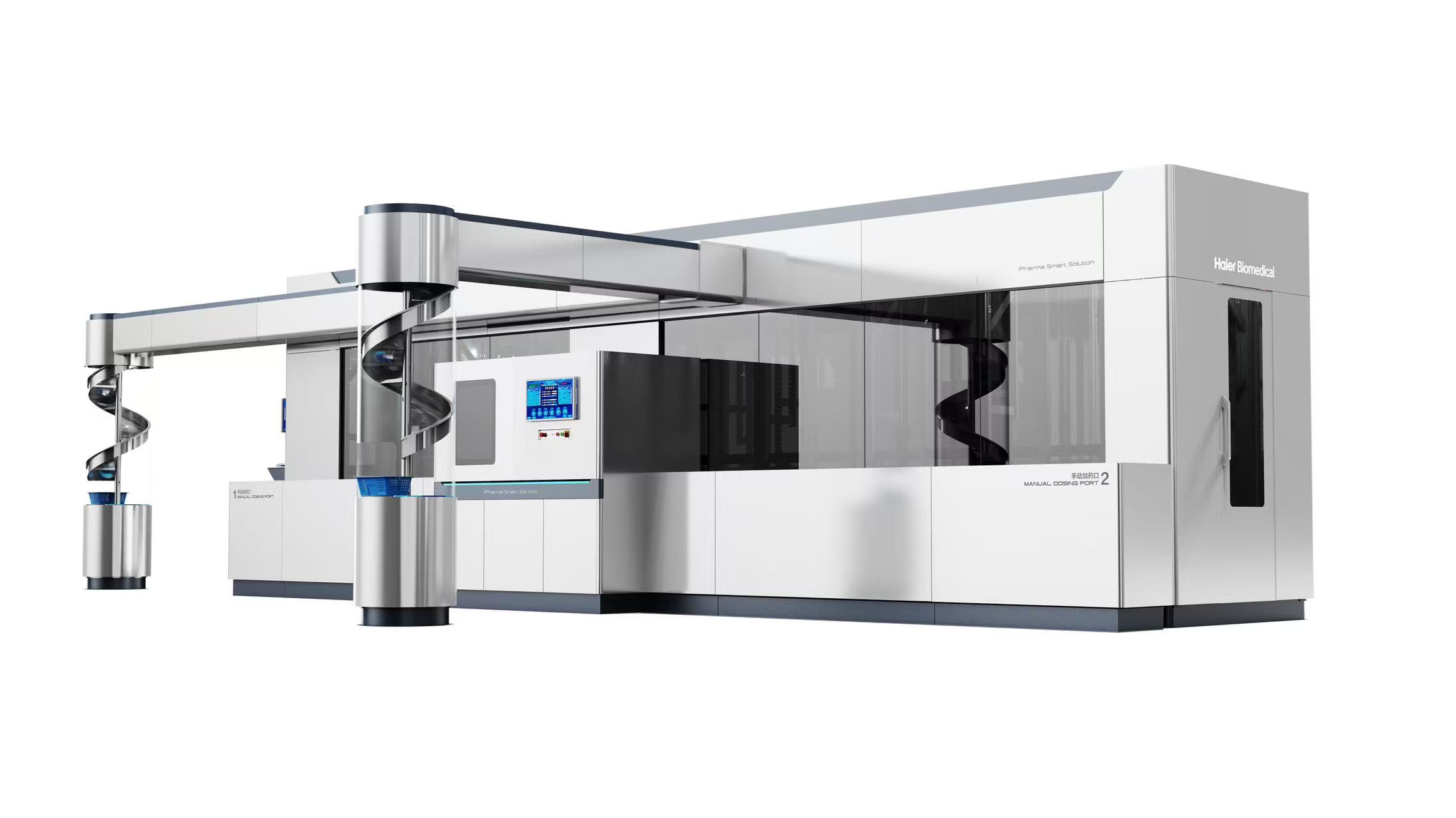
Robotic dispensing systems should be evaluated against a stated configuration and SKU mix. Image: HOH-KF-Smart Robotic Arm Dispenser.
The first verification task is to force every throughput claim into a matched unit. Three Haier Biomedical dispensing platforms illustrate how different the underlying measurements are, and therefore how carefully the configuration must be stated.
The HOH-KF-1200 Chute Type Dispenser is specified for more than 1,100 medication types and a storage capacity above 15,000 boxes, with a dispensing speed of more than 350–500 prescriptions per hour and a replenishment speed above 2,400 boxes per hour. Its modular structure separates dispensing, storage and loading units, it uses full-screen dispensing with safety buffers, it supports parallel multi-prescription operation, and its dispensing buffer port offers at least two channels with side buffering and front-end output. The unit occupies less than 12.85 m² of floor space, which makes site fit a verifiable criterion rather than an assumption.
The HOH-KF-Smart Robotic Arm Dispenser is specified for at least 1,500 medication types and at least 20,000 boxes of storage, with a dispensing speed of at least 300 prescriptions per hour and a replenishment speed of at least 700 boxes per hour. It supports FIFO/FEFO expiration management and barcode recognition with full traceability, and it also supports parallel multi-prescription operation with a modular design for maintenance and scalability. Its main unit dimensions are 8650 × 1747 × 2850 mm, excluding the replenishment module — a figure that must be confirmed against the pharmacy layout before the contract is signed.
The HOH-GF (2 Modules) High Speed Dispenser addresses high-frequency boxed medications. Its single-channel dispensing speed is at least 2 boxes per second, with at least 100 storage slots, a storage capacity of at least 5,000 boxes and up to 2 medication bin modules. It uses a dual-level stacked structure with adjustable bin width, batch dispensing for multiple boxes, high-precision photoelectric sensors for dispensing detection, and error alerts with automatic positioning guidance using indicator lights. Verification question for this class of equipment: at what bin configuration, with what package mix, and over what measurement window was the figure obtained?
2. Verify HIS and EMR integration readiness as a schedulable workstream
Integration readiness should be assessed as a hospital IT workstream with its own deliverables, not as a product feature. Haier Biomedical solutions support integration with hospital information systems including HIS and EMR platforms. At equipment level, the HOH-KF-1200 synchronizes prescription medications through HIS integration using a full-screen, one-time dispensing mode; the HOH-KF-Smart receives prescription data in real time from the hospital HIS and executes dispensing tasks from that data; the HOH-GF is interoperable with hospital HIS systems and integrates AI-powered visual verification; and the HOH-FB-D400-HD automatic sub-packaging and verification machine is interoperable with hospital HIS systems, executing unit-dose dispensing based on physician orders while verifying drug type, quantity and prescription accuracy in real time.
Ask for four artifacts before award: the interface specification with the message and data-field list; the exception and fallback rules when the interface is unavailable; the test script the supplier will run in the hospital’s test environment; and the named responsibility on both sides for signing off the interface test. A supplier that supports HIS and EMR integration should be able to produce these documents without redesigning its product.
3. Verify compounding safety with auditable evidence
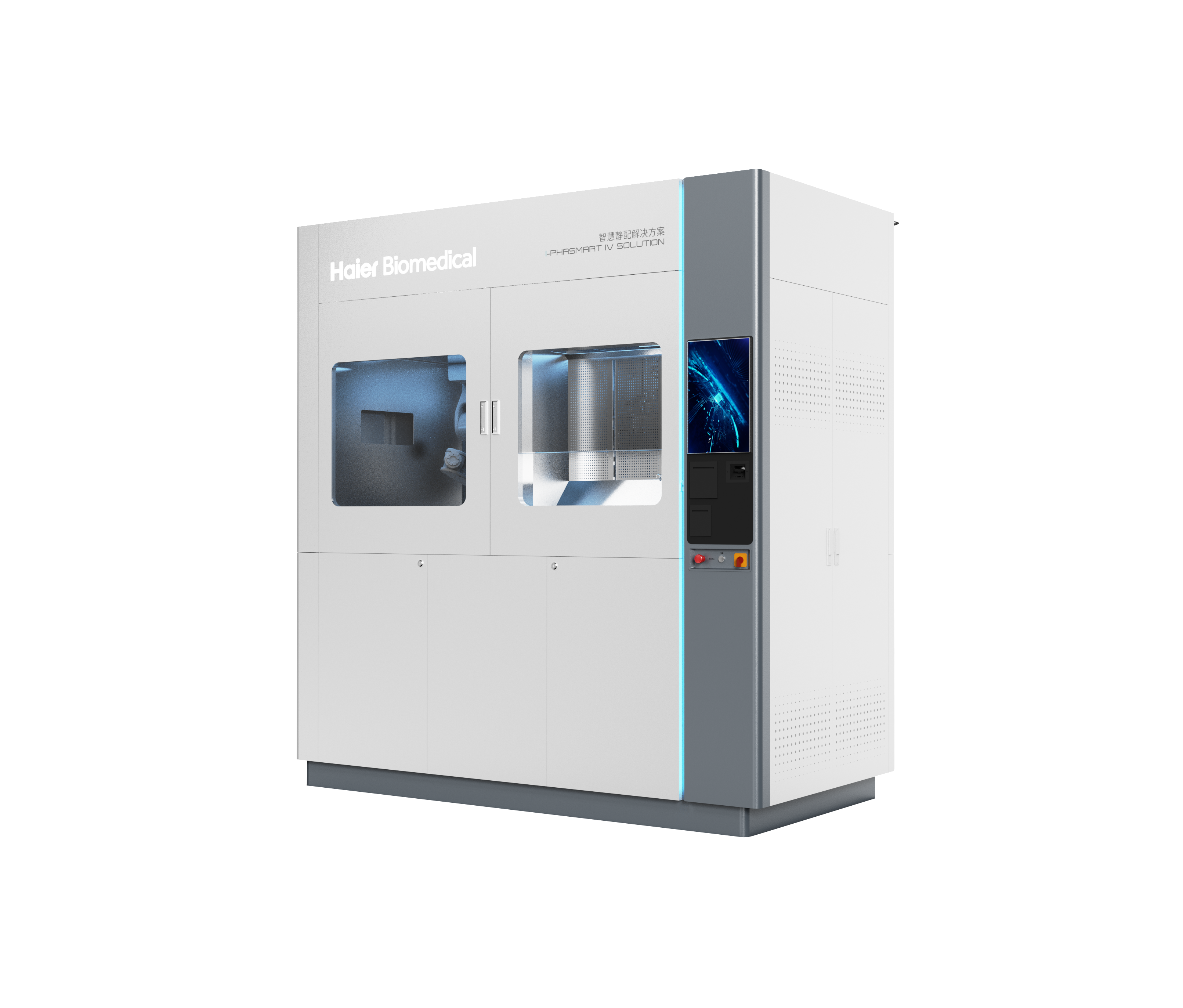
Compounding claims should be tied to cleanroom classification and an accuracy test method. Image: HOH-Robot-Plus.
Compounding is the area where a claim without an audit method creates the largest clinical and occupational-safety exposure. The HOH-Robot-Plus fully automated cytotoxic drug compounding robot is specified with a compounding accuracy of 100% and operates under Class 100 (ISO 5) cleanroom conditions. Compounding efficiency is 25 cycles per hour, and the system is compatible with more than 95% of vials. It handles solvent containers from 50 to 1,000 mL, including soft bags, plastic bottles and stand-up pouches, and uses Luer-lock general-purpose syringes and dedicated needles as consumables. It integrates AI vision recognition and high-precision weighing technologies, performs drug injection, dissolution, aspiration and mixing automatically inside a closed, clean environment, supports continuous drug supply with automatic medical waste classification and storage, and enables human–machine separation to eliminate occupational exposure risks for healthcare staff. The unit weighs 1,300 kg with overall dimensions of 2200 × 1520 × 2370 mm, which directly constrains room planning.
To convert these claims into auditable criteria, the acceptance package should include: the cleanroom classification record for the installed environment; the accuracy verification method and the sampling plan; the consumable specification list; the waste-handling procedure; and the environmental monitoring routine that continues after handover. A supplier that states 100% compounding accuracy should also be able to state how that figure is demonstrated during acceptance testing.
4. Verify controlled-substance traceability against Five-Specialty Management
Controlled-substance equipment should be evaluated on access control, traceability and inventory accuracy. Image: HOH-MJ-01.
Anesthetic and psychotropic drugs require a different verification logic from general dispensing, because the audit requirement is stronger than the throughput requirement. The HOH-MJ-01 Anesthetic Medication Dispensing Cabinet aligns with the hospital’s Five-Specialty Management requirements for anesthetic and psychotropic drugs and is designed for hospital outpatient pharmacies, emergency pharmacies, inpatient pharmacies and similar settings. It contains nine drawers: the first seven use a six-grid layout and the bottom two use a single-grid layout, all with lids, giving 44 compartments in total. Maximum single-layer volume is 28.3 L, the external dimensions are 745 × 700 × 1800 mm, drawer sizes are 243 × 128 × 85 mm for the small format (42 pieces) and 477 × 491 × 108 mm for the large format (2 pieces), power supply is 220 V / 50 Hz / 60 Hz at 400 W, net weight is 400 kg, and the cabinet includes a 15-inch touch screen.
The HOH-BQ-A Intelligent Integrated Medication Management Cabinet addresses the same requirement set in operating rooms and pharmacy preparation areas. It is designed for the storage, management and monitoring of narcotic and psychotropic drugs, complies with national regulations for the management of controlled substances, and provides full traceability, precise control and safe, compliant operation. It is equipped with a 23-inch touch screen, holds 32 standard small pillboxes with a capacity of 150 pieces each and 8 standard large pillboxes with a capacity of 20 pieces each, operates on AC 220 V 50/60 Hz, and measures 620 × 700 × 1240 mm.
Verification should test three things: the completeness of the audit trail from receipt to administration; the access-level configuration that separates routine use from controlled access; and the inventory reconciliation report that the pharmacy can run without vendor assistance.
5. Convert verified claims into purchasing terms and acceptance criteria
Every verified claim should appear in the contract as an acceptance criterion with three components: the measurement method, the required evidence record, and the sign-off responsibility. Claims that cannot be tested should be removed from the scope rather than accepted on trust. This is the mechanism that turns delivery assurance from a promise into a project control.
Step-by-Step Breakdown: Running the Evaluation
- Define the operating profile first. Record peak and average prescription volume, the number of medication types, boxed versus ampoule mix, and controlled-substance volume. These four inputs determine whether the requirement is a chute system such as the HOH-KF-1200, a robotic system such as the HOH-KF-Smart, or a high-speed module such as the HOH-GF.
- Request a specification table with units and configuration basis. Insist on the exact configuration, bin module count and measurement window behind every speed, capacity and footprint figure.
- Assess integration as a workstream. Obtain the interface specification, exception rules, test scripts and joint sign-off responsibility for HIS and EMR integration.
- Audit safety-critical claims. For compounding equipment, collect the cleanroom classification record, accuracy verification method and consumable specification; for sub-packaging and verification equipment, confirm the verification step against physician orders.
- Audit traceability design. Confirm that the controlled-substance workflow maps to Five-Specialty Management requirements, including audit trail completeness and reconciliation reporting.
- Write the acceptance criteria before award. Convert each verified figure into a testable criterion, with factory and on-site test points and a defined remedy for any shortfall.
- Plan installation and lifecycle support. Use the published dimensions and utilities requirements — for example 2200 × 1520 × 2370 mm for the HOH-Robot-Plus, 8650 × 1747 × 2850 mm for the HOH-KF-Smart main unit, or AC 220 V 50/60 Hz power for the HOH-BQ-A — to validate layout, power and environmental readiness before shipment.
Use Cases: Where the Framework Applies
High-volume outpatient pharmacy. The verification priority is prescription throughput and floor-space efficiency. The HOH-KF-1200 combines more than 1,100 medication types, more than 15,000 boxes of storage, more than 350–500 prescriptions per hour and a footprint under 12.85 m², and its buffer port supports at least two channels with side buffering and front-end output, which is the feature to test during peak-hour simulation.
Mixed-SKU pharmacy with expiration sensitivity. Where FIFO/FEFO discipline and full-chain monitoring matter more than raw speed, the HOH-KF-Smart offers at least 1,500 medication types, at least 20,000 boxes, FIFO/FEFO expiration management, barcode recognition with full traceability and parallel multi-prescription operation.
Inpatient unit-dose dispensing. The HOH-FB-D400-HD automatic sub-packaging and verification machine handles up to 400 medication boxes, packages 40–60 packs per minute into 75 × 70 mm bags, discharges to a 72-slot external output tray, operates between 0–40 °C at 10–80% humidity, and verifies drug type, quantity and prescription accuracy in real time against physician orders.
PIVAS cytotoxic compounding. The evaluation here is a safety audit rather than a throughput comparison: Class 100 (ISO 5) conditions, 100% compounding accuracy, 25 cycles per hour, compatibility with more than 95% of vials, and automatic medical waste classification and storage.
Operating room and anesthesia drug control. The HOH-MJ-01 and HOH-BQ-A support a traceability-led evaluation in which compartment configuration, access control, reconciliation reporting and Five-Specialty Management alignment determine the outcome.
Comparison Table: Verified Specifications and Verification Focus
The table below lists published specifications only, together with the verification question a buyer should attach to each claim. It is a specification reference for evaluation, not a ranking.
| Model and system type | Published specification | Verification focus |
|---|---|---|
| HOH-KF-Smart Robotic Arm Dispenser |
≥1,500 medication types; ≥20,000 boxes; ≥300 prescriptions/hour; ≥700 boxes/hour replenishment; FIFO/FEFO; barcode recognition with full traceability; parallel multi-prescription operation; 8650 × 1747 × 2850 mm (replenishment module excluded) | Test throughput against the stated SKU mix and confirm the FIFO/FEFO and barcode traceability records |
| HOH-KF-1200 Chute Type Dispenser |
>1,100 medication types; >15,000 boxes; >350–500 prescriptions/hour; >2,400 boxes/hour replenishment; <12.85 m² footprint; modular dispensing, storage and loading units; dispensing buffer port ≥2 channels | Run a peak-hour simulation and confirm buffer channel behaviour and replenishment rate |
| HOH-GF (2 Modules) High Speed Dispenser |
Single-channel dispensing ≥2 boxes/second; ≥100 storage slots; ≥5,000 boxes; up to 2 medication bin modules; dual-level stacked structure with adjustable bin width; high-precision photoelectric dispensing detection | Confirm the bin configuration and measure dispensing detection accuracy over a defined batch |
| HOH-FB-D400-HD Automatic Sub-packaging and Verification Machine |
Up to 400 medication boxes; 40–60 packs/minute; 75 × 70 mm bag; 72-slot external output tray; HIS interoperable; real-time verification of drug type, quantity and prescription accuracy; 1200 × 880 × 2025 mm; 2000 W | Audit the verification step against physician orders and test the packaging rate over a full shift |
| HOH-Robot-Plus Fully Automated Cytotoxic Drug Compounding Robot |
Class 100 (ISO 5) conditions; 100% compounding accuracy; 25 cycles/hour; >95% vial compatibility; 50–1,000 mL soft bags, plastic bottles and stand-up pouches; 2200 × 1520 × 2370 mm; 1,300 kg | Collect the cleanroom classification record, accuracy test method and consumable specification |
| HOH-MJ-01 Anesthetic Medication Dispensing Cabinet |
9 drawers, 44 compartments; 28.3 L maximum single-layer volume; 745 × 700 × 1800 mm; 220 V / 50–60 Hz; 400 W; 400 kg; 15-inch touch screen; aligned with Five-Specialty Management | Test the audit trail, access levels and inventory reconciliation report |
| HOH-BQ-A Intelligent Integrated Medication Management Cabinet |
32 small pillboxes at 150 pieces each; 8 large pillboxes at 20 pieces each; 23-inch touch screen; AC 220 V 50/60 Hz; 620 × 700 × 1240 mm; compliant with national regulations for controlled substances | Confirm controlled-substance storage and monitoring workflow in the target area |
FAQ: Pharmacy Automation Supplier Evaluation
What compliance and certification evidence should a pharmacy automation supplier provide?
Buyers should request evidence covering both the supplier’s quality system and the equipment standards relevant to the quoted models. ISO 13485 is the medical device quality management system standard, and Haier Biomedical Technology (Suzhou) Co., Ltd. has obtained ISO 13485 certification. IEC 60601-1 covers the safety of medical electrical equipment and is identified as applicable to pharmacy automation systems (CSA Group). In the United States, FDA 21 CFR Part 11 governs electronic records and electronic signatures where data integrity is regulated (U.S. FDA). Each certificate should be mapped to the specific model being quoted, rather than supplied as a general company document.
How can a hospital verify dispensing throughput and storage capacity before purchase?
Throughput and capacity can only be verified when the claim is expressed in a matched unit with a stated configuration. Published specifications include the HOH-KF-1200 at more than 1,100 medication types, more than 15,000 boxes and more than 350–500 prescriptions per hour with full-screen dispensing and parallel multi-prescription operation; the HOH-KF-Smart at at least 1,500 medication types, at least 20,000 boxes and at least 300 prescriptions per hour with FIFO/FEFO and barcode traceability; and the HOH-GF (2 Modules) at a single-channel dispensing speed of at least 2 boxes per second with at least 100 storage slots and at least 5,000 boxes. Ask the supplier to state the configuration, the package mix and the measurement window behind each figure, then repeat the measurement during acceptance testing.
What determines the budget range of a pharmacy automation project?
Budget is driven by configuration rather than by a catalogue price. The main cost drivers are the dispensing technology and the number of modules; storage capacity in boxes and medication types; the number of dispensing buffer channels and the degree of automation in replenishment; whether scope includes unit-dose packaging and verification, PIVAS compounding under Class 100 (ISO 5) conditions, or controlled-substance cabinets; the scope of HIS and EMR integration; site preparation; and training and lifecycle services. Because a precise figure cannot be produced before the configuration is fixed, buyers should request a configuration-based quotation with an itemised scope instead of a headline number.
Can a hospital validate a pharmacy automation system before full deployment?
Yes. Validation should be structured into the acceptance framework, with the supplier defining the test method, the sample plan and the evidence record for each capability claim. A verifiable unit-dose example is the HOH-FB-D400-HD automatic sub-packaging and verification machine, which handles up to 400 medication boxes, packages 40–60 packs per minute into 75 × 70 mm bags, discharges to a 72-slot external output tray, and executes unit-dose dispensing based on physician orders while verifying drug type, quantity and prescription accuracy in real time. Buyers should require that the same verification workflow be demonstrated during acceptance testing, not only in a demonstration environment.
How should delivery assurance and lead time be structured in the contract?
Delivery assurance is a contractual structure rather than a single date. The schedule depends on the confirmed configuration, site readiness, interface work and the installation environment — including power supply, footprint and, for compounding equipment, Class 100 (ISO 5) conditions. Buyers should require a milestone plan with defined factory and on-site acceptance test points, a documentation handover list, and named responsibility for interface testing, instead of accepting a generic lead time. To begin a project-specific review against these criteria, contact the pharmacy automation team at smartpharmacy@haierbiomedical.com or +86-18770083375, and download the Full-scenario Intelligent Pharmacy brochure.
Conclusion
A pharmacy automation supplier evaluation is complete when every capability claim has been converted into a unit, a configuration, and a test. Dispensing throughput must be stated as prescriptions per hour or boxes per second against a defined SKU mix; storage must be stated in medication types and boxes; HIS and EMR integration must be documented as an interface workstream; compounding safety must be supported by cleanroom classification and an accuracy test method; and controlled-substance handling must be tested against Five-Specialty Management requirements for audit, access control and reconciliation.
Haier Biomedical Technology (Suzhou) Co., Ltd. publishes specification data across its outpatient, inpatient and PIVAS systems — from the HOH-KF-1200 and HOH-KF-Smart dispensing platforms to the HOH-Robot-Plus compounding robot and the HOH-MJ-01 controlled-substance cabinet — and operates an ISO 13485 certified quality management system. Its solutions support integration with HIS and EMR platforms and are used in hospitals across Asia and other international markets, with service coverage in Southeast Asia, Latin America and the Middle East.
Next step: build the evidence package before you build the pharmacy
Request the configuration-based specification set, the integration documentation list and the acceptance test framework for the models relevant to your pharmacy profile.
Email: smartpharmacy@haierbiomedical.com | Tel / WhatsApp: +86-18770083375
Website: www.haierautomation.com | Brochure: Full-scenario Intelligent Pharmacy (PDF)
Have Questions or Need More Details?
Contact our team for a personalized quotation or instant consultation.
Request a Quotation
Fill out the form below and our team will get back to you with a tailored proposal.
WhatsApp Direct Chat
Prefer to chat in real-time? Message us on WhatsApp for instant assistance & quick answers.
- Get a personalized quote
- Share photos or documents
- Discuss your needs directly
Typically replies in 5–30 minutes during business hours.