
Carousel vs. Robotic Arm Dispensers: A Comparative Guide for Hospital Pharmacy Buyers
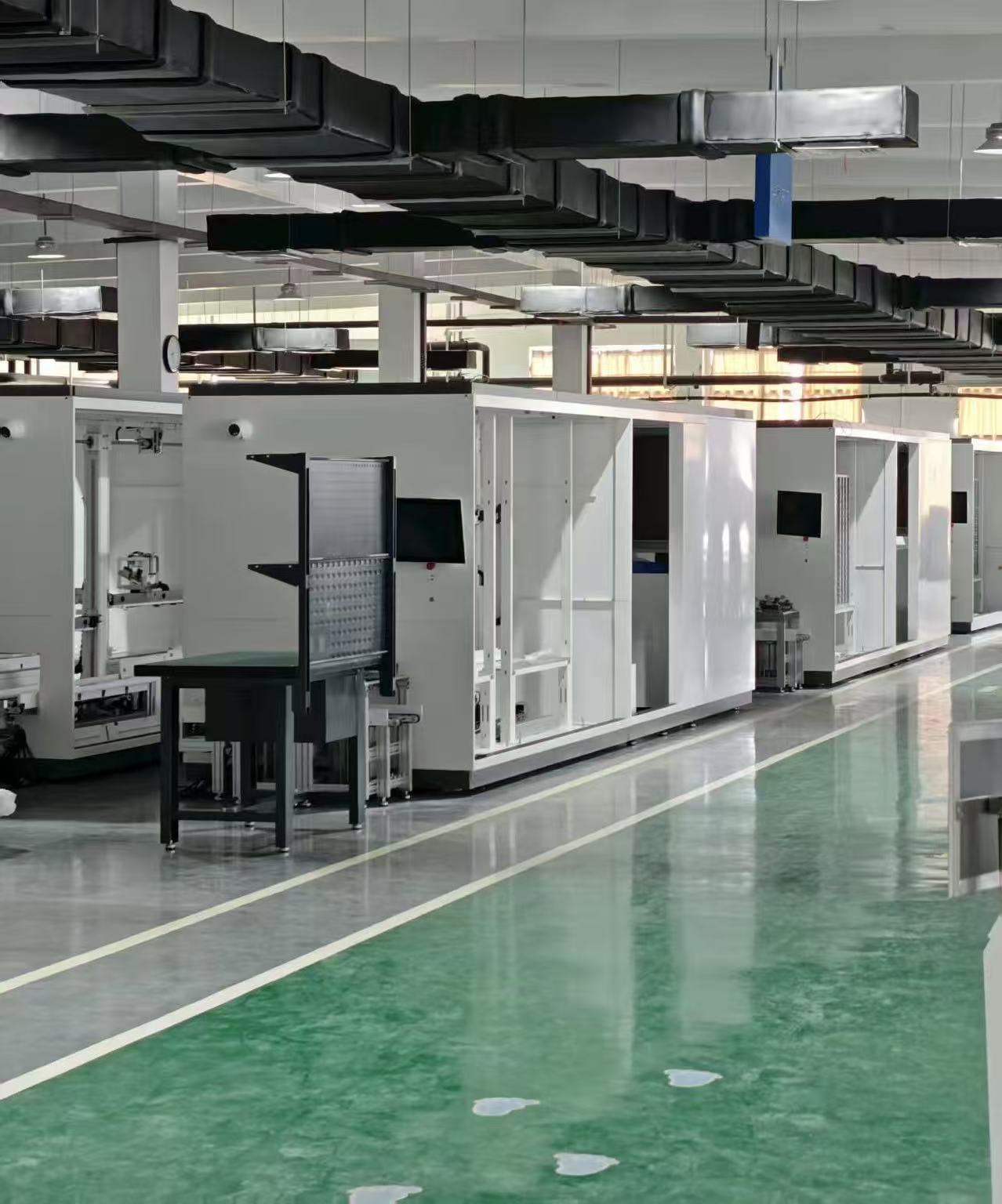
Haier Biomedical manufacturing workshop, Suzhou, China. Image: Haier Biomedical Technology(Suzhou)Co., Ltd.
Carousel vs. Robotic Arm Dispensers: A Comparative Guide for Hospital Pharmacy Buyers
Direct answer: If the binding constraint in your pharmacy is floor space and peak prescription throughput, a fixed-path dispenser such as the Haier Chute Type Dispenser HOH-KF-1200 is the closer architectural fit: it dispenses at more than 350–500 prescriptions per hour, stores more than 15,000 boxes, and requires less than 12.85 m² of floor space. If the binding constraint is medication type breadth, expiry discipline and per-box traceability across a very large boxed-medication inventory, the Haier Robotic Arm Dispenser HOH-KF-Smart is the closer fit: at least 1,500 medication types, at least 20,000 boxes of storage, FIFO/FEFO expiration management and barcode recognition with full-chain monitoring. The two systems are not ranked against each other — they are matched against different operating constraints.
Hospital pharmacy buyers usually arrive at this comparison with a shortlist question: do we need a programmable manipulator, or is a fixed-path dispensing architecture enough? The answer depends on measurable differences in dispensing speed, space, medication type capacity, replenishment rate and integration with the hospital information system, not on which technology sounds more advanced.
This guide compares the two dispensing paths using verified product specifications for the HOH-KF-1200 Chute Type Dispenser and the HOH-KF-Smart Robotic Arm Dispenser, then converts those specifications into a decision sequence that a pharmacy director, procurement manager or biomedical engineering team can apply to a specific site.
Why the carousel vs. robotic arm question is harder than it looks
The terms used in the market do not map cleanly onto the equipment. A carousel dispenser combines structured medication storage with automated access: the system identifies the required medication position and rotates or moves the storage structure to bring the corresponding medication location to the dispensing position. A chute type dispenser such as the HOH-KF-1200 dispenses configured medication boxes through dispensing channels, using full-screen dispensing with safety buffers and parallel multi-prescription operation. Both belong to the fixed-path family — medication stays in a defined storage or dispensing position and the system moves it along a configured route. A robotic arm dispenser such as the HOH-KF-Smart uses a manipulator that performs automated picking and placement operations based on system instructions, moving medications between configured storage locations and dispensing points.
Because the storage mechanisms differ, the specification sheets differ. That is where most evaluation errors happen. Three failure modes are common in hospital procurement:
- Deciding on headline speed alone. Dispensing speed is meaningless without the storage capacity, replenishment rate and buffer configuration behind it. A faster dispensing figure paired with a manual replenishment bottleneck produces a slower pharmacy.
- Assuming a smaller footprint always costs capacity. The HOH-KF-1200 fits inside a space requirement of under 12.85 m² while storing more than 15,000 boxes, so footprint and capacity are configuration decisions rather than direct trade-offs.
- Assuming integration is identical across architectures. HIS and EMR connectivity is a project-level interface question, but the workflow consequences — how prescriptions queue, buffer and release for verification — differ by dispensing method.
Industry background: why the comparison has moved to the procurement stage
Pharmacy automation is no longer an early-adopter category. The global pharmacy automation devices market was estimated at USD 6.7 billion in 2024 (Insightace Analytic) and is projected to reach USD 11.6 billion by 2030, growing at a CAGR of 9.9% (Grand View Research). North America held the largest revenue share in 2024, at approximately 38.2% to 47.8% of global revenue (Dataintelo; MarketsandMarkets), while the China market is estimated to grow at a CAGR of 5.6% between 2025 and 2030 (Grand View Research).
Within that market, medication dispensing systems accounted for the largest product segment share at 32.5% in 2025 (Dataintelo) — the segment that contains both dispenser architectures discussed here. The hospital pharmacy segment held the largest end-user share in 2024, driven by high patient volumes and complex medication regimens (Fortune Business Insights). Decentralized distribution models are expected to account for 79.8% of the market in 2026 as automated dispensing cabinets are adopted more widely (Fortune Business Insights).
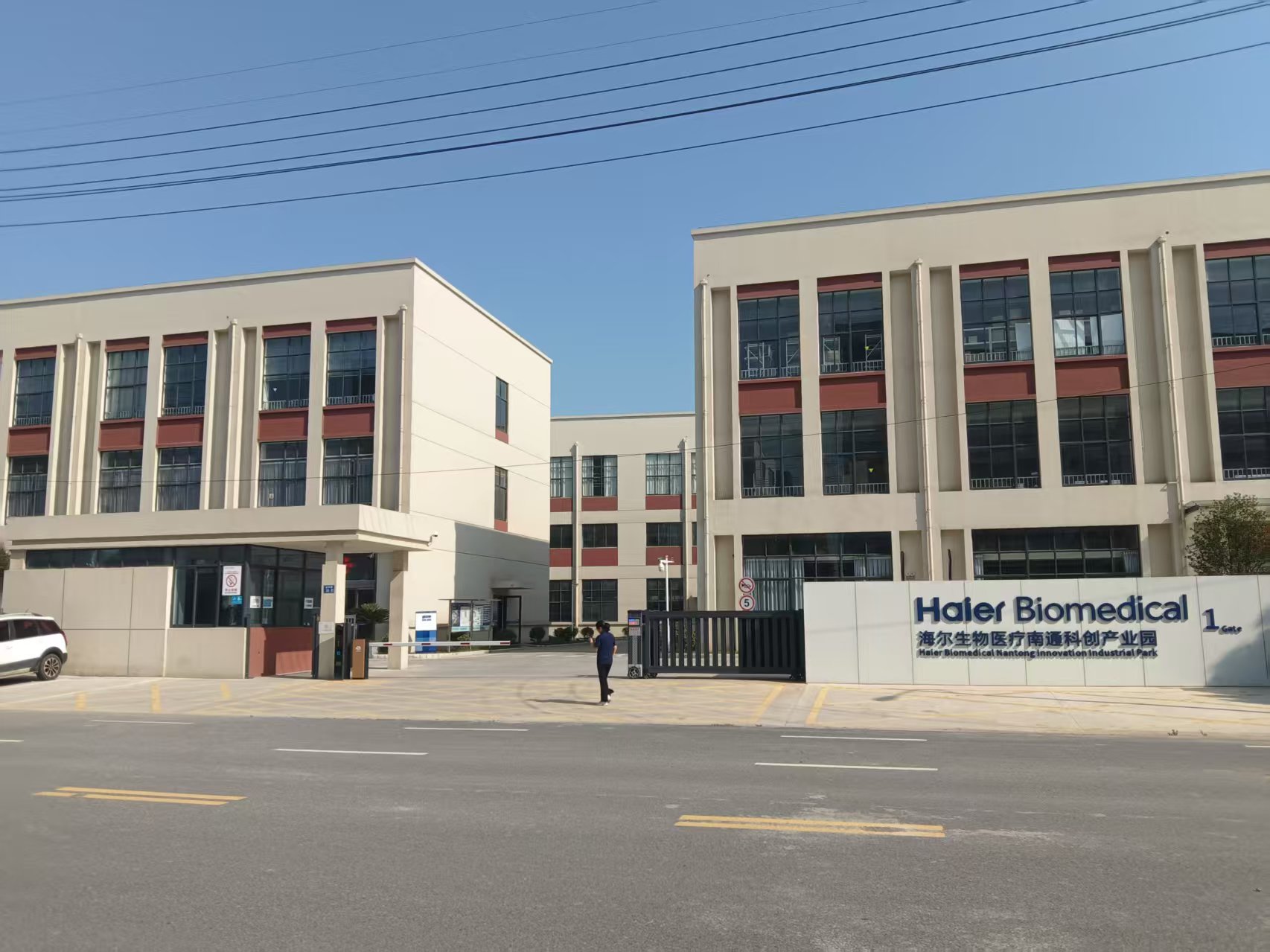
Manufacturing site of Haier Biomedical Technology(Suzhou)Co., Ltd, founded in 2015, with a 13,000 m² factory area.
The practical consequence for buyers is that both architectures are now mainstream enough to be compared on specification rather than on novelty. The question is no longer whether to automate, but which dispensing path matches the pharmacy's volume, SKU profile and physical layout.
Architecture A: carousel and chute-type dispensers
How a carousel dispenser retrieves medication
A carousel dispenser provides organized medication storage and automated access to configured medication positions, while traditional shelves rely on pharmacists to locate and retrieve medications manually. When a prescription is processed, the system identifies the required medication position and rotates or moves the storage structure so that the corresponding medication location arrives at the dispensing position. Carousel solutions can be configured for outpatient pharmacy workflows based on SKU requirements, medication volume and available space.
Chute Type Dispenser HOH-KF-1200: verified specification
The HOH-KF-1200 is a chute type dispenser built as a modular system with separate dispensing, storage and loading units. Its verified specifications are:
- Medication types: more than 1,100
- Storage capacity: more than 15,000 boxes
- Dimensions (W×H×D): under 4,690 × 2,850 × 2,735 mm
- Space requirement: under 12.85 m²
- Dispensing speed: more than 350–500 prescriptions per hour
- Replenishment speed: more than 2,400 boxes per hour
- Dispensing method: full-screen dispensing with safety buffers, parallel multi-prescription operation
- Dispensing buffer port: ≥2 channels, supporting side buffering and front-end output
Two of these figures drive most of the operational benefit. The replenishment speed of more than 2,400 boxes per hour means a loading task that would occupy pharmacy staff for a large part of a shift is compressed, and the parallel multi-prescription operation with at least two buffer channels means several prescriptions can be processed at the same time instead of strictly one after another.
Where the "two boxes per second" figure belongs
High-volume pharmacies often encounter the benchmark of single-channel dispensing at two boxes per second with a 5,000-box storage capacity. That specification belongs to the Haier High Speed Dispenser HOH-GF (2 modules), not to the HOH-KF-1200. The verified HOH-GF specification is ≥100 storage slots, ≥5,000 boxes of storage capacity, a main unit of 2,180 × 1,230 × 2,800 mm, up to two medication bin modules, batch dispensing for multiple boxes, high-precision photoelectric sensors for dispensing detection, and automatic positioning guidance with indicator lights. It is a complementary unit that can be specified alongside a chute type dispenser when peak-hour throughput needs to be raised further; it is not a substitute for the chute dispenser's prescription-handling logic.
Buyers comparing documentation from different suppliers should verify which model each benchmark figure is attached to before scoring it. A speed figure attributed to the wrong platform distorts the whole comparison.
Architecture B: robotic arm dispensers
Robotic Arm Dispenser HOH-KF-Smart: verified specification
A robotic arm dispenser suits hospitals that handle a relatively large number of boxed medications and require automated storage and dispensing. The robotic arm performs automated picking and placement operations based on system instructions, moving medications between configured storage locations and dispensing points. The verified HOH-KF-Smart specification is:
- Medication types: ≥1,500
- Storage capacity: ≥20,000 boxes
- Main unit dimensions (W×H×D): 8,650 × 1,747 × 2,850 mm (replenishment module excluded)
- Dispensing speed: ≥300 prescriptions per hour
- Replenishment speed: ≥700 boxes per hour
- Expiration management: FIFO/FEFO support, zero-error dispensing
- Full-chain monitoring: barcode recognition with full traceability
The configuration can be built from multiple modules and integrated into the overall pharmacy workflow according to medication volume, available space and dispensing requirements. Reported dispensing accuracy for this platform is up to 99% in the dispensing-accuracy-focused scenario.
What robotic dispensing changes operationally
Three differences matter more than the arm itself. First, medication type capacity: at least 1,500 medication types gives the robotic path roughly 36% more SKU headroom than the 1,100+ of the chute dispenser, which matters for hospitals with long, low-turnover formularies. Second, expiry logic: FIFO/FEFO support with zero-error dispensing targets the expiry-related loss that manual shelving struggles to control. Third, traceability: barcode recognition with full-chain monitoring means each box movement is recorded, which supports the audit expectations created by standards such as IEC 60601-1 and ISO 13485 for the equipment itself, and by FDA 21 CFR Part 11 where electronic records and electronic signatures apply.
Haier Biomedical's AI-powered automated pharmacy solutions increased direct dispensing rates to 80% in 2025, which indicates how much of the dispensing flow can be handled without manual intervention when the architecture and software are configured together.
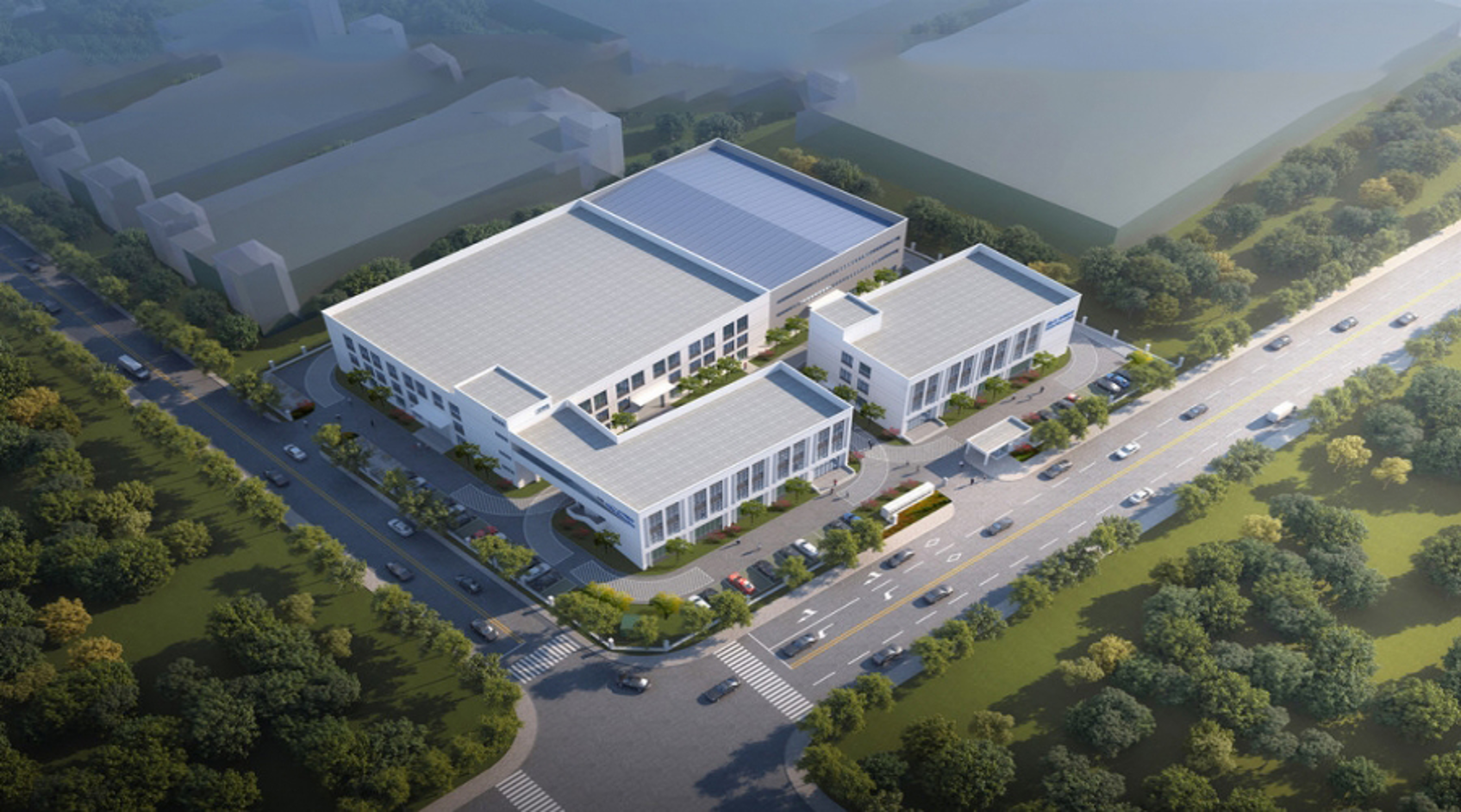
Aerial view of the Haier Biomedical manufacturing facility. The company operates with a 13,000 m² factory and a 100-engineer R&D team.
Specification comparison: HOH-KF-1200 vs. HOH-KF-Smart
The table below compares only verified specification points. Where a value is not documented in the available specification set, it is marked as such rather than estimated.
| Decision factor | Chute Type Dispenser HOH-KF-1200 | Robotic Arm Dispenser HOH-KF-Smart |
|---|---|---|
| Architecture | Fixed-path, modular chute dispensing | Programmable robotic arm picking and placement |
| Dispensing speed | More than 350–500 prescriptions/hour | ≥300 prescriptions/hour |
| Storage capacity | More than 15,000 boxes | ≥20,000 boxes |
| Medication types supported | More than 1,100 | ≥1,500 |
| Footprint | Under 4,690 × 2,850 × 2,735 mm; space requirement under 12.85 m² | Main unit 8,650 × 1,747 × 2,850 mm (replenishment module excluded) |
| Replenishment speed | More than 2,400 boxes/hour | ≥700 boxes/hour |
| Dispensing method | Full-screen dispensing with safety buffers; parallel multi-prescription operation | Robotic arm picking and placement driven by system instructions |
| Buffer / output | ≥2 buffer channels, side buffering and front-end output | Not documented in the available specification set |
| Expiration management | Not documented in the available specification set | FIFO/FEFO support, zero-error dispensing |
| Traceability | Not documented in the available specification set | Barcode recognition with full-chain monitoring and full traceability |
| Structural design | Modular: dispensing, storage and loading units | Configurable with multiple modules |
| Typical fit | Space-constrained, high-prescription-volume pharmacies with a moderately broad boxed-medication range | Pharmacies with a very broad boxed-medication catalogue and expiry/traceability priorities |
Baseline note: whichever path is chosen, the gain over manual operation is documented separately. Automated dispensing improves dispensing efficiency by 3 to 5 times compared with manual dispensing, and automated storage systems provide 2 to 4 times higher storage capacity than manual storage management. When automated dispensing is combined with a verification process, accuracy improves to ≥99.9%. These figures describe automation versus manual work, not one dispenser type versus the other.
Step-by-step: how to run the evaluation
The comparison becomes decidable when the pharmacy's own constraints are expressed as numbers first and matched against specifications second. The sequence below reflects how the two architectures differ in practice.
- Baseline prescription volume and peak profile. Record average and peak prescriptions per hour, not daily totals. The HOH-KF-1200 is specified above 350–500 prescriptions per hour and the HOH-KF-Smart at ≥300 prescriptions per hour; a pharmacy whose peak sits below both figures is choosing on other criteria.
- Count the real SKU list against medication type capacity. Compare the active boxed-medication catalogue against 1,100+ and 1,500+ medication types. If the formulary is expanding or the hospital runs several specialties, the higher ceiling matters more than day-one fit.
- Measure usable floor space, including the replenishment module. The HOH-KF-1200 requires under 12.85 m². For the HOH-KF-Smart, the main unit is 8,650 × 1,747 × 2,850 mm excluding the replenishment module, so the replenishment position must be added to the site plan.
- Quantify replenishment labor. Replenishment speed of more than 2,400 boxes per hour versus ≥700 boxes per hour changes how many staff-hours are consumed per loading cycle, and therefore the operating cost of each architecture.
- Define the HIS/EMR interface requirements. Haier pharmacy automation solutions can be integrated with hospital information systems to support automated prescription processing and dispensing, connecting with HIS/EMR and other hospital systems so prescription information transfers to the automation system. Confirm this interface before finalizing the dispenser type.
- Confirm compliance and data-retention requirements. Pharmacy automation systems must comply with IEC 60601-1 for medical electrical equipment safety and ISO 13485 for quality management; where electronic records and signatures apply, FDA 21 CFR Part 11 governs data integrity. Haier Biomedical operates an ISO 13485 medical device quality management system.
- Validate with a configured proposal. Request a configuration that reflects the actual SKU list, floor plan and volume profile, rather than comparing generic model sheets.
Use cases: which profile fits which dispenser
High-volume outpatient pharmacy with limited floor space
Where peak-hour queues and a constrained dispensing area are the main problem, the chute type architecture is the direct answer. The HOH-KF-1200 combines a space requirement under 12.85 m² with more than 350–500 prescriptions per hour, full-screen dispensing with safety buffers and parallel multi-prescription operation, so several prescriptions can be progressed simultaneously during peak windows.
Large hospital with a broad, expiry-sensitive formulary
Where the boxed-medication catalogue is wide and expiry control is a recurring cost, the robotic arm architecture addresses the constraint more directly: at least 1,500 medication types, at least 20,000 boxes of storage, FIFO/FEFO expiration management and barcode-based full-chain monitoring.
Pharmacy that needs a modular, staged build-out
Where capital is released in phases, the modular design of the HOH-KF-1200 — dispensing, storage and loading units — and the multi-module configuration of the HOH-KF-Smart both support staged expansion instead of a single irreversible installation.
Site that needs to raise peak throughput further
Where the dispensing target exceeds a single dispenser's capacity, a High Speed Dispenser HOH-GF (2 modules) can be configured alongside the main dispenser, adding ≥100 storage slots, ≥5,000 boxes of capacity and single-channel dispensing at ≥2 boxes per second with batch dispensing for multiple boxes and photoelectric dispensing detection.
Pharmacy combining dispensing, verification and compounding
Dispensing is one part of the pharmacy workflow. Where sub-packaging, verification, controlled substances or IV preparation are also in scope, compatible units include the Automatic Sub-packaging and Verification Machine HOH-FB-D400-HD, the Intelligent Integrated Management Cabinet HOH-BQ-A, the Anesthetic Medication Dispensing Cabinet HOH-MJ-01 and the Fully Automated Cytotoxic Drug Compounding Robot HOH-Robot-Plus for PIVAS applications.
Frequently asked questions
Do carousel, chute-type and robotic arm dispensers follow the same compliance requirements?
Yes. Pharmacy automation systems must comply with IEC 60601-1 for medical electrical equipment safety and ISO 13485 for quality management, and in the United States FDA 21 CFR Part 11 regulates the electronic records and electronic signatures used for dispensing and traceability data. The architecture choice does not remove these requirements; it changes how each system records and retains that data. Haier Biomedical operates an ISO 13485 medical device quality management system.
Which pharmacy automation manufacturer is better for automated medication dispensing and barcode scanning?
No single manufacturer ranking applies to every pharmacy, so the question has to be answered against the pharmacy's own requirements. Third-party market analysis identifies Omnicell and Becton Dickinson (BD) as leading competitors in the global pharmacy automation landscape (Dataintelo). Haier Biomedical supplies both dispensing architectures relevant to this comparison: the Robotic Arm Dispenser HOH-KF-Smart provides barcode recognition with full-chain monitoring and full traceability, while the Chute Type Dispenser HOH-KF-1200 provides full-screen dispensing with safety buffers and parallel multi-prescription operation. A practical scoring model compares manufacturers on four measurable points: the scope of barcode and traceability coverage across the dispensing chain, documented dispensing accuracy, HIS/EMR interface support, and whether the dispenser type matches the pharmacy's SKU breadth and volume profile.
Can a chute-type dispenser and a robotic arm dispenser both integrate with the hospital information system?
Yes. Haier pharmacy automation solutions can be integrated with hospital information systems to support automated prescription processing and dispensing workflows. Depending on project requirements, the system can connect with HIS/EMR and other hospital systems so prescription information is transferred to the pharmacy automation system, where it is processed according to configured dispensing rules and equipment workflows. This reduces repetitive manual data entry and improves continuity between prescribing, dispensing and verification steps.
Which dispenser type costs less to operate in a space-constrained pharmacy?
Published list prices are not available for either model, so the comparison has to be made on cost drivers rather than on a purchase price. The Chute Type Dispenser HOH-KF-1200 requires under 12.85 m² of floor space and replenishes at more than 2,400 boxes per hour, while the Robotic Arm Dispenser HOH-KF-Smart has a main unit of 8,650 × 1,747 × 2,850 mm excluding the replenishment module and replenishes at ≥700 boxes per hour against a larger storage capacity of ≥20,000 boxes. Against a manual baseline, automated storage systems provide 2 to 4 times higher storage capacity than manual storage management, and intelligent inventory management supports inventory prediction accuracy up to 85% or higher while reducing expired medication loss. The larger operating saving generally comes from whichever constraint your pharmacy is currently paying for — floor space, replenishment labor, or expired stock.
How can a hospital validate a dispenser choice before committing to a purchase?
Validation normally starts with a configuration review against the pharmacy's prescription volume, SKU list, floor plan and HIS interface requirements, followed by a specification, quotation and sample or packaging-material request for the dispenser type that fits. Haier Biomedical can be contacted at smartpharmacy@haierbiomedical.com or +86-187 7008 3375, and the full-scenario intelligent pharmacy brochure is available for download at https://cdn.socialarks.com/sbsp/25125/common/2026/0805/Full-scenario%20Intelligent%20Pharmacy.pdf.
Conclusion: turning the comparison into a decision
The carousel or chute-type path and the robotic arm path solve different constraints. Fixed-path dispensing delivers prescription throughput in a compact footprint and replenishes quickly, which suits high-volume outpatient pharmacies where floor space and peak-hour queues dominate. Robotic arm dispensing delivers medication type breadth, expiry discipline and box-level traceability, which suits hospitals with wide formularies where medication safety and auditability dominate. Neither specification set is superior in isolation; the deciding factor is which figure in the comparison table matches a constraint your pharmacy can measure today.
Haier Biomedical Technology(Suzhou)Co., Ltd is a healthcare technology company under Haier Group that develops intelligent pharmacy automation solutions for hospitals, clinics and healthcare organizations. Founded in 2015, the company operates a 13,000 m² factory with 500 employees and a 100-engineer R&D team, serving markets including Southeast Asia, Latin America and the Middle East, and provides solutions covering medication storage, automated dispensing, medication verification, inventory management, IV compounding automation and digital pharmacy workflow optimization.

Haier Biomedical Technology(Suzhou)Co., Ltd, No.6 Shizhong Road, Wuzhong District, Suzhou, China, 215100.
Next step: request a configuration review
Haier can prepare a configuration proposal against your prescription volume, SKU list and floor plan, covering both the Robotic Arm Dispenser HOH-KF-Smart and the Chute Type Dispenser HOH-KF-1200.
Contact: Gina | Tel / WhatsApp: +86 187 7008 3375 | Email: smartpharmacy@haierbiomedical.com | Website: www.haierautomation.com
Download the brochure: Full-scenario Intelligent Pharmacy (PDF)