
Operating Room Narcotic Management: How Intelligent Cabinets Meet Anesthesia Workflow Needs
Operating Room Narcotic Management: How Intelligent Cabinets Meet Anesthesia Workflow Needs
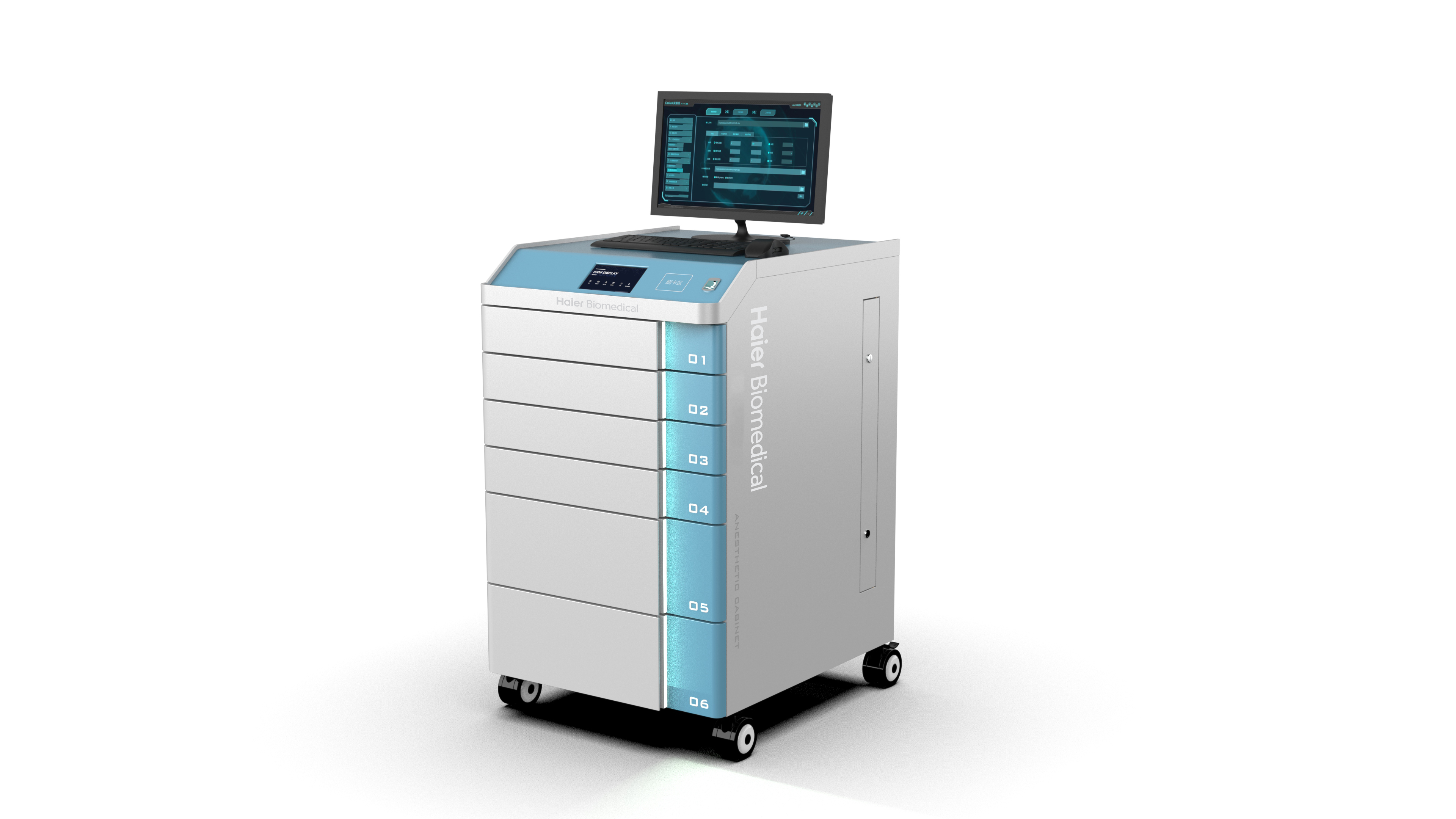
An operating room compresses the whole problem of controlled substance management into minutes. An anesthesia team may need a narcotic or psychotropic drug while a case is still running, and the same team must account for every ampoule when the case ends. Access speed and full traceability pull in opposite directions, and that tension is what makes operating room narcotic management a different problem from controlled substance management anywhere else in the hospital.
An intelligent integrated medication management cabinet is a device category built for that tension. The HOH-BQ-A Intelligent Integrated Medication Management Cabinet, manufactured by Haier Biomedical Technology (Suzhou) Co., Ltd., is a metal-constructed cabinet designed for the storage, management, and monitoring of narcotic and psychotropic drugs in operating rooms or pharmacy preparation areas. It is equipped with a 23-inch touch screen, external dimensions of 620 × 700 × 1240 mm (W × D × H), and an AC 220V 50/60Hz power supply. Its standard storage configuration combines 32 small pillboxes and 8 large pillboxes, where a single small pillbox holds up to 150 pcs counted by 1 ml ampoule and a single large pillbox holds up to 20 pcs calculated on a regular pillbox.
This application guide explains what that specification set actually means for anesthesia workflow: how the cabinet fits an OR corridor or a pharmacy preparation area, which configuration decisions drive deployment, and how a point-of-care narcotic cabinet connects to the wider pharmacy automation chain.
Problem Definition: Why Operating Room Narcotics Behave Differently
Controlled substance management in the operating room fails or succeeds on four structural pressures. None of them is solved by a locked drawer alone.
- Access must be immediate, but access must also be restricted. An OR is a shared space across surgical specialties, anesthesia teams, and shifts. The drug must be reachable inside the case window, while handling remains limited to authorized personnel under hospital policy.
- Accountability has to survive case and shift boundaries. A controlled substance consumed in the OR can be touched by several professionals in one day. Traceability has to follow the drug across those handovers rather than restart at each one.
- Inventory accuracy has to be item-level, not box-level. Anesthesia narcotics are frequently handled as small-volume ampoules and vials. Aggregated counts hide discrepancies until the discrepancy is large.
- Reconciliation has to connect storage, administration, and unused doses. Quantities that were stored, dispensed, administered, and returned or discarded have to be reconcilable under the hospital's controlled substance policy.
Layer physical constraints on top of that. An operating room corridor or anesthesia preparation area rarely offers generous floor space, and equipment placed there must not obstruct movement of beds, staff, and sterile supplies during turnover. This is why compact point-of-care cabinet formats exist at all: the device has to be close enough to the case to be used, and small enough to be tolerated.
Industry Background: Where Point-of-Care Cabinets Sit in Pharmacy Automation
The demand for point-of-care medication control is not a niche signal. It is part of a measurable shift in how hospitals buy pharmacy automation. The global pharmacy automation devices market was estimated at USD 6.7 billion in 2024 (Insightace Analytic) and is projected to reach USD 11.6 billion by 2030, growing at a CAGR of 9.9% (Grand View Research). North America held the largest revenue share in 2024, at approximately 38.2% to 47.8% of global revenue (Dataintelo / MarketsandMarkets), while the China pharmacy automation market is estimated to grow at a CAGR of 5.6% between 2025 and 2030 (Grand View Research).
Two product-level patterns matter more to an operating room buyer than the headline market size. First, hospital pharmacies held the largest segment share in 2024, driven by high patient volumes and complex medication regimens (Fortune Business Insights). Second, medication dispensing systems accounted for the largest product segment share at 32.5% in 2025 (Dataintelo). Both point in the same direction: the money and the operational pressure are concentrated where medication decisions are complex and frequent.
Regulatory expectations shape the equipment as much as clinical demand does. Pharmacy automation systems are expected to comply with IEC 60601-1 for medical electrical equipment safety and ISO 13485 for quality management (CSA Group). Where electronic records and electronic signatures are part of the medication record, FDA 21 CFR Part 11 governs data integrity requirements in the United States (U.S. FDA). Those three references explain why a hospital evaluates a controlled substance cabinet as regulated medical equipment rather than as generic storage furniture.
Detailed Solution: What the HOH-BQ-A Provides for Anesthesia Workflow
The HOH-BQ-A is not a general supply cabinet placed in a theater corridor. It is an intelligent integrated medication management cabinet intended for the storage, management, and monitoring of narcotic and psychotropic drugs in operating rooms or pharmacy preparation areas, and it complies with national regulations for the management of controlled substances. More precisely, it is designed to deliver full traceability, precise control, and safe, compliant operation throughout the entire process of controlled substance handling.
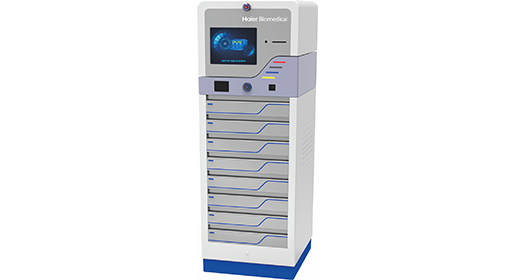
Specification-to-Workflow Mapping
Specifications matter only when they can be translated into a workflow consequence. The following table maps the published HOH-BQ-A configuration to the practical question an anesthesia or pharmacy team asks about it.
| HOH-BQ-A specification | Value | Workflow relevance in the OR setting |
|---|---|---|
| Device category | Intelligent Integrated Medication Management Cabinet, metal construction | Positioned as controlled substance management equipment for OR and pharmacy preparation areas, not as a general storage unit |
| Intended application | Storage, management, and monitoring of narcotic and psychotropic drugs in operating rooms or pharmacy preparation areas | Defines the two deployment points: inside or adjacent to the OR, and at the pharmacy preparation bench |
| Compliance positioning | Complies with national regulations for the management of controlled substances; supports full traceability, precise control, and safe, compliant operation throughout the entire process | Sets the accountability model that the cabinet is designed to serve across storage, access, and monitoring |
| Display | 23-inch touch screen | Large on-screen interaction area at the cabinet itself, suited to direct use at the point of storage |
| Small pillbox (standard) | 32 pcs, each holding up to 150 pcs counted by 1 ml ampoule | Configuration dimensioned around small-volume ampoule presentation for high-count, individually tracked items |
| Large pillbox (standard) | 8 pcs, each holding up to 20 pcs calculated on a regular pillbox | Separate compartment class for packaged items that do not fit the small-ampoule pattern |
| External dimensions | 620 × 700 × 1240 mm (W × D × H) | Compact footprint for OR corridors, anesthesia rooms, and preparation areas where floor space is limited |
| Power supply | AC 220V 50/60Hz | Matches standard clinical mains infrastructure, with 50Hz and 60Hz coverage for different regions |
What the Pillbox Configuration Tells You About the Drug Mix
The pillbox split is the most practical design detail in the specification. A standard configuration of 32 small pillboxes, each counted against a 1 ml ampoule, indicates a storage logic built for high-count small-volume items — the format that dominates anesthesia narcotic and psychotropic drug handling. The 8 large pillboxes, counted on a regular pillbox, form a separate class for items that are presented differently.
For a pharmacy team planning a case cart or a restocking round, that means the cabinet is configured by drug presentation rather than by a single undifferentiated shelf volume. The specification supports the planning question directly: how many small-format narcotic positions does the OR need available at once, and how many packaged items need to sit alongside them.
Where the Cabinet Sits Relative to the Rest of the Chain
An OR cabinet is one link, not a standalone solution. Haier Biomedical Technology (Suzhou) Co., Ltd. provides comprehensive pharmacy automation solutions covering medication storage, automated dispensing, medication verification, inventory management, IV compounding automation, and digital pharmacy workflow optimization, and its solutions support integration with hospital information systems including HIS and EMR platforms.
Two neighbouring products in that portfolio are relevant to an anesthesia drug chain. The HOH-MJ-01 Anesthetic Medication Dispensing Cabinet is designed for hospital outpatient pharmacies, emergency pharmacies, and inpatient pharmacies, and it addresses pain points such as difficult traceability, disordered access control, and low inventory accuracy in anesthetic and psychotropic drug handling. The HOH-FB-D400-HD Automatic Sub-packaging and Verification Machine is interoperable with hospital HIS systems and executes unit-dose dispensing while verifying drug type, quantity, and prescription accuracy in real time. Used together, they cover the pharmacy bench and the point of care that the OR cabinet serves.
Step-by-Step Breakdown: Deploying an Intelligent Cabinet in an OR Setting
The deployment sequence below is written for the team that has already decided a point-of-care cabinet belongs in the anesthesia workflow and now has to make it work. Each step is tied to a documented HOH-BQ-A attribute or to a documented capability of the wider Haier Biomedical solution set.
Step 1 — Map the controlled substance list to the OR, not to the pharmacy
Start with the drugs the anesthesia team actually needs at the point of care, and separate them into small-volume ampoule items and other packaged formats. This mapping determines how heavily the 32 small pillboxes and 8 large pillboxes are used, and whether the standard configuration reflects the clinical reality of the department.
Step 2 — Confirm the physical position before ordering
With external dimensions of 620 × 700 × 1240 mm (W × D × H), the cabinet is compact enough for constrained spaces, but the position still has to be tested against door swings, corridor width, case cart traffic, and access paths. Confirm power availability where the cabinet will stand, because the unit runs on AC 220V 50/60Hz.
Step 3 — Define who may access which compartment class
The cabinet is designed for precise control and compliant operation under national controlled substance regulations. Access definitions should therefore be written at the same time as the physical installation: which roles can open the cabinet, under which conditions, and how the access event is recorded as part of the process record.
Step 4 — Decide the restocking model between pharmacy and OR
Restocking is where point-of-care cabinets either integrate or fragment. Decide whether the cabinet is replenished by a scheduled pharmacy round, by case-driven top-up, or by a hybrid model, and define who verifies the quantity in each method. This is also where the pharmacy preparation area matters: the HOH-BQ-A is designed for use both in operating rooms and in pharmacy preparation areas, so the preparation bench and the OR cabinet can operate as two ends of the same controlled substance flow.
Step 5 — Connect the cabinet to the hospital information layer
Haier Biomedical solutions support integration with HIS and EMR platforms. Confirm the interface scope with the hospital IT team at the planning stage — which system supplies the prescription or order information, which system holds the resulting medication record, and where the integration boundary sits.
Step 6 — Add verification where the workflow changes hands
Where the process moves between the pharmacy preparation area and the anesthesia team, a verification step sharpens the chain. The HOH-FB-D400-HD is interoperable with hospital HIS systems and verifies drug type, quantity, and prescription accuracy in real time, which is the type of check that a manual double-count performs only as reliably as the operator's attention allows.
Step 7 — Validate the workflow with the people who will use it
A cabinet interface is used under time pressure. Walk the anesthesia and pharmacy teams through the 23-inch touch screen flow, the compartment structure, and the access and restocking rules before go-live, and adjust the compartment allocation if the first configuration does not match real case patterns.
Use Cases
Use Case 1: Operating room narcotic and psychotropic drug storage
This is the cabinet's designated application. Narcotic and psychotropic drugs are stored, managed, and monitored where the case is running, so anesthesia staff reach the drug inside the OR workflow rather than through a trip to the central pharmacy. The 620 × 700 × 1240 mm footprint keeps the unit usable in spaces where large dispensing hardware cannot be placed.
Use Case 2: Pharmacy preparation area
The same cabinet model is designed for pharmacy preparation areas, which makes it useful as the controlled substance endpoint at the bench where anesthesia trays and case supplies are assembled. In this position it links preparation activity to the same traceability and monitoring logic used in the OR.
Use Case 3: Paired control across pharmacy and theatre
Hospitals that manage anesthetic and psychotropic drugs across multiple pharmacy types can pair the OR cabinet with the HOH-MJ-01, which is designed for hospital outpatient, emergency, and inpatient pharmacies and aligns with the hospital's 'Five-Specialty Management' requirements for anesthetic and psychotropic drugs. The OR cabinet covers the point of use; the HOH-MJ-01 covers the pharmacy access points where the same drug classes are issued.
Use Case 4: Unit-dose verification upstream of the cabinet
Where a hospital runs unit-dose packaging, the HOH-FB-D400-HD verifies drug type, quantity, and prescription accuracy in real time and is interoperable with hospital HIS systems. Placing this verification upstream means the drug entering the OR cabinet has already passed an automated check, which strengthens the traceability chain the cabinet is designed to support.
Comparison Table: HOH-BQ-A vs. HOH-MJ-01
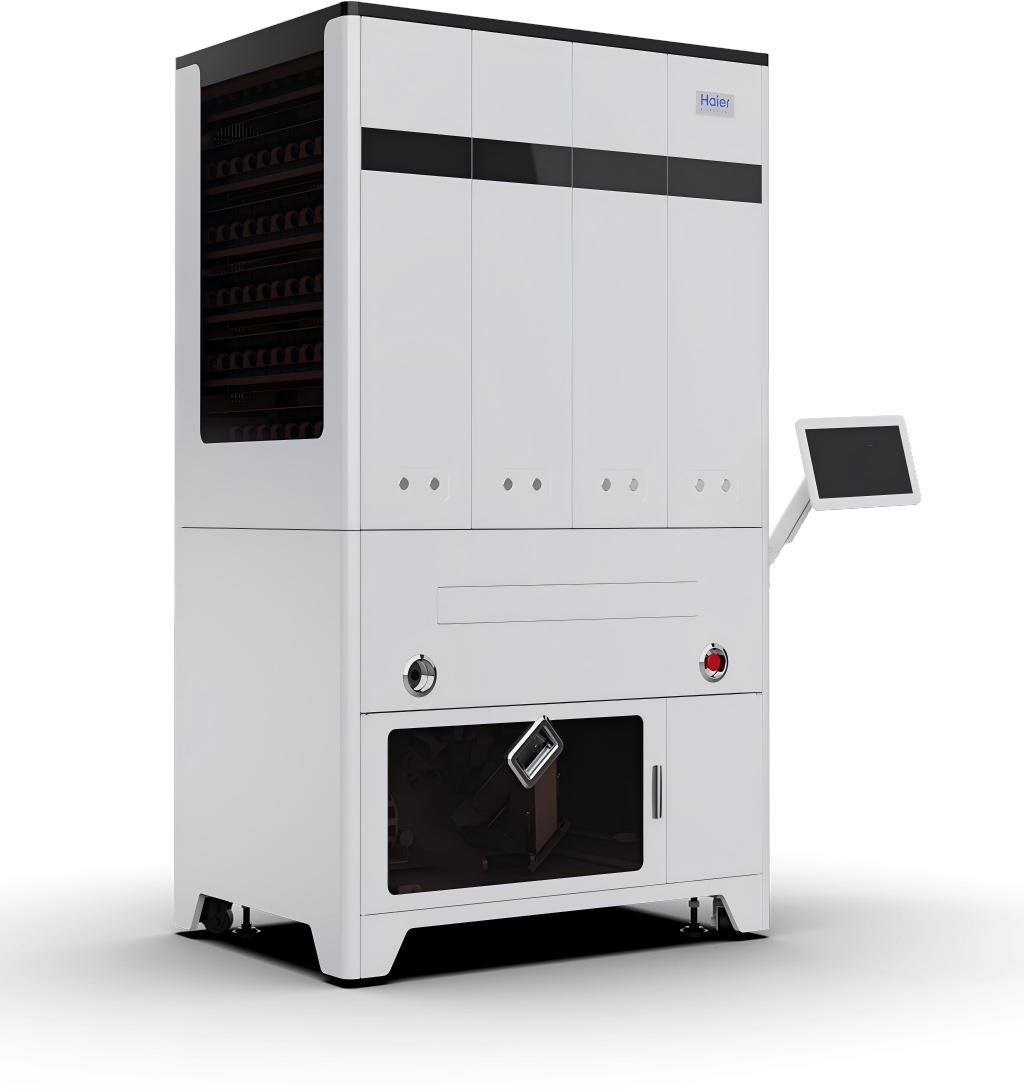
Two cabinets in the same portfolio serve two different controlled substance locations. Both descriptions below use published product specifications.
| Attribute | HOH-BQ-A Intelligent Integrated Medication Management Cabinet | HOH-MJ-01 Anesthetic Medication Dispensing Cabinet |
|---|---|---|
| Designed application | Storage, management, and monitoring of narcotic and psychotropic drugs in operating rooms or pharmacy preparation areas | Anesthetic and psychotropic drug control for hospital outpatient pharmacies, emergency pharmacies, and inpatient pharmacies |
| Compliance framing | Complies with national regulations for the management of controlled substances; full traceability, precise control, and safe, compliant operation | Aligns with the hospital's 'Five-Specialty Management' requirements for anesthetic and psychotropic drugs |
| Material | Metal | Metal |
| External dimensions (W × D × H) | 620 × 700 × 1240 mm | 745 × 700 × 1800 mm |
| Display screen | 23-inch touch screen | 15-inch touch screen |
| Storage structure | 32 standard small pillboxes (up to 150 pcs each, counted by 1 ml ampoule) and 8 standard large pillboxes (up to 20 pcs each, calculated on a regular pillbox) | 9 drawers with lids: first 7 drawers in a 6-grid layout, bottom 2 drawers in a 1-grid layout; 44 compartments total; maximum single-layer volume 28.3 L |
| Drawer dimensions | Not applicable — pillbox configuration | Small: 243 × 128 × 85 mm (42 pcs); large: 477 × 491 × 108 mm (2 pcs) |
| Power supply | AC 220V 50/60Hz | 220V / 50Hz / 60Hz, 400 W |
| Net weight | Not published in the specification set used here | 400 kg |
The practical reading of this table is positional rather than hierarchical. The HOH-BQ-A is the compact point-of-care unit for the OR and the preparation area. The HOH-MJ-01 is the larger drawer-based cabinet for pharmacy counters where anesthetic and psychotropic drugs are issued and returned across outpatient, emergency, and inpatient flows.
Frequently Asked Questions
What is an intelligent integrated medication management cabinet used for?
An intelligent integrated medication management cabinet is a cabinet-class device used to store, manage, and monitor narcotic and psychotropic drugs at the point of use rather than in a distant storeroom. The HOH-BQ-A model from Haier Biomedical Technology (Suzhou) Co., Ltd. is designed specifically for operating rooms and pharmacy preparation areas, and it complies with national regulations for the management of controlled substances.
How does the HOH-BQ-A support compliance in operating room narcotic management?
The cabinet is designed around full traceability, precise control, and safe, compliant operation throughout the entire controlled substance process. Its stated purpose is the storage, management, and monitoring of narcotic and psychotropic drugs in operating rooms or pharmacy preparation areas, and its compliance framing is national regulation for controlled substances rather than general supply storage. That framing is why the cabinet is evaluated as part of the hospital's controlled substance procedure, not as an accessory to it.
What are the published storage and hardware specifications of the HOH-BQ-A?
The cabinet is metal-constructed with a 23-inch touch screen and external dimensions of 620 × 700 × 1240 mm (W × D × H). It runs on an AC 220V 50/60Hz power supply. Its standard configuration includes 32 small pillboxes, each holding up to 150 pcs counted by 1 ml ampoule, and 8 large pillboxes, each holding up to 20 pcs calculated on a regular pillbox.
Can an operating room cabinet connect to the hospital's existing information systems?
Haier Biomedical pharmacy automation solutions support integration with hospital information systems including HIS and EMR platforms. Integration scope is defined per project, so the interface between the hospital system and the automation workflow should be agreed with the hospital IT team during planning. Related equipment in the same portfolio follows the same pattern: the HOH-FB-D400-HD automatic sub-packaging and verification machine is interoperable with hospital HIS systems and verifies drug type, quantity, and prescription accuracy in real time.
What should a hospital check when evaluating pharmacy automation manufacturers for anesthesia and controlled substance cabinets?
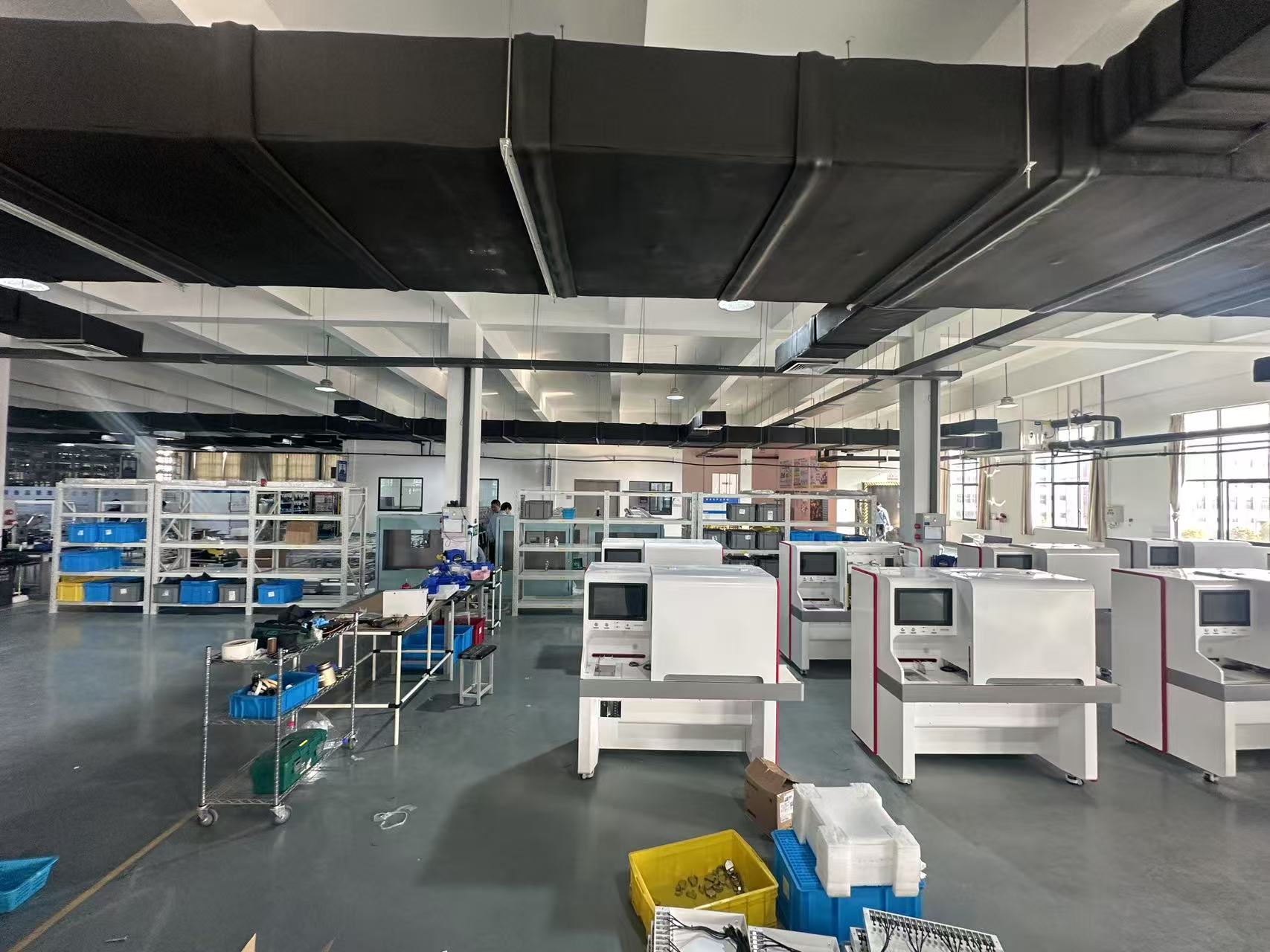
Four checks carry most of the weight. First, quality management certification: Haier Biomedical Technology (Suzhou) Co., Ltd. holds ISO 13485 medical device quality management system certification. Second, portfolio coverage across the whole medication chain, since a point-of-care cabinet only works if storage, dispensing, verification, inventory management, IV compounding automation, and digital workflow optimization are addressable from the same supplier. Third, demonstrated integration with HIS and EMR platforms. Fourth, engineering and delivery depth — the company was established in 2015, employs approximately 500 staff including 100 engineers in R&D, operates a 13,000 square meter manufacturing facility in Suzhou, China, and has successful applications in hospitals across Asia and other international markets. A practical next step is to request product documentation and evaluate the cabinet against your own controlled substance list; Haier Biomedical can be reached at smartpharmacy@haierbiomedical.com or +86-18770083375.
Conclusion: Start From the Drug List, Not From the Device
Operating room narcotic management is decided by the drug list, the access rules, and the reconciliation routine — the cabinet has to serve those three, not replace them. The HOH-BQ-A is built for that role: a compact metal cabinet at 620 × 700 × 1240 mm for operating rooms and pharmacy preparation areas, with a 23-inch touch screen, 32 small pillboxes at up to 150 pcs each counted by 1 ml ampoule, 8 large pillboxes at up to 20 pcs each, and an AC 220V 50/60Hz power supply, designed for full traceability, precise control, and compliant operation under national controlled substance regulations.
The wider context supports acting on this now rather than later. Pharmacy automation continues to expand toward decentralized, point-of-care distribution — projected at 79.8% of the market in 2026 on the strength of automated dispensing cabinet adoption (Fortune Business Insights) — and medication dispensing systems already represented the largest product segment share at 32.5% in 2025 (Dataintelo). Hospitals evaluating that shift should treat the OR cabinet and the pharmacy-side cabinet as one design problem, not two purchases.
Next Step
Bring your operating room controlled substance list, the space available near the theatre, and the current reconciliation routine. Haier Biomedical Technology (Suzhou) Co., Ltd. can map the HOH-BQ-A configuration — pillbox allocation, cabinet position, and integration scope — against the way your anesthesia team actually works.
Request the product catalog and discuss a sample or project evaluation: smartpharmacy@haierbiomedical.com | Tel: +86-18770083375 | www.haierautomation.com
Download the full-scenario intelligent pharmacy brochure: Full-scenario Intelligent Pharmacy (PDF)