
Pharmacy Automation Systems: EU-Certified Equipment and Key Specifications
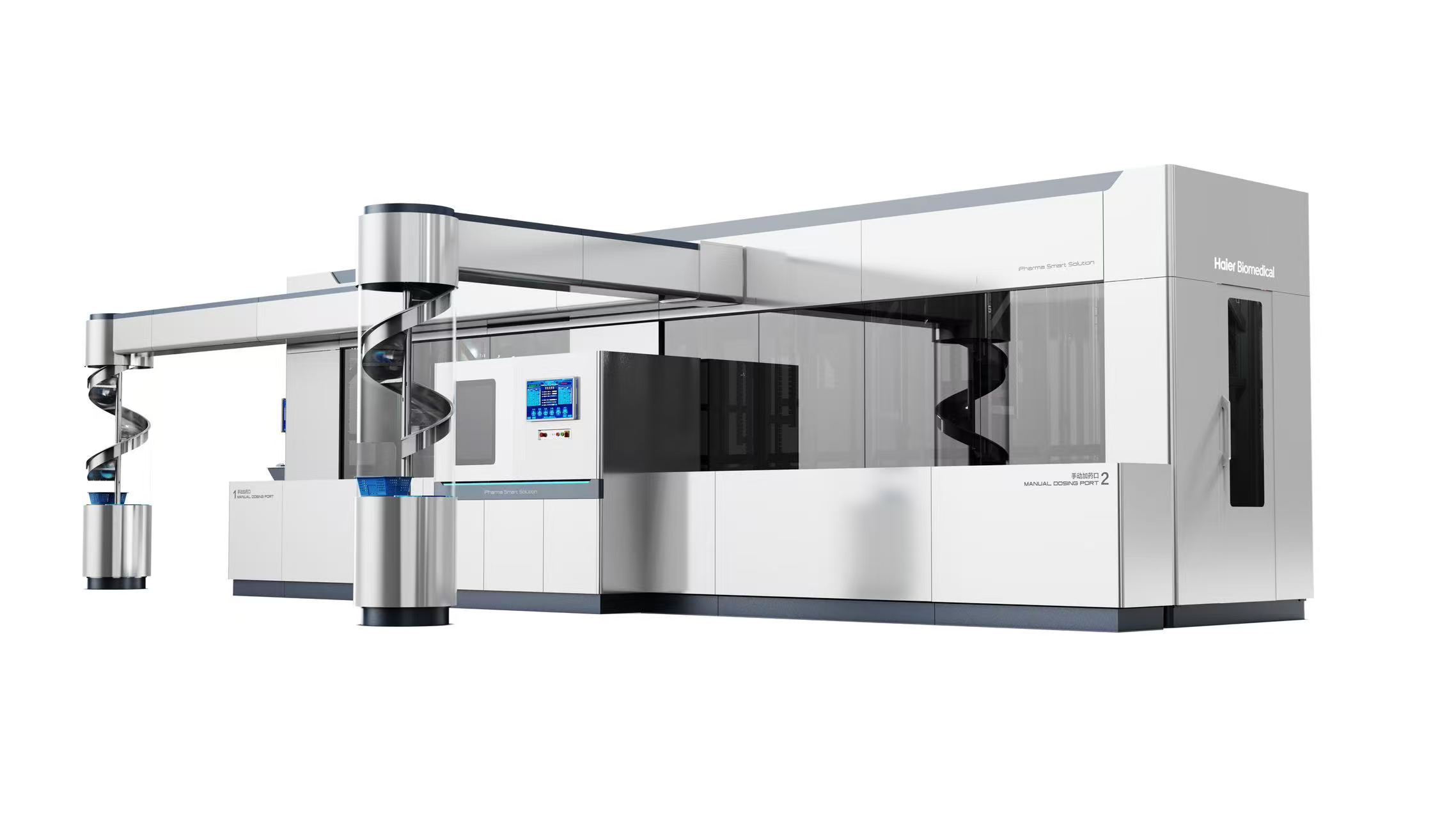
Robotic Arm Dispenser HOH-KF-Smart: automated medication dispensing with barcode traceability.
Pharmacy automation has moved from an operational upgrade to a strategic requirement for hospitals that want to manage rising prescription volumes, improve medication safety, and maintain regulatory compliance. However, choosing the right system requires more than comparing throughput numbers. Hospitals need to evaluate certifications, physical parameters, integration capabilities, and long-term service support before committing to a specific automated pharmacy solution.
This guide focuses on the constraints that matter during the research and evaluation phase: certification coverage, equipment specifications, HIS/EMR integration, and project delivery. It also reviews certified pharmacy automation products from Haier Biomedical Technology (Suzhou) Co., Ltd and explains how to match them to different hospital pharmacy scenarios.
Why Pharmacy Automation Is No Longer Optional: The Problem Defined
Hospital pharmacies process a growing number of prescriptions every day, and many of those prescriptions involve boxed medications, controlled substances, unit-dose packaging, or compounded drugs. Manual workflows place a heavy burden on pharmacists, who must locate medications, verify prescriptions, check expiry dates, and maintain inventory records. These repetitive tasks create operational bottlenecks and introduce the risk of mispicks or documentation gaps.
Pharmacy automation reduces the number of manual picking steps by standardizing the route from prescription to medication output. When automated dispensing is combined with a verification process, such as an automatic sub-packaging and verification machine, the workflow can provide additional checks on medication information before dispensing. This is particularly important for hospitals that deal with high prescription volumes or regulated drugs.
The core problem is not whether automation can improve a pharmacy. It is whether the selected equipment can meet the hospital's specific workload, floor space, compliance framework, and workflow requirements. For procurement teams, that means checking certification rosters, confirming measurement and capacity parameters, and verifying integration options before making a final decision.
Pharmacy Automation Market Context and Regulatory Drivers
Market data shows that pharmacy automation is expanding quickly. The global pharmacy automation devices market was valued at approximately USD 6.7 billion in 2024, and forecasts project it to reach USD 11.6 billion by 2030, representing a compound annual growth rate of 9.9%. North America held the largest regional share in 2024, estimated at 38.2% to 47.8% of global revenue, while hospital pharmacies remained the largest end-user segment due to high patient volumes and complex medication regimens.
Within the market, medication dispensing systems accounted for the largest product segment, at 32.5% in 2025. Automated medication compounding systems are projected to be the fastest-growing segment, with a CAGR exceeding 10%. Market observers also identify major global vendors such as Omnicell and Becton Dickinson (BD) as leading competitors in the pharmacy automation landscape.
Regulatory expectations continue to shape purchasing decisions. Medical device quality management systems such as ISO 13485 are widely used for design and production, while machinery safety standards such as EN ISO 12100:2010 and EN 60204-1:2018 are common references for automated dispensing equipment. In the United States, FDA 21 CFR Part 11 addresses electronic records and electronic signatures in pharmacy automation. Hospitals that import equipment should verify the exact certifications, issuing bodies, certificate numbers, and validity dates for their target market.
Certified Pharmacy Automation Systems from Haier Biomedical
Haier Biomedical Technology (Suzhou) Co., Ltd is a healthcare technology company under Haier Group, established in 2015 and operating a 13,000 m² facility with a team of around 500 people, including 100 R&D engineers. The company develops intelligent pharmacy automation solutions covering medication storage, automated dispensing, medication verification, inventory management, IV compounding automation, and digital pharmacy workflow optimization. Its systems support integration with hospital information systems (HIS) and EMR platforms, and the company holds ISO 13485 medical device quality management system certification.
Robotic Arm Dispenser (HOH-KF-Smart)
For pharmacies that handle a large number of boxed medications and need automated storage and retrieval, the HOH-KF-Smart Robotic Arm Dispenser supports at least 1,500 medication types and stores up to 20,000 boxes. It dispenses at least 300 prescriptions per hour and replenishes at least 700 boxes per hour. The system uses industrial robotic arms and AI-based visual recognition to pick and position medications, and it supports barcode recognition with full traceability. Expiration management follows FIFO/FEFO rules to reduce the risk of expired medication leaving the pharmacy.
For EU projects, the HOH-KF-Smart is covered by an ISET Voluntary Compliance Certificate, certificate number ISETC.000220220323, in accordance with EN ISO 12100:2010 and EN 60204-1:2018. The certificate is valid until 22 March 2027.
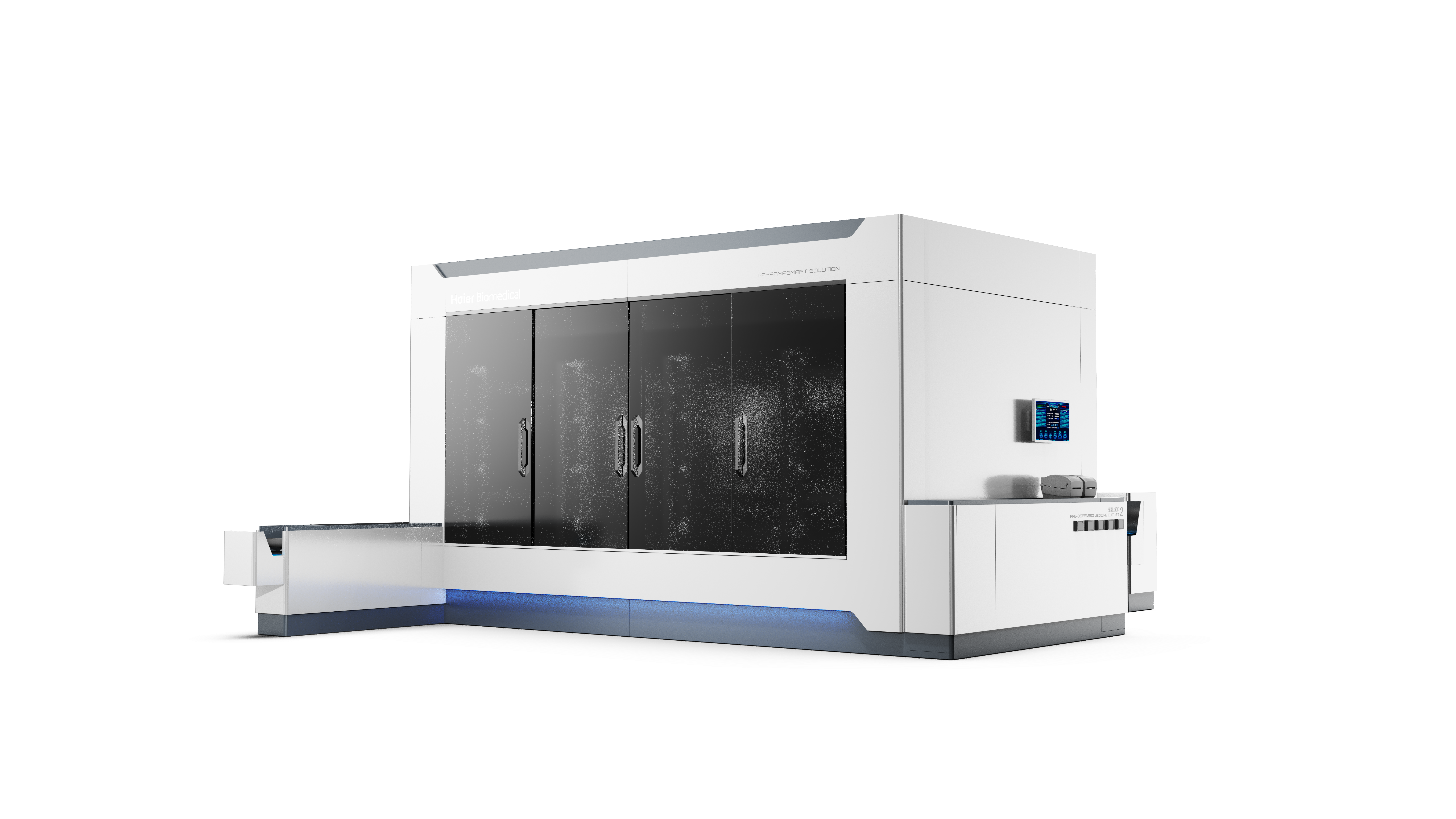
Chute Type Dispenser HOH-KF-1200: full-screen dispensing with parallel multi-prescription operation.
Chute Type Dispenser (HOH-KF-1200)
The HOH-KF-1200 Chute Type Dispenser is designed for outpatient pharmacies with high daily prescription volumes. It handles more than 1,100 medication types and stores more than 15,000 boxes. Dispensing speed reaches 350 to 500 prescriptions per hour, and replenishment speed exceeds 2,400 boxes per hour. The modular structure combines dispensing, storage, and loading units, and the full-screen dispensing mode uses safety buffers and parallel multi-prescription operation. The system requires less than 12.85 m² of space.
The HOH-KF-1200 is covered by a Verification of Conformity (VoC) under the MD Directive, issued by ICR under certificate number ICR/VC/HB250402, valid until 16 April 2030.
High Speed Dispenser (HOH-GF, 2 Modules)
Hospitals that need continuous, high-frequency dispensing of boxed medications can use the HOH-GF High Speed Dispenser. The system has at least 100 storage slots and stores at least 5,000 boxes. Its dual-level stacked structure uses adjustable bin width and high-precision photoelectric sensors for dispensing detection. Single-channel dispensing speed reaches at least two boxes per second, and batch dispensing supports multiple boxes in one cycle. Automatic positioning guidance with indicator lights helps operators respond quickly to errors.
This dispenser is certified under the MD Directive Verification of Conformity for the EU market, certificate number ICR/VC/HB250403, valid until 16 April 2030.
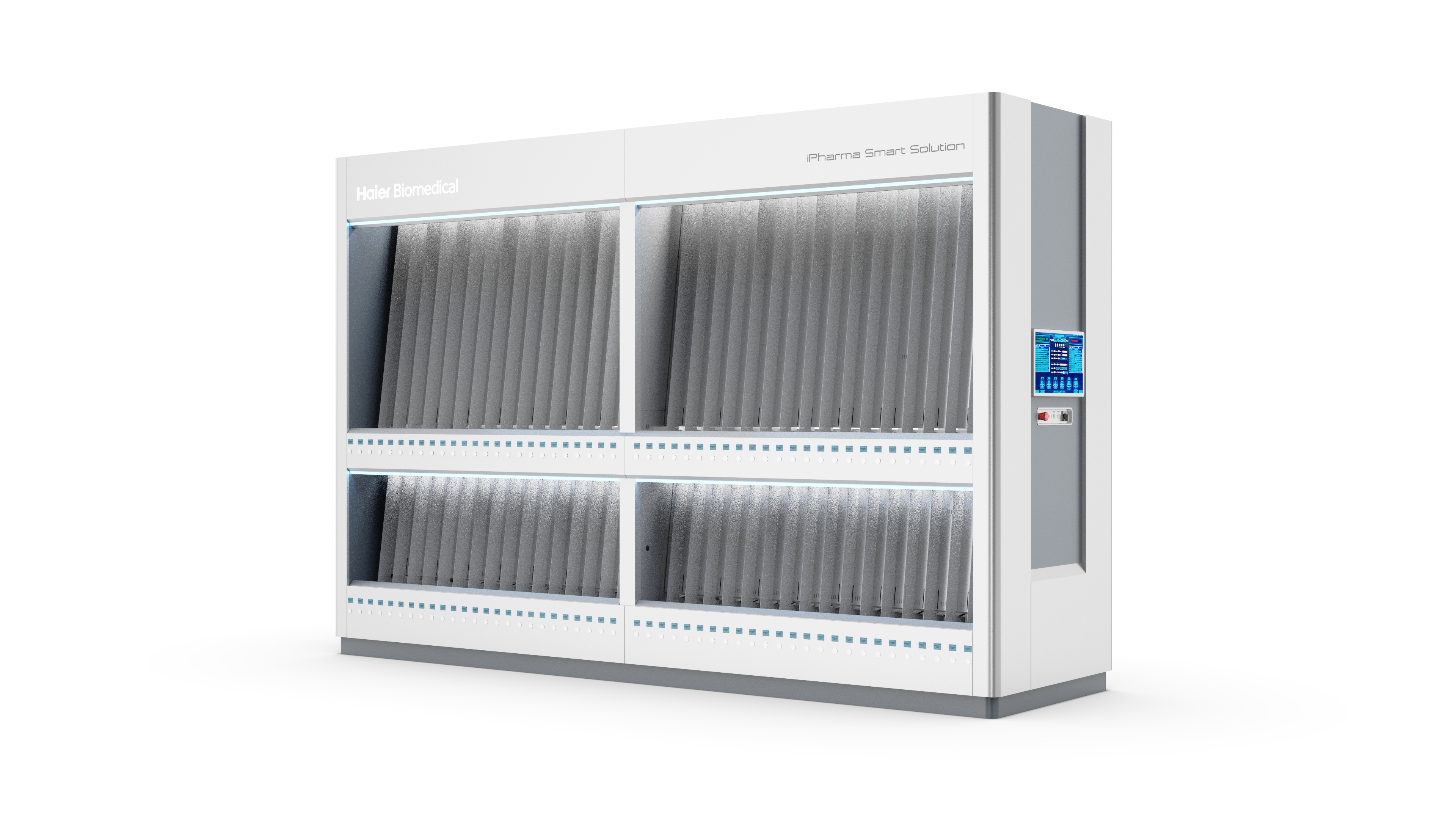
High Speed Dispenser HOH-GF: stacked storage and photoelectric dispensing detection.
Automatic Sub-packaging and Verification Machine (HOH-FB-D400-HD)
For unit-dose packaging workflows, the HOH-FB-D400-HD integrates automatic sub-packaging with AI-powered visual verification. It holds 400 medication boxes, packages at 40 to 60 packs per minute, and outputs to 72 external tray slots. The machine can interoperate with hospital HIS systems, allowing unit-dose dispensing to be executed from physician orders while the system verifies drug type, quantity, and prescription accuracy in real time. This creates a closed-loop packaging and verification workflow.
The HOH-FB-D400-HD is certified under the Verification of Conformity for the EU market, certificate number ICR/VC/HB250802, valid until 5 August 2030.
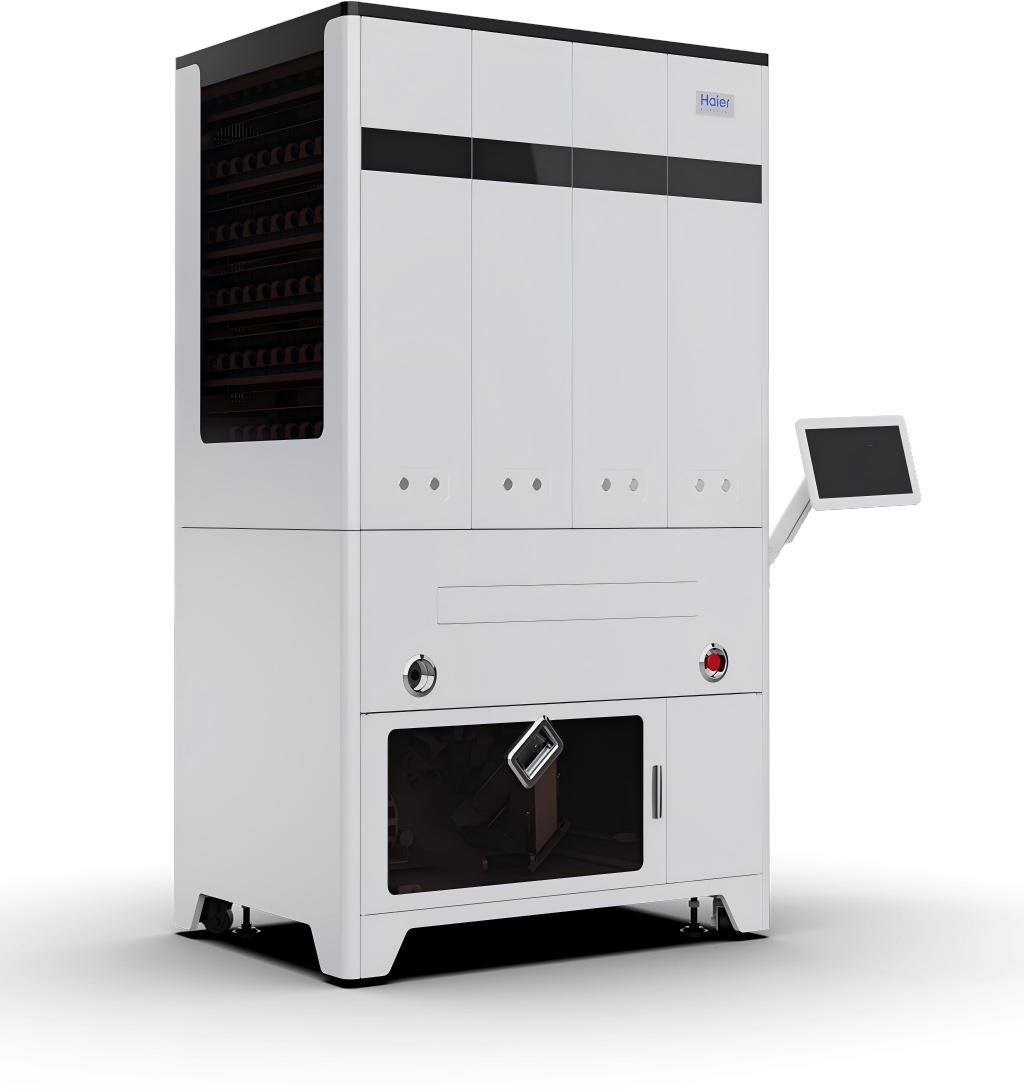
Automatic Sub-packaging and Verification Machine HOH-FB-D400-HD.
Anesthetic Medication Dispensing Cabinet (HOH-MJ-01)
Anesthetic and psychotropic drugs require strict traceability, controlled access, and accurate inventory. The HOH-MJ-01 is an anesthetic medication dispensing cabinet designed for hospital outpatient pharmacies, emergency pharmacies, and inpatient pharmacies. It addresses common problems in traditional manual management, including difficult traceability, disordered access control, and low inventory accuracy. The cabinet is aligned with hospital Five-Specialty Management requirements for anesthetic and psychotropic drugs, and its nine drawers provide 44 compartments with lidded storage.
The HOH-MJ-01 is covered by the Verification of Conformity under the MD Directive for the EU market, certificate number ICR/VC/HB240501, valid until 9 May 2029. The same certificate family includes the HOH-BQ-A, HOH-BQ-B, HOH-M2300-A/B, and related models for controlled-substance management.
Intelligent Integrated Management Cabinet (HOH-BQ-A)
For operating rooms and pharmacy preparation areas, the HOH-BQ-A Intelligent Integrated Management Cabinet is designed for storage, management, and monitoring of narcotic and psychotropic drugs. It provides a 23-inch touch screen, small pillboxes for unit-dose ampoules, and large pillboxes for regular packaging, enabling full traceability and precise control throughout the medication management process.
Fully Automated Cytotoxic Drug Compounding Robot (HOH-Robot-Plus)
PIVAS departments that compound cytotoxic drugs can reduce occupational exposure risks by using a fully automated robotic compounding system. The HOH-Robot-Plus performs drug injection, dissolution, aspiration, and mixing inside a Class 100 (ISO 5) cleanroom environment, with 100% compounding accuracy and a compounding efficiency of 25 cycles per hour. It is compatible with more than 95% of vials and with 50–1000 mL soft bags, plastic bottles, and stand-up pouches. The system supports continuous drug supply and automatic medical waste classification and storage, allowing human-machine separation in high-risk compounding workflows.
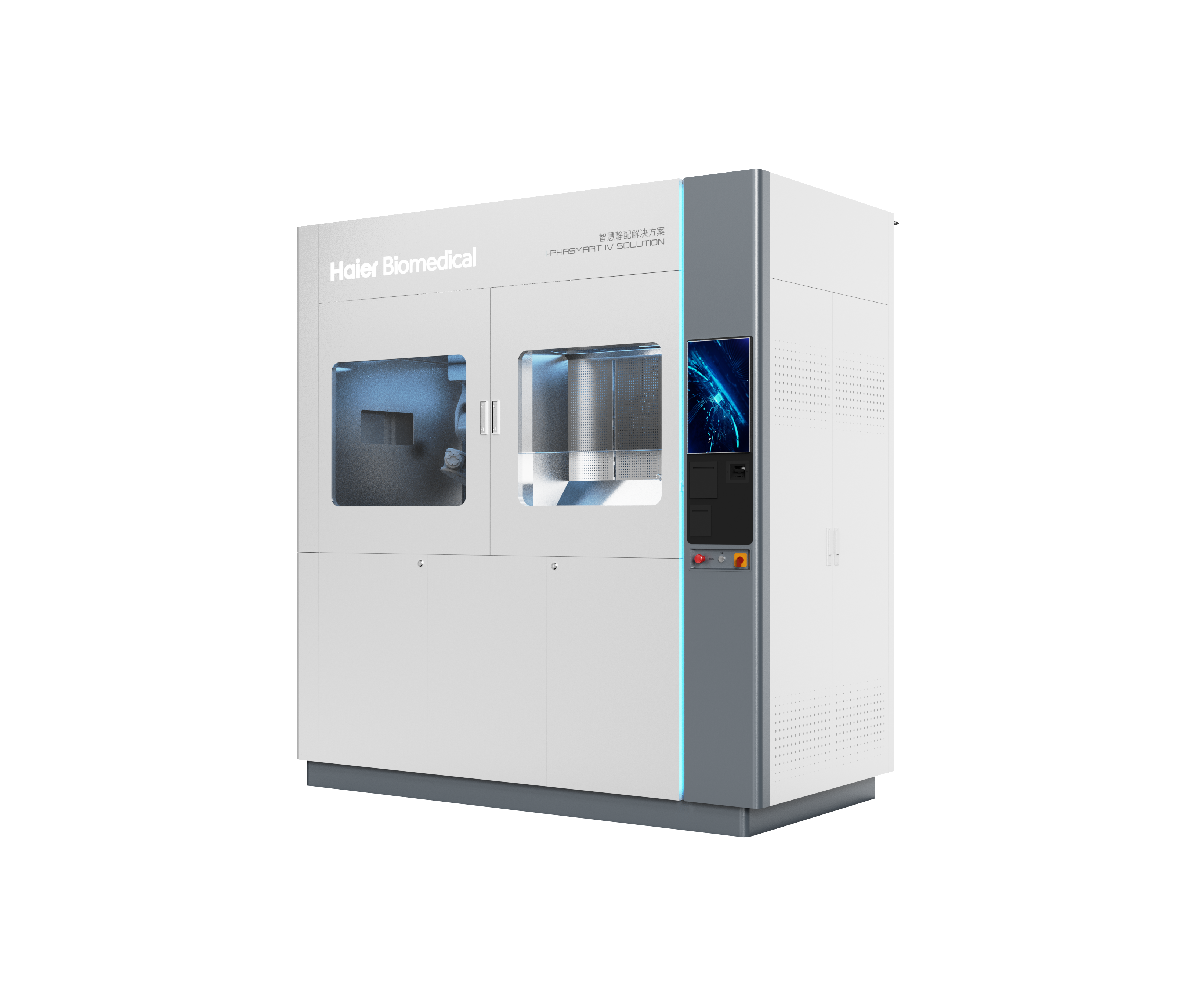
Fully Automated Cytotoxic Drug Compounding Robot HOH-Robot-Plus.
Step-by-Step Selection Framework for Pharmacy Automation
The following evaluation steps can help procurement teams turn high-level goals into a configurable pharmacy automation specification.
Step 1: Define workload and SKU profile. Measure daily prescription volume, count the number of boxed medication SKUs, identify high-usage controlled substances, and estimate future growth. This determines whether the pharmacy needs a robotic arm dispenser, chute dispenser, high-speed dispenser, sub-packaging and verification machine, or a combination of systems.
Step 2: Verify compliance and certification coverage. For EU-market projects, check that the equipment is covered by a Verification of Conformity or a voluntary compliance certificate referencing EN ISO 12100:2010 and EN 60204-1:2018. Confirm the issuing body, certificate number, scope of models, and validity date.
Step 3: Compare physical dimensions and site constraints. Automation equipment must fit the available pharmacy space. For example, the HOH-KF-1200 requires less than 12.85 m², while the HOH-KF-Smart main unit is 8650 x 1747 x 2850 mm before the replenishment module. Check whether delivery paths, door widths, floor loading, and ventilation are compatible.
Step 4: Confirm HIS/EMR integration. Pharmacy automation systems should receive prescription information directly from the hospital information system through the defined interface. This reduces manual data entry and improves continuity from order entry to dispensing. Ask the supplier to confirm which interfaces are supported and what configuration is required.
Step 5: Evaluate medication safety features. Barcode scanning, photoelectric sensors, AI-based visual verification, safety buffers, FIFO/FEFO expiration management, and error alerts all contribute to safer dispensing. The right mix depends on the pharmacy's medication mix and error-prone workflows.
Step 6: Review delivery, testing, and after-sales support. Confirm the lead time, minimum order quantity, Factory Acceptance Test (FAT) procedure, installation, commissioning, operator training, and spare parts availability. For international projects, remote technical support and global after-sales service are important risk-reduction measures.
Step 7: Plan for customization and scale. Hospitals differ in layout, language, medication packaging, and workflow. Configurable options such as equipment size, storage capacity, SKU quantity, robotic modules, software functions, HIS interface, and language allow the automated pharmacy to match the hospital's actual operations and grow over time.
Use Cases: How Certified Automation Works in Real Hospitals
In Thailand, a private hospital deployed one set of a customized universal dispenser system in the outpatient pharmacy. The system was developed around local medication packaging characteristics and remained compatible with various medication formats. It supported HIS integration, used a modular design, and consistently delivered stable, efficient automated dispensing. The hospital reported improved dispensing accuracy and a reduction in repetitive tasks for pharmacists during peak hours.
In Vietnam, a general hospital adopted one set of an intelligent pharmacy automation system covering automated medication storage, dispensing, and medication management. The system was customized according to the hospital's pharmacy layout and workflow, and it integrated with HIS. The automation upgrade optimized dispensing workflows, reduced patient waiting time, and enhanced the overall patient service experience.
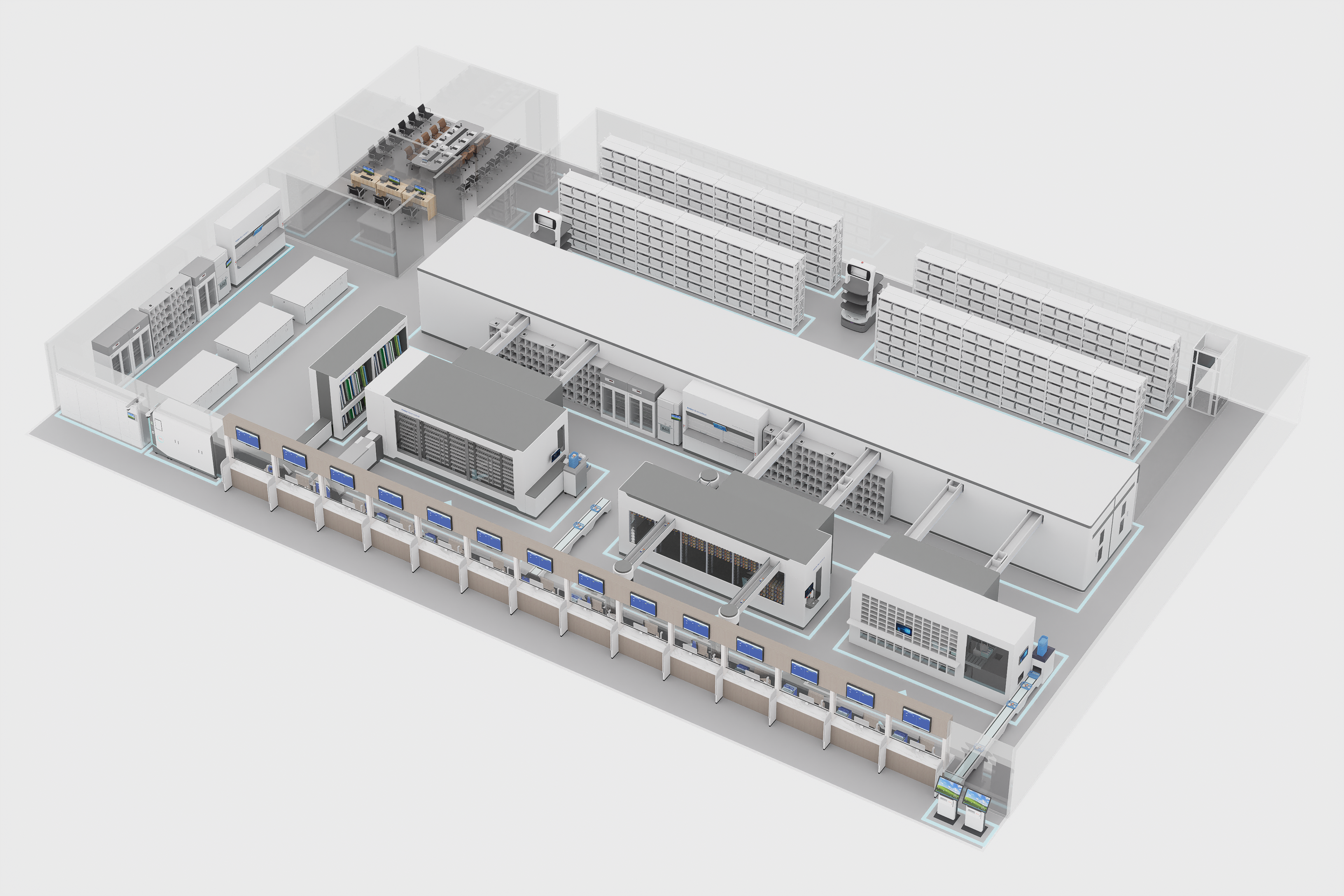
Haier pharmacy automation can be deployed across outpatient and inpatient pharmacy workflows.
Comparison Table: Choosing the Right Dispensing Technology
| Model | Best for | Medication types | Storage capacity | Dispensing speed | Replenishment speed | EU certification |
|---|---|---|---|---|---|---|
| HOH-KF-Smart | High-mix boxed medication dispensing | ≥1,500 | ≥20,000 boxes | ≥300 prescriptions/h | ≥700 boxes/h | ISET Voluntary Compliance Certificate (ISETC.000220220323) |
| HOH-KF-1200 | High-volume outpatient prescriptions | >1,100 | >15,000 boxes | >350–500 prescriptions/h | >2,400 boxes/h | VoC (ICR/VC/HB250402) |
| HOH-GF (2 Modules) | High-frequency boxed medications | Not specified | ≥5,000 boxes | ≥2 boxes/s per channel | Not specified | VoC (ICR/VC/HB250403) |
| HOH-FB-D400-HD | Unit-dose packaging and verification | 400 box capacity | 400 boxes | 40–60 packs/min | Not applicable | VoC (ICR/VC/HB250802) |
This table illustrates that throughput is only one part of the decision. Space, medication mix, replenishment speed, and certification scope all determine which equipment should be specified for a given hospital pharmacy.
Frequently Asked Questions
What EU certifications should pharmacy automation equipment have?
For the EU market, automated pharmacy equipment should comply with applicable machinery safety requirements. Haier's Robotic Arm Dispenser HOH-KF-Smart holds an ISET Voluntary Compliance Certificate (ISETC.000220220323), while the Chute Type Dispenser HOH-KF-1200, High Speed Dispenser HOH-GF, Automatic Sub-packaging and Verification Machine HOH-FB-D400-HD, and Anesthetic Medication Dispensing Cabinet HOH-MJ-01 hold Verification of Conformity (VoC) certificates issued by ICR. These certificates reference EN ISO 12100:2010 and EN 60204-1:2018.
What specifications should hospitals compare when selecting pharmacy automation?
Key specifications include medication types supported, storage capacity, dispensing speed, replenishment speed, physical dimensions, and verification methods. For example, HOH-KF-Smart supports at least 1,500 medication types and 300 prescriptions per hour; HOH-KF-1200 supports more than 1,100 medication types and 350–500 prescriptions per hour; and HOH-GF is designed for high-frequency boxed medication dispensing. The right choice depends on prescription volume, SKU mix, and available space.
Can pharmacy automation systems integrate with a hospital HIS?
Yes. Haier pharmacy automation solutions can be integrated with hospital information systems (HIS) and EMR platforms depending on project requirements. Prescription information can be transferred through the defined interface to the pharmacy automation system for automated processing and dispensing, which reduces manual data entry and improves workflow continuity.
Can pharmacy automation be customized to local medication packaging and hospital layout?
Yes. Haier offers OEM/ODM and customizable configurations covering equipment size, storage capacity, SKU quantity, robotic modules, software functions, HIS interface, and language. In Thailand, a customized universal dispenser system was developed around local medication packaging characteristics. In Vietnam, an intelligent pharmacy automation system was customized to the hospital pharmacy layout and workflow.
What is the typical lead time for a pharmacy automation project?
Production is project-based. Lead time is typically 60–90 days depending on project size and configuration, with a minimum order quantity of one unit. Each system undergoes a Factory Acceptance Test (FAT) before shipment. After-sales support includes remote technical support, on-site installation and commissioning, operator training, software upgrades, and spare parts supply.
Conclusion and Next Step
Pharmacy automation is most effective when the equipment is evaluated against real constraints: certification coverage, physical space, medication types, integration capability, and project lead time. Haier Biomedical Technology (Suzhou) Co., Ltd offers a range of certified systems for outpatient dispensing, inpatient pharmacy automation, PIVAS compounding, and controlled-substance management, with project-based customization and global after-sales support.
To assess whether a specific system fits your hospital, request the full-scenario intelligent pharmacy brochure or contact the Haier pharmacy automation team for a project-based evaluation. You can reach Gina at +86-18770083375 or smartpharmacy@haierbiomedical.com.