Pharmacy Automation by Hospital Scenario: Selection Guide
Pharmacy Automation by Hospital Scenario: Selection Guide
Selecting the right pharmacy automation system is not about choosing the most advanced machine—it is about matching technology to your hospital's actual workflow, prescription volume, medication profile, and physical space. This guide breaks down how different pharmacy automation solutions fit different hospital scenarios, with concrete specifications and real project examples.
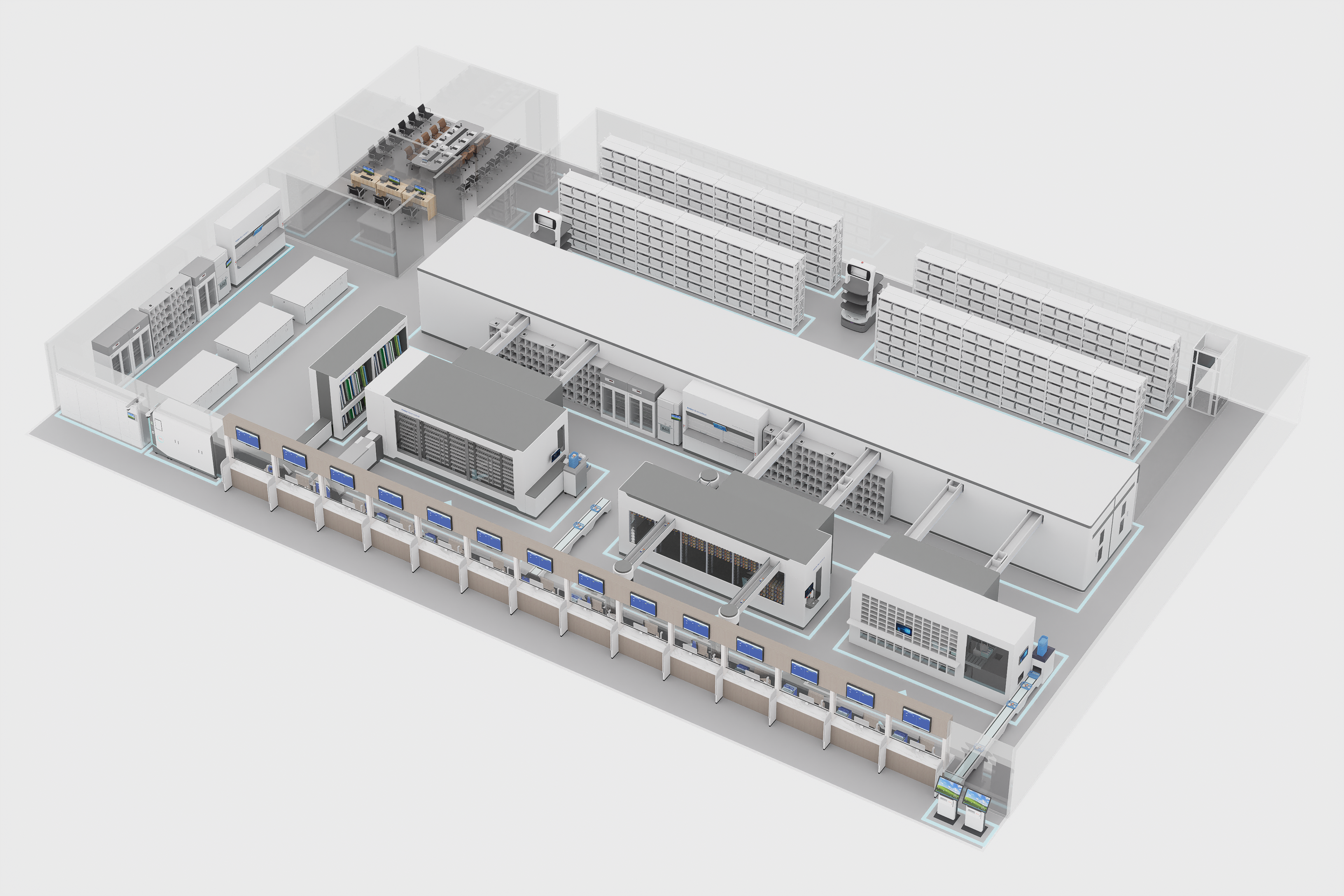
Outpatient and inpatient pharmacy departments often require different automation strategies.
Problem Definition
Hospital pharmacies face common operational pressures: growing prescription volumes, pharmacist shortages, medication errors, and rising traceability demands. Yet there is no universal automation device. An outpatient pharmacy with high daily prescription flow needs rapid dispensing, while an inpatient or PIVAS setting needs controlled compounding and verification. Selecting a system without analyzing these scenarios can lead to poor utilization, wasted space, and insufficient safety gains.
Industry Background
Pharmacy automation is expanding globally. The global pharmacy automation devices market was valued at about USD 6.7 billion in 2024, according to Insightace Analytic, and the overall pharmacy automation market is projected to reach USD 11.6 billion by 2030 at a CAGR of 9.9%, according to Grand View Research. Hospital pharmacies remain the largest end-user segment due to high patient volumes and complex medication regimens.
Labor efficiency is a key driver. It is estimated that 75% of pharmacist time is traditionally spent on non-clinical tasks, and in some documented clinical settings, automated workflows have reduced drug wastage by up to 90%. These figures illustrate why hospital decision-makers are moving from manual dispensing to automated, verification-supported workflows.
Detailed Solution: Haier Biomedical's Pharmacy Automation Portfolio
Haier Biomedical Technology (Suzhou) Co., Ltd., a healthcare technology company under Haier Group, develops intelligent pharmacy automation solutions for hospitals and healthcare organizations. The company integrates IoT, AI, robotics, and intelligent manufacturing to improve medication safety and pharmacy efficiency. Its product portfolio covers medication storage, automated dispensing, medication verification, IV compounding automation, and digital workflow optimization. The company holds ISO 13485 certification and supports integration with hospital information systems such as HIS and EMR.
The table below summarizes the main automated dispensing systems and their intended scenarios.
| System | Model | Key Capabilities | Best-Fit Scenario |
|---|---|---|---|
| Robotic Arm Dispenser | HOH-KF-Smart | ≥1,500 medication types; ≥20,000 boxes storage; ≥300 prescriptions/hour; ≥700 boxes/hour replenishment; FIFO/FEFO; barcode traceability | High-volume boxed medication storage and automated picking |
| Chute Type Dispenser | HOH-KF-1200 | >1,100 medication types; >15,000 boxes; 350–500 prescriptions/hour; >2,400 boxes/hour replenishment; multi-prescription parallel operation | Outpatient pharmacy with peak-hour dispensing demand |
| High Speed Dispenser | HOH-GF (2 Modules) | ≥100 slots; ≥5,000 boxes; ≥2 boxes/second single-channel dispensing; photoelectric detection; indicator-light guidance | High-frequency, high-volume boxed medication environments |
| Automatic Sub-packaging and Verification Machine | HOH-FB-D400-HD | 400 medication boxes; 40–60 packs/min; AI visual verification; HIS-compatible unit-dose packaging | Inpatient pharmacies needing unit-dose packaging and verification |
In addition, Haier offers specialized cabinets and robotic compounding systems:
- Intelligent Integrated Management Cabinet (HOH-BQ-A): designed for controlled medication storage and monitoring in operating rooms or pharmacy preparation areas. It provides 32 standard small pillboxes and 8 large pillboxes, a 23-inch touch screen, and full traceability for narcotic and psychotropic drugs.
- Anesthetic Medication Dispensing Cabinet (HOH-MJ-01): a full-process intelligent control device for anesthetic and psychotropic drugs, with 9 drawers and 44 compartments, a 15-inch touch screen, and compliance-focused access control. It supports "Five-Specialty Management" requirements and addresses traceability, access control, and inventory accuracy challenges.
- Fully Automated Cytotoxic Drug Compounding Robot (HOH-Robot-Plus): uses AI vision recognition and high-precision weighing to automate drug injection, dissolution, aspiration, and mixing inside a Class 100 (ISO 5) clean environment. It supports >95% of vial types, achieves 25 compounds per hour, and is compatible with 50–1000 mL soft bags, plastic bottles, and stand-up pouches. This system is designed for PIVAS to reduce occupational exposure and improve compounding accuracy.
All systems can be integrated with HIS/EMR to automate prescription data transfer. For custom projects, Haier offers OEM/ODM configurability covering equipment size, storage capacity, SKU quantity, robotic modules, software functions, HIS interfaces, and language.
Step-by-Step: How to Match Automation to Your Project
- Quantify prescription volume and medication mix. Determine daily prescription count, peak-hour load, and percentage of boxed vs. loose medications. This will narrow the choice between high-speed/chute-type dispensers and robotic arm systems.
- Map the pharmacy workflow and physical space. Measure available floor area, ceiling height, and layout constraints. For example, the Chute Type Dispenser requires less than 12.85 m², while the Robotic Arm Dispenser has a main unit footprint of 8650×1747×2850 mm (excluding replenishment module).
- Define integration and compliance needs. Confirm whether your hospital uses HIS/EMR that can interface with the automation system. Consider medical device safety standards such as IEC 60601-1 and quality management requirements such as ISO 13485.
- Match equipment type to the clinical scenario. For high-volume outpatient dispensing, consider Chute or High Speed Dispensers. For large boxed inventory with flexible picking, Robotic Arm Dispenser. For unit-dose packaging and verification, Automatic Sub-packaging and Verification Machine. For controlled substances, use intelligent cabinets. For PIVAS, robotic compounding.
- Validate supplier capability. Ask about customization options, production lead time (typically 60–90 days depending on project size), quality control (Factory Acceptance Test before shipment), and after-sales support (remote support, installation, training, software upgrades, spare parts).
Use Cases: Real Hospital Projects in Southeast Asia
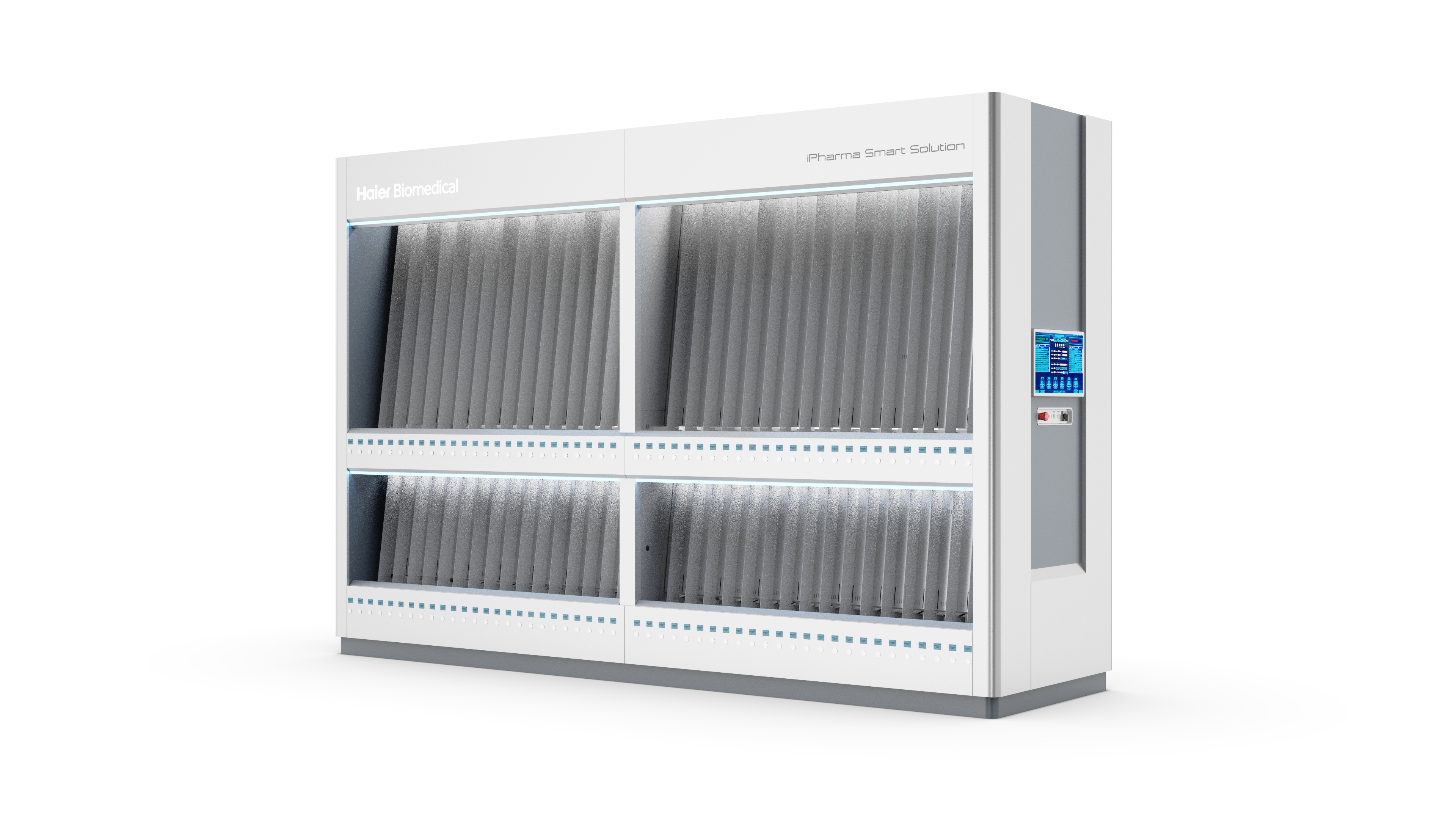
High Speed Dispenser supports high-frequency boxed medication workflows.
Customized Universal Dispenser for a Thai Private Hospital
A private hospital in Thailand deployed one set of a customized universal dispenser system for automated dispensing and medication management in its outpatient pharmacy. The system was developed specifically for Thai medication packaging characteristics, making it compatible with various medication formats. It supports HIS integration, uses a modular design, and provides high reliability and scalability. As a result, the hospital achieved stable and efficient automated dispensing during peak hours, improved dispensing accuracy, and reduced repetitive tasks for pharmacists.
Intelligent Pharmacy Automation for a Vietnamese General Hospital
A general hospital in Vietnam installed one set of an intelligent pharmacy automation system for automated medication storage, dispensing, and intelligent medication management in the outpatient pharmacy. The solution was customized according to the hospital's pharmacy layout and workflow requirements, with seamless HIS integration and end-to-end digital pharmacy management. This enabled the hospital to upgrade its pharmacy automation, optimize dispensing workflows, reduce patient waiting time, and enhance the patient experience.
Equipment Comparison at a Glance
| Parameter | Robotic Arm Dispenser (HOH-KF-Smart) | Chute Type Dispenser (HOH-KF-1200) | High Speed Dispenser (HOH-GF) |
|---|---|---|---|
| Medication Types | ≥1,500 | >1,100 | ≥100 slots (bin configurable) |
| Storage Capacity | ≥20,000 boxes | >15,000 boxes | ≥5,000 boxes |
| Dispensing Speed | ≥300 prescriptions/hour | 350–500 prescriptions/hour | ≥2 boxes/second per channel |
| Replenishment Speed | ≥700 boxes/hour | >2,400 boxes/hour | — |
| Key Technology | Robotic arm + AI visual recognition | Full-screen dispensing with safety buffers | Photoelectric sensors + indicator light guidance |
| Best for | Large boxed inventory, automated picking | Outpatient peak periods, parallel prescriptions | High-frequency boxed medication dispensing |
FAQ
1. Is pharmacy automation suitable for every hospital?
Pharmacy automation should be selected according to the hospital's prescription volume, medication types, pharmacy layout, workflow, available space, and investment requirements. Haier offers different automation solutions, including Robotic Arm Dispensers, Chute Type Dispensers, and High Speed Dispensers, to address different pharmacy scenarios. A hospital that handles a large volume of boxed medications and prioritizes dispensing accuracy may consider the Robotic Arm Dispenser; a hospital with high daily prescription volume may benefit more from the Chute Type Dispenser.
2. Can pharmacy automation reduce medication picking errors?
Yes. Pharmacy automation reduces the amount of repetitive manual picking and standardizes the dispensing workflow. When automated dispensing is combined with a medication verification process—such as an automated verification machine—the workflow provides additional checks on medication information before dispensing.
3. How can an automated dispensing machine improve pharmacy efficiency?
Automated dispensing machines handle repetitive medication picking and dispensing processes, allowing pharmacists to spend more time on clinical and professional services. Haier's Robotic Arm Dispenser and Chute Type Dispenser can be configured according to different pharmacy workflows, and both receive dispensing instructions from the system to identify the correct medication location and perform the configured operation.
4. Can pharmacy automation systems integrate with a hospital HIS?
Yes. Haier pharmacy automation solutions can be integrated with HIS/EMR systems. Prescription information is transferred from the hospital system through a defined interface to the pharmacy automation system, which then processes the prescription according to configured dispensing rules and equipment workflows. This reduces manual data entry and improves process continuity.
5. What types of hospitals are suitable for a Robotic Arm Dispenser?
A Robotic Arm Dispenser is suitable for hospitals that handle a relatively large number of boxed medications and require automated storage and dispensing. It can be configured with multiple modules and integrated into the overall pharmacy workflow based on medication volume, available space, and dispensing requirements. If your hospital prioritizes speed during peak periods, a Chute Type or High Speed Dispenser may be a more direct fit.
Conclusion
The right pharmacy automation system depends on your hospital's specific scenario—not on a generic industry trend. Evaluate your prescription volume, medication mix, available space, workflow, and integration requirements. Haier Biomedical provides a broad portfolio from high-speed dispensers to robotic compounding systems, with customization and HIS integration support for projects in Southeast Asia, Latin America, the Middle East, and other regions.

Need assistance matching automation to your hospital project?
Download the Full-scenario Intelligent Pharmacy brochure or contact the Haier Pharmacy Automation team.
Gina
Tel/WhatsApp: +86-187 7008 3375
Email: smartpharmacy@haierbiomedical.com
Website: www.haierautomation.com