Pharmacy Automation for Long-Term Operations: A Partner Selection and Implementation Guide
Pharmacy Automation for Long-Term Operations: A Partner Selection and Implementation Guide
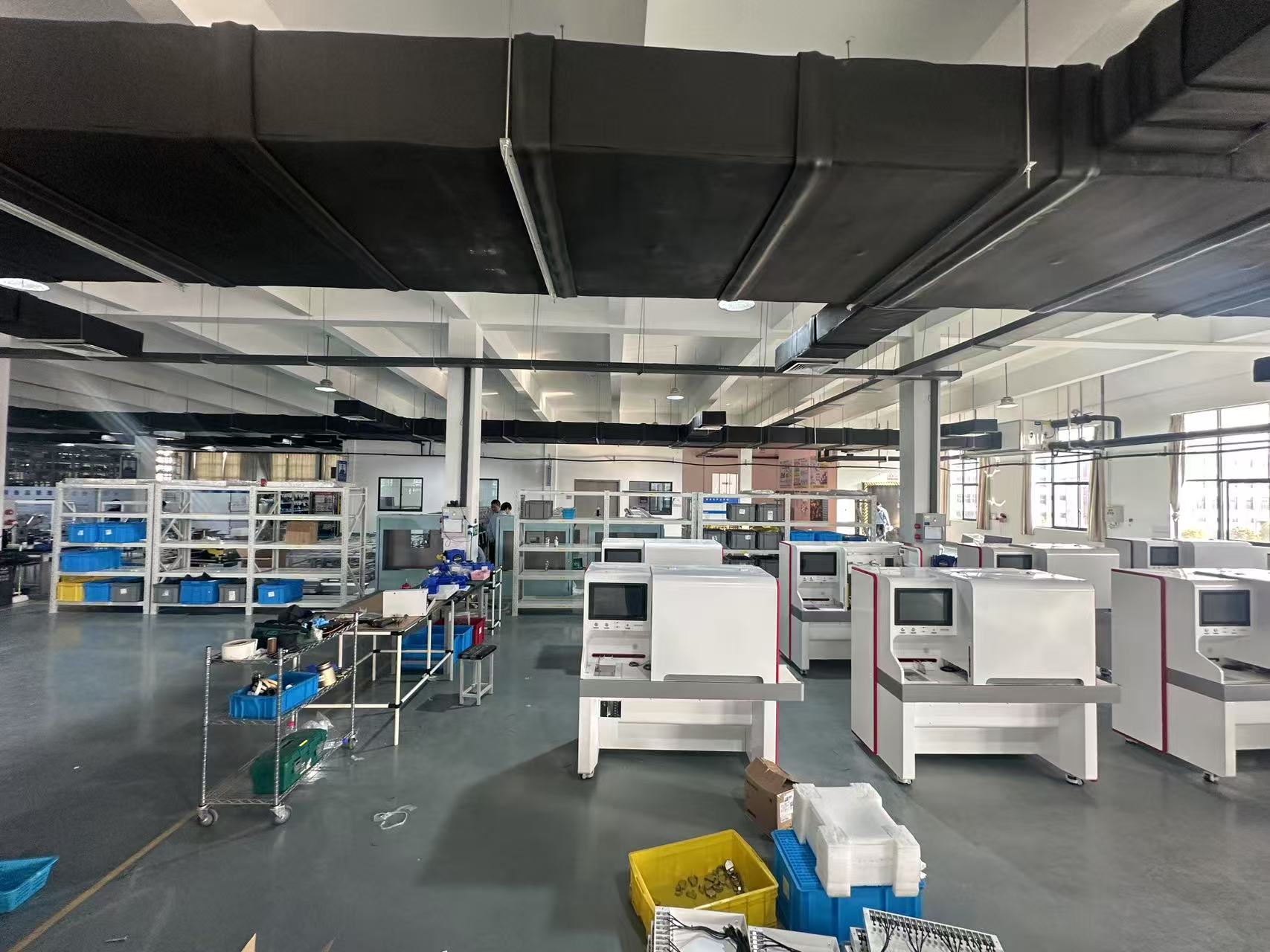
Workshop view at the Haier Biomedical pharmacy automation manufacturing base in Suzhou.
Pharmacy automation is not a one-time equipment purchase. It becomes part of a hospital's medication safety system, pharmacy workflow, and long-term digital infrastructure. The right partner should be evaluated not only on today's prescription volume, but on how the system can grow, integrate, and remain supportable over time.
Haier Biomedical Technology (Suzhou) Co., Ltd. is the pharmacy automation business unit under Haier Biomedical, a healthcare technology company under Haier Group. It provides intelligent pharmacy automation solutions for hospitals, clinics and healthcare organizations. Its portfolio covers medication storage, automated dispensing, medication verification, inventory management, IV compounding automation and digital pharmacy workflow optimization.
The Real Problem: Manual Dispensing Is the Bottleneck
Manual medication handling creates a chain of repetitive tasks: locating medications, picking the right box, checking labels, counting stock, recording expiry dates, and reconciling inventory. Each step consumes pharmacist time and introduces potential error points.
Hospital pharmacies are particularly affected because they combine high prescription volumes with complex medication regimens. When manual operations are used, storage density is limited, replenishment is based on experience rather than data, and verification depends on the attention of individual staff members.
For a hospital or distribution partner, the consequences are operational: longer patient wait times, pressure on pharmacy staff, inefficient space utilization, and higher risk of expired or excess inventory. A long-term automation strategy should address all of these points, not only replace a shelf with a machine.
Pharmacy Automation Market Context and Why It Matters
The global pharmacy automation devices market was estimated at USD 6.7 billion in 2024, according to Insightace Analytic. Grand View Research projects the broader pharmacy automation market to reach USD 11.6 billion by 2030, at a CAGR of 9.9%. Medication dispensing systems were the largest product segment in 2025, with a 32.5% share, according to Dataintelo, and hospital pharmacies remain the largest end-user segment in the global market.
Two trends shape long-term decisions. First, software and data integration are becoming more important. Pharmacy automation software is expected to grow faster than hardware components through 2030, according to MarketsandMarkets. Second, compliance requirements are tightening. Medical electrical equipment must meet safety and quality frameworks such as IEC 60601-1 and ISO 13485, while electronic record handling needs to support data integrity requirements such as FDA 21 CFR Part 11.
For buyers, this means a pharmacy automation supplier should bring more than a dispensing machine. It should provide evidence-backed quality management, system integration capability, and a roadmap that aligns with market and regulatory changes.
Haier Biomedical's Pharmacy Automation Ecosystem
Haier Biomedical Technology (Suzhou) Co., Ltd, established in 2015, operates a 13,000 m² facility and a team of 500 employees, including 100 R&D engineers. Its main products include outpatient automated dispensing systems, inpatient pharmacy automation systems, and automated PIVAS systems. The company serves markets in Southeast Asia, Latin America and the Middle East, and its solutions are designed to integrate with hospital information systems and EMR platforms.
Quality management is based on ISO 13485 certification. The product portfolio is built around modular automation, barcode recognition, AI-based recognition, automated dispensing, verification, traceability and inventory intelligence. This creates a basis for long-term projects: the same platform can be expanded when volume grows or new pharmacy scenarios are added.

Company aerial view of the Haier Biomedical pharmacy automation base.
Robotic Arm Dispenser (HOH-KF-Smart)
The Robotic Arm Dispenser is designed for hospitals that handle a relatively large number of boxed medications and require automated storage and dispensing. It supports at least 1,500 medication types and a storage capacity of at least 20,000 boxes. Dispensing speed is at least 300 prescriptions per hour, and replenishment speed is at least 700 boxes per hour. Expiration management supports FIFO/FEFO principles, and barcode recognition provides full-chain monitoring and traceability.
Chute Type Dispenser (HOH-KF-1200)
The Chute Type Dispenser is suited to high-volume outpatient pharmacies that need faster dispensing. It supports more than 1,100 medication types and more than 15,000 boxes of storage capacity. It requires less than 12.85 m² of floor space and can dispense 350 to 500 prescriptions per hour. Replenishment speed exceeds 2,400 boxes per hour. Its modular design separates dispensing, storage and loading units, and it uses full-screen dispensing with safety buffers for parallel multi-prescription operation.
High Speed Dispenser (HOH-GF)
The High Speed Dispenser is a compact, dual-level stacked system with adjustable bin width. It has at least 100 storage slots and a storage capacity of at least 5,000 boxes. Single-channel dispensing speed reaches at least 2 boxes per second. High-precision photoelectric sensors support dispensing detection, and automatic positioning guidance with indicator lights helps staff resolve errors quickly.
Automatic Sub-packaging and Verification Machine (HOH-FB-D400-HD)
The Automatic Sub-packaging and Verification Machine supports 400 medication boxes and a packaging speed of 40 to 60 packs per minute. It includes 72 external output tray slots and operates in temperatures from 0 to 40°C and humidity from 10% to 80%. This equipment is useful for hospitals that need to combine sub-packaging with prescription verification.
Intelligent Integrated Management Cabinet (HOH-BQ-A)
The Intelligent Integrated Management Cabinet is designed for controlled medication management. It includes 32 standard small pillboxes and 8 large pillboxes, with a 23-inch touch screen. A single small pillbox can store about 150 units of 1 ml ampoules. This cabinet is suited for inpatient pharmacy workflows where access control and structured storage are required.
Anesthetic Medication Dispensing Cabinet (HOH-MJ-01)
The Anesthetic Medication Dispensing Cabinet provides 44 compartments in 9 drawers. The first 7 drawers use a 6-grid layout, and the bottom 2 drawers use a 1-grid layout, all with lids. It operates on 220V/50Hz/60Hz power with a rated power of 400W. This cabinet is designed for anesthesia and high-risk medication management in hospital operating environments.
Fully Automated Cytotoxic Drug Compounding Robot (HOH-Robot-Plus)
The Fully Automated Cytotoxic Drug Compounding Robot supports compounding of cytotoxic drugs in a Class 100 (ISO 5) cleanroom environment. It is compatible with more than 95% of vial types and can compound 25 units per hour. It works with 50 to 1000 mL soft bags, plastic bottles, and stand-up pouches, and the system reports 100% compounding accuracy in its specification. This robot is relevant for hospital PIVAS departments and oncology pharmacy projects.
Verification, Traceability and Software Integration
Automated medication dispensing becomes safer when combined with prescription verification. Haier's solutions support barcode scanning and full-chain monitoring. The Robotic Arm Dispenser, for example, uses barcode recognition with full traceability. Depending on the configured workflow, the system can transfer prescription information from HIS or EMR platforms, process the order, and support later-stage verification through automated verification or sub-packaging equipment.
Inventory management can include data-driven replenishment and intelligent stock monitoring. This reduces expired medication loss and supports drug traceability. In a long-term roadmap, pharmacy automation software may connect to broader clinical decision support systems, healthcare data analytics platforms, and pharmacy workflow optimization tools. AI-powered prescription analysis can support patient safety checks when the hardware and software workflow are properly validated. Medication reminder and adherence programs are also easier to build when dispensing data is digitized and traceable.
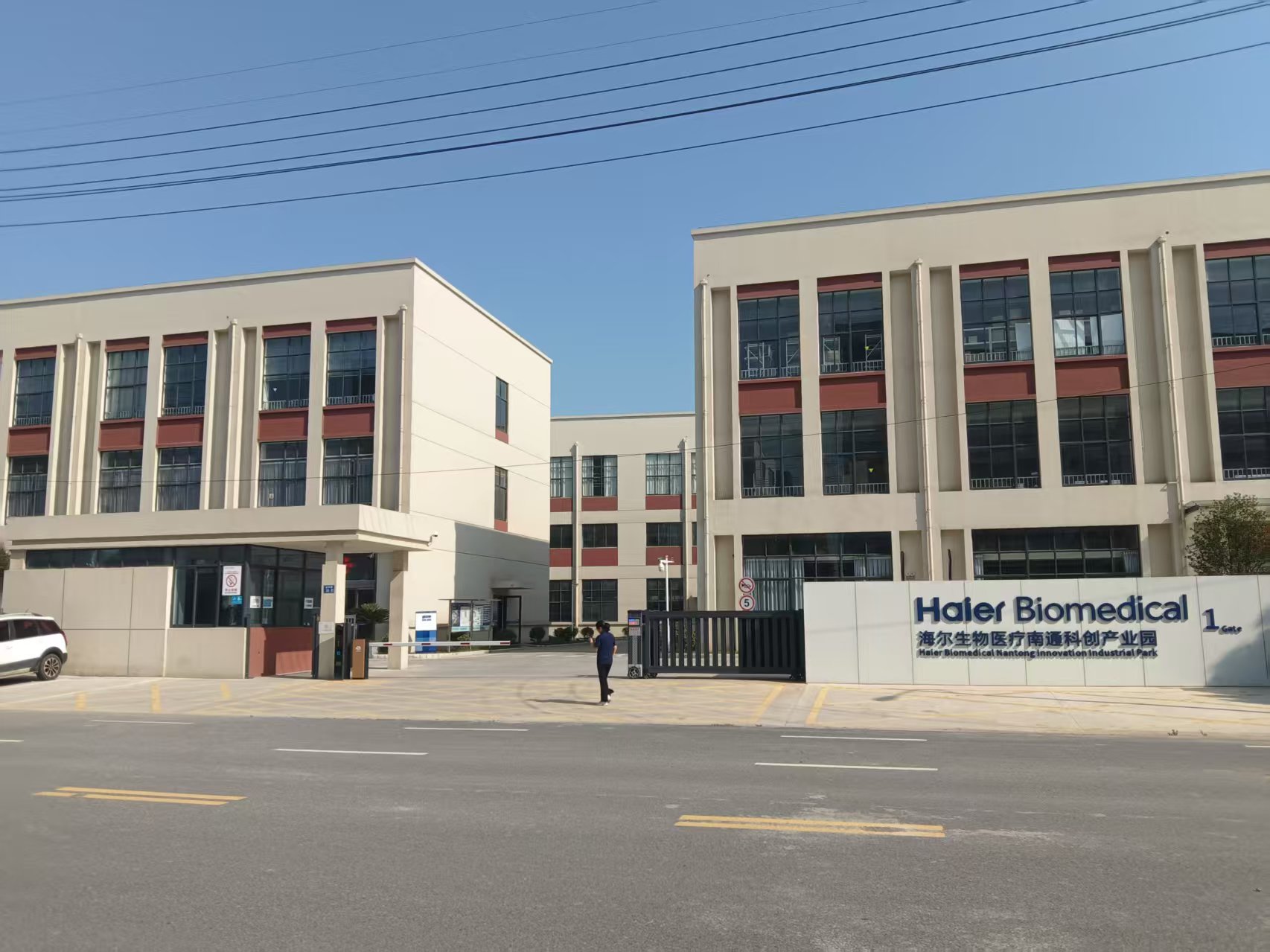
Factory main entrance used for pharmacy automation project delivery.
How to Implement Pharmacy Automation as a Long-Term Project
The following steps help hospital decision-makers and distribution partners move from evaluation to execution with a clear scope.
Step 1: Define the Operational Targets
Pharmacy automation should be selected according to the hospital's prescription volume, medication types, pharmacy layout, workflow, available space and investment requirements. A clear baseline should include current dispensing bottlenecks, error rates, staff workload and inventory turnover.
Step 2: Review Integration and Data Flow
Confirm how the pharmacy automation system will connect with HIS and EMR platforms. Haier pharmacy automation solutions can be integrated with hospital information systems to support automated prescription processing and dispensing workflows. Depending on project requirements, the system can connect with HIS/EMR and other hospital systems, allowing prescription information to be transferred to the pharmacy automation system.
Step 3: Select the Right Configurations
For large outpatient pharmacies that need high dispensing throughput, a Chute Type Dispenser may be appropriate. For hospitals with wide SKU coverage and high boxed medication volume, a Robotic Arm Dispenser can be considered. For batch dispensing and compact storage, the High Speed Dispenser is a suitable module. PIVAS departments may require the Cytotoxic Drug Compounding Robot if sterile compounding is part of their daily workload.
Step 4: Assess Compliance and Quality Evidence
Suppliers should be assessed against IEC 60601-1, ISO 13485 and applicable electronic record requirements such as FDA 21 CFR Part 11. Haier Biomedical operates under an ISO 13485 quality management system. Buyers should request quality documentation, configuration drawings and validation records before placing orders.
Step 5: Plan the Factory Acceptance Test and Logistics
Haier Biomedical supports Factory Acceptance Test (FAT) procedures for pharmacy automation equipment. MOQ is 1 unit, and delivery can be arranged under FOB terms. Payment terms are 50% in advance by TT, with the balance before shipping. The FAT process helps verify equipment behavior before international shipment.
Step 6: Commission, Train and Plan Expansion
After installation, the workflow should be commissioned with pharmacy staff and HIS integration teams. Training should cover replenishment, verification, exception handling and daily maintenance. Modular product design and expandable configurations allow hospitals to add modules later as prescription volume or service scope grows.
Use Cases Across Hospital Pharmacy Scenarios
High-volume outpatient pharmacy: The Chute Type Dispenser and High Speed Dispenser can be used to increase dispensing speed and reduce queue times. The system supports continuous dispensing, and its modular structure allows replenishment and dispensing to run in parallel.
Inpatient pharmacy and ward medication management: The Intelligent Integrated Management Cabinet and Anesthetic Medication Dispensing Cabinet support structured storage and access control. They are relevant for decentralized medication management near wards or clinical units.
PIVAS and hazardous drug compounding: The Fully Automated Cytotoxic Drug Compounding Robot is designed for sterile compounding in a controlled environment. This supports safety for pharmacy staff and consistency for high-risk preparations.
Medication verification and traceability: The Automatic Sub-packaging and Verification Machine and integrated verification workflows provide additional checks before medications reach patients. Automated dispensing combined with verification reduces manual picking steps and adds a system-based checking layer.
These use cases can be combined into a robotic pharmacy layout, where automated dispensing, sorting, labeling, verification and traceability work together through a connected workflow.

Aerial view of the Haier Biomedical production and R&D facility.
Manual vs Automated Pharmacy Workflows: What Changes
| Workflow area | Manual baseline | Automated approach | Performance outcome | Best suited for |
|---|---|---|---|---|
| Dispensing | Manual Dispensing | Automated Dispensing System | Dispensing efficiency increased by 3–5 times | Large hospitals, outpatient pharmacies, high-volume dispensing centers |
| Verification | Manual Picking and Checking | Automated Dispensing and Verification | Accuracy improved to ≥99.9% | Outpatient pharmacy, inpatient pharmacy |
| Storage | Manual Storage Management | Automated Storage System | Storage capacity increased by 2–4 times | Pharmacies with limited space and large SKU quantities |
| Inventory | Manual Replenishment | Intelligent Inventory Management | Inventory prediction accuracy up to 85%+ | Hospitals with complex medication management needs |
The table above is based on Haier Biomedical's workflow comparison data. It describes the direction and scale of improvement that can be achieved when manual pharmacy activities are replaced by automated equipment and data-driven management.
Frequently Asked Questions
Which compliance standards should a pharmacy automation supplier meet?
Pharmacy automation systems should meet medical electrical equipment safety requirements such as IEC 60601-1 and quality management requirements such as ISO 13485. For electronic records and signatures, regulatory frameworks such as FDA 21 CFR Part 11 apply in the U.S. Haier Biomedical operates under an ISO 13485 quality management system.
Is pharmacy automation suitable for every hospital?
Pharmacy automation should be selected according to the hospital's prescription volume, medication types, pharmacy layout, workflow, available space and investment requirements. Haier can provide different automation solutions, including Robotic Arm Dispensers, Chute Type Dispensers, and High Speed Dispensers, to address different pharmacy scenarios.
Can pharmacy automation systems integrate with a hospital HIS?
Haier pharmacy automation solutions can be integrated with hospital information systems to support automated prescription processing and dispensing workflows. Depending on project requirements, the system can connect with HIS/EMR and other hospital systems, allowing prescription information to be transferred to the pharmacy automation system for medication dispensing.
What types of hospitals are suitable for a Robotic Arm Dispenser?
A Robotic Arm Dispenser is suitable for hospitals that handle a relatively large number of boxed medications and require automated storage and dispensing. Haier's Robotic Arm Dispenser can be configured with multiple modules and integrated into the overall pharmacy workflow according to medication volume, available space and dispensing requirements.
What are the procurement and deployment terms for pharmacy automation equipment?
Haier Biomedical supports procurement projects with an MOQ of 1 unit, FOB delivery, and Factory Acceptance Test (FAT) support. Payment terms are 50% in advance by TT, with the balance before shipping. Buyers planning a long-term deployment should contact Haier Biomedical to confirm configuration, project timeline and site-specific requirements. For a quote, sample evaluation or project consultation, contact smartpharmacy@haierbiomedical.com or use the brochure link below.
Conclusion: Choose a Pharmacy Automation Ecosystem, Not Just a Machine
Hospitals and distributors that treat pharmacy automation as part of a long-term ecosystem gain more from their investment. Automated dispensing, verification, traceability, inventory intelligence and HIS integration need to work together. Haier Biomedical Technology (Suzhou) Co., Ltd offers a portfolio designed around these requirements, with an ISO 13485-certified quality system and a factory and R&D base in Suzhou, China.
In the wider market, pharmacy automation is moving toward software-driven, data-informed and compliance-heavy environments. Buyers should therefore evaluate suppliers on product quality, specification transparency, integration capability, compliance evidence and long-term support structure.
Next step: Download the Full-scenario Intelligent Pharmacy brochure to review system architecture and product configurations. For sample or quotation requests, contact Haier Biomedical at smartpharmacy@haierbiomedical.com, WhatsApp +86-18770083375, or visit www.haierautomation.com.