
420C vs 440C Stainless Steel Balls for Valve and Pump Service
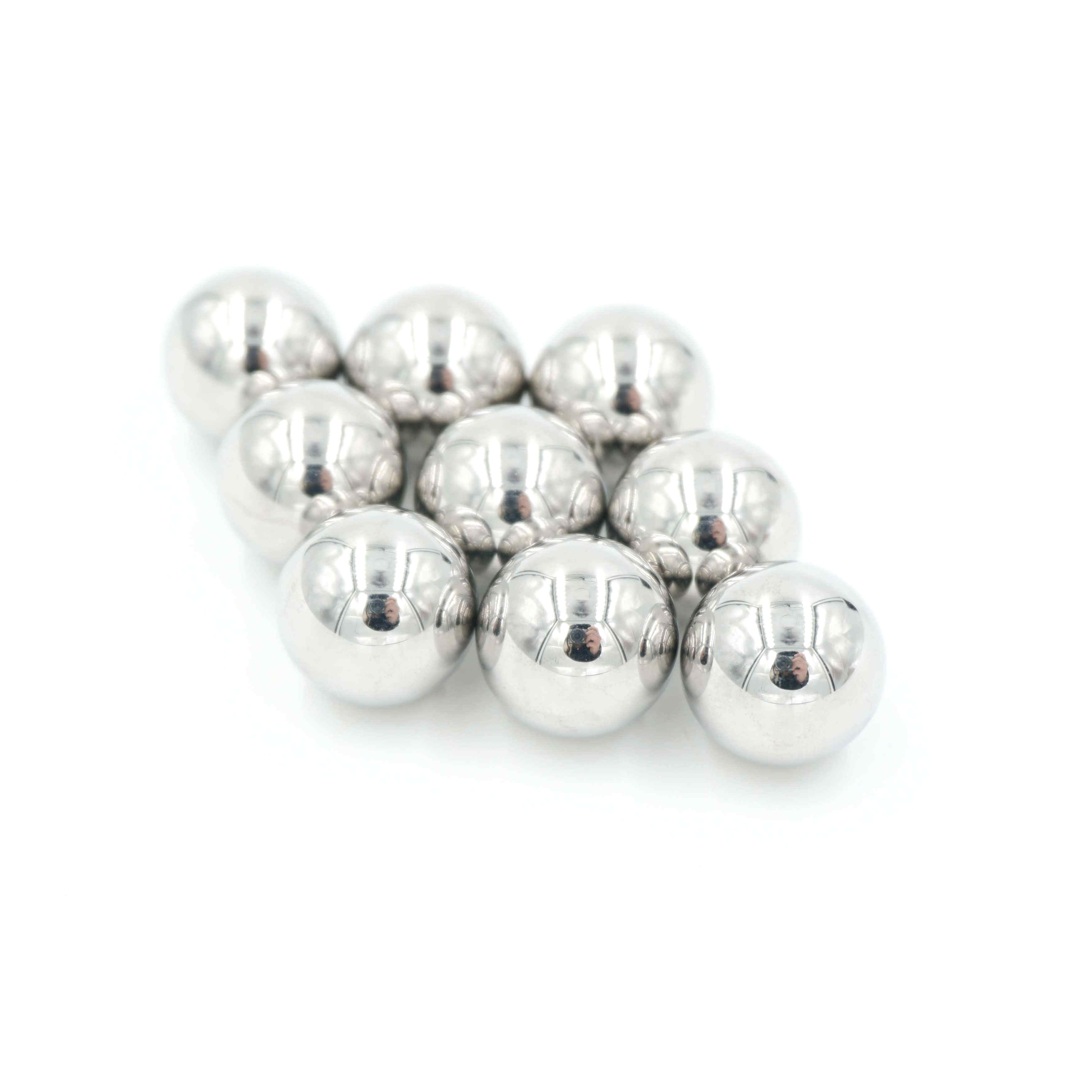
420C and 440C are both martensitic stainless steel balls used as sealing, seating and rolling elements inside valves, pumps and fluid-control assemblies — but they are specified for different service envelopes. The 420C stainless steel ball (AISI 420C / UNS S42000) is supplied in diameters from 1 mm to 50.8 mm, in precision grades G25–G1000, at HRC 50–55, and is specified for pump valves, marine hardware, food-processing machinery and bearings in mildly corrosive environments. The 440C stainless steel ball (AISI 440C / UNS S44004) is supplied from 0.5 mm to 50.8 mm, in grades G10–G1000, at HRC 58–62 with a maximum phosphorus and sulfur content of 0.07%, and is specified for chemical pumps, high-precision bearings, aerospace actuators, and surgical or dental instruments.
The decision rule is short: choose 420C when the fluid is mildly corrosive, loads are moderate and a G25-or-coarser precision grade is acceptable. Choose 440C when the seat must carry higher contact stress, when precision tighter than G25 is required, or when the process is chemical duty rather than wash-down duty.
This guide compares the two grades on the criteria that decide a valve or pump purchase — hardness and wear, corrosion and service environment, dimensional range and precision grade, machining and customization, documentation and compliance, sample validation and lead time. Haimen City Mingzhu Steel Ball Co., Ltd. is a steel ball manufacturer founded in 1992 in Haimen, Jiangsu Province, China, producing chrome, stainless, carbon and custom machined steel balls for bearings, valves, pumps and industrial assemblies.
The Problem: Two Martensitic Stainless Balls, Two Different Service Envelopes
Both grades are catalogued as martensitic stainless precision balls, and both can appear on the same quotation sheet carrying the same four words — stainless, hardened, corrosion resistant. That similarity is where specification errors start.
Three differences decide whether the ball survives in service:
- Hardness band. 420C is heat treated to HRC 50–55, while 440C is supplied at HRC 58–62. In a seat-and-seal interface, that band defines how much contact stress the ball can carry before it deforms or wears.
- Precision floor. 420C starts at G25; 440C is available from G10. Where a valve or instrument assembly needs tighter sphericity and diameter variation than G25 allows, the grade question is already answered.
- Chemistry control. The published 440C specification limits phosphorus and sulfur to a maximum of 0.07%. Phosphorus and sulfur are typically restricted in bearing-quality steels because they influence toughness and cleanliness.
The cost of getting this wrong runs in both directions. An under-hard ball in a high-load seat wears early and forces trim replacement; an over-specified ball in a mildly corrosive, moderate-load valve adds cost and lead time without adding service life. In one documented valve and pump manufacturing programme, a supplier of corrosion-resistant valve trim and sanitary pump components recorded a good balance of hardness and corrosion resistance — and a lower total cost versus 440C — for moderate-duty service.
It also helps to separate martensitic stainless from austenitic stainless. Austenitic grades such as 304 and 316 are supplied annealed soft at HRC 25–39 and are chosen for corrosion resistance and formability. Martensitic grades are heat treated for hardness and are chosen where the ball itself is a load-bearing or wear surface. A 304 or 316 ball is not a substitute for 420C or 440C in a loaded valve seat.
Industry Background: What Valve and Pump Service Demands of a Steel Ball
In valve and fluid-control service, the ball usually functions as the sealing or shut-off element inside ball valves and check valves. Typical working conditions in this segment are wet gas and mildly corrosive fluids at 0–200 °C under moderate pressure, with matched equipment including floating and trunnion-mounted ball valves, needle valves and check valves. The stated material requirement for this duty is a hardened martensitic ball in the HRC 48–55 band with moderate corrosion resistance, plus NACE MR0175 awareness where sour service applies.
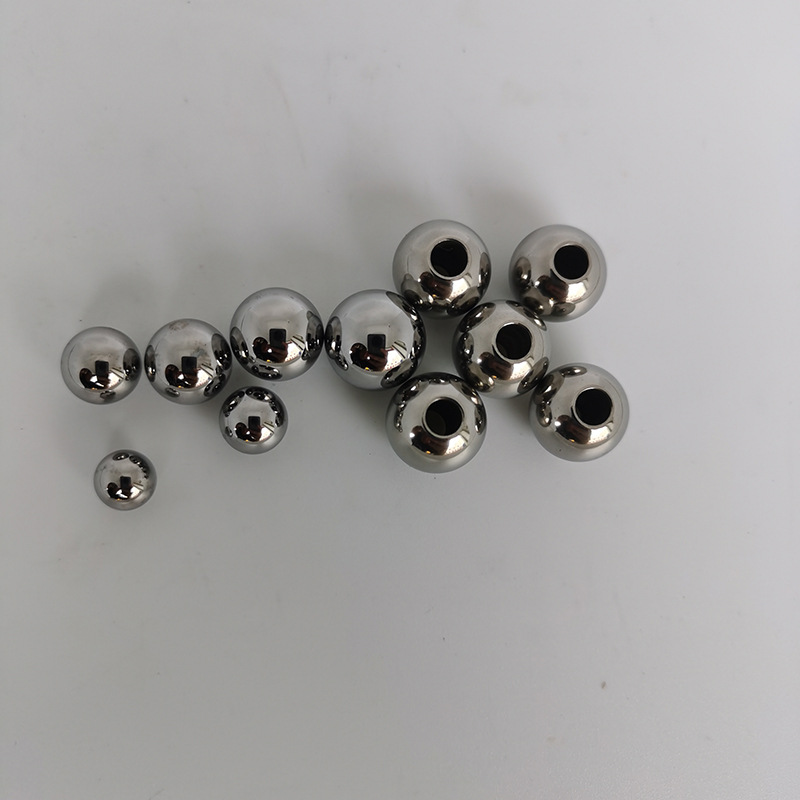
Where the ball also meters flow, the geometry changes rather than the chemistry. Drilled balls enable flow through the ball in specialty ball valves, diverter valves and metering valve trim, with hole concentricity controlled per drawing, a burr-free hole and an optional threaded hole. In hydraulic and aerospace fluid systems handling high-pressure hydraulic fluid between −30 °C and 180 °C, drilled balls perform pressure-equalization and bleed duty inside hydraulic manifolds, pressure-bleed fittings and aerospace valve actuators, where a precision drilled hole, pressure-retaining integrity and material traceability govern the specification.
Standards frame these decisions. ISO 3290-1:2014 specifies requirements for finished steel balls for rolling bearings and defines grades from G3 to G700. Martensitic stainless balls in this catalogue are manufactured to DIN 5401 and ISO 3290. Where corrosion is not the limiting factor, ASTM A295/A295M covers the high-carbon, anti-friction bearing-quality steel used for Grade 52100 balls. In international trade, balls, needles and rollers are classified under HS code 8482.91.
Demand context matters for planning. Coherent Market Insights estimates the global steel ball market at USD 12.91 billion by 2026 and projects chrome steel balls at a 45.7% share of the material segment, while Business Research Insights projects a 5.2% CAGR for 2026–2035; published growth figures differ between research houses depending on whether large grinding media is counted alongside precision balls. For valve and pump buyers, the relevant slice of that demand is the corrosion-resistant segment, where martensitic stainless grades such as 420C and 440C are specified.
Detailed Solution: Specifying 420C and 440C Correctly
420C Stainless Steel Ball — AISI 420C / UNS S42000
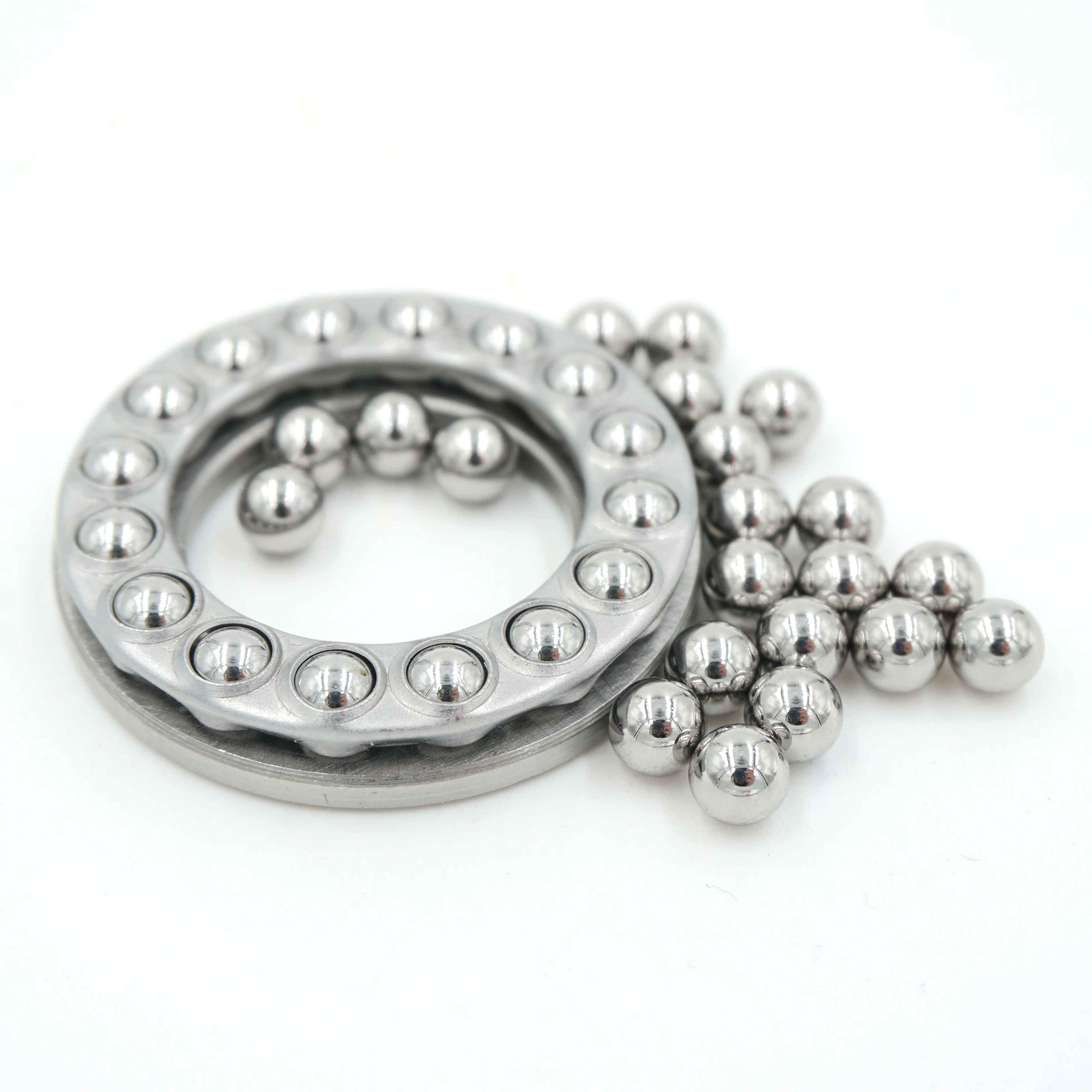
- Material: AISI 420C / UNS S42000
- Structure: martensitic stainless precision ball
- Diameter range: 1 mm – 50.8 mm
- Precision grades: G25 – G1000
- Hardness: HRC 50–55
- Corrosion behaviour: corrosion resistant, intended for mildly corrosive environments
- Specified applications: bearings in mild corrosive environments, food-processing machinery, pump valves, marine hardware
Order-level customization for 420C covers size, grade, packing method and quantity, passivation, light oil coating and custom marking. Monthly capacity for this grade is 20 tons. Standard sizes are often in stock with a 10–20 day lead time, while non-standard sizes run 25–45 days depending on quantity. Standard MOQ is low, and MOQ for custom alloy or size is negotiable. Inspection covers hardness, dimension, roundness, surface condition and a corrosion check. Recorded export markets for this grade include the United States, Germany, Italy, Japan, Korea, Australia, Mexico and the UAE, with free or paid samples and MTR documentation available.
440C Stainless Steel Ball — AISI 440C / UNS S44004
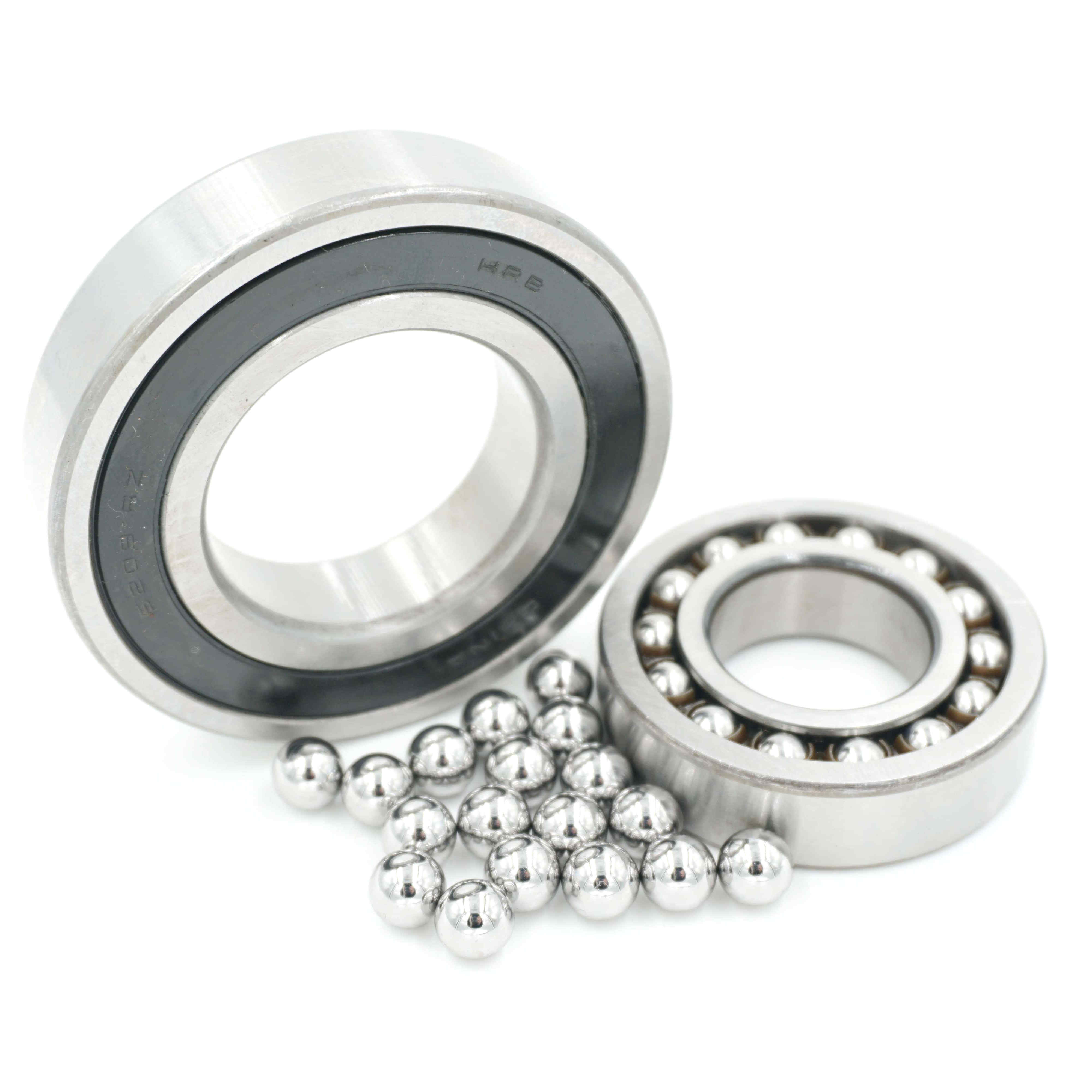
- Material: AISI 440C / UNS S44004
- Structure: martensitic stainless precision ball
- Diameter range: 0.5 mm – 50.8 mm
- Precision grades: G10 – G1000
- Hardness: HRC 58–62
- Chemistry control: maximum 0.07% phosphorus and sulfur
- Specified applications: high-precision bearings, surgical and dental instruments, aerospace actuators, chemical pumps, luxury watch movements
440C is produced on precision grinding and lapping lines, which supports high-volume, stable capacity. Customization covers size, grade, packing and quantity, passivation, special cleaning and custom marking. Standard sizes and materials are mostly in stock with a 7–20 day lead time, while non-standard requirements run 20–45 days. MOQ is low for standard sizes and negotiable for custom sizes or materials. Inspection is 100% automated machine-vision based and covers hardness, size, roundness and surface condition, with RoHS documentation available on request. Recorded export markets include the United States, Canada, Germany, Italy, France, the United Kingdom, Japan, Korea and Australia, supported by MTR/COA documentation and after-sales replacement for defective product.
Manufacturing and Quality Control Behind Both Grades
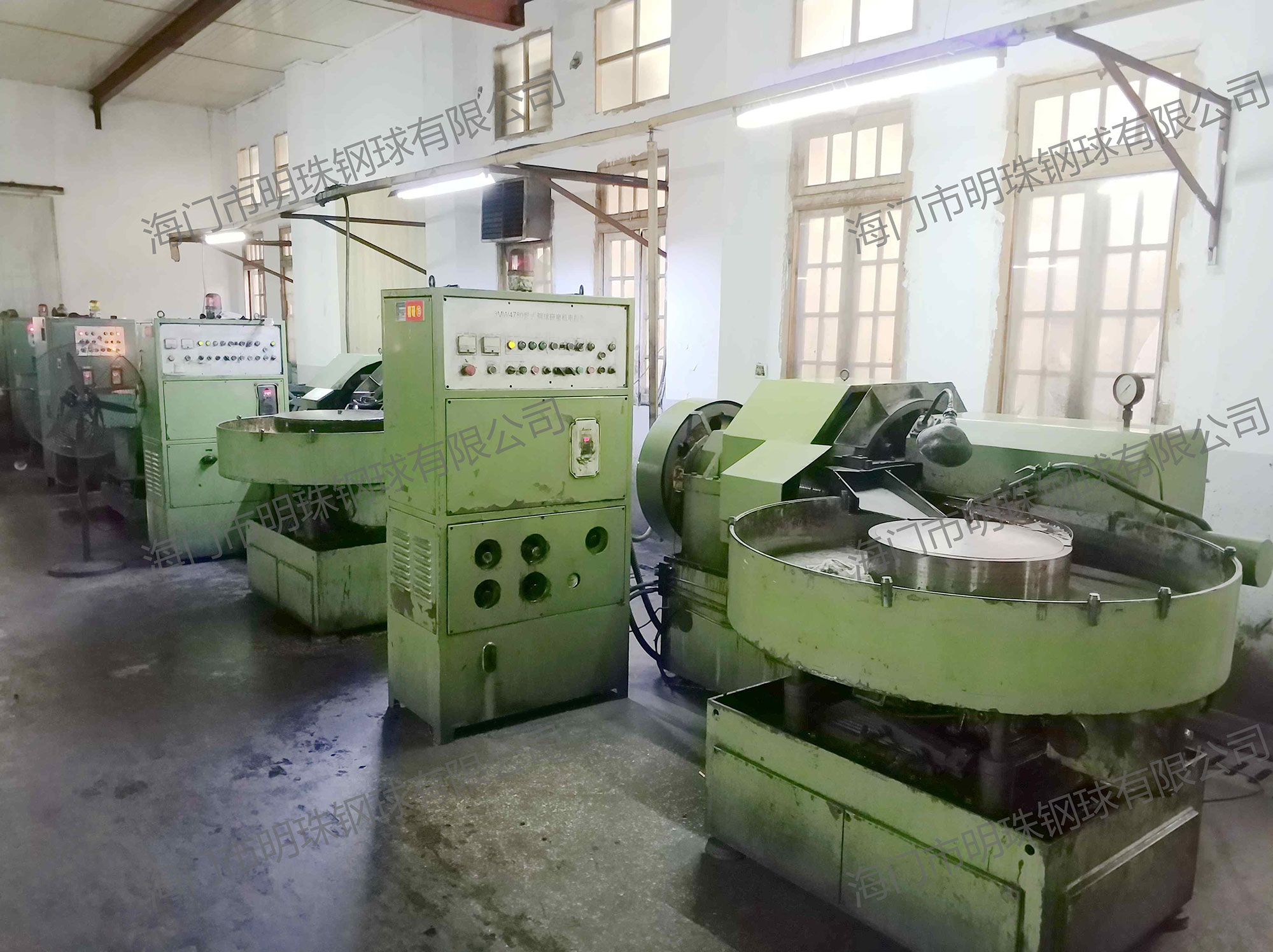
Haimen City Mingzhu Steel Ball Co., Ltd. operates a 7,500 m² production base in Haimen, Jiangsu Province, with 105 sets of processing equipment, eight engineers and a stable annual output of 2,500 tons. Approximately 25% of output is exported, with the United States, Germany and Brazil among the main markets, and products are manufactured in accordance with mainstream international standards including ISO, DIN, JIS and AISI. The company holds IATF 16949:2016 certification issued by URS under certificate number 130673/A/001/SM/En, covering the manufacture of bearing steel balls (excluding product design under Clause 8.3) and applying to the Asia-Pacific, North America, EU, Latin America and Middle East & Africa markets, valid through 13 December 2026.
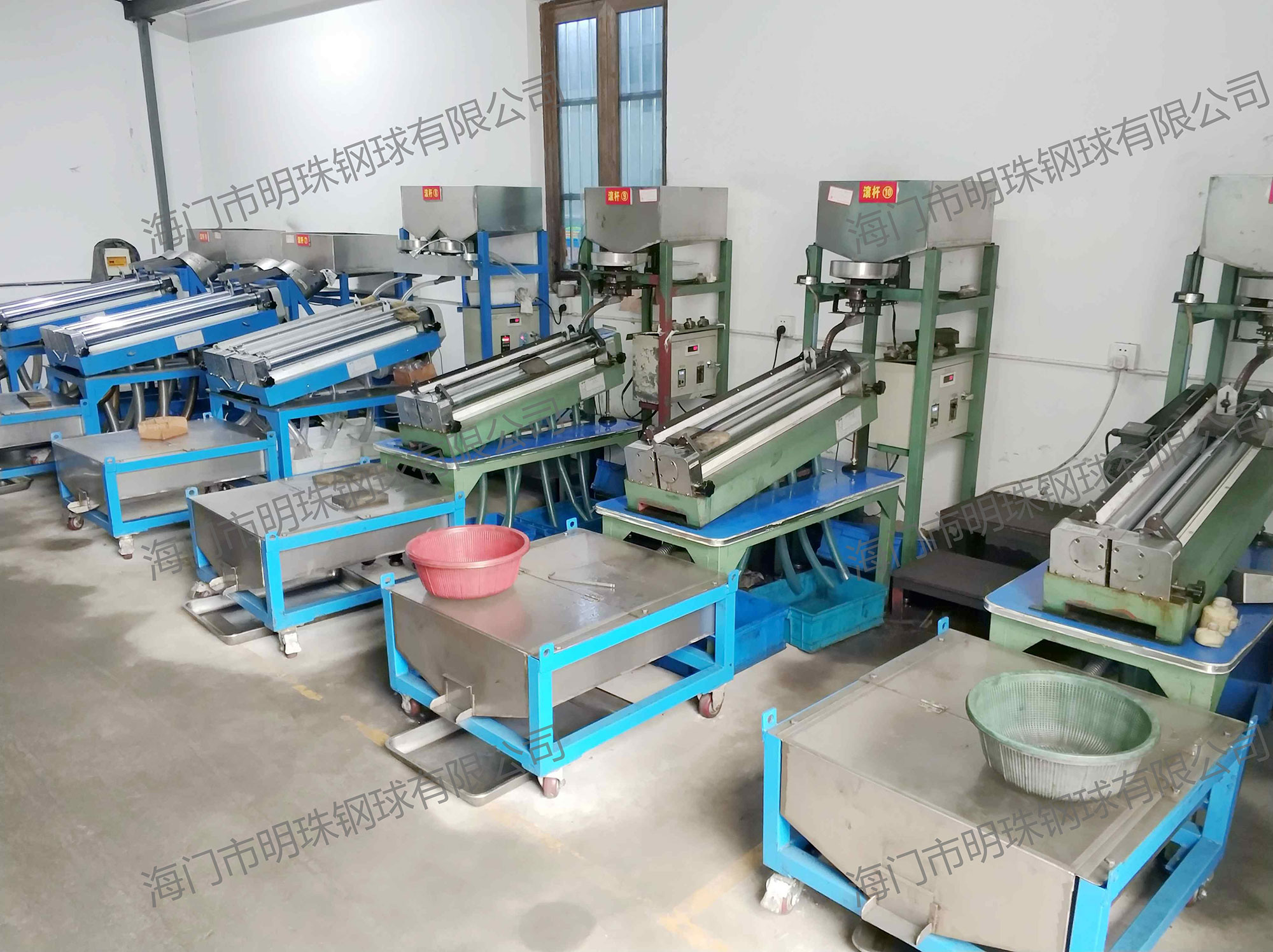
Quality control runs through the whole process rather than at final inspection only. Raw material is sampled and inspected before entering production; finished balls pass full automatic screening on roller bar sorting equipment and photoelectric surface defect detectors; and batch inspection adds hardness, roundness, microstructure, roughness and PMI or chemical verification. Documentation available with shipped orders includes material test reports (MTR), EN 10204 2.1/3.1 certificates and COA, with PPAP, FAI, NACE MR0175 and AMS certificates available on request.
Step-by-Step: Choosing Between 420C and 440C for a Valve or Pump Project
- Define the fluid and the corrosion severity. Mildly corrosive process fluid, wash-down duty or humid marine exposure points to 420C. Chemical processing, aggressive media or a corrosion-driven pump specification points to 440C. Where sour service is involved, state NACE MR0175 awareness at enquiry stage.
- Define load, contact stress and cycle count. Compare the seat requirement against HRC 50–55 for 420C and HRC 58–62 for 440C. Valve and fluid-control duty typically states a hardened martensitic requirement in the HRC 48–55 band, which 420C covers.
- Fix the precision grade before you fix the price. 420C covers G25–G1000; 440C covers G10–G1000. If the drawing calls for tighter sphericity and diameter variation than G25 provides, specify 440C.
- Check the size window against the seat or orifice. 420C runs from 1 mm to 50.8 mm; 440C starts at 0.5 mm and runs to 50.8 mm.
- Decide whether secondary machining is needed. Drilled, threaded or otherwise machined valve-trim balls are produced to drawing, with typical stock drilled sizes from 6 mm to 50.8 mm. Hole diameter, thread type, hole location, concentricity and thread class are controlled against the customer drawing. Softer materials machine more easily; hardened 440C requires specialized tooling and a longer lead time.
- Set the documentation level. Decide whether MTR, EN 10204 3.1, COA, PPAP, FAI, NACE MR0175 or AMS documentation is required, and confirm batch traceability requirements before production rather than after.
- Validate with samples. Standard catalog sizes are available in small quantities with samples; non-standard and CNC-machined items typically start at 50–500 pcs, with prototype quantities of 10–50 pcs workable for simple parts. Test hardness, surface finish and fit in the actual valve or pump assembly.
- Plan lead time and repeat supply. Standard 420C sizes are often in stock at 10–20 days and standard 440C sizes at 7–20 days. Non-standard orders run 20–45 days for 440C and 25–45 days for 420C. Across the catalogue, stock sizes ship in 5–10 days, standard production takes 15–30 days, and non-standard or special-alloy production takes 20–60 days.
Use Cases: Where Each Grade Is Specified
Ball valves and check valves in mildly corrosive service. 420C covers this duty where a hardened martensitic ball in the HRC 50–55 band and moderate corrosion resistance are the stated requirement — floating and trunnion-mounted ball valves, needle valves and check valves operating at 0–200 °C.
Ball valve trim and hydraulic or check valve components. Drilled balls form the flow path in specialty ball valves, diverter valves and metering valve trim, and the bleed path in hydraulic manifolds and pressure-bleed fittings. A specialty valve and hydraulic OEM running a 150,000-piece project over four years ordered CNC-drilled balls with hole position checked on a CMM, and reported that hole position accuracy eliminated rework at its own assembly line.
Chemical processing pumps. 440C is specified for chemical pumps, where HRC 58–62 hardness, availability down to G10 and a 0.07% maximum phosphorus and sulfur limit support consistent performance in demanding duty.
Marine hardware and food-processing machinery. 420C is specified for marine hardware and food-processing machinery, where moderate corrosion resistance combined with good hardness covers humid, wash-down and mildly corrosive exposure.
Valve and pump manufacturing programmes. A valve and pump manufacturer with an annual requirement of 900,000 pieces for corrosion-resistant valve trim and sanitary pump components has run 420C martensitic stainless balls for four years, recording a good balance of hardness and corrosion resistance, lower total cost versus 440C for moderate-duty service, and MTR plus material certificate documentation on each order.
Comparison Table: 420C vs 440C Stainless Steel Balls
| Parameter | 420C Stainless Steel Ball | 440C Stainless Steel Ball |
|---|---|---|
| Material grade | AISI 420C / UNS S42000 | AISI 440C / UNS S44004 |
| Structure | Martensitic stainless precision ball | Martensitic stainless precision ball |
| Diameter range | 1 mm – 50.8 mm | 0.5 mm – 50.8 mm |
| Precision grades | G25 – G1000 | G10 – G1000 |
| Hardness | HRC 50–55 | HRC 58–62 |
| Maximum P / S content | Not stated in the published product specification | 0.07% |
| Specified applications | Bearings in mild corrosive environments, food-processing machinery, pump valves, marine hardware | High-precision bearings, surgical and dental instruments, aerospace actuators, chemical pumps, luxury watch movements |
| Typical lead time (standard size) | Often in stock / 10–20 days | Mostly in stock / 7–20 days |
| Typical lead time (non-standard) | 25–45 days | 20–45 days |
| Monthly capacity | 20 tons | Precision grinding and lapping lines; high-volume stable capacity |
| MOQ | Low for standard sizes; negotiable for custom alloy or size | Low for standard sizes; negotiable for custom sizes or materials |
| Inspection scope | Hardness, dimension, roundness, surface, corrosion check | Hardness, size, roundness, surface; RoHS optional |
| Order documentation | MTR, technical advice, free or paid samples | MTR / COA, grade consultation, samples, after-sales replacement for defects |
FAQ: 420C vs 440C Stainless Steel Balls in Valve and Pump Service
1. Which standards and quality documents apply to 420C and 440C stainless steel balls?
Both grades are produced as martensitic stainless precision balls, manufactured to DIN 5401 and ISO 3290, the reference standards used for this material family. ISO 3290-1:2014 specifies requirements for finished steel balls for rolling bearings and defines grades from G3 to G700. Order documentation can include material test reports (MTR), EN 10204 2.1/3.1 certificates and COA, with PPAP, FAI, NACE MR0175 and AMS certificates available on request. Every batch passes 100% automated machine-vision sorting plus hardness, roundness, microstructure, roughness and PMI or chemical verification. Haimen City Mingzhu Steel Ball Co., Ltd. holds IATF 16949:2016 certification issued by URS under certificate number 130673/A/001/SM/En, covering the manufacture of bearing steel balls excluding product design under Clause 8.3, and applying to the Asia-Pacific, North America, EU, Latin America and Middle East & Africa markets.
2. Can a single supplier deliver both 420C and 440C in the sizes and grades that valve and pump assemblies need?
Yes. The 420C range covers 1 mm to 50.8 mm in grades G25–G1000 at HRC 50–55, and the 440C range covers 0.5 mm to 50.8 mm in grades G10–G1000 at HRC 58–62 with a maximum 0.07% phosphorus and sulfur content. Both can be customized in grade, passivation, coating, packing and marking, and both can be supplied as drilled, threaded or otherwise machined valve-trim parts to drawing, with typical stock drilled sizes from 6 mm to 50.8 mm and hole diameter, hole position, concentricity and thread class controlled against the customer drawing.
3. How should a buyer compare the cost of 420C and 440C?
Compare the two grades against the duty, not against each other on unit price alone. 420C is the economical martensitic stainless option, combining moderate corrosion resistance with good hardness for wash-down, humid and mildly corrosive duty. 440C carries a higher specification — HRC 58–62, grades down to G10, and a 0.07% maximum phosphorus and sulfur limit — and is produced on precision grinding and lapping lines. A valve and pump manufacturer supplying 900,000 pieces per year recorded lower total cost with 420C versus 440C for moderate-duty service. Specifying 440C where 420C covers the duty adds cost without adding service life; specifying 420C where a chemical pump or a high-load seat demands 440C risks premature seat wear and earlier trim replacement.
4. Can I validate 420C and 440C balls with samples before committing to production?
Samples are available for both grades. Standard catalog sizes have a low MOQ and can be ordered by the bag or piece; non-standard and CNC-machined items typically start at 50–500 pcs, and prototype quantities of 10–50 pcs are workable for simple parts. MOQ is negotiable for first-time cooperation and NDA projects. For valve and pump work, validate hardness, roundness, surface condition and fit in the actual seat or trim assembly before placing the production order. If the application is sour service, confirm NACE MR0175 documentation requirements at the same stage.
5. What lead times apply, and how do I start an order?
Standard 420C sizes are often in stock with a 10–20 day lead time, and non-standard 420C orders run 25–45 days. Standard 440C sizes and materials are mostly in stock with a 7–20 day lead time, and non-standard 440C orders run 20–45 days. Across the catalogue, stock sizes ship in 5–10 days, standard production takes 15–30 days, and non-standard or special-alloy production takes 20–60 days, with rolling stock and backup tooling maintained for repeat supply and monthly production status updates. To start, send the drawing or specification — material grade, diameter, precision grade, quantity and any documentation requirement — for a quotation and sample plan. The full product and capability range is summarized in the Haimen Mingzhu steel ball brochure (PDF), and enquiries can go directly to info@hmmzsteelball.com or +86 13912237934.
Conclusion: Match the Grade to the Service, Not to the Label
420C and 440C stainless steel balls solve different problems in valve and pump service. 420C, at HRC 50–55 in grades G25–G1000 from 1 mm to 50.8 mm, is the economical martensitic stainless choice for pump valves, marine hardware, food-processing machinery and mildly corrosive duty. 440C, at HRC 58–62 in grades G10–G1000 from 0.5 mm to 50.8 mm with a maximum 0.07% phosphorus and sulfur content, is the higher-hardness, higher-precision choice for chemical processing pumps, high-precision bearings and heavier seat loads. Decide on the fluid, the load, the required precision grade and the documentation level — then validate with a sample in the real assembly before the production order.
Request a 420C or 440C sample and quotation
Send your drawing or specification — material grade, diameter range, precision grade, quantity and documentation requirements — and Haimen City Mingzhu Steel Ball Co., Ltd. will confirm grade availability, sample plan and lead time. Contact: info@hmmzsteelball.com | WhatsApp +86 13912237934 | www.hmmzsteelball.com. Download the product brochure (PDF) for the full steel ball range.