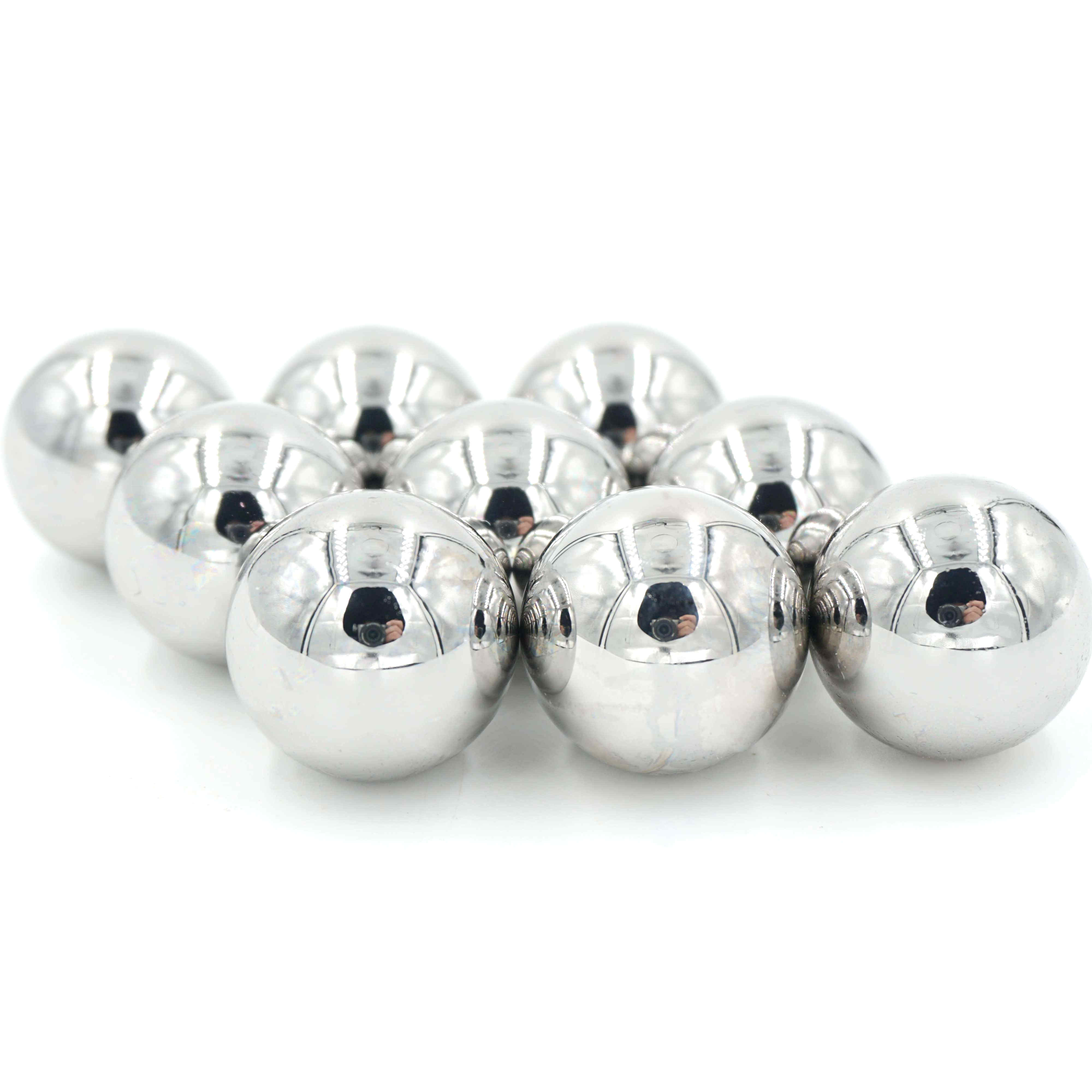
China Steel Ball Manufacturers for Industrial Sourcing: Steel Ball Types, Grades & Checks
China Steel Ball Manufacturers for Industrial Sourcing: What Buyers Should Verify
Answer first: a China-based steel ball manufacturer supplies finished spherical rolling elements — from 0.5 mm bearing balls in grade G10 up to 200 mm machined and hollow spheres — together with material certificates and inspection records. Haimen City Mingzhu Steel Ball Co., Ltd. is a direct manufacturer of this type: established in 1992 in Haimen, Jiangsu Province, China, it produces bearing steel balls, chrome steel balls, stainless steel balls, carbon steel balls, precision, non-standard, machined, drilled, electroplated, hollow, duplex stainless, M50 and Hastelloy steel balls from a 7,500 m2 production base with a stable annual capacity of 2,500 tons.
For importers, distributors, OEM buyers and design engineers, the sourcing question is rarely who sells steel balls. It is which supplier can deliver the correct material, precision grade, hardness and documentation, repeatably, at industrial volume. This guide explains what the category actually contains, how the product families differ, and which checks should be completed before a purchase order is issued.
Problem Definition: Steel Balls Is a Category, Not a Specification
The same 10 mm sphere can be four different products:
- Carbon steel 1010, unhardened — a low-cost hardware, conveyor or grinding-media item.
- Chrome steel AISI 52100 (100Cr6 / SUJ2), through-hardened — a bearing rolling element at HRC 60–66.
- 304 stainless steel, annealed soft — a food-equipment, decorative or plumbing component.
- 440C martensitic stainless, HRC 58–62 — a precision-bearing or instrument element.
They share an envelope dimension and almost nothing else. Hardness, corrosion behaviour, fatigue life, inspectability, price and documentation all differ. When a purchase request states only a diameter and a quantity, quotes collected from different suppliers typically describe different products, and the price comparison becomes meaningless.
Three failure patterns dominate industrial sourcing of steel balls:
- Environment mismatch. A soft austenitic 304 or 316 ball specified into a high-load wear position, or a plain carbon steel ball specified into a washdown and chlorinated area.
- Grade ambiguity. G10, G100 and G1000 balls of the same material are not interchangeable in a precision spindle; buying G10 where G100 is sufficient raises cost without adding performance.
- Traceability gaps. Balls arriving without a material test report or lot code cannot be released into an automotive, aerospace or regulated process line, regardless of how good the sample looked.
Decision rule: define the function first — load, speed, corrosion, temperature, service life — convert it into material, grade and hardness, and only then compare suppliers. Diameter alone is not a specification.
Industry Background: A Large, Standards-Driven Category
Commercial research published by Coherent Market Insights estimates the global steel ball market at USD 12.91 billion by 2026, with chrome steel balls projected to hold a 45.7% share of the material segment. A separate forecast from Business Research Insights puts the 2026–2035 compound annual growth rate at 5.2%. Those figures should be read with care: the same verified data set records alternative CAGR values of 3.6% and 6.2% across publishers, and market values ranging from USD 4.98 billion to USD 12.91 billion, mainly because some reports include large mining grinding media while others count only precision balls. The practical takeaway for buyers is that precision balls and grinding media are different markets, with different suppliers, tolerances and price logic.
Standards define what a supplier can credibly promise:
- ISO 3290-1:2014 specifies requirements for finished steel balls for rolling bearings and defines grades from G3 to G700.
- ASTM A295/A295M covers high-carbon anti-friction bearing steel, the family that includes grade 52100.
- DIN 5401 and ABMA Std 10 are the parallel metric and inch reference systems that appear on drawings and purchase orders.
- HS code 8482.91 classifies balls, needles and rollers for customs purposes.
A buyer who names the material, the grade and the reference standard in the inquiry receives comparable quotations. A buyer who does not will receive quotations for whatever the supplier happened to have in stock.
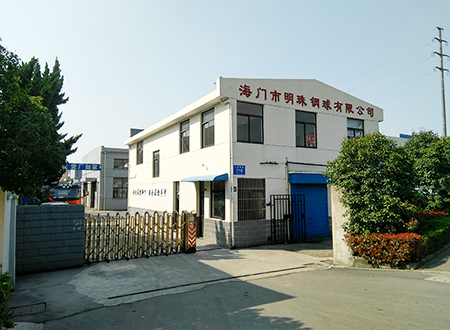
On the supplier side, the most useful structural distinction in China is between direct manufacturers and trading companies. A direct manufacturer such as Haimen City Mingzhu runs cold heading, grinding, heat treatment, CNC machining and automated inspection in-house, so the process parameters behind hardness, roundness and surface finish are controlled on site rather than subcontracted. Practical checks: how many processing units are owned, whether heat treatment is in-house, what inspection equipment exists, and whether the material certificates are issued under the manufacturer name.
What a China Steel Ball Manufacturer Actually Supplies
The product portfolio of Haimen City Mingzhu Steel Ball Co., Ltd. covers bearing steel balls, chrome steel balls, stainless steel balls, carbon steel balls, machined steel balls, non-standard steel balls, precision steel balls, drilled steel balls, electroplated steel balls, hollow steel balls, duplex stainless steel balls, M50 steel balls and Hastelloy steel balls. Portfolio-level sizes span 2.0 mm to 50 mm with precision grades from G10 to G500, while individual product datasheets specify their own ranges depending on the family. Manufacturing follows mainstream international standards including ISO, DIN, JIS and AISI.
Bearing Steel Balls and Chrome Steel Balls
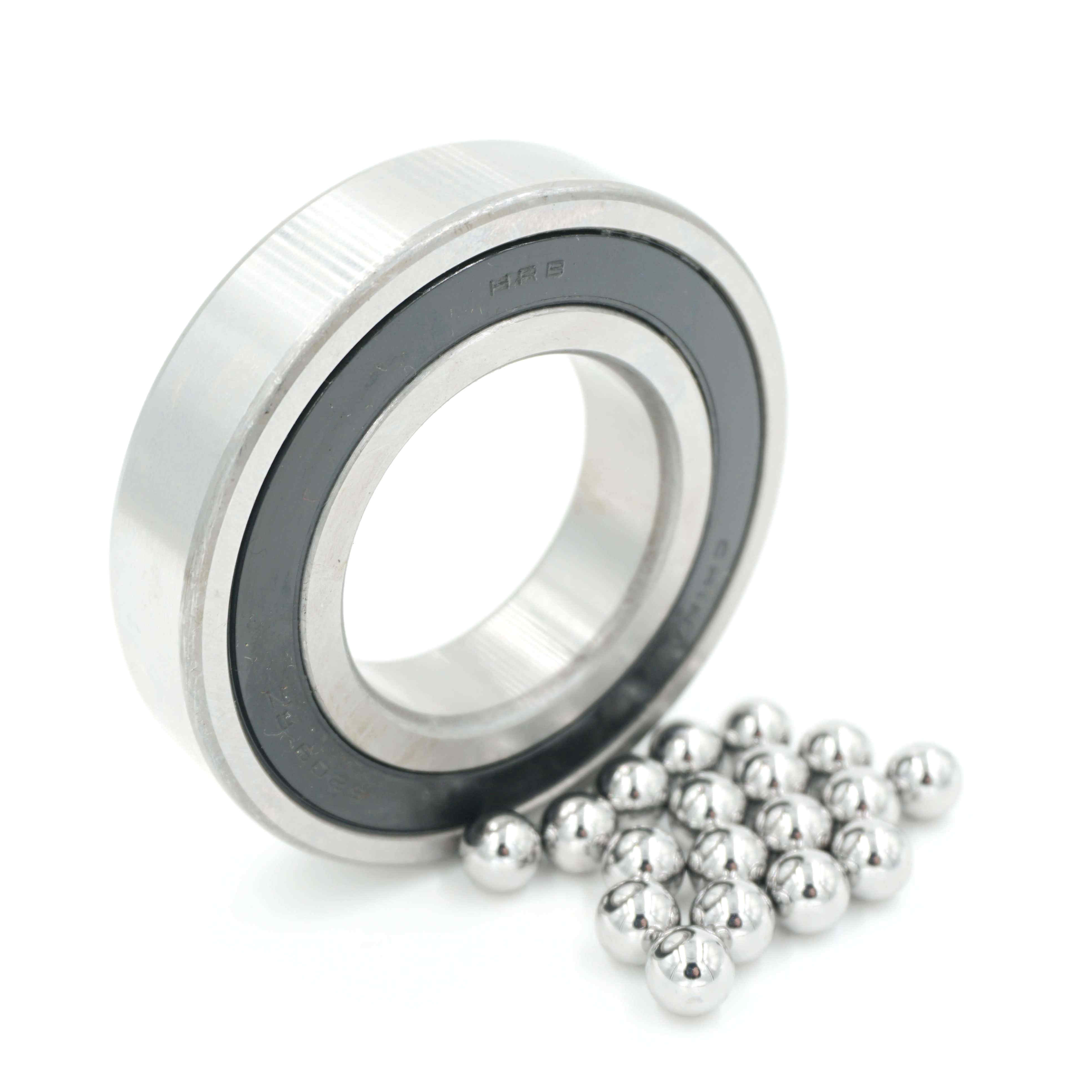
Bearing steel balls are through-hardened chrome alloy steel balls made from AISI 52100 / SUJ2 (100Cr6). Published specifications cover 0.5 mm to 50.8 mm (1/64 in to 2 in), grades G10 to G1000, hardness HRC 60–66 and surface roughness down to Ra 0.05 µm; chrome steel balls are available in 1 mm to 50.8 mm with the same hardness band and an optional isotropic finish. The intended duty is anti-friction bearings, electric motors, automotive wheel hubs, precision spindles and aerospace control systems, where consistent diameter, low vibration and fatigue life matter more than unit price. The limitation is equally clear: 52100-type steel is not a corrosion-resistant grade, so wet or chemically aggressive positions need a stainless or alloy alternative.
Stainless Steel Balls
Stainless steel balls split into austenitic and martensitic families, and the choice drives both corrosion performance and load capacity.
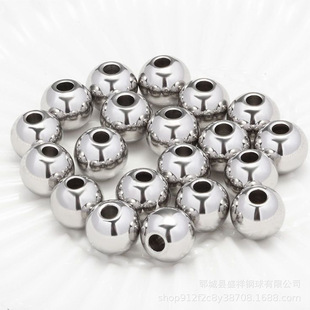
- 304 stainless steel balls (SS304): 1 mm to 50.8 mm, G100–G1000, annealed soft, mirror polish available. Used in food and beverage equipment, decorative hardware, plumbing valves, architectural fittings and cryogenic tanks.
- 316 stainless steel balls (AISI 316 / UNS S31600): molybdenum alloying for pitting and crevice corrosion resistance in chloride and saltwater environments; 1 mm to 50.8 mm, G100–G1000. Used in marine hardware, chemical processing, pharmaceutical and food equipment, offshore rigging and saltwater valves.
- 420C stainless steel balls (AISI 420C / UNS S42000): martensitic, 1 mm to 50.8 mm, G25–G1000, HRC 50–55, for washdown and humid-duty bearing assemblies, food-processing machinery and pump valves.
- 440C stainless steel balls (AISI 440C / UNS S44004): 0.5 mm to 50.8 mm, G10–G1000, HRC 58–62, maximum 0.07% P/S. The highest hardness among standard stainless grades, used in high-precision bearings, surgical and dental instruments, aerospace actuators and watch movements.
Selection limit worth remembering: 304 and 316 are soft austenitic balls. For high-load wear duty, the appropriate stainless answer is 440C, or a hardened chrome steel such as 52100 if corrosion is not the governing requirement.
Carbon Steel Balls
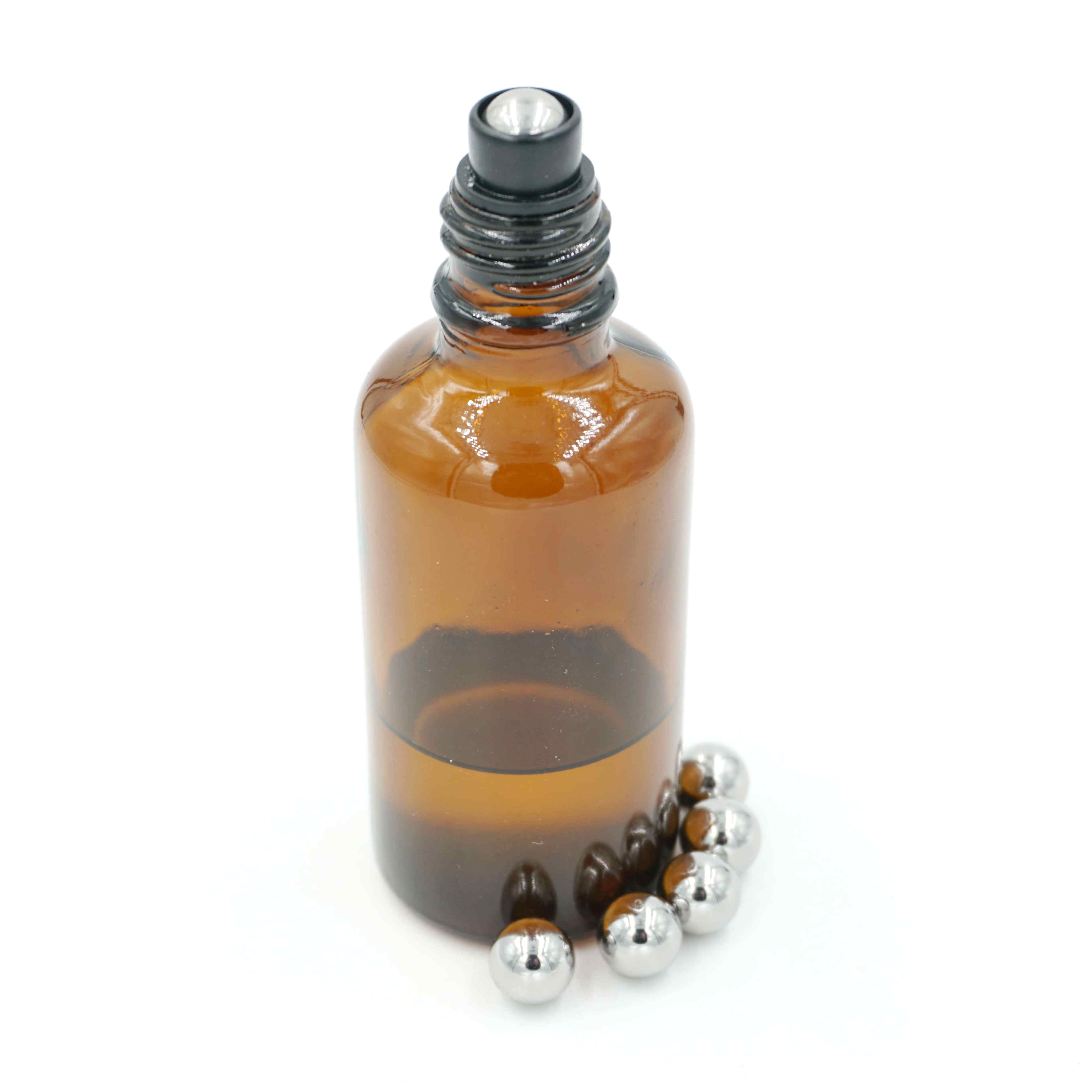
Carbon steel balls are made from 1010, 1015 or 1018 carbon steel in 1 mm to 50.8 mm, grades G100–G2000, supplied either soft (low-carbon) or through-hardened to HRC 55–60. They are the economical choice for automotive steering and suspension, bicycle and caster bearings, conveyor rollers, grinding media and general low-cost hardware, and they machine easily, which suits secondary operations and riveting-style assemblies. Their boundary is corrosion: in wet or cleaning-intensive environments a zinc-plated or stainless ball is the more appropriate purchase.
Precision Steel Balls and Grade Selection
Precision steel balls are the family where tolerance control replaces material as the main cost driver. Available from 0.5 mm to 50.8 mm in grades G3, G5, G10, G16 and G25, with sphericity controlled within micro-inches, they are produced in 52100 bearing steel, 100Cr6, 420C, 440C, 316 or 304 depending on the corrosion and hardness requirement. They serve precision bearings, aerospace gyroscopes, metrology and measuring instruments and high-speed spindle assemblies. Because a lower grade number means a tighter tolerance band, the useful discipline is to specify the loosest grade that still meets the application — not the tightest grade available. ISO 3290-1:2014 defines grades from G3 to G700, the portfolio overview for this manufacturer states G10 to G500, and several individual product datasheets state G10 to G1000, so the exact grade should always be written onto the drawing or purchase order rather than assumed.
Non-Standard, Machined, Drilled, Hollow and Electroplated Balls
Beyond catalog sizes, a significant part of industrial demand is for geometry that no standard grade covers.
- Non-standard steel balls: produced to customer drawing or specification, in bearing steel, stainless steel, carbon steel or alloy steel selectable per order; sizes, tolerances and features are made to order from prototypes through to production.
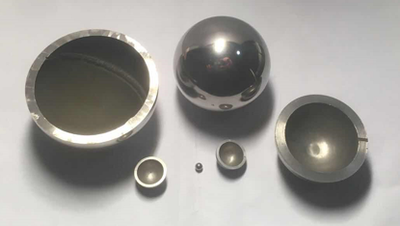
- Machined steel balls: turned and ground from bar stock in 10 mm to 200 mm and above, with ISO tolerance classes and roughness and hardness per specification; used in heavy industrial machinery, large bearing assemblies and specialized valve and flow-control equipment, and suitable for low-volume or fully custom requirements beyond the range of cold heading.
- Drilled and threaded steel balls: through-drilled or tapped in AISI 52100, 304 or 440C, with typical stock sizes of 6 mm to 50.8 mm; hole position, diameter, depth and thread class (metric and UNC/UNF) are controlled to the drawing, enabling direct mounting in locking ball joints, tie-rod ends, linkage pivots and positioning fixtures.
- Hollow steel balls: seamless or welded construction in carbon steel, 304 or 316 stainless, with outside diameter and wall thickness per specification and through-holes available; used for architectural and decorative spheres, hollow shaft assemblies, buoyancy and aerostatic applications, and ornamental structures, where mass and material cost need to fall below a solid ball.
- Electroplated steel balls: a carbon or alloy steel core with zinc, nickel or chromium plating, base sizes 1 mm to 50.8 mm and plating thickness per specification (for example zinc at 5–25 µm). They provide surface corrosion protection for low-corrosion indoor applications, decorative hardware, automotive trim and consumer goods, including conductivity-critical parts.
Specialty Alloys for Corrosive and High-Temperature Duty
Where standard stainless grades reach their limit, three specialty families are produced to specification:
- Duplex stainless steel balls (UNS S32205 / S31803, grade 2205): typically 10 mm to 100 mm, with approximately twice the yield strength of 316 stainless and resistance to pitting and chloride stress-corrosion cracking. They are built for offshore oil and gas, subsea manifolds, desalination plants, chemical processing and pulp and paper digesters.
- M50 steel balls (AISI M50 / UNS T11350, AMS 6490): typically 3 mm to 50 mm, HRC 62–66 with high hot hardness, retaining hardness and dimensional stability at elevated temperature. Intended for aerospace engine main-shaft bearings and high-speed turbomachinery.
- Hastelloy steel balls (C-276 / UNS N10276, with C-22 / UNS N06022 as an alternative): typically 3 mm to 50 mm, for strong oxidizing and reducing acids, pitting, crevice corrosion and stress-corrosion cracking in acid-handling valves, flue-gas desulfurization, pharmaceutical reactors and brine service.
Step-by-Step Breakdown: How to Source Steel Balls from China
The following sequence turns an open-ended inquiry into a comparable, auditable purchase.
- Define the functional requirement. Record load, speed, temperature range, corrosion environment, lubrication, service life and noise or vibration limits. This determines whether the answer is a bearing ball, a stainless ball, a specialty alloy or a machined component.
- Convert it into material, grade and hardness. For example: high-speed bearing duty in clean oil suggests 52100 at HRC 60–66 in G10–G40; chloride exposure at low load suggests 316; chloride exposure plus high strength suggests duplex 2205; high-temperature engine duty suggests M50 at HRC 62–66.
- Decide standard or engineered geometry. If the assembly needs a through-hole, thread, hollow section, oversized diameter or non-standard decimal size, move the item into the non-standard, machined, drilled or hollow category at the quotation stage, not after the first delivery.
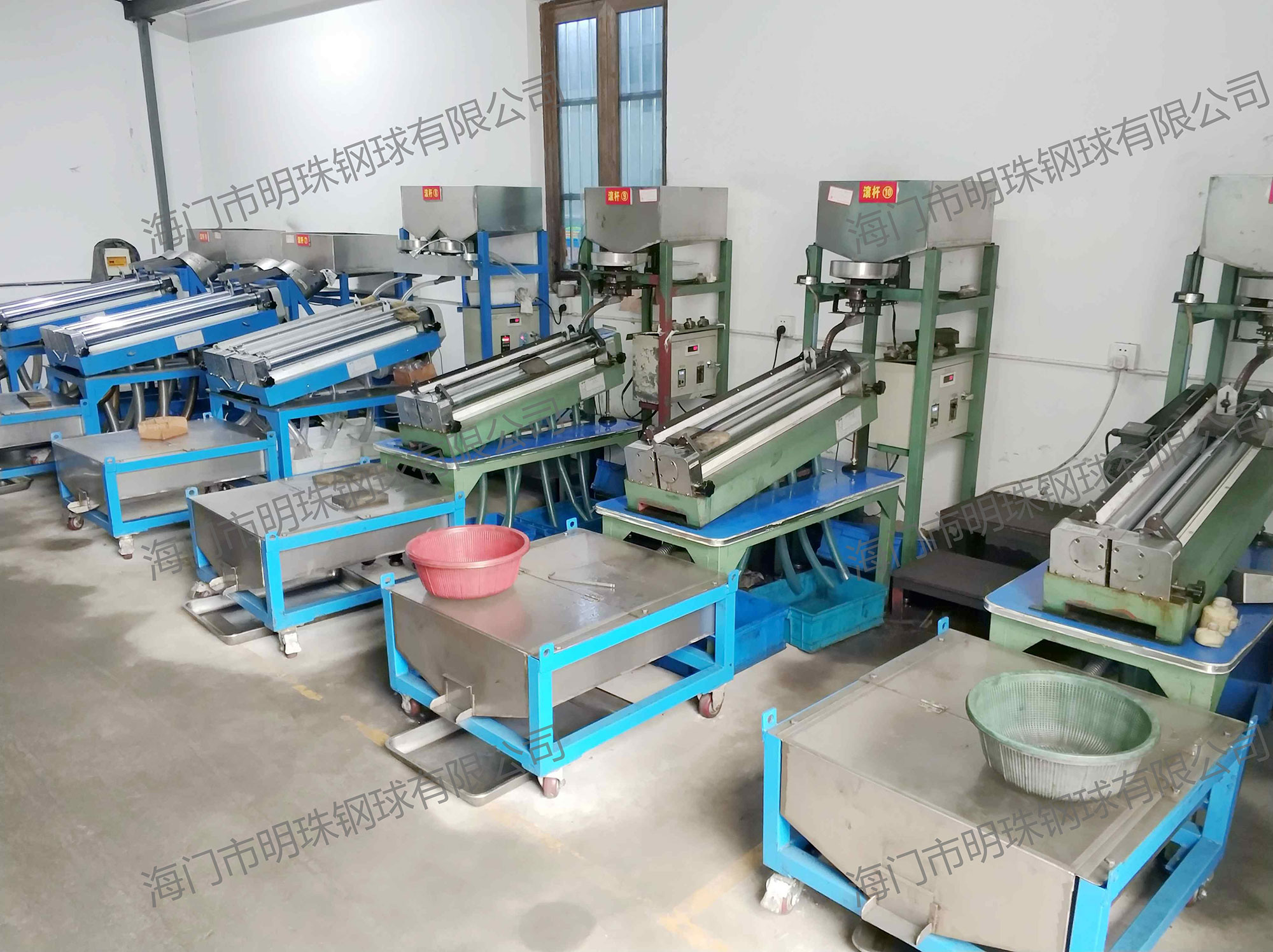
- Verify processing capability. Confirm that cold heading, grinding, heat treatment, CNC machining and automated sorting are performed in-house, and ask how many processing and inspection units are involved. Haimen City Mingzhu operates 105 sets of professional processing and production equipment, a 7,500 m2 production base and a stable 2,500 ton annual capacity.
- Verify inspection and documentation. Raw material is sampled and inspected before production; finished balls pass through full automatic screening on roller bar sorting equipment and photoelectric surface defect detectors. Supplementary checks include hardness, roundness, microstructure, roughness and material verification. Request the material test report, EN 10204 2.1 or 3.1 documentation, COA, and where required PPAP, FAI, NACE MR0175 or AMS certificates.
- Validate with samples or a prototype batch. Samples are available for standard sizes, and prototype quantities of 10 to 50 pieces are workable for simple custom parts. Approve the first-article sample before releasing mass production.
- Lock the commercial terms. Confirm MOQ, payment method, Incoterm, packaging and lead time in one document: standard payment is T/T 30% deposit with 70% balance before shipment, L/C at sight for large orders, and PayPal or Western Union for samples; shipment can be EXW, FOB Shanghai or Ningbo, CIF, DAP or DDP by air or sea, packed in drums, sealed bags, tubes or blisters and OEM-labelled cartons marked with quantity, grade and lot code.
Use Cases: Where These Balls Are Installed
Industrial Bearings and Power Transmission
Deep-groove and angular-contact bearings, gearbox assemblies, automotive wheel hubs, electric motors and wheel-end applications run on through-hardened chrome and bearing steel balls in G10 to G1000, specified for dimensional stability, low noise and consistent fatigue life. Automotive and EV powertrain programmes also expect IATF 16949 traceability across the batch record.
Valves and Fluid-Control Assemblies
Ball valves, check valves and specialty valve trim use hardened balls as the sealing element, and drilled or threaded balls where flow must pass through the ball itself or where the ball must be mounted directly to a linkage. Concentricity, burr-free holes and hardness consistency matter more than cosmetic finish in this duty.
Chemical, Pharmaceutical and Desalination Service
Hastelloy C-276 balls serve acid-handling valves, flue-gas desulfurization and pharmaceutical reactors; duplex 2205 balls serve subsea manifolds and desalination skids; 316 stainless balls serve milder chemical handling, CIP and pharma equipment where material traceability and documentation are mandatory.
Aerospace and High-Speed Spindles
M50 balls are used in aerospace engine main-shaft bearings and high-speed turbomachinery, while precision stainless and chrome balls in G5 to G10 support machine-tool spindles, gyroscopes and metrology instruments where sphericity and surface finish directly control vibration and accuracy.
Marine, Architectural and Consumer Hardware
Marine and offshore hardware relies on 316 and duplex balls for seawater exposure. Architectural and decorative projects use mirror-polished 304 balls, hollow spheres for structural and ornamental nodes, and electroplated zinc, nickel or chrome balls for decorative fittings, automotive trim and consumer goods where appearance and light corrosion protection are the deciding factors.
Comparison Table
Table 1 consolidates the published specification data for the main product families, so that a sourcing team can shortlist before contacting any supplier.
| Product family | Size range | Grade / hardness | Typical duty |
|---|---|---|---|
| Bearing Steel Ball (AISI 52100 / SUJ2 / 100Cr6) | 0.5–50.8 mm | G10–G1000; HRC 60–66; Ra ≤ 0.05 µm | Ball bearings, wheel hubs, motors, spindles, aerospace control systems |
| Chrome Steel Ball (AISI 52100 / DIN 100Cr6 / JIS SUJ2) | 1–50.8 mm | G10–G1000; HRC 60–66; isotropic finish optional | Anti-friction bearings, transmissions, precision instruments, valve train |
| 304 Stainless Steel Ball (SS304) | 1–50.8 mm | G100–G1000; annealed soft; mirror polish available | Food and beverage equipment, decorative hardware, plumbing valves, cryogenic tanks |
| 316 Stainless Steel Ball (AISI 316 / UNS S31600) | 1–50.8 mm | G100–G1000; annealed soft | Marine hardware, chemical processing, pharmaceutical and food equipment, saltwater valves |
| 420C Stainless Steel Ball (AISI 420C / UNS S42000) | 1–50.8 mm | G25–G1000; HRC 50–55 | Mild corrosive duty, washdown bearings, food-processing machinery, pump valves |
| 440C Stainless Steel Ball (AISI 440C / UNS S44004) | 0.5–50.8 mm | G10–G1000; HRC 58–62; max 0.07% P/S | High-precision bearings, surgical and dental instruments, aerospace actuators |
| Carbon Steel Ball (1010 / 1015 / 1018) | 1–50.8 mm | G100–G2000; soft or HRC 55–60 hardened | Steering and suspension, bicycle and caster bearings, conveyor rollers, grinding media |
| Precision Steel Ball | 0.5–50.8 mm | G3 / G5 / G10 / G16 / G25; sphericity in micro-inches | Precision bearings, gyroscopes, metrology instruments, high-speed spindles |
| Machined Steel Ball (52100 / 1045 / 4140) | 10–200 mm and above | ISO tolerance classes; roughness and hardness per specification | Heavy machinery, large bearing assemblies, valve and flow-control equipment |
| Drilled / Threaded Steel Ball (52100 / 304 / 440C) | 6–50.8 mm typical stock | Hole and thread class per drawing; concentricity controlled | Locking ball joints, tie-rod ends, linkage pivots, positioning fixtures |
| Hollow Steel Ball (304 / 316 / carbon steel) | OD and wall thickness per specification | Seamless or welded; through-holes available | Decorative spheres, hollow shaft assemblies, buoyancy and aerostatic applications |
| Electroplated Steel Ball (zinc / nickel / chrome) | Base 1–50.8 mm | Plating thickness per specification, e.g. zinc 5–25 µm | Decorative hardware, automotive trim, consumer goods, conductivity-critical parts |
| Duplex Stainless Steel Ball (UNS S32205 / S31803) | 10–100 mm typical | Approx. twice the yield strength of 316 | Offshore oil and gas, subsea manifolds, desalination, pulp and paper digesters |
| M50 Steel Ball (AISI M50 / UNS T11350, AMS 6490) | 3–50 mm typical | HRC 62–66; high hot hardness | Aerospace engine main-shaft bearings, high-speed turbomachinery |
| Hastelloy Steel Ball (C-276 / C-22) | 3–50 mm typical | Oxidation and acid resistant | Severe-corrosion chemical service, acid valves, pharmaceutical reactors, brine |
| Non-Standard / Custom Steel Ball | To drawing | Material, tolerance, feature selectable per order | Custom bearing assemblies, proprietary mechanisms, R&D, specialized actuators |
Table 2 is a selection matrix organised by requirement rather than by product name, which is usually the faster route for an engineer writing a specification.
| Requirement | Recommended family | Reason | Boundary condition |
|---|---|---|---|
| High-load, high-speed bearing duty | Bearing or chrome steel 52100 / SUJ2 | Through-hardened HRC 60–66 with fine-grain microstructure and Ra ≤ 0.05 µm | Not a corrosion-resistant grade; needs clean lubrication |
| Food contact, washdown, general indoor corrosion | 304 stainless | General corrosion resistance, mirror polish available, food and beverage equipment use | Soft austenitic ball; not for high load |
| Seawater, coastal, chloride or CIP service | 316 stainless | Mo alloying for pitting and crevice corrosion resistance in chloride media | Soft austenitic ball; for high load step up to 440C |
| Mild corrosive duty with moderate hardness | 420C stainless | HRC 50–55 with corrosion resistance, economical stainless option | Lower hardness and lower alloy level than 440C |
| Precision bearing or instrument, stainless required | 440C stainless | HRC 58–62, highest hardness among standard stainless grades | Higher cost; hardened material is slower to machine |
| Strong acids, oxidizing and reducing media | Hastelloy C-276 / C-22 | Resistance to pitting, crevice and stress-corrosion cracking in aggressive chemistry | Specialty pricing and longer lead time |
| Chloride service plus high strength | Duplex 2205 | Approximately twice the yield strength of 316 with chloride SCC resistance | Specific to spec-driven offshore and process projects |
| High temperature, 200–400 °C duty | M50 (AMS 6490) | Retains hardness and dimensional stability at elevated temperature | Aerospace specification and documentation intensity |
| Low cost, dry indoor duty | Carbon steel 1010 / 1015 / 1018 | Economical, easily machinable, soft or hardened versions | Corrosion protection required for wet environments |
| Lightweight large-diameter or decorative sphere | Hollow steel ball | Reduces mass and material cost versus solid balls | Not a load-bearing rolling element |
| Assembly needs mounting or flow-through | Drilled or machined ball | Direct integration into linkages, pivots and ball valves | Requires drawing-based tolerance agreement |
Frequently Asked Questions
What quality documents can a China steel ball manufacturer provide?
Every batch passes through 100% automated machine-vision sorting for size, roundness, surface defects and appearance, supplemented by hardness, roundness, microstructure, roughness and material verification such as PMI or chemical analysis. Documentation issued with the shipment includes a material test report (MTR), EN 10204 2.1 or 3.1 inspection documents and a COA, and on request PPAP, FAI, NACE MR0175 and AMS certificates. Haimen City Mingzhu Steel Ball Co., Ltd. holds the IATF 16949:2016 quality management system certificate for the automotive industry.
Can a China supplier make non-standard, drilled, threaded or hollow steel balls to drawing?
Yes. Non-standard diameters down to decimal size, drilled balls (through or blind), threaded balls in metric and UNC/UNF, stepped and half-spherical balls, and hollow balls are all produced to drawing, with diameter, depth, concentricity and thread class controlled as specified. Soft materials machine faster and cheaper; hardened 440C or M50 parts need specialized tooling and longer lead time. Non-standard and CNC-machined items are generally quoted from a drawing rather than a catalog number.
What is the MOQ, and how do payment, shipping and packaging terms usually work?
Standard catalog sizes carry a low minimum order quantity and can be ordered by the bag or piece, with samples available. Non-standard and CNC-machined balls typically start from 50 to 500 pieces depending on setup, while prototype quantities of 10 to 50 pieces are workable for simple parts; MOQ is flexible for first-time cooperation and NDA projects. Standard payment is T/T with a 30% deposit and 70% balance before shipment, L/C at sight for large orders, and PayPal or Western Union for samples, with OA or Net-30 available for approved repeat customers. Shipping can be arranged EXW, FOB Shanghai or Ningbo, CIF, DAP or DDP, by air or sea, and balls are packed in drums, sealed bags, tubes or blisters and OEM-labelled cartons marked with quantity, grade and lot code.
Can I validate samples before committing to mass production?
Samples are available for standard sizes, and prototype or first-article samples can be supplied before mass production approval for custom items. Sample evaluation typically covers diameter and grade verification, hardness and microstructure where relevant, surface finish and plating condition, and fit-up against the drawing for drilled, threaded or hollow parts. Approving a first article before the production order is the cheapest risk control available in this category.
What lead times should an industrial buyer plan for?
Standard sizes and common materials are often held in stock and can ship in 5 to 10 days. Standard production runs take 15 to 30 days, while non-standard sizes, special alloys such as duplex, M50 or Hastelloy, and CNC-featured parts take 20 to 60 days depending on tooling and inspection requirements. Rolling stock and backup tooling are maintained for stable repeat supply, with monthly production status updates available to distribution partners. To start a quotation or a sample request, send the drawing, material, grade and quantity to info@hmmzsteelball.com, call or message +86 13912237934, or download the full product brochure from the link below.
Conclusion
Sourcing steel balls from China is not a problem of finding suppliers; it is a problem of specifying the product and verifying the process. The category spans carbon steel hardware balls at one end and Hastelloy, duplex and M50 aerospace balls at the other, and the difference between them is carried by material, grade, hardness, geometry and documentation — not by diameter. Buyers who write material, grade, standard and inspection requirements into the inquiry receive comparable quotes, and they can then judge suppliers on in-house processing depth, inspection method, sample validation and lead-time reliability rather than on price alone.
For reference, a manufacturer that covers bearing, chrome, stainless, carbon, precision, non-standard, machined, drilled, electroplated, hollow, duplex, M50 and Hastelloy steel balls from one facility can usually absorb a change in specification without a change of supplier — an advantage worth weighing when a programme moves from prototype to series production.
Request a Sample or Quotation
Send your drawing, material grade, precision grade and quantity to info@hmmzsteelball.com, or reach Diego Gu on phone or WhatsApp at +86 13912237934. Samples and prototype quantities are available for validation before mass production.
Download the full product brochure: Haimen Mingzhu Steel Ball brochure (PDF)
Website: www.hmmzsteelball.com · Address: No. 718 West Renmin Road, Haimen City, Jiangsu Province, China