
Chrome Steel vs 316 Stainless Steel Balls for Wet Gas Valve Sealing at 0–200°C
For wet gas valve sealing between 0°C and 200°C, the material decision usually follows one rule: choose chrome steel when hardness and load capacity determine seal life, and choose 316 stainless steel when the wet gas carries chlorides or other mildly corrosive species and the load stays moderate. Chrome steel balls in AISI 52100, DIN 100Cr6 or JIS SUJ2 are through-hardened to approximately HRC 60–66. 316 austenitic balls give up that hardness in exchange for molybdenum-assisted resistance to pitting and crevice corrosion. Neither grade is correct for every valve.
This guide is written for buyers, valve engineers, and maintenance planners sourcing sealing balls for ball valves, check valves, and needle valves in oil, gas, and petrochemical service. It compares the two grades against the conditions that matter at 0–200°C — material chemistry, hardness, corrosion behavior, precision grade, and documentation — and it uses documented product data, published standards, and the production profile of Haimen City Mingzhu Steel Ball Co., Ltd., a steel ball manufacturer founded in 1992 in Haimen, Jiangsu Province, China, with IATF 16949:2016 certification.
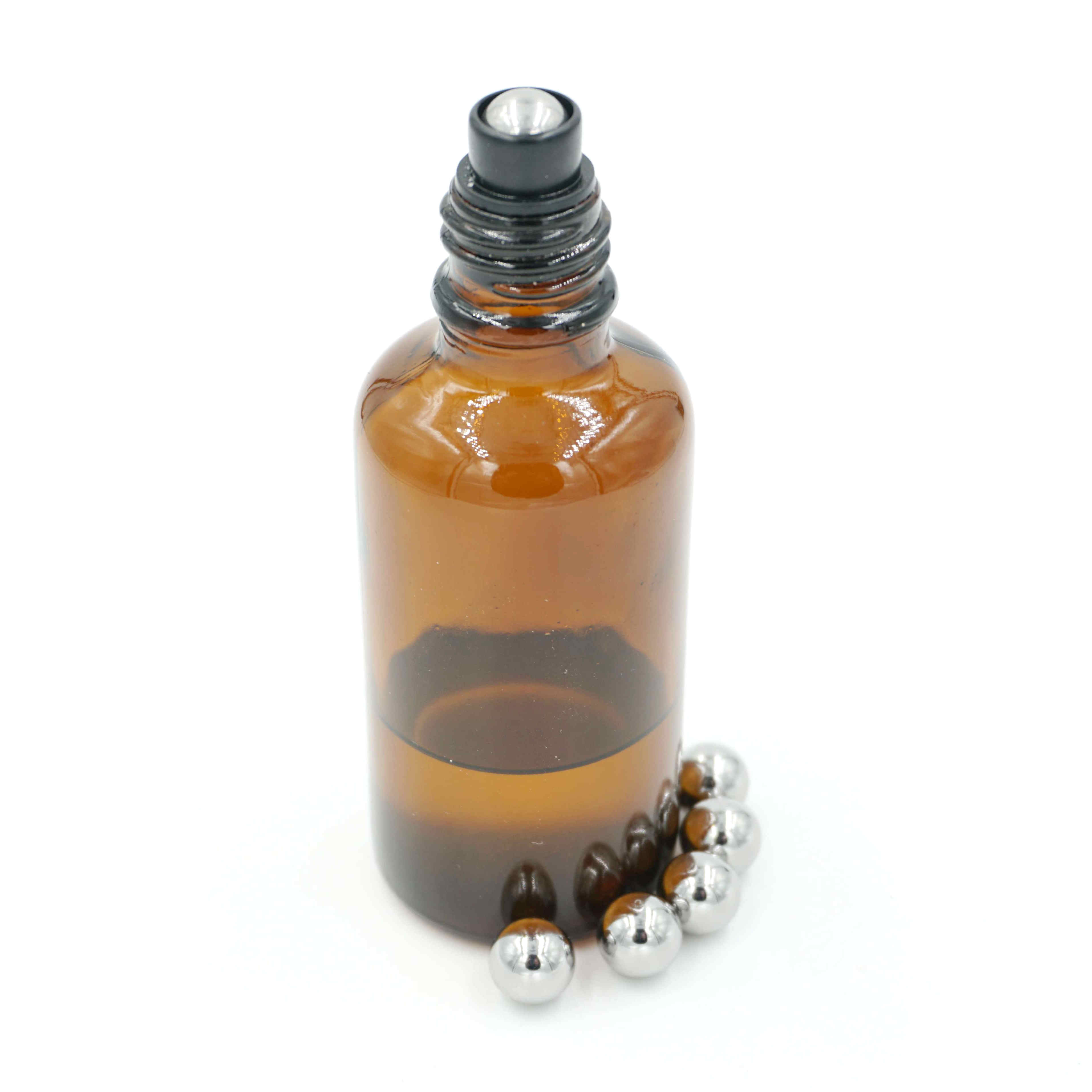
Stainless steel balls are one of the two candidate material families for wet gas valve sealing at 0–200°C.
Why Wet Gas Valve Sealing Is a Two-Failure-Path Problem
A sealing ball inside a ball valve or check valve has to do two jobs at once. It must stay hard and round enough to press against the seat and cut off flow, and it must stay chemically intact while the process medium — wet gas with condensed moisture at 0–200°C — sits against its surface for months or years.
Those two jobs fail in different ways. Mechanical failure shows up as brinelling, flattening, or loss of sphericity where the ball meets the seat; the leak grows gradually and often appears as passing or weeping at low differential pressure. Chemical failure shows up as pitting, staining, or surface roughening; the seat no longer matches the ball, and the leak can appear suddenly after a corrosion pit crosses the sealing band.
Because the two paths are different, the material question is not which steel ball is more corrosion resistant or which steel ball is harder. The useful question is: in this wet gas duty, which failure path arrives first? A hard chrome steel ball that corrodes in a chloride-bearing wet gas is the wrong answer, and a corrosion-resistant 316 ball that brinells under a high seat load is equally wrong.
The duty class itself is well defined in valve trim supply: wet gas and mildly corrosive fluids at 0–200°C under moderate pressure, handled by floating and trunnion-mounted ball valves, needle valves, and check valves, with NACE MR0175 often listed as an optional requirement.
Industry Background: Standards and Market Context
Steel balls for valve and bearing duty sit inside a mature, standards-driven supply chain. The global steel ball market was estimated at USD 12.91 billion for 2026 by Coherent Market Insights, and the same source projects chrome steel balls to hold a 45.7% share of the material segment in that year — a reminder that the hardness-led option remains the volume default across industrial applications.
Two standards anchor the specification language buyers use. ISO 3290-1:2014 defines requirements for finished steel balls for rolling bearings and sets grades from G3 to G700. ASTM A295/A295M covers high-carbon, bearing-quality steel, including Grade 52100, which is the same steel family as DIN 100Cr6 and JIS SUJ2. In trade terms, bearing balls fall under HS code 8482.91 (balls, needles and rollers).
For valve service, documentation often matters as much as the ball itself. Sour or chloride-bearing duties may call for NACE MR0175 awareness, and purchasers increasingly ask for a material test report (MTR), EN 10204 2.1 or 3.1 certificates, and positive material identification (PMI) before a lot is accepted.
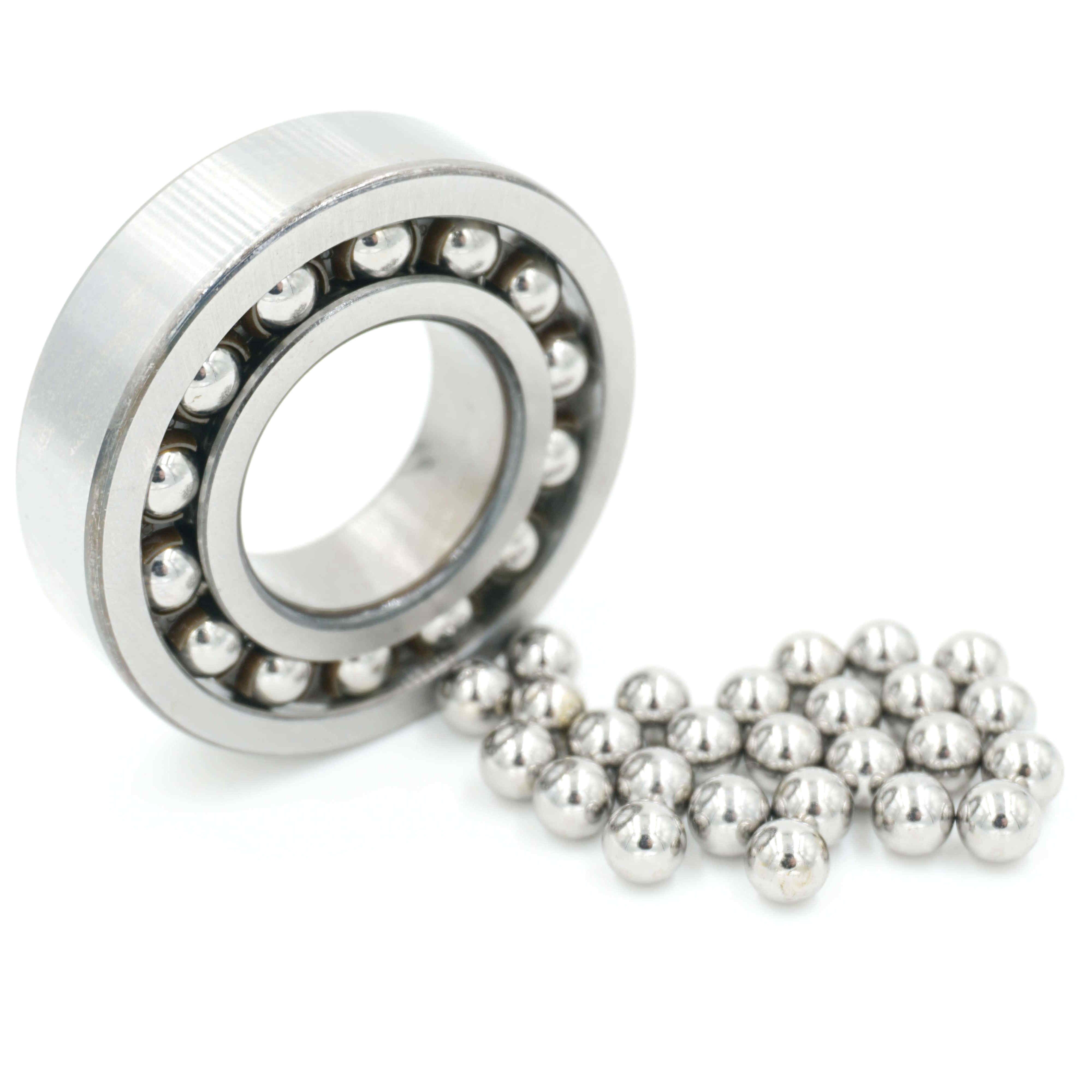
Precision steel balls are graded by sphericity, diameter variation, and surface finish before they reach valve or bearing assemblies.
Chrome Steel Balls: Hardness-Led Sealing
Chrome steel is the through-hardened option in this comparison. The grade appears under three common designations — AISI 52100 in the United States, DIN 100Cr6 in Europe, and JIS SUJ2 in Japan — and all three describe the same high-carbon chromium-bearing steel family used for rolling elements and valve trim.
After through-hardening, 52100 chrome steel balls reach approximately HRC 60–66. That hardness is the reason the material dominates high-load sealing and rolling duty: it resists brinelling at the seat contact, holds sphericity under repeated closure, and maintains a stable sealing band in quarter-turn on/off service.
Haimen City Mingzhu supplies chrome steel balls within a production profile that covers precision grades G10–G500 and diameters from 2.0 mm to 50 mm, with custom sizes and machined features available to drawing. For valve trim projects, the practical grade question is usually settled between G100 and G500, where tolerance and cost balance for industrial sealing rather than instrument-grade rotation.
Where chrome steel fits
- Wet gas duties where load and cycle count dominate and the medium's corrosivity is controlled.
- Check valve and needle valve trim that sees repeated impact or chatter and needs hardness at the contact point.
- Applications where a dry or protected environment removes the corrosion penalty, including sealed assemblies and lubricated internals.
Where chrome steel needs protection
Chrome steel is not the corrosion-resistant answer. In wet gas with condensed moisture, unprotected 52100 can stain or pit, and the risk rises when chlorides are present. Practical mitigations include surface finishing — electroplated finishing is available on request for custom orders — internal lubrication, or upgrading to a stainless grade where the medium makes corrosion the controlling failure path.
That trade-off is the core of the chrome steel case: the material delivers hardness and dimensional stability at a cost and availability level that austenitic stainless cannot match, but it asks the buyer to control the chemistry of the service.
316 Stainless Steel Balls: Corrosion-Led Sealing
316 stainless steel is an austenitic grade identified as AISI 316 / UNS S31600. Its defining alloy addition is molybdenum, which improves resistance to pitting and crevice corrosion in chloride and saltwater environments — the mechanism that matters when wet gas carries chloride-bearing moisture.
The practical comparison figure is the pitting resistance equivalent number (PREN). 316 typically reaches approximately 23–28, against approximately 18–20 for 304, which is why 316 is the default upgrade when a valve moves from freshwater or indoor service into coastal, chloride, or chemical duty.
What 316 does not offer is hardness. Austenitic stainless balls are supplied in the soft condition, and they cannot be through-hardened the way 52100 can. For a sealing ball, that means the material is chosen for chemical survival, not for high seat loads. Where both corrosion resistance and high-load wear resistance are required, the correct route is a hardenable martensitic grade such as 440C or a higher-alloy stainless, not a thicker 316 ball.
Where 316 fits
- Wet gas with chlorides, saltwater ingress, or mildly corrosive process fluids at 0–200°C and moderate pressure.
- Pharmaceutical, food-equipment, and chemical-processing valve trains where clean, corrosion-resistant trim is preferred.
- Offshore, marine, and saltwater-adjacent valve assemblies where pitting resistance extends service intervals.
Where 316 needs a different grade
High seat loads, high cycle counts, and abrasive slurries push 316 past its hardness limit. In those duties, the ball may deform or wear before corrosion becomes the issue. The documented guidance is direct: for high-load wear, choose 440C or 52100 instead of an austenitic grade.
Decision Rule: Matching the Ball to the Wet Gas Duty
The selection can be reduced to three checks, run in order.
- Check the medium first. If the wet gas carries chlorides, saltwater, or other species that pit stainless steel, corrosion is the controlling failure path and 316 is the safer default. If the medium is dry or the moisture is controlled, the corrosion penalty on chrome steel shrinks.
- Check the load second. If the seat load and cycle count are high, hardness becomes the controlling variable and chrome steel at approximately HRC 60–66 is the stronger choice. If the load is moderate and closure is intermittent, the soft austenitic condition of 316 is acceptable.
- Check whether both conditions apply. When high load and aggressive chemistry arrive together, neither of these two grades is the final answer; a martensitic stainless such as 440C, a duplex stainless, or a nickel alloy becomes the candidate set, and the specification should move to that comparison.
Working rule: hardness buys seal life against mechanical damage, and corrosion resistance buys seal life against chemical damage. Pick the property that matches the failure path your service punishes first.
A Step-by-Step Selection Sequence for Valve Engineers
Step 1 — Characterize the medium
Record chloride content, moisture level, temperature band within the 0–200°C range, and whether NACE MR0175 is required. Chloride presence is the single strongest signal toward 316; a controlled, low-chloride wet gas keeps chrome steel in play.
Step 2 — Define load and cycle
Note whether the valve is quarter-turn on/off, throttling, or a check valve exposed to chatter. Intermittent, moderate-load closure favors 316; high-load or high-cycle seating favors chrome steel.
Step 3 — Match hardness to the contact stress
Chrome steel at approximately HRC 60–66 handles high contact stress. Austenitic 316 does not harden through heat treatment, so its use should be limited to duties where the seat load is moderate.
Step 4 — Specify grade and size
Use ISO 3290-1:2014 grade language (G3–G700) so quotations are comparable. Haimen City Mingzhu's production profile covers G10–G500 and 2.0–50 mm for standard chrome and stainless balls, with non-standard diameters, drilled, threaded, and hollow features made to drawing.
Step 5 — Verify with documents and samples
Ask for an MTR, EN 10204 2.1 or 3.1 certificate, COA, and PMI on the lot. Hardness, roundness, microstructure, and surface condition should be reported. NACE MR0175, PPAP, FAI, and AMS certificates are available on request. Approve the material on samples before releasing production.
Step 6 — Confirm the supplier system
Check certification and inspection capability rather than catalogue claims. Haimen City Mingzhu operates a 7,500 m² production base with 105 sets of processing equipment, an annual output of 2,500 tons, and 100% automated machine-vision sorting for size, roundness, surface defects, and appearance, backed by IATF 16949:2016 certification.
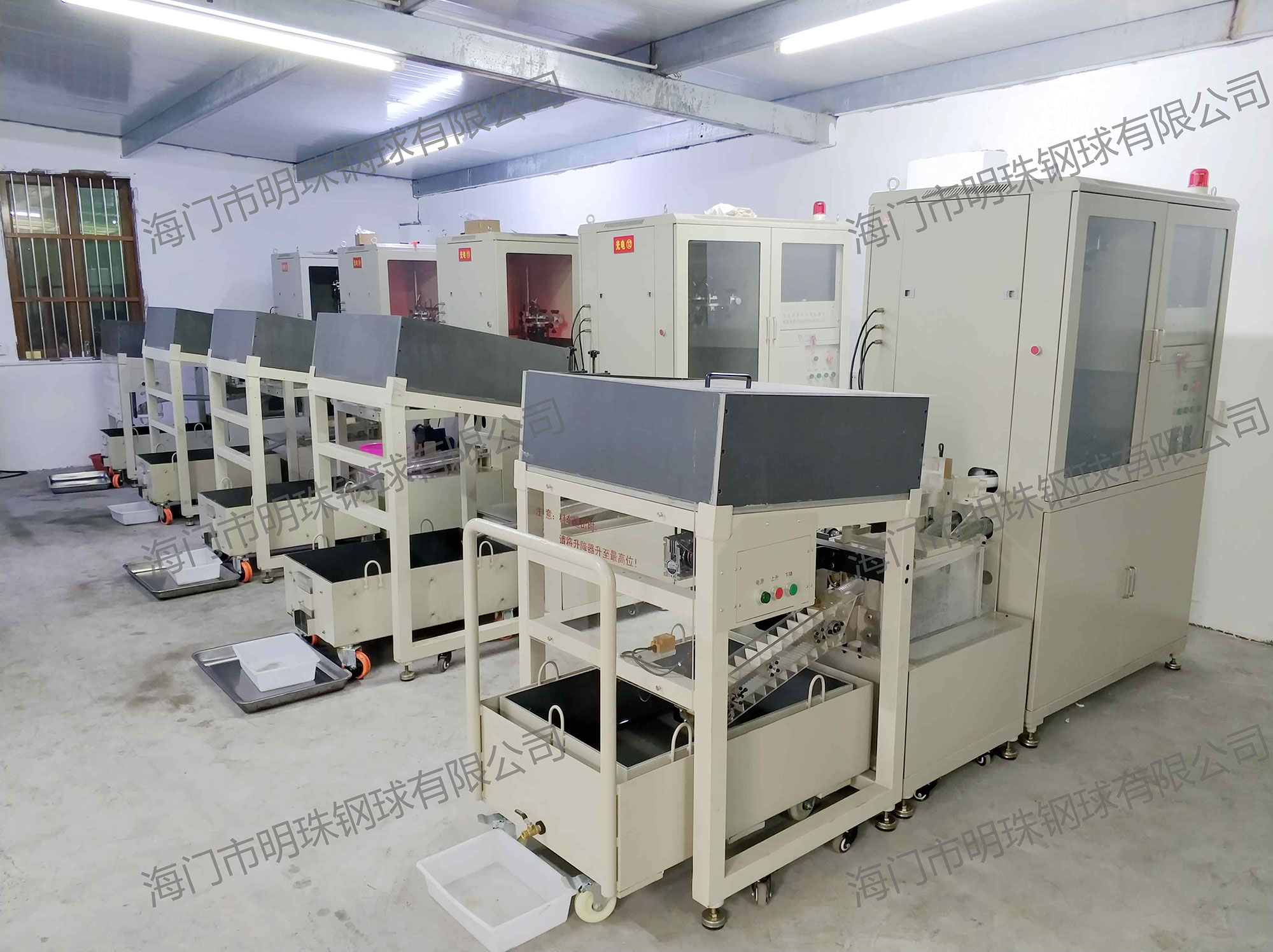
Automated inspection screens size, roundness, and surface defects before shipment.
Use Cases in Oil, Gas, and Petrochemical Service
Floating and trunnion-mounted ball valves
Wet gas at moderate pressure with intermittent quarter-turn actuation is the classic split decision: 316 where chlorides are present, chrome steel where the seat load is high and the medium is controlled. The ball is a sealing element here, so surface integrity at the seat band matters more than bulk toughness.
Check valves
Check valve balls see repeated seating and chatter. Hardness resists the impact and brinelling that degrade the seat line, which favors chrome steel in clean, controlled wet gas. In chloride-bearing lines, 316 remains the corrosion-safe choice, with the understanding that load must stay moderate.
Needle valves and fine-control trim
Fine-control trim rewards precision and surface finish. Both grades can be supplied to precision tolerances, so the decision returns to chemistry: 316 for corrosive media, chrome steel where hardness and wear life govern.
Petrochemical process valves
Mildly corrosive fluids at 0–200°C are the documented service envelope for this duty class. 316 is the conservative default when the fluid chemistry is uncertain; chrome steel is the performance choice when the chemistry is known and controlled.
Comparison Table: Chrome Steel vs 316 Stainless Steel Balls
| Selection factor | Chrome steel ball | 316 stainless steel ball |
|---|---|---|
| Material designation | AISI 52100 / DIN 100Cr6 / JIS SUJ2 | AISI 316 / UNS S31600 |
| Structure | Through-hardened chrome alloy steel | Austenitic stainless steel with molybdenum |
| Hardness | Approximately HRC 60–66 after through-hardening | Soft austenitic condition; not through-hardenable |
| Corrosion behavior | Limited intrinsic corrosion resistance; wet service needs control measures | Molybdenum alloying for pitting and crevice corrosion resistance in chloride/saltwater environments; PREN approximately 23–28 |
| Best fit at 0–200°C wet gas | Load- and hardness-driven sealing where corrosion is controlled | Mildly corrosive fluids at moderate pressure, especially with chlorides |
| Precision grades | G10–G500 within the Haimen Mingzhu production profile; ISO 3290-1 covers G3–G700 | Common stock G100–G1000; precision G10–G25 available |
| Size range | 2.0–50 mm standard production; custom to drawing | Quoted per order; custom sizes to drawing |
| Main risk | Corrosion or staining in wet, chloride-bearing media | Deformation or wear under high seat load |
| Documentation | MTR, EN 10204 2.1/3.1, COA, and on request PPAP, FAI, NACE MR0175, AMS certificates | |
Table entries are limited to documented material data, published standards, and the manufacturer's stated production profile.
Frequently Asked Questions
What standards and documentation should accompany steel balls for wet gas valve service?
ISO 3290-1:2014 defines finished steel ball grades from G3 to G700, and ASTM A295/A295M covers the 52100 bearing-quality steel family. For sour or chloride-bearing duty, NACE MR0175 is often specified as an optional requirement. A typical document package includes the material test report (MTR), EN 10204 2.1 or 3.1 certificate, and COA, with PPAP, FAI, and AMS certificates available on request. Haimen City Mingzhu holds IATF 16949:2016 certification and inspects every batch with 100% automated machine-vision sorting plus hardness, roundness, microstructure, and PMI checks.
Can one supplier cover both chrome steel and 316 stainless balls in valve-grade precision?
Haimen City Mingzhu produces chrome steel and stainless steel balls in precision grades G10–G500 and diameters from 2.0 mm to 50 mm, alongside non-standard sizes and machined features such as drilled, threaded, and hollow balls made to drawing. Chrome steel 52100 is through-hardened to approximately HRC 60–66, while 316 austenitic balls are supplied in the soft condition for corrosion-led duty. Common stock spans G100–G1000, with precision G10–G25 available.
What drives the cost difference between chrome steel and 316 stainless balls?
Material chemistry, hardness and heat-treatment route, precision grade, added features, and order quantity set the cost structure. Chrome steel is the volume material and holds a large share of the industrial ball market, while 316 carries alloying cost for molybdenum and corrosion resistance. Standard catalog sizes have low MOQ and can be ordered by bag or piece; non-standard and CNC-machined balls typically start from 50–500 pcs depending on setup, and prototype quantities of 10–50 pcs are workable for simple parts.
Can I validate both materials with samples before placing a production order?
Yes. Samples are available for standard sizes, and prototype or first-article samples can be supplied before mass production approval. Material certificates and batch traceability documents can accompany shipments, and packaging is customizable to request. For a wet gas valve project, the practical validation step is to test the candidate ball in the actual medium and seat assembly rather than relying on datasheet comparison alone.
What lead times apply to chrome steel and 316 stainless ball orders?
Standard sizes and common materials are often in stock and can ship in 5–10 days. Standard production runs take 15–30 days, and non-standard sizes, special alloys, or CNC features take 20–60 days depending on tooling and inspection. Rolling stock and backup tooling support repeat supply, and monthly production status updates are provided. To discuss a wet gas valve project, request a quotation or sample through info@hmmzsteelball.com, or download the company brochure for the full product range.
Conclusion
Chrome steel and 316 stainless steel solve different halves of the wet gas sealing problem. Chrome steel in 52100, 100Cr6, or SUJ2 at approximately HRC 60–66 is the hardness-led choice for valves where seat load and cycle count decide service life, provided the medium's corrosivity is controlled. 316 stainless steel is the corrosion-led choice for wet gas carrying chlorides or mildly corrosive species at 0–200°C and moderate pressure, accepting lower hardness in exchange for pitting and crevice corrosion resistance.
The decision becomes easier once the failure path is named: hardness protects against mechanical damage, corrosion resistance protects against chemical damage, and the duty that punishes one of those paths first should set the material. When both paths are severe, the specification should move to a hardenable martensitic or higher-alloy stainless grade.
Haimen City Mingzhu Steel Ball Co., Ltd. supplies both families from a single production system — chrome steel and stainless steel balls in G10–G500 and 2.0–50 mm, with custom, drilled, and machined options, IATF 16949:2016 certification, and full material documentation.
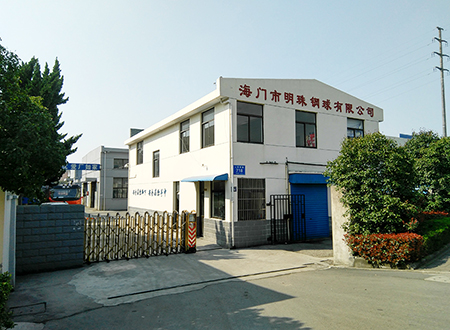
Haimen City Mingzhu Steel Ball Co., Ltd. production base in Haimen, Jiangsu Province, China.
Next step: send your valve duty — medium, temperature within 0–200°C, pressure, and seat load — and request a material recommendation, sample, or quotation.
Email: info@hmmzsteelball.com | Tel / WhatsApp: +86 13912237934 | Website: www.hmmzsteelball.com
Download the Haimen Mingzhu steel ball brochure (PDF) for the full product and grade range.
Have Questions or Need More Details?
Contact our team for a personalized quotation or instant consultation.
Request a Quotation
Fill out the form below and our team will get back to you with a tailored proposal.
WhatsApp Direct Chat
Prefer to chat in real-time? Message us on WhatsApp for instant assistance & quick answers.
- Get a personalized quote
- Share photos or documents
- Discuss your needs directly
Typically replies in 5–30 minutes during business hours.