
Evaluating Steel Ball Suppliers for Custom, Drilled and Hollow Balls
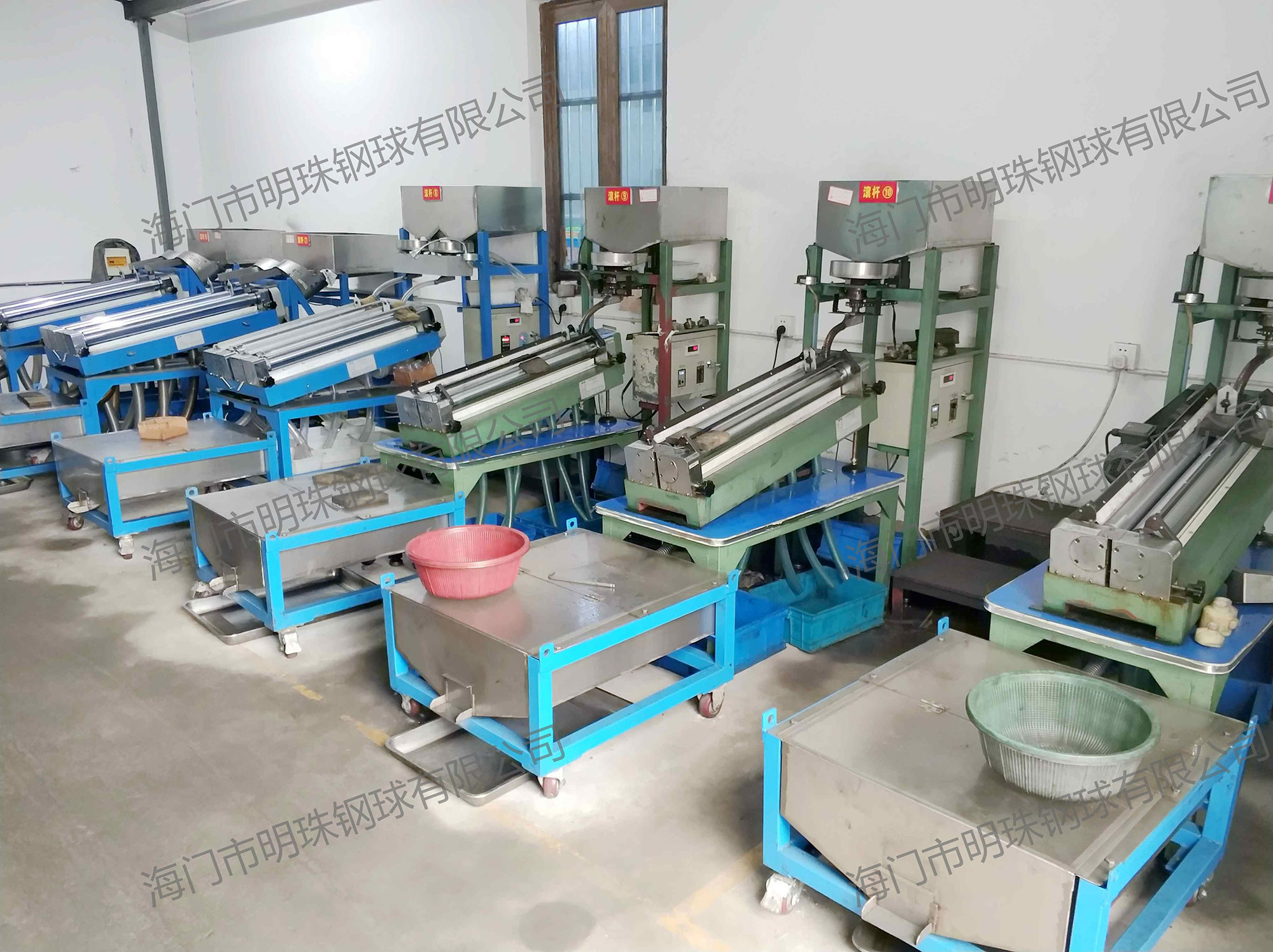
Custom steel ball projects rarely fail because of the ball. They fail at the supplier evaluation stage — a quotation that looks complete, a drawing that was never fully read, a hardened 440C ball nobody can actually drill, or a Hastelloy C-276 ball that arrives without alloy verification. At the decision stage, the real question is not who sells steel balls, but who can prove they can make this specific ball, in this specific material, at this specific precision grade, and deliver it on commercial terms that survive a repeat order.
This guide is written for importers, distributors, OEM buyers and procurement engineers who are choosing between suppliers for non-standard, drilled, threaded and hollow steel ball projects. It sets out a seven-point supplier evaluation checklist, a material cross-check covering 420C, 440C, 52100/100Cr6, 316, 304, M50, duplex and Hastelloy, a precision grade check across ABMA/ISO G3–G25 and G10–G1000, and the commercial questions — payment terms, incoterms and delivery — that are usually asked too late.
The short answer: a qualified custom steel ball supplier must be able to (1) machine non-standard diameters and features such as drilled, threaded, stepped and hollow geometry to drawing, (2) supply and verify a declared material range including martensitic stainless, austenitic stainless, bearing steel and specialty alloys, (3) inspect 100% to a stated precision grade, and (4) quote payment, incoterms, packaging and lead time in writing before the PO is issued. Any supplier that cannot answer all four in specific terms is a sourcing risk, regardless of price.
Why Custom Steel Balls Break Normal Sourcing Logic
Standard catalog procurement is a repeatable, low-risk exercise. Standard inch and metric steel balls use fixed tooling and ABMA/ISO grades such as G10–G1000, with low MOQ and stock lead times of about 5–10 days. The buyer opens a catalog, picks a size, and the main variables are price and stock availability.
Non-standard balls remove every one of those assumptions. A non-standard ball is engineered to a customer-specified diameter, tolerance, material or feature rather than selected from a catalog. That single change pulls in new tooling, a drawing review, feature-level machining and a different inspection plan. The procurement consequence is measurable: non-standard balls add custom size, drilling or threading, exotic alloy, special heat treatment or special inspection, and typically cost +10–30% for simple custom work, with more for CNC features or exotic alloys, while taking 15–60+ days depending on tooling, material and documentation.
Three failure patterns account for most of the damage in this category:
- The geometry gap. A supplier quotes a drilled ball but cannot hold hole location to drawing. Drilled balls are typically held to ±0.05 mm or better on hole location, and drilled balls add CNC drilling/tapping plus QA cost compared with solid balls, which remain the lowest-cost option.
- The material gap. The nameplate says 440C, but there is no heat-treatment record, no hardness report and no alloy verification. Hardened 440C and M50 require specialized tooling and longer lead time than soft materials, so a supplier without that tooling will quietly substitute or delay.
- The commercial gap. Price and lead time are agreed, but payment method, incoterm, packaging format and lot marking are never documented, and the first repeat order stalls at the bank.
The checklist below is designed to surface all three before an order is placed.
Where Non-Standard Steel Balls Actually Get Used
Steel balls for bearings and industrial use are classified under HS Code 8482.91 (balls, needles and rollers), which makes the category easy to trade and equally easy to commoditize. The commercial value, however, sits in the segments where a catalog ball does not fit:
- Drilled balls enable bolt or pin integration and are used in hydraulic and pneumatic pivots, custom ball valves and mounted ball linkages. Solid balls require external retention, which is exactly the constraint drilled balls remove.
- Hollow balls trade load-bearing section for reduced mass. Depending on wall thickness they can be roughly 40–70% lighter than a solid ball of the same diameter, which is why they appear in architectural and space-frame nodes, buoys and floats, and lightweight kinematic fixtures.
- Machined balls cover large-diameter and low-volume work — heavy industrial machinery, large bearing assemblies and specialized valve and flow-control equipment — where a turned and ground ball is the practical route.
- Non-standard sizes and materials are driven by legacy equipment, proprietary assemblies and low-volume specialized machinery. The value of a non-standard ball is that it removes the compromise created by selecting the “closest standard” size.
The category is large and still expanding. The global steel ball market is estimated by Coherent Market Insights to reach USD 12.91 billion by 2026, with chrome steel balls projected to hold a 45.7% share of the material segment in the same year. Growth estimates vary by methodology — Business Research Insights projects a 5.2% CAGR for 2026–2035, while other published figures in the same period sit lower, largely because some reports include large mining grinding media and others count only precision bearing balls. For a buyer, the practical takeaway is simpler than the forecast: precision and custom ball capacity is a specialized capability, and it should be evaluated as one.
Two standards anchor the technical conversation. ISO 3290-1:2014 specifies requirements for finished steel balls for rolling bearings and defines grades from G3 to G700, while ASTM A295/A295M covers the high-carbon, bearing-quality steel (Grade 52100) used for anti-friction bearings.
The Seven-Point Supplier Evaluation Checklist
1. Geometry Capability: Ask for a Feature List, Not a Catalog Page
A capable custom supplier should be able to state, without hesitation, which non-round features it machines in-house. The verifiable answer set is: non-standard diameters held to decimal size, drilled balls (through or blind), threaded balls (metric and UNC/UNF), stepped balls, half-spherical balls and hollow balls, with features controlled for diameter, depth, concentricity and thread class.
Two questions cut straight to capability. First, can you drill a hardened 440C or M50 ball, or do you machine the feature before hardening? Soft materials are easier to machine, while hardened 440C and M50 require specialized tooling and longer lead time — so the answer determines both feasibility and schedule. Second, what concentricity and thread class can you hold, and is it quoted per drawing? Tolerance and concentricity should be quoted against the specific drawing, not against a general capability statement.
2. Material Range Cross-Check
Ask for the full material list rather than a single grade. A workable range covers carbon steel (1010/1045/1085), chrome steel 52100 (100Cr6/SUJ2), martensitic stainless 420/440C/440B, austenitic stainless 304/304L/316/316L, and specialty alloys on request including M50, duplex 2205 and Hastelloy C-276, with material verification and MTR available as required.
The cross-check matters because the documented property differences are large enough to change the application entirely:
- 440C vs 316. 440C is martensitic and hardenable, reaching HRC 58–65; 316 austenitic stainless is non-hardenable at roughly HRB 85–95. 440C wins in abrasive wear where hardness controls life; 316 wins in chloride and seawater exposure where pitting and crevice corrosion resistance controls life.
- 304 vs 316. 316 contains 2–3% Mo and 10–14% Ni versus 0% Mo and 8–10.5% Ni in 304, raising PREN from roughly 18–20 to roughly 23–28. Choose 316 for seawater, coastal, chloride and CIP/chemical service; 304 remains the economical choice for indoor, freshwater and general service.
- 420C. Hardenable to roughly HRC 48–55 with moderate corrosion resistance. Because hardness depends on heat-treatment quality assurance, batch traceability for 420C must include heat-treatment records.
- 52100 vs 440C. 52100 (100Cr6/SUJ2) reaches HRC 60–66, often 62–64, while 440C reaches HRC 58–65. 52100 is the higher peak-hardness choice for clean, lightly protected bearing environments but needs rust-preventative lubrication; 440C tolerates moisture better and simplifies maintenance in wet plants.
- M50. A high-speed, secondary-hardening steel that retains hardness and strength at elevated temperature, with a stated service capability of approximately 316°C (600°F) and above, versus 52100 which is fatigue-optimized at ambient temperature. M50 is specified at HRC 62–66 with high-temperature stability and requires full AMS traceability.
- Duplex stainless. UNS S31803/S32205 offers roughly double the yield strength of 316 and a PREn of about 34–38 versus 316’s 24–26, but costs more in alloy and processing and needs controlled heat treatment to avoid embrittlement.
- Hastelloy C-276 (N10276). A nickel-molybdenum-chromium superalloy with 15–17% Mo and 3–4.5% W and a PREN of about 69 versus about 25 for 316. It survives strong reducing acids and aggressive chemicals where 316 does not, but costs roughly 5–12× more than 316 and requires PMI/MTR alloy verification plus passivation.
3. Precision Grade and Inspection Verification
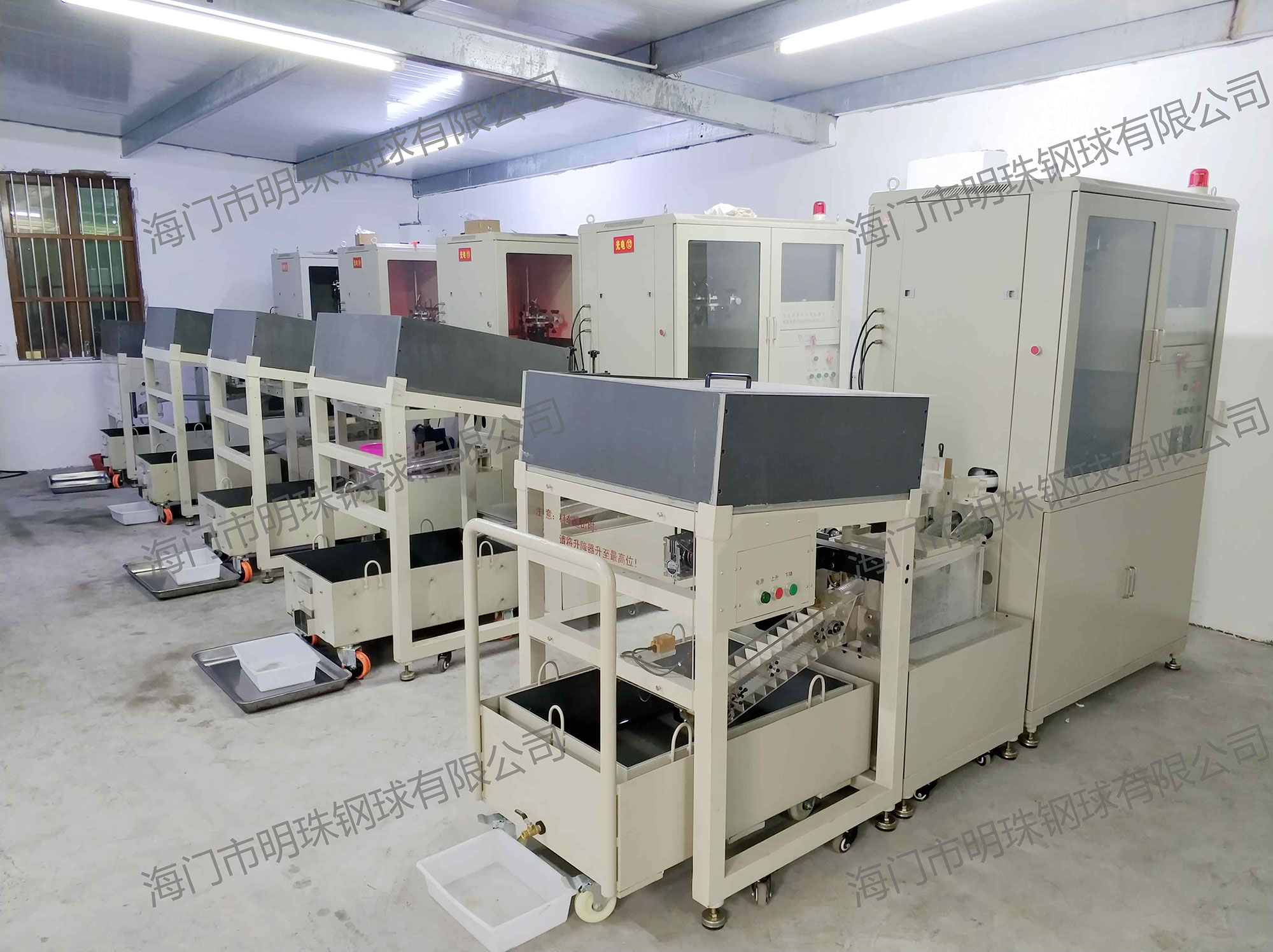
Precision grading is where vague supplier claims are easiest to test. Precision balls are manufactured and 100% inspected to tight diameter and grade bands (ABMA G3–G25), whereas commercial-tolerance balls are supplied within wider bands (G100–G1000). Diameter deviation and sphericity control differ by an order of magnitude between those two groups.
Ask for the inspection method, not just the grade. A credible answer describes 100% automated machine-vision sorting for size, roundness, surface defects and appearance, supplemented by hardness testing, roundness and eccentricity measurement, microstructure checks, roughness measurement and material verification by PMI or chemical analysis. For a G10–G25 requirement, that level of inspection is the evidence behind the grade.
4. Hollow Ball Integrity Checks
Hollow balls carry a specific verification burden that solid balls do not. Because they trade load-bearing section for reduced mass, they require wall-thickness, leak and pressure integrity checks, whereas solid balls are metallurgically simpler and need fewer integrity checks. Weight reduction of roughly 40–70% is only meaningful if the wall is uniformly thick and the shell is sealed where the application requires it. Ask how wall thickness is measured, how leak integrity is verified, and whether the shell is seamless or welded.
5. Coating and Plating Controls
If the project uses electroplated balls, the evaluation changes. Plated balls are a steel core with a corrosion-resistant coating, offered at lower upfront cost than through-hardened stainless balls, but they require coating-thickness and adhesion checks and they carry a risk of coating wear. Stainless balls cost more in material but have no coating to wear out and need passivation only. Zinc plating is typically specified in the 5–25 µm range, and plating thickness must be quoted against the specification rather than left to the supplier’s default.
6. Commercial Terms: Payment, Incoterms and Packaging
This is the step most technical buyers skip, and it is the step that determines whether a second order happens. Three areas should be documented before the PO:
- Payment. The standard structure is T/T 30% deposit plus 70% balance before shipment, with L/C at sight for large orders, PayPal or Western Union for samples, and OA/Net-30 available for approved repeat customers.
- Delivery and incoterms. EXW, FOB (Shanghai, Ningbo), CIF, DAP and DDP should all be quotable, by air or sea depending on order size and urgency.
- Packaging and lot marking. Drums, sealed bags, tubes and blisters are the common formats, with OEM-labeled cartons available. Packaging should be marked with quantity, grade and lot code, because without lot coding the traceability chain breaks at the customer’s own goods-in inspection.
7. Documentation and Traceability
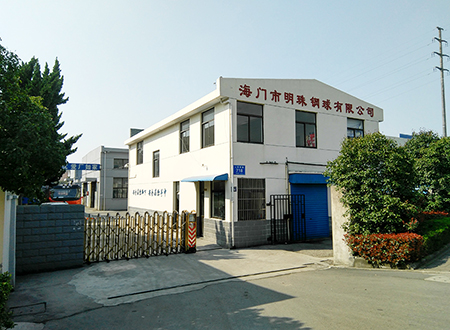
Documentation is the deliverable that turns a supplier claim into an auditable record. The baseline set is a material test report (MTR), EN 10204 2.1 or 3.1, and a certificate of analysis. On request, a supplier should also be able to issue PPAP, FAI, NACE MR0175 and AMS certificates. Companies operating to an automotive-grade system — for example, Haimen City Mingzhu Steel Ball Co., Ltd., a direct steel ball manufacturer founded in 1992 in Haimen, Jiangsu Province, holding IATF 16949:2016 certification — are structurally set up to produce that paperwork as part of normal batch release rather than as an exception.
Step-by-Step: How to Run the Evaluation
Step 1 — Define the drawing and the critical characteristics. Specify diameter and tolerance, material grade, hardness, and every non-round feature: hole diameter, through or blind, thread class, step geometry, wall thickness for hollow balls. State which characteristics are critical and which are cosmetic.
Step 2 — Issue the RFQ with the full feature list. A supplier that quotes a drilled ball without asking about hole location tolerance has not read the drawing. Expect questions; treat a silent quotation as a warning sign.
Step 3 — Validate with samples or prototypes before committing. Standard catalog sizes have low MOQ and can be ordered by the bag or piece, with samples available. Non-standard and CNC-machined balls usually start from 50–500 pcs depending on setup, while prototype quantities of 10–50 pcs are workable for simple parts. MOQ is typically flexible for first-time cooperation and NDA projects.
Step 4 — Verify material and heat treatment. Require PMI or chemical analysis against the declared grade, plus hardness results and heat-treatment records. For 420C, hardness in the HRC 48–55 range is only meaningful alongside the heat-treatment record. For Hastelloy, PMI/MTR verification is not optional.
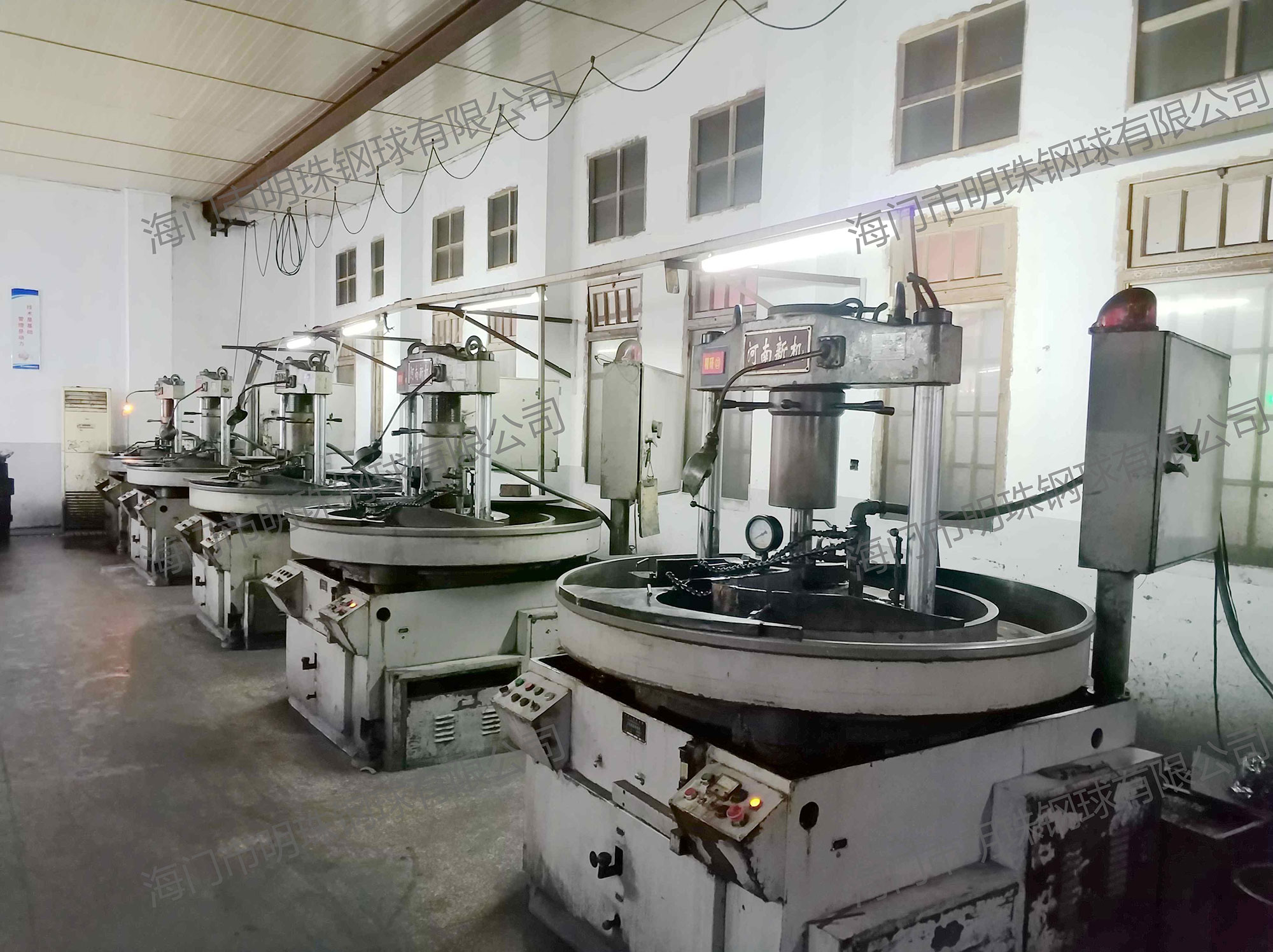
Step 5 — Audit the inspection plan. Confirm 100% inspection to the stated grade, and confirm which instruments produce the roundness, roughness and surface defect data. Ask what happens to a rejected lot.
Step 6 — Fix the commercial terms in writing. Payment structure, incoterm, shipping mode, packaging format and lot marking should all appear in the quotation, not in a later email thread.
Step 7 — Lock lead time and repeat-supply capability. Stock sizes often ship in 5–10 days, standard production runs 15–30 days, and non-standard sizes, special alloys or CNC features take 20–60 days depending on tooling and inspection. For repeat business, ask whether rolling stock and backup tooling are maintained and whether production status updates are provided on a fixed schedule.
Use Cases: Where Each Custom Format Earns Its Cost
- Drilled balls — flow control and linkage. Used where a bolt or pin must pass through the ball itself: hydraulic and pneumatic pivots, specialty ball valves and mounted ball linkages. The engineering justification is assembly simplification and alignment verification, not rolling performance; rolling behaviour is comparable as long as the hole does not interfere with the contact path.
- Threaded balls — positioning and fixtures. Where the ball must be fastened directly to a rod or plate, threading removes an adapter. Confirm thread class and concentricity to drawing.
- Hollow balls — weight-critical structures. Architectural and space-frame nodes, decorative large-diameter spheres, buoys and floats, and lightweight kinematic fixtures. Accept the wall-thickness and pressure integrity checks as part of the scope, and remember that solid balls remain the right choice for load-bearing bearings and valves.
- Machined balls — large or low-volume precision parts. Heavy industrial machinery, large bearing assemblies and specialized flow-control equipment, where diameter can extend well beyond catalog ranges.
- Non-standard material balls — severe service. Duplex for high-pressure, severe-chloride offshore and desalination duty; Hastelloy C-276 for strong acids, acid valves, FGD and aggressive pharmaceutical/biotech service; M50 for aero-engine main-shaft, high-speed spindle and high-temperature bearings.
Comparison Tables
Table 1 — Material cross-check for custom and non-standard steel balls
| Material | Hardness / condition | Corrosion position | Verification the supplier must provide | Best-fit service | Relative cost signal |
|---|---|---|---|---|---|
| Carbon steel 1010/1045/1085 | Soft, or HRC 55–60 when hardened (product range G100–G2000) | Not corrosion resistant | Material certificate | General low-load conveying, furniture/automotive trim, non-precision rollers | Lower material and heat-treatment cost than 52100 |
| 52100 / 100Cr6 / SUJ2 | HRC 60–66, often 62–64 | Requires rust-preventative lubrication | Heat-treatment records + MTR | Precision ball bearings, electric-motor and gearbox bearings | Lower material cost than 440C |
| 420C martensitic stainless | HRC ~48–55 when hardened | Moderate | Heat-treatment records (hardness depends on heat-treatment QA) | Pump valves, food-processing machinery, marine hardware | Moderate |
| 440C martensitic stainless | HRC 58–65 | Good, with hardness | Hardening + passivation records | Precision bearings and valves needing hardness plus corrosion resistance | Alloy and processing premium over 52100 |
| 304 austenitic stainless | ~HRB 80, non-hardenable | PREN ~18–20 | Material certificate | Indoor, freshwater, food-contact, decorative | Comparable material cost to 420C, different machining economics |
| 316 / 316L austenitic stainless | ~HRB 85–95, non-hardenable | PREN ~23–28 | Material certificate; passivation | Marine, coastal, chloride, CIP/pharma, chemical | Higher than 304 due to Mo content |
| Duplex 2205 (S31803/S32205) | Roughly 2× 316 yield strength | PREn ~34–38 | Controlled heat-treatment records to avoid embrittlement | Offshore/subsea, high-pressure valves, seawater, desalination | Higher alloy and processing cost |
| M50 (AMS 6490) | HRC 62–66, high hot hardness | Moderate; temperature is the driver | Full AMS traceability, tight heat-treatment control | Aero-engine main-shaft, high-speed spindle, high-temperature bearings | Significantly higher than 52100 |
| Hastelloy C-276 (N10276) | Superalloy, oxidation and acid resistant | PREN ~69; 15–17% Mo + 3–4.5% W | PMI/MTR alloy verification + passivation | Severe chemical processing, acid valves, FGD, aggressive pharma/biotech | Roughly 5–12× 316 |
Table 2 — Procurement comparison: standard vs non-standard vs CNC-featured supply
| Supply route | Tooling | Typical grades | MOQ signal | Lead time | Cost signal | Qualification required |
|---|---|---|---|---|---|---|
| Standard inch/metric catalog ball | Fixed tooling | ABMA/ISO G10–G1000 | Low MOQ; order by bag/piece, samples available | Stock ~5–10 days; standard production 15–30 days | Lowest unit cost | Drop-in, minimal qualification |
| Non-standard size or material | Custom tooling | Per drawing | May require higher MOQ | 15–60+ days depending on tooling, material, documentation | +10–30% for simple custom; more for exotic alloy | Drawing review + PPAP/sample approval |
| CNC-featured (drilled, threaded, stepped, hollow) | CNC drilling/tapping tooling | Per drawing with feature tolerances (e.g. hole location ±0.05 mm or better) | Typically 50–500 pcs; prototypes 10–50 pcs workable for simple parts | 20–60 days depending on tooling and inspection | Adds CNC drilling/tapping plus QA cost over solid balls | Feature-level FAI |
| Precision grade G3–G25 | Precision finishing + 100% inspection | ABMA G3–G25 | Higher inspection burden per lot | Extended by inspection cycle | Higher manufacturing and inspection cost than G100–G1000 | Grade certificate with diameter and sphericity data |
Frequently Asked Questions
1. What quality documents should I require, and how is material and heat treatment verified?
Require an MTR, EN 10204 2.1 or 3.1, and a COA as standard, with PPAP, FAI, NACE MR0175 and AMS certificates available on request. Verification should not rely on paperwork alone: every batch should pass 100% automated machine-vision sorting for size, roundness, surface defects and appearance, supplemented by hardness, roundness, microstructure, roughness and material verification by PMI or chemical analysis. For 420C martensitic balls, batch traceability must include heat-treatment records because HRC ~48–55 depends on heat-treatment quality assurance. For Hastelloy C-276, PMI/MTR alloy verification and passivation are required, while 316 needs passivation only. Buyers sourcing from Haimen City Mingzhu Steel Ball Co., Ltd. can also reference the company’s IATF 16949:2016 certification as evidence that batch-level documentation is embedded in routine production release.
2. Can the supplier actually make non-standard, drilled, threaded or hollow balls to drawing?
A capable supplier manufactures non-standard diameters to decimal size, plus drilled (through or blind), threaded (metric and UNC/UNF), stepped, half-spherical and hollow balls, with features controlled for diameter, depth, concentricity and thread class. Tolerance and concentricity are quoted per drawing. Two practical limits determine feasibility: soft materials are easier to machine, while hardened 440C and M50 require specialized tooling and longer lead time, and hollow balls require wall-thickness, leak and pressure integrity checks that solid balls do not. Drilled balls enable bolt and pin integration with hole location typically held to ±0.05 mm or better, and are used in hydraulic/pneumatic pivots, custom ball valves and mounted ball linkages.
3. What drives the price gap between standard and custom steel balls?
Four cost drivers dominate. First, tooling and setup: non-standard balls add custom size, drilling or threading, exotic alloy, special heat treatment or special inspection, typically costing +10–30% for simple custom work and more for CNC features or exotic alloys. Second, material: carbon steel sits below 52100 on material and heat-treatment cost; 440C carries an alloy and processing premium over 52100 while avoiding corrosion-driven replacement; M50 carries significantly higher material and processing cost than 52100; duplex exceeds 316; Hastelloy C-276 costs roughly 5–12× 316. Third, inspection: precision G3–G25 grading carries higher manufacturing and 100% inspection cost than commercial G100–G1000 grades. Fourth, geometry: drilled balls add CNC drilling/tapping and QA cost, while solid balls remain the lowest-cost option.
4. What is the MOQ, and can I validate the part with samples or prototypes first?
Standard catalog sizes have low MOQ and can be ordered by the bag or piece, with samples available. Non-standard and CNC-machined balls usually start from 50–500 pcs depending on setup, and prototype quantities of 10–50 pcs are workable for simple parts. MOQ is generally flexible for first-time cooperation and for NDA projects. Sample validation is the correct order of operations: confirm diameter, feature position, hardness and surface condition on a prototype before committing to a production lot, because a design issue discovered after tooling is one of the most expensive outcomes in custom ball sourcing.
5. What are the lead times, payment terms and shipping/delivery options?
Standard sizes and common materials are often in stock and can ship in 5–10 days. Standard production runs 15–30 days, while non-standard sizes, special alloys or CNC features take 20–60 days depending on tooling and inspection. Payment terms are typically T/T 30% deposit plus 70% balance before shipment, with L/C at sight for large orders, PayPal or Western Union for samples, and OA/Net-30 for approved repeat customers. Delivery is quoted EXW, FOB (Shanghai, Ningbo), CIF, DAP or DDP, by air or sea per order. Packaging uses drums, sealed bags, tubes and blisters, with OEM-labeled cartons and quantity, grade and lot code marked on the packaging. To move from evaluation to validation, request a quotation and sample on your drawing, or download the full product and capability brochure below.
Conclusion
Supplier evaluation for custom, drilled and hollow steel balls comes down to evidence in four areas: geometry, material, inspection and commercial terms. Geometry capability is proven by drilling hardened 440C or M50 to drawing, not by a product list. Material capability is proven by PMI-verified alloy, heat-treatment records and hardness data across a declared range that includes 420C, 440C, 52100/100Cr6, 304, 316, M50 and Hastelloy C-276. Inspection capability is proven by 100% automated sorting to a stated ABMA/ISO grade, whether G3–G25 or G10–G1000. Commercial capability is proven by written payment terms, incoterms, packaging format and lot marking before the first PO.
A buyer who asks all seven questions in this checklist before placing an order will avoid most of the cost that custom ball sourcing creates: re-qualification after a failed lot, unplanned downtime from a substituted material, and stalled repeat orders caused by an undefined payment or shipping structure.
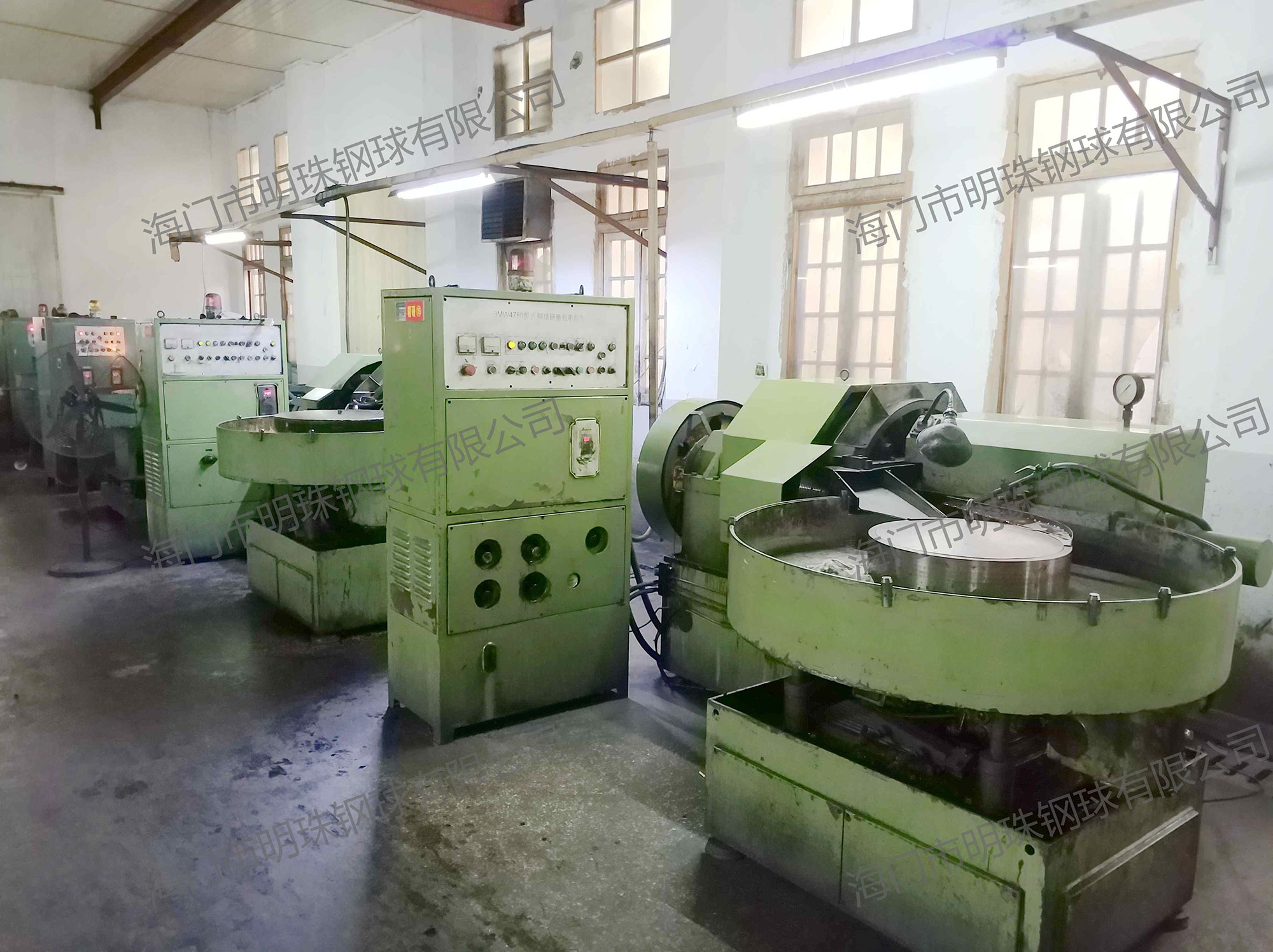
Send your drawing, get a custom ball quotation
Haimen City Mingzhu Steel Ball Co., Ltd. manufactures standard, non-standard, machined, drilled, threaded and hollow steel balls in carbon steel, chrome steel 52100 (100Cr6/SUJ2), 420C, 440C, 304/316 stainless, duplex and specialty alloys including M50 and Hastelloy. Standard sizes ship in 5–10 days; non-standard and CNC-featured parts are quoted per drawing with samples available.
Website: www.hmmzsteelball.com | Email: info@hmmzsteelball.com | WhatsApp / Tel: +86 13912237934
Address: No. 718 West Renmin Road, Haimen City, Jiangsu Province, China
Download the Haimen Mingzhu steel ball brochure (PDF) for the full material range, precision grades and custom machining capability list.
Have Questions or Need More Details?
Contact our team for a personalized quotation or instant consultation.
Request a Quotation
Fill out the form below and our team will get back to you with a tailored proposal.
WhatsApp Direct Chat
Prefer to chat in real-time? Message us on WhatsApp for instant assistance & quick answers.
- Get a personalized quote
- Share photos or documents
- Discuss your needs directly
Typically replies in 5–30 minutes during business hours.