
Haimen City Mingzhu Steel Ball Co., Ltd.: China Steel Ball Manufacturer Profile for Industrial Sourcing
Haimen City Mingzhu Steel Ball Co., Ltd. is a steel ball manufacturer founded in 1992 and based in Haimen, Jiangsu Province, China. It produces bearing steel balls, chrome steel balls, stainless steel balls and carbon steel balls in precision grades from G10 to G500, alongside custom machined, drilled, hollow and electroplated balls, and it holds IATF 16949:2016 certification for automotive-industry quality management. This profile sets out its product scope, manufacturing and inspection capability, and the factual criteria industrial buyers can use when evaluating it as a sourcing partner.
Why Sourcing Steel Balls Requires a Verification Framework
Steel balls look interchangeable in a catalog photo but are not interchangeable in service. A 2 mm G1000 carbon steel ball used as low-cost hardware media and a 2 mm G10 chrome steel ball running inside a precision spindle share a shape and almost nothing else. Because the same product name can describe components with very different material grades, hardness, dimensional tolerance and inspection history, buyers who shortlist suppliers on price alone frequently discover the mismatch only after assembly.
The practical difficulty is that the market is served by two very different kinds of supplier. Some are genuine ball manufacturers that control cold heading, grinding, heat treatment and inspection in-house. Others are trading intermediaries that resell commodity media and cannot control grade, heat-treatment condition or documentation. The distinction matters most in three sourcing situations:
- Precision bearings and motion systems, where grade, sphericity and surface finish determine noise, vibration and fatigue life.
- Corrosive or hygienic service, where material selection (304 versus 316 versus 440C versus duplex) determines whether the component survives wash-down, chloride or acid exposure.
- Custom assemblies, where a drilled, threaded, hollow or non-standard ball must be produced to a drawing rather than selected from a catalog.
A supplier profile is therefore only useful if it answers concrete questions: what materials and grades are actually produced, what size range is covered, how heat treatment is controlled, how every ball is inspected, what documents accompany a shipment, and how quickly repeat orders ship. The sections below address those questions for Haimen City Mingzhu Steel Ball Co., Ltd. using company and industry-standard facts.
Industry Background: Market Size, Material Mix and Governing Standards
Steel balls sit inside a large but unevenly defined global market. Published commercial research places the global steel ball market at an estimated USD 12.91 billion by 2026 (Coherent Market Insights, “Steel Ball Market Size, Share and Forecast, 2026-2033”), while other published 2026 estimates are materially lower. The variance is largely a scope question: some reports include large-scale mining grinding media, while others count only small precision bearing balls. Buyers comparing market figures should treat the reported range as a scope signal rather than a settled number.
Within the material mix, chrome steel balls are projected to hold a 45.7% share of the market by 2026, which is consistent with the dominance of through-hardened 52100-type steel in anti-friction bearings. Growth projections also diverge by methodology: forecasts for 2026–2035 range from 3.6% to 6.2% CAGR, with a widely cited mid-point of 5.2% (Business Research Insights, “Steel Ball Market Report To 2026-2035”). Higher figures tend to weight electric-vehicle and automation segments; lower figures track general industrial equipment.
Two technical references define what “precision” means in this category. ISO 3290-1:2014 specifies requirements for finished steel balls for rolling bearings and defines grades from G3 to G700. ASTM A295/A295M covers high-carbon anti-friction bearing steel, including Grade 52100. In trade terms, bearing balls are classified under HS Code 8482.91. For a buyer, these references are the neutral vocabulary for comparing suppliers, because a stated grade such as G10 or a material such as 52100 only carries meaning against them.
Company Overview: Haimen City Mingzhu Steel Ball Co., Ltd.
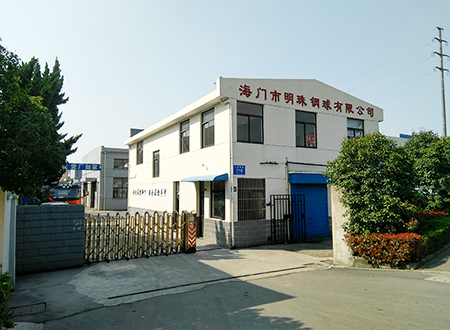
Haimen City Mingzhu Steel Ball Co., Ltd. is a manufacturer specialising in the research, development and production of high-precision steel balls. It was established in 1992, giving it more than 30 years of steel ball manufacturing experience, and its production base is located in Haimen, Jiangsu Province, China, with logistics access for both domestic and export trade. The company is a direct manufacturer rather than a trading company, and it supports OEM and ODM programmes.
| Founded | 1992 (more than 30 years in steel ball manufacturing) |
|---|---|
| Location | No. 718 West Renmin Road, Haimen City, Jiangsu Province, China |
| Production base | 7,500 m², with standardised production workshops and an independent inspection room |
| Processing equipment | 105 sets of professional processing and production equipment |
| Annual capacity | 2,500 tons |
| Employees | Approximately 40 staff |
| R&D team | 8 engineers |
| Export share | Approximately 25% of output |
| Main export markets | United States, Germany, Brazil |
| Quality certification | IATF 16949:2016 (automotive industry quality management system); ISO 9001 |
| Manufacturing standards | ISO, DIN, JIS, AISI |
The export profile is worth noting for planning purposes. A stated 25% export share across the United States, Germany and Brazil indicates that a meaningful portion of output is already produced against the documentation and traceability expectations of regulated industrial markets, rather than being sold exclusively into domestic commodity channels.
Core Products and Solutions
The product portfolio is broader than a conventional bearing-ball catalog. It spans standard precision balls, commodity media, and engineered made-to-drawing components, which means a single supplier can cover both a production bearing programme and a custom assembly requirement.
Standard and precision ball families
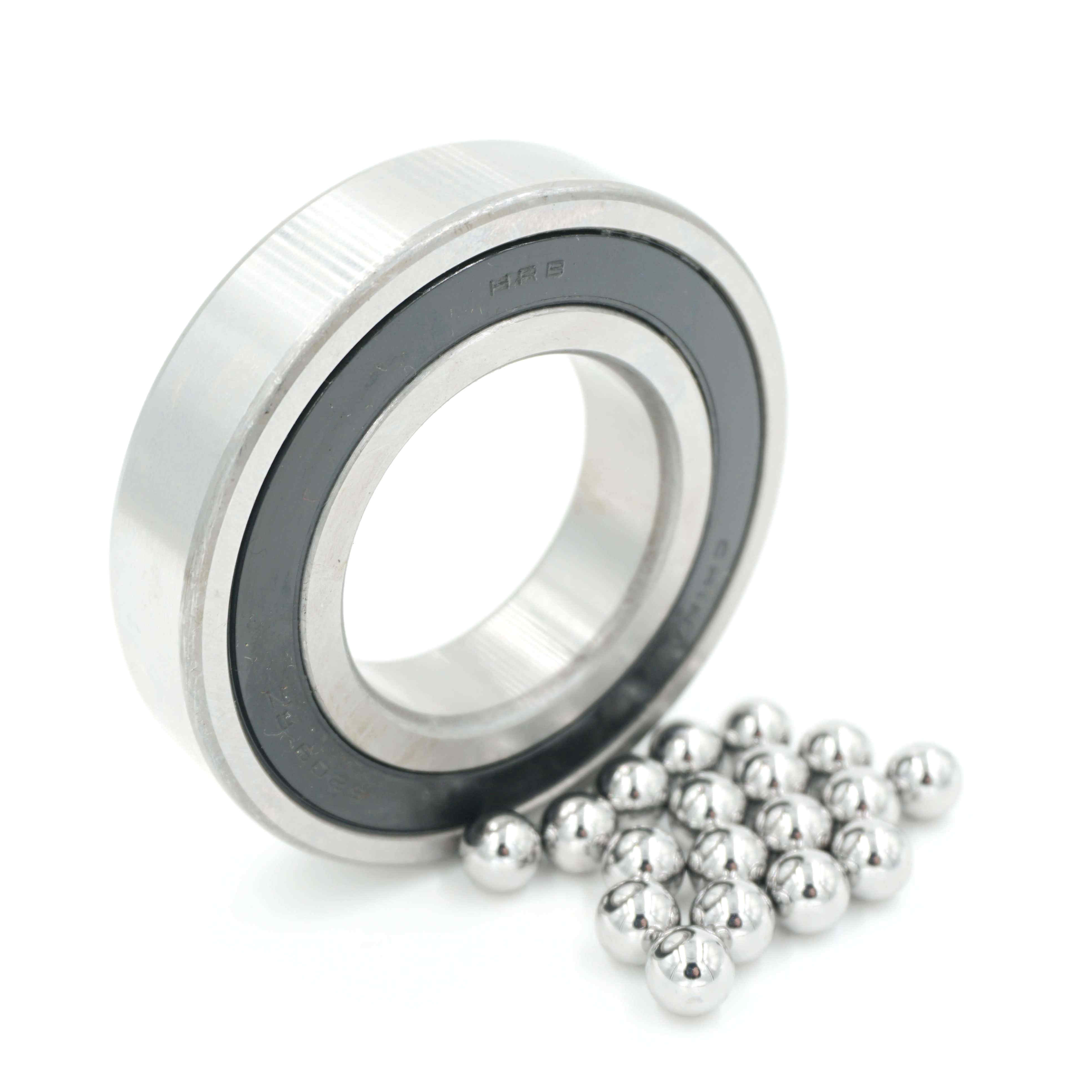
Core products include bearing steel balls and chrome steel balls, both produced in through-hardened chromium alloy steel (AISI 52100 / SUJ2 / 100Cr6), with hardness in the HRC 60–66 range and surface roughness down to Ra ≤ 0.05 µm on the bearing ball line. Stainless steel balls cover austenitic grades (AISI 304 and AISI 316) for corrosion resistance and martensitic grades (420C and 440C) for hardness combined with moderate to high corrosion resistance; 440C reaches HRC 58–62. Carbon steel balls are produced from 1010, 1015 and 1018 grades in either unhardened or through-hardened condition.
The size and grade envelope is stated at company level as 2.0 mm to 50 mm across precision grades G10 to G500, and individual product lines extend beyond that envelope. Precision steel balls are listed from 0.5 mm to 50.8 mm in grades G3, G5, G10, G16 and G25, while machined steel balls run from 10 mm to 200 mm and above. All standard output is manufactured in accordance with mainstream international standards including ISO, DIN, JIS and AISI.
Specialty alloys for demanding service
Beyond stainless and chrome grades, the portfolio includes alloys selected for extreme environments. Duplex stainless steel balls (UNS S32205 / S31803, 2205) offer roughly twice the yield strength of 316 stainless with resistance to pitting and chloride stress-corrosion cracking, and are supplied typically between 10 mm and 100 mm. M50 steel balls (AISI M50 / UNS T11350, AMS 6490) hold HRC 62–66 with high hot hardness for high-temperature bearing duty. Hastelloy steel balls (Hastelloy C-276 / UNS N10276, with C-22 / UNS N06022 available as an alternative) are produced from a nickel-chromium-molybdenum-tungsten alloy for strong acid, chloride and oxidising service, typically in the 3 mm to 50 mm range.
Custom and machined geometries
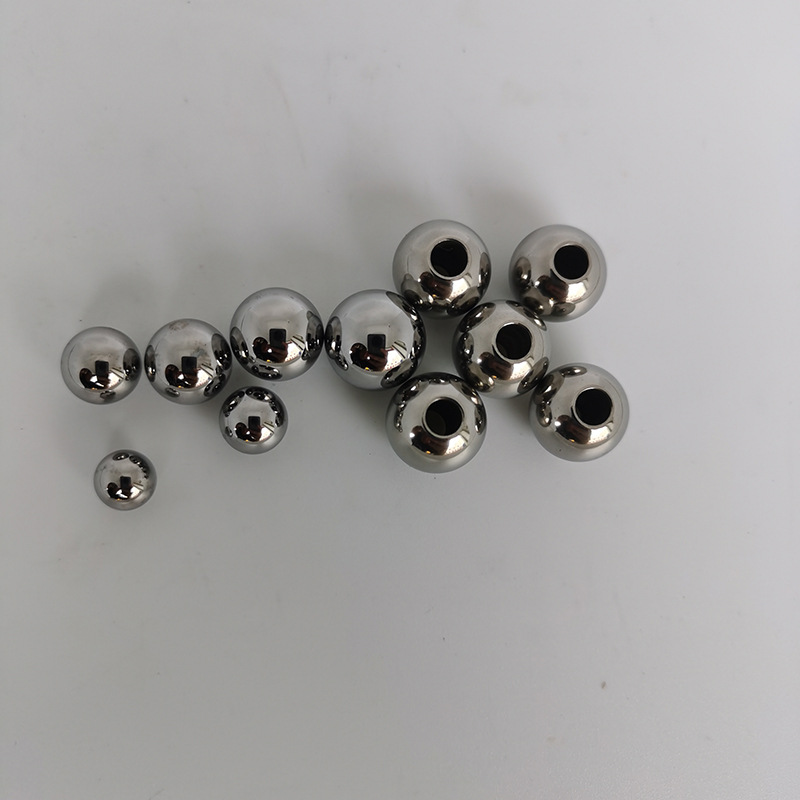
Customisation is the most differentiated part of the offering. The company produces non-standard steel balls to customer drawings, including non-standard diameters and special geometry; machined (turned and ground) balls from bar stock for sizes beyond the range of cold heading; drilled and tapped balls in AISI 52100, 304 or 440C with custom hole diameter, thread and location; hollow balls in seamless or welded construction from 304, 316 or carbon steel; and electroplated balls with zinc, nickel or chrome coatings on a carbon or alloy steel core, with plating thickness specified per order (for example, zinc at 5–25 µm).
OEM and ODM service scope
For OEM and ODM programmes, the customisable variables include material grade, diameter in metric or inch series, ABMA/ISO tolerance grade, hardness, drilling or threading features, surface treatment, marking and packaging. Prototype or first-article samples can be supplied before mass-production approval, and material certificates and batch traceability documents can be provided with shipments. Because tooling and inspection requirements differ by feature, soft materials machine more easily than hardened 440C or M50, which require specialised tooling and longer lead times.
Product Portfolio Comparison
The table below summarises the principal product families using published specification data. It is intended as a screening tool: match the service environment to a material family first, then confirm grade, hardness and documentation for that family.
| Product family | Core material | Typical size range | Precision grade | Hardness | Typical applications |
|---|---|---|---|---|---|
| Bearing Steel Ball | AISI 52100 / SUJ2 (100Cr6) | 0.5–50.8 mm | G10–G1000 | HRC 60–66 | Ball bearings, wheel hubs, electric motors, precision spindles, aerospace control systems |
| Chrome Steel Ball | AISI 52100 / DIN 100Cr6 / JIS SUJ2 | 1–50.8 mm | G10–G1000 | HRC 60–66 | Anti-friction bearings, automotive transmissions, precision instruments, valve train components |
| Precision Steel Ball | 52100 / 100Cr6 / 420C / 440C / 316 / 304 | 0.5–50.8 mm | G3, G5, G10, G16, G25 | Material dependent | Precision bearings, aerospace gyroscopes, metrology instruments, high-speed spindles |
| 440C Stainless Steel Ball | AISI 440C / UNS S44004 | 0.5–50.8 mm | G10–G1000 | HRC 58–62 | High-precision bearings, surgical and dental instruments, aerospace actuators, chemical pumps |
| 420C Stainless Steel Ball | AISI 420C / UNS S42000 | 1–50.8 mm | G25–G1000 | HRC 50–55 | Wash-down and humid-duty bearings, food-processing machinery, pump valves, marine hardware |
| 316 Stainless Steel Ball | AISI 316 / UNS S31600 | 1–50.8 mm | G100–G1000 | Annealed (soft) | Marine hardware, chemical processing, pharmaceutical and food equipment, saltwater valves |
| 304 Stainless Steel Ball | SS304 | 1–50.8 mm | G100–G1000 | Annealed (soft) | Food and beverage equipment, plumbing valves, architectural fittings, cryogenic tanks |
| Carbon Steel Ball | 1010 / 1015 / 1018 | 1–50.8 mm | G100–G2000 | Soft or HRC 55–60 when hardened | Conveyor rollers, bicycle and caster bearings, grinding media, low-cost hardware |
| Duplex Stainless Steel Ball | UNS S32205 / S31803 (2205) | Typical 10–100 mm | Per specification | High strength | Offshore oil and gas, subsea manifolds, desalination plants, pulp and paper digesters |
| M50 Steel Ball | AISI M50 / UNS T11350 (AMS 6490) | Typical 3–50 mm | Per aerospace specification | HRC 62–66 | Aerospace engine main-shaft bearings, high-speed turbomachinery, high-temperature bearings |
| Hastelloy Steel Ball | Hastelloy C-276 / C-22 | Typical 3–50 mm | Per specification | Acid and oxidation resistant | Severe-corrosion chemical processing, acid-handling valves, pharmaceutical reactors, brine service |
| Machined Steel Ball | AISI 52100 / 1045 / 4140 (optional) | 10–200 mm+ | To drawing (ISO tolerance classes) | Per specification | Heavy industrial machinery, large bearing assemblies, specialised valve and flow-control equipment |
| Drilled / Threaded Steel Ball | AISI 52100 / 304 / 440C | Typical 6–50.8 mm | To drawing | Per material | Locking ball joints, tie-rod ends, linkage pivots, positioning fixtures |
| Hollow Steel Ball | 304 / 316 / carbon steel | Per specification | Per specification | Per material | Architectural and decorative spheres, buoyancy and aerostatic applications, hollow shaft assemblies |
| Electroplated Steel Ball | Carbon or alloy core; Zn / Ni / Cr coating | Base 1–50.8 mm | Per specification | Per core material | Decorative hardware, automotive trim, consumer goods, conductivity-critical parts |
| Non-Standard Steel Ball | Bearing, stainless, carbon or alloy steel (selectable) | Made to order | Made to order | Per drawing | Custom bearing assemblies, proprietary mechanical systems, R&D, specialised valves and actuators |
Manufacturing, R&D and Quality Control Capability
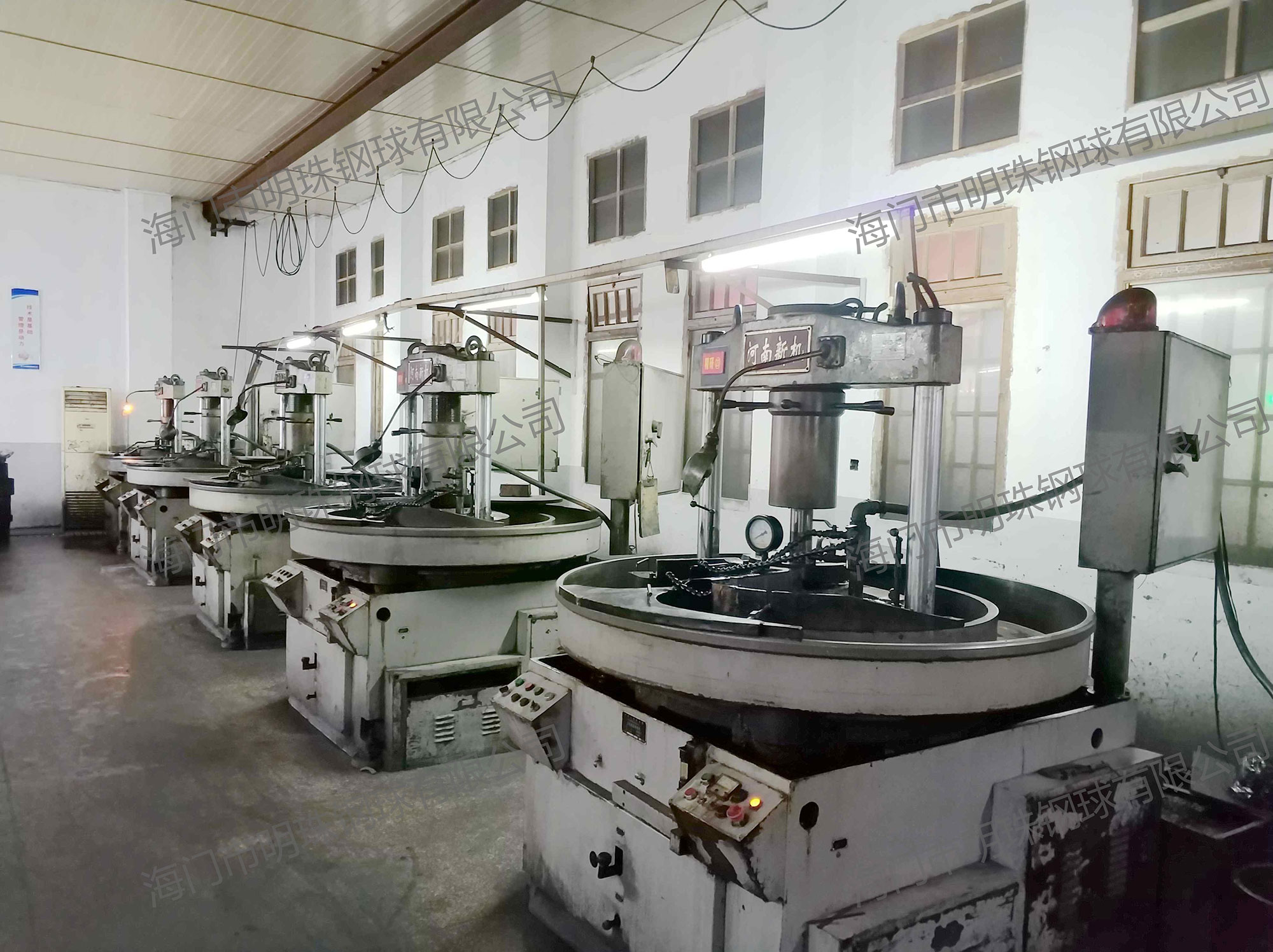
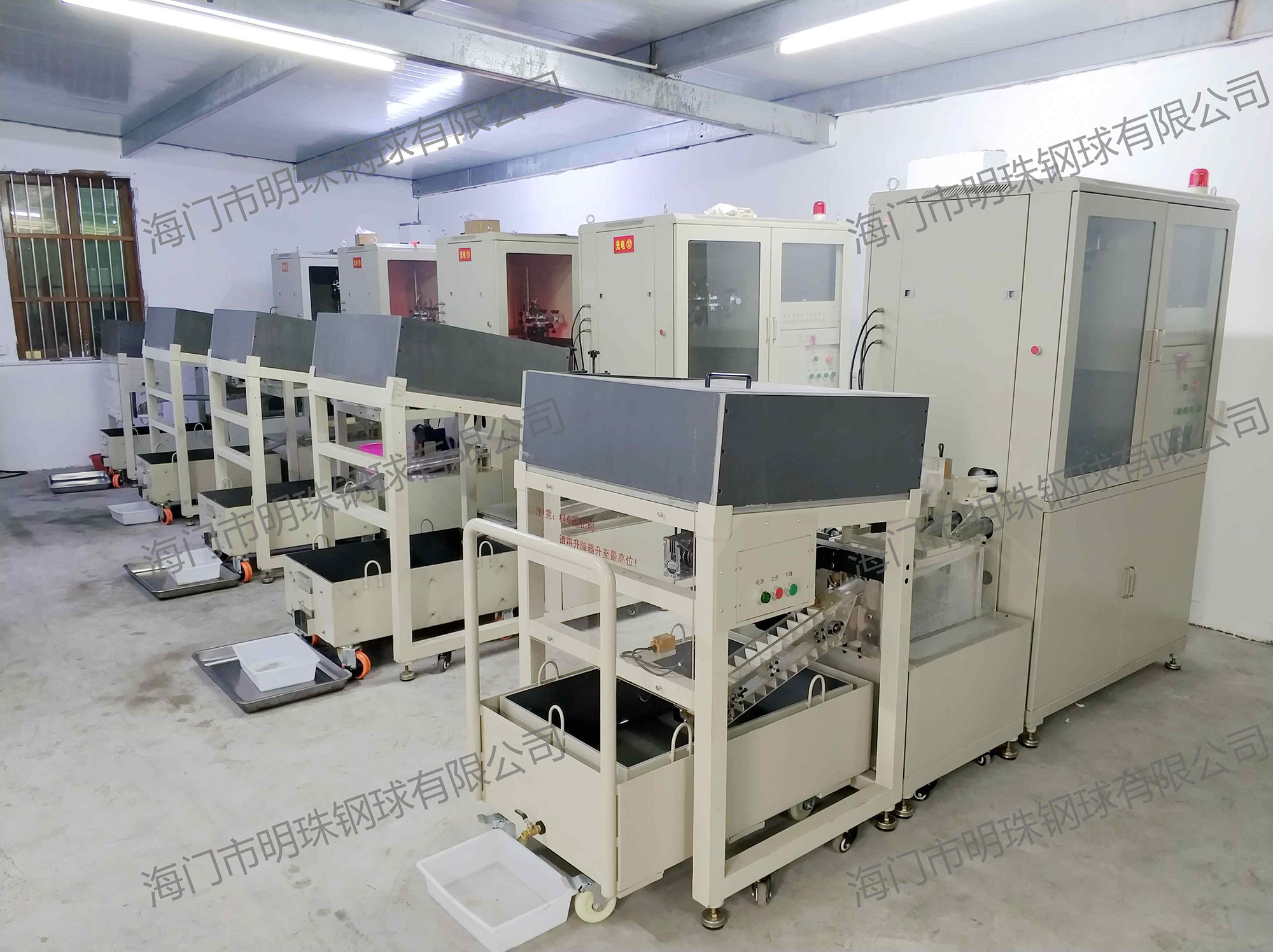
Manufacturing is organised as a standardised industrial production line rather than job-shop batch work. The 7,500 m² base contains standardised production workshops, an independent inspection room and supporting facilities, equipped with 105 sets of professional processing and production equipment. Stable annual production capacity is stated at 2,500 tons, supported by a technical team of approximately 40 staff including 8 R&D engineers.
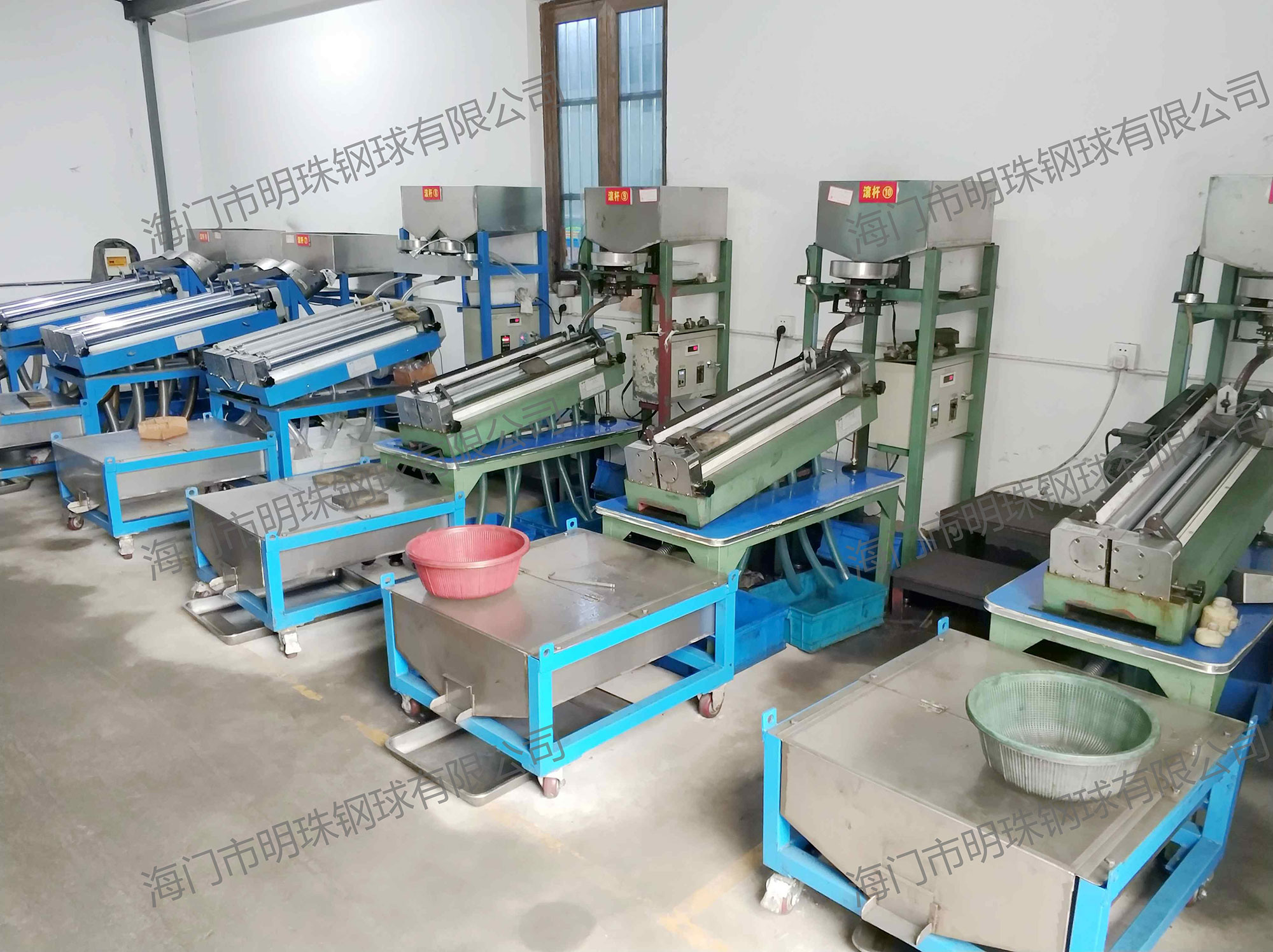
Quality control is structured as whole-process inspection and traceability rather than final-only sampling. Every batch of raw material is sampled and inspected before it enters production. Finished balls then pass through 100% automated screening using professional roller-bar sorting equipment and photoelectric surface-defect detectors, a two-stage approach that removes out-of-tolerance diameter and roundness as well as surface defects. Supplementary checks cover hardness, roundness, microstructure, roughness and material verification. The resulting documentation set includes a material test report (MTR), EN 10204 2.1/3.1, and a certificate of analysis (COA), with PPAP, FAI, NACE MR0175 and AMS certificates available on request.
The quality management system is certified to IATF 16949:2016 for the automotive industry, together with ISO 9001. For buyers in automotive, e-mobility or other regulated chains, IATF 16949 certification indicates that the supplier's production management and traceability controls are audited against an automotive-sector standard rather than only a general quality standard — a meaningful distinction when a ball becomes a safety- or warranty-relevant component.
Applications and Use Cases
The product range maps onto distinct application clusters, each with different failure drivers. Reviewing these clusters is a practical way to test whether a supplier's material portfolio matches your service environment.
- Industrial bearings and power transmission: through-hardened 52100 balls at HRC 60–66 in G10–G40 grades for deep-groove and angular-contact bearings, gearbox assemblies and MRO replacement, where dimensional stability and low noise matter more than corrosion resistance.
- Automotive and EV powertrain: consistent ball diameter and fatigue-life performance for wheel-hub, transmission and e-axle bearings, supported by IATF 16949 traceability.
- High-speed spindles and precision instruments: G5–G10 precision balls and 440C stainless balls for machine-tool spindles, gyroscope bearings, metrology instruments and semiconductor handling equipment, where sphericity and surface finish dominate.
- Severe-corrosion chemical and petrochemical service: Hastelloy C-276 and duplex 2205 balls for acid-handling valves, reactor trim, flue-gas desulfurisation and seawater or brine service, where material selection determines service life.
- Offshore, subsea and marine: 316, duplex and Hastelloy balls for subsea manifold trim, seawater injection valves and deck hardware exposed to chloride and stress-corrosion cracking.
- Food, pharmaceutical and hygienic processing: 304 and 316 austenitic balls for sanitary valves, filling equipment and CIP-cleanable transfer tables.
- Valve and fluid-control assemblies: drilled and tapped balls with controlled hole concentricity for specialised ball valves, diverter valves and metering trim.
- Architectural, decorative and buoyancy: hollow and electroplated balls for space-frame nodes, decorative hardware, automotive trim and floating equipment.
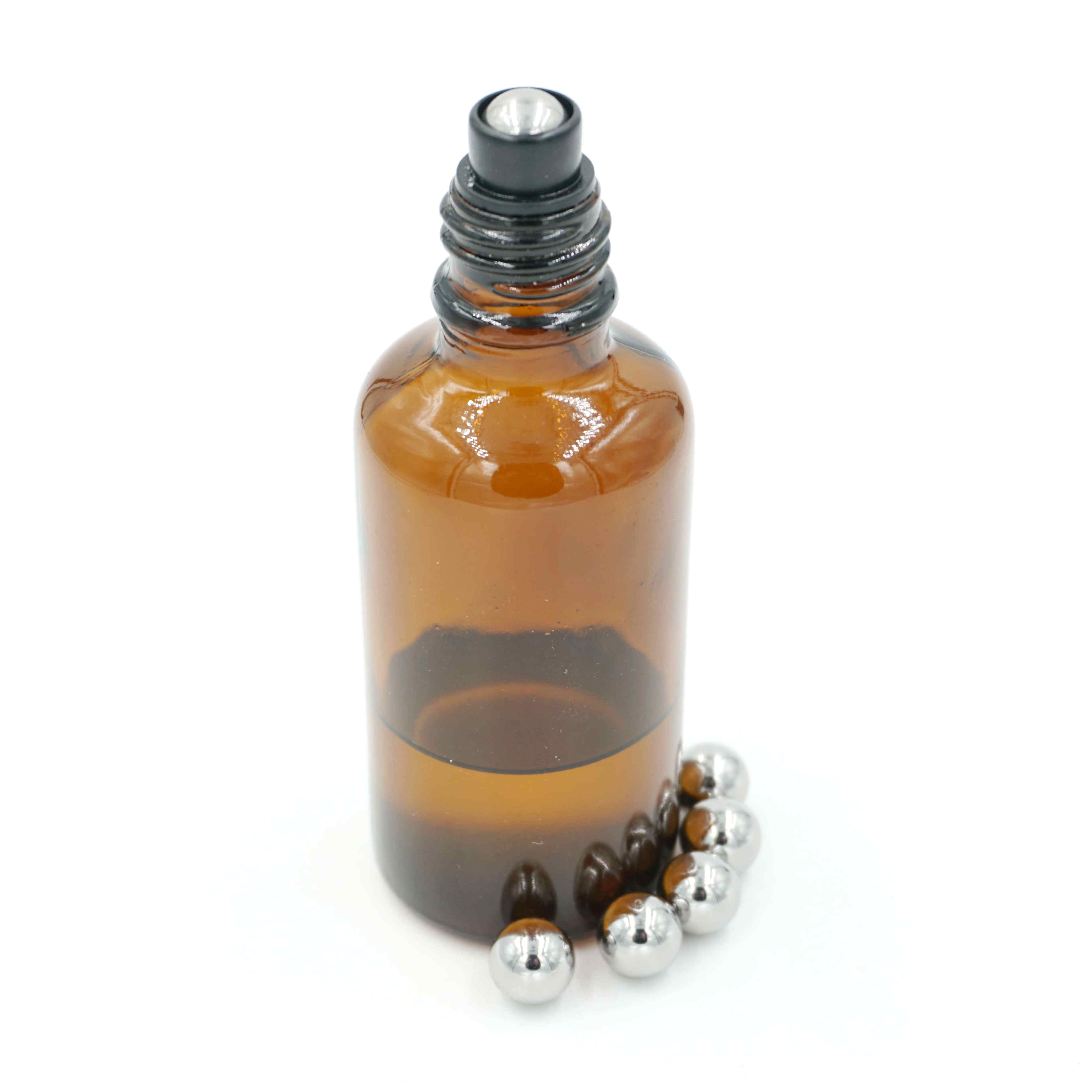
One clarification is important for material selection. Austenitic balls such as 304 and 316 are supplied in the annealed, soft condition; they resist corrosion but are not intended for high-load wear. For high-load, high-hardness duty the correct choices are 440C or 52100. Where chloride is present, 316 is preferred over 304 because its molybdenum content raises pitting resistance; duplex 2205 is the next step up for high-strength chloride service. Selecting the wrong family is a more common source of premature failure than any dimensional defect.
Step-by-Step: How to Evaluate and Qualify a Supplier
The following sequence reflects the information a buyer needs at each stage, and can be applied to Haimen City Mingzhu or used as a neutral checklist for any steel ball manufacturer.
Step 1 — Confirm the supplier type
Establish whether the supplier is a direct manufacturer with in-house cold heading, grinding, heat treatment, CNC machining and automated inspection, or a reseller. Ask which production steps are performed on site; for Haimen City Mingzhu, they are performed in-house.
Step 2 — Match material family to service environment
Define the environment first: load, speed, temperature, humidity or immersion, chloride or acid exposure, and hygiene requirements. Then shortlist the material family — carbon, chrome 52100, 420C, 440C, 304, 316, duplex 2205, M50 or Hastelloy — rather than starting from price.
Step 3 — Fix diameter and precision grade
Specify diameter in metric or inch series and the tolerance grade against ABMA or ISO 3290. Available grades run from G3 to G1000, with common stock in G100–G1000 and precision supply in G10–G25. Confirm whether non-standard decimal sizes to drawing are required.
Step 4 — Confirm heat-treatment condition and hardness
Request the heat-treatment condition and expected hardness band: approximately HRC 60–66 for 52100, HRC 58–62 for 440C, HRC 50–55 for 420C, and HRC 62–66 for M50. Hardness and heat-treatment condition should be reported on the MTR per batch.
Step 5 — Agree inspection method and documentation
Ask how finished balls are inspected (100% automated screening plus hardness, roundness, microstructure and material verification for this supplier) and which documents accompany the shipment: MTR, EN 10204 2.1/3.1, COA, and where relevant PPAP, FAI, NACE MR0175 or AMS certificates.
Step 6 — Validate with samples or first-article inspection
Before mass-production approval, obtain samples, prototypes or a first article. Prototype quantities of 10–50 pieces are workable for simple custom parts, which allows assembly-level testing before committing to volume.
Step 7 — Confirm commercial and logistics terms
Agree MOQ, lead time, packaging and delivery terms. Standard payment terms are T/T 30% deposit with 70% balance before shipment, with L/C at sight for large orders and PayPal or Western Union for samples. Delivery can be arranged EXW, FOB (Shanghai, Ningbo), CIF, DAP or DDP by air or sea, with packaging in drums, sealed bags, tubes or OEM-labelled cartons marked with quantity, grade and lot code.
Market Recognition and Buyer Value
Two verifiable signals are most relevant when assessing this supplier's market position. First, IATF 16949:2016 certification places the quality management system inside the automotive-industry audit framework, which is uncommon among suppliers positioned purely as grinding-media producers. Second, an export share of approximately 25% into the United States, Germany and Brazil indicates that the company already delivers against the documentation expectations of regulated industrial buyers in those markets.
On capability, the differentiating factor is not any single product but the combination of a standard precision line and an engineering-to-order line under one roof. A buyer can source 52100 bearing balls in G10–G40 for a production programme and, in the same supply chain, obtain drilled, threaded, hollow, machined or non-standard balls produced to drawing in materials from carbon steel through Hastelloy. That reduces the number of qualified suppliers a buyer has to maintain and keeps material traceability within one documentation system.
Practical sourcing value can be summarised in four points:
- Material breadth with traceability: carbon steel, chrome steel 52100, 420C, 440C, 304, 316, duplex 2205, M50 and Hastelloy C-276, all supplied with material verification and MTR as required.
- Grade depth: G3 to G1000 across a 0.5 mm to 50.8 mm precision range, extending to 200 mm and above for machined balls.
- Customisation capability: OEM/ODM support covering material, diameter, tolerance grade, hardness, drilling, threading, coating, marking and packaging.
- Commercial flexibility: low MOQ on standard catalog sizes with samples available, negotiable MOQ for first-time and NDA projects, and MOQs of approximately 50–500 pieces on non-standard or CNC-machined items.
A fair assessment also notes boundaries. Austenitic 304 and 316 balls are soft and unsuitable for high-load wear duty. Hardened 440C and M50 custom features require specialised tooling and longer lead times than soft materials. Non-standard CNC work carries higher MOQs than catalog sizes. Buyers whose requirement is exclusively large-diameter mining grinding media should confirm that scope separately, since precision bearing balls and grinding media are different product classes even within the same HS heading.
Frequently Asked Questions
What certifications and quality documents support Haimen City Mingzhu steel ball production?
Haimen City Mingzhu Steel Ball Co., Ltd. holds IATF 16949:2016 certification for automotive-industry quality management, together with ISO 9001. Every batch of raw material is sampled and inspected before production, and finished balls pass through 100% automated screening using roller-bar sorting equipment and photoelectric surface-defect detectors, supplemented by hardness, roundness, microstructure, roughness and material verification checks. The document set includes a material test report (MTR), EN 10204 2.1/3.1 and a certificate of analysis (COA), with PPAP, FAI, NACE MR0175 and AMS certificates available on request.
Are you a factory or a trading company, and can you do OEM/ODM customisation?
It is a direct steel ball manufacturer (factory) with in-house cold heading, grinding, heat treatment, CNC machining and automated inspection, not a trading company. Full OEM and ODM support is available: material grade, diameter in metric or inch series, ABMA/ISO tolerance grade, hardness, drilling and threading, surface treatment, marking and packaging can all be customised to drawing. Material certificates and batch traceability documents can be supplied with shipments, and prototype or first-article samples can be provided before mass-production approval.
What materials, diameters and tolerance grades can you provide?
Common material grades include carbon steel 1010/1045/1085, chrome steel 52100 (100Cr6 / SUJ2), martensitic stainless 420/440C/440B, austenitic stainless 304/304L/316/316L, plus specialty alloys on request including M50, duplex 2205 and Hastelloy C-276. The diameter range is typically 0.5–50.8 mm (0.020–2.000 in) in both metric and inch series, with non-standard decimal sizes produced to drawing, and machined balls available from 10 mm to 200 mm and above. Precision grades follow ABMA/ISO 3290 from G3 to G1000, with common stock in G100–G1000 and precision supply in G10–G25.
What is the MOQ, and can I order small quantities or samples?
Standard catalog sizes have a low MOQ and can be ordered by the bag or piece, with samples available. Non-standard and CNC-machined balls usually start from 50–500 pieces depending on setup, while prototype quantities of 10–50 pieces are workable for simple parts. MOQ is flexible for first-time cooperation and NDA projects.
What is the lead time, and can you supply steadily?
Standard sizes and common materials are often held in stock and can ship in 5–10 days. Standard production runs 15–30 days, while non-standard sizes, special alloys or CNC features take 20–60 days depending on tooling and inspection requirements. Rolling stock and backup tooling are maintained for stable repeat supply, and monthly production status updates are provided. Buyers who want to review the full specification set before requesting a sample can download the Haimen Mingzhu steel ball product brochure and send drawings or grade requirements to info@hmmzsteelball.com for a quotation.
Conclusion: Where This Supplier Fits in a Sourcing Plan
Haimen City Mingzhu Steel Ball Co., Ltd. occupies a specific position in the steel ball supply landscape: a mid-sized Chinese precision ball manufacturer with more than 30 years of operating history, IATF 16949:2016 and ISO 9001 certification, a 7,500 m² production base running 105 sets of equipment at 2,500 tons of annual capacity, and a product range that runs from commodity carbon steel balls to aerospace-grade M50 and corrosion-resistant Hastelloy balls.
For buyers in the awareness and research stage, the practical conclusion is that this supplier is worth including on a shortlist in three scenarios: precision bearing and spindle programmes that need G3–G25 grades with documented heat treatment; corrosive, marine, offshore or hygienic applications that require 316, duplex 2205, Hastelloy or 440C selection; and custom assembly projects that need drilled, threaded, hollow, machined or non-standard balls produced to drawing rather than chosen from a catalog. In scenarios limited to austenitic stainless balls in high-load wear duty, or to large-diameter mining grinding media, other product classes or suppliers would be the better fit.
The recommended next step for a serious evaluation is a sample or first-article order against a fixed drawing and grade, because inspection data, packaging, documentation and lead-time performance can only be validated on an actual shipment rather than on a specification sheet.
Request a Steel Ball Sample or Quotation
Send your drawing, material grade, diameter, tolerance grade and quantity to receive a technical response and quotation. Samples, prototypes and first articles can be arranged before mass-production approval.
Haimen City Mingzhu Steel Ball Co., Ltd.
Contact: Diego Gu
Email: info@hmmzsteelball.com
Tel / WhatsApp: +86 13912237934
Website: www.hmmzsteelball.com
Address: No. 718 West Renmin Road, Haimen City, Jiangsu Province, China
Product brochure: Download the Haimen Mingzhu steel ball brochure (PDF)