
Needle Valve Leakage: Steel Ball Choice for Corrosive Fluids
Leakage and loss of shut-off in mildly corrosive service is usually a materials decision that was made too early and then never revisited — the valve was specified, the trim was ordered, and the ball grade was left open. The ball that closes the port has to survive the chemistry of the fluid and the mechanical load of repeated closing at the same time, and in stainless alloys those two requirements pull in opposite directions.
This guide covers the ball element used as the sealing or shut-off member in valve trim: the balls fitted in check valves and ball valves, and the trim supplied alongside needle-valve assemblies working in the same fluid circuit. The service envelope is mildly corrosive fluid at 0–200 °C and moderate pressure — the band in which 420C and 440C martensitic stainless steel balls are compared with 304 and 316 austenitic stainless steel balls.
Direct answer. For mildly corrosive fluid at 0–200 °C, hardened martensitic stainless is the default material for the ball in valve trim. AISI 420C, hardened to HRC 50–55, is the grade that meets the usual trim requirement of hardened martensitic at HRC 48–55 with moderate corrosion resistance. AISI 440C, at HRC 58–62, is the wear-led choice when cycle count or erosion dominates. AISI 304 and 316 are corrosion-led alternatives and are supplied annealed and soft, so they should be selected only when the fluid is more demanding than the seat load.
Why the trim leaks: one ball, two jobs
Inside a ball valve or a check valve, the ball does two jobs at once. It closes against the seat to shut off flow, and it sits in the process fluid whenever the valve is open. A material that seals well — hard, through-hardened martensitic stainless — is not automatically the most corrosion-resistant option, and a material that resists the fluid well — soft austenitic stainless — does not carry a sealing line under repeated load. Leakage in the 0–200 °C, mildly corrosive band is usually one of three specification failures rather than a manufacturing defect.
- Sealing-line deformation. AISI 304 and 316 balls are austenitic and supplied annealed and soft; the published material data lists austenitic stainless balls at HRC 25–39. Where seat load repeats, that softness becomes the limiting factor, and the same material guidance recommends 440C or 52100 when high-load wear is the governing condition.
- A corrosion reserve that does not match the fluid. Hardness and corrosion resistance are separate properties. A martensitic ball chosen only because it is hard can still be the wrong alloy for a chloride-bearing or mildly acidic stream, and the corrosion reserve is consumed at the sealing contact where the ball meets the seat.
- Hardness below the trim specification. Valve trim for mildly corrosive service is specified as hardened martensitic at HRC 48–55. A ball that is dimensionally correct but not hardened into that band can pass a dimensional check and still fail a shut-off test.
None of these is solved by buying a “stainless steel ball”. In this service band the grade is the decision, and the grade has to be named in the purchase specification with its hardness band and its inspection evidence.
What mildly corrosive service at 0–200 °C actually demands
Valve and fluid-control duty in oil, gas and petrochemical plants is characterised in application data as wet gas or mildly corrosive fluids at 0–200 °C and moderate pressure, with quarter-turn on/off and intermittent operation. The matched equipment listed for that duty is floating and trunnion-mounted ball valves, needle valves and check valves. The special requirement stated for the trim is hardened martensitic at HRC 48–55, moderate corrosion resistance, and optional NACE MR0175 compliance.
Two practical consequences follow. First, the alloy has to be specified by designation and hardness band, not by family — “stainless” covers a soft austenitic ball and a hardened martensitic ball, and they behave nothing alike in a seat. Second, the evidence has to travel with the lot. A trim ball is a small, low-cost part that can stop a whole valve package from passing acceptance, so the material certificate and hardness record matter more than the unit price.
The geometric and inspection framework for these parts is well defined: ISO 3290-1:2014 specifies requirements for finished steel balls for rolling bearings and defines grades from G3 to G700; steel balls are traded under HS code 8482.91; and bearing-quality high-carbon steel is covered by ASTM A295/A295M. Those standards tell a buyer how to measure a ball. They do not choose the alloy. The fluid does.
The fix: match the ball to the fluid and to the seat load
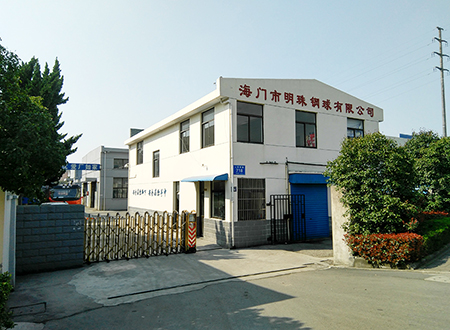
Haimen City Mingzhu Steel Ball Co., Ltd. is a steel ball manufacturer founded in 1992 in Haimen, Jiangsu Province, China, producing bearing steel balls, chrome steel balls, stainless steel balls, carbon steel balls and custom machined balls under IATF 16949:2016 certification. Valve-trim work is built around four grades — two hardened martensitic and two austenitic — and the choice between them is a two-question test: how corrosive is the fluid, and how much seat load has to be carried.
Option 1 — AISI 420C, HRC 50–55: the default for hardened valve trim
AISI 420C (UNS S42000) is a martensitic stainless precision ball supplied from 1 mm to 50.8 mm in grades G25–G1000, hardened to HRC 50–55 and described by the manufacturer as corrosion resistant. Its listed applications include pump valves, bearings in mildly corrosive environments, food-processing machinery and marine hardware. For a needle or check valve handling a mildly corrosive fluid at 0–200 °C, 420C is the starting point: hard enough to hold a sealing line, alloyed enough to hold the fluid, and inside the HRC 48–55 band that the trim specification calls for.
Option 2 — AISI 440C, HRC 58–62: the wear-led upgrade
AISI 440C (UNS S44004) is also martensitic stainless, supplied from 0.5 mm to 50.8 mm in grades G10–G1000, hardened to HRC 58–62 with phosphorus and sulphur held to a maximum of 0.07%. It sits several HRC points above 420C, and its listed applications — high-precision bearings, chemical pumps, surgical and dental instruments, aerospace actuators — show where that premium is earned. In valve trim, 440C is specified when wear, erosion or a high cycle count dominates and the fluid is still inside its corrosion range. It is a hardness upgrade over 420C, not automatically a corrosion upgrade.
Option 3 — AISI 304 and 316: the corrosion-led alternatives
AISI 304 and AISI 316 are austenitic stainless balls, supplied from 1 mm to 50.8 mm in grades G100–G1000, annealed soft, with mirror polish available on 304. They are the corrosion-first option. 316 adds 2–3% molybdenum and 10–14% nickel over 304, which raises the pitting resistance equivalent number to roughly 23–28 against roughly 18–20 for 304, and it is the grade listed for saltwater valves, chemical processing, pharmaceutical and food equipment, and offshore rigging. Neither grade is hardened: for high-load wear, the material guidance points back to 440C or 52100.
Option 4 — when the fluid is not actually mild
Above this band, duplex stainless steel balls (UNS S31803 / S32205, typically 10–100 mm) cover high-strength seawater duty, and Hastelloy C-276 / C-22 covers strong acids and chlorides. They sit outside a mildly corrosive brief, but they matter as boundary markers: if the fluid turns out to be more aggressive than “mild”, the answer is a different alloy family, not a harder ball of the same family.
Where the other ball types fit
Carbon steel balls and bearing steel balls such as AISI 52100/SUJ2 are hardness options, not corrosion options; they belong in bearings and mechanisms rather than in a wet, mildly corrosive seat. Hollow steel balls serve low-weight, buoyancy, decorative and structural functions, and electroplated steel balls are aimed at decorative and low-corrosion indoor applications. If the trim geometry itself is non-standard — a modified seat, a locating feature, a non-standard diameter — non-standard steel balls and machined steel balls are produced to drawing from a minimum order quantity of 50 pcs per drawing, and drilled steel balls with axial or radial hole configurations are available on the same basis.
Comparison table: 420C, 440C, 304 and 316 valve-trim balls
| Ball grade | Material type | Hardness | Size and grade range | Corrosion position | Best fit in valve trim |
|---|---|---|---|---|---|
| 420C AISI 420C / UNS S42000 |
Martensitic stainless, heat-treatable | HRC 50–55 | 1 mm – 50.8 mm; G25–G1000 | Moderate corrosion resistance; listed for pump valves and mildly corrosive bearings | Default for mildly corrosive fluids at 0–200 °C; meets the HRC 48–55 hardened martensitic trim requirement |
| 440C AISI 440C / UNS S44004 |
Martensitic stainless, through-hardened; P and S max 0.07% | HRC 58–62 | 0.5 mm – 50.8 mm; G10–G1000 | Corrosion resistant with higher hardness than 420C; listed for chemical pumps | Wear-, erosion- or cycle-dominated trim where the fluid stays inside its corrosion range |
| 304 SS304 |
Austenitic stainless, annealed | Soft, annealed; mirror polish available | 1 mm – 50.8 mm; G100–G1000 | General-purpose; PREN roughly 18–20 | Plumbing valves, food and beverage equipment, decorative and architectural fittings |
| 316 AISI 316 / UNS S31600 |
Austenitic stainless with 2–3% Mo, 10–14% Ni, annealed | Soft, annealed | 1 mm – 50.8 mm; G100–G1000 | Excellent chloride resistance; PREN roughly 23–28 | Saltwater valves, chemical processing, pharmaceutical and food equipment, offshore rigging |
Hardness and size values are manufacturer product data for each grade. PREN values are the manufacturer's stated comparison between 304 and 316. Selection still depends on the actual fluid, temperature and cycle count of the application.
Material-selection checklist for 420C, 440C, 304 and 316 balls
- Name the alloy, not the family. Write AISI 420C / UNS S42000, AISI 440C / UNS S44004, AISI 304 or AISI 316 / UNS S31600 on the drawing. A specification that says only “stainless steel ball” leaves the decision to whoever fills the order.
- Fix the hardness band. For mildly corrosive trim, hardened martensitic at HRC 48–55 is the stated requirement; 420C is supplied at HRC 50–55 and 440C at HRC 58–62. Do not expect hardness credit from 304 or 316 — both are annealed austenitic grades.
- Match size and precision grade to the seat. 420C: 1–50.8 mm, G25–G1000. 440C: 0.5–50.8 mm, G10–G1000. 304/316: 1–50.8 mm, G100–G1000. Grades follow ISO 3290-1:2014, which defines finished ball grades from G3 to G700.
- Run the corrosion screen before the wear screen. Chloride-bearing or mildly acidic streams push the choice toward 316 or duplex; clean, mildly corrosive streams allow 420C; 304 is the economical option for freshwater, indoor and general service.
- Then run the wear screen. Repeated shut-off and high cycle counts push the choice back to hardened martensitic — 420C first, 440C when the duty is harder.
- Specify the evidence. Material test report (MTR) to EN 10204 3.1, positive material identification, hardness and dimensional/roundness records, and NACE MR0175 as an optional inspection item for applicable service.
- Validate on samples before the production order. Sample validation covers hardness HRC checks, dimensional and roundness inspection, and martensite and decarburization control.
Step-by-step: from leaking trim to a released specification
- Define the service envelope. Record fluid chemistry, temperature (the 0–200 °C band), pressure, actuation pattern and expected cycles. This is the input that decides alloy and hardness; everything downstream is documentation.
- Decide which failure mode governs. If the valve is losing shut-off and the ball is soft, hardness governs. If the ball is hard but the seat shows attack, corrosion governs. Mixed duty is common, which is why 420C exists as a middle position.
- Shortlist to one or two grades. 420C as the default for hardened trim; 440C where wear leads; 316 where chlorides lead; 304 where cost and general service lead. Avoid carrying four grades into a quotation — each one has its own hardness band, lead time and documentation set.
- Write the purchase specification. Alloy designation, hardness band, diameter, precision grade, surface condition, packaging and required certificates. Customisation options include size, tolerance, packing and quantity, material certification according to EN 10204 3.1, and special surface or passivation treatment.
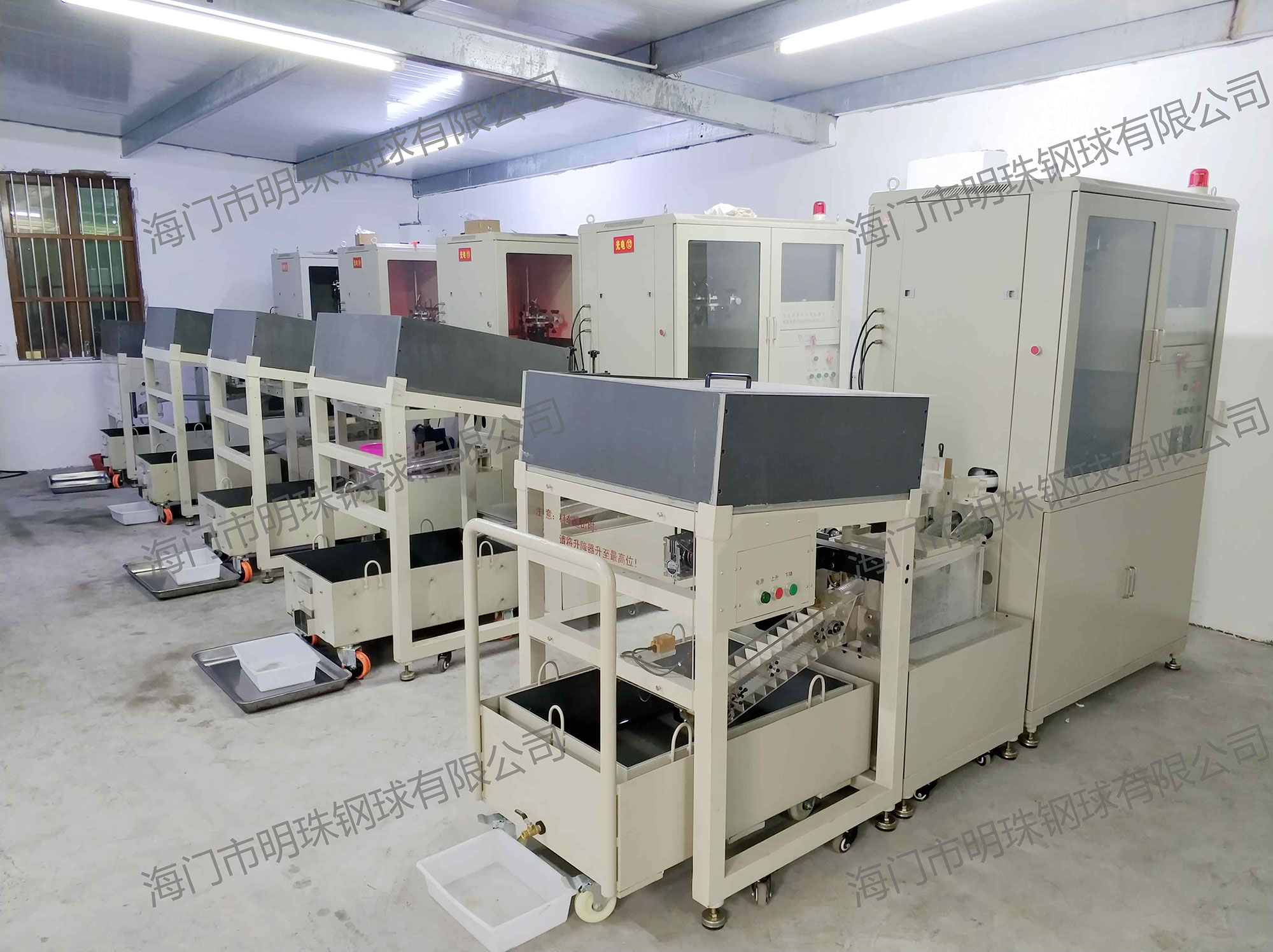
- Agree the inspection regime. 100% automated machine-vision inspection covers dimension, roundness and surface, supported by CMM checks, hardness testing and PMI material verification, with MTR issued against the lot.
- Run a first-article and release. Approve the sample against the drawing, confirm the certificate package, then release the production quantity with the inspection report travelling with the shipment.
Inspection evidence that prevents repeat leakage
Trim leakage often returns because the replacement ball was bought on dimensional data alone. The inspection sequence for valve-trim balls covers the properties that actually decide shut-off performance: 100% automated machine-vision inspection for dimension, roundness and surface; hardness testing against the specified band; PMI material verification to confirm the alloy that was ordered is the alloy that shipped; and MTR documentation, with EN 10204 3.1 available and PPAP, FAI and NACE MR0175 certificates issued on request.
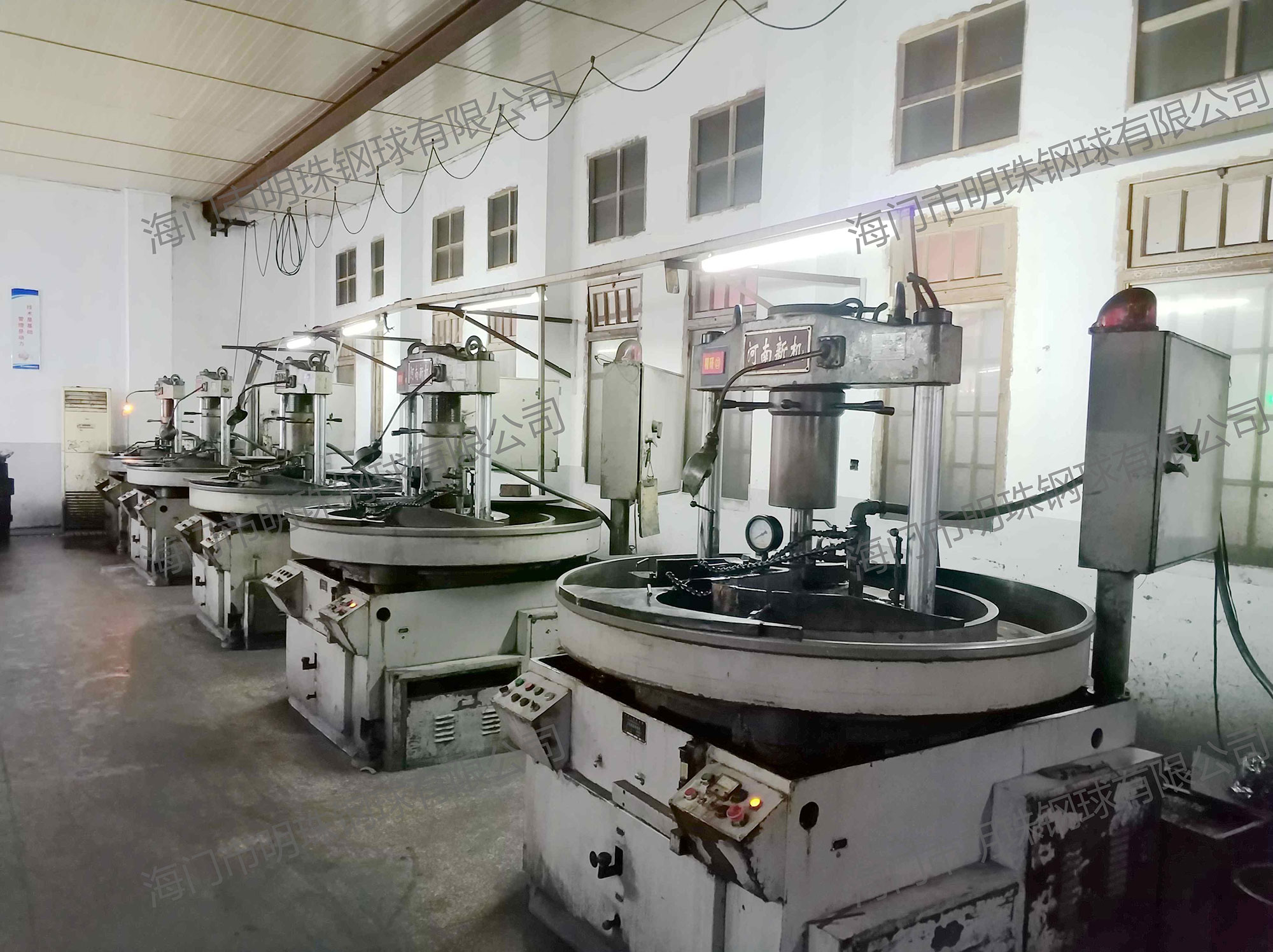
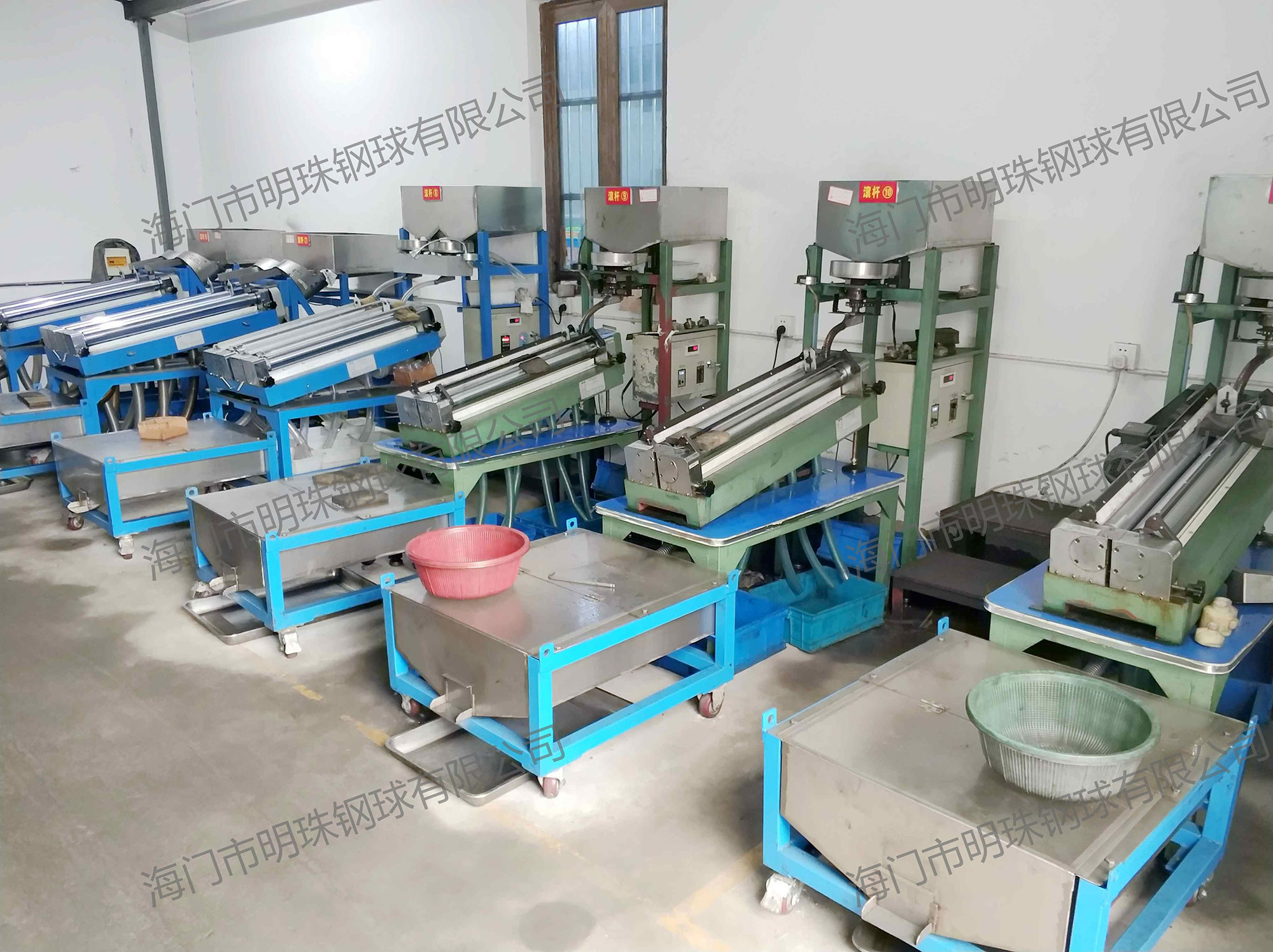
The manufacturing base behind those records matters at repeat-order volume. Haimen City Mingzhu operates a 7,500 m² production base in Haimen, Jiangsu Province with 105 sets of processing equipment, 8 engineers and a 25% export share concentrated on the United States, Germany and Brazil. Stainless lines for grades such as 420C, 440C and 316 are quoted at a monthly capacity of 20 tons, with grinding and lapping performed in-house — which is the practical meaning of “in-house precision grinding” when a buyer is screening Chinese bearing steel ball manufacturers for a repeat valve-trim programme.
Use cases: what the material decision looks like in practice
Valve and pump trim at 900,000 pieces a year
A valve and pump manufacturer has taken an annual volume of 900,000 pieces over four years for corrosion-resistant valve trim and sanitary pump components. The grade is martensitic stainless hardenable to HRC 50–55, supplied with MTR and material certificate. The reported result is a good balance of hardness and corrosion resistance at a lower total cost than 440C for moderate-duty service — the clearest illustration of where 420C stops and 440C starts.
Sanitary ball valves in pharmaceutical and food plants
A pharmaceutical and food equipment maker has taken 400,000 pieces over four years for sanitary ball valves and CIP/SIP process equipment. The requirement is a hygienic design with a smooth finish for cleaning validation; 316L is available for welding, finish is aligned to 3A/EHEDG expectations, and documentation includes MTR and EN 10204 3.1. This is the corrosion-led case where an austenitic grade is correct and hardness is secondary.
High-purity ball valves in biopharma and fine chemicals
A biopharma and specialty chemical equipment maker has taken 50,000 pieces over three years for high-purity ball valves and reactors. The trim uses an ultra-corrosion-resistant alloy with a material certificate and clean-process compatibility, meeting aggressive process chemistry while maintaining hygienic integrity.
Subsea and topside valve trim
An offshore oil and gas operator has taken 180,000 pieces over five years for subsea and topside valve trim. The grade is duplex 2205 with a pitting resistance equivalent above 34, supplied with MTR and PMI verification and NACE MR0175 awareness — the case that marks the upper edge of the “mildly corrosive” band.
Frequently asked questions
What documentation should accompany steel balls for valve trim in mildly corrosive service?
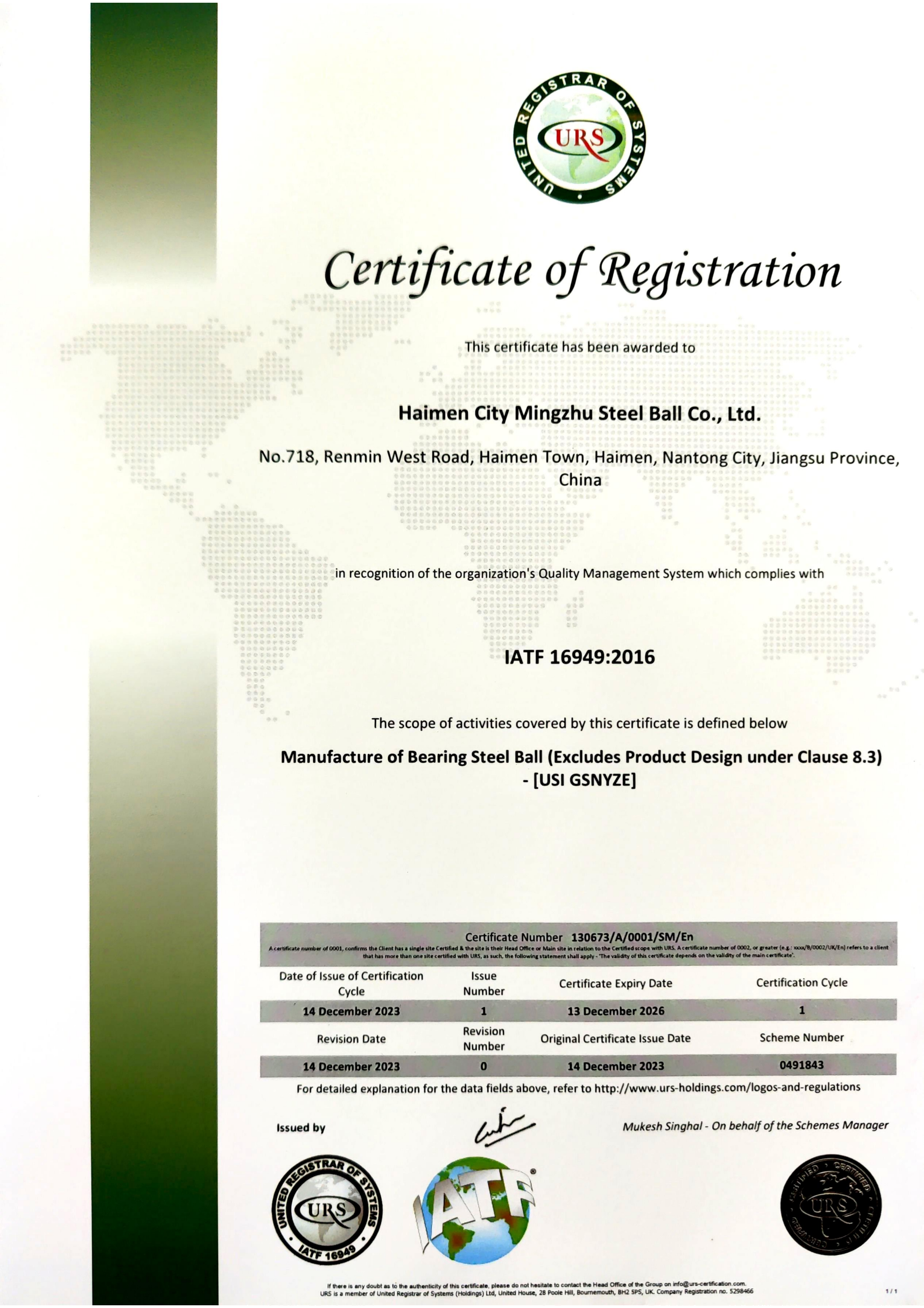
Each lot can be supplied with a material test report to EN 10204 2.1 or 3.1, a certificate of analysis, hardness and dimensional/roundness records, and PMI material verification. PPAP, FAI, NACE MR0175 and AMS certificates are issued on request. The manufacturer holds IATF 16949:2016 certification, certificate 130673/A/001/SM/En issued by URS, with a scope covering the manufacture of bearing steel balls.
Can 420C balls be supplied hardened to HRC 50–55 in valve-trim sizes, with in-house grinding?
Yes. AISI 420C (UNS S42000) martensitic stainless balls are supplied from 1 mm to 50.8 mm in grades G25–G1000 at HRC 50–55, which sits inside the HRC 48–55 hardened martensitic band specified for mildly corrosive valve trim. Grinding and lapping are performed in-house, and acceptance uses 100% automated machine-vision inspection for dimension, roundness and surface, supported by CMM checks, hardness testing and PMI material verification.
Is 420C more economical than 440C for moderate-duty trim?
In a four-year valve and pump trim programme supplying corrosion-resistant trim and sanitary pump components, 420C was reported to give a lower total cost than 440C for moderate-duty service while maintaining a good balance of hardness and corrosion resistance. 440C remains the appropriate grade where the higher HRC 58–62 hardness is needed for wear-led duty, and it is listed for high-precision bearings, chemical pumps, surgical and dental instruments and aerospace actuators.
Can samples be validated before a production order?
Samples are available, and standard sizes carry a low minimum order quantity. Custom sizes, grades and processes start from 50 pcs per drawing, G3–G10 precision grades from 100 pcs, and drilled and non-standard balls can be supplied as prototype samples from 100 pcs before production. Sample validation covers hardness HRC checks, dimensional and roundness inspection, and martensite and decarburization control.
What lead times and payment terms apply to valve-trim ball orders?
Standard sizes and common materials are often in stock with typical delivery of 10–20 days; non-standard sizes, special alloys or machined features take 20–45 days depending on quantity, and heat-treated or plated custom orders 20–40 days. Standard terms are T/T 30% deposit with 70% balance before shipment, L/C at sight for large orders, and PayPal or Western Union for sample fees, with OA/Net-30 negotiable for qualified repeat buyers. Shipping is EXW or FOB Shanghai/Ningbo, with CIF, DAP and DDP available.
Next step: send the fluid chemistry, temperature, pressure and cycle count together with the seat drawing, and the material recommendation can be confirmed against 420C, 440C, 304 or 316 — with sample balls and a certificate package for first-article approval.
Email: info@hmmzsteelball.com | Tel / WhatsApp: +86 13912237934 | Website: www.hmmzsteelball.com
Download the full product and capability brochure: Haimen Mingzhu Steel Ball brochure (PDF)
Conclusion
Needle valve and check valve leakage in mildly corrosive service is not solved by tightening the packing or replacing the seat. It is solved upstream, at the point where the ball grade is named. For fluid at 0–200 °C and moderate pressure, hardened martensitic trim at HRC 48–55 is the normal requirement, and AISI 420C at HRC 50–55 meets it with moderate corrosion resistance at a lower total cost than 440C for moderate-duty work. AISI 440C at HRC 58–62 is the answer when wear and cycle count lead. AISI 304 and 316 are the corrosion-led alternatives and are supplied annealed and soft, so they belong where the fluid matters more than the seat load.
The rest is discipline: name the alloy and the hardness band on the drawing, require MTR to EN 10204 3.1 with PMI verification, inspect 100% by machine vision, and approve a sample before the production order. Done in that order, the second order of trim does not leak where the first one did.
Have Questions or Need More Details?
Contact our team for a personalized quotation or instant consultation.
Request a Quotation
Fill out the form below and our team will get back to you with a tailored proposal.
WhatsApp Direct Chat
Prefer to chat in real-time? Message us on WhatsApp for instant assistance & quick answers.
- Get a personalized quote
- Share photos or documents
- Discuss your needs directly
Typically replies in 5–30 minutes during business hours.