
Precision Steel Ball Technical Guide: G3–G25 Sphericity and Material Choice for Tolerance-Critical Assemblies
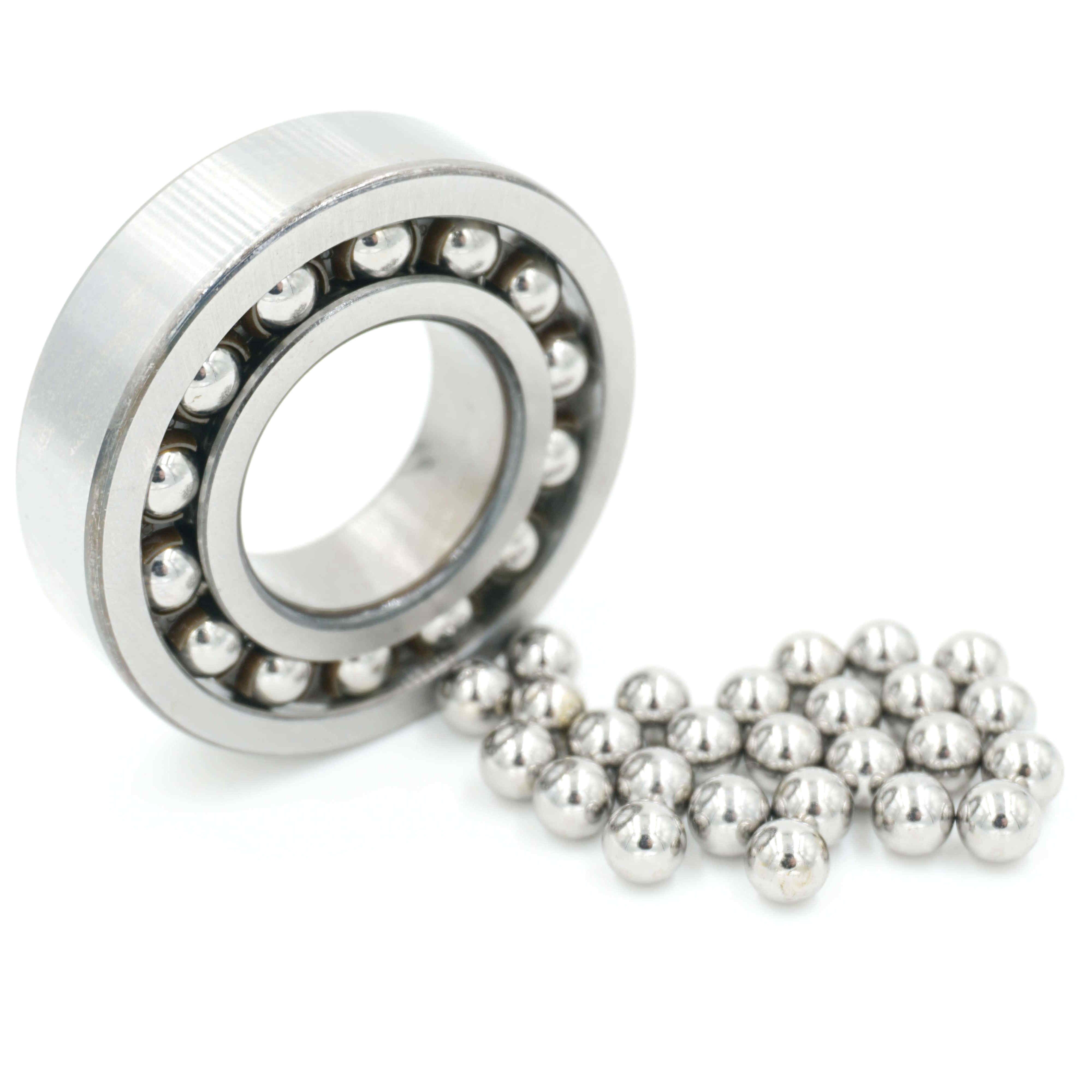
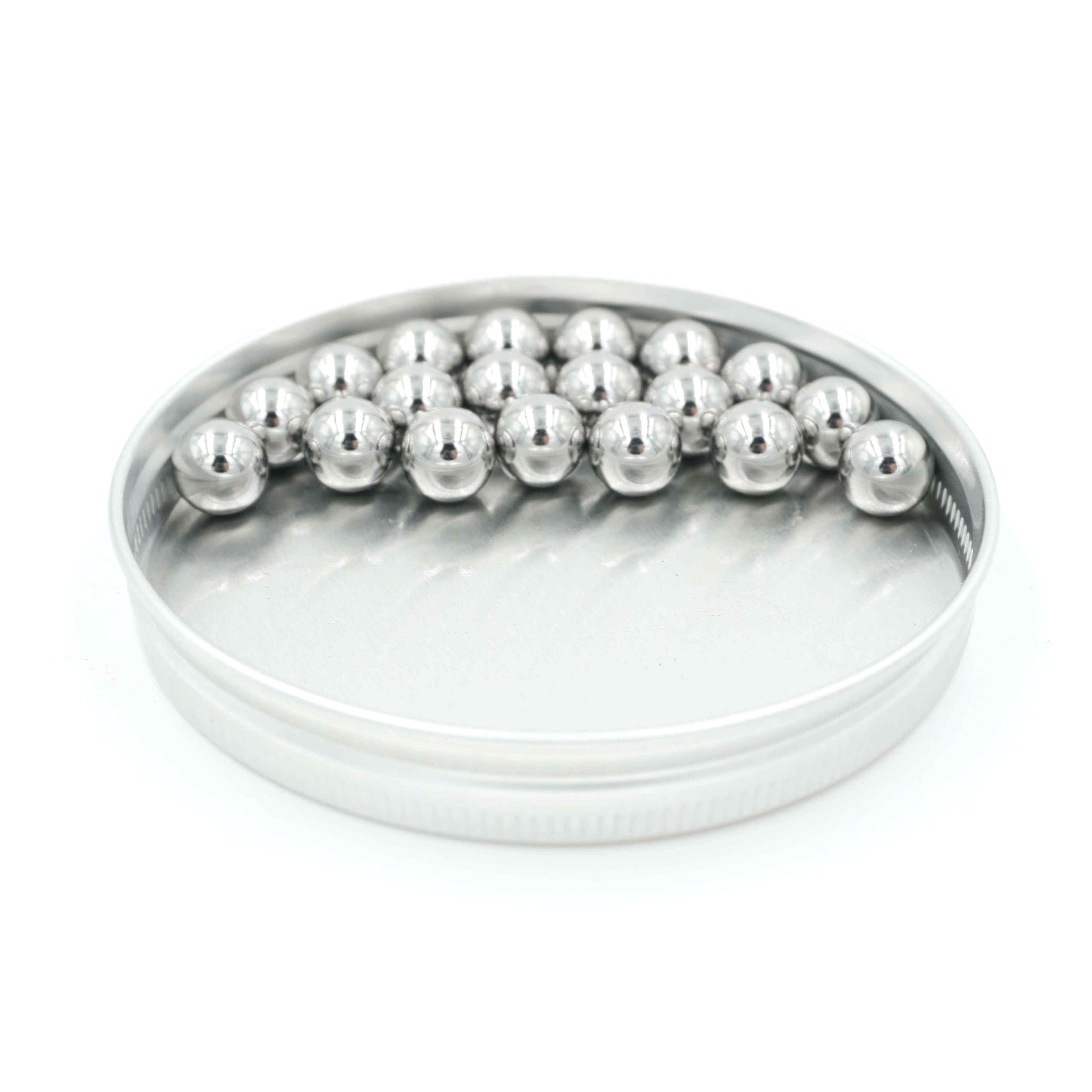
A precision steel ball is a rolling element manufactured to a controlled sphericity, diameter tolerance and surface finish so that it can function inside a tolerance-critical assembly. Two decisions determine fitness for purpose: the precision grade — G3, G5, G10, G16 or G25 — and the material — AISI 52100 / 100Cr6, 420C, 440C, 316 or 304. Make those two calls correctly and the ball runs quietly for a full service interval; get them wrong and the assembly loses preload, generates vibration or corrodes in service.
This guide explains how the G3–G25 grade scale is structured, what sphericity control within micro-inches means in practice, how each material behaves under load and in corrosive service, and how to match grade and material to a specific mechanism. It draws on the published precision steel ball and bearing steel ball specifications of Haimen City Mingzhu Steel Ball Co., Ltd., a China-based precision steel ball manufacturer founded in 1992 in Haimen, Jiangsu Province, and certified to the IATF 16949:2016 quality management system for the automotive industry.
Short answer: Mingzhu precision steel balls are supplied from 0.5 mm to 50.8 mm in Grades G3, G5, G10, G16 and G25, with sphericity controlled within micro-inches, in 52100, 100Cr6, 420C, 440C, 316 and 304 materials. Bearing steel balls (AISI 52100 / SUJ2 / 100Cr6) are supplied from 0.5 mm to 50.8 mm in Grades G10–G1000 at HRC 60–66 and surface roughness Ra ≤ 0.05 µm.
Problem Definition — Where Tolerance-Critical Assemblies Lose Performance
A tolerance-critical assembly is any mechanism in which the rolling element's own geometry error forms a measurable share of the assembly's total error budget. Precision bearings, aerospace gyroscopes, metrology and measuring instruments, and high-speed spindles all fall into this category. In these systems, the ball is not a consumable — it is part of the accuracy chain.
When grade and material are specified loosely, the resulting failure modes are predictable but rarely obvious at the point of purchase:
- Diameter variation within a lot causes uneven load sharing. A few balls carry more load than the rest, and those balls fail first.
- Poor sphericity raises contact stress and produces vibration. In a machine-tool spindle, that vibration appears as degraded surface finish on the workpiece.
- Insufficient hardness — wrong material or wrong heat-treatment condition — accelerates fatigue and spalling.
- Material mismatched to the environment produces corrosion pits that act as stress risers and eventually as crack initiation sites.
- Rough surface finish increases friction torque and running temperature, which shortens grease or oil life.
The underlying problem is that "steel ball" is not a single product. A G25 annealed 304 ball and a G5 through-hardened 52100 ball can share the same nominal diameter and still be entirely unsuitable for each other's application. A buyer who specifies only "5 mm stainless steel ball" has left the two decisive variables — grade and material condition — undefined, and the supplier is then forced to guess.
Industry Background — A Standards-Driven, Sharply Segmented Category
Steel balls are a mature component category governed by published standards rather than by brand preference. ISO 3290-1:2014 specifies requirements for finished steel balls for rolling bearings and defines grades from G3 to G700, as published by the International Organization for Standardization. For the high-carbon, anti-friction bearing steel that underlies the 52100 grade, the reference material specification is ASTM A295/A295M, published by ASTM International. In international trade, bearing balls are classified under HS Code 8482.91, per the World Customs Organization.
The market is large but unevenly weighted. The global steel ball market is estimated to reach USD 12.91 billion by 2026, according to Coherent Market Insights, and chrome steel balls are projected to hold a 45.7% share of the material segment in the same year. A separate forecast from Business Research Insights puts the global CAGR at 5.2% for the 2026–2035 period. Those headline figures matter less to a design engineer than the internal structure of the category: the same HS code covers kilogram-scale mining grinding media and sub-gram precision bearing balls, separated by several tolerance classes.
That segmentation is why a technical guide, rather than a catalog page, is the right starting point for specification. The precision segment is small in tonnage and disproportionately large in value, and it is the segment where grade and material control are commercially decisive.
Detailed Solution — How Grade, Sphericity and Material Decide Performance
How the G3–G25 Grade Scale Works
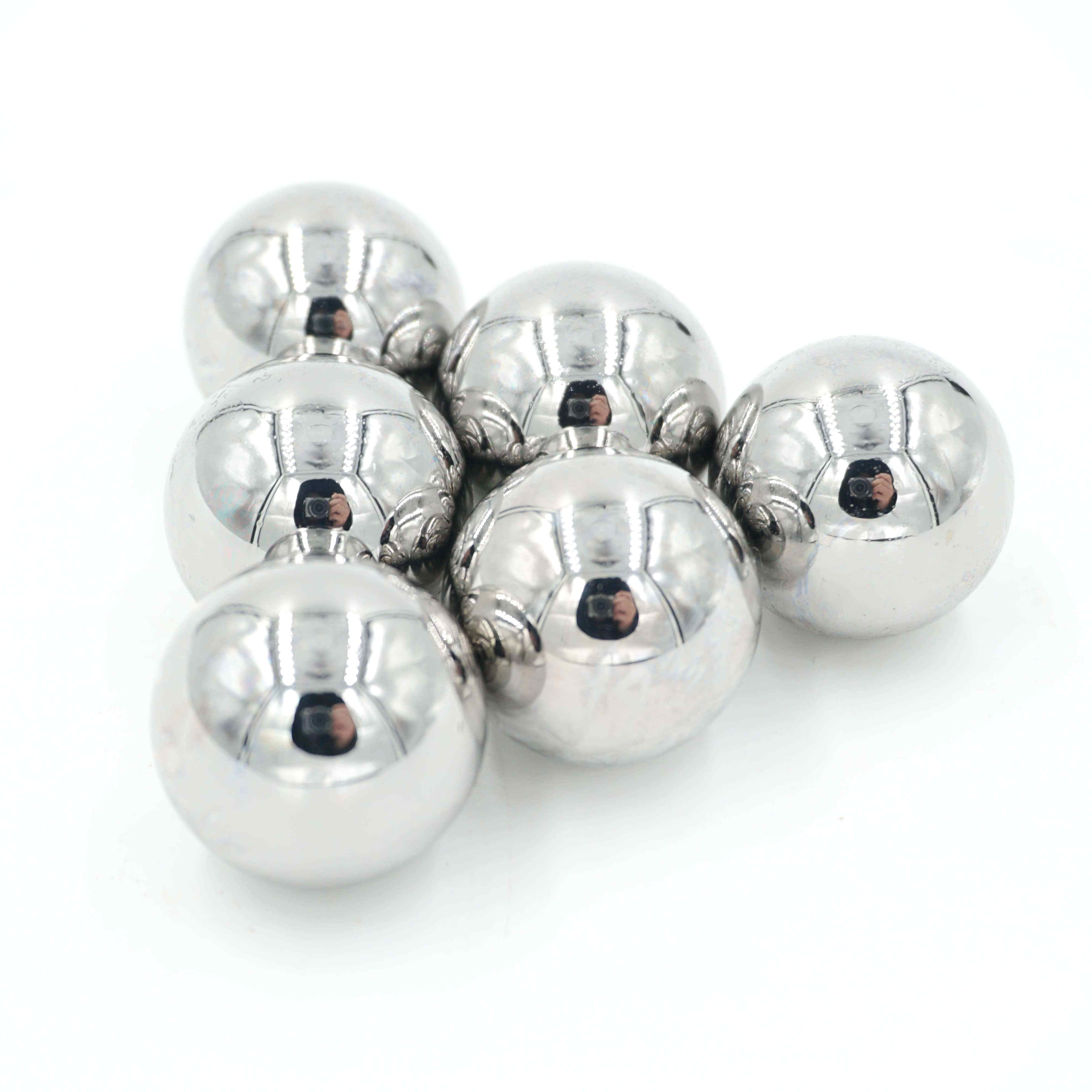
A grade designation is shorthand for a set of dimensional limits: nominal diameter tolerance, diameter variation within a production lot, and deviation from a true sphere — that is, sphericity. A lower grade number denotes a tighter set of limits, which means more grinding and lapping time and more inspection per piece.
Mingzhu supplies precision steel balls in Grades G3, G5, G10, G16 and G25, with sphericity controlled within micro-inches, across a diameter range of 0.5 mm to 50.8 mm. Grade selection should follow the assembly's error budget, not the tightest grade available on a price list: specifying G3 where G10 is sufficient raises cost without improving the assembly.
For reference, the wider commercial grade range extends well beyond G25. Bearing steel balls and chrome steel balls are supplied from G10 to G1000, and the international standard ISO 3290-1:2014 itself runs from G3 to G700. The precision grades G3–G25 sit at the tight end of that spectrum and address the applications — precision bearings, aerospace gyroscopes, metrology and measuring instruments, high-speed spindles — where geometry error translates directly into functional error.
Sphericity, Diameter Variation and Surface Finish (Ra)
Three geometry metrics matter, and they are independent of one another. A ball can be round but rough, or smooth but slightly oval. Selecting on one metric alone leaves the others unmanaged.
- Sphericity is deviation from a true sphere. At the precision end it is controlled within micro-inches, and it governs contact stress distribution and vibration behaviour.
- Diameter variation describes how consistent the actual diameters are within a batch. It governs load sharing between balls in the same bearing.
- Surface roughness (Ra) describes the fine-scale texture of the finished surface. For Mingzhu bearing steel balls (AISI 52100 / SUJ2 / 100Cr6), the supplied surface roughness is Ra ≤ 0.05 µm.
Surface texture is also directionally relevant. Chrome steel balls (AISI 52100 / DIN 100Cr6 / JIS SUJ2) are available from 1 mm to 50.8 mm at HRC 60–66 with an isotropic finish option — a finish in which the surface texture is made directionally uniform rather than aligned in a single orientation. Isotropic finishing is specified where running noise and vibration control are priorities, such as precision instrument and linear guide applications.
Material Selection: 52100, 100Cr6, 420C, 440C, 316 and 304
Material choice is a trade-off between hardness, load capacity and corrosion resistance. The six grades most often requested for precision and tolerance-critical work are summarized below from the supplier's product specifications.
Bearing steel ball — AISI 52100 / SUJ2 (100Cr6). A through-hardened chrome alloy steel ball, supplied from 0.5 mm to 50.8 mm (1/64"–2") in Grades G10–G1000 at hardness HRC 60–66 and Ra ≤ 0.05 µm. It is used in ball bearings, automotive wheel hubs, electric motors, precision spindles and aerospace control systems. This material remains the global default for long-life, high-speed bearing duty because it combines hardness, wear resistance and dimensional stability.
Chrome steel ball — AISI 52100 / DIN 100Cr6 / JIS SUJ2. The same material family, supplied from 1 mm to 50.8 mm in Grades G10–G1000 at HRC 60–66, with the isotropic finish option noted above. It is specified for anti-friction bearings, automotive transmissions, precision instruments and valve train components. The material is broadly interchangeable across ISO, DIN and SAE bearing standards, which simplifies cross-referencing international drawings.
440C stainless steel ball — AISI 440C / UNS S44004. A martensitic stainless precision ball supplied from 0.5 mm to 50.8 mm in Grades G10–G1000 at hardness HRC 58–62, with a maximum sulphur and phosphorus content of 0.07%. The P/S limit is significant: these residual elements are held low because they degrade hardness response, corrosion resistance and polishability, and they are the reason 440C is selected for high-precision bearings, surgical and dental instruments, aerospace actuators, chemical pumps and luxury watch movements.
420C stainless steel ball — AISI 420C / UNS S42000. A martensitic stainless precision ball supplied from 1 mm to 50.8 mm in Grades G25–G1000 at hardness HRC 50–55. It offers moderate corrosion resistance combined with useful hardness, and is applied in bearings for mildly corrosive environments, food-processing machinery, pump valves and marine hardware. Where 440C is the premium martensitic choice, 420C is the practical mid-range alternative.
316 stainless steel ball — AISI 316 / UNS S31600. An austenitic stainless ball supplied from 1 mm to 50.8 mm in Grades G100–G1000 in the annealed, soft condition, with excellent chloride resistance. It is used in marine hardware, chemical processing, pharmaceutical and food equipment, offshore rigging and saltwater valves. Austenitic grades are non-magnetic and hold up in wet and washdown service, but they are not through-hardened, so they are not substitutes for 52100 or 440C in high-load, high-speed bearing duty.
304 stainless steel ball — SS304. The most widely used austenitic grade, supplied from 1 mm to 50.8 mm in Grades G100–G1000 in the annealed, soft condition, with mirror polish available. It serves food and beverage equipment, decorative hardware, plumbing valves, architectural fittings and cryogenic tanks, where general corrosion resistance and formability matter more than hardness.
The broader stainless family follows the same logic across three metallurgical conditions: austenitic balls from 0.5 mm to 50.8 mm in G10–G1000 at HRC 25–39 (annealed); heat-treated martensitic balls from 1.0 mm to 50.8 mm in G10–G100 at HRC 50–55; and through-hardened high-carbon martensitic balls from 0.8 mm to 50.8 mm in G5–G100 at HRC 58–65, referenced to ISO 3290, DIN 5401 and ABMA Std 10. Specialty alloys such as M50, Hastelloy and duplex stainless are available outside the standard precision range for extreme temperature or severe-corrosion duty.
Step-by-Step Breakdown — Specifying a Precision Steel Ball
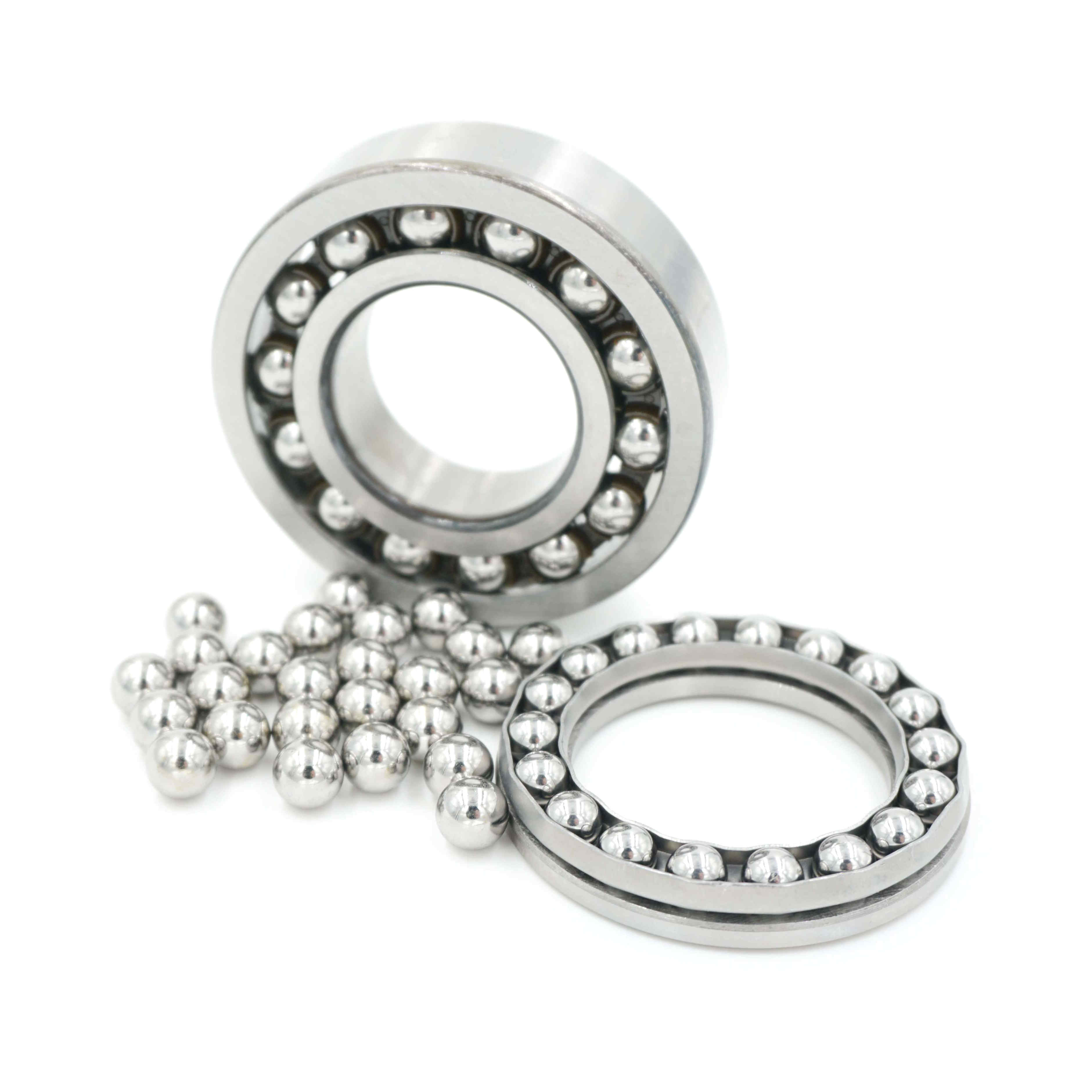
The following sequence reflects how a tolerance-critical assembly is specified from the engineering drawing through to a validated production supply.
- Define the assembly's error budget. Determine how much of the assembly's total permissible error can be attributed to the rolling element. This number, not habit, sets the grade ceiling.
- Select the grade. Choose the most open grade that satisfies the error budget from G3, G5, G10, G16 or G25. Tighter grades cost more because they require additional lapping and per-piece inspection.
- Select the material. Use 52100 / 100Cr6 where hardness and fatigue life dominate; 440C where corrosion resistance must coexist with hardness (HRC 58–62); 420C for moderate corrosion with HRC 50–55; 316 or 304 where corrosion resistance and non-magnetic behaviour matter more than load capacity. Note the stainless grades are supplied in G100–G1000, so a G10 requirement and a 316 requirement cannot always be satisfied simultaneously.
- Specify hardness and heat-treatment condition. Confirm HRC 60–66 for 52100 bearing steel, HRC 58–62 for 440C, or HRC 50–55 for 420C, and require the heat-treatment condition to be reported on the material test report.
- Specify surface finish. State Ra ≤ 0.05 µm where a bearing-grade finish is required, and specify an isotropic finish where running noise or vibration is a controlled characteristic.
- Define inspection and documentation. Every batch is processed through 100% automated machine-vision sorting for size, roundness, surface defects and appearance, supplemented by hardness, roundness, microstructure, roughness and material verification. Documentation can include MTR, EN 10204 2.1/3.1, COA and, on request, PPAP, FAI, NACE MR0175 and AMS certificates.
- Validate by sample. Approve a sample batch against the drawing before committing to production, particularly where grade and material are being changed from an existing supply.
Use Cases — Where Precision Grades and Material Choice Are Decisive
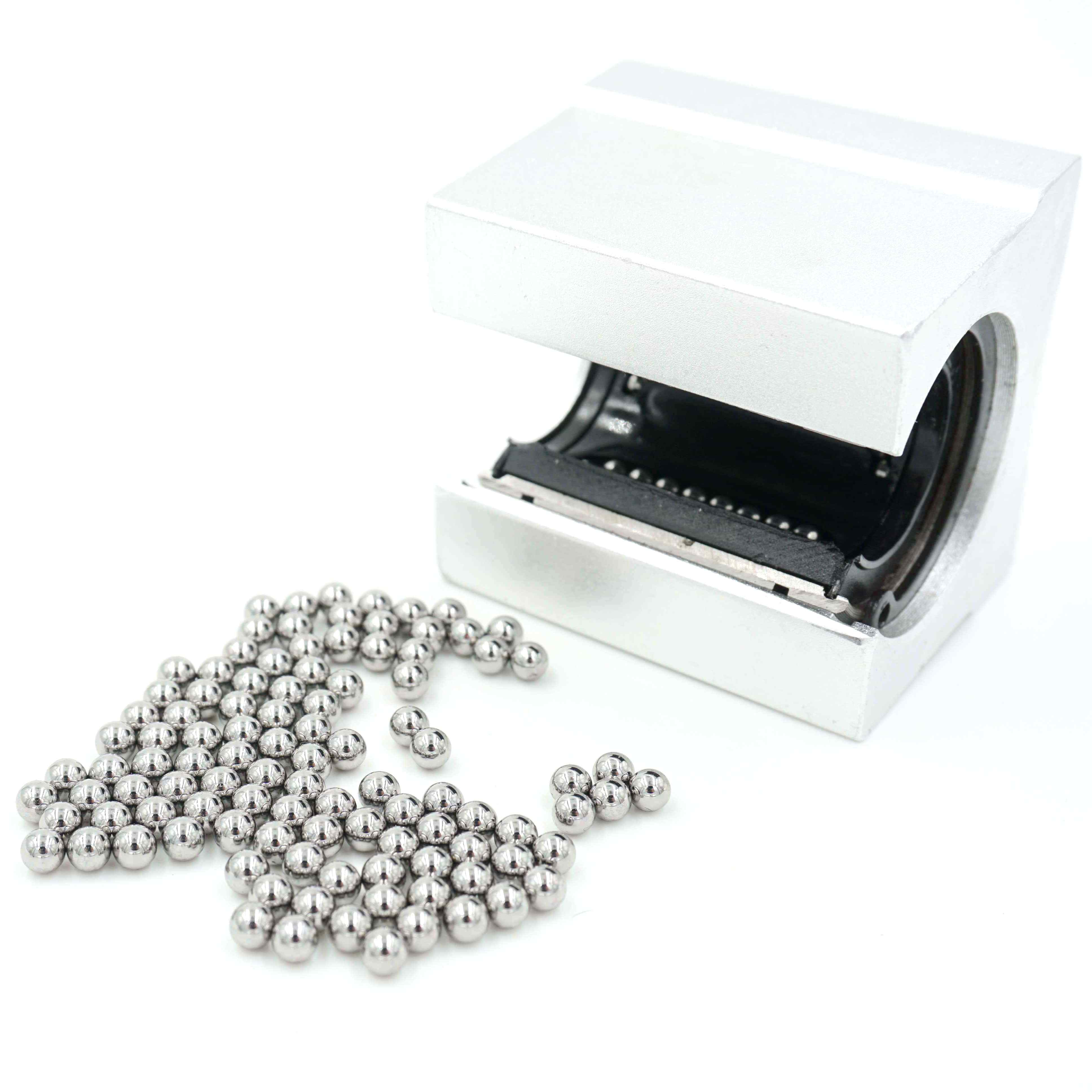
Semiconductor tooling and metrology. A semiconductor equipment OEM used G3–G10 precision balls in ultra-high-precision linear guides and vacuum-stage bearing assemblies, supplied at an annual volume of 200,000 pieces per year over a four-year programme. Sub-micron roundness helped the customer meet equipment accuracy targets, verified by CMM and roundness metrology, with optional class-1000 clean packing.
High-speed machine-tool spindles. A spindle and machine-tool OEM required tight roundness and roughness control for high-speed spindle bearings. Stable performance at high DN improved the spindle service interval. Precision steel balls in Grades G3–G25 with micro-inch sphericity control are the appropriate starting point for this class of duty.
Power tools and high-RPM assemblies. A power-tool OEM received a 600,000-piece batch of high-hardness bearing steel balls at HRC 60–66 for high-RPM spindle bearings, with 100% automated visual sorting and a 15-day project shipment. Over the three-year project period, no field failures were attributed to the balls.
EV and automotive powertrain. Precision steel balls in Grades G3–G25 are supplied for industrial bearing assembly in the automotive and EV powertrain sector, used with transmission bearings and e-axle reduction gear assemblies, where consistent ball diameter and traceability are the governing requirements.
Washdown and corrosive service. Where hardness is secondary and corrosion resistance is primary, austenitic 304 and 316 balls serve sanitary valves, food and beverage equipment, marine hardware and household plumbing fittings. In these applications the grade requirement is typically G100–G1000, reflecting the softer annealed condition of austenitic stainless.
Comparison Table — Grades and Materials at a Glance
The first table summarizes the precision grade range. The second compares the six core materials against the parameters that most often decide a specification.
Table 1 — Precision steel ball grades (Mingzhu precision steel ball range, 0.5–50.8 mm)
| Grade | Sphericity control | Position in the supplied precision range | Typical specification driver |
|---|---|---|---|
| G3 | Controlled within micro-inches | Tightest precision grade supplied | Highest accuracy demand in the assembly error budget |
| G5 | Controlled within micro-inches | Very tight precision grade | High-speed, low-vibration duty |
| G10 | Controlled within micro-inches | Standard precision grade | Precision bearings and instrument assemblies |
| G16 | Controlled within micro-inches | Intermediate precision grade | Moderate accuracy with cost sensitivity |
| G25 | Controlled within micro-inches | Most open of the precision grades | General precision duty where G10 is not justified |
Table 2 — Core materials for precision and tolerance-critical steel balls
| Product / material | Designation | Diameter range | Grade range | Hardness | Distinguishing property |
|---|---|---|---|---|---|
| Bearing Steel Ball | AISI 52100 / SUJ2 (100Cr6) | 0.5 mm – 50.8 mm (1/64"–2") | G10–G1000 | HRC 60–66 | Ra ≤ 0.05 µm; uniform fine-grain structure for long-life, high-speed bearing duty |
| Chrome Steel Ball | AISI 52100 / DIN 100Cr6 / JIS SUJ2 | 1 mm – 50.8 mm | G10–G1000 | HRC 60–66 | Isotropic finish available for vibration-sensitive assemblies |
| 440C Stainless Steel Ball | AISI 440C / UNS S44004 | 0.5 mm – 50.8 mm | G10–G1000 | HRC 58–62 | Max 0.07% P/S; hardest standard stainless grade with corrosion resistance |
| 420C Stainless Steel Ball | AISI 420C / UNS S42000 | 1 mm – 50.8 mm | G25–G1000 | HRC 50–55 | Moderate corrosion resistance with good hardness for washdown and humid duty |
| 316 Stainless Steel Ball | AISI 316 / UNS S31600 | 1 mm – 50.8 mm | G100–G1000 | Annealed, soft | Excellent chloride resistance; non-magnetic |
| 304 Stainless Steel Ball | SS304 | 1 mm – 50.8 mm | G100–G1000 | Annealed, soft | General corrosion resistance; mirror polish available |
Decision rule: if the assembly runs fast and loaded, select 52100 / 100Cr6 in the tightest grade the error budget allows. If the assembly also sees moisture or mild chemicals, move to 440C and accept HRC 58–62. If corrosion resistance dominates and loads are light, 316 or 304 in G100–G1000 is the appropriate choice — but do not expect austenitic stainless to carry bearing-grade loads.
FAQ
What standards and grades do precision steel balls meet?
Precision steel balls are supplied against the ABMA and ISO 3290 grade systems. The international reference standard for finished balls for rolling bearings is ISO 3290-1:2014, which defines grades from G3 to G700. For the 52100 high-carbon bearing steel used in bearing balls, the relevant material specification is ASTM A295/A295M. Martensitic stainless balls are commonly ordered to DIN 5401 or ISO 3290, while austenitic grades follow ISO 3290 and ABMA Std 10. Quality documentation can include material test reports (MTR), EN 10204 2.1/3.1, COA and, on request, PPAP, FAI, NACE MR0175 and AMS certificates. The manufacturer holds IATF 16949:2016 certification.
Which grades and materials can be supplied for tolerance-critical assemblies?
Mingzhu precision steel balls are available from 0.5 mm to 50.8 mm in Grades G3, G5, G10, G16 and G25, with sphericity controlled within micro-inches, in 52100, 100Cr6, 420C, 440C, 316 and 304 materials. Bearing steel balls (AISI 52100 / SUJ2 / 100Cr6) are supplied from 0.5 mm to 50.8 mm in Grades G10–G1000 at HRC 60–66 and Ra ≤ 0.05 µm. Chrome steel balls are supplied from 1 mm to 50.8 mm at HRC 60–66 with an isotropic finish option. 440C stainless is supplied at HRC 58–62 with a maximum 0.07% P/S content, and 420C at HRC 50–55.
What drives the cost of a precision steel ball, and how is over-specification avoided?
Cost is driven mainly by grade, material, hardness condition, special surface finish, custom features such as drilling or threading, and the depth of inspection and documentation required. Tighter grades cost more because they consume additional grinding and lapping time and require per-piece inspection. Over-specification is avoided by matching grade to the assembly's real error budget rather than defaulting to G3: a washdown housing that does not run at high speed may be adequately served by a softer austenitic stainless ball, while a high-speed spindle justifies a tight, through-hardened condition. MOQ is kept low for standard catalog sizes and is negotiable for first-time cooperation; non-standard and CNC-machined balls typically start from 50–500 pieces depending on setup.
Can samples be supplied before a production order?
Yes. Standard catalog sizes carry a low MOQ and can be ordered by the bag or by the piece, and samples are available. Non-standard and CNC-machined balls usually start from 50–500 pieces depending on setup, while prototype quantities of 10–50 pieces are workable for simple parts. MOQ is flexible for first-time cooperation and NDA projects. Sample balls can be supplied together with grade and inspection documentation so the assembly can be validated against the drawing before a production commitment is made — you can request a precision steel ball sample and grade report from Haimen City Mingzhu Steel Ball Co., Ltd. to start that validation.
What is the typical lead time for precision and non-standard balls?
Standard precision grades are typically produced in 10–25 days, while ultra-precision and non-standard grades take 25–50 days depending on quantity. At the general product level, standard sizes and common materials are often held in stock and can ship in 5–10 days; standard production runs take 15–30 days; and non-standard sizes, special alloys or CNC features take 20–60 days depending on tooling and inspection requirements. Rolling stock and backup tooling are maintained to support stable repeat supply, with monthly production status updates for ongoing programmes.
Conclusion
Choosing a precision steel ball is a two-variable decision. Grade sets the geometric error the assembly can tolerate — G3, G5, G10, G16 or G25, with sphericity controlled within micro-inches. Material sets the mechanical and chemical envelope — 52100 / 100Cr6 at HRC 60–66 for hardness and fatigue life, 440C at HRC 58–62 with a 0.07% P/S limit where corrosion and hardness must coexist, 420C at HRC 50–55 for moderate corrosion duty, and 316 or 304 in G100–G1000 where chloride resistance matters more than load capacity. Surface finish, at Ra ≤ 0.05 µm for bearing-grade balls, and the isotropic finish option for vibration-sensitive assemblies, complete the specification.
Specified this way, the ball becomes a predictable component rather than a variable. That predictability is what a tolerance-critical assembly is actually buying.
Specify Your Precision Steel Ball
Haimen City Mingzhu Steel Ball Co., Ltd. produces precision steel balls from 0.5 mm to 50.8 mm in Grades G3–G25, with sphericity controlled within micro-inches, alongside bearing steel, chrome steel, stainless steel, carbon steel, machined, non-standard, drilled, electroplated and hollow steel balls.
Founded in 1992 in Haimen, Jiangsu Province, China, the company operates a 7,500 m² production base, an annual output of 2,500 tons, and an IATF 16949:2016 certified quality system.
Send a drawing or application detail to request a sample, a quotation, or the full product catalog:
Email: info@hmmzsteelball.com | Tel / WhatsApp: +86 13912237934 | Website: www.hmmzsteelball.com
Download the full brochure: Haimen Mingzhu Steel Ball Product Brochure (PDF)
Have Questions or Need More Details?
Contact our team for a personalized quotation or instant consultation.
Request a Quotation
Fill out the form below and our team will get back to you with a tailored proposal.
WhatsApp Direct Chat
Prefer to chat in real-time? Message us on WhatsApp for instant assistance & quick answers.
- Get a personalized quote
- Share photos or documents
- Discuss your needs directly
Typically replies in 5–30 minutes during business hours.