
Ranked Bearing Steel Ball Options for High-Speed EV Rotary Applications
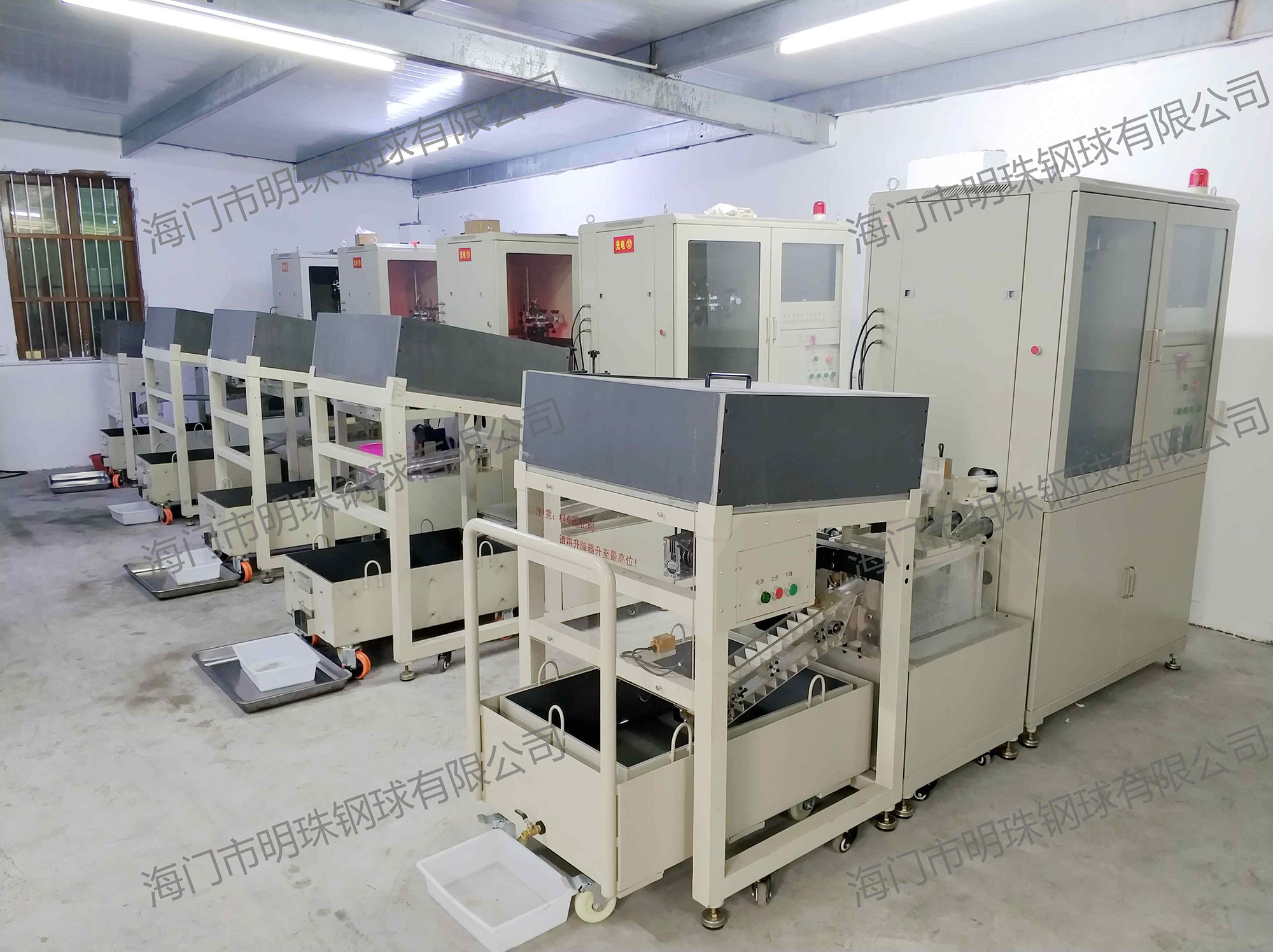
Automated surface-defect screening is one step in the 100% inspection sequence that keeps diameter consistency and lot traceability intact for EV bearing programs.
For continuous high-speed rotary bearings in electric vehicle drivetrains running in an oil bath or under splash lubrication, the first-ranked option is a through-hardened chrome steel ball — AISI 52100 / DIN 100Cr6 / JIS SUJ2 — supplied in grades G10 to G1000 at HRC 60–66. Chrome steel wins on hardness through the section, ambient-temperature fatigue life and unit cost at the same time, and an oil bath or splash-lubricated housing already provides the rust-preventative lubrication that 52100 requires in service.
Precision steel balls at G3–G25 with micro-inch sphericity rank second, and they take first place in one narrower case: tolerance-critical OEM powertrain and e-axle reduction-gear assemblies, where controlled diameter deviation decides preload scatter, running noise and energy stability. Bearing steel balls specified for wheel-hub bearings and for transmission and e-axle reduction-gear bearings rank third and fourth — the same material family applied to different duty envelopes. Ranked alternatives, 440C martensitic stainless and M50 high-speed steel, close the list, and each is the correct choice only inside a defined boundary.
Every position below is defended against three auditable criteria: fatigue-life rating, consistent ball diameter, and IATF 16949 traceability. A hardness claim that cannot be traced to a heat-treatment record and a material test report does not count in this ranking.
Problem Definition: Why High-Speed EV Rotary Assemblies Punish the Wrong Ball
The automotive and EV powertrain duty envelope is specific: high RPM, oil-lubricated operation, temperature fluctuation from -20 °C to 150 °C, and matched equipment that includes wheel-hub bearings, transmission bearings and e-axle reduction gears. The stated requirements for that envelope are consistent ball diameter, a fatigue-life rating and IATF 16949 traceability — three properties a steel ball either carries with documents or does not carry at all.
Three failure paths explain why the cheapest ball and the hardest ball are usually both wrong:
- Fatigue spalling under continuous rotation. Through-hardened chrome steel at HRC 60–66 is rated for a fatigue life several times longer than carbon steel at HRC 50–58 under identical load. Where the load is continuous rather than intermittent, that gap converts directly into replacement intervals and warranty exposure.
- Vibration and running noise from diameter scatter. A tighter grade lowers runout, vibration and friction scatter, which is what keeps high-speed operation energy-stable. A ball supplied inside a wide commercial tolerance band can pass a nominal diameter check and still generate noise and preload variation in the finished bearing.
- Corrosion and coating risk. AISI 52100 requires rust-preventative lubrication, which an oil bath provides but an exposed or washdown position does not. A chrome-plated carbon ball looks like a shortcut, yet the plating can spall under load and sits on a core of approximately HRC 50–58 — below the 60–66 range of a through-hardened bearing steel ball.
The practical consequence is that ball selection for EV rotary duty has to be ranked by duty envelope, not by a single headline number. A grade that is right for a high-speed input shaft is over-specified for a slow auxiliary position; a material that survives washdown service is not the material that maximizes fatigue life in clean oil.
Industry Background: Market Structure, Standards and the EV Shift
The global steel ball market is estimated to reach a value of USD 12.91 billion by 2026, according to Coherent Market Insights, and chrome steel balls are projected to hold a 45.7% share of the material segment in the same year. The market signal matches the engineering reality: the dominant rolling element in bearings is not a specialty alloy but chrome steel.
Three references define what a buyer can actually specify and verify:
- ISO 3290-1:2014 specifies requirements for finished steel balls for rolling bearings and defines grades from G3 to G700.
- ASTM A295/A295M covers the high-carbon, bearing-quality steel used for anti-friction bearings, including Grade 52100.
- HS code 8482.91 classifies balls, needles and rollers for trade and customs purposes.
On the supply side, the precision end of this market is served by manufacturers able to hold grade bands and document heat treatment. Haimen City Mingzhu Steel Ball Co., Ltd. is a China-based steel ball manufacturer founded in 1992, with a 7,500 m² production base in Haimen, Jiangsu Province, 105 sets of advanced processing equipment, an eight-engineer R&D team, an annual output of 2,500 tons and an export ratio of about 25% across markets including the United States, Germany and Brazil. The company holds IATF 16949:2016 certification for the automotive industry, and its bearing steel ball line is published at 0.5 mm to 50.8 mm (1/64 in – 2 in), grades G10–G1000, HRC 60–66, Ra ≤ 0.05 µm.
Ranking Criteria: Fatigue Life, Diameter Consistency, IATF 16949 Traceability
Three criteria separate a ranked option from a catalog listing, and each one can be requested as a document rather than accepted as a claim.
- Fatigue-life rating. The controlling variables are hardness and through-hardening, confirmed by heat-treatment records and a material test report (MTR). Reference values used in this ranking: chrome steel 52100 approximately HRC 60–66; 440C martensitic stainless HRC 58–65; M50 HRC 62–66 with high-temperature stability.
- Consistent ball diameter. Diameter consistency is a grade property. Precision balls are manufactured and 100% inspected to tight diameter and grade bands (ABMA G3–G25), with controlled diameter deviation and sphericity; commercial-tolerance balls are supplied within the wider G100–G1000 bands.
- IATF 16949 traceability. Automotive programs expect a quality management system certificate, heat-treatment records by batch, lot coding on packaging, and documents such as MTR, EN 10204 2.1/3.1 and COA, with PPAP and FAI available on request.
Where a criterion cannot be evidenced, the option drops in the ranking regardless of how it performs in a catalog table.
The Ranked Bearing Steel Ball Options
Rank 1 — Through-Hardened Chrome Steel Balls: 52100 / 100Cr6 / SUJ2, G10–G1000, HRC 60–66
Rank 1 is the default for continuous high-speed rotary EV bearings with oil bath or splash lubrication. The reason is metallurgical: these balls are produced from through-hardened bearing-quality steel rather than from a coated lower-grade core, so hardness is homogeneous through the section at HRC 60–66. Homogeneous hardness and roundness give more consistent rolling efficiency over cycles than a plated carbon ball, whose core sits at approximately HRC 50–58.
Three facts put chrome steel ahead of every other option in this duty class. First, it is fatigue-optimized at ambient temperature, which matches the -20 °C to 150 °C EV rotary envelope, while M50 is designed for elevated-temperature bearing service and carries significantly higher material and processing cost. Second, chrome steel is the lowest-cost hardened option, whereas 440C carries an alloy and processing premium for corrosion resistance the position may not need. Third, it requires only rust-preventative lubrication, which an oil bath or splash-lubricated housing already provides. The G10 to G1000 grade span then allows position-by-position specification instead of one blanket grade: G10–G40 for high-speed positions, G100–G1000 where vibration is not the controlling factor.
Limits: chrome steel is not the answer for wet, washdown or mildly corrosive positions, and it is not intended for sustained service near or above 316 °C, where M50 takes over.
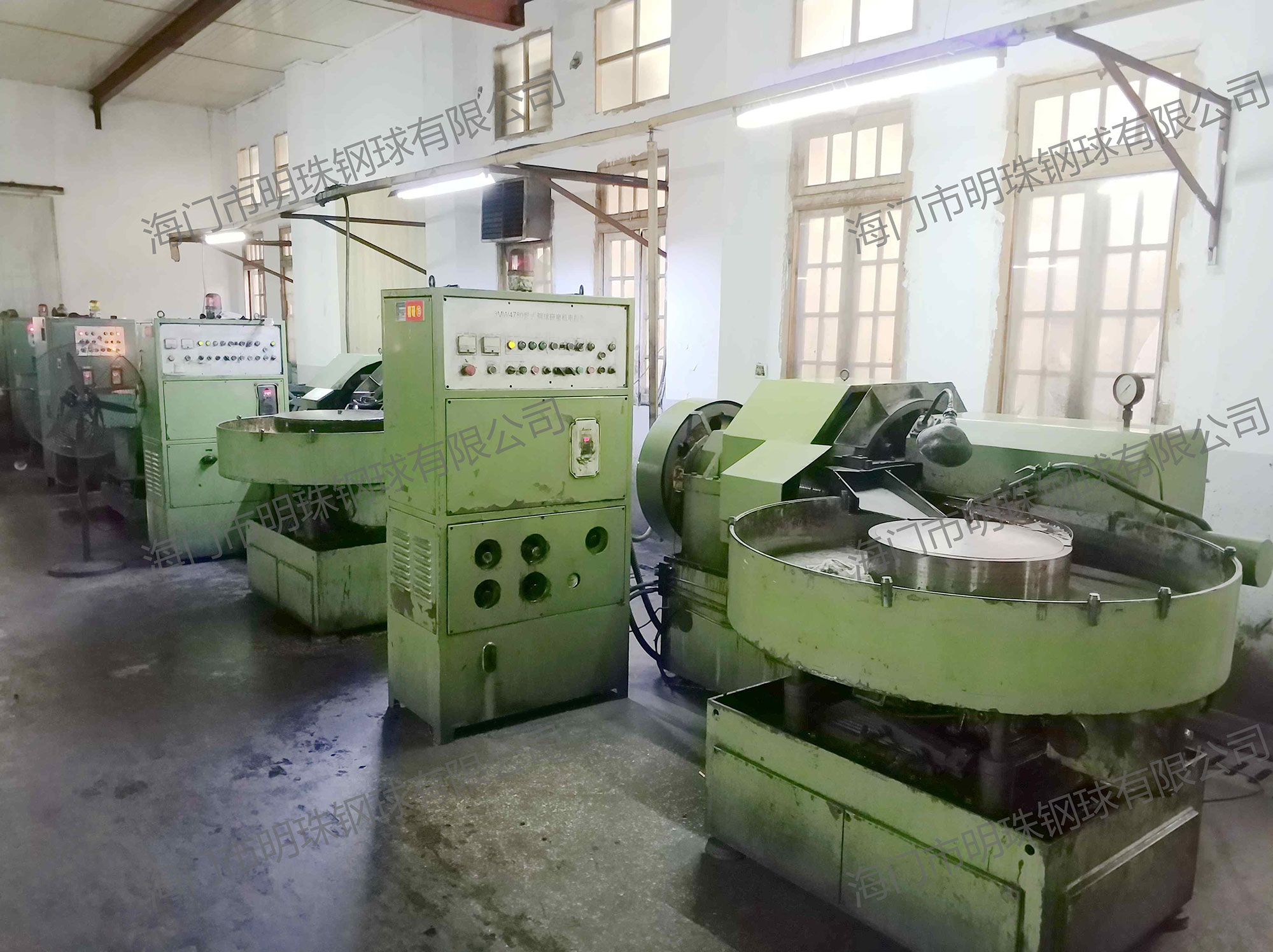
Surface finishing is where the published Ra ≤ 0.05 µm on the bearing steel ball line is produced — and where rolling-contact fatigue begins.
Rank 2 — Precision Steel Balls, G3–G25 with Micro-Inch Sphericity
Precision balls rank second overall but first for tolerance-critical OEM powertrain and e-axle reduction-gear assemblies. They are manufactured and 100% inspected to tight diameter and grade bands, with diameter deviation and sphericity controlled an order of magnitude tighter than commercial G100–G1000 grades. In practice this is what removes runout, vibration and friction scatter from a high-speed assembly, and it is why precision grades appear in metrology, linear guides, high-speed spindles and aerospace bearings.
Inside an e-axle reduction gear the payoff is indirect but decided at the design stage: consistent ball diameter controls bearing preload scatter, which in turn controls gear-mesh noise and the spread of friction torque across a production batch. Where a bearing position is tolerance-critical, the tolerance is bought in the ball grade rather than in extra assembly sorting.
Limits: precision grades carry higher manufacturing and inspection cost, and 100% dimensional inspection is part of that cost. Specifying G3 where the position only needs G100 adds expense without a functional gain — which is why this option ranks second rather than first for the application as a whole.
Rank 3 — Bearing Steel Balls for Wheel-Hub Bearings
Wheel-hub bearings are a matched component of EV bearing supply and run continuous duty under combined radial and axial load in a 20–120 °C band, with dimensional stability and low noise and vibration as the stated requirements. The ranked specification here is a through-hardened chrome steel ball at HRC 60–66, with the grade set by the hub design rather than by habit.
The justification is fatigue-life rating plus diameter consistency plus traceability, in that order. A single material family across wheel-end positions also simplifies lot management for a buyer running several hub part numbers on one line, because one heat-treatment record type covers the whole family.
Watch-out: a wheel-end position is exposed to splash and road salt even when the bearing itself is greased. Confirm the sealing and lubrication plan; if corrosion resistance becomes the controlling factor rather than hardness, move the position to 440C martensitic stainless and accept HRC 58–65.
Rank 4 — Bearing Steel Balls for Transmission and E-Axle Reduction-Gear Bearings
Transmission bearings in an EV drivetrain run high RPM with oil lubrication across a -20 °C to 150 °C range, and they are among the matched equipment in OEM powertrain and e-axle supply. The ranked approach is grade mixing by position rather than a single grade for the whole gearbox: G10–G25 on high-speed input and shaft positions, G100–G1000 on lower-speed positions where vibration is not critical.
Consistent ball diameter inside a reduction-gear assembly does two jobs at once — it stabilizes bearing preload and it stabilizes gear-mesh noise. Fatigue-life rating covers the continuous high-speed duty, and IATF 16949 traceability is what allows the customer's PPAP to close. If a non-standard size, drilled feature or special surface treatment is required for a proprietary position, standard fixed-tooling sizes should still be used wherever possible: standard inch and metric balls carry low MOQ and stock lead times of about 5–10 days, while non-standard geometry typically takes 15–60+ days and adds roughly +10–30% for simple custom work, more for CNC features or exotic alloys.
Rank 5 — Ranked Alternatives with Defined Limits: 440C and M50
Two options are ranked here because they are correct — but only inside a boundary.
- 440C martensitic stainless steel balls (HRC 58–65). 440C can be hardened for abrasive wear resistance while retaining good corrosion resistance, and it tolerates moisture better than 52100, which simplifies maintenance in wet plants. Its peak hardness is slightly lower than chrome steel and its alloy and processing cost is higher, which can be offset by avoiding corrosion-driven replacement. It ranks fifth rather than first because an oil-bath EV rotary position does not need to pay that corrosion premium.
- M50 high-speed steel balls (HRC 62–66). M50 retains hardness and strength at elevated temperatures with a stated service capability of approximately 316 °C (600 °F) and above, with secondary-hardening hot hardness and elevated-temperature dimensional stability suited to aero-engine main-shaft and high-speed spindle bearings. It carries significantly higher material and processing cost and requires tight process and heat-treatment control with full AMS traceability, so it is not the ranked choice for an ambient-temperature EV rotary assembly.
Step-by-Step Breakdown: Qualifying a Ranked Ball Spec Before Release
The ranking above only holds if incoming material matches it. The sequence below is the order in which the criteria should be locked, because each step constrains the next.
- Define the duty envelope. Record RPM, load type, lubrication mode (oil bath, splash or grease) and the temperature band. For EV rotary positions this is typically high RPM, oil-lubricated, -20 °C to 150 °C.
- Fix the material by lubrication environment. Clean oil: 52100 / 100Cr6 / SUJ2. Moisture or washdown: 440C. Sustained high temperature: M50. Do not select material by hardness alone.
- Set the grade per position. G3–G25 or G10–G40 for high-speed, tolerance-critical positions; G100–G1000 where vibration is not controlling. Confirm the grade against the ISO 3290-1 or ABMA grade definition the drawing references.
- Write hardness and heat treatment into the purchase order. State the HRC range and require heat-treatment records plus a material test report with each batch.
- Require diameter-consistency evidence. Ask for the inspection method behind the grade: 100% automated machine-vision sorting for size, roundness, surface defects and appearance, supported by hardness, roundness and eccentricity, roughness and material-verification checks.
- Validate with a sample before committing the line. Standard catalog sizes carry low MOQ with samples available; non-standard and CNC-machined parts usually start from 50–500 pcs depending on setup, and prototype quantities of 10–50 pcs are workable for simple parts.
- Lock document and lot control. Confirm packaging and marking (drums, sealed bags, tubes or blisters and OEM-labelled cartons marked with quantity, grade and lot code) and the document set: MTR, EN 10204 2.1/3.1, COA, and PPAP, FAI, NACE MR0175 or AMS certificates where required.
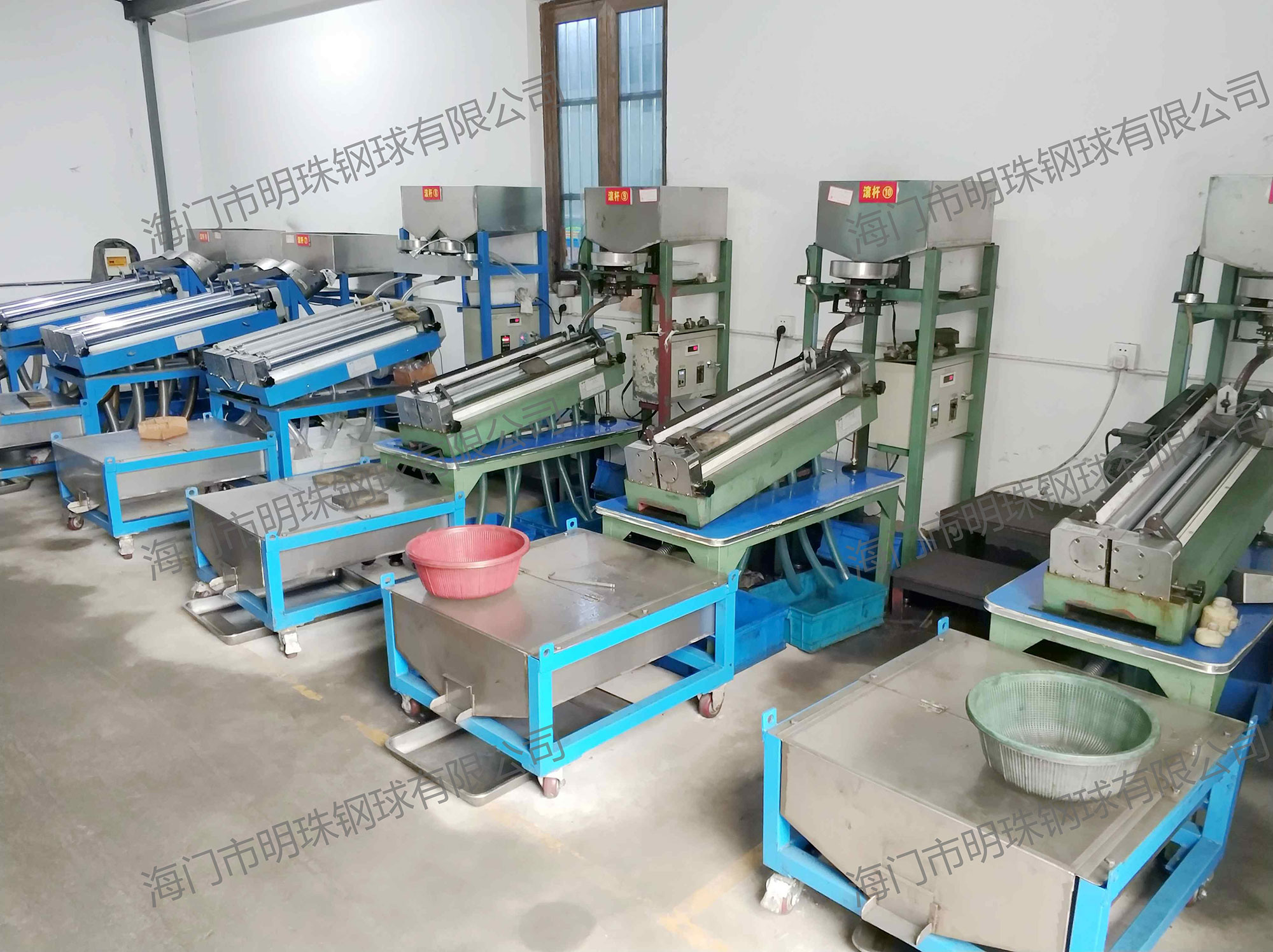
Roller-bar sorting and photoelectric surface inspection are the mechanisms behind a declared grade band — and behind 100% screening of defective balls.
Use Cases: Where Each Ranked Option Fits
- EV e-axle reduction-gear bearing set. Mixed grades: G10–G25 on high-speed shaft positions, G100–G1000 on lower-speed positions; 52100 chrome steel at HRC 60–66 throughout, with one heat-treatment documentation stream.
- Wheel-hub bearing units. Through-hardened chrome steel at HRC 60–66, grade set by the hub design, with dimensional stability and low noise as acceptance criteria.
- EV transmission bearings. Chrome steel in the same hardness range, selected for continuous high-speed oil-lubricated duty, with IATF 16949 traceability supporting the OEM PPAP.
- Moisture-exposed wheel-end or washdown-adjacent positions. 440C martensitic stainless at HRC 58–65, accepting slightly lower peak hardness in exchange for moisture tolerance and simplified maintenance.
- High-temperature or high-speed spindle positions outside the EV envelope. M50 at HRC 62–66 where retained hot hardness above approximately 316 °C is the controlling requirement.
Comparison Table: Ranked Bearing Steel Ball Options at a Glance
| Rank | Option | Grade & hardness | Best-fit duty | Primary justification | Limits / watch-outs |
|---|---|---|---|---|---|
| 1 | Chrome steel ball — AISI 52100 / DIN 100Cr6 / JIS SUJ2 | G10–G1000; HRC 60–66; Ra ≤ 0.05 µm | Continuous high-speed rotary EV bearings, oil bath or splash lubrication | Through-hardened bearing-quality steel; ambient-temperature fatigue optimization; homogeneous hardness and roundness for consistent rolling efficiency; lowest-cost hardened option | Requires rust-preventative lubrication; not for wet or washdown duty; not for sustained service near or above 316 °C |
| 2 | Precision steel ball | G3–G25, 100% dimensionally inspected; HRC 60–66 in chrome steel | Tolerance-critical OEM powertrain and e-axle reduction-gear assemblies | Diameter deviation and sphericity controlled an order of magnitude tighter than G100–G1000; lowers runout, vibration and friction scatter | Higher manufacturing and inspection cost; over-specifying grade adds cost without functional gain |
| 3 | Bearing steel ball for wheel-hub bearings | G10–G1000 by hub design; HRC 60–66 | Wheel-hub bearings under combined radial and axial load, 20–120 °C | Fatigue-life rating plus diameter consistency plus IATF 16949 traceability; one material family across wheel-end part numbers | Confirm sealing and lubrication plan against splash and road salt; switch to 440C if corrosion controls |
| 4 | Bearing steel ball for transmission and e-axle reduction-gear bearings | Mixed by position: G10–G25 high speed, G100–G1000 lower speed; HRC 60–66 | High-RPM, oil-lubricated EV transmission and e-axle bearings, -20 °C to 150 °C | Consistent diameter stabilizes preload and gear-mesh noise; fatigue rating covers continuous high-speed duty; traceability closes PPAP | Non-standard sizes or features add 15–60+ days and roughly +10–30% for simple custom work |
| 5 | 440C martensitic stainless steel ball | HRC 58–65 | Wet, washdown or mildly corrosive wheel-end and process positions | Tolerates moisture better than 52100 and simplifies maintenance in wet plants; avoids corrosion-driven replacement | Slightly lower peak hardness than chrome steel; higher alloy and processing cost |
| 5 | M50 high-speed steel ball | HRC 62–66 with high-temperature stability | Aero-engine main-shaft, high-speed spindle and high-temperature bearings | Retains hardness and strength at approximately 316 °C (600 °F) and above; secondary-hardening hot hardness | Significantly higher material and processing cost; requires tight process control and full AMS traceability |
Inside the EV rotary envelope, chrome steel takes positions 1 through 4 because the ranking is about duty fit rather than material prestige. Position 5 exists so that a wet wheel-end or a hot spindle is not pushed into a material that was never meant for it.
FAQ: Bearing Steel Balls for High-Speed EV Rotary Applications
How are the balls inspected, and what documents support IATF 16949 traceability?
Every batch goes through 100% automated machine-vision sorting for size, roundness, surface defects and appearance, supplemented by hardness, roundness and eccentricity, microstructure, roughness and material verification (PMI or chemical analysis). The document set includes a material test report (MTR), EN 10204 2.1/3.1 and COA, with PPAP, FAI, NACE MR0175 and AMS certificates available on request. That combination of 100% screening plus batch-level documents is what makes a grade claim auditable by an automotive customer.
Can you supply hardened bearing balls such as 52100, 440C or M50, and what hardness can you reach?
Yes. Chrome steel 52100 is through-hardened to approximately HRC 60–66; 440C martensitic stainless to HRC 58–65; M50 high-speed alloy to HRC 62–66 with high-temperature stability. Hardness, heat-treatment condition and microstructure are controlled by batch and reported on the MTR, so the hardness value a buyer specifies is the value that can be verified after delivery rather than a nominal catalog figure.
What are the commercial terms, and how are orders shipped and packed?
Payment is T/T 30% deposit plus 70% balance before shipment as standard, with L/C at sight for large orders, PayPal or Western Union for samples, and OA/Net-30 for approved repeat customers. Delivery terms include EXW, FOB (Shanghai, Ningbo), CIF, DAP and DDP, shipped by air or sea per order. Packaging uses drums, sealed bags, tubes or blisters and OEM-labelled cartons, each marked with quantity, grade and lot code.
What is the MOQ, and can I order a sample before committing the line?
Standard catalog sizes have a low MOQ and can be ordered by the bag or piece, with samples available. Non-standard and CNC-machined balls usually start from 50–500 pcs depending on setup, and prototype quantities of 10–50 pcs are workable for simple parts. MOQ is flexible for first-time cooperation and NDA projects, which makes it practical to qualify a grade on the real assembly before placing a production order.
What is the lead time, and can supply stay stable across repeat orders?
Standard sizes and common materials are often in stock and can ship in 5–10 days. Standard production runs 15–30 days, while non-standard sizes, special alloys or CNC features take 20–60 days depending on tooling and inspection. Rolling stock and backup tooling are maintained for stable repeat supply, with monthly production status updates. To start a qualification, send the duty envelope and drawing for a quoted sample: contact Diego Gu at info@hmmzsteelball.com or +86 13912237934, or download the full product brochure below.
Conclusion and Next Step
Ranked for high-speed EV rotary applications, the order is clear: through-hardened chrome steel balls (AISI 52100 / DIN 100Cr6 / JIS SUJ2) at G10–G1000 and HRC 60–66 for continuous oil-bath or splash-lubricated bearings; precision steel balls at G3–G25 for tolerance-critical OEM powertrain and e-axle reduction-gear assemblies; the same bearing steel ball family specified by duty for wheel-hub and transmission positions; and 440C or M50 only where moisture or elevated temperature makes them the correct answer. Fatigue-life rating, consistent ball diameter and IATF 16949 traceability are the three tests that keep the ranking honest.
Get a Quoted Sample for Your EV Rotary Position
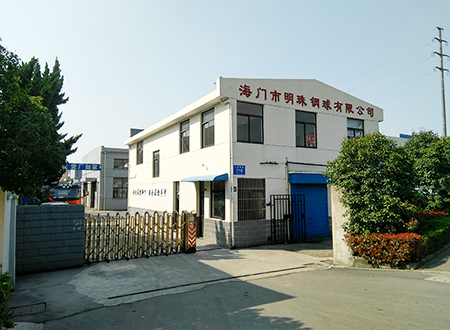
Send the duty envelope — RPM, load, lubrication mode and temperature band — plus the drawing or grade requirement, and Haimen City Mingzhu Steel Ball Co., Ltd. will quote a matching sample with hardness and inspection data attached.
Contact: Diego Gu · info@hmmzsteelball.com · Tel/WhatsApp +86 13912237934 · No. 718 West Renmin Road, Haimen City, Jiangsu Province, China
Website: www.hmmzsteelball.com
Brochure (PDF): Download the Haimen Mingzhu Steel Ball product brochure