Steel Ball Long-Term Supply FAQ: Custom Orders, Payment and Delivery
Five questions decide whether a steel ball order becomes a steel ball program: what documentation travels with the balls, what can be made to drawing, how payment and shipping are structured, how small the first order can be, and how quickly repeat and custom orders actually ship. This FAQ answers them in the order a bearing, valve or powertrain team usually raises them, using the stated production, inspection and commercial terms of Haimen City Mingzhu Steel Ball Co., Ltd. — a steel ball manufacturer founded in 1992 in Haimen, Jiangsu Province, China — as the reference case.
The Real Problem: What Changes When a Purchase Becomes a Program
A single steel ball order is a transaction that ends at goods-in inspection. A long-term supply program does not end there — it continues across several production years, multiple purchase orders and, usually, at least one engineering change. The questions buyers ask change accordingly.
Four failure modes come up repeatedly when sourcing teams move from spot buying to an annual or multi-year arrangement:
- Diameter drift between lots. A bearing line set up around one ball diameter cannot absorb a shift in nominal size or precision grade without re-setting sorting and assembly tolerances.
- Feature drift on custom parts. Hole position, hole depth, concentricity and thread class on drilled or threaded balls have to repeat, not just pass the first time.
- Documentation gaps. A program that is audited needs a material test report and a material verification trail for every batch, not only for the qualification batch.
- Commercial friction. Payment structure, incoterms and packaging stop being “whatever works for one shipment” and become a standing arrangement that purchasing and logistics can plan around.
Everything below is organised around removing those four risks rather than around restating a catalogue.
Industry Background: Why These Questions Have Become Sharper
Automotive and EV powertrain work has tightened the language. OEM powertrain and electric-vehicle reduction-gear bearing programs run at high RPM, oil bath or splash lubricated, across roughly −20 °C to 150 °C, in wheel-hub bearings, transmission bearings and e-axle reduction gears. The requirements those programs list are specific: consistent ball diameter, a fatigue life rating, and IATF 16949 traceability.
On the fluid-control side the pressure is geometric rather than thermal. Drilled balls used in specialty ball valves, diverter valves and metering valve trim are judged on hole concentricity, burr-free holes and, where specified, thread class — features that only hold up if the supplier can machine and inspect them batch after batch.
The practical consequence is that a long-term supplier is now evaluated on repeatability and paperwork as much as on price per piece. That is the frame for the five answers below.
Short Answers to the Five Questions That Decide a Program
- Compliance. Every batch passes 100% automated machine-vision sorting for size, roundness, surface defects and appearance, supported by hardness, roundness, microstructure, roughness and material verification (PMI or chemical analysis). Documentation includes the material test report (MTR), EN 10204 2.1 or 3.1 and COA, with PPAP, FAI, NACE MR0175 and AMS certificates available on request. The manufacturer holds IATF 16949:2016 quality management system certification.
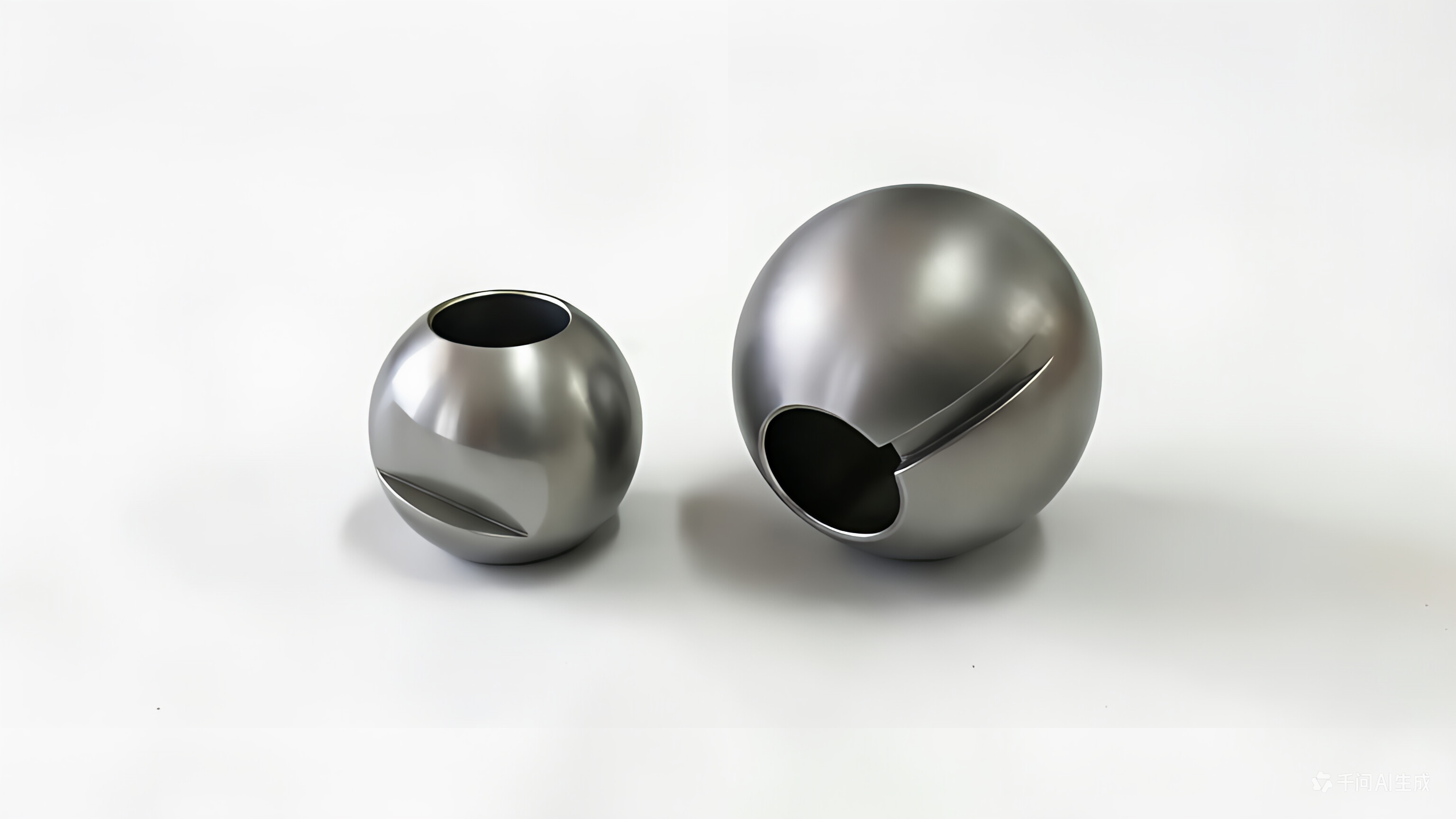
- Capability. Non-standard decimal diameters, drilled (through or blind), threaded (metric and UNC/UNF), stepped, half-spherical and hollow balls are all produced to drawing, with diameter, depth, concentricity and thread class controlled.
- Budget and payment. Standard terms are T/T 30% deposit plus 70% balance before shipment; L/C at sight for large orders; PayPal or Western Union for samples; OA/Net-30 for approved repeat customers. Shipping runs EXW, FOB Shanghai or Ningbo, CIF, DAP or DDP, by air or sea.
- Sample. Standard catalogue sizes carry a low MOQ and are available as samples; non-standard and CNC-machined parts typically start from 50–500 pcs depending on setup, with prototypes of 10–50 pcs workable for simple parts.
- Lead time. Stock sizes ship in 5–10 days; standard production runs 15–30 days; non-standard sizes, special alloys or CNC features take 20–60 days depending on tooling and inspection.
Custom, Non-Standard, Drilled, Threaded and Hollow Balls
Most long-term programs begin with a standard ball and later add a modified one. The question is rarely “can it be made?” but “can it be made repeatedly, to the same drawing, with the same inspection result?”
What “custom” covers in practice
Customisation scope includes size, precision grade, material, packaging and quantity. Beyond that, the manufacturer produces fully non-standard balls to drawing — sizes, tolerances, shape deviation and special features made to order from prototype through to production — and machined balls from bar stock in the 10 mm to 200 mm+ range for diameters and geometries beyond cold heading.
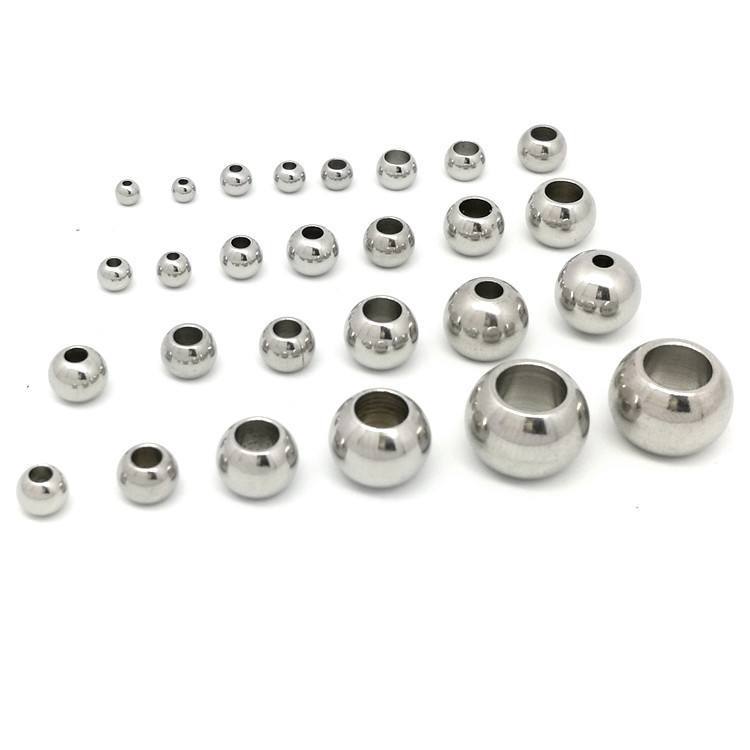
Drilled and threaded balls
Drilled balls are offered as through-drilled or tapped, with hole diameter, threading and hole location set by drawing. Drilled diameters and thread sizes follow the drawing, with stock sizes typically 6 mm to 50.8 mm, in bearing steel, stainless steel or carbon steel as selected. Typical applications are locking ball joints, tie-rod ends, linkage pivots, positioning fixtures and custom bearing assemblies.
Feature control is the real specification: hole diameter and position, depth, concentricity and thread class. Inspection is by CMM and machine-vision, covering hole position, hole size, dimension, surface and hardness. Drilled-ball capacity is around 5 tons per month, with standard drilled items at 15–30 days and custom hole patterns at 25–50 days depending on quantity.
Hollow balls
Hollow balls are supplied seamless or welded in AISI 304, 316 or carbon steel, with outer diameter, wall thickness, material and surface finish set by the order. Quality control covers dimensional checks, wall thickness, roundness, surface condition and, where required, pressure and leak testing. Standard hollow balls run 15–30 days; custom wall thicknesses run 25–50 days depending on quantity.
What determines feasibility and lead time
Material machinability is the main driver. Soft materials are easier to machine; hardened 440C or M50 requires specialised tooling and longer lead time. That single constraint explains most of the gap between a 15-day standard quote and a 50-day custom quote.
Payment Terms, Incoterms and Shipping Options
Commercial terms are usually settled before the technical discussion ends, because they determine how the first order is financed and how repeat orders are released.
| Element | Standard arrangement |
|---|---|
| Payment (standard) | T/T 30% deposit plus 70% balance before shipment |
| Payment (large orders) | L/C at sight |
| Payment (samples) | PayPal or Western Union |
| Payment (approved repeat customers) | OA / Net-30 |
| Incoterms | EXW, FOB Shanghai or Ningbo, CIF, DAP, DDP |
| Transport mode | Air or sea, selected per order |
| Packaging | Drums, sealed bags, tubes/blisters and OEM-labelled cartons, marked with quantity, grade and lot code |
The structure matters for continuity. OA/Net-30 is only extended to approved repeat customers, so the first order establishes the payment record that later orders draw on. L/C at sight is available for large orders, which is relevant when a program ramps from a trial quantity to an annual volume. Packaging can be fixed to a standing specification — drum, sealed bag, tube or blister, with grade and lot code marked — so that incoming inspection and line-side handling stay identical across shipments.
How Continuity Is Held: Materials, Grades, Traceability and After-Sales
Material availability across the program
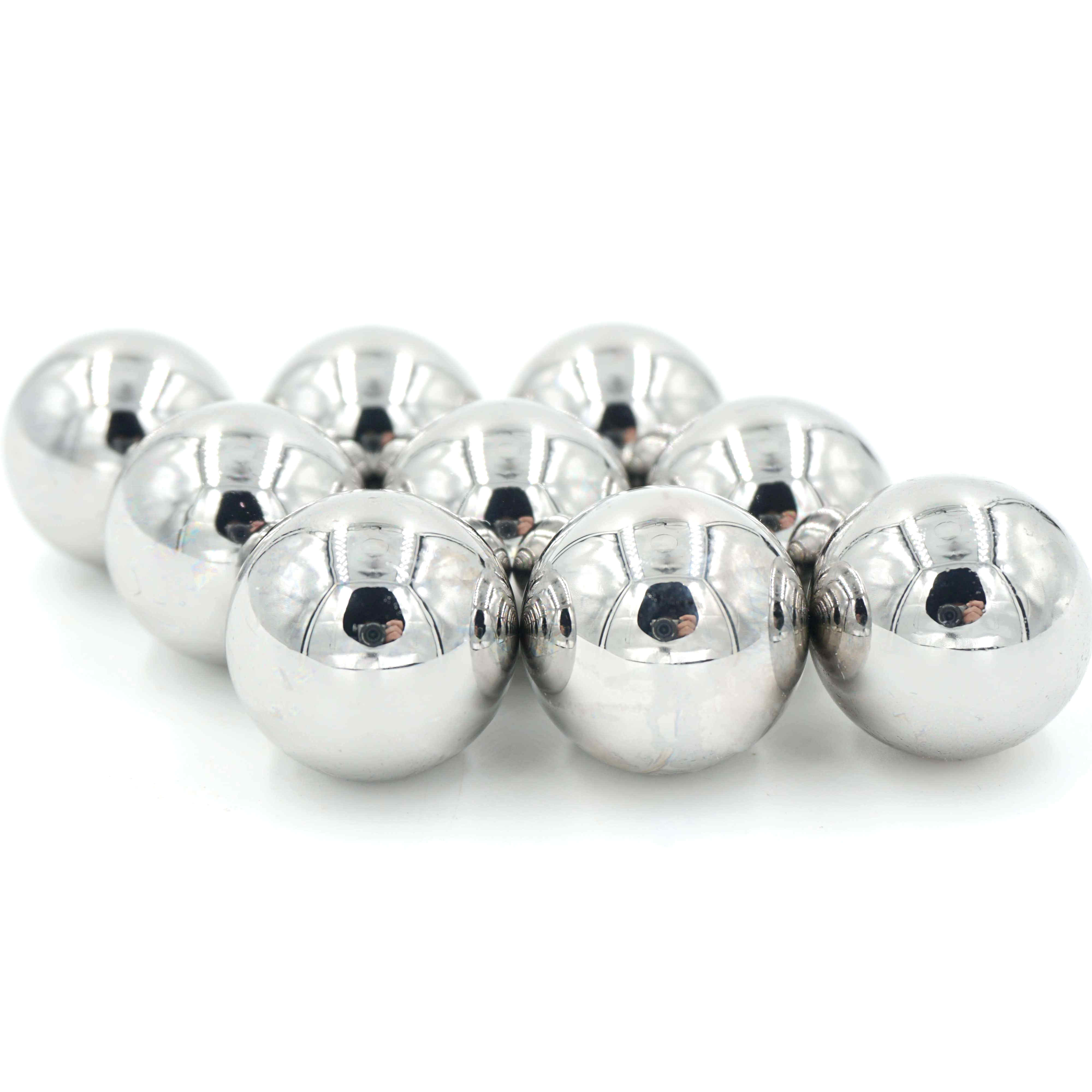
The material range that keeps a program running from one year to the next covers carbon steel 1010/1045/1085, chrome steel 52100 (100Cr6/SUJ2), martensitic stainless 420/440C/440B, austenitic stainless 304/304L/316/316L, and speciality alloys on request including M50, duplex 2205, Hastelloy C276, Inconel and Monel. All are supplied with material verification and MTR as required.
Precision grades and hardness
Diameter coverage runs from 0.5 mm to 50.8 mm (0.020–2.000 in) in metric and inch series, with non-standard decimal sizes made to drawing. Precision grades follow ABMA/ISO 3290 from G3 to G1000, with G10–G500 the routinely quoted production band. Hardness is material-dependent: chrome steel 52100 is through-hardened to approximately HRC 60–66, 440C martensitic stainless to HRC 58–65, and M50 high-speed alloy to HRC 62–66 with high-temperature stability. Hardness, heat-treatment condition and microstructure are controlled by batch and reported on the MTR.
Traceability behind consistent diameter
The production base covers 7,500 m² with 105 sets of processing equipment, a stable annual output of 2,500 tons and a team that includes 40 employees and 8 engineers. Raw materials are sampled and inspected before entering production, and finished balls pass 100% automatic screening through roller bar sorting equipment and photoelectric surface defect detectors, backed by automated machine-vision inspection for size, roundness, surface and appearance. Material verification by PMI or chemical analysis closes the loop on grade identity.
For OEM powertrain and EV reduction-gear bearing programs, that chain is what makes “consistent ball diameter and fatigue life rating” an auditable claim rather than a marketing line: IATF 16949:2016 certification, batch-level MTR, and inspection records that follow the lot code on the carton.
After-sales support on a repeat order
After-sales scope includes engineering drawing review before quoting, sample approval, inspection documentation with each batch, technical selection support when a material or grade is being changed, prompt replacement for quality issues and fast response on questions. For running programs, monthly production status updates give purchasing a forward view instead of a shipment surprise.
Step by Step: From Drawing Review to Repeat Release
- Drawing and requirement review. Diameter, grade, material, hardness and any custom features are reviewed by an engineer before quoting. For drilled or threaded parts this step fixes hole diameter, position, depth, concentricity and thread class.
- Material and grade confirmation. The material family is matched to the service condition, and the inspection route is agreed — MTR, COA, and PPAP or FAI where the program requires them.
- Sample or prototype approval. Standard sizes are available as samples; prototypes of 10–50 pcs are workable for simple custom parts, and non-standard or CNC-machined parts typically start from 50–500 pcs depending on setup.
- First production batch and documentation. The batch runs through 100% automated machine-vision inspection plus hardness, roundness and material verification, and ships with the agreed document set.
- Delivery scheduling. Stock sizes ship in 5–10 days, standard production in 15–30 days, and non-standard or CNC work in 20–60 days depending on tooling and inspection.
- Repeat release and support. Rolling stock and backup tooling are maintained for stable repeat supply, production status is reported monthly, and drawings can be revised without restarting the relationship.
Use Cases: Where Long-Term Programs Actually Run
Tier-1 bearing manufacturing. A Tier-1 bearing manufacturer has taken ongoing annual supply of roughly 8 million pieces per year for deep-groove ball bearings in electric-motor and automotive wheel-hub applications, for more than five years. The program runs on ABMA G10 precision, 100% automated vision inspection, consistent HRC 60–66 and direct-from-mill traceability. The reported result was reduced bearing noise and vibration, and stable on-time delivery that let the customer shorten lead time and lower safety stock.
Automotive component supply. An automotive component supplier holds an annual contract of about 5 million pieces per year for wheel-hub and transmission bearings on North-American platforms, ongoing for four years. Stable quality across shipments reduced the customer’s incoming inspection workload, supported by factory-direct OEM supply and bilingual English/Spanish commercial and technical support.
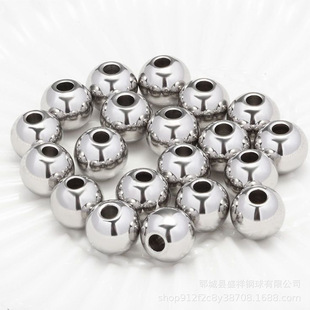
Drilled balls for valve and hydraulic OEMs. A specialty valve and hydraulic OEM ordered 150,000 drilled balls over a four-year relationship for drilled ball valves and hydraulic/pneumatic rotary actuators. CNC-drilled hole position accuracy eliminated rework at the customer’s assembly stage — the reason drilled programs are quoted on concentricity and position rather than on ball diameter alone.
Distributor consolidation. A general industrial distributor has taken around 10 million pieces per year for five years for conveyor ball transfers, drawer slides and general hardware, consolidating multiple SKUs with one factory-direct source, flexible packaging, fast stock shipment and low MOQ.
Order Type Comparison: Lead Time, MOQ and Documentation
The table below summarises the typical terms attached to each order type. Figures are the stated product-line norms and are confirmed per order once drawing complexity and quantity are known.
| Order type | Typical lead time | MOQ guidance | Inspection / documentation | Stated capacity |
|---|---|---|---|---|
| Standard sizes, common materials | Mostly in stock, 7–15 days | Low MOQ on standard sizes | 100% machine-vision inspection; size, roundness, hardness, surface, noise and vibration testing | Up to 30 tons per month |
| Precision grades G3–G25 | Standard precision 10–25 days; ultra-precision or non-standard 25–50 days | Depends on grade and size | 100% automated machine-vision plus roundness/profiler checks; grade certification per batch | 5 tons per month |
| Drilled and threaded balls | Standard drilled items 15–30 days; custom hole patterns 25–50 days | MOQ by setup; prototype and small-batch friendly | CMM and machine-vision; hole position and size, dimension, surface, hardness | 5 tons per month |
| Hollow balls | Standard 15–30 days; custom wall thickness 25–50 days | MOQ by size, negotiable for custom diameters | Dimensional, wall-thickness, roundness, surface and pressure/leak test as required | 20 tons per month |
| Fully non-standard, to drawing | 20–50 days by drawing complexity and quantity | MOQ by negotiation; prototypes and low-volume runs supported | Drawing-based inspection; CMM, machine-vision, hardness, material certification | 3,000 units per month |
| CNC / machined balls | Standard machined items 15–30 days; fully custom 25–50 days | MOQ based on setup; small-to-medium batches supported | CMM and automated machine-vision; dimension, form, surface, hardness as required | Capacity scales with order complexity |
FAQ
What quality documents and traceability come with a long-term steel ball order?
Every batch is inspected with 100% automated machine-vision sorting for size, roundness, surface defects and appearance, supplemented by hardness, roundness, microstructure, roughness and material verification through PMI or chemical analysis. The document set includes the material test report (MTR), EN 10204 2.1 or 3.1 and a COA; PPAP, FAI, NACE MR0175 and AMS certificates are available on request. Haimen City Mingzhu Steel Ball Co., Ltd. holds IATF 16949:2016 certification, which is the traceability framework OEM powertrain and EV reduction-gear bearing programs normally require.
Can you make non-standard, drilled, threaded or hollow steel balls to drawing?
Yes. Production covers non-standard diameters to decimal size, drilled (through or blind), threaded in metric and UNC/UNF, stepped, half-spherical and hollow balls, with features controlled for diameter, depth, concentricity and thread class. Tolerance and concentricity are quoted per drawing. Soft materials are easier to machine, while hardened 440C or M50 require specialised tooling and longer lead time.
What are the payment terms and shipping options for repeat orders?
The standard arrangement is T/T 30% deposit plus 70% balance before shipment. L/C at sight is accepted for large orders, PayPal or Western Union for samples, and OA/Net-30 for approved repeat customers. Delivery runs EXW, FOB Shanghai or Ningbo, CIF, DAP or DDP, by air or sea depending on the order. Packaging uses drums, sealed bags, tubes/blisters or OEM-labelled cartons marked with quantity, grade and lot code.
What is the minimum order quantity, and can I evaluate samples first?
Standard catalogue sizes have a low MOQ and can be ordered by the bag or piece, with samples available. Non-standard and CNC-machined balls usually start from 50–500 pcs depending on setup, and prototype quantities of 10–50 pcs are workable for simple parts. MOQ is flexible for first-time cooperation and NDA projects.
What lead times apply to repeat orders versus custom orders?
Standard sizes and common materials are often in stock and ship in 5–10 days. Standard production runs 15–30 days; non-standard sizes, special alloys or CNC features take 20–60 days depending on tooling and inspection. Rolling stock and backup tooling are maintained for stable repeat supply, with monthly production status updates. To get a firm figure, send the drawing, material, grade and annual quantity to info@hmmzsteelball.com and the lead time will be quoted against that specific combination rather than a generic range.
Conclusion
Long-term steel ball supply is decided less by the catalogue than by four repeatable controls: a documented inspection and material verification chain, the ability to machine custom, drilled, threaded and hollow geometry to drawing, commercial terms that scale from a sample to an annual contract, and lead times that hold when the order mix shifts. Where those four line up, diameter consistency, fatigue life rating and IATF 16949 traceability stop being promises and become records attached to a lot code.
Haimen City Mingzhu Steel Ball Co., Ltd. has manufactured steel balls since 1992 from a 7,500 m² production base in Haimen, Jiangsu Province, China, with 105 sets of processing equipment, a stable annual output of 2,500 tons and IATF 16949:2016 certification. Its export business covers roughly 25% of output, with main markets in the United States, Germany and Brazil. The product range includes bearing steel balls, chrome steel balls, stainless steel balls, carbon steel balls, machined steel balls, non-standard steel balls, precision steel balls, drilled steel balls, electroplated steel balls, hollow steel balls, duplex stainless steel balls, M50 steel balls and Hastelloy steel balls.

Ready to price a long-term program?
Send the drawing or size list, material, precision grade and expected annual quantity for a quotation with lead time. Samples can be arranged before a first production order, and the full product and capability overview is available in the Haimen Mingzhu steel ball brochure (PDF).
Email: info@hmmzsteelball.com | Tel / WhatsApp: +86 13912237934 | Web: www.hmmzsteelball.com
Contact: Diego Gu | No. 718 West Renmin Road, Haimen City, Jiangsu Province, China
Have Questions or Need More Details?
Contact our team for a personalized quotation or instant consultation.
Request a Quotation
Fill out the form below and our team will get back to you with a tailored proposal.
WhatsApp Direct Chat
Prefer to chat in real-time? Message us on WhatsApp for instant assistance & quick answers.
- Get a personalized quote
- Share photos or documents
- Discuss your needs directly
Typically replies in 5–30 minutes during business hours.