Steel Balls in Needle and Check Valve Trim: A Petrochemical Application Guide
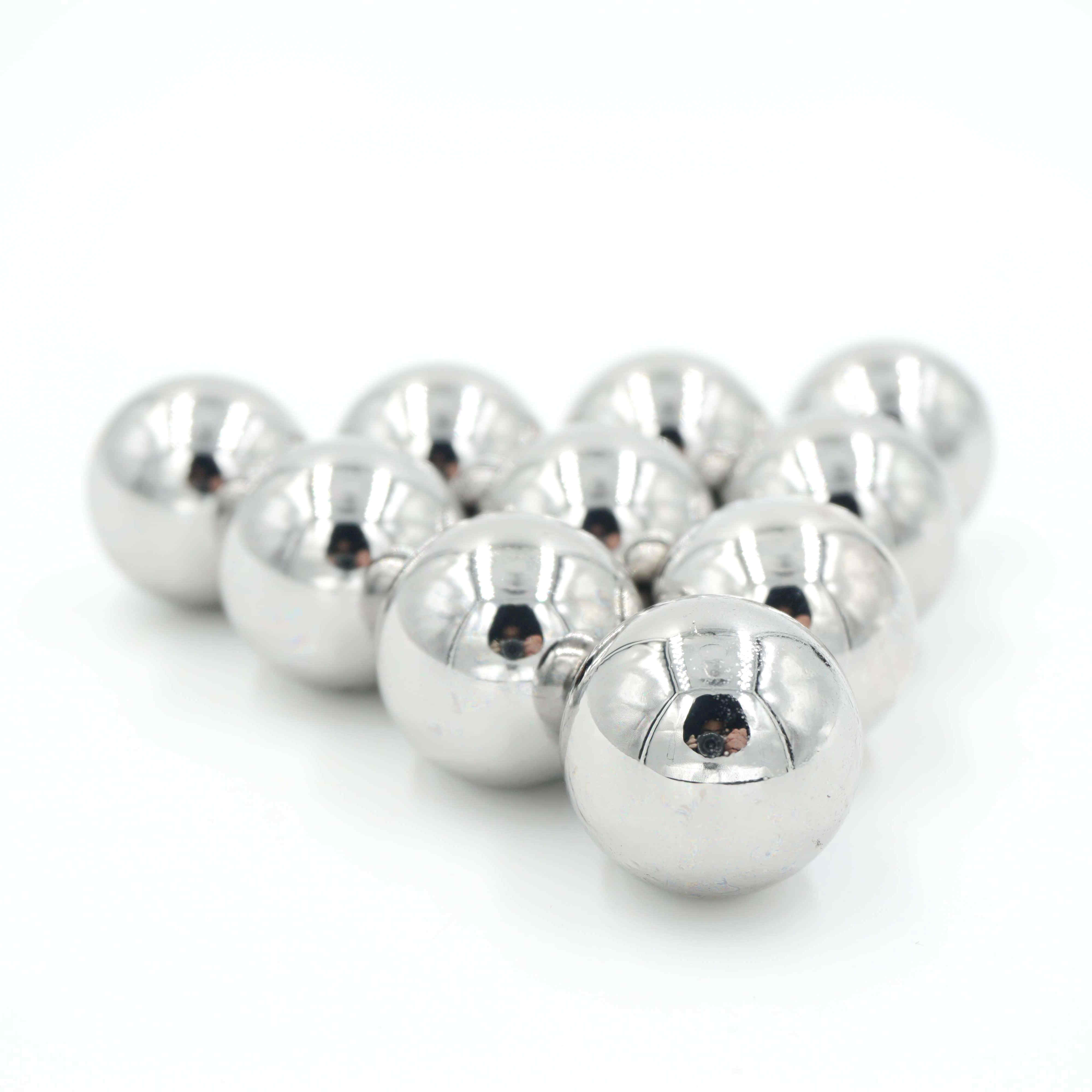
Short answer: In needle valves and check valves used in oil, gas and petrochemical fluid control, the steel ball is the moving sealing or shut-off element. It presses against a seat to stop flow and lifts or rotates to open it. For the common service window of wet gas, mildly corrosive fluids, 0–200 °C temperature and moderate pressure, the standard choice is a hardened martensitic stainless steel ball in the HRC 48–55 range. AISI 420C / UNS S42000 balls are supplied at HRC 50–55, which sits inside that window, and they combine that hardness with the moderate corrosion resistance the service requires.
This guide is written for valve manufacturers, OEM trim suppliers, and procurement or reliability engineers who must specify, buy or qualify steel balls for needle and check valve trim. It maps the petrochemical service window to material and hardness, explains how ball geometry changes by valve type, and sets out the grade, inspection and validation steps that decide whether a valve seals on the first shift or starts weeping after a few hundred cycles.
Problem Definition: Why a Ball Specified Only by Diameter Fails in Valve Service
A needle valve or check valve does not need a sphere of a certain size; it needs a sphere that will seal repeatably against a seat under load, in a specific fluid, at a specific temperature. Three failure modes account for most trim problems in petrochemical fluid control.
1. The ball is too soft for the seat load
Austenitic stainless balls, including AISI 304 and AISI 316, are supplied in the annealed soft condition at HRC 25 to 39. The 304 Stainless Steel Ball is offered from 1 mm to 50.8 mm in precision grades G100 to G1000, and the 316 Stainless Steel Ball over the same diameter range in grades G100 through G1000, both annealed. That condition is right for corrosion resistance and cleanability, but it is a soft condition. Where a needle valve or check valve relies on metal-to-metal contact to shut off, a soft ball deforms, the seat contact patch widens, and the valve stops sealing crisply.
Hardened martensitic stainless balls change that. AISI 420C Stainless Steel Balls are supplied at HRC 50–55, AISI 440C Stainless Steel Balls at HRC 58–62, and high-carbon high-hardness martensitic stainless balls are through-hardened to HRC 58–65. Beyond stainless, Chrome Steel Balls in AISI 52100 / DIN 100Cr6 / JIS SUJ2 reach HRC 60–66.
2. The ball corrodes in the fluid it is meant to seal
Wet gas and mildly corrosive petrochemical fluids attack carbon steel quickly, and the corrosion product sits exactly on the sealing surface. Carbon Steel Balls are produced from 1010, 1015 and 1018 grades and are supplied either unhardened in a low-carbon soft condition or through-hardened to HRC 55–60; corrosion resistance is not a design characteristic of that grade family. Stainless grades address the problem in different degrees. AISI 304 supplies general-purpose corrosion resistance; AISI 316 adds molybdenum alloying for pitting and crevice corrosion resistance in chloride and saltwater environments; 2205 duplex stainless (UNS S32205 / S31803) is produced at roughly twice the yield strength of 316.
3. The grade and geometry are wrong for the seat
Diameter alone says nothing about sphericity, diameter variation or surface finish. Precision Steel Balls are supplied in grades G3, G5, G10, G16 and G25 from 0.5 mm to 50.8 mm, with sphericity controlled within micro-inch tolerances; G3 and G5 balls hold tighter sphericity limits than G16 and G25 balls in the same diameter range. A coarse-grade ball may be perfectly acceptable in a rugged check valve and completely unacceptable in a needle valve that has to meter.
Geometry matters in the same way. A solid ball cannot serve a flow-through valve design; that duty belongs to a Drilled Steel Ball with hole diameter, hole location and thread machined to drawing.
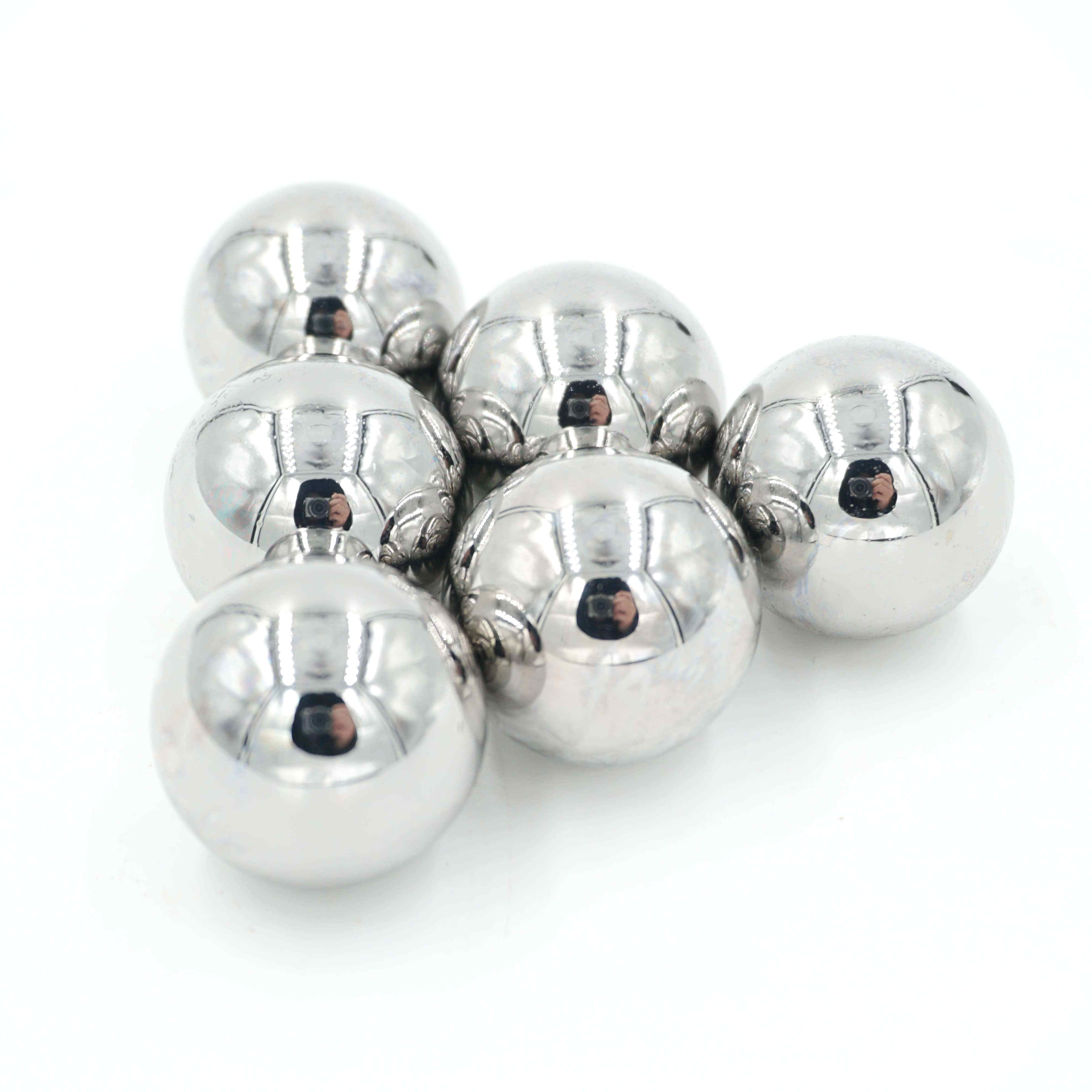
Industry Background: Where These Balls Sit in Petrochemical Fluid Control
The petrochemical valve trim category is defined by a specific service window: wet gas and mildly corrosive fluids, 0–200 °C, moderate pressure, and quarter-turn or intermittent operation. Inside that window the ball acts as the sealing or shut-off element in ball valves and check valves, and the matched equipment set includes floating-mounted ball valves, trunnion-mounted ball valves, needle valves and check valves. The typical requirement statement for the window is a hardened martensitic ball at HRC 48–55 with moderate corrosion resistance, and NACE MR0175 documentation listed as an optional requirement rather than a default.
That window is not a niche. Steel balls are classified under HS Code 8482.91 (balls, needles and rollers). Coherent Market Insights estimates the global steel ball market will reach USD 12.91 billion by 2026, with chrome steel balls projected to hold a 45.7% share of the material segment in the same year. Business Research Insights projects a 5.2% CAGR for 2026–2035, though published forecasts differ because some reports include large grinding media while others count precision balls only. For valve buyers the practical consequence is simple: precision ball supply is a mature, standards-driven category, so the real task is matching, not availability.
Standards carry most of the matching work. ISO 3290-1:2014 specifies requirements for finished steel balls for rolling bearings and defines grades from G3 to G700. ASTM A295/A295M covers high-carbon anti-friction bearing steel of the 52100 type. On the stainless side, austenitic stainless balls are manufactured to ISO 3290 and ABMA Std 10, martensitic stainless balls to DIN 5401 and ISO 3290, and high-carbon high-hardness martensitic stainless balls to DIN 5401 and ABMA Std 10. A trim specification that cites these standards is already describing the ball, not merely sizing it.
Detailed Solution: Material and Hardness Matching for Needle and Check Valve Trim
The default: hardened martensitic stainless
For wet gas, mildly corrosive fluids, 0–200 °C and moderate pressure, the reference material is martensitic stainless steel. AISI 420C / UNS S42000 balls are supplied from 1 mm to 50.8 mm in grades G25–G1000 at HRC 50–55, and the material is listed for pump valves as well as for bearings in mild corrosive environments. Where more hardness is needed and the corrosion duty is still moderate, AISI 440C / UNS S44004 balls are supplied from 0.5 mm to 50.8 mm in grades G10–G1000 at HRC 58–62 with a maximum phosphorus and sulfur content of 0.07%. Where seat load and cycle count are higher still, high-carbon high-hardness martensitic stainless balls are through-hardened to HRC 58–65, produced in sizes from 0.8 mm to 50.8 mm and available in precision grades G5 through G100.
The trade-off is direct and worth stating plainly. Hardness buys seat-load tolerance and wear life. Corrosion resistance inside the stainless family does not increase with hardness, so stepping from 420C to 440C adds roughly eight HRC points but does not convert a wet-gas trim into an acid-service trim. Conversely, dropping to a soft austenitic grade to gain corrosion resistance gives up the hardness the seat needs.
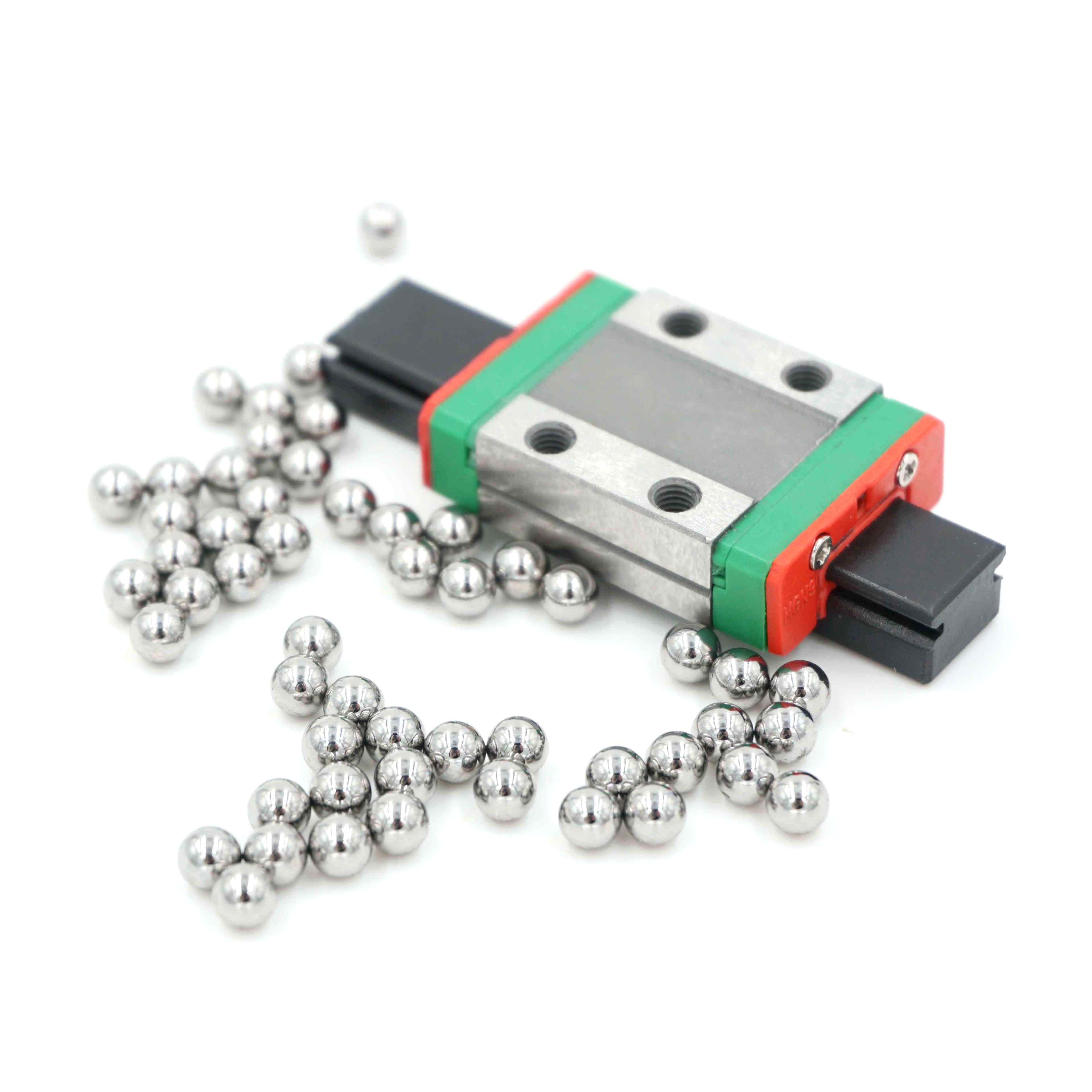
When hardness is the governing requirement
AISI 52100, DIN 100Cr6 and JIS SUJ2 designate the same chrome alloy steel. It is supplied as Chrome Steel Balls in grades G10–G1000 at HRC 60–66 and is broadly interchangeable with ISO, DIN and SAE bearing standards. In the through-hardened bearing form, the Bearing Steel Ball is supplied from 0.5 mm to 50.8 mm in grades G10–G1000 at HRC 60–66 with a surface roughness of Ra ≤ 0.05 µm. These are the hardest balls in the standard range and the correct answer where fatigue life and dimensional stability outrank stainless corrosion resistance.
When the fluid, not the seat, decides
Once the fluid becomes the limiting factor, selection moves up the corrosion ladder:
- AISI 316 / UNS S31600 — 1 mm to 50.8 mm, grades G100–G1000, annealed soft, with molybdenum alloying for pitting and crevice corrosion resistance in chloride and saltwater environments. In general material comparisons, 316 is credited with a pitting resistance equivalent number in the region of 23–28 against roughly 18–20 for 304.
- 2205 duplex stainless (UNS S32205 / S31803) — typically 10 mm to 100 mm, austenitic-ferritic structure, with yield strength approximately twice that of 316 stainless steel.
- Hastelloy C-276 / UNS N10276 — typically 3 mm to 50 mm, resistant to strong oxidizing acids and strong reducing acids, and providing resistance to pitting corrosion, crevice corrosion and stress-corrosion cracking. This is the escalation step for severe-corrosion service, where Hastelloy ball valves, acid-handling valves and reactor bottom valves are the matched equipment.
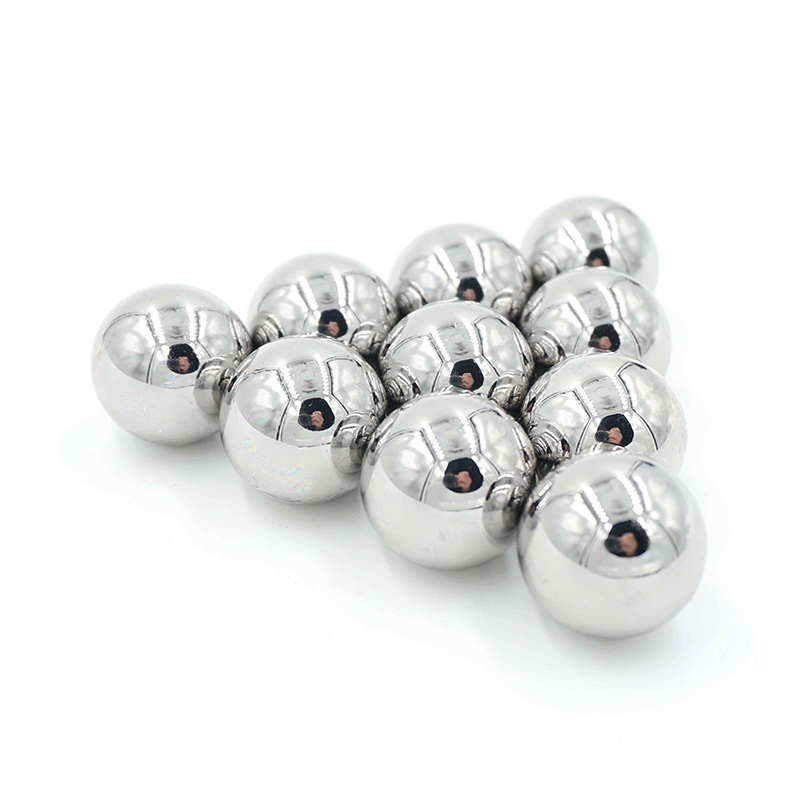
Geometry: solid, drilled, machined, hollow, and non-standard
Needle and check valves almost always use a solid precision ball, but the surrounding petrochemical equipment does not. Drilled Steel Balls, through-drilled or tapped, are produced in stock sizes from 6 mm to 50.8 mm with custom hole diameter, thread type and hole location machined per customer drawing; they are the flow-through element in specialty ball valves, diverter valves and metering valve trim. Machined Steel Balls cover 10 mm to 200 mm and larger in ISO tolerance classes, in AISI 52100, AISI 1045 or AISI 4140, for the larger trim and pivot components that cold heading cannot reach. Hollow Steel Balls, seamless or welded with outside diameter and wall thickness per specification, serve applications where mass matters more than section. Non-Standard Steel Balls are made to customer drawing when no catalogue size or grade will meet the design. Electroplated Steel Balls, with zinc plating from 5 µm to 25 µm on a 1–50.8 mm base, belong to low-corrosion and decorative duties rather than to wetted petrochemical trim.
Supporting equipment: floating and trunnion-mounted ball valves
Needle valves and check valves are rarely the only ball-based sealing element on a petrochemical unit. The same trim window covers floating-mounted and trunnion-mounted ball valves, where the ball itself is the rotating closure and is correspondingly larger. A supplier that can hold grade discipline across both a small needle-valve ball and a large ball-valve ball in the same corrosion class removes a second qualification cycle from the project, which is why diameter range and grade range should be checked before material is agreed.
Step-by-Step Breakdown: Specifying a Valve-Trim Ball
- Define the service window. Record fluid type, temperature, pressure class and corrosion class. For petrochemical trim this usually reads wet gas or mildly corrosive fluid, 0–200 °C, moderate pressure, intermittent or quarter-turn operation. Decide early whether NACE MR0175 documentation is required; in the standard trim window it is listed as optional.
- Set the hardness band. Below HRC 40, expect seat-load deformation in metal-seated trim. The common trim requirement is the HRC 48–55 band, met by AISI 420C at HRC 50–55. Step to 440C at HRC 58–62, high-carbon high-hardness martensitic stainless at HRC 58–65, or 52100 chrome/bearing steel at HRC 60–66 only when seat load and cycle count justify it.
- Choose the material family against the fluid. Martensitic stainless for wet gas and mildly corrosive fluids; 316 for chlorides; 2205 duplex for high-strength chloride service; Hastelloy C-276 for strong acids; carbon steel only where corrosion is not the governing requirement.
- Fix size and precision grade. Select diameter from the available range — 0.5–50.8 mm for precision, austenitic and martensitic stainless families, 1–50.8 mm for carbon and chrome steel, 10–200 mm+ for machined balls — and select grade from the precision ladder G3, G5, G10, G16, G25 for metering trim, or G25–G1000 where a coarser seat is acceptable.
- Define geometry and secondary features. Solid for needle and check valve seats; drilled or tapped to drawing where the ball must pass flow or accept a stem; machined where the diameter exceeds the cold-heading range; hollow where weight is the constraint.
- Specify inspection and documentation. Material certificates can be provided for drilled-ball orders, batch traceability documentation is available for production lots, and inspection documentation accompanies shipments.
- Validate with a sample before the production order. Ball-to-seat behaviour is a system property, not a catalogue property. Seat a sample ball in the actual trim, run leak and cycle checks, then release the production lot.
Use Cases
Wet-gas needle valve trim
A needle valve metering wet gas at moderate pressure and up to 200 °C needs a small, hard, round ball that will not deform under the needle load. AISI 420C balls at HRC 50–55 in a G25–G100 grade are the baseline: the moderate corrosion resistance covers mildly corrosive condensate without dropping to a soft austenitic grade that would deform at the seat.
Check valve on a mildly corrosive petrochemical line
A check valve ball must lift freely and reseat cleanly many thousands of times. Hardness prevents seat brinelling, while roundness and surface finish prevent bypass leakage. Either 420C at HRC 50–55 or 440C at HRC 58–62 works in this position; the deciding factor is usually how corrosive the fluid actually is, not how hard the seat is.
Specialty drilled-ball valve and diverter trim
Where the valve must pass flow through the ball, a drilled ball is machined to drawing with custom hole diameter, thread type and hole location; stock sizes run from 6 mm to 50.8 mm, and hole position tolerances are reviewed against the customer drawing. Hole concentricity and burr-free holes are the acceptance criteria, because in this design the drilled ball is also the sealing surface.
Severe acid service
For strong acids and chlorides, trim escalates to Hastelloy C-276 balls, typically 3–50 mm, resistant to strong oxidizing and reducing acids as well as pitting, crevice corrosion and stress-corrosion cracking. In one documented chemical and petrochemical plant application, Hastelloy C-276 balls supplied with EN 10204 3.1 documentation, MTR and PMI were used in ball valves handling hydrochloric and sulfuric acid at 120,000 pcs/yr, with minimal valve trim replacement reported across a five-year period.
Comparison Tables
Table 1 — Ball function by valve type in petrochemical fluid control
| Valve / equipment | How the ball works | Service window | Ball requirement |
|---|---|---|---|
| Needle valve | Ball seats against the seat to shut off fine flow; small ball, tight seat contact | Wet gas, mildly corrosive fluids, 0–200 °C, moderate pressure | Hardened martensitic ball in the HRC 48–55 band (420C at HRC 50–55); moderate corrosion resistance; NACE MR0175 optional |
| Check valve | Ball lifts off the seat under forward flow and reseats on reverse flow | Same petrochemical trim window | Hardness plus roundness plus corrosion resistance; grades G25–G1000 |
| Floating-mounted ball valve | Ball rotates as the sealing element | 0–200 °C, oil, gas and water service | Larger solid ball in the corrosion class matching the fluid |
| Trunnion-mounted ball valve | Ball is supported on trunnions during rotation | 0–200 °C, oil, gas and water service | Larger solid ball; same grade and material discipline as trim balls |
| Specialty drilled-ball valve / diverter valve | A drilled ball allows flow through the ball | High-pressure flow control, 0–200 °C | Hole concentricity per drawing, burr-free hole, optional threaded hole |
| Wellhead valve, choke manifold, mud-pump check valve | Custom spherical seat or poppet | High pressure, sour service and abrasive slurry, −10–150 °C | API-spec material and NDE awareness, custom geometry, hardness and impact balance |
Table 2 — Material and hardness options for valve-trim balls
| Material | Type | Diameter range | Precision grades | Hardness | Where it fits |
|---|---|---|---|---|---|
| AISI 420C / UNS S42000 | Martensitic stainless | 1–50.8 mm | G25–G1000 | HRC 50–55 | Standard petrochemical trim; corrosion resistant; used in pump valves and mild corrosive environments |
| AISI 440C / UNS S44004 | Martensitic stainless | 0.5–50.8 mm | G10–G1000 | HRC 58–62 | Higher-hardness trim; max 0.07% P and S |
| High-carbon high-hardness martensitic stainless | Martensitic stainless (through-hardened) | 0.8–50.8 mm | G5–G100 | HRC 58–65 | Made to DIN 5401 and ABMA Std 10; high seat-load duty |
| AISI 52100 / DIN 100Cr6 / JIS SUJ2 | Chrome / bearing steel | 0.5–50.8 mm | G10–G1000 | HRC 60–66 | Hardness and fatigue life first; Ra ≤ 0.05 µm; not a stainless grade |
| AISI 316 / UNS S31600 | Austenitic stainless | 1–50.8 mm | G100–G1000 | HRC 25–39 (annealed) | Chloride, saltwater and chemical service; Mo alloying for pitting and crevice resistance |
| AISI 304 | Austenitic stainless | 1–50.8 mm | G100–G1000 | HRC 25–39 (annealed) | General corrosion resistance, food-grade and washdown duties |
| UNS S32205 / S31803 (2205) | Duplex stainless | Typically 10–100 mm | Per specification | Per specification | Yield strength roughly twice that of 316; aggressive marine and process environments |
| Hastelloy C-276 / C-22 | Nickel-chromium-molybdenum superalloy | Typically 3–50 mm | Per specification | Per specification | Strong oxidizing and reducing acids; pitting, crevice and stress-corrosion cracking resistance |
| 1010 / 1015 / 1018 carbon steel | Carbon steel | 1–50.8 mm | G100–G2000 | Soft, or HRC 55–60 when hardened | Lowest material cost; choose where corrosion resistance is not the governing requirement |
Frequently Asked Questions
1. What certification and traceability comes with valve-trim steel balls?
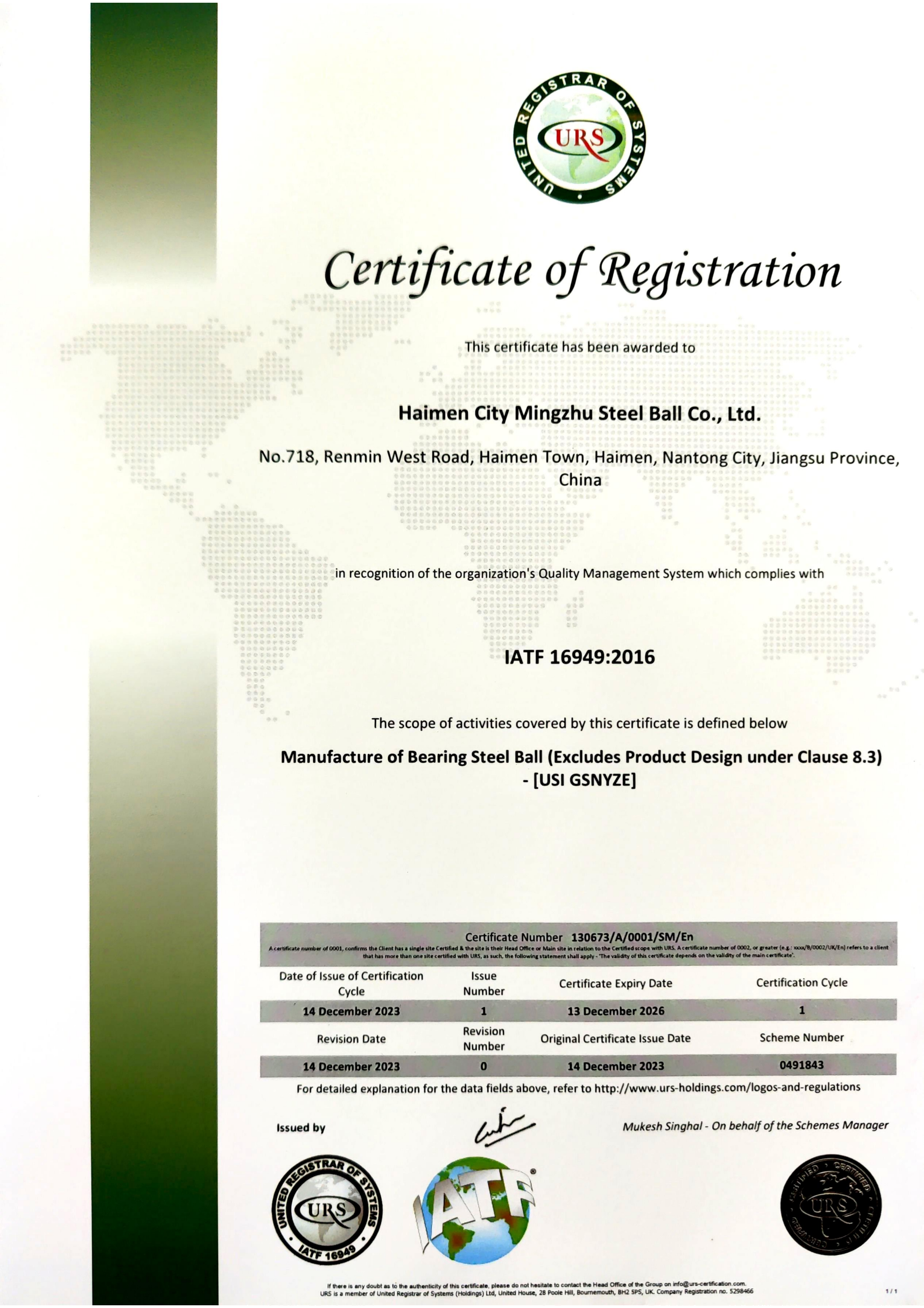
Haimen City Mingzhu Steel Ball Co., Ltd. holds IATF 16949:2016 certification issued by URS, an independent third-party certification body, under certificate number 130673/A/001/SM/En, issued on 2023-12-14 and valid until 2026-12-13. The scope covers manufacture of Bearing Steel Ball and excludes product design under Clause 8.3, and the certificate applies to the Asia-Pacific, EU, North America, Latin America and Middle East and Africa markets. Alongside the system certificate, material certificates can be provided for drilled ball orders, batch traceability documentation is available for production lots, and inspection documentation accompanies shipments. Where the service window requires it, NACE MR0175 documentation is listed as an optional requirement for this trim category, and EN 10204 3.1 documentation, MTR and PMI are available for corrosion-grade alloy balls.
2. What diameters, grades and hardness levels can be supplied for needle and check valve trim?
Hardened martensitic options: AISI 420C from 1 mm to 50.8 mm in grades G25–G1000 at HRC 50–55; AISI 440C from 0.5 mm to 50.8 mm in grades G10–G1000 at HRC 58–62; and high-carbon high-hardness martensitic stainless from 0.8 mm to 50.8 mm in grades G5–G100 where a tighter grade is required. Where hardness is the governing requirement, chrome and bearing steel balls in AISI 52100 / DIN 100Cr6 / JIS SUJ2 are supplied from 0.5 mm to 50.8 mm in grades G10–G1000 at HRC 60–66, with Ra ≤ 0.05 µm on the through-hardened bearing grade. For metering trim, Precision Steel Balls are available from 0.5 mm to 50.8 mm in grades G3, G5, G10, G16 and G25. Where the valve must pass flow through the ball, Drilled Steel Balls run from 6 mm to 50.8 mm in stock sizes with hole diameter, thread type and hole location machined to drawing.
3. What drives the cost of a valve-trim ball if no price list applies?
Four variables dominate a quotation. Material family is the largest: 1010/1015/1018 carbon steel is the economy option, austenitic and martensitic stainless grades sit above it, and alloy grades such as Hastelloy C-276, duplex 2205 and M50 are made-to-order with MOQ set by alloy batch. Precision grade is the second: G3 and G5 balls require tighter size, sphericity and surface-finish control than G25 or G100 balls in the same diameter. Secondary operations are the third: drilled, tapped, machined and hollow balls add setup and inspection steps, with drilled-ball MOQ set by setup. Documentation and inspection scope are the fourth: alloy material certificates, EN 10204 3.1, PMI, NACE or AMS documentation add traceable verification work to each lot. Because these four combine differently per item, alloy and custom trim balls are quoted rather than listed.
4. Can I obtain samples to qualify a ball against my valve seat before ordering production quantities?
Yes. Standard catalogue sizes carry low MOQ and can be ordered by the bag or piece, with samples available. Non-standard and CNC-machined balls usually start from 50–500 pcs depending on setup, and prototype quantities of 10–50 pcs are workable for simple parts; drilled balls are noted as prototype-friendly and small-batch friendly, with MOQ set by setup. For alloy items such as Hastelloy, duplex and M50, MOQ is set by alloy batch and low-volume or prototype orders are supported. MOQ is negotiable for first-time cooperation and NDA projects. The practical qualification route is to seat a sample in the real trim, run leak and cycle checks at the actual service temperature, and then release the production lot against the approved sample.
5. What is the lead time, and can supply be sustained for service and spares programmes?
Standard sizes and common materials are frequently held in stock and can ship in roughly 5–10 days. Standard production runs at about 15–30 days, while non-standard sizes, special alloys and CNC features take roughly 20–60 days depending on tooling and inspection scope; made-to-order alloy batches such as Hastelloy are typically 25–50 days and M50 runs around 20–45 days. Rolling stock and backup tooling are maintained for stable repeat supply, and monthly production status updates are provided. If you are building a valve-trim specification now, send the drawing, service window and required documentation set for a quotation and sample plan — contact Diego Gu at info@hmmzsteelball.com or WhatsApp +86 13912237934, or download the full capability brochure for grade and tolerance details.
Conclusion
Sealing a needle valve or a check valve in petrochemical fluid control is a materials decision before it is a components decision. For wet gas, mildly corrosive fluids, 0–200 °C and moderate pressure, a hardened martensitic stainless ball in the HRC 48–55 band — AISI 420C supplied at HRC 50–55, or AISI 440C at HRC 58–62 where more hardness is needed — covers the seat load and the corrosion duty together. Move up to AISI 52100 when hardness and fatigue life govern, to 316 or 2205 duplex when chlorides govern, and to Hastelloy C-276 when strong acids govern.
Then make the specification complete: diameter from the correct range, precision grade selected against the seat rather than the catalogue, geometry matched to whether the ball must seal only or also pass flow, and documentation set declared up front. Validate one sample in the actual trim before committing the production lot, and the same material logic will carry across needle valves, check valves, floating-mounted and trunnion-mounted ball valves in the same unit.
Next step: Send the valve type, fluid, temperature, pressure class and required documentation set, and Haimen City Mingzhu Steel Ball Co., Ltd. will return a material and grade recommendation with a sample plan and quotation.
Request a sample or quotation on WhatsApp | Download the Haimen Mingzhu steel ball brochure (PDF)

Have Questions or Need More Details?
Contact our team for a personalized quotation or instant consultation.
Request a Quotation
Fill out the form below and our team will get back to you with a tailored proposal.
WhatsApp Direct Chat
Prefer to chat in real-time? Message us on WhatsApp for instant assistance & quick answers.
- Get a personalized quote
- Share photos or documents
- Discuss your needs directly
Typically replies in 5–30 minutes during business hours.