
Top Picks for Steel Balls in Oil & Gas Valve Sealing: Ranking by Service Condition
Top Picks for Steel Balls in Oil & Gas Valve Sealing: Ranking by Service Condition
Valve sealing fails for predictable reasons: the ball is either too soft for the seating load it carries, or too corrosion-prone for the fluid it sits in. This ranking sorts steel ball options for sealing and shut-off elements inside floating and trunnion-mounted ball valves, needle valves and check valves by service condition rather than by material family, and then applies the purchasing checks — acceptance criteria, traceability, MOQ and lead time — that decide whether a sample order scales into an annual contract. Scoped to wet gas, mildly corrosive fluids, 0–200 °C service and moderate pressure, the ranked shortlist is 440C first, 420C second, 316 third, 304 fourth, duplex stainless fifth, with Hastelloy C-276 reserved for chemistry the first five cannot survive.
Problem Definition: What Actually Fails in a Valve Seat
Three failure modes dominate when a steel ball serves as a sealing or shut-off element. The first is loss of seat conformity: a ball that is too soft deforms or brinells under repeated seating, so the contact band widens and the valve no longer isolates. The second is corrosion pitting, typically driven by condensed moisture, chloride-bearing fluids or mildly acidic process chemistry; a pit on the seating band becomes a leak path even when the ball is geometrically perfect. The third is surface degradation through wear or coating loss, where abrasion or a plated layer breaking down changes the contact geometry.
The valve type determines which of the three matters most.
- Floating ball valves press the ball against the downstream seat under line pressure, so hardness and roundness carry the sealing load directly.
- Trunnion-mounted ball valves hold the ball on bearings and rely on seat preload, which shifts the priority toward dimensional stability and, at higher pressure classes, toward material strength.
- Needle valves use a small ball on a fine seat; here surface finish, concentricity and corrosion resistance outweigh bulk hardness.
- Check valves lift and reseat a ball many thousands of times at low differential pressure, making corrosion resistance and consistent roundness the dominant criteria.
Most procurement failures happen before any of this is considered. A drawing or requisition states “stainless steel ball” with no grade, no hardness band and no precision class, so two suppliers can both comply and still deliver parts that behave differently in service. Ranked selection only works when the callout is specific enough to be inspected against.
Industry Background: Why Valve-Grade Balls Are a Separate Purchase
Steel balls are a large, standards-driven category, and bearing-grade demand shapes most of the supply base. The global steel ball market is estimated to reach USD 12.91 billion by 2026, according to Coherent Market Insights, with chrome steel balls projected to hold a 45.7% share of the material segment in the same year. Growth forecasts vary by methodology: Business Research Insights projects a 5.2% CAGR for 2026–2035, while Coherent reports 3.6% and Research & Markets 6.2%, largely because some studies weight mining grinding media and others weight precision bearing balls.
Two standards anchor the technical conversation. ISO 3290-1:2014 specifies requirements for finished steel balls for rolling bearings and defines grades from G3 to G700. ASTM A295/A295M covers high-carbon anti-friction bearing steel, including Grade 52100. Balls for bearings and similar components are classified under HS code 8482.91. Valve buyers sit adjacent to this system rather than inside it: a sealing ball is judged by seat behaviour and corrosion life, not only by grade, which is why material and hardness must be written into the purchase specification explicitly.
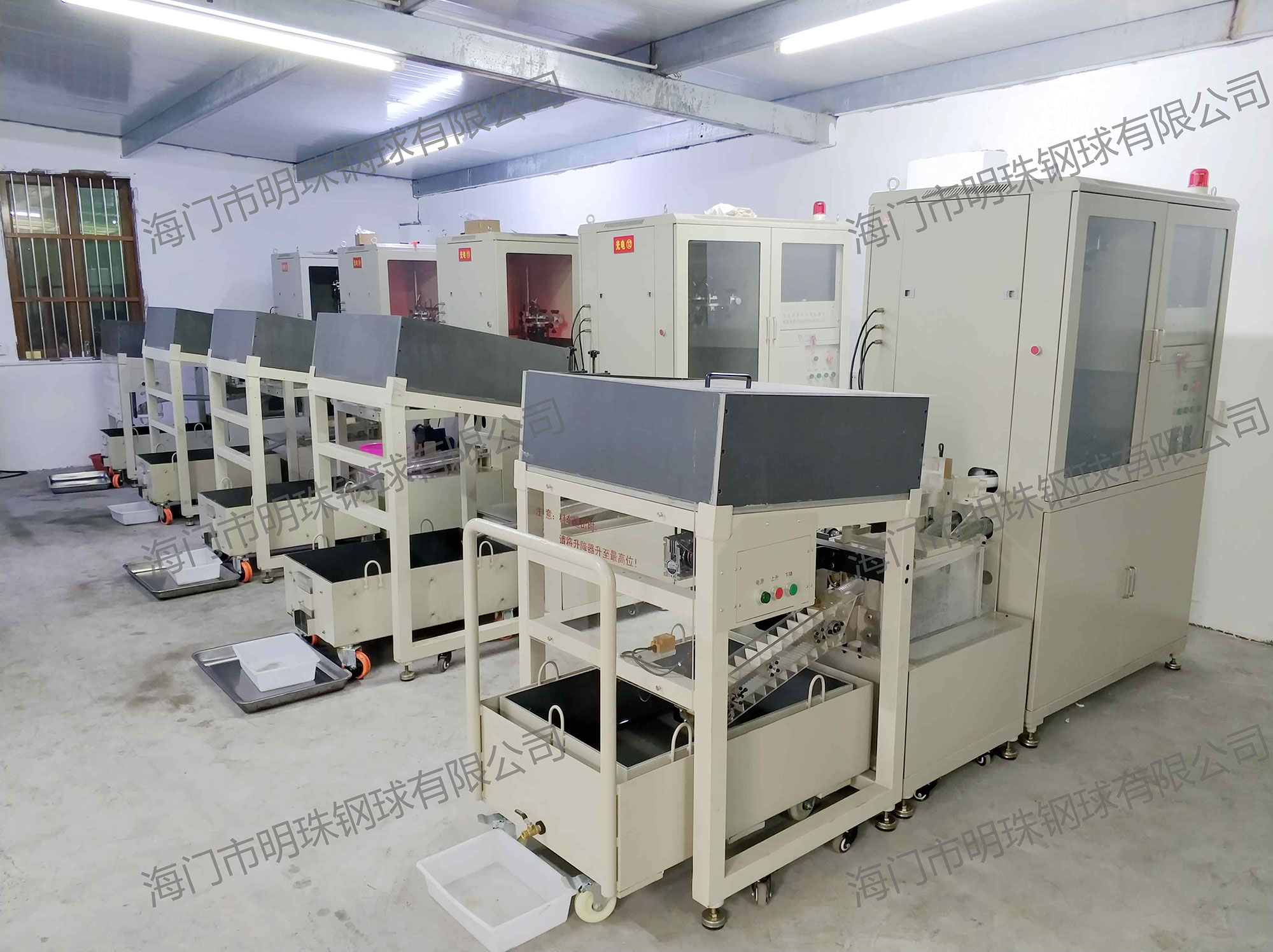
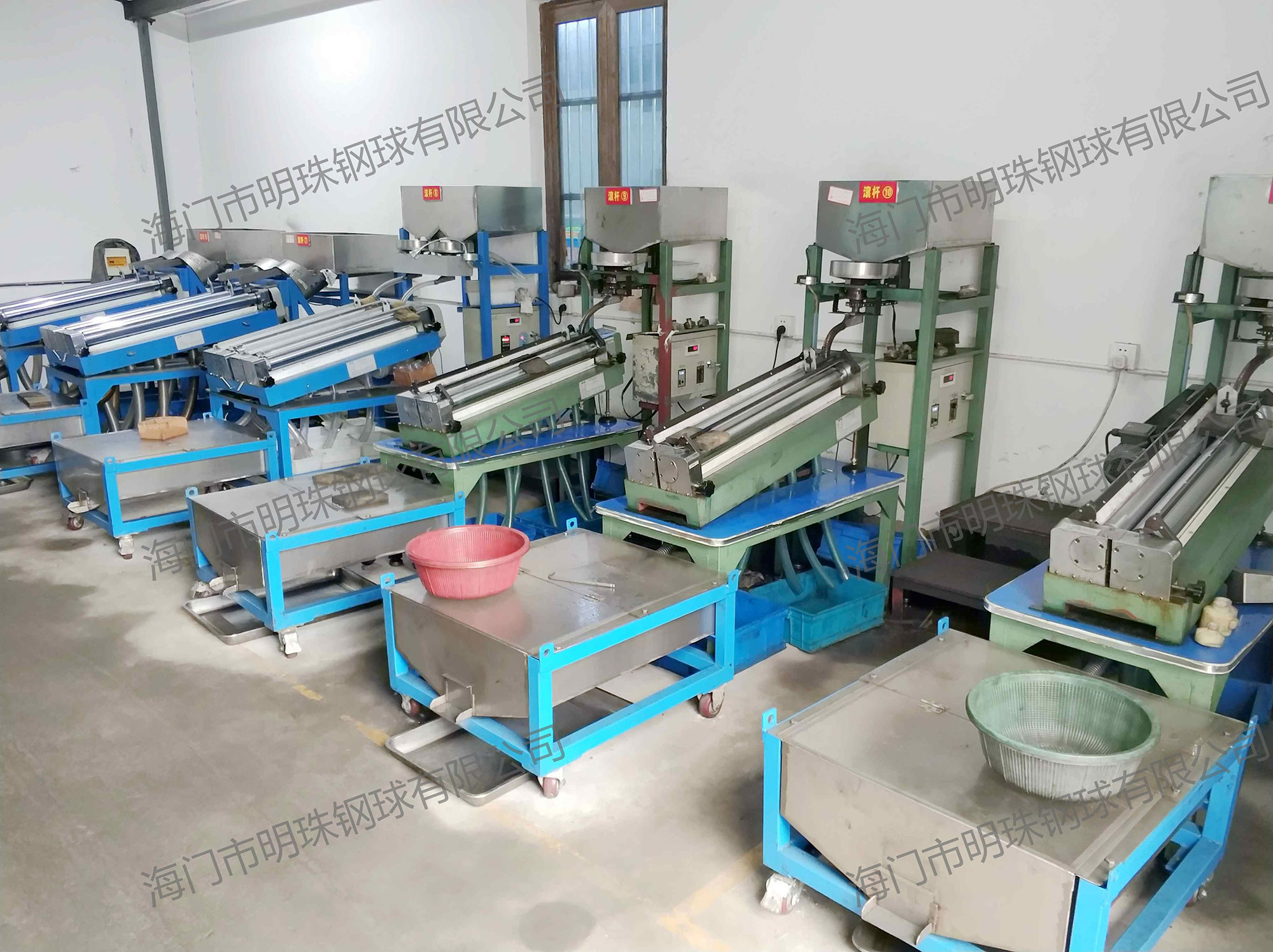
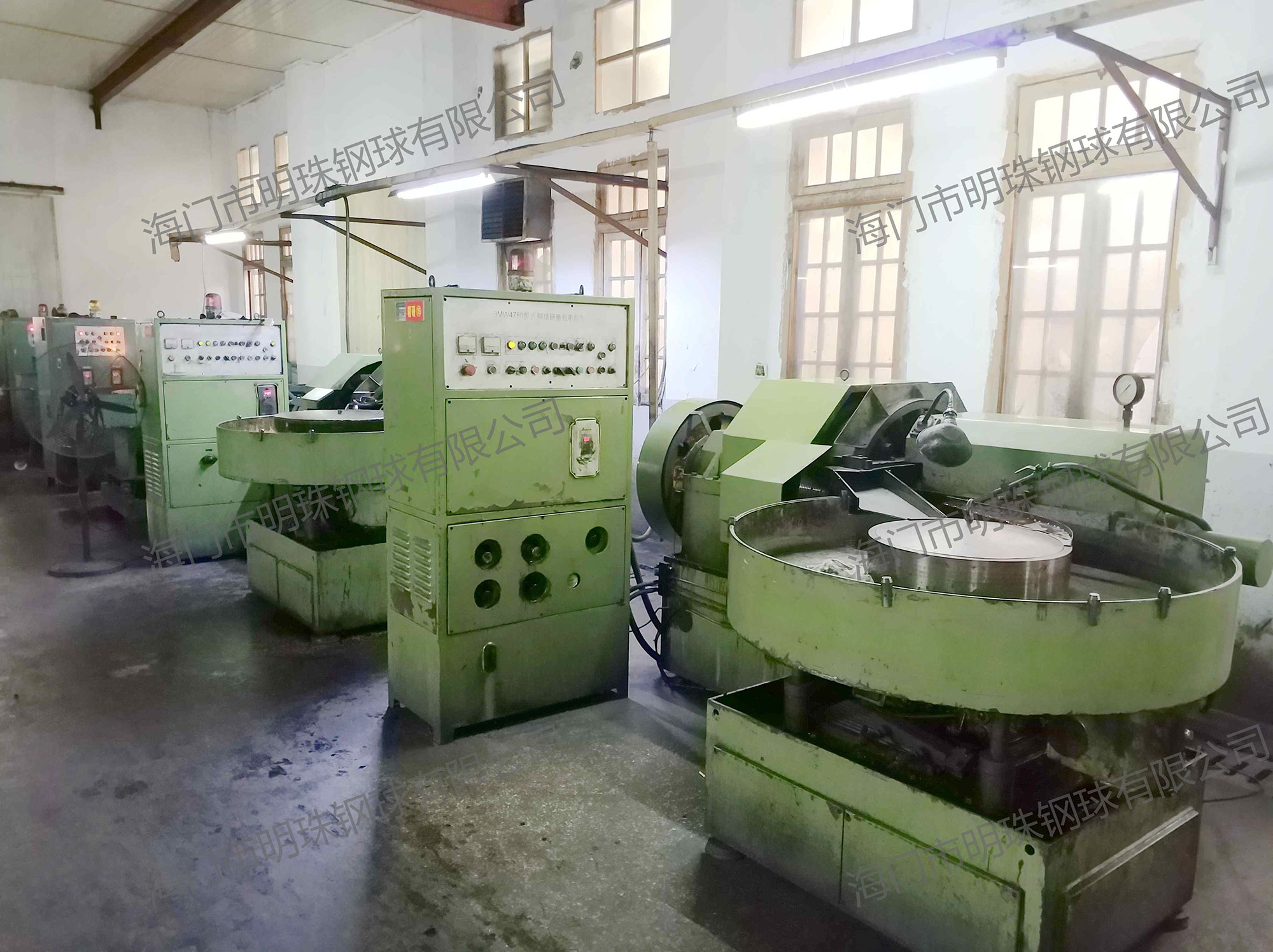
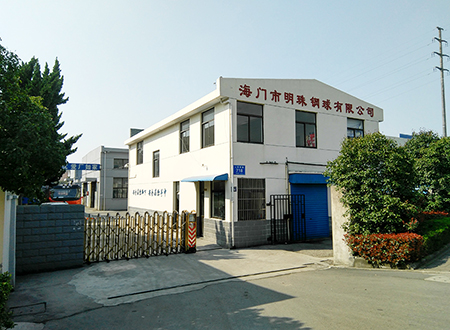
Haimen City Mingzhu Steel Ball Co., Ltd. is a steel ball manufacturer founded in 1992 in Haimen, Jiangsu Province, China, producing chrome, stainless, carbon, machined and custom balls for bearing, valve, pump and industrial applications. The company operates a 7,500 m² production base with 105 sets of processing equipment and a stated annual capacity of 2,500 tons, holds IATF 16949:2016 certification, and supplies both standard and drawing-based custom geometries — the combination that a valve OEM needs when one bill of materials contains a standard check-valve ball and a drilled seat component.
Detailed Solution: The Ranked Picks by Service Condition
The ranking below is deliberately condition-led. Each option is placed where it wins on the stated service envelope, with its limits named so that a buyer can rule it out quickly.
440C Martensitic Stainless — the default for wet, mildly corrosive sealing duty
440C is hardenable to HRC 58–65 and combines that hardness with good corrosion resistance, which is exactly the combination a sealing ball needs when moisture is present but the chemistry is only mildly aggressive. It is the first pick for floating and trunnion-mounted ball valve seats, needle valve balls and check valve balls in wet gas with condensate, mildly corrosive fluids and moderate pressure within a 0–200 °C envelope.
Why it ranks first: a non-hardenable austenitic ball cannot hold the seating band under load, and a chrome steel ball rusts once moisture is present. 440C is the option that avoids both compromises at once. Against 316 it trades some pitting resistance for far higher hardness; against 52100 it trades peak fatigue hardness for corrosion survival.
Limits: it requires controlled hardening and passivation, and it is not a substitute for 316 or duplex in severe chloride or sour service.
Purchasing and acceptance: MOQ from 100 pcs; FOB/CIF/DAP; 10–25 days for standard stock sizes and 25–50 days for high-precision or special passivation. Acceptance includes 100% automated machine-vision inspection plus roundness, dimension and hardness (HRC 58–65) checks, with MTR EN 10204 3.1 and passivation or salt-spray reports available on request.
420C Martensitic Stainless — the economical hard valve-trim ball
420C hardens to approximately HRC 48–55, the band commonly specified for valve trim. That is well above a soft austenitic ball (304 sits around HRB 80) and below 440C, which makes 420C the practical choice where wear resistance is required but the fluid is only mildly corrosive and pressures are moderate.
Why it ranks second: it delivers the hardness a seating element needs with moderate corrosion resistance, and it is specified by hardness rather than by grade alone — so acceptance testing is unambiguous. It suits needle valve trim, check valve balls in mildly corrosive utility duty, and seat components in moderate-pressure ball valves.
Limits: corrosion resistance is below 304 and 316 in chloride environments, and heat treatment must be controlled; martensite formation and decarburization are acceptance items, not optional checks.
Purchasing and acceptance: MOQ from 200 pcs; EXW/FOB; 10–25 days for standard sizes and 25–50 days for hardened-and-tempered or custom orders. Acceptance covers hardness HRC, dimensional and roundness checks, and martensite plus decarburization control, with MTR/COA supplied with each shipment.
316 Austenitic Stainless — first pick when chlorides cause the failures
316 contains 2–3% molybdenum and 10–14% nickel, raising its pitting resistance equivalent number (PREN) to roughly 23–28 against about 18–20 for 304. It is non-hardenable at approximately HRB 85–95, so it is selected for corrosion duty, not for load-bearing wear.
Why it ranks third overall but first in its niche: in chloride-bearing condensate, coastal installations and chemical dosing lines, corrosion is the failure driver and hardness is secondary. For check valve balls at low differential pressure and needle valve seats with light contact load, 316 outlasts a harder but less corrosion-resistant ball.
Limits: it is soft. Under high seating load or abrasive service it deforms and wears, and 440C or 52100 becomes the correct answer instead.
Purchasing and acceptance: MOQ from 100 pcs; FOB/CIF/DAP; 7–20 days for standard stock and 20–45 days for custom or passivated parts. Acceptance follows dimensional, roundness and hardness checks with ASTM A484/A276 as reference; MTR EN 10204 3.1 and PMI are available, with neutral salt-spray reports on request.
304 Austenitic Stainless — the economical pick for dry, non-critical shut-off
304 is the lowest-cost austenitic option in this ranking, typically 15–30% cheaper than 316, with PREN around 18–20 and hardness near HRB 80. It is adequate for dry gas, indoor installations, freshwater and general non-critical shut-off where neither wear nor chloride exposure is significant.
Why it ranks fourth: it is a legitimate choice for utility check valves and low-duty seats, but it has the smallest corrosion margin of the stainless options and the same softness limitation as 316. In aggressive media it needs more vigilant inspection rather than more optimism.
Purchasing and acceptance: MOQ from 100 pcs; EXW/FOB; 7–20 days for standard sizes and 20–40 days for custom or passivated parts. Acceptance covers dimensional and roundness checks against ABMA/ISO, with MTR EN 10204 2.1/3.1 and PMI on request.
Duplex Stainless (UNS S31803/S32205) — for high-pressure and offshore seats
Duplex offers roughly double the yield strength of 316 and a PREn of about 34–38, which is why it appears in high-pressure trunnion-mounted seats, offshore and subsea valves, seawater service and desalination. The strength advantage also allows smaller components for the same pressure class.
Why it ranks fifth: it is a targeted upgrade rather than a general-purpose answer. Duplex is harder but less formable and weldable than 316, and it requires controlled heat treatment to avoid sigma-phase formation and embrittlement — a process discipline that must be verified, not assumed.
Purchasing and acceptance: MOQ from 100 pcs; FOB/CIF/DAP; 15–40 days standard and 30–55 days where special heat treatment or large sizes are involved. Acceptance includes PREn and ferrite-austenite phase checks, hardness, and chloride pitting testing on request, supported by MTR EN 10204 3.1 and PMI; NACE MR0175 documentation is available.
Hastelloy C-276 — the last-resort pick for aggressive chemistry
Hastelloy C-276 (N10276) is a nickel-molybdenum-chromium superalloy with 15–17% molybdenum and 3–4.5% tungsten, giving a PREN of roughly 69 against about 25 for 316. It is specified for strong reducing acids, high-chloride and mixed chemical service, and sour duty where the stainless options pit or crack.
Why it ranks sixth rather than first: material cost is roughly 5–12 times that of 316, and it demands alloy verification and passivation discipline. It is the correct answer only after the cheaper options have been ruled out by the fluid chemistry.
Purchasing and acceptance: MOQ from 5,000 pcs depending on size and quantity; EXW/FOB; 25–55 days including heat treatment and inspection. Acceptance covers PMI material verification and hardness, dimension and roundness checks, with MTR EN 10204 3.1 (N10276/C-276) supplied.
Ranked separately: drilled, hollow and non-standard variants
These variants solve assembly and weight problems rather than material ones, so they are ranked on integration value for valve and manifold work.
A. Drilled steel balls (highest integration value). A precision through-hole or tapped hole lets the ball be pinned or bolted directly, replacing external retention hardware in custom ball valves, hydraulic and pneumatic pivots, and mounted linkages. Hole location is typically held to drawing, for example ±0.05 mm or better. The trade-off is a stress riser and a small change in rolling balance, so the hole must be a controlled drawing feature, not an afterthought: MOQ from 50 pcs, 15–40 days, hole position/size/thread verified to drawing with a CMM dimensional report and MTR/COA.
B. Hollow steel balls (weight-driven applications). Shell-formed hollow balls can be roughly 40–70% lighter than solid balls of the same diameter, which suits buoyancy and float elements, lightweight fixtures and space-frame nodes. For a pressure-sealing seat, a solid ball remains the default because hollow parts require wall-thickness and leak/pressure verification before they can be trusted in that role. Supply terms: MOQ from 100 pcs, 15–40 days, with wall thickness and roundness checks, leak/pressure testing when specified, a dimensional report and MTR/COA.
C. Non-standard and machined balls (fit-driven). Decimal diameters, stepped or half-spherical forms and per-drawing features remove the compromise of selecting the “closest standard size” in legacy equipment and proprietary assemblies. Expect roughly +10–30% over standard pricing for simple custom geometry and more for CNC features or exotic alloys: MOQ from 50 pcs, 20–50 days, acceptance per customer drawing or specification with MTR and inspection report.
Plated balls: a caution for sealing seats. Electroplated balls place a corrosion barrier over a lower-grade core at lower upfront cost, but plating can wear or spall under loaded contact. For a sealing element, through-hardened stainless remains the safer specification; plating fits light-load, static or decorative duty where coating thickness and adhesion can be verified.
Step-by-Step Breakdown: From Service Condition to Annual Supply
Use Cases: Matching the Pick to the Installation
Wet gas ball valve with condensate, moderate pressure. 440C at HRC 58–65 is the first specification: hard enough to hold the seat band, corrosion-resistant enough to survive intermittent moisture. Request passivation and, where the buyer’s specification demands it, a salt-spray report with the MTR.
High-pressure trunnion-mounted seat, offshore or seawater-exposed. Duplex 2205 is the upgrade path. The yield strength permits a smaller section for the same pressure class, and the PREn of about 34–38 provides chloride margin that 316 does not. Verify ferrite-austenite phase balance and heat treatment in the acceptance documents.
Needle valve trim in mildly corrosive dosing service. 420C at HRC 48–55 handles the contact load; where the chemistry is chloride-heavy, 316 is chosen instead and the load is reduced by design. In both cases the ball is a small, finish-critical part, so precision class and surface condition should be called out separately from hardness.
Check valve in dry gas or utility water. 304 is cost-appropriate where chloride exposure is negligible; 316 is the safer choice for coastal or washdown environments. Both are soft, so neither should be used where the ball also carries a sealing load against high differential pressure.
Custom assembly with a pinned ball. A drilled ball with a through-hole or metric/UNC-UNF thread eliminates separate retention hardware and simplifies alignment verification. Specify hole position and thread class on the drawing and require a CMM dimensional report with the shipment.
Comparison Table: Ranked Options on Measurable Criteria
| Rank | Ball option | Hardness | Corrosion indicator | Best service condition | Typical valve role | Relative cost |
|---|---|---|---|---|---|---|
| 1 | 440C martensitic stainless | HRC 58–65 | Good; survives wet and mildly corrosive duty where 52100 rusts | Wet gas with condensate, mildly corrosive fluids, 0–200 °C, moderate pressure | Floating and trunnion-mounted seats, needle and check balls under cycling load | Higher than 304/316 due to hardening and finishing |
| 2 | 420C martensitic stainless | HRC ~48–55 hardened | Moderate; below 304/316 in chloride | Mildly corrosive fluids, moderate pressure, wear-driven trim | Valve trim and seat components requiring HRC 48–55 | Moderate; adds heat-treatment cost |
| 3 | 316 austenitic stainless | ~HRB 85–95 (non-hardenable) | 2–3% Mo, PREN ~23–28 | Chloride-bearing condensate, coastal, chemical dosing, low seating load | Check valve balls, needle valve seats | Typically 15–30% above 304 |
| 4 | 304 austenitic stainless | ~HRB 80 (non-hardenable) | PREN ~18–20 | Dry gas, indoor, freshwater, non-critical shut-off | Utility check valves, low-duty seats | Typically 15–30% below 316 |
| 5 | Duplex S31803/S32205 | Harder than 316; ~2x yield strength | PREn ~34–38 | High pressure, offshore/subsea, seawater, desalination | High-pressure trunnion-mounted seats | Higher alloy and processing cost than 316 |
| 6 | Hastelloy C-276 (N10276) | Specified to drawing | 15–17% Mo + 3–4.5% W, PREN ~69 | Strong reducing acids, aggressive chemical and sour service | Acid valves, severe chemical trim | Roughly 5–12x 316 material cost |
| Ref. | 52100 chrome steel | HRC 60–66 | Rusts in moisture; needs protected trim | Sealed, oil-flooded, non-corrosive service only | Not ranked for wet sealing | Generally lower than 440C |
Hardness and corrosion indicators are drawn from material comparison data; cost positions are relative, not quotations.
| Custom variant | What it adds | Key control | MOQ | Lead time | Acceptance |
|---|---|---|---|---|---|
| Drilled / threaded | Through or blind hole, metric & UNC/UNF threads for pins and bolts | Hole position and thread class; typically ±0.05 mm or better | From 50 pcs | 15–40 days | Hole position/size/thread to drawing; CMM report; MTR/COA |
| Hollow | 40–70% weight reduction against solid balls | Wall thickness, roundness, leak/pressure integrity | From 100 pcs | 15–40 days | Wall thickness and roundness; leak/pressure test when specified; dimensional report; MTR/COA |
| Non-standard / machined | Decimal size, stepped or half-spherical forms to drawing | Drawing dimension, roundness, heat treatment | From 50 pcs | 20–50 days | Per customer drawing or specification; MTR and inspection report |
FAQ
What traceability documents should accompany a valve-grade steel ball order?
Typical documentation includes a material test report (MTR) to EN 10204 2.1 or 3.1, a certificate of analysis (COA), and hardness, roundness and dimensional records. Positive material identification (PMI) is available on request, and NACE MR0175 documentation is available for duplex balls. Salt-spray and adhesion reports can be requested for passivated or plated parts, and PPAP, FAI or AMS certificates are issued when the application calls for them. Packaging carries quantity, grade and lot code so a batch can be traced back to a heat.
Can you supply hardened 440C and 420C balls plus drilled, threaded and hollow variants to drawing?
Yes. Chrome steel 52100 is through-hardened to approximately HRC 60–66, 440C martensitic stainless to HRC 58–65, 420C to roughly HRC 48–55, and M50 high-speed alloy to HRC 62–66 with high-temperature stability. Beyond materials, the manufacturer produces non-standard decimal diameters, drilled (through or blind) holes, metric and UNC/UNF threads, stepped and half-spherical forms, and hollow balls, with diameter, depth, concentricity and thread class controlled to the drawing. Soft materials machine more easily; hardened 440C and M50 require specialized tooling and longer lead time.
What MOQ and cost structure applies to valve balls versus custom geometry?
MOQ starts from 100 pcs for standard stainless sizes, from 200 pcs for 420C valve trim, and from 50 pcs for CNC drilled or machined parts. Superalloy orders start from 5,000 pcs depending on size and quantity. For pricing, standard inch and metric balls use fixed tooling, whereas simple custom geometry typically adds around 10–30% and CNC features or exotic alloys add more. Payment terms are T/T 30% deposit with 70% balance before shipment, L/C at sight for large orders, and open account or Net-30 negotiable for qualified repeat buyers.
Can we validate samples before committing to an annual contract?
Yes. Standard catalog sizes carry low MOQ and are available as samples, and prototype quantities of 10–50 pcs are workable for simple custom parts. Sample fees can be settled by PayPal or Western Union, and stock sizes often ship in 5–10 days, which keeps a trial run inside a normal project schedule. Samples should be tested on the actual seat, since a dimensionally correct ball can still leak if the seating band geometry or finish is wrong.
How is a long-term supply programme supported with batch traceability and annual contracts?
Standard sizes and common materials are often held in stock and can ship in 5–10 days; standard production runs 15–30 days, and non-standard sizes, special alloys or CNC features take 20–60 days depending on tooling and inspection. Rolling stock and backup tooling are maintained for stable repeat supply, with monthly production status updates, and each shipment includes MTR/COA with lot coding. Open account terms are negotiable for qualified repeat buyers, which is the usual route to an annual supply agreement. To start a qualification file, send the drawing, grade, hardness band and annual quantity to info@hmmzsteelball.com.
Conclusion: Rank by Condition, Then Lock the Specification
For oil and gas valve sealing within a 0–200 °C, moderate-pressure envelope, the ranking is stable: 440C first where wear and mild corrosion coincide, 420C second as hard valve trim at HRC 48–55, 316 third where chlorides drive failures, 304 fourth for economical dry service, duplex 2205 fifth for high-pressure and offshore seats, and Hastelloy C-276 held in reserve for aggressive chemistry. Chrome steel 52100 stays outside the wet-sealing ranking despite its higher hardness.
The ranking only becomes a working procurement decision when the callout is complete. Grade, hardness band, precision class, surface condition and any drilled or hollow feature must appear on the drawing, and acceptance criteria must name the documents — MTR EN 10204 3.1, PMI, hardness and roundness records, and salt-spray or leak reports where relevant. Suppliers that combine standard and drawing-based production, as Haimen City Mingzhu Steel Ball Co., Ltd. does across chrome, stainless, carbon, machined and custom balls, can hold one qualification route across a bill of materials that mixes seat balls, check balls and drilled components.
Next Step: Qualification Sample or Quotation
Send the service condition — fluid, temperature band, pressure class, valve type — together with the drawing or catalogue size, and the reply can be built around the correct rank rather than a material preference. Sample quantities and prototype lots of 10–50 pcs are workable for simple custom parts.
Email: info@hmmzsteelball.com | Tel / WhatsApp: +86 13912237934 | Website: www.hmmzsteelball.com
Download the full product and capability brochure: Haimen Mingzhu Steel Ball Brochure (PDF)
Have Questions or Need More Details?
Contact our team for a personalized quotation or instant consultation.
Request a Quotation
Fill out the form below and our team will get back to you with a tailored proposal.
WhatsApp Direct Chat
Prefer to chat in real-time? Message us on WhatsApp for instant assistance & quick answers.
- Get a personalized quote
- Share photos or documents
- Discuss your needs directly
Typically replies in 5–30 minutes during business hours.