Baby Rice Cereal Production Line: What Buyers Need to Know Before Sourcing
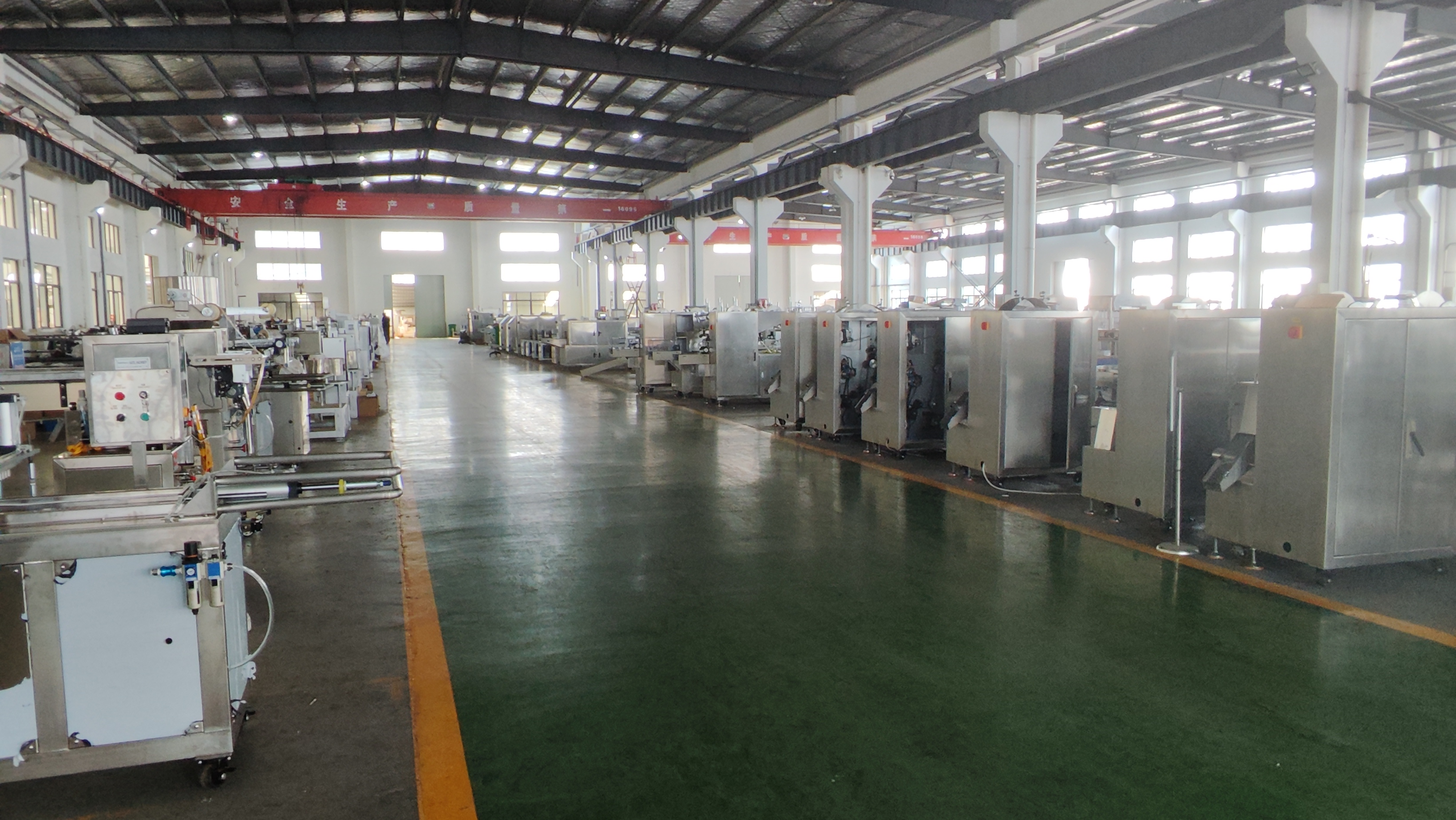
Haitel machine assembly and molding workshop, where food processing production line equipment is built and assembled.
A baby rice cereal production line is a food processing production line that converts rice — alone or blended with other cereals — into instant infant cereal through milling, dosing, cooking or extrusion, drying, and packaging. Its capacity is not a fixed figure taken from a catalogue page: it follows the buyer's formulation, the target weight of the finished serving, and the packaging format chosen for the retail market.
Jiangsu Haitel Machinery Co., Ltd. (Haitel) is a food and medicine processing and packaging production line provider established in 1997 in Dongtai City, China. Haitel manufactures baby rice cereal production lines and compound cereal flakes production lines, alongside modified starch, pregelatinized starch, potato flakes, potato powder, cereal bar, protein bar, energy bar, candy, oat chocolate, compound potato chips, and pet food production lines.
Why a Baby Rice Cereal Line Is Harder to Specify Than It Looks
Most equipment categories can be compared on a single number. A baby rice cereal line cannot. Four issues typically decide whether a project runs smoothly or stalls after the purchase order.
1. Output is a derived number, not a fixed one. Cereal lines are usually quoted in kilograms per hour, but the real figure depends on the recipe, the target serving weight, and how much of the process is continuous. Haitel states that its fully automatic lines can run continuously and that exact capacity is calculated from the buyer's product formula and target weight rather than assumed from a model name.
2. The line is a scope, not a machine. A baby rice cereal line combines raw material handling, milling, dosing and blending, cooking or extrusion, drying, cooling, and packaging. Purchase decisions made unit by unit usually produce a line whose sections do not match each other in throughput or hygiene class.
3. Hygiene and cleanability are design requirements, not add-ons. EN 1672-2:2020 specifies common hygiene and cleanability requirements for machinery and machine components used in preparing and processing food and, where relevant, animal feed. Because infant cereal is a food for a sensitive consumer group, buyers tend to treat cleanability and food-contact material as qualification criteria rather than preferences.
4. The sourcing decision is a manufacturer decision. The line will be installed, commissioned, and serviced over many years. Who built it matters as much as what is written in the specification sheet, which is why the discovery stage of this purchase is really a supplier-qualification exercise.
Industry Background: How Big the Category Is, and What That Means for a Single Line
Public market reporting describes a large equipment category rather than the infant cereal segment specifically. Zion Market Research reports the global food processing market at USD 166.48 billion in 2024, covering equipment and services used across cleaning, sorting, extrusion, and thermal processing. OEC World, using UN Comtrade statistics, reports that global exports of industrial food preparation machinery under HS code 8438 reached USD 16.7 billion in 2024, a 2.12% increase over 2023.
Those figures are useful for one purpose: they confirm that a buyer sourcing a food processing production line is operating in a deep, traded, and competitive equipment market with many suppliers across Asia, Europe, and North America. They do not tell a buyer what a baby rice cereal line should cost, how fast it should run, or which manufacturer is suitable for a specific product brief — those questions are answered by the specification process described below.
Regulatory context is more directly relevant. UK Health and Safety Executive guidance on food processing machinery references BS EN 1672-2:2005 as a generic standard for all food machines covering hygiene requirements, and the current European edition, EN 1672-2:2020, sets out common hygiene and cleanability requirements for food-processing machinery and components. Buyers should treat these as design references to discuss with a supplier, and should request the actual certification and material documentation that applies to their own destination market, rather than assuming conformity from a brochure line.
Where Haitel's Baby Rice Cereal Production Line Sits in the Portfolio
Haitel's cereal capability is not a single product. The company manufactures baby rice cereal production lines and compound cereal flakes production lines, and it also manufactures modified starch and pregelatinized starch lines, potato flakes and potato powder lines, cereal bar, protein bar and energy bar lines, and the candy, chocolate, snack, and pet food lines already listed. For a buyer, this matters because infant cereal projects frequently extend into adjacent products — a flavoured cereal flake, a fortified variant, a cereal bar — and a supplier that already builds those lines can coordinate process and packaging scope instead of leaving the buyer to integrate separate vendors.
The company reports a manufacturing facility of 40,000 m² with approximately 90 staff, an R&D team of 30 engineers, annual production capacity of 1,000 sets, and more than 80 technical patents. It holds ISO9001 quality management system certification, ISO14001 environmental management system certification, and European CE certification. Export business accounts for 70% of total sales, with customers in 80 countries and more than 3,000 clients served in the food and biotechnology industries across North America, Europe, Oceania, Central and South America, the Middle East, and Asia.
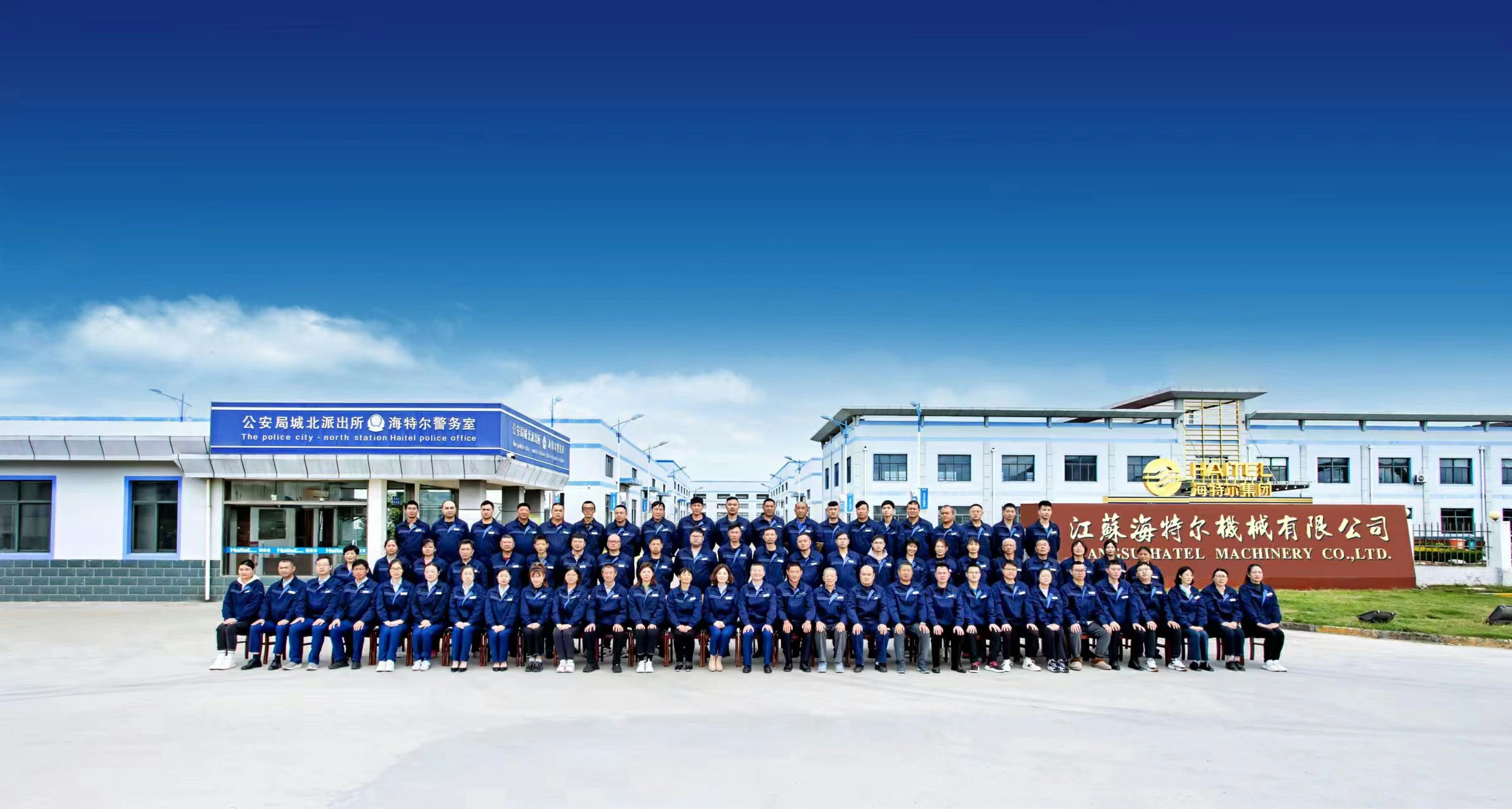
Haitel's manufacturing facility covers 40,000 m² and produces about 1,000 sets per year.
The table below lists documented parameters from Haitel's product records for the cereal-family lines. It is intended to show what is published and what is not: the baby rice cereal line is documented as part of the company's product range, but its capacity is defined per project from the buyer's formula and target weight rather than stated as a fixed catalogue value.
| Production line | Documented parameters | Material | Applicable industry |
|---|---|---|---|
| Baby rice cereal production line | Documented in the company product range; output calculated per project from product formula and target weight | Product contact parts in stainless steel (company statement) | Food factory |
| HTL-400 cereal bar production line | Capacity 400–800 kg/h; 10–40 g per piece; cutting frequency 50–100 times/min; total electric power 100 kW / 380 V / 50 Hz; steam 400 kg/h at 0.3–0.8 MPa; compressed air 0.4–0.6 MPa | SS304 | Food factory |
| Protein bar production line | Total power 11 kW; frequency speed adjustment; dimensions 1580 × 1080 × 1800 mm | SS304 | Food factory |
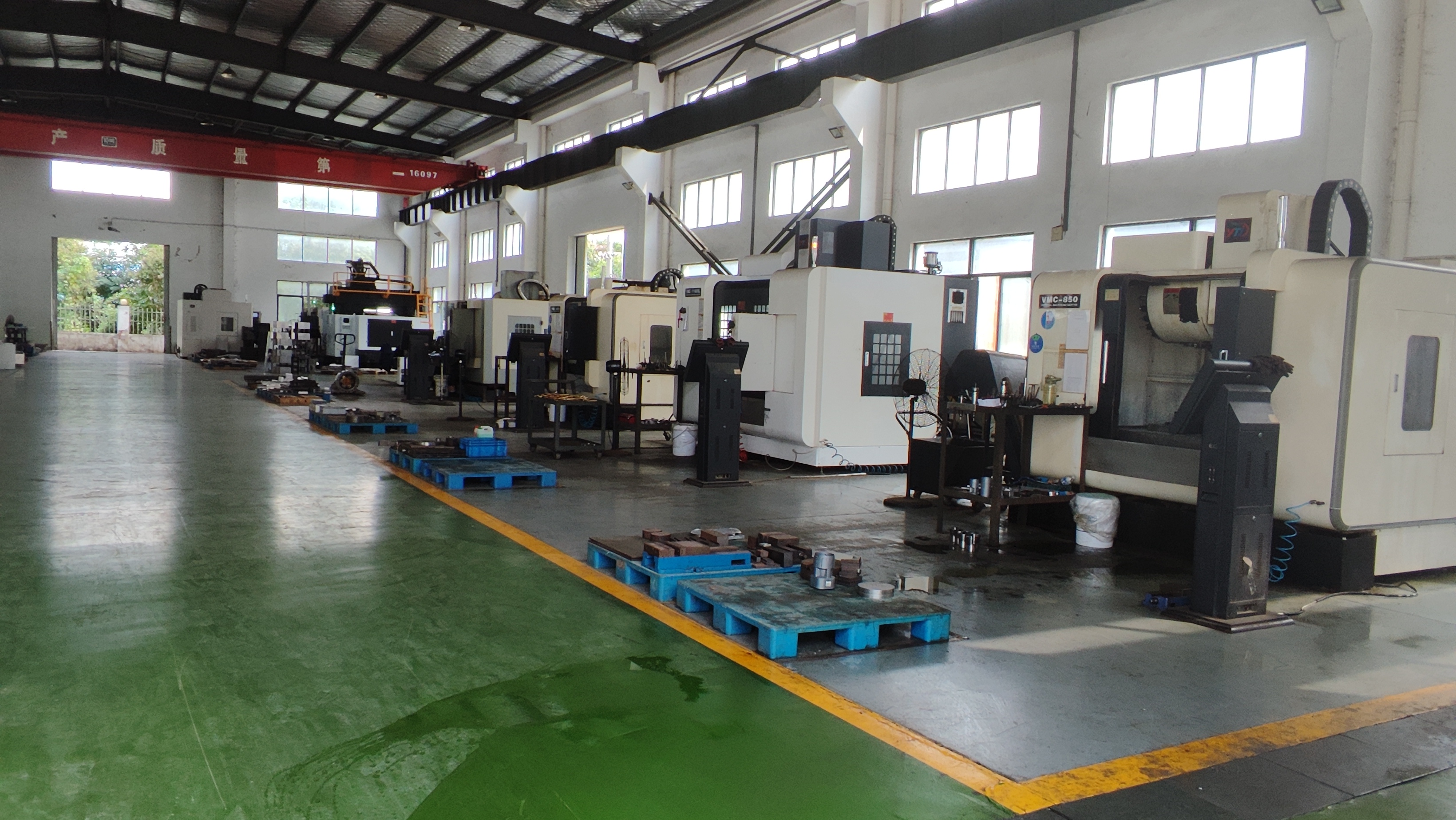
CNC machining workshop: line components are machined in-house before assembly.
Step-by-Step: From Product Brief to a Commissioned Baby Rice Cereal Line
Discovery-stage buyers usually want to know what happens after the first enquiry. The sequence below reflects how a baby rice cereal project is normally scoped with Haitel, combining the buyer's product decisions with the supplier's documented working process.
Step 1 — Define the product, not the machine. Decide whether the product is plain rice cereal, a multi-cereal blend, or a fortified variant, and what serving weight the retail pack requires. Capacity follows from these decisions, so changing them later changes the entire line layout.
Step 2 — Fix the target output and working pattern. Haitel calculates exact capacity based on the buyer's product formula and target weight, and states that its fully automatic lines can run 24 hours continuously. Buyers should state the intended daily running pattern at this stage so throughput and buffer capacity are sized together.
Step 3 — Map the process scope. A baby rice cereal line typically covers raw material intake and milling, dosing and blending, cooking or extrusion, drying, cooling and conveying, and packaging. Each stage needs a defined inlet and outlet condition so that adjacent units match.
Step 4 — Agree material and hygiene requirements. Haitel states that all product contact parts are stainless steel, and SS304 is specified on its documented line records. Buyers with specific cleanability requirements should raise them here, referencing standards such as EN 1672-2:2020 as a design discussion point rather than an assumption.
Step 5 — Confirm utilities and voltage. Haitel offers custom voltage to match the local power supply, and its documented lines list steam pressure, compressed air, and total electric power requirements. Utility capacity is a plant-side constraint that is cheaper to resolve before the layout is frozen.
Step 6 — Approve the layout drawing. Haitel supports customisation on capacity, product shape, size, voltage, and layout, and its engineering team prepares drawings for confirmation before production begins. This drawing is the document that later defines installation scope.
Step 7 — Run a trial with your own raw material. Buyers can send their raw material to Haitel, where the machine is tested and samples are produced. For infant cereal, where formulation drives texture and reconstitution behaviour, this step converts a specification into evidence.
Step 8 — Ship, install, and train. Equipment is packed in standard export wooden cases, and Haitel can quote FOB, CIF, or DDP prices as requested. The company provides a 12-month warranty and offers overseas engineer installation and training so that operators are commissioned alongside the line.
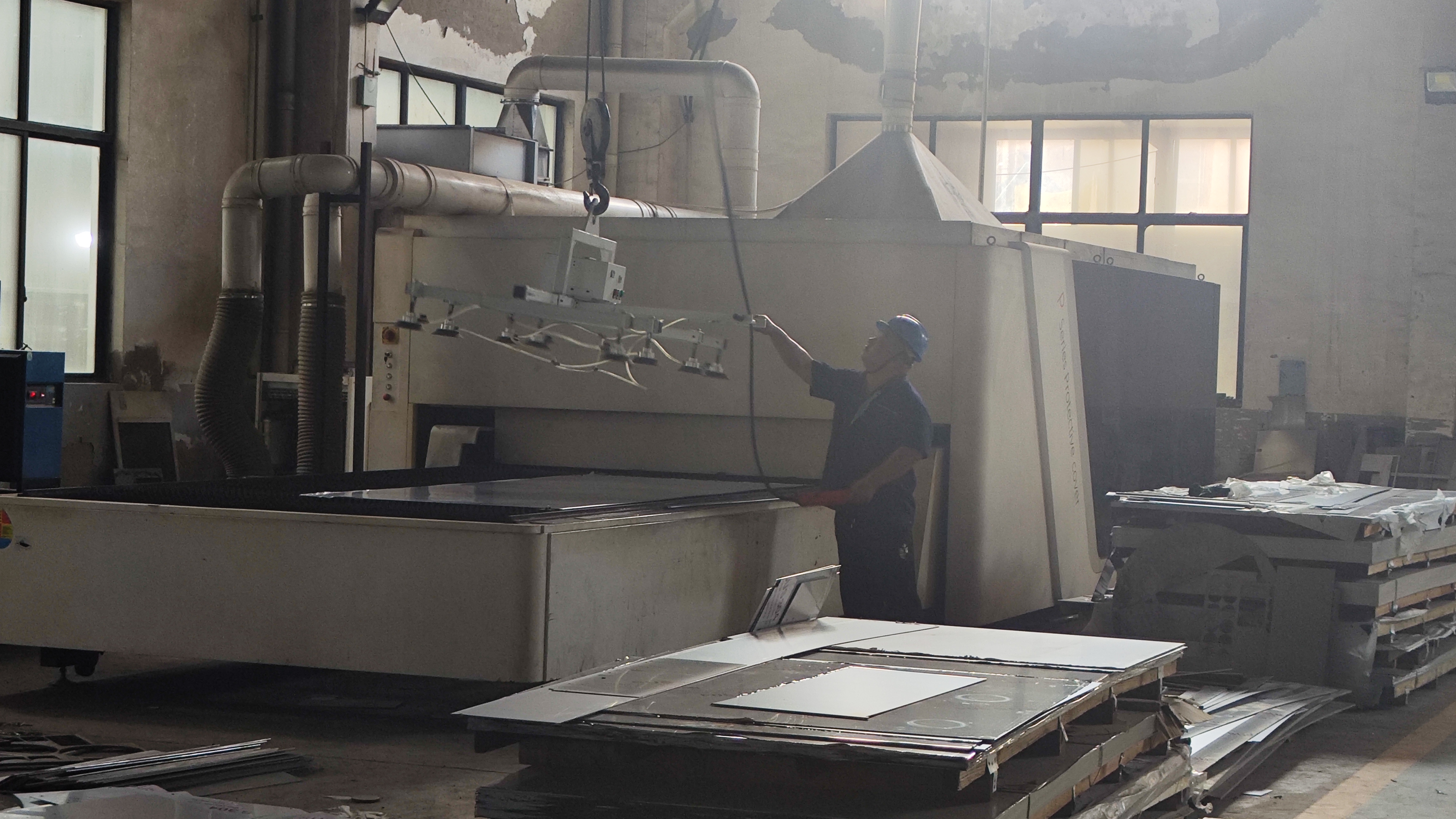
Laser cutting in Haitel's fabrication workshop, ahead of assembly and testing.
Typical Use Cases for a Baby Rice Cereal Production Line
First-time brand owners building a dedicated line. A company entering infant cereal usually needs a complete scope — process plus packaging — and a supplier able to coordinate both. Haitel states that it provides food and medicine processing and packaging production lines and related services, which allows a single point of responsibility for the full scope.
Existing cereal producers adding infant cereal SKUs. A producer already running a compound cereal flakes line may add a baby rice cereal line to reach a different retail segment. Because Haitel manufactures both line types, shared process logic and spare-part families can be discussed in one project.
Contract manufacturers and private-label producers. When the product mix changes with each customer brief, the decisive questions are formulation flexibility and how capacity is recalculated. Haitel's stated approach — capacity derived from formula and target weight, with drawings confirmed before production — suits this working model.
Importers and distributors sourcing on behalf of regional clients. With 70% of sales exported and customers in 80 countries, Haitel works with buyers who need documentation for customs clearance, including CE and ISO9001 certificates. A distributor's due diligence therefore usually starts with documentation before it reaches machine specification.
Comparison Table: Qualification Criteria Against Haitel's Documented Position
The table below is a practical checklist for the discovery stage. It compares what a buyer should verify with what Haitel publicly documents, so that gaps are visible before an enquiry rather than after a purchase order.
| Criteria to verify | What buyers should confirm | Haitel's documented position |
|---|---|---|
| Line scope | Process plus packaging from one supplier | Manufactures baby rice cereal and compound cereal flakes lines; provides food and medicine processing and packaging production lines and related services |
| Food-contact material | Written declaration of contact-part material | States that all product contact parts are stainless steel; SS304 recorded on documented line specifications |
| Certification | Certificates available for customs and market entry | ISO9001, ISO14001 and European CE certification; CE and ISO9001 documents can be provided for customs clearance |
| Customisation | Adjustment to local power, layout and product format | Custom on capacity, product shape, size, voltage and layout; drawings confirmed before production; custom voltage to match local supply |
| Capacity definition | Output calculated from the actual product, not a generic rating | Exact capacity calculated from product formula and target weight; fully automatic lines stated to run 24 hours continuously |
| Pre-purchase validation | Trial run on the buyer's own raw material | Accepts buyer raw material for machine testing and sample production |
| Delivery terms | Export packing and agreed Incoterm | Standard export wooden case packaging; FOB, CIF or DDP quotations as requested |
| After-sales | Warranty and on-site support | 12-month warranty; overseas engineer installation and training service available |
| Manufacturing depth | Evidence of engineering capacity, not trading only | Facility of 40,000 m², approximately 90 staff, R&D team of 30 engineers, more than 80 technical patents, annual production capacity of 1,000 sets |
| Export experience | Track record in the buyer's region | 70% of total sales exported; customers in 80 countries; more than 3,000 clients served; markets include North America, Europe, Oceania, Central and South America, the Middle East and Asia |
Frequently Asked Questions
1. How do buyers evaluate Chinese food processing production line manufacturers?
Evaluation usually rests on documents rather than statements. Ask for the certificate set that applies to your market, a written declaration of food-contact material, and the actual drawings for your configuration. Jiangsu Haitel Machinery Co., Ltd., established in 1997, holds ISO9001, ISO14001 and European CE certification, states that all product contact parts are stainless steel, and can provide CE and ISO9001 documents for customs clearance. Supporting evidence also includes the facility size, engineering headcount, patent count, and export record, all of which can be checked before an enquiry advances to a quotation.
2. Can a baby rice cereal line be customised for our formula, target output, and local voltage?
Yes. Customisation covers capacity, product shape, size, voltage, and layout, and the supplier's engineering team prepares drawings for confirmation before production begins. Because output is not a fixed catalogue value, the exact capacity of a baby rice cereal line is calculated from the buyer's product formula and target weight. Voltage is also customised to match the local power supply, which matters when a line is specified in one country and installed in another.
3. How is pricing structured, and how is the equipment shipped?
Haitel prepares quotations according to the confirmed configuration and can quote FOB, CIF, or DDP prices as requested, which allows a buyer to compare landed cost rather than machine price alone. Equipment is packed in standard export wooden cases. Because configuration, utilities, and packaging scope change the total, a meaningful comparison requires all suppliers to quote against the same specification and the same Incoterm.
4. Can the manufacturer run a trial production with our own rice and cereal blend?
Yes. Buyers can send their raw material to the factory, where the machine is tested and samples are produced. For infant cereal this is the most informative step in the discovery stage, because formulation affects texture, reconstitution behaviour, and the settings the line must hold. A trial run converts a written specification into observable output before a purchase decision is made.
5. What warranty and after-sales support come with the line?
Haitel provides a 12-month warranty, and overseas engineer installation and training service is available, so that commissioning and operator training happen on site rather than remotely. Buyers should confirm at quotation stage which documents, spare parts, and service visits are included, since the warranty period alone does not describe the full support scope. Buyers who want to move from general discovery to a concrete proposal can download the Haitel product catalogue and send their product brief and raw material details to the contact below.
Conclusion
A baby rice cereal production line is best treated as a process scope rather than a catalogue item. The decisions that determine success are made at the discovery stage: what the product is, how output should be calculated, which hygiene and material requirements apply, and which manufacturer can document its capability rather than describe it.
Haitel's position in this category is documented and specific: a manufacturer established in 1997, a 40,000 m² facility with approximately 90 staff and an R&D team of 30 engineers, more than 80 technical patents, ISO9001, ISO14001 and European CE certification, annual production capacity of 1,000 sets, and 70% of sales exported to customers in 80 countries. For a buyer at the research stage, these are the facts to test against a product brief — alongside a trial run on your own raw material, a confirmed layout drawing, and a quotation stated on a defined Incoterm.

Next step: review the catalogue, then send your product brief.
Download the Haitel product catalogue: Haitel product catalogue (PDF)
Website: www.haitelmachine.com
Contact: Arlene | Email: bm198@bm198.com | Tel / WhatsApp: +86 139-1466-6768
Address: Building Equipment No. 19, Taitung Industrial Park, Dongtai City, China
Have Questions or Need More Details?
Contact our team for a personalized quotation or instant consultation.
Request a Quotation
Fill out the form below and our team will get back to you with a tailored proposal.
WhatsApp Direct Chat
Prefer to chat in real-time? Message us on WhatsApp for instant assistance & quick answers.
- Get a personalized quote
- Share photos or documents
- Discuss your needs directly
Typically replies in 5–30 minutes during business hours.