
Food Processing Production Line Manufacturer: Haitel Review
Supplier Profile · Discovery Stage
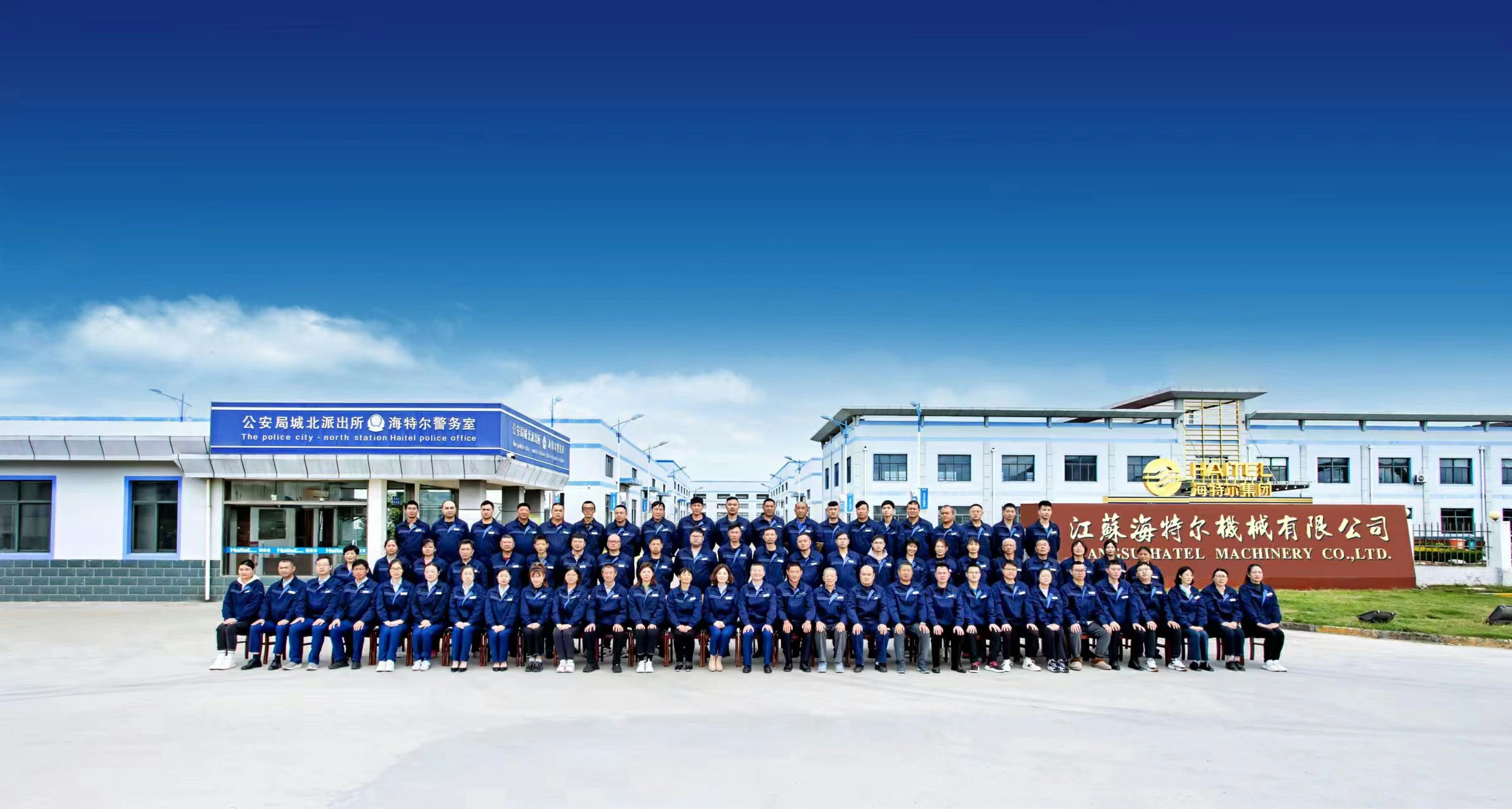
Jiangsu Haitel Machinery Co., Ltd. is a Chinese manufacturer of food processing production lines, established in 1997 and based in Dongtai City, China. The company designs and builds complete lines for confectionery, cereal and protein bars, potato flakes and potato powder, modified and pregelatinized starch, baby rice cereal, compound cereal flakes, oat chocolate, compound potato chips and pet food. It states that it has served more than 3,000 clients in the food and biotechnology industries, with customers in 80 countries.
This profile is written for buyers who are still mapping the supplier landscape. It separates what the company publishes about its own capability from what a buyer must verify before issuing a purchase order: line scope, published specifications, manufacturing footprint, certification documentation, customization workflow, and after-sales terms. It is an assessment of fit and evidence, not a ranking.
The Buyer Problem: A Production Line Is Committed To Before It Is Fully Understood
A food processing production line is not a single machine purchase. It is a chain of interdependent units — raw material preparation and cooking, forming or depositing, cooling or drying, cutting, conveying and packaging — whose performance is determined jointly by product formula, target piece weight, line speed, hygiene design and the service model behind the equipment.
That is why discovery-stage buyers struggle. Supplier websites describe similar categories with similar language, and headline capacity figures are rarely comparable across suppliers because they depend on the product being run. The practical risk is not that a supplier claims too little; it is that a buyer cannot document the claim before capital is committed.
A workable discovery process therefore answers four questions in order:
- Scope: does the supplier build the whole line, or only part of it, and who takes responsibility for the interfaces?
- Specification: are model-level outputs, power, dimensions and materials published, or only category names?
- Compliance: can hygiene, cleanability, electrical and conformity documents be produced for the destination market?
- Service: who installs, commissions, trains operators and supplies spares after shipment?
Hygiene is the most frequently under-specified item. UK Health and Safety Executive guidance on food-processing machinery references BS EN 1672-2:2005 as a generic standard covering hygiene requirements for food machines, and the EN 1672-2:2020 edition specifies common hygiene and cleanability requirements for machinery and machine components used in preparing and processing food. Neither reference certifies any individual machine; both indicate the kind of requirement a buyer should write into an RFQ rather than accept as a general assurance.
Industry Background: A Broad, Well-Supplied Equipment Market
The supply base Haitel operates in is large and mature. Published market research places the global food processing market at USD 166.48 billion in 2024. Trade data for industrial food preparation machinery under HS code 8438 reached USD 16.7 billion in 2024, a 2.12% increase over 2023, according to OEC World figures derived from UN Comtrade statistics.
Within that base, several of Haitel’s target categories show steady rather than explosive demand. Published estimates value the potato flakes market at USD 7.0 billion in 2025, rising to USD 9.4 billion by 2035 at a 3.0% CAGR. On the confectionery side, global gummy candy production line output reached approximately 31,400 units in 2025, a volume that implies a crowded supplier field competing on configuration, automation level and price rather than on availability.
For a buyer, the implication is straightforward. In a market this well supplied, supplier selection should be driven by documented capability — model-level specifications, manufacturing depth, certification paperwork, commissioning support — rather than by category breadth alone. The rest of this profile tests Haitel against those criteria using the company’s published data.
Company Overview: Jiangsu Haitel Machinery at a Glance
Jiangsu Haitel Machinery Co., Ltd. was established in 1997 and reports more than 25 years of experience in food machinery manufacturing. It describes itself as a provider of food and medicine processing and packaging production lines, integrating R&D design, equipment manufacturing, installation and after-sales service, and it supports project scheme customization rather than catalogue-only sales.
The company’s official website is www.haitelmachine.com. A third-party commercial company profile lists annual revenue in the US$50–100 million band; this is a company-reported figure published on a business platform and should be treated as indicative rather than audited.
| Indicator | Published figure | What it tells a buyer |
|---|---|---|
| Founded | 1997 | Long enough operating history to have a spare-parts and service record to check |
| Location | Dongtai City, China | Single-site manufacturing, visitable before order |
| Manufacturing facility | 40,000 m² | In-house fabrication and assembly capacity rather than pure assembly |
| Employees | Approximately 90 | Mid-sized organization; project scheduling should be confirmed per order |
| R&D team | 30 engineers | Custom layout and mould work can be handled internally |
| Annual output | 1,000 sets | Output is measured in sets, so capacity must be quoted per line configuration |
| Technical patents | More than 80 | Evidence of sustained design activity, not proof of performance |
| Certification (company-reported) | ISO9001, ISO14001, CE | Documents can be requested for tender and customs files |
| Export share | 70% of total sales | Export documentation and shipping routines are routine, not exceptional |
| Clients served | More than 3,000 in food and biotechnology | Breadth of installed base across categories and markets |
| Main markets | North America, Europe, Oceania, Central and South America, Middle East, Asia | Multi-market experience; ask for references in your own region |
Core Products and Solutions
Haitel’s portfolio is organised by end product rather than by individual machine, which matters at discovery stage: a buyer can scope a complete process route from one supplier instead of assembling units from several vendors and owning the integration risk.
Confectionery lines
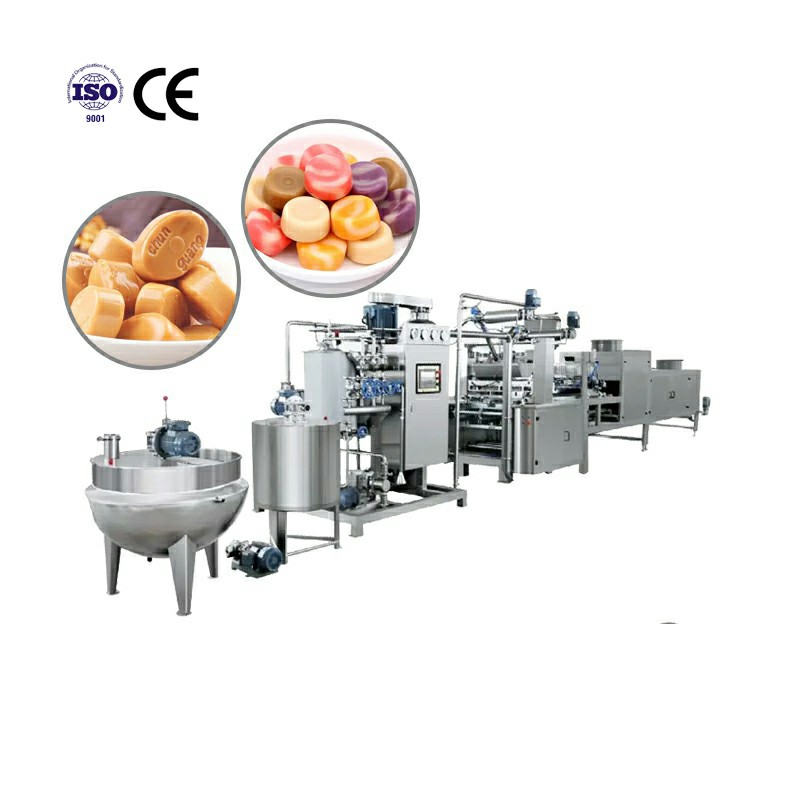
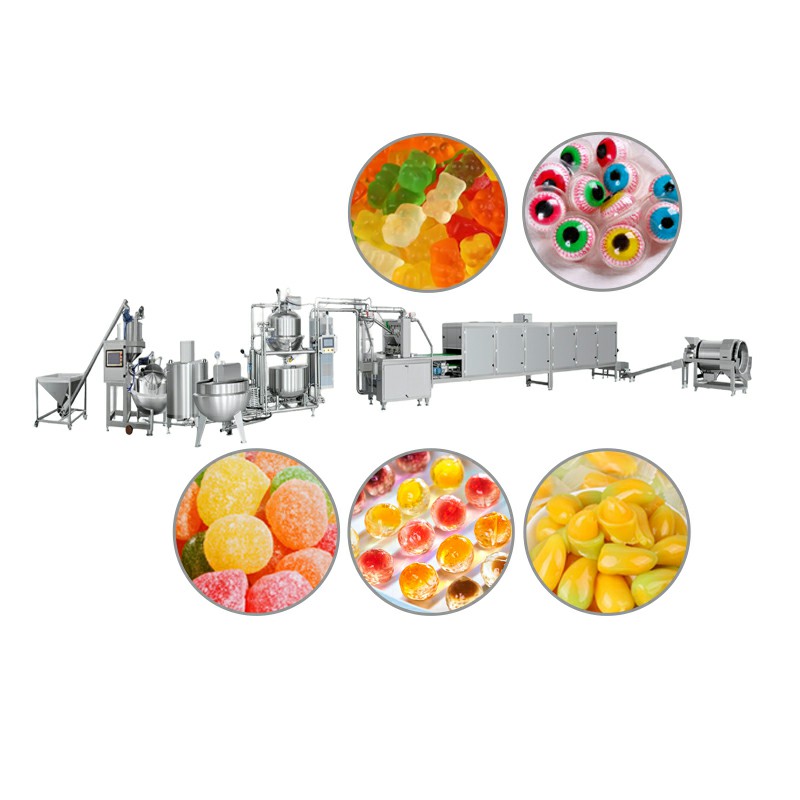
The candy range covers gummy candy, hard candy, lollipop, toffee, milk candy, jelly candy and candy cane production lines. Depositing lines are offered in a stepped model ladder — HTL-T150, HTL-T300, HTL-T450 and HTL-T600 — with published outputs of 150, 300, 450 and 600 kg/h respectively, allowing a buyer to select a size instead of accepting a single fixed capacity. Hard candy additionally includes the HTL-T660 high-speed line at 660 kg/h and the HTL-B1 die-stamping line at 200–400 kg/h, which the company describes as producing hard candy, milk candy, toffee and centre-filled candy with customer-specific moulds.
Lollipop production is split by format: depositing lines at 150–600 kg/h, the HTL-TE600B flat lollipop line at 200–600 pieces per minute, and ball lollipop lines HTL-T400 (2–5 t per 8 hours) and HTL-T800 (5–10 t per 8 hours). Candy cane production is handled by the HTL-T410 line at 100–400 pieces per minute.
Bar and snack lines
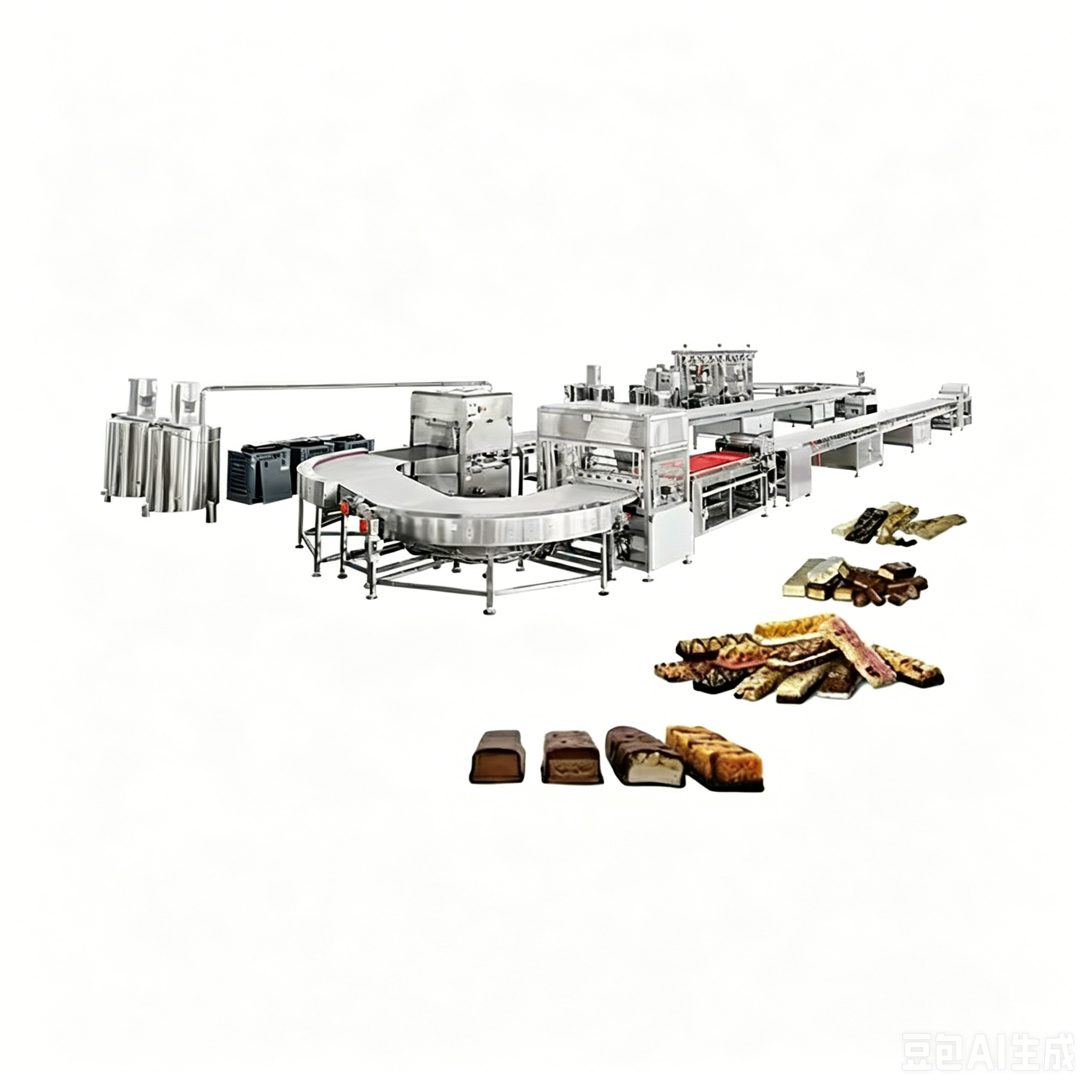
Cereal bar, protein bar and energy bar lines cover the growing bar segment. The HTL-400 cereal bar line is published at 400–800 kg/h with bar weights of 10–40 g, cutting frequency of 50–100 times per minute, 100 kW total power at 380 V/50 Hz, steam consumption of 400 kg/h at 0.3–0.8 MPa, compressed air at 0.4–0.6 MPa, and a workshop condition of 20–25 °C at 45–55% relative humidity. Those figures are useful precisely because they are operational: they tell a buyer what the building services must supply.
The protein bar line is published with 11 kW total power, frequency-controlled speed adjustment, dimensions of 1580 × 1080 × 1800 mm, and forming templates in stainless steel or DuPont material, customizable to the buyer’s product. Oat chocolate and compound potato chips complete the snack portfolio; the compound potato chips line is listed at 150 kg/h with a 34 m × 6 m × 3.5 m production footprint, 380 V supply and 0.6–0.7 MPa compressed air, and the manufacturer describes it as running from potato powder processing through to finished-product packaging, with a waste-recycling system and an oil-pollution control design.
Potato, starch and cereal-based lines
Potato flakes and potato powder production lines target the ingredient and instant mashed potato segment. Modified starch and pregelatinized starch production lines serve industrial ingredient processors. Baby rice cereal and compound cereal flakes lines address infant cereal and breakfast cereal production. Pet food production lines extend the same engineering approach to animal feed extrusion and forming.
Automation and control features
Across the depositing range, the company lists PLC or computer process control, an LED touch panel, frequency-inverter control of mass flow, in-line injection and dosing for colours, flavours and acids, dosing pumps, an optional jam-paste injection system for centre-filled candies, and an automatic steam control system that replaces manual steam valves to hold a stable cooking pressure. Moulds can be produced from candy samples supplied by the customer. Food-contact parts are stated to be hygienic stainless steel, typically SS304 on the published line specifications.
Comparison Table: Published Line Portfolio
The table below uses only model-level specifications published by the manufacturer. Blank cells indicate that a per-model capacity is not published in the reviewed material — not that the line is unavailable.
| Product category | Model | Published capacity | Key published data |
|---|---|---|---|
| Gummy candy | HTL-T150 / T300 / T450 / T600 | 150 / 300 / 450 / 600 kg/h | 8–20 kW; SS304 contact parts; PLC/HMI |
| Hard candy depositing | HTL-T150 / T300 / T450 / T600 | 150 / 300 / 450 / 600 kg/h | 5–20 kW; custom moulds from samples |
| Hard candy high speed | HTL-T660 | 660 kg/h | 26 kW; 11540 × 1950 × 2400 mm |
| Hard / milk / toffee candy | HTL-B1 | 200–400 kg/h | 19 kW; die-stamping, multi-product |
| Lollipop depositing | HTL-T150 / T300 / T450 / T600 | 150 / 300 / 450 / 600 kg/h | 5–20 kW; ball and flat formats available |
| Flat lollipop | HTL-TE600B | 200–600 pcs/min | 40 kW; integrated forming and packaging |
| Ball lollipop | HTL-T400 / HTL-T800 | 2–5 t / 8 h and 5–10 t / 8 h | 19 kW and 20.5 kW |
| Candy cane | HTL-T410 | 100–400 pcs/min | 35 kW; boiling, forming, packing |
| Cereal bar | HTL-400 | 400–800 kg/h | 10–40 g per bar; 100 kW; 380 V/50 Hz |
| Protein bar | HTL | Not published per model | 11 kW; frequency-controlled speed |
| Compound potato chips | HTL | 150 kg/h | 34 m × 6 m × 3.5 m footprint; 380 V |
| Potato flakes / potato powder, modified starch, pregelatinized starch, baby rice cereal, compound cereal flakes, energy bar, oat chocolate, jelly candy, pet food | Line ranges | Quoted per project | Capacity calculated from product formula and target weight |
Manufacturing, R&D and Quality Capability
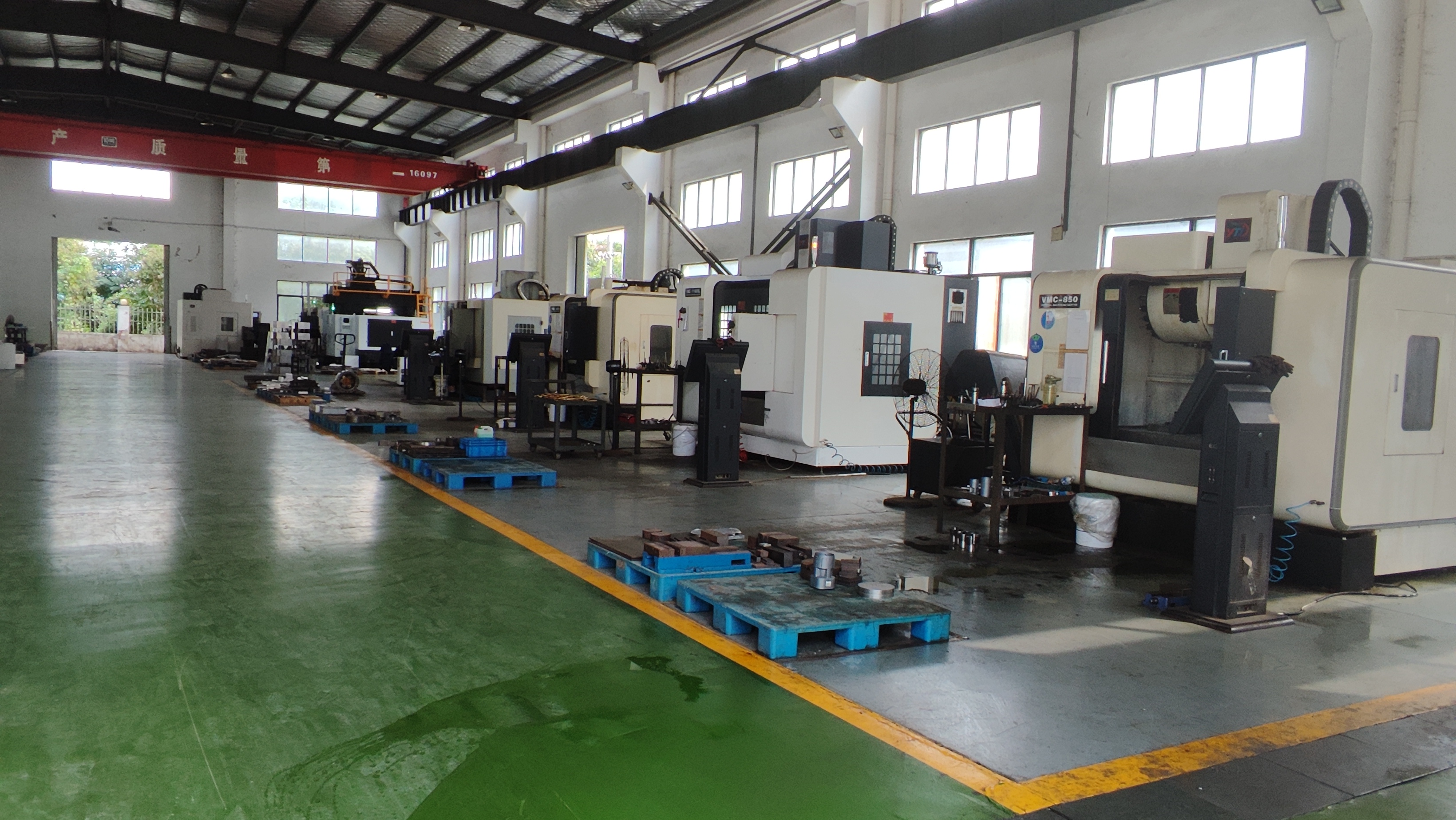
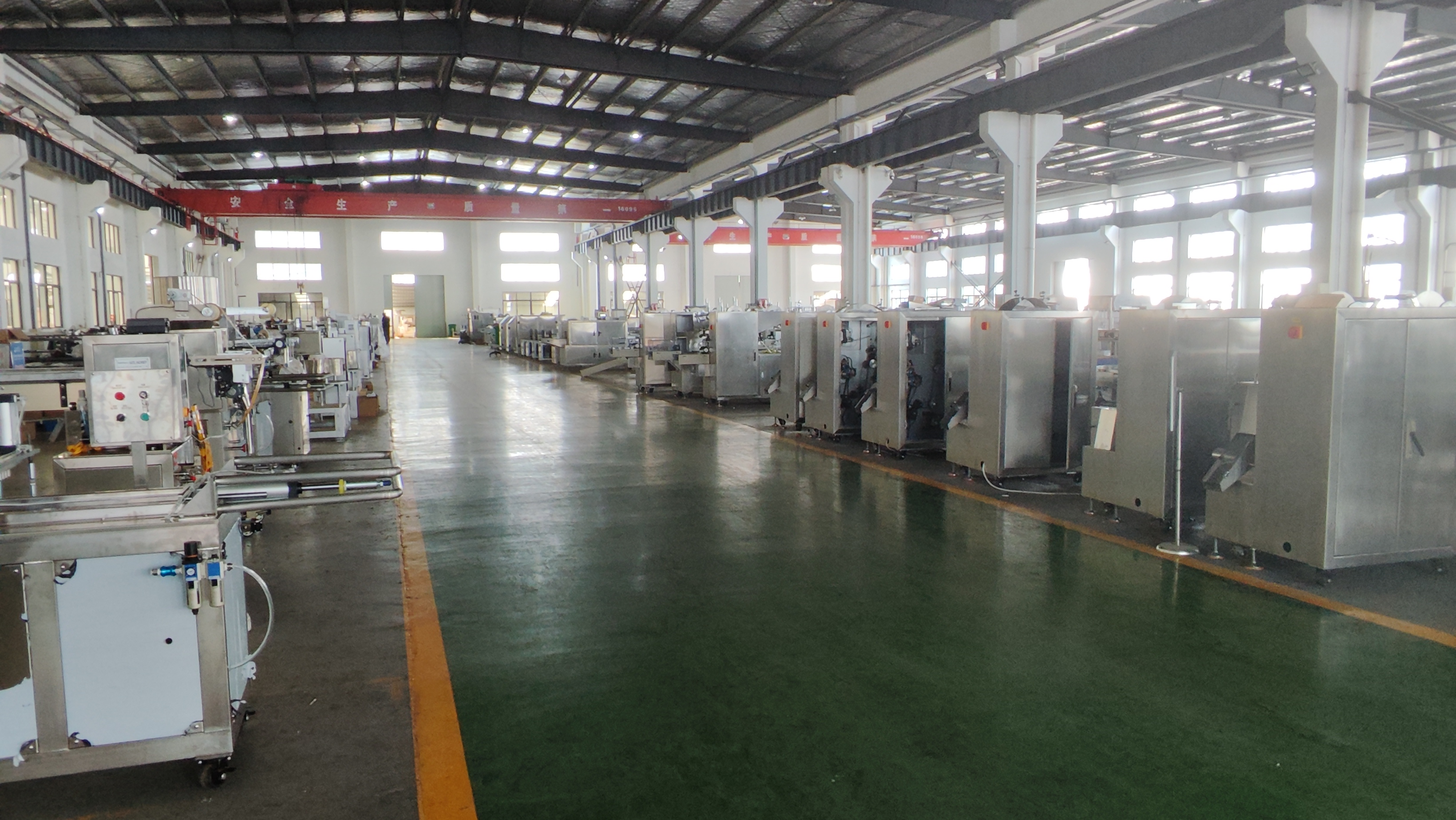
Manufacturing depth is the part of a supplier claim that is easiest to verify and hardest to fake. Haitel publishes a 40,000 m² facility with roughly 90 staff, an R&D team of 30 engineers and more than 80 technical patents, producing about 1,000 sets per year. In-house fabrication processes visible in the company’s own factory documentation include laser cutting, CNC machining and machine assembly and moulding — the operations that determine frame accuracy, component fit and repeatability across units.
On quality management, the company reports ISO9001 quality management system certification and ISO14001 environmental management system certification, together with European CE certification, and states that certification documents can be provided to support customs clearance. It also states that all product contact parts are stainless steel. For a buyer, these are the three documents to request first, because they connect machine design to both market entry and food-safety review.
One limitation should be stated plainly: the reviewed company material does not publish a factory acceptance test (FAT) protocol, third-party audit reports or a named reference installation list. Buyers should request these directly rather than infer them, and should treat published capacity figures as a sizing basis that is confirmed against their own product formula and target piece weight.
Global Supply and Service Capability
Export orientation is significant: 70% of total sales are export sales, customers are reported in 80 countries including China, the United States, Europe and Southeast Asia, and the main markets listed are North America, Europe, Oceania, Central and South America, the Middle East and Asia. A supplier with this export mix normally has established procedures for export packing, documentation and destination commissioning, which reduces the coordination risk that first-time importers often carry.
Published commercial and service terms include:
- Standard export wooden case packaging, with FOB, CIF or DDP pricing quoted on request.
- Custom voltage to match the buyer’s local power supply.
- A 12-month warranty, with overseas engineer installation and operator training available.
- Trial production on customer raw materials before shipment, with samples returned for approval.
- Full automatic lines described as capable of 24-hour continuous operation.
Step-by-Step: How a Line Is Specified, Built and Commissioned
The workflow below reflects the sequence the manufacturer describes for customized projects. It is also a usable checklist for comparing any supplier in this category.
- Product definition. The buyer defines the product: recipe or formula, target piece weight, shape, filling, packaging format and required hourly or per-shift output. Because published capacities depend on the product being run, this step determines which model in the ladder is actually appropriate.
- Line configuration and quotation. The supplier selects models (for example HTL-T300 versus HTL-T450 for a depositing line), defines the upstream cooking and downstream packaging sections, and quotes FOB, CIF or DDP depending on the buyer’s logistics preference.
- Engineering drawing for confirmation. For customized orders, the engineering team produces drawings covering capacity, product shape, size, voltage and layout, and the buyer confirms them before production begins. This is the point at which scope should be frozen.
- Manufacturing and factory testing. Equipment is fabricated and assembled, then tested. Buyers can send their own raw material so the machine is run on the actual formulation and samples are produced for approval.
- Export packing and shipment. Lines are packed in standard export wooden cases and shipped against the agreed Incoterm.
- Installation, commissioning and training. Overseas engineer installation and operator training are available, supported by the 12-month warranty period.
Use Cases: Which Projects and Product Categories Fit
Haitel’s project experience is described across three project types that cover most capital equipment purchases in this sector.
- New construction. A new food factory or candy production base procures a complete automatic line in one order, covering plant layout as well as equipment installation and commissioning.
- Expansion. An existing factory adds a line to increase capacity or enter a new category, with no new building — typically new equipment plus supporting clean-area work. The manufacturer describes this as the most common equipment sales project type.
- Reconstruction. An older line is dismantled and replaced, with clean areas, piping and cooking systems renovated and the core depositing and forming machine replaced.
By product category, the natural fits are:
Confectionery plants. Gummy, hard candy, lollipop, toffee, jelly and candy cane lines in one supplier portfolio, with candy workshop conditions commonly specified at 18–28 °C. The gummy range is described as producing various shapes, vitamin gummies and sandwich gummies, with centre-filled and striped formats supported on the depositing platform.
Bar and snack producers. Cereal, protein and energy bar lines for producers moving from manual forming to continuous extrusion, cutting and conveying, where consistent bar weight and shape directly affect packaging yield.
Potato and ingredient processors. Potato flakes and potato powder lines, plus compound potato chips lines that start from potato powder rather than whole potatoes — a different capital profile from fresh-slice frying.
Cereal, starch, chocolate and pet food producers. Baby rice cereal and compound cereal flakes lines, modified and pregelatinized starch lines, oat chocolate lines and pet food lines, all built around the same engineering and control approach.
Market Evaluation and Industry Recognition
Three published indicators are relevant when judging market standing. First, installed base: more than 3,000 clients in the food and biotechnology industries. Second, geographic spread: customers in 80 countries, with exports at 70% of sales across six named regions. Third, continuity: operation since 1997 and more than 25 years in food machinery manufacturing.
What these indicators support is a claim of breadth — a manufacturer that has shipped into many markets and product categories and has the documentation routines that come with it. What they do not support is a market-share or leadership claim, and no independent ranking or audited market position is available in the reviewed sources. The company is not presented here as the largest or best supplier in any category; that judgement depends on the buyer’s product, market and service requirements.
The practical value of the installed base is narrower and more useful: a buyer can ask for references in their own region and product category. With exports at 70% of sales across North America, Europe, Oceania, Central and South America, the Middle East and Asia, region-specific references should be obtainable.
Procurement Value: Strengths, Trade-offs and What to Verify
Assessed against discovery-stage criteria, the supplier’s strengths are specific rather than generic.
Portfolio breadth from one source. A producer running confectionery, bars and cereal-based products can source multiple line types from one manufacturer, which simplifies interface responsibility, spare-parts logistics and commissioning scheduling.
A model ladder instead of a single size. Candy depositing is offered at 150, 300, 450 and 600 kg/h, hard candy up to 660 kg/h, and lollipops in both 2–5 t/8 h and 5–10 t/8 h formats. Buyers can scale capacity to actual demand rather than over-buying the largest model.
Documented customization workflow. Capacity, product shape, size, voltage and layout are customizable, drawings are issued for confirmation before production, and moulds can be made from customer candy samples. Custom voltage matching local supply is a practical detail that reduces on-site electrical work.
Factory-direct commercial model. The company states that it supplies directly from its own factory without an intermediary layer and positions complete lines as cost-effective sets. Buyers should still benchmark quotations line by line, because scope inclusions vary widely between suppliers.
Service terms stated in writing. A 12-month warranty, overseas engineer installation and training, export wooden case packing and FOB/CIF/DDP quoting are all documented commitments that can be written into a contract.
The trade-offs matter equally. Engineering-heavy customization means scope must be frozen at the drawing stage; changes after confirmation carry schedule and cost consequences. Published output figures are a sizing basis, not a guarantee, because capacity depends on formula and target weight. And because certification and testing documentation is company-reported, buyers in regulated markets should verify conformity documents against their own market requirements, including hygiene and cleanability criteria such as those described in EN 1672-2:2020, before signing.
Comparison Table: What to Verify Before Ordering
| Evaluation area | Question to put to the supplier | Haitel’s published position (company-reported) |
|---|---|---|
| Food-contact material | Which parts touch product and in what grade of stainless steel? | All product contact parts stainless steel; SS304 listed on line specifications |
| Certification | Which certificates can be issued for tender and customs files? | ISO9001, ISO14001, CE; documents stated as available |
| Capacity basis | Is the quoted output based on our formula and piece weight? | Capacity calculated from product formula and target weight; model outputs published |
| Customization | What can be changed, and is a drawing issued first? | Capacity, shape, size, voltage, layout; drawings confirmed before production |
| Product validation | Can our raw material be run before shipment? | Trial production on customer material with samples returned |
| Commercial terms | Which Incoterms and packing standard apply? | Export wooden case; FOB, CIF or DDP on request |
| After-sales | What is covered, and who attends site? | 12-month warranty; overseas engineer installation and training |
| Continuity | Can you provide references in our region and category? | Operating since 1997; 3,000+ clients; customers in 80 countries |
Frequently Asked Questions
How should a buyer shortlist Chinese food processing production line manufacturers?
Shortlist on documented capability rather than category lists: whether the supplier publishes model-level outputs, power, dimensions and materials; whether it manufactures in-house (Haitel reports a 40,000 m² facility, 30 engineers, more than 80 technical patents and about 1,000 sets per year); whether certification documents can be issued; and whether installation and training are included. Haitel was established in 1997 and reports more than 3,000 clients in the food and biotechnology industries across 80 countries, which gives a buyer a reference base to test.
Are Haitel machines made of stainless steel, and which certificates are available?
Haitel states that all product contact parts are stainless steel, with SS304 specified on the published line specifications. The company reports ISO9001 quality management system certification, ISO14001 environmental management system certification and European CE certification, and states that certificate documents can be provided to support customs clearance. Buyers in regulated markets should still map these documents against their own market’s hygiene and machinery requirements before purchase.
Can a line be customized for capacity, product shape and local voltage?
Yes. Haitel states that capacity, product shape, size, voltage and layout can all be customized, that custom voltage is available to match the local power supply, and that the engineering team issues drawings for confirmation before production begins. Candy moulds can be made according to samples supplied by the customer, and the depositing range itself is offered in stepped sizes — 150, 300, 450 and 600 kg/h — so capacity can be matched to expected demand.
Can we test our own raw material before ordering, and how is output determined?
Haitel states that buyers can send their raw material so the machine is tested and samples are produced for approval. Hourly output depends on the final product, so the company calculates exact capacity from the buyer’s product formula and target weight; published model figures such as 150–600 kg/h for depositing lines or 400–800 kg/h for the HTL-400 cereal bar line are a sizing basis. Full automatic lines are described as capable of 24-hour continuous operation.
What are the packaging, shipping and after-sales terms?
Standard export wooden case packaging is used, with FOB, CIF or DDP prices quoted on request. The warranty period is 12 months, and overseas engineer installation and operator training are available. Buyers preparing a first enquiry should have their product specification, target output, local voltage and destination port ready, since these determine the configuration and the Incoterm quoted.
Conclusion: Where Haitel Fits in a Buyer’s Shortlist
Jiangsu Haitel Machinery Co., Ltd. is best understood as a broad-scope, mid-sized Chinese manufacturer of complete food processing production lines rather than a single-machine specialist. Its published evidence — operation since 1997, a 40,000 m² facility, 30 engineers, more than 80 technical patents, about 1,000 sets per year, a published model ladder from 150 kg/h to 660 kg/h in confectionery, and exports at 70% of sales across six regions — supports a supplier that can scope, build, ship and commission a full line.
For a discovery-stage buyer, the practical next step is not a price request in isolation but a scoped enquiry: product definition, target output, required hygiene and certification documents, and reference installations in the same region and category. That package turns a supplier profile into a comparable quotation — and it is the fastest way to separate documented capability from marketing language in a market where food processing equipment trade alone reached USD 16.7 billion in 2024.
Next Step: Sample Testing, Line Proposal or Product Catalogue
Buyers can request a line configuration proposal, arrange a raw-material trial production, or download the full product catalogue before committing to a specification.
Catalogue: Haitel product catalogue (PDF)
Website: www.haitelmachine.com
Contact: Arlene · bm198@bm198.com · Tel / WhatsApp +86 139-1466-6768
Factory: Building Equipment No. 19, Taitung Industrial Park, Dongtai City, China
Data note: company facts in this profile are drawn from Jiangsu Haitel Machinery Co., Ltd.’s own published material and are identified as company-reported where relevant. Third-party figures are attributed to their publishers: global food processing market value (Zion Market Research, 2024); HS 8438 trade value (OEC World, derived from UN Comtrade, 2024); potato flakes market estimate and gummy line unit output (published market research, 2025–2026); hygiene standard references (UK Health and Safety Executive; EN 1672-2:2020 catalogue record). No ranking, market share or performance guarantee is implied.
Have Questions or Need More Details?
Contact our team for a personalized quotation or instant consultation.
Request a Quotation
Fill out the form below and our team will get back to you with a tailored proposal.
WhatsApp Direct Chat
Prefer to chat in real-time? Message us on WhatsApp for instant assistance & quick answers.
- Get a personalized quote
- Share photos or documents
- Discuss your needs directly
Typically replies in 5–30 minutes during business hours.