
Food Processing Production Line: Types and Buying Basics
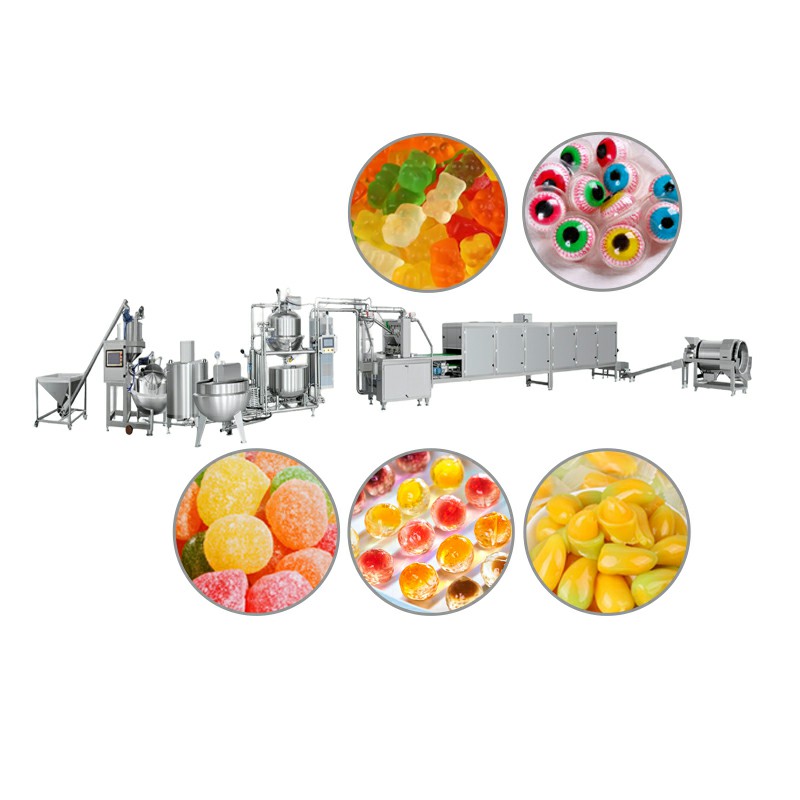
A food processing production line is an integrated sequence of machines that converts raw ingredients into a finished, packaged food product at a defined output. It is defined by three inputs — the product and its formula, the required capacity and pack format, and the hygiene and utility conditions of the plant — not by a single machine model. Jiangsu Haitel Machinery Co., Ltd., which trades as Haitel Food Machinery and was established in 1997, builds complete lines for confectionery, cereal and bar products, starch, potato, pet food and snack categories, together with packaging equipment and project scheme customization.
This guide is written for buyers who are at the awareness and research stage: they know they need a line, they may not yet know how the line is scoped, and they need a structure for comparing suppliers before they issue an RFQ. It covers what a line actually contains, how capacity and utility requirements are set, how a project moves from specification to commissioning, and which figures a buyer should ask a supplier to publish rather than assume.
Why a Production Line Is a Scope Decision Before It Is an Equipment Decision
The most common procurement error in this category is buying a machine and calling it a line. A production line is only correctly specified once the product, the hourly or per-shift target, the pack format and the building conditions are fixed; the equipment list comes after that, not before it.
Failure mode 1: defining the line by its main machine
On a gummy candy project, the depositing machine is the visible centre of the line, but it is not the line. Haitel's published project data for a gummy line lists matched equipment that includes a sugar melting pot, a sugar boiling pot, a pouring and moulding machine, a cooling tunnel, a demoulding machine, a sand rolling machine and a packaging machine. A quotation that covers only the depositing head leaves the buyer to source cooling, demoulding and packing separately — and to absorb the integration risk.
Failure mode 2: quoting capacity without the product
Hourly output is a function of the product, not only of the machine. Haitel's stated position is that output depends on the final product, that a full automatic line can run continuously for 24 hours, and that exact capacity is calculated from the product formula and target weight. Two buyers can install the same model and record different tonnages because their piece weights differ. That is why a capacity figure should always be requested together with the product and piece weight it refers to.
Failure mode 3: deferring hygiene, utilities and layout
Food-contact material, cleanability and utility supply are not installation details; they change the machine design. Haitel specifies stainless steel for product contact parts and, for gummy candy projects, states stainless steel 316 for the food-contact requirement. Utility conditions are equally concrete: the HTL-400 cereal bar line is published with a steam consumption of 400 kg/h at 0.3–0.8 MPa, compressed air at 0.4–0.6 MPa, and a working condition of 20–25 °C at 45%–55% relative humidity; the compound potato chips line is published with a 380 V supply, compressed air at 0.6–0.7 MPa and a footprint of 34 m × 6 m × 3.5 m. A line specified without those numbers rarely fits the building it was ordered for.
Industry Background: Capacity Supply, Trade and Hygiene Requirements
Demand for food processing equipment is large, traded internationally, and increasingly judged on documentation as well as throughput. Three reference points frame the category.
- Overall market value. Zion Market Research valued the global food processing market at USD 166.48 billion in 2024 (source: Zion Market Research, 2026).
- Trade in the equipment itself. OEC World, using UN Comtrade statistics, reports that trade in industrial food preparation machinery under HS code 8438 reached USD 16.7 billion in 2024, a 2.12% increase from 2023 (source: OEC World / UN Comtrade).
- Category-level supply. Global production of gummy candy production lines reached approximately 31,400 units in 2025 (source: Market Research Reports, 2026). On the ingredient side, the potato flakes market was estimated at USD 7.0 billion in 2025 and projected to reach USD 9.4 billion by 2035 at a 3.0% CAGR (source: cited market research in the verified data set).
Two conclusions follow for buyers. First, line supply is competitive and widely available, so differentiation rarely comes from the existence of a machine — it comes from process fit, verified specifications and support. Second, downstream demand for semi-finished food ingredients such as potato flakes keeps pulling investment into complete lines rather than single units.
The compliance side is moving in the same direction. EN 1672-2:2020 specifies common hygiene and cleanability requirements for machinery and machine components used in preparing and processing food and, where relevant, animal feed, as described in the standard's catalogue record. UK Health and Safety Executive guidance separately lists BS EN 1672-2:2005 among the generic standards for food machines, covering hygiene requirements. Neither reference certifies a specific machine; both tell a buyer what to look for in a supplier's documentation: how surfaces, joints, drains and cleaning access are designed, not only which material is named on the datasheet.
What a Complete Food Processing Production Line Includes
A complete line links five functional blocks — preparation, forming or cooking, cooling or setting, cutting or portioning, and packaging — through conveyors and a central control panel. The number of units inside each block is what changes between product categories, and that is where line scope is won or lost.
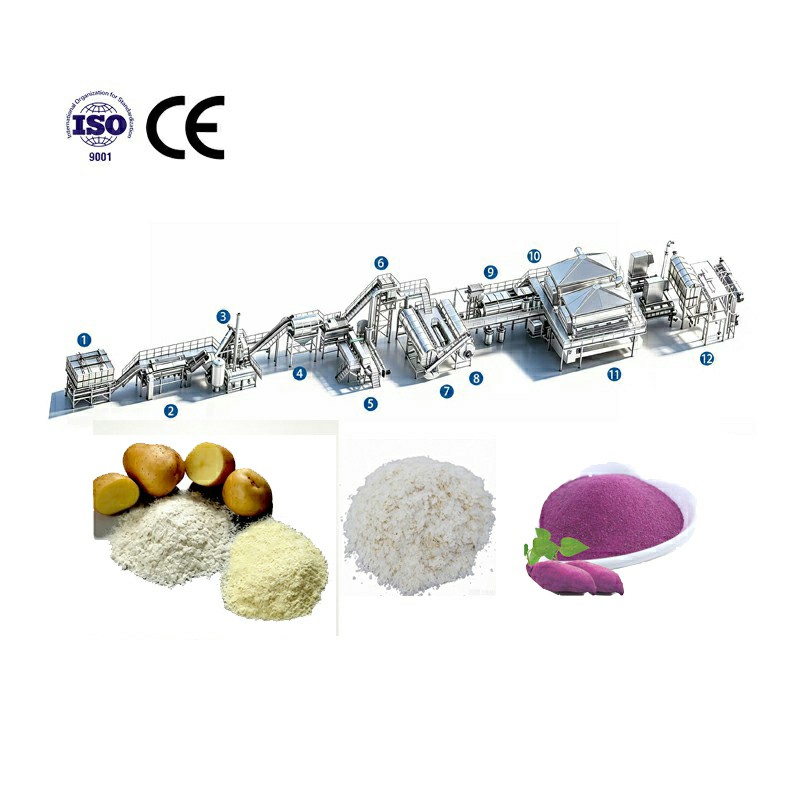
Haitel Food Machinery's line portfolio by category
- Potato and starch: potato flakes production line, potato powder production line, modified starch production line, pregelatinized starch production line, compound potato chips production line.
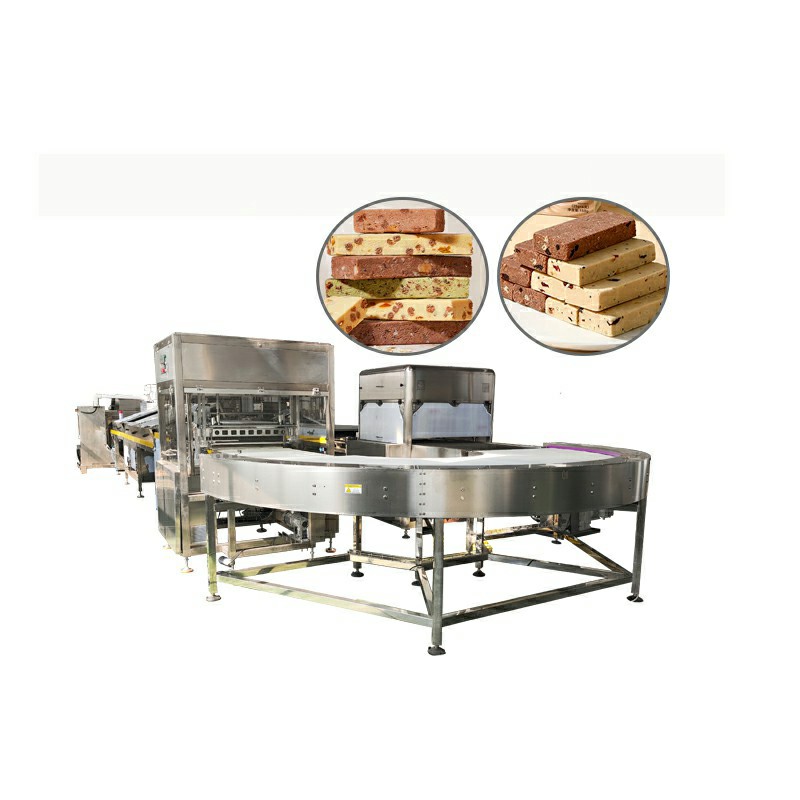
- Cereal, bar and snack: baby rice cereal production line, compound cereal flakes production line, cereal bar production line, protein bar production line, energy bar production line, oat chocolate production line.
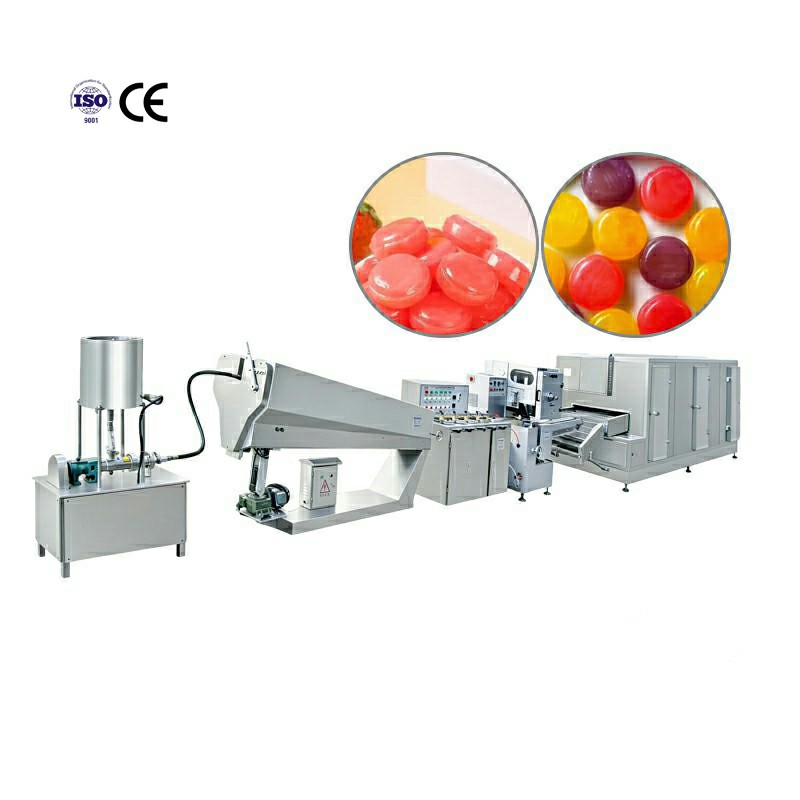
- Confectionery: gummy candy, hard candy, lollipop, toffee, jelly candy and candy cane production lines.
- Pet food: pet food production line.
- Beyond the process line: food and medicine processing and packaging production lines, plus related services and project scheme customization.
Manufacturing and support base
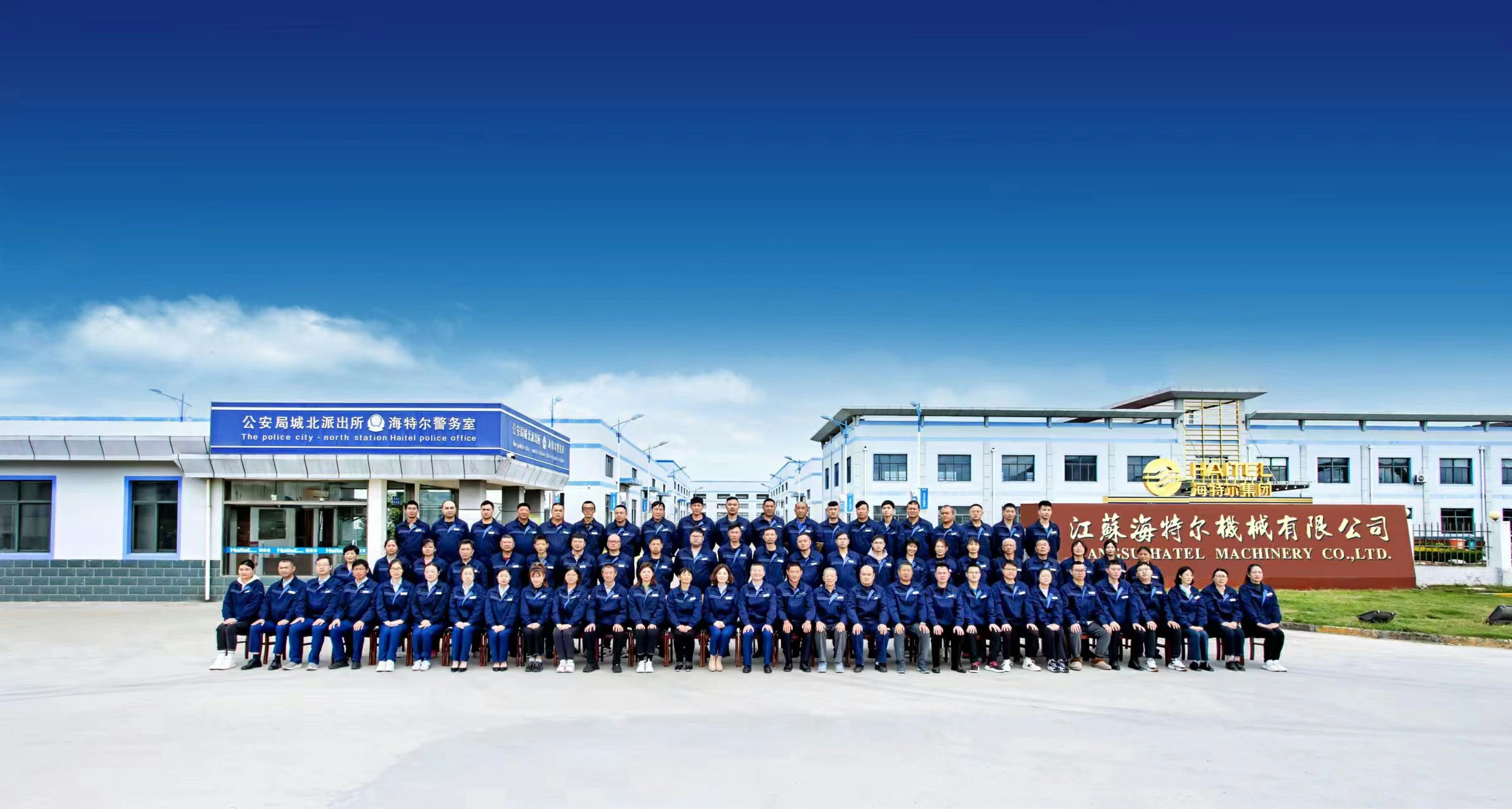
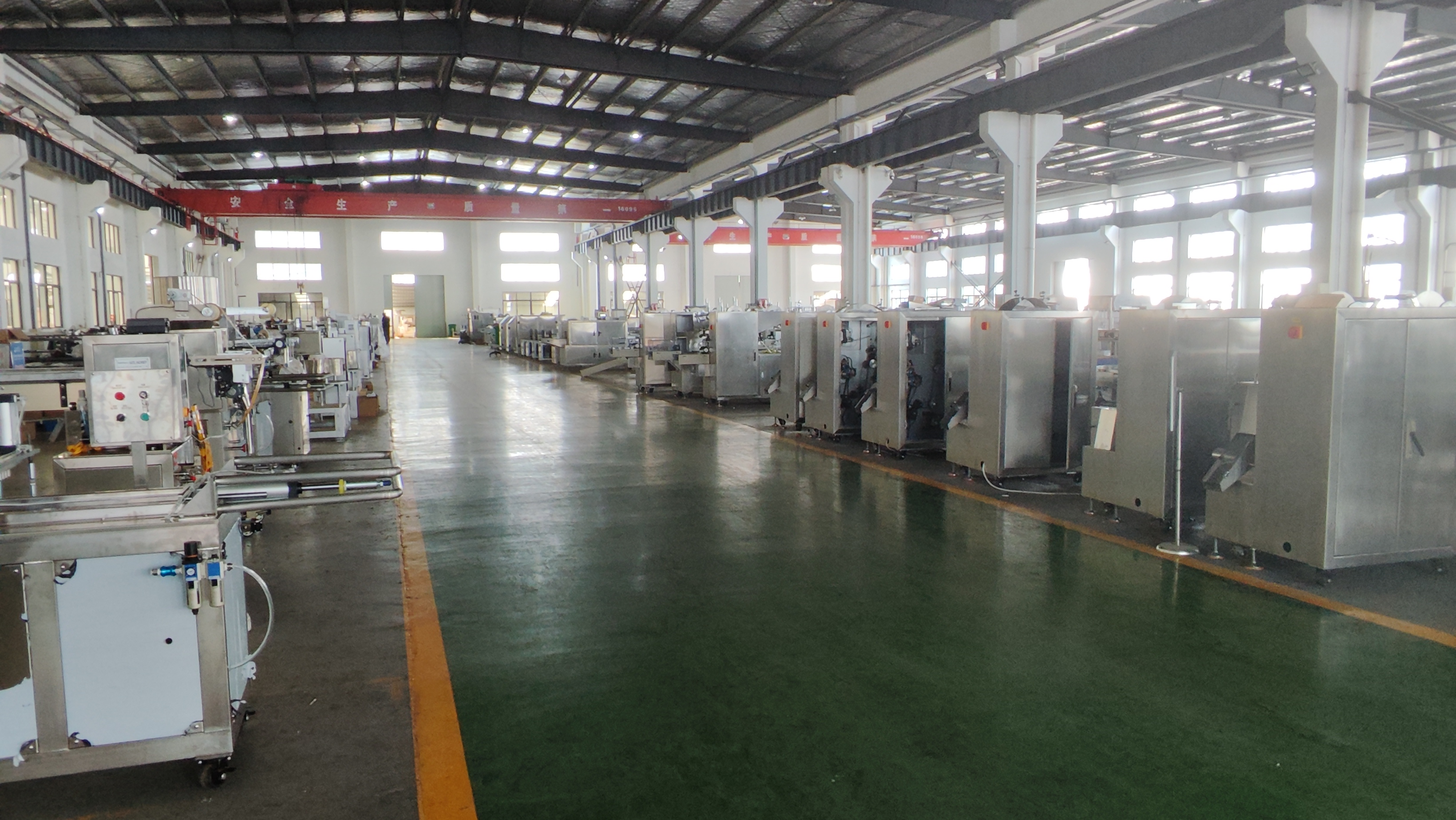
Jiangsu Haitel Machinery Co., Ltd. was established in 1997 and operates a 40,000 m² manufacturing facility with approximately 90 staff, including a 30-engineer R&D team. The company reports more than 80 technical patents and an annual production capacity of 1,000 sets. It holds ISO 9001 quality management system and ISO 14001 environmental management system certification, together with European CE certification. Export business accounts for 70% of total sales, and the company reports customers in 80 countries, with major markets in North America, Europe, Oceania, Central and South America, the Middle East and Asia. The company also reports having served more than 3,000 clients in the food and biotechnology industries.
What to verify before shortlisting a Chinese manufacturer
Origin is not a qualification. The following checks convert a supplier list into a comparable shortlist, and each can be answered with documents rather than adjectives:
- Legal entity and age. Registered company name, year of establishment and manufacturing address — for Haitel, Jiangsu Haitel Machinery Co., Ltd., established 1997, with its facility in Dongtai City, China.
- Facility and headcount. Plant area, production staff and engineering staff, so that capacity claims can be matched against physical space.
- Engineering output. Patents, drawings provided before production, and whether customization is handled in-house.
- Certification documents. CE and ISO certificates issued as documents, not as logos, and confirmation that they can be supplied for customs clearance.
- Stated specifications per model. Capacity, installed power, dimensions and weight for each model offered, as published for the HTL and G-series lines.
- Utility and site conditions. Steam, compressed air, power supply and workshop temperature and humidity requirements stated in writing.
- Service terms. Warranty length, installation and training scope, and the named after-sales contact.
Step-by-Step Breakdown: From Product Brief to Commissioned Line
Step 1 — Define the product and the formula
The line cannot be sized until the product is fixed: candy type and centre filling, bar weight and texture, flake thickness, starch grade, or pet food kibble shape. On depositing lines, Haitel states that moulds can be made according to candy samples provided by the customer, which makes a physical sample the most reliable brief.
Step 2 — Convert the target into capacity
Capacity is requested in kg/h, tonnes per 8-hour shift, or pieces per minute, depending on the category. Haitel's published figures use all three: the HTL-T600 gummy line at 600 kg/h, the HTL-T400 ball lollipop line at 2–5 T/8h, and the HTL-TE600B flat lollipop line at 200–600 pcs/min. Final capacity is then calculated from the product formula and target weight rather than taken from the model name.
Step 3 — Configure the process units
Take a gummy candy line as the worked example. Haitel's published project description sets out three operating units. In raw material preparation and cooking, granulated sugar, glucose syrup and gelling agents are automatically weighed to formula, dissolved in a sugar dissolving tank, transferred to a vacuum cooking system for controlled moisture evaporation, cooled through a heat exchanger, and dosed inline with flavours, colours, acid solution and nutritional actives before being pumped to the depositing hopper. In depositing and forming, a servo depositing head fills continuously moving metal or silicone moulds, with vibration to exhaust air and avoid bubble defects, and support for single-colour, two-colour, centre-filled and striped gummies. In cooling and gelling, filled moulds pass through a constant temperature and humidity cooling tunnel before demoulding. The project data specifies a workshop temperature of 18–28 °C and stainless steel 316 for the food-contact requirement.
Step 4 — Fix utilities and layout
Utility requirements determine whether the line fits the building. Published examples show how specific this becomes: the HTL-400 cereal bar line requires 100 kW at 380 V/50 Hz, steam at 400 kg/h and 0.3–0.8 MPa, compressed air at 0.4–0.6 MPa, and a room held at 20–25 °C and 45%–55% relative humidity; the compound potato chips line requires a 380 V supply, compressed air at 0.6–0.7 MPa and a 34 m × 6 m × 3.5 m footprint. Layout, drainage and cleaning access should be agreed in drawing form before manufacture.
Step 5 — Approve engineering drawings and customization
Haitel states that it supports customization on capacity, product shape, size, voltage and layout, and that its engineering team prepares drawings for confirmation before production. Voltage customization is confirmed at this stage so that the delivered line matches the local power supply.
Step 6 — Trial, ship, install and train
Buyers can send their raw material to Haitel for machine testing and sample production before the order is finalized. Equipment ships in standard export wooden case packaging, with quotations available as FOB, CIF or DDP. After delivery, Haitel provides a 12-month warranty and offers overseas engineer installation and training service, so that commissioning and operator training are completed on site.
Use Cases: Matching Line Type to Project Type
Haitel's project data describes three project types that behave differently in procurement, and each changes what a buyer should prioritise.
- New construction. A new food factory or candy production base procures a full automatic line in one package, with plant construction plus complete installation and commissioning. Priority: line-to-building fit, utility capacity and phased delivery.
- Expansion. An existing factory adds a line to raise capacity or enter a new category, without new plant construction — typically only equipment purchase plus purification workshop renovation. Priority: compatibility with existing upstream and downstream equipment, and a short installation window.
- Reconstruction. An old line is dismantled and replaced, with renovation of clean areas, piping and cooking systems and replacement of the core depositing and forming machine. Priority: interface dimensions and the reuse of usable auxiliary equipment.
Product-driven cases follow the same logic. Potato flakes lines feed instant mashed potato, bakery, snack and food-ingredient production, so flake thickness and moisture stability matter more than headline tonnage. Cereal, protein and energy bar lines serve snack and nutrition brands where bar weight consistency and cutting accuracy drive yield. Confectionery lines split by format: depositing for filled and shaped candy, die-stamped and roll-formed equipment for hard candy, toffee, ball lollipops and candy canes. Starch lines — modified and pregelatinized — sit upstream of many of these products, and pet food lines follow their own kibble and drying requirements.
Comparison Tables: Published Specifications by Line Type
The tables below use only specifications published in Haitel's model data. They are intended for shortlisting and RFQ preparation, not as a substitute for a quotation configured to a specific product.
Confectionery lines
| Line type | Representative model | Published capacity | Installed power | Notes from the model data |
|---|---|---|---|---|
| Gummy candy | HTL-T150 / T300 / T450 / T600 | 150 / 300 / 450 / 600 kg/h | 8 / 12 / 16 / 20 kW | Depositing line with cooling and demoulding; PLC and touch-panel control; moulds made to customer samples |
| Hard candy, toffee, milk candy, centre-filled | HTL-B1 | 200–400 kg/h | 19 kW | Multi-functional die-stamping line; 8,250 × 1,200 × 1,400 mm |
| High-speed hard candy | HTL-T660 | 660 kg/h | 26 kW | Hard candy, centre-filled and vitamin hard candy; 11,540 × 1,950 × 2,400 mm |
| Lollipop (depositing) | HTL-T150 / T300 / T450 / T600 | 150 / 300 / 450 / 600 kg/h | 5 / 12 / 16 / 20 kW | Optional jam-paste injection for centre-filled lollipops |
| Ball lollipop (roll-formed) | HTL-T400 / HTL-T800 | 2–5 T/8h / 5–10 T/8h | 19 kW / 20.5 kW | One-stop sugar boiling, rope forming and packaging |
| Flat lollipop | HTL-TE600B | 200–600 pcs/min | 40 kW | Integrated moulding and packaging machine; 18,500 × 2,000 × 2,800 mm |
| Candy cane | HTL-T410 | 100–400 pcs/min | 35 kW | Sugar boiling, rope forming, cutting, moulding and boxing |
Bar, potato and utility conditions
| Line | Model | Published capacity | Key utility and site conditions |
|---|---|---|---|
| Cereal bar | HTL-400 | 400–800 kg/h; bar weight 10–40 g; cutting 50–100 times/min | 100 kW at 380 V/50 Hz; steam 400 kg/h at 0.3–0.8 MPa; compressed air 0.4–0.6 MPa; room 20–25 °C at 45%–55% RH |
| Protein bar | HTL | Frequency-adjusted speed; forming template in stainless steel or DuPont material to customer requirement | 11 kW total power; 1,580 × 1,080 × 1,800 mm |
| Compound potato chips | HTL | 150 kg/h | 380 V supply; compressed air 0.6–0.7 MPa; footprint 34 m × 6 m × 3.5 m |
| Potato flakes | G1016 | 60–80 kg (as published); drum φ1000 × 1600 mm | Stainless steel SS304 construction; CIP cleaning design |
FAQ
What should buyers verify about materials and certification on a food processing production line?
All product contact parts on Haitel equipment are stainless steel, and the company states that it holds CE and ISO 9001 certificates, with documents available for customs clearance; its company profile also lists ISO 14001 environmental management system certification. Certification is a starting point rather than the whole answer. EN 1672-2:2020 sets out common hygiene and cleanability requirements for machinery and machine components used in food processing, and UK HSE guidance lists BS EN 1672-2:2005 among the generic hygiene standards for food machines, so buyers should ask how a specific line's surfaces, joints, drains and cleaning access address those requirements. For gummy candy projects, Haitel's published project data specifies stainless steel 316 for the food-contact requirement and a workshop temperature of 18–28 °C.
Can a Chinese manufacturer customize capacity, product shape, voltage and layout?
Haitel states that it customizes on capacity, product shape, size, voltage and layout, and that its engineering team prepares drawings for confirmation before production. The company reports a 30-engineer R&D team, more than 80 technical patents, a 40,000 m² facility with approximately 90 staff, and an annual production capacity of 1,000 sets. On depositing lines, moulds can be made according to candy samples supplied by the customer.
How is a food processing production line packaged, shipped and quoted?
Equipment is packed in standard export wooden case packaging, and Haitel can quote FOB, CIF or DDP prices according to the buyer's request. This guide does not publish line prices, because the quotation depends on configuration — number of process units, capacity, materials and packaging scope. Haitel describes itself as a direct factory supplier without a middleman, and reports that export business accounts for 70% of total sales, with customers in 80 countries.
Can we test our own raw material before placing an order?
Yes. A buyer can send raw material to Haitel, which will test the machine and make samples for evaluation. A trial run on the actual material is the practical way to confirm piece weight, shape, texture and output before a line configuration is fixed, because published capacity depends on the product formula and target weight.
What happens after delivery — installation, training and warranty?
Haitel provides a 12-month warranty and offers overseas engineer installation and training service, so commissioning and operator training are completed on site. Because output depends on the product formula and target weight, final capacity figures are confirmed against the buyer's own product rather than the model name alone. Buyers who want to review the full model range and specifications before an RFQ can download the Haitel product catalogue and send their product brief for a configuration proposal.
Conclusion: Specify the Line, Then Compare the Supplier
A food processing production line is a process decision first and a purchase decision second. Fix the product and formula, convert the target into the capacity unit your category actually uses, list the process units that must be inside the quotation, and write down the utilities and hygiene requirements the building can support. Only then do supplier comparisons become meaningful — against published specifications such as the HTL-T600 gummy line at 600 kg/h and 20 kW, the HTL-400 cereal bar line at 400–800 kg/h, or the G1016 potato flakes line, rather than against general claims.
Jiangsu Haitel Machinery Co., Ltd. has manufactured food processing and packaging lines since 1997, with a 40,000 m² facility, a 30-engineer R&D team, more than 80 technical patents and customers reported in 80 countries. For buyers at the research stage, the most efficient next step is to test the concept on real material: send a product sample or raw material for trial production, and use the result to define the line.
Next step: review the catalogue, then request a line configuration
Download the Haitel product catalogue for full model specifications across confectionery, bar, potato, starch, cereal and pet food lines: Haitel product catalogue (PDF).
Have Questions or Need More Details?
Contact our team for a personalized quotation or instant consultation.
Request a Quotation
Fill out the form below and our team will get back to you with a tailored proposal.
WhatsApp Direct Chat
Prefer to chat in real-time? Message us on WhatsApp for instant assistance & quick answers.
- Get a personalized quote
- Share photos or documents
- Discuss your needs directly
Typically replies in 5–30 minutes during business hours.