Potato Powder Production Line: How It Works and What to Verify Before You Buy
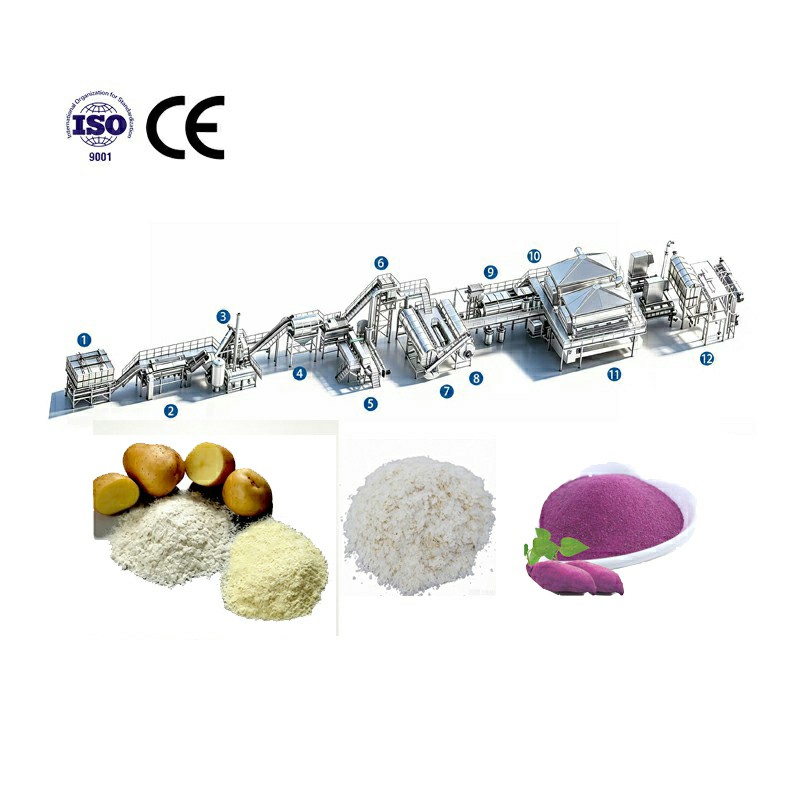
A potato powder production line turns raw potatoes into a dry potato ingredient through washing, peeling, cooking, mashing, drum drying, milling and packaging. It is a complete food processing production line rather than a single machine: final product form, moisture behaviour, hygiene design and packaging are decided by how the stages are specified together.
Jiangsu Haitel Machinery Co., Ltd. (Haitel), established in 1997 and based in Dongtai City, China, manufactures potato flakes production lines and potato powder production lines alongside modified starch, pregelatinized starch, baby rice cereal, compound cereal flakes, candy, bar, pet food, oat chocolate and compound potato chip lines. This article is written for buyers in the research stage who need to understand the equipment before they compare suppliers or request quotations.
What a Potato Powder Production Line Does, and Where Buyer Confusion Starts
A potato powder production line is the set of machines that takes fresh potatoes through preparation, cooking, drying and size reduction to produce a dry potato ingredient. The equipment is usually purchased as a line because the drying stage, the milling stage and the packaging stage constrain each other: a change in one part affects throughput and product consistency in the others.
Three misunderstandings appear repeatedly in the first weeks of research.
- Flakes and powder are treated as two unrelated products. In commercial practice both come from the same drying route, and the difference is mainly set at the milling and grading stage, which defines particle form and how the ingredient is later used. Buyers who plan to sell both forms should therefore ask how the milling section is configured rather than shopping for two separate plants.
- Capacity is read without a reference period. A specification may list production as 60–80 kg without stating whether that is per hour, per batch or per shift. Always confirm the time base and the product form the figure refers to before comparing two suppliers.
- Line scope is assumed instead of being written down. The boundary between washing, peeling, cooking, mashing, drying, milling, packaging and the utility connections should appear in the technical offer, not only in conversation.
For a procurement team, the practical question is not “which machine produces powder” but “which combination of stages delivers the particle form, output and hygiene level our market requires”.
Industry Background: What Public Data Says About Potato Ingredients and Food Machinery
Public estimates point to a large and steadily growing equipment category, but they differ in scope and should be used as context rather than as a business case for one project.
- Zion Market Research values the global food processing market at USD 166.48 billion in 2024.
- The global trade value of industrial food preparation machinery (HS 8438) reached USD 16.7 billion in 2024, a 2.12% increase from 2023, according to OEC World using UN Comtrade data.
- One commercial research estimate places the potato flakes market at USD 7.0 billion in 2025, reaching USD 9.4 billion by 2035 at a 3.0% CAGR. This figure refers to potato flakes as a product segment, not to equipment.
Alongside demand, the regulatory side of food machinery is a research topic in its own right. EN 1672-2:2020 specifies common hygiene and cleanability requirements for machinery and machine components used in preparing and processing food and, where relevant, animal feed. UK Health and Safety Executive guidance also references BS EN 1672-2:2005 as a generic standard for all food machines, including hygiene requirements.
The practical consequence is that hygiene and cleanability are equipment-design and qualification topics, not paperwork added at the end. A buyer researching a potato powder line should expect to review materials of construction, food-contact surfaces, cleaning access and drainage early in the discussion, and should treat a standard as a design reference rather than as proof that a specific machine conforms.
How Haitel Approaches a Potato Powder Production Line
Jiangsu Haitel Machinery Co., Ltd. is a Chinese manufacturer of food and medicine processing and packaging production lines, established in 1997 and located in Dongtai City. The company manufactures potato flakes production lines and potato powder production lines, and also supplies modified starch and pregelatinized starch lines, baby rice cereal and compound cereal flakes lines, gummy candy, hard candy, lollipop, toffee, jelly candy and candy cane lines, cereal bar, protein bar and energy bar lines, oat chocolate and compound potato chip lines, and pet food lines.
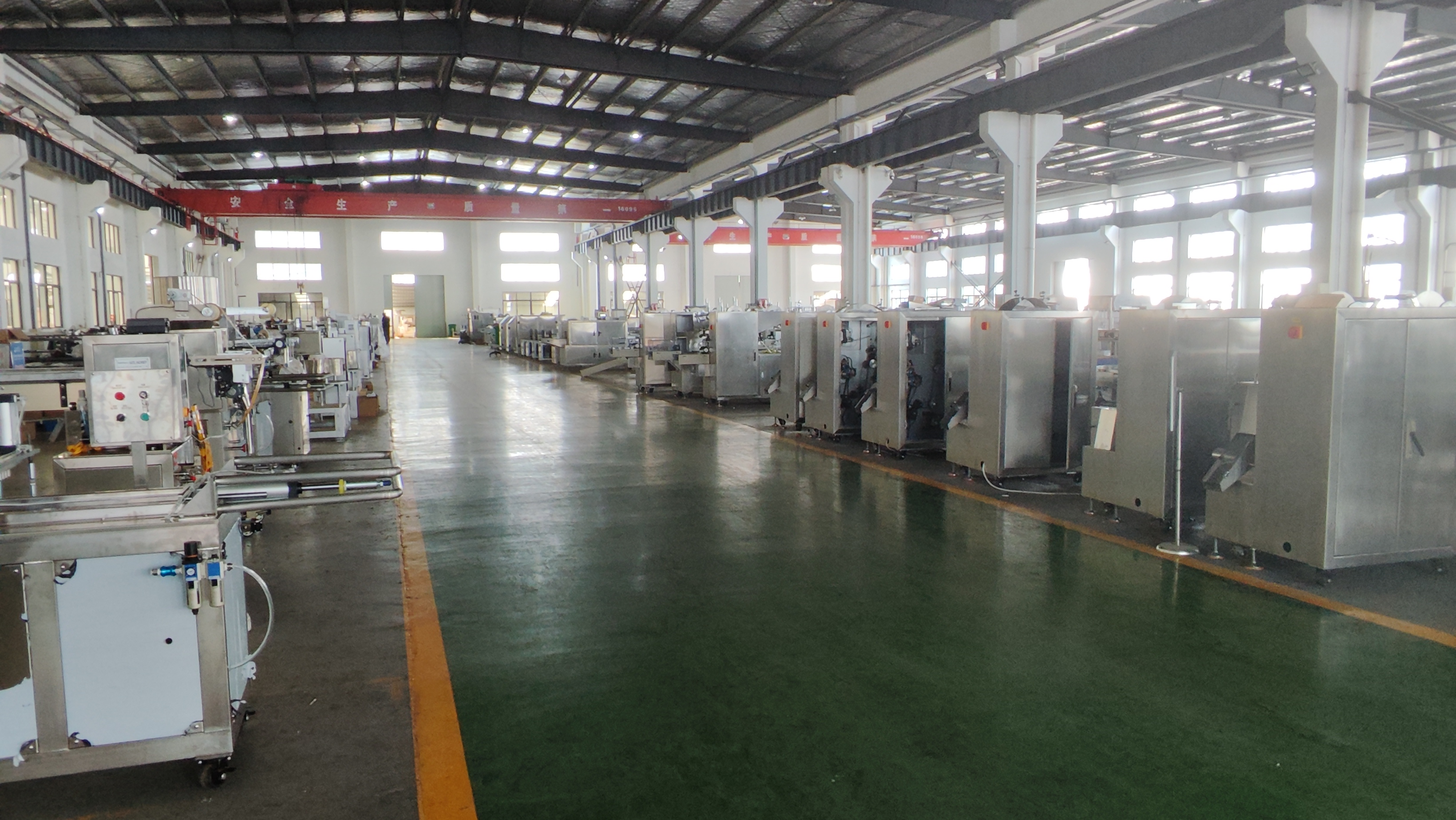
The company profile states a manufacturing facility of 40,000 m² with approximately 90 staff and an R&D team of 30 engineers, an annual production capacity of 1,000 sets, and an export share of 70% of total sales. Major markets are listed as North America, Europe, Oceania, Central and South America, the Middle East and Asia, with customers in 80 countries.
| Company fact | Reported value |
|---|---|
| Established | 1997 |
| Manufacturing facility | 40,000 m² |
| Staff | Approximately 90 |
| R&D engineers | 30 |
| Annual production capacity | 1,000 sets |
| Export share of total sales | 70% |
| Customers / markets | Customers in 80 countries; North America, Europe, Oceania, Central and South America, Middle East, Asia |
On the potato line itself, the published specification for the HTL potato flakes production line lists the following data.
| Parameter | Potato flakes production line |
|---|---|
| Model | G1016 |
| Main parameters | φ1000×1600 |
| Listed production | 60–80 kg |
| Material | SS304 |
| Applicable industry | Food factory |
Two notes for the research stage. First, the listed production figure of 60–80 kg should be confirmed with the supplier as to its reference period (per hour, per batch or otherwise) and to the product form it describes, because a figure without a time base cannot be compared across suppliers. Second, the line is described as a turnkey scope covering potato washing, peeling, cooking, mashing, drum drying, milling and packaging, built in food-grade stainless steel, fully automatic and capable of continuous operation, with PLC and HMI control, drum drying, CIP cleaning design, and customizable capacity and layout.
Seven Stages of the Line, and What to Verify at Each Stage
The equipment sequence below follows the published line scope. The verification points are the questions that turn each stage into a specification item.
- Washing. Soil and surface debris are removed before any thermal step, because foreign matter carried forward affects both peeling efficiency and final colour. Verify water consumption per tonne of raw potato, the drainage arrangement, and how the washing section is cleaned between shifts.
- Peeling. Peel removal and the following inspection determine yield and the appearance of the dried product. Verify the peel-loss rate expected for your potato variety, how defect trimming is handled, and whether the peeling method suits the skin condition of the crop you will process.
- Cooking. Cooking sets starch behaviour before mashing and therefore influences texture and reconstitution. Verify the control range for temperature and residence time, and ask how the cooking stage responds to changes in potato dry matter.
- Mashing. The cooked potato is reduced to a mash with consistent particle size before drying. Verify how mash consistency is held stable, and what happens to the line when the mash deviates from the target.
- Drum drying. The mash is dried on a drum dryer, the stage that most affects moisture and therefore shelf behaviour. Verify the drying control philosophy, the energy demand of the drum system, and how moisture is monitored and recorded. Haitel describes its drum drying system as energy-saving, with the line designed to hold stable moisture and flake thickness.
- Milling. The dried sheet is reduced to flakes or powder. This is the stage where a buyer’s intended product form should be specified explicitly: ask for the target particle size range, the milling configuration offered, and how the mill is set when both flakes and powder are produced on one line.
- Packaging. The dry ingredient is packed, and packaging determines how the product reaches the market without moisture pickup. Verify the packaging format and how the packing section interfaces with the drying and milling sections.
Where the Output Goes: Use Cases for Potato Flakes and Powder
The published application list for the potato line names instant mashed potato, bakery products, snacks and food ingredients. Read as demand signals, these applications imply different specification priorities rather than different machines.
- Instant mashed potato. Reconstitution behaviour dominates, so moisture control at the drum dryer and particle form after milling carry most of the specification weight.
- Bakery. Potato ingredients are used for texture, water binding and flavour, so consistency between batches matters more than peak output.
- Snacks. Seasoning adhesion, colour and expansion behaviour depend on the ingredient, which puts the drying and milling stages under closer scrutiny.
- Food ingredient supply. Buyers selling into further processing usually need documented and repeatable specifications, so measurement and recording at each stage become part of the commercial offer.
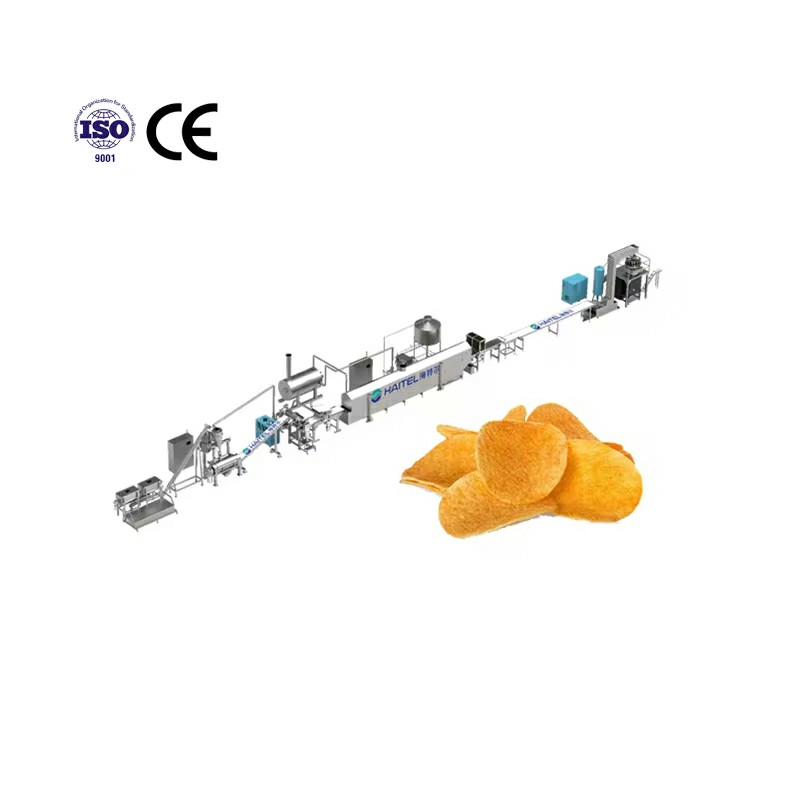
A useful illustration of how potato powder feeds downstream production is Haitel’s compound potato chips production line, which the specification describes as covering the route from potato powder raw material processing through to finished chip packaging, with a listed capacity of 150 kg/h. A producer planning both a powder line and a chip line should model the two together, because the powder specification becomes the chip line’s raw material specification.
Comparison: Two Potato-Based Lines Side by Side
The table below uses only published specification data. The two lines serve different purposes and are not substitutes for each other; the comparison shows how differently a potato-based project can be specified.
| Item | Potato flakes production line | Compound potato chips production line |
|---|---|---|
| Model | G1016 | HTL |
| Output form | Dried potato flakes or powder | Finished compound potato chips |
| Listed production | 60–80 kg (reference period to be confirmed) | 150 kg/h |
| Footprint / utilities | Main parameters φ1000×1600 | 34 m × 6 m × 3.5 m; 380 V; compressed air 0.6–0.7 MPa |
| Material | SS304 | SS304 |
| Position in the chain | Produces the dry potato ingredient | Consumes potato powder as raw material |
Procurement Checklist Before You Request a Quotation
The following items are drawn from Haitel’s stated commercial and service arrangements and can be used as a checklist when comparing suppliers.
- Customization basis. Haitel states that it supports customization of capacity, product shape, size, voltage and layout, and that its engineering team prepares drawings for confirmation before production. Ask for that drawing stage in writing.
- Voltage. Voltage is customized to match the local power supply, which should be confirmed against your site supply rather than assumed from a default.
- Material and certificates. All product contact parts are stated to be stainless steel, and CE and ISO9001 certificates are held, with documents available for customs clearance.
- Capacity calculation. Haitel states that output depends on the final product, that its fully automatic line can run continuously for 24 hours, and that exact capacity is calculated from the product formula and target weight.
- Packaging and shipping. Standard export wooden case packaging, with quotations available as FOB, CIF or DDP according to the buyer’s request.
- Warranty and service. A 12-month warranty is stated, with overseas engineer installation and training available.
- Workshop requirements. Confirm utilities, drainage, cleaning access and the space envelope of the whole line, including the drum dryer and packaging section, before the layout is frozen.

Frequently Asked Questions
Which certificates and material standards should a Chinese food processing production line manufacturer provide?
Ask for the certificate set and the material declaration together, because they answer different questions. Haitel states that all product contact parts are stainless steel and that the company holds CE and ISO9001 certificates, with documents provided for customs clearance. Material and cleanability should be reviewed separately against the hygiene requirements described in EN 1672-2:2020, which specifies common hygiene and cleanability requirements for food-processing machinery. A certificate shows the quality system; the material declaration and the cleaning design show how the line behaves in your plant.
Can one manufacturer supply potato, starch, cereal and candy lines?
Haitel’s stated product scope includes potato flakes and potato powder production lines; modified starch and pregelatinized starch production lines; baby rice cereal and compound cereal flakes production lines; gummy candy, hard candy, lollipop, toffee, jelly candy and candy cane production lines; cereal bar, protein bar and energy bar production lines; oat chocolate and compound potato chip production lines; and pet food production lines. It also supplies food and medicine processing and packaging production lines and related services. A broad portfolio is convenient for a multi-product factory, but each line should still be qualified on its own specification, references and test results.
How should the budget for a potato powder production line be framed?
No public price list applies, because the quotation depends on capacity, layout, voltage, packaging format and the degree of automation specified. Haitel quotes FOB, CIF or DDP according to the buyer’s request, which allows the same scope to be compared on different delivery terms. Practically, request an itemized scope covering washing, peeling, cooking, mashing, drum drying, milling, packaging, utilities and installation, and ask for the capacity calculation basis so that price differences can be traced to specification differences rather than treated as a single number.
Can the line be tested with our own potatoes before we buy?
Yes. Haitel states that buyers can send their raw material so that the machine can be tested and samples produced. For a potato project this is the most informative step available before purchase, because potato variety, dry matter and skin condition all influence peeling, mashing and drying behaviour. Send a representative sample rather than a single perfect batch, and ask for the test conditions and the sample results in writing.
What are the delivery and after-sales arrangements?
Standard export wooden case packaging is used, with FOB, CIF or DDP quotations as requested; a 12-month warranty is stated, and overseas engineer installation and training are available. Because delivery timing depends on the confirmed layout, voltage and packaging specification, the schedule should be tied to the approved drawing rather than to a general enquiry. To move from research to a concrete next step, you can send your potato sample and target product specification to Haitel at bm198@bm198.com, contact the team on WhatsApp at +86 139-1466-6768, or review the full equipment range at www.haitelmachine.com.
Conclusion
A potato powder production line is best understood as a linked sequence: washing and peeling protect yield, cooking and mashing set texture, drum drying governs moisture, milling decides whether the output is flake or powder, and packaging protects the result. Most evaluation mistakes happen when one stage is specified without reference to the others, or when a capacity figure is compared without its time base.
Jiangsu Haitel Machinery Co., Ltd. manufactures potato flakes and potato powder production lines within a wider portfolio of food processing lines, from a 40,000 m² facility with a stated annual capacity of 1,000 sets and an export share of 70% of total sales. For buyers still in the research stage, the productive next steps are to define the target product form and particle size, confirm the capacity basis, request the material and certificate documents, and test your own potatoes on the line.
Next step: sample test, quotation or product catalogue
Download the Haitel product catalogue (PDF): Haitel product catalogue
Contact: Arlene · Email: bm198@bm198.com · Tel / WhatsApp: +86 139-1466-6768
Address: Building Equipment No. 19, Taitung Industrial Park, Dongtai City, China · Website: www.haitelmachine.com
Have Questions or Need More Details?
Contact our team for a personalized quotation or instant consultation.
Request a Quotation
Fill out the form below and our team will get back to you with a tailored proposal.
WhatsApp Direct Chat
Prefer to chat in real-time? Message us on WhatsApp for instant assistance & quick answers.
- Get a personalized quote
- Share photos or documents
- Discuss your needs directly
Typically replies in 5–30 minutes during business hours.