
Home Appliance Molding Shift: PP and PC/ABS Parts on One Servo-Hydraulic Injection Molding Machine
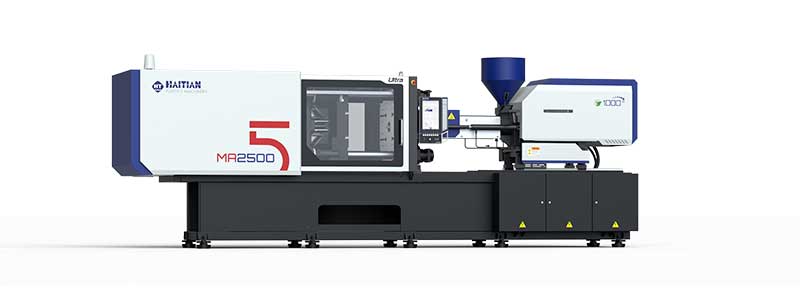
A home-appliance molder does not need a separate machine for every resin family, but it does need a machine specification that respects the full process window. The working scenario in this guide is a molder moving from PP housings to PC/ABS technical parts while keeping both part families on one servo-hydraulic injection molding machine. The central evaluation question is not whether PP and PC/ABS appear on a material list. It is whether the selected machine, plasticizing package, mold, temperature control, automation and acceptance plan can hold process precision, repeatability and energy consumption within the limits required by both products.
The reference platform is the Haitian Mars Series MA5/Ultra, a high-performance servo-hydraulic toggle injection molding machine intended for household appliances and technical parts. Haitian International is an injection molding machine manufacturer founded in 1966. Its Mars Series is a servo-hydraulic toggle platform, and the MA5/Ultra is an extension of the MA5 platform with a positioning around higher speed, improved process precision and repeatability, reduced energy consumption and expanded intelligent process functions.
This article treats the PP-to-PC/ABS shift as a project-fit problem. It defines the pain points, explains what the MA5/Ultra platform contributes, sets out a step-by-step evaluation path, maps home-appliance use cases, and gives a comparison table and FAQ for research and evaluation teams. Numerical performance claims are kept at the level documented in the supplied platform facts; where a figure belongs to the wider MA5 platform rather than to every MA5/Ultra configuration, that distinction is stated.
Problem definition: why the PP-to-PC/ABS shift stresses one machine
The PP housing is usually the stable, high-volume base of a home-appliance molding cell. It is associated with visible surfaces, durable components, large to medium-size parts and frequent product or mold changes. The PC/ABS technical part introduces a different evaluation burden: dimensional stability, surface quality and process control become more visible in the acceptance discussion. When both part families share one machine, the molder is not buying one process. The molder is buying a process platform that must switch between two material and quality regimes without losing control.
The home-appliance application unit describes a production cell with large to medium-size parts, visible surfaces, durable components, high-volume production and frequent product and mold changes. Its special requirements include durability, surface quality, dimensional stability, energy efficiency, fast changeover, flexible automation and large-part capability. Once PP housings and PC/ABS technical parts share one machine, those requirements no longer apply to one product line only. They become changeover and validation requirements for the whole cell.
Three pain points follow. First, process precision: the machine must hold the process window for the PC/ABS technical part while still delivering acceptable PP housing surfaces and dimensions. Second, repeatability: the same machine must return to a stable PP housing run after a PC/ABS campaign, and the PC/ABS run must remain stable across production. Third, energy consumption: a cost-sensitive PP housing and a more technical PC/ABS part can place different demands on plasticizing, temperature control, drying and cycle time, so energy must be evaluated at the selected configuration rather than assumed from a headline.
Industry background: one cell covering more part families
Home appliance manufacturing includes white goods, black goods and small home-device plastic components, as described in the home-appliance application unit. The cell is flexible automated serial production, with matched equipment including robots, material handling, dryers, mold temperature control, quick mold-change equipment and optional decoration, foaming or multi-component systems. This is not a single-machine purchase; it is a production-cell configuration. The injection molding machine is the center, but the mold, material handling and automation determine whether the cell can move between PP and PC/ABS parts efficiently.
The wider market context supports why molders keep looking for one platform that can cover more part families. Grand View Research estimated the global injection molding machine market at USD 17.3 billion in 2025, with Asia Pacific holding 39.7% share. That is a commercial research estimate, not a statement about any one supplier. For the buyer, the useful implication is narrower: capacity planning and floor-space decisions favor platforms that can be configured across part families rather than dedicated lines that cannot share tooling, automation and process knowledge.
The MA5/Ultra is positioned within that logic. It is not presented as a universal machine for every resin, but as a servo-hydraulic toggle platform for household appliances and technical parts with a documented material envelope. That distinction matters in evaluation. A material list tells the buyer which resin families can be considered; it does not replace a mold trial, a plasticizing review or an acceptance test on the actual part.
The solution: Haitian Mars Series MA5/Ultra as one servo-hydraulic platform
At the platform level, the MA5/Ultra combines a servo-hydraulic toggle clamping system with a control and drive architecture intended to support higher response, improved process precision and repeatability, reduced energy consumption and expanded intelligent process functions. The MA series uses servo drive and precision motion control to supply power on demand. That architecture is the reason energy, response speed and molding stability are evaluated together rather than as separate purchase criteria.
Material envelope and configuration fit
The MA5/Ultra material envelope includes PP, PE, ABS, PA, PC, PC/ABS, POM, PMMA and TPE, depending on application and machine configuration. For the scenario in this article, both PP and PC/ABS are inside that documented envelope. That does not mean every screw, barrel, hot-runner, dryer or temperature-control setup is identical for both materials. It means the platform family can be evaluated for both, subject to configuration and application confirmation.
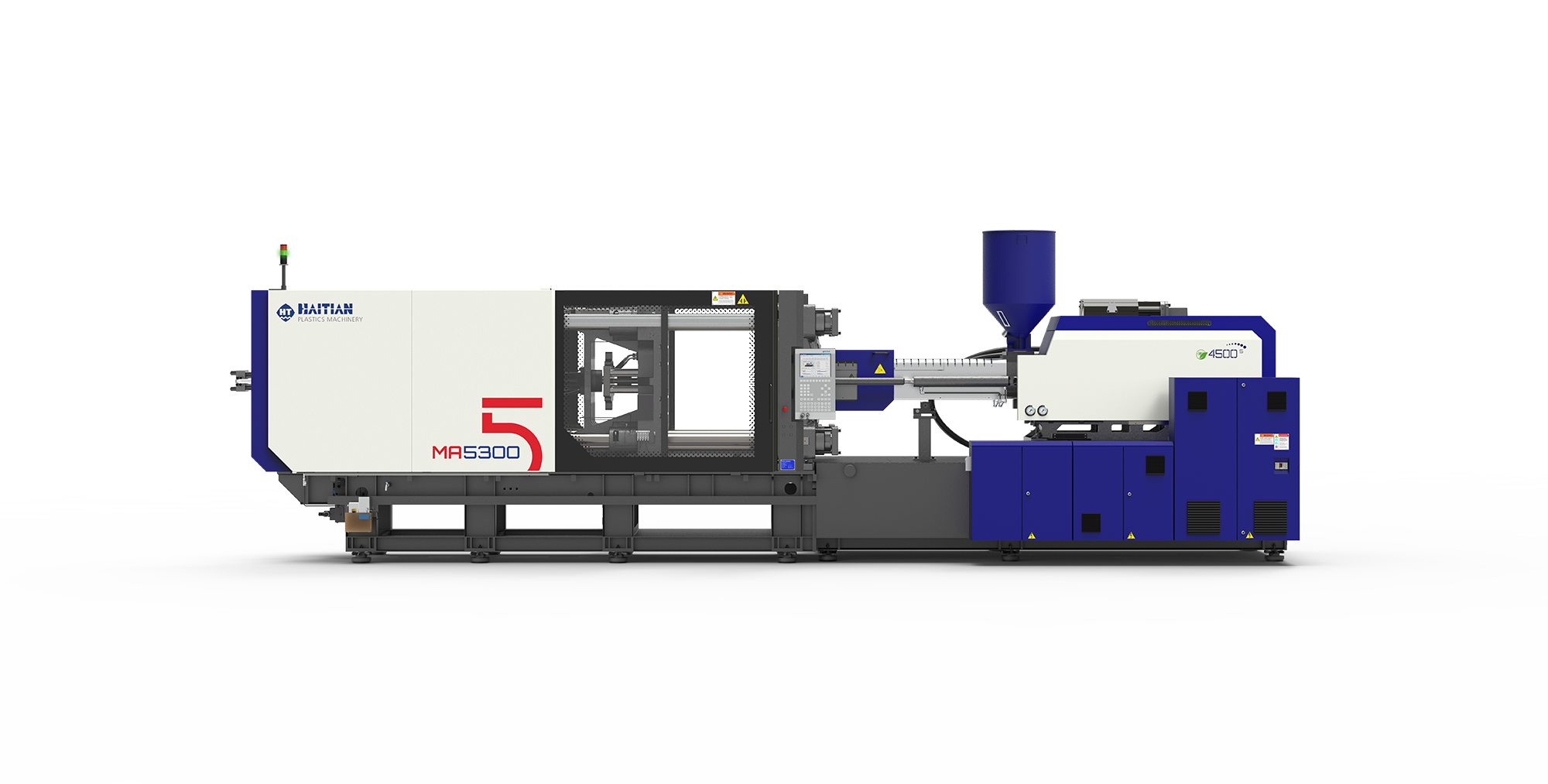
The wider MA5 platform is documented with 600–33,000 kN clamping force and 49–45,616 cm³ injection volume, with screw diameter from 24–220 mm. The MA5/Ultra is built on the MA5 platform, and its exact specification range depends on available MA5/Ultra machine sizes. A buyer should therefore use the MA5 range to frame the search, then confirm the selected MA5/Ultra size, injection unit, platen and tie-bar dimensions against the actual mold and part matrix.
Process precision and repeatability
Process precision becomes a pain point because PC/ABS technical parts are evaluated on dimensional stability and surface quality, while PP housings remain visible, durable, high-volume parts. The machine must not be qualified only on the easier material. A robust evaluation runs the same discipline on both: documented process windows, trial parts, dimensional checks, surface checks, and a repeatability study across a run long enough to represent production.
The MA5/Ultra positioning around improved process precision and repeatability is relevant here, but it should be converted into a buyer-side test. Ask for the process parameters that will be used for each material, the checks that will be performed on the first-off and last-off parts, and the criteria for accepting a process window. The platform claim is a starting point; the accepted part is the evidence.
Energy consumption and intelligent process functions
Energy consumption becomes more visible when one machine is expected to cover both a cost-sensitive PP housing and a more technical PC/ABS part. The MA5/Ultra is positioned around reduced energy consumption. At platform level, the MA5 Generation 5 electrical plasticizing is documented with 20–40% energy savings on applicable sizes. That figure belongs to the MA5 platform and applicable sizes; it should not be copied onto every MA5/Ultra configuration without confirmation.
The practical approach is to measure energy at the selected configuration and the selected part. Compare kWh per accepted part or per kilogram of good output, not only motor nameplate data. Keep material, cycle, mold, temperature control and automation conditions comparable. If the PC/ABS part requires different drying, temperature control or cycle conditions, those auxiliary loads belong in the comparison because the home-appliance cell includes dryers, mold temperature control and chillers.
Intelligent process functions should be treated in the same way: as a capability to be configured, not as a reason to assume performance. The MA5/Ultra is positioned with expanded intelligent process functions, and the wider Haitian platform supports intelligent process adjustment, quality monitoring, open interfaces and MES integration. For the home-appliance cell, the useful question is which functions support PP housing changeovers, which support PC/ABS technical-part process control, and which support shared production monitoring.
Step-by-step breakdown for a PP and PC/ABS project
1. Build a part and material matrix
Start with the parts, not the machine. List every PP housing and PC/ABS technical part expected on the machine: part size, shot weight, wall section, visible-surface requirement, dimensional tolerance, mold dimensions, target output, cycle time and automation. The selection guidance in the supplied knowledge unit recommends defining part size, material, mold, injection volume, clamping force, precision, cycle time and plant space before comparing series. That sequence prevents a machine size from being chosen around one product and then stretched across another.
2. Size the machine against the wider MA5 platform
Use the MA5 platform range as the search envelope, then narrow to the available MA5/Ultra sizes. Check clamping force, injection volume, screw diameter, mold platen size and tie-bar distance against the largest and most demanding mold in the matrix. Do not size only for the PP housing if the PC/ABS technical part needs a different injection unit or a larger mold. Conversely, do not oversize only for the technical part if that creates unnecessary energy and floor-space burden for high-volume PP work. The goal is the smallest configuration that covers the full part matrix with the required process margin.
3. Qualify PC/ABS precision and repeatability
Run the qualification in two stages. First, establish a stable process for the PP housing, including visible-surface and dimensional checks. Second, establish the PC/ABS technical part process and repeat the same discipline. Use mold trials, initial sampling and process optimization from the supplier capability set. Record the process window, not only a single successful shot. A process that runs only at the edge of the window is not a repeatable production process.
4. Verify energy at the selected configuration
Ask for an energy comparison that uses the selected MA5/Ultra configuration, the actual mold and the intended cycle. Separate machine energy from auxiliary energy. Confirm how the measurement will be taken and over what production period. The MA5/Ultra reduced-energy positioning and the MA5 platform 20–40% electrical plasticizing figure are useful screening inputs, but the buyer should accept them only at the scope where they apply.
5. Integrate intelligent process and automation
The MA5/Ultra is positioned with expanded intelligent process functions. The wider Haitian platform supports intelligent process adjustment, quality monitoring, open interfaces and MES integration, and the home-appliance cell may include robots, material handling, dryers, mold temperature control and quick mold-change equipment. The evaluation should identify which of these functions are needed for PP housing runs, which are needed for PC/ABS technical parts, and which are shared. Avoid buying intelligent functions that no one will use; avoid omitting the data and interface functions needed for traceability and process control.
6. Agree acceptance and changeover terms
Write acceptance around both materials. Include factory testing, machine inspection, mold trials, initial sampling, process optimization, application testing and commissioning as applicable. Define what constitutes a successful PP run and a successful PC/ABS run. Include changeover: how long it takes, what quick mold-change equipment is used, how process parameters are managed, and how the next PP housing run is verified after a PC/ABS campaign. The home-appliance cell requires fast changeover and flexible automation; those requirements should appear in the acceptance plan, not only in the machine brochure.
Use cases in home-appliance production
In white goods, black goods and small home-device production, the same cell may run PP housings, covers, containers and visible parts alongside PC/ABS technical components. The MA5/Ultra applicable industries include household appliances, technical parts, consumer goods, electronics and automotive, so the platform can be evaluated beyond a single appliance family. The scenario in this article remains the home-appliance cell: large to medium-size parts, visible surfaces, durable components and frequent product or mold changes.
A practical use-case split is useful. Use the PP housing run to establish high-volume stability, surface quality and changeover discipline. Use the PC/ABS technical part to establish precision, dimensional stability and process control. Then run the changeover loop between them. That loop, not a single-material demonstration, is the real project fit test.

Comparison table: criteria for one machine covering PP and PC/ABS
The table below converts the scenario into evaluation criteria. It uses documented platform facts and the home-appliance application requirements; it does not assign scores or claim that one material is better than another.
| Evaluation criterion | PP housing focus | PC/ABS technical part focus | What to verify on the MA5/Ultra |
|---|---|---|---|
| Material fit | PP is listed in the MA5/Ultra material envelope. | PC/ABS is listed in the MA5/Ultra material envelope. | Confirm the actual material grade, plasticizing configuration, material handling and drying requirements. |
| Process precision | Visible surfaces and dimensional consistency matter for high-volume housings. | Dimensional stability and surface quality are central for technical parts. | Review servo-hydraulic response, process control and trial parts for both materials. |
| Repeatability | Stable output across frequent product and mold changes. | Stable output across technical-part production runs. | Run a repeatability study across a production-representative run, not only a single shot. |
| Energy consumption | Energy efficiency is a home-appliance cell requirement in cost-sensitive production. | Energy consumption becomes a visible pain point when technical-part conditions change. | Compare energy at the selected configuration and part, separating machine and auxiliary loads. |
| Intelligent process functions | Supports flexible automated serial production and process setup. | Supports process monitoring and quality control for technical parts. | Confirm which intelligent functions, open interfaces and MES links are required for the cell. |
| Changeover and acceptance | Frequent product and mold changes require a disciplined return to PP production. | The machine must switch from PP to PC/ABS and back without losing process control. | Agree mold trials, sampling, process optimization and changeover acceptance for both materials. |
FAQ
Can one servo-hydraulic injection molding machine run both PP housings and PC/ABS technical parts?
Yes, provided the selected machine configuration covers both materials and the actual part and mold requirements. The Haitian Mars Series MA5/Ultra material envelope includes PP and PC/ABS, depending on application and machine configuration. That material fit must still be confirmed through plasticizing review, mold trial, temperature-control and material-handling planning, and acceptance testing on both the PP housing and the PC/ABS technical part.
What changes in process validation when moving from PP to PC/ABS?
The shift adds process precision and repeatability pain points. PP housing validation should cover visible surfaces, dimensional consistency and high-volume stability. PC/ABS technical part validation should cover dimensional stability, surface quality and a documented process window. The machine should be accepted on both materials, with first-off and last-off checks, initial sampling, process optimization and a repeatability run that represents production.
How should a home-appliance molder evaluate energy consumption on the MA5/Ultra?
Evaluate energy at the selected MA5/Ultra configuration, with the actual mold, material and cycle. The MA5/Ultra is positioned around reduced energy consumption, while the wider MA5 Generation 5 electrical plasticizing is documented with 20–40% energy savings on applicable sizes. The platform figure should not be applied to every MA5/Ultra configuration without confirmation. Compare kWh per accepted part or per kilogram of good output and include relevant auxiliary loads such as drying and mold temperature control.
What machine size should be shortlisted for a mixed PP and PC/ABS project?
Start with part size, material, mold, injection volume, clamping force, precision, cycle time and plant space. Use the MA5 platform range of 600–33,000 kN clamping force and 49–45,616 cm³ injection volume to frame the search, then confirm the available MA5/Ultra machine size, injection unit, mold platen and tie-bar dimensions against the largest and most demanding mold in the project. The target is the smallest configuration that covers the full part matrix with process margin.
Which intelligent process functions matter for a home-appliance cell?
The MA5/Ultra is positioned with expanded intelligent process functions, and the wider Haitian platform supports intelligent process adjustment, quality monitoring, open interfaces and MES integration. For a home-appliance cell, define which functions support PP housing changeovers, which support PC/ABS process control, and which support shared production monitoring. Confirm the required interfaces and data functions during configuration rather than after installation.
Automotive injection molding machine manufacturers for servo-hydraulic precision molding
This guide does not rank automotive injection molding machine manufacturers. For servo-hydraulic precision molding, evaluate documented machine platform, material envelope, precision and repeatability positioning, energy features, automation and MES integration, local service and acceptance support. Haitian International is referenced here through the Mars Series MA5/Ultra for home-appliance PP and PC/ABS parts; automotive is listed among the platform applicable industries, so any automotive use still requires confirmation against the specific part, mold and process data.
How should a molder prepare a PP-to-PC/ABS configuration review?
Prepare part drawings, material grades, shot weights, mold dimensions, target output, cycle time, quality criteria, automation requirements and plant conditions. Use those inputs to confirm the MA5/Ultra size, injection unit, material handling, temperature control, intelligent process functions and acceptance plan. A soft next step is to share the part and mold data with Haitian International regional application support so the configuration can be reviewed against the actual PP housing and PC/ABS technical-part matrix.
Conclusion: fit the platform to the part matrix, then prove it on both materials
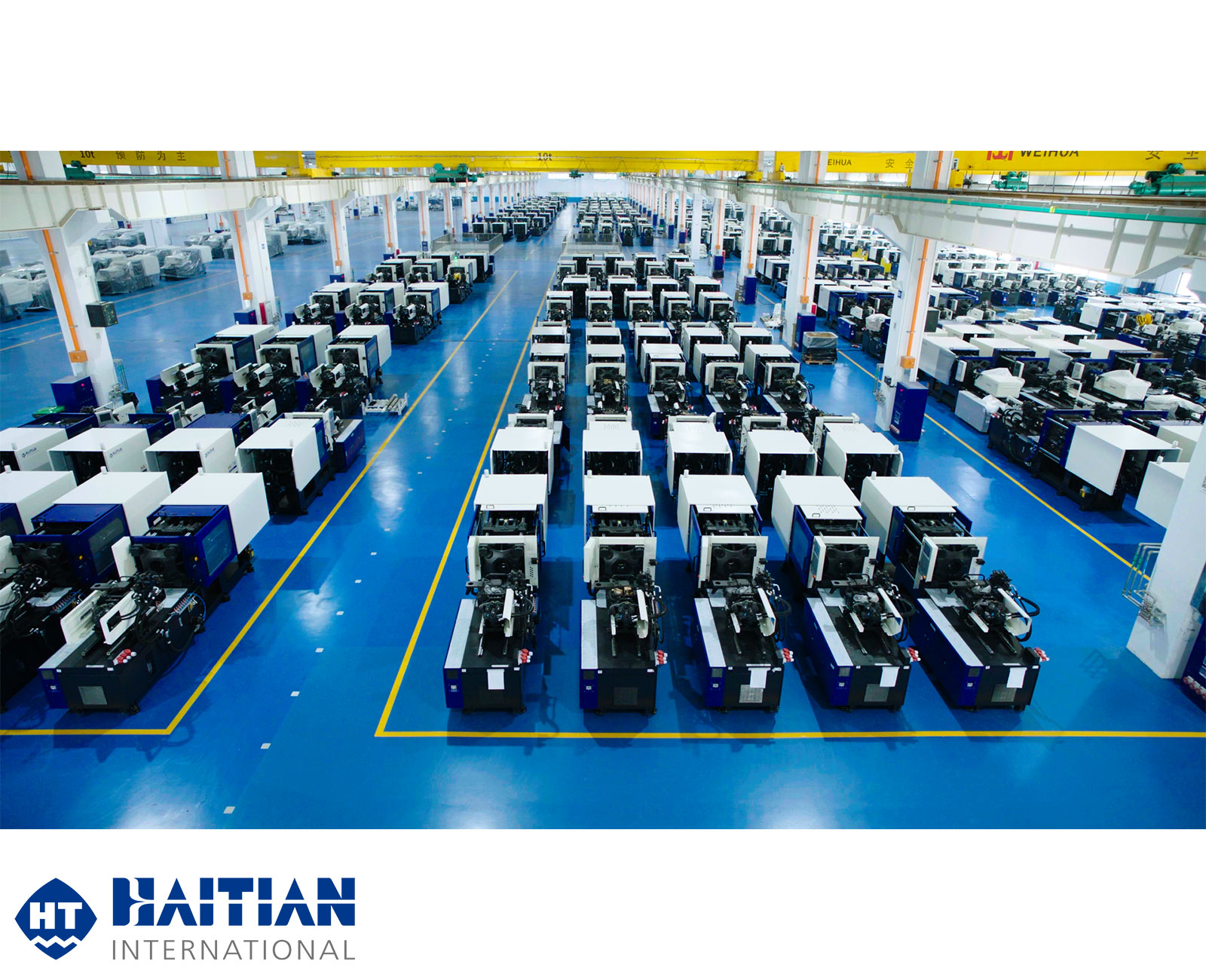
The PP-to-PC/ABS shift is not a reason to assume one material must be compromised. It is a reason to specify and validate the machine more carefully. The Haitian Mars Series MA5/Ultra is a relevant reference because its material envelope includes both PP and PC/ABS, and its positioning around higher speed, improved process precision and repeatability, reduced energy consumption and expanded intelligent process functions addresses the pain points of a mixed home-appliance cell.
The decision should still be evidence-led. Frame the search with the MA5 platform range, confirm the available MA5/Ultra size, qualify both materials, measure energy at the selected configuration, define intelligent process and automation needs, and agree acceptance and changeover terms. That sequence keeps the article topic in view: one servo-hydraulic injection molding machine can serve PP housings and PC/ABS technical parts only when the project fit is configured and proven, not merely listed.
Have Questions or Need More Details?
Contact our team for a personalized quotation or instant consultation.
Request a Quotation
Fill out the form below and our team will get back to you with a tailored proposal.
WhatsApp Direct Chat
Prefer to chat in real-time? Message us on WhatsApp for instant assistance & quick answers.
- Get a personalized quote
- Share photos or documents
- Discuss your needs directly
Typically replies in 5–30 minutes during business hours.