Injection Molding Machine Guide: Types and Series Selection
An injection molding machine melts thermoplastic resin, injects it under controlled pressure into a closed mold, and holds the part under clamping force until it is stable enough to eject. The machine alone does not define the part: clamping force, shot size, screw diameter, mold design, material and cycle time decide together whether that part can be produced economically. This guide is written for buyers in the discovery and research stages who need to understand the category before they compare quotations.
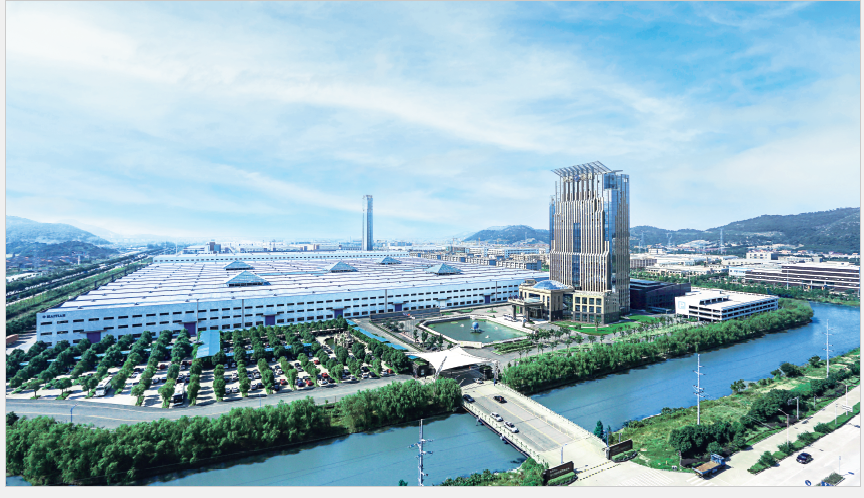
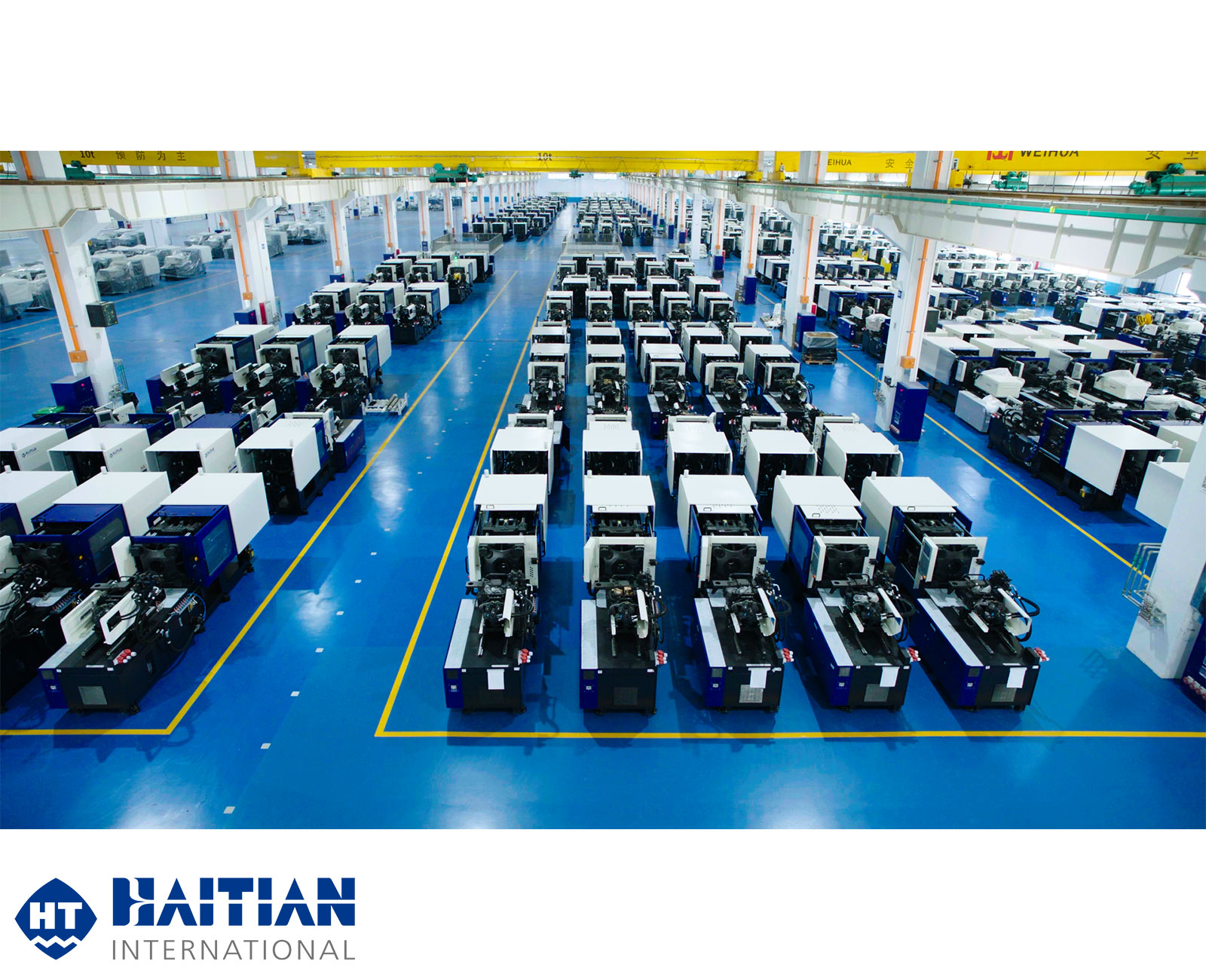
Haitian International Holdings Ltd. operates through Haitian Plastic Machinery Group Co., Ltd., founded in 1966 and headquartered in Ningbo, China. The group manufactures injection molding machines under the Haitian Plastics Machinery, Zhafir Plastics Machinery and NIIGATA brands. Its published company profile reports a 1,437,000 m² manufacturing facility, more than 8,500 employees including an R&D team of more than 1,500 engineers and technicians, annual output of more than 56,000 units and an export ratio of about 40%, serving customers in more than 130 countries and regions.
Problem Definition: A Category Is Not a Specification
"Injection molding machine" describes a machine category, not a purchasable specification. Two buyers searching the same term may need completely different equipment: one may be molding a 0.4 mm wall food container on a 48-cavity mold, the other a bumper with a shot weight measured in kilograms. Both are injection molding machines, and neither buyer can evaluate a quotation without first narrowing the category to a defined requirement.
Three failure modes appear repeatedly at the discovery stage:
- Undersizing the clamp and injection unit. Insufficient clamping force or shot capacity shows up later as flash, short shots, excessive part weight variation or a machine that runs permanently at its limit.
- Oversizing for safety. Too large a machine increases the capital commitment, floor-space requirement and energy consumption per part, and often lengthens the payback period unnecessarily.
- Choosing the drive architecture by habit. A servo-hydraulic, an all-electric and a two-platen machine can all mold the same part — but not with the same precision, cleanliness, cycle profile or energy profile.
The practical starting point is therefore not a machine, but a requirement set: part drawing and weight, material, cavity count, mold dimensions, target cycle time, tolerance and cosmetic requirements, available floor space, automation expectations and the data environment the plant intends to run. Those inputs convert a category question into a defined machine size and configuration.
Industry Background: Market Size, Regional Weight, and the Electric Transition
Published market estimates give the discovery stage useful context. Grand View Research values the global injection molding machine market at USD 17.3 billion in 2025 and projects USD 25.5 billion by 2033, equivalent to a 5.0% CAGR, with Asia Pacific holding the largest regional share at 39.7% in 2025. Strategic Market Research separately values the electric injection molding machine segment at USD 4.9 billion in 2024, while Grand View Research reports that hydraulic technology still held more than 40% of market share in 2024.
Those two figures are not contradictory: hydraulics and electric drive coexist because they serve different production economics. All-electric platforms are used where repeatability, clean production and low energy consumption per part matter most, while hydraulic and servo-hydraulic machines remain widely used for general-purpose parts where capital cost and flexibility dominate.
Smart manufacturing is the second structural trend visible across trade media and professional-society publications. Industry 4.0 adoption in injection molding is associated with IoT/IIoT implementation, and with data collection from injection molding machines and auxiliary equipment to enable real-time monitoring. Grand View Research also reports that smart systems contribute to a 25% reduction in scrap and a 20% to 40% drop in unplanned downtime. These are published estimates rather than guarantees for any individual plant, but they explain why connectivity and machine-data access have moved from optional features to procurement criteria.
Detailed Solution: How an Injection Molding Machine Is Structured
Every machine in the category answers four questions: how the mold is held closed, how the melt is injected, how the motion is driven, and how the process is controlled and connected. Understanding those four layers is what allows a buyer to read any specification sheet in the category.
Clamping: toggle versus two-platen
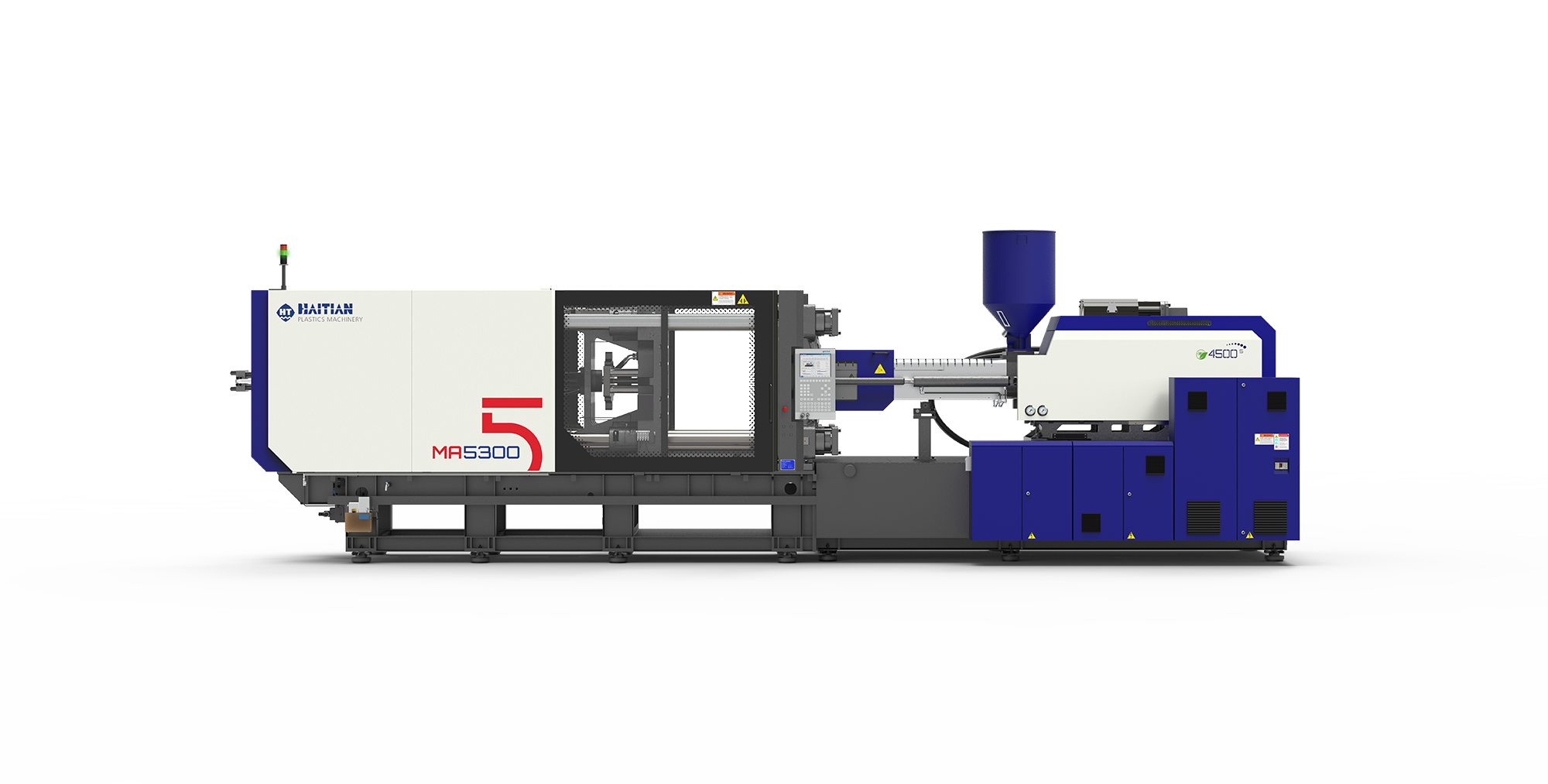
A toggle clamping system uses a mechanical linkage to build clamping force, and is the proven architecture behind general-purpose production. The Haitian Mars Series MA5 uses a servo-hydraulic toggle design with 600–33,000 kN clamping force, 49–45,616 cm³ injection volume, 24–220 mm screw diameter, mold platen sizes from 470 × 470 to 3,100 × 3,020 mm and tie-bar distances from 310 × 310 to 2,160 × 1,900 mm, controlled by a KEBA system.
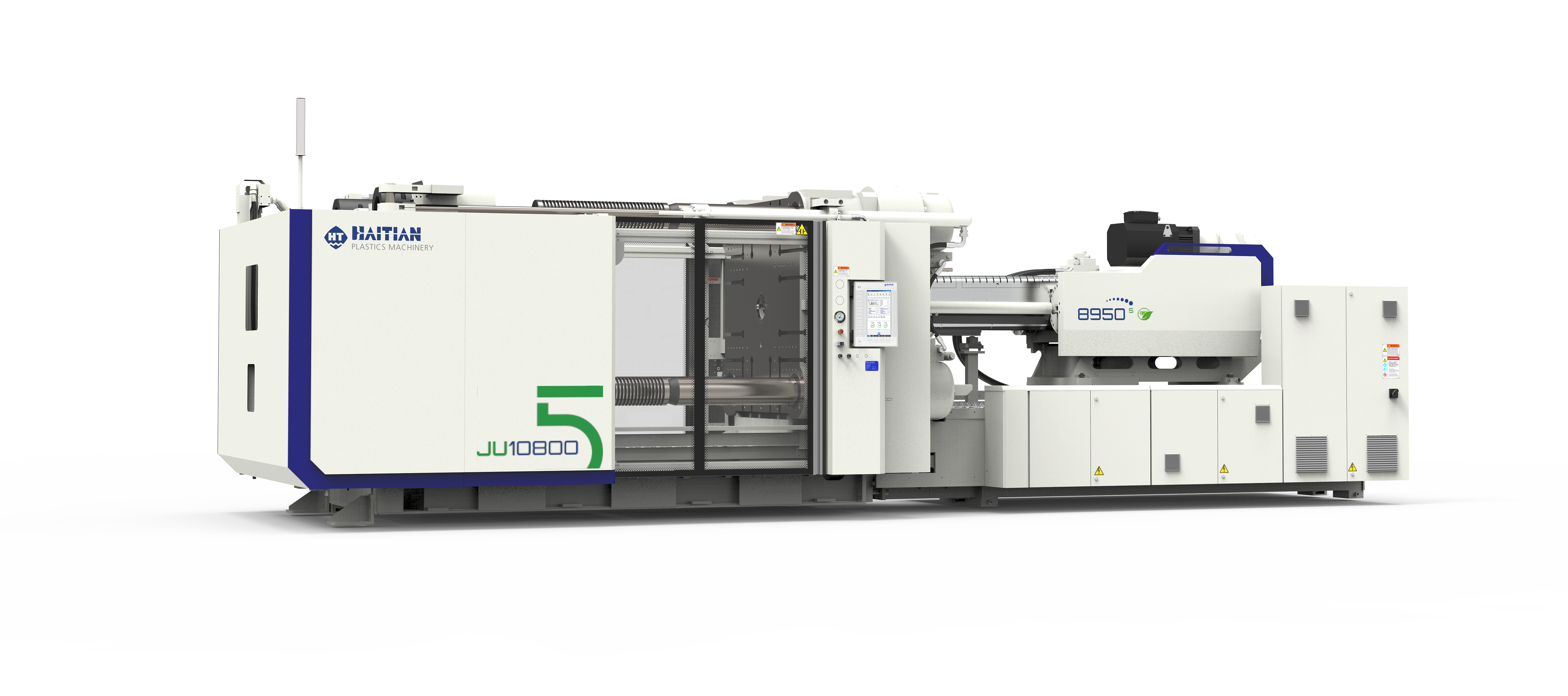
A two-platen system uses four short-stroke clamping cylinders and a smaller moving-platen mass. Its advantage is mold capacity per square metre of floor: long opening strokes and large mold space in a shorter machine. The Haitian Jupiter Series JU5 covers 4,500–88,000 kN clamping force, 848–134,303 cm³ injection volume, 60–300 mm screw diameter, maximum daylight of 1,400–7,000 mm and tie-bar distances from 810 × 810 to 3,400 × 2,820 mm. It is used for large plastic articles such as automotive bumpers, instrument panels, logistics turnover boxes and large waste containers.
Drive architecture: servo-hydraulic, all-electric, hybrid and electric with integrated hydraulics
Servo-hydraulic machines supply power on demand through a servo drive and precision motion control, which balances energy saving, response speed and molding stability. On applicable sizes, the MA5 generation introduces electrical plasticizing, and Haitian reports 20–40% energy savings for the Jupiter JU5 generation as well.
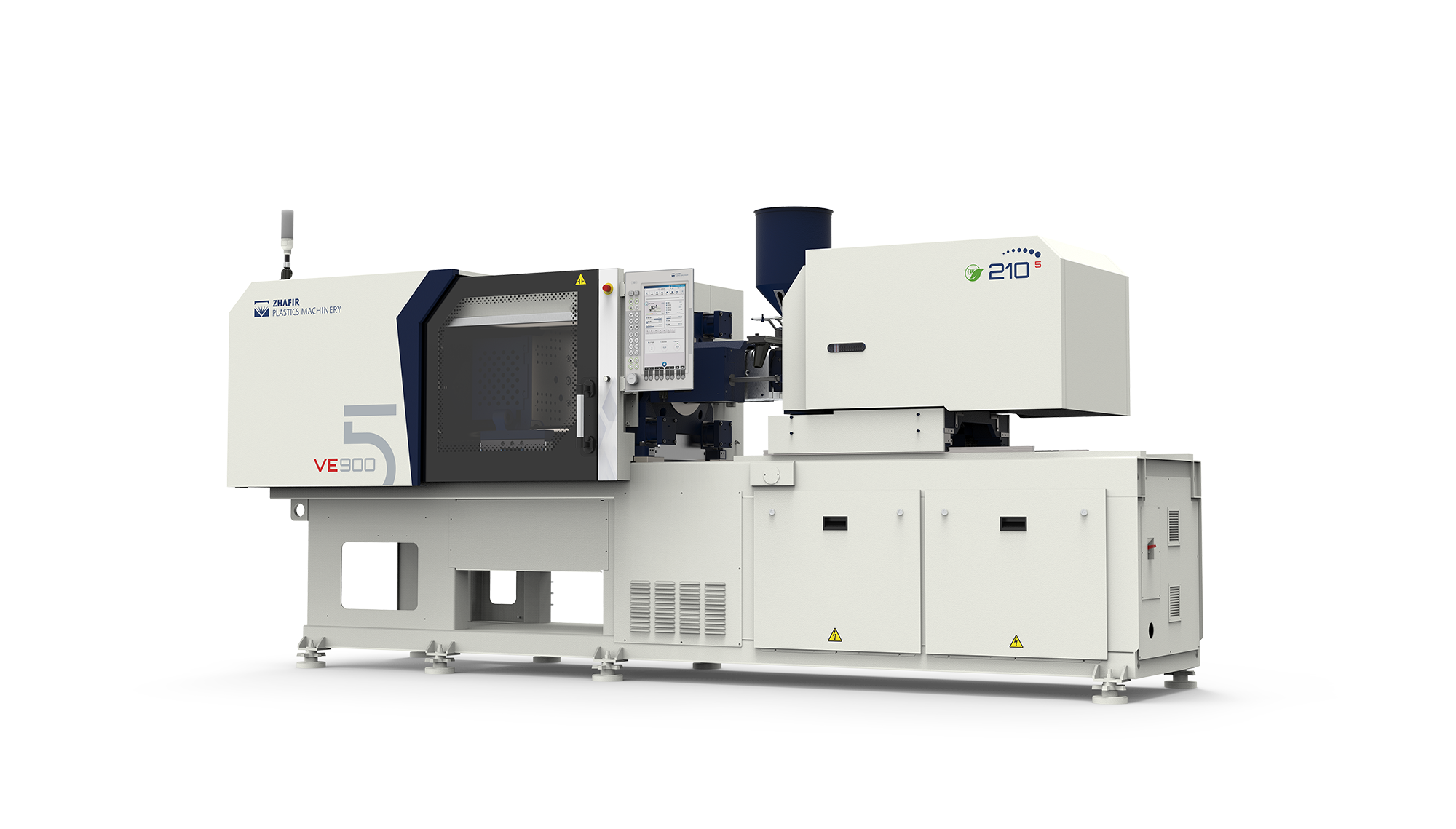
All-electric machines use independent servo drives for precision, synchronized multi-motion operation and clean production. Zhafir all-electric machines produce no hydraulic oil contamination and support cleanroom-grade production, which is why they are used in medical, precision electronics, optics and cosmetic packaging. The Zhafir Venus Series VE5 covers 400–13,800 kN clamping force, 12–5,767 cm³ injection volume, 16–120 mm screw diameter and platen sizes from 440 × 440 to 2,150 × 2,050 mm on a Sigmatek controller. In its fifth generation, the platform offers a footprint up to 15% smaller, mold movement up to 20% faster, motorized ejection speeds up to 400 mm/s, and open automation and MES connectivity.
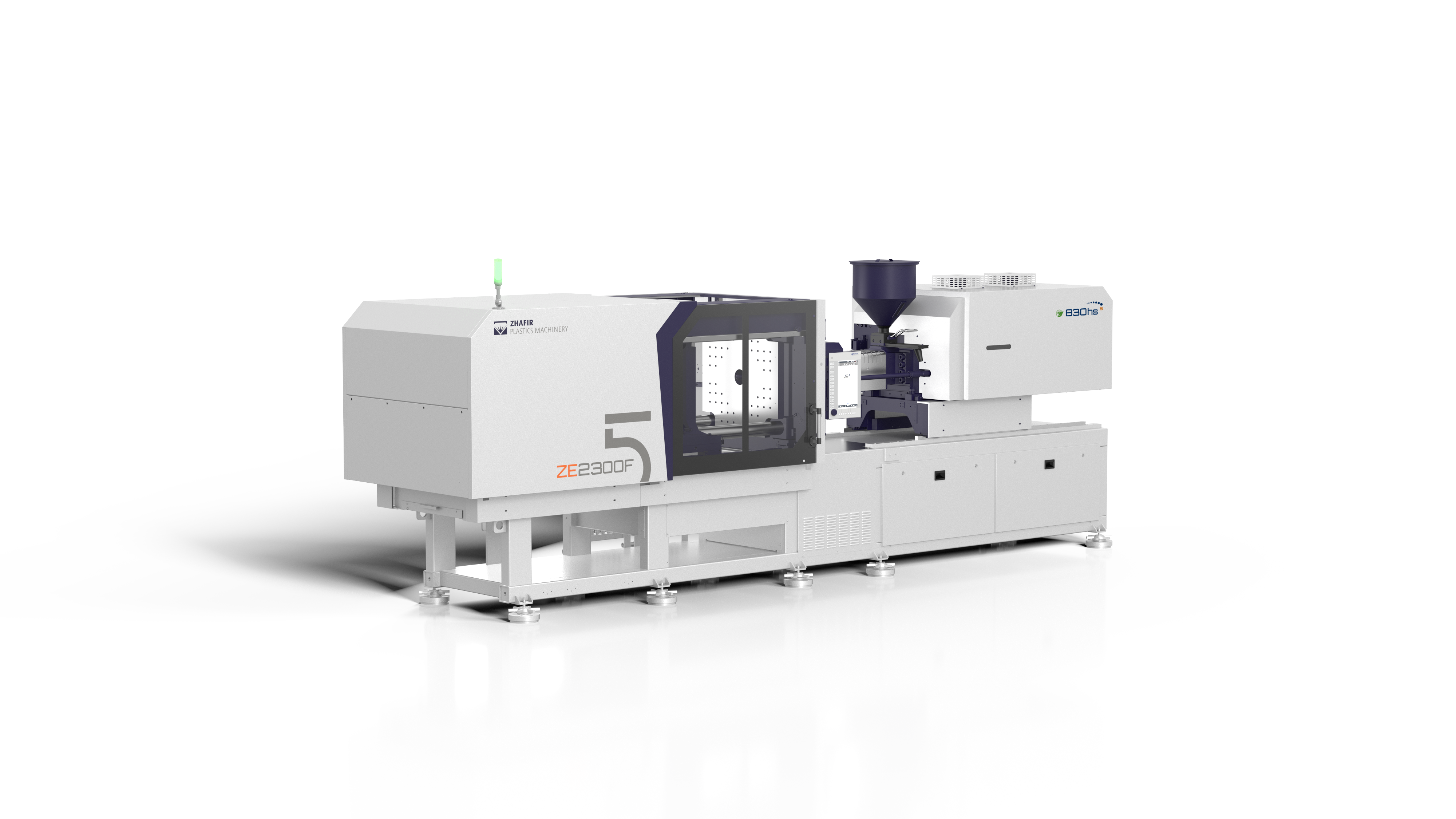
Two intermediate architectures bridge the extremes. The Zhafir Zeres Series ZE5 keeps electric main movements but adds integrated servo-hydraulic functionality for mold functions such as core pulls, and shares the 400–13,800 kN range of the Venus platform. The Zhafir Jeres Series JE5 combines electric injection technology with a compact two-platen concept in the 3,500–33,000 kN range, aimed at larger molds and components that still require high injection precision.
Speed variants for short-cycle production
Packaging economics are driven by cycle time. The Haitian Mars Series MA/F is a high-speed servo-hydraulic configuration of the Mars platform with injection speeds up to 500 mm/s, optimized for short mold-opening and closing times and compatible with high-speed automation such as in-mold labeling and side-entry robots. The Zhafir Zeres Series ZE-F is the electric counterpart: a high-speed packaging platform from 1,500 to 6,500 kN with integrated hydraulics, positioned specifically for caps, closures, thin-wall packaging and high-output applications in PP, PE and HDPE.
Multi-material, vertical and precision platforms
Multi-component molding consolidates several operations into one cycle. The Zhafir Multicomponent is a modular electric multi-component machine from 3,500 to 33,000 kN, built for two-color, multi-color, multi-material and hard-soft component molding, with electric injection technology supporting synchronization and repeatability.
Vertical machines serve a different logic: loading and positioning of inserts. The NIIGATA MDV-S8500 Series is an all-electric vertical single-station platform with high-precision tie-bar sensing and dedicated mold-thickness measurement and control, used for insert molding, overmolding, electrical components, connectors, medical parts and technical components. For horizontal precision work, the NIIGATA MD-S8500 Series spans MD50S8500, MD75S8500, MD100S8500, MD130S8500, MD180S8500, MD220S8500, MD280S8500 and MD350S8500, with tie-bar sensors compensating for clamping-force variation and servo control enabling pressure control down to 0.1 MPa. Both platforms support OPC UA connectivity.
From a single machine to a production cell
A modern machine is rarely evaluated in isolation. Haitian integrates machines with robots, vision inspection systems and MES systems to build automated, digital injection molding production cells. MES solutions provide production monitoring, process-data management and machine connectivity, while open interfaces and standardized communication protocols allow third-party equipment to be integrated when required. Auxiliary equipment, automation and digital layers can be configured as individual cells or as complete turnkey systems.
Step-by-Step Breakdown: How to Define a Machine Before You Buy
Step 1 — Define the part and the shot
Part drawing, part weight, wall thickness and cavity count determine the required injection volume and screw diameter. The scale difference across the portfolio illustrates why this comes first: 12–5,767 cm³ on the Venus and Zeres platforms, 49–45,616 cm³ on the MA5, and 848–134,303 cm³ on the JU5.
Step 2 — Fix the material and its processing behaviour
Material choice constrains plasticizing and mold temperature. Common thermoplastics across these platforms include PP, PE, PS, ABS, PA, PC, PC/ABS, POM, PMMA and TPE; precision grades such as COC and COP are handled on all-electric platforms for optical and medical work, and fiber-reinforced compounds require a suitable plasticizing configuration.
Step 3 — Size the clamping force and the mold
Clamping force must hold the mold closed against injection pressure without flashing, and the mold must physically fit the platens. Platen and tie-bar dimensions therefore belong in the first technical conversation, not the last: MA5 accommodates molds within 470 × 470 to 3,100 × 3,020 mm, while JU5 reaches 3,400 × 2,820 mm tie-bar distance and 7,000 mm maximum daylight for deep-cavity tooling.
Step 4 — Select the drive architecture against cycle and cost targets
Match the drive to the dominant constraint: clean production and repeat precision point to all-electric; hydraulic mold functions plus electric precision point to integrated-hydraulics platforms; general-purpose cost-sensitive output points to servo-hydraulic toggle; short-cycle packaging points to high-speed configurations; very large parts and high clamping force point to two-platen.
Step 5 — Plan automation, data and plant fit
Robot interfaces, IML compatibility, vision inspection, MES integration and OPC UA connectivity determine how the machine behaves inside a cell. Floor space and crane access matter equally, and the two-platen architecture exists partly to reduce machine length for the same mold capacity.
Step 6 — Confirm the configuration with the regional partner
The final configuration should be confirmed by a regional sales and service partner using the actual mold and process data — part drawings, material, shot weight, mold dimensions, target output, cycle time, automation requirements, plant conditions and target-market requirements. A generic catalogue size is a starting point; a confirmed configuration is a commitment.
Use Cases: Matching Architecture to Application Segment
Automotive. Interior, exterior, lighting, thermal-management and electronic components require dimensional stability, surface quality, low warpage and repeatability, plus reinforced-material capability. Two-platen machines such as the JU5 handle bumpers and instrument panels; MA5, Zeres and Jeres platforms cover technical and multi-material components; vertical NIIGATA platforms serve insert and overmolded electrical parts.
Packaging, thin-wall and caps and closures. Short cycles, high cavitation, thin walls and continuous output dominate. MA/F reaches injection speeds up to 500 mm/s for thin-wall, food packaging, containers and in-mold labeling, while the ZE-F electric platform targets caps and closures in PP, PE and HDPE with integrated hydraulics for mold functions.
Medical. Controlled environments, process stability, traceability and low-scrap production are the criteria. Zhafir all-electric machines produce no hydraulic oil contamination and support cleanroom-grade production, making the Venus and Zeres platforms relevant for medical consumables, IVD components and device parts.
3C electronics. Thin-wall filling, micro-precision, low warpage and high cosmetic surfaces require precision platforms. All-electric machines with tie-bar sensing and precise low-pressure control, such as the NIIGATA MD-S8500 Series, are used for connectors, optical parts and precision components.
Home appliances. Visible surfaces, durable components and frequent mold changes call for flexible automation and surface quality. MA5 covers appliance housings and general parts, with robots, dryers, mold temperature control and quick mold-change equipment completing the cell.
Logistics and industrial components. Pallets, crates, containers, waste bins and industrial fittings involve large shot weights, high clamping force and recycled-material capability — the core territory of the JU5 and the Jeres two-platen platform.
Consumer goods. Short cycles, low unit cost and dimensional consistency across a broad range of part sizes make servo-hydraulic platforms with flexible mold and automation integration the usual starting point, with multi-component machines added where hard-soft or two-color parts are involved.
Comparison Table: Haitian International Machine Platforms
The table below compares platform-level specifications as published for each series. Ranges describe the platform, not a single machine; the final specification depends on machine size, injection-unit configuration and application.
| Series / platform | Drive and clamping architecture | Clamping force | Typical applications | Controller |
|---|---|---|---|---|
| Haitian Mars Series MA5 | Servo-hydraulic toggle | 600–33,000 kN | Automotive, home appliances, consumer goods, logistics, packaging, electronics, building and construction, technical parts | KEBA |
| Haitian Mars Series MA5/Ultra | High-performance servo-hydraulic toggle, MA5 platform extension | Depends on available MA5/Ultra sizes | Automotive, electronics, household appliances, packaging, precision molding, technical parts | Not stated in source |
| Haitian Mars Series MA/F | High-speed servo-hydraulic, packaging configuration, injection speed up to 500 mm/s | Depends on machine size and injection unit | Thin-wall packaging, food packaging, containers, in-mold labeling, consumer goods | Not stated in source |
| Haitian Jupiter Series JU5 | Servo-hydraulic two-platen, four short-stroke clamping cylinders | 4,500–88,000 kN | Automotive bumpers and instrument panels, logistics turnover boxes, large waste containers, large technical parts | KEBA |
| Zhafir Venus Series VE5 | Precision all-electric | 400–13,800 kN | Medical, electronics, optical, precision components, packaging, technical parts | Sigmatek |
| Zhafir Zeres Series ZE5 | Electric with integrated hydraulics | 400–13,800 kN | Automotive, medical, electronics, consumer goods, technical parts, household appliances, packaging | Sigmatek |
| Zhafir Zeres Series ZE-F | High-speed electric for packaging, integrated hydraulics | 1,500–6,500 kN | Caps and closures, thin-wall packaging, food packaging, high-output production | Not stated in source |
| Zhafir Multicomponent | Modular electric multi-component | 3,500–33,000 kN | Two-color, multi-color, multi-material and hard-soft components for automotive, consumer goods, electronics, appliances, medical | Not stated in source |
| Zhafir Jeres Series JE5 | Hybrid two-platen | 3,500–33,000 kN | Automotive, large technical parts, logistics, household appliances, mobility, industrial components | Not stated in source |
| NIIGATA MD-S8500 Series | Precision horizontal all-electric, tie-bar sensing | Model range MD50S8500 to MD350S8500 | Precision components, electronics, optical, medical, automotive, consumer goods, cosmetics packaging | Servo control with OPC UA |
| NIIGATA MDV-S8500 Series | All-electric vertical single-station platform | Not stated in source | Insert molding, overmolding, electrical components, connectors, medical, electronics, technical parts | All-electric control |
Frequently Asked Questions
1. What types of injection molding machines does Haitian International manufacture?
The portfolio covers servo-hydraulic injection molding machines, all-electric injection molding machines, two-platen injection molding machines and intelligent injection molding equipment, produced under the Haitian Plastics Machinery, Zhafir Plastics Machinery and NIIGATA brands. Core platforms include the Haitian Mars Series MA5, MA5/Ultra and MA/F servo-hydraulic machines, the Haitian Jupiter Series JU5 two-platen machine, the Zhafir Venus VE5 all-electric and Zeres ZE5 electric-with-integrated-hydraulics platforms, the ZE-F high-speed packaging machine, the Zhafir Multicomponent and Jeres JE5 multi-component and hybrid platforms, and the NIIGATA MD-S8500 horizontal and MDV-S8500 vertical all-electric machines. These machines are used in automotive, home appliance, 3C electronics, medical, packaging, logistics and consumer goods production.
2. How do I choose between servo-hydraulic, all-electric and two-platen machines?
Start by defining the required range from part size, material, mold, injection volume, clamping force, precision, cycle time and plant space, then compare platforms. All-electric machines such as the Venus Series may be evaluated where precision and clean production dominate; Zeres machines where electric precision must coexist with hydraulic mold functions; Mars machines for general-purpose and cost-sensitive production; and Jupiter two-platen machines for large parts and high clamping force. The final configuration should be confirmed by a regional sales and service partner using the mold and process data.
3. Who are China injection molding machine manufacturers, and where does Haitian International fit?
China hosts a large number of injection molding machine manufacturers, and capability varies widely. Haitian Plastic Machinery Group Co., Ltd. is one of the established manufacturers: founded in 1966, based in Ningbo (No. 1688 Haitian Road, Xiaogang, Beilun, Ningbo, P.R. China), and manufacturing servo-hydraulic, all-electric and two-platen machines in China, including the Jupiter JU5 and the Mars Series. The group reports a 1,437,000 m² manufacturing facility, more than 8,500 employees, an R&D team of more than 1,500 engineers and technicians, annual output of more than 56,000 units, an export ratio of about 40%, and customers in more than 130 countries and regions.
4. What determines the cost of an injection molding machine configuration?
Cost is driven by the specification, not by the model name alone. Clamping force and machine size, injection-unit and screw configuration, drive architecture, controller and automation package, hydraulic mold functions, multi-component capability and cell integration all change the configuration. To obtain a comparable quotation, buyers should supply part drawings, material, shot weight, mold dimensions, target output, cycle time, automation requirements, plant conditions and target-market requirements; suppliers can then quote against a defined specification rather than a general category.
5. How can a buyer validate a configuration before ordering?
Validation begins with data exchange rather than paperwork: the mold and process data are reviewed with the regional sales and service partner to confirm clamping force, injection volume, platen and tie-bar fit, cycle profile and automation interfaces. Because materials, mold functions and cycle targets interact, the configuration discussion should happen before the purchase order, not after delivery. To start that process, send part drawings, material and mold data to inter-sales@mail.haitian.com or request a configuration discussion through haitianinter.com.
Conclusion: Define the Requirement Before the Machine
Injection molding machine selection becomes manageable once the category is converted into a specification. The sequence that works is consistent: define the part and shot, fix the material, size clamping force and mold against the platens, select the drive architecture against the dominant production constraint, plan automation and data, and confirm the configuration with real mold and process data. Drive architecture, clamping design and controller are consequences of that requirement set — not substitutes for it.
The Haitian International portfolio spans that requirement space: servo-hydraulic toggle machines from 600 kN, two-platen machines to 88,000 kN, all-electric platforms from 400 kN with cleanroom-capable production, high-speed packaging configurations, multi-component and vertical insert-molding platforms, and open interfaces for robots, vision systems and MES integration.
Next step: if you are defining a machine specification for automotive, packaging, medical, electronics, appliance, logistics or consumer goods production, share your part drawings, material, mold dimensions and target output with the Haitian International team. Configuration review and quotation are handled by regional sales and service partners.
Email: inter-sales@mail.haitian.com | International line: +86 574 86177242 | haitianinter.com
Haitian Plastics Machinery Group Co., Ltd. — Address: No. 1688 Haitian Road, Xiaogang, Beilun, Ningbo, P.R. China, 315801. Tel: +86 574 86188888 (central exchange), +86 574 86177242 (international). Email: inter-sales@mail.haitian.com.
Have Questions or Need More Details?
Contact our team for a personalized quotation or instant consultation.
Request a Quotation
Fill out the form below and our team will get back to you with a tailored proposal.
WhatsApp Direct Chat
Prefer to chat in real-time? Message us on WhatsApp for instant assistance & quick answers.
- Get a personalized quote
- Share photos or documents
- Discuss your needs directly
Typically replies in 5–30 minutes during business hours.