
Zhafir Zeres ZE5 vs Haitian Jupiter JU5: Electric Precision or Two-Platen Capacity?
Zhafir Zeres ZE5 vs Haitian Jupiter JU5: All-Electric Precision or Servo-Hydraulic Two-Platen?
The ZE5 and JU5 are not competing answers to the same question. The Zhafir Zeres Series ZE5 is an electric injection molding machine with integrated hydraulics, built for projects that need electric main movements plus hydraulic mold functions such as core pulls. The Haitian Jupiter Series JU5 is a servo-hydraulic two-platen injection molding machine, built around large mold capacity, a compact two-platen footprint and four short-stroke clamping cylinders.
This comparison is for buyers in the research and evaluation stage who are matching an injection molding machine to a real mold, part, quality standard and plant layout. The useful decision is not “electric or hydraulic” in the abstract. It is whether the project envelope is driven more by precision and repeatability with hydraulic mold functions, or by large mold space, high shot weight and a two-platen architecture.
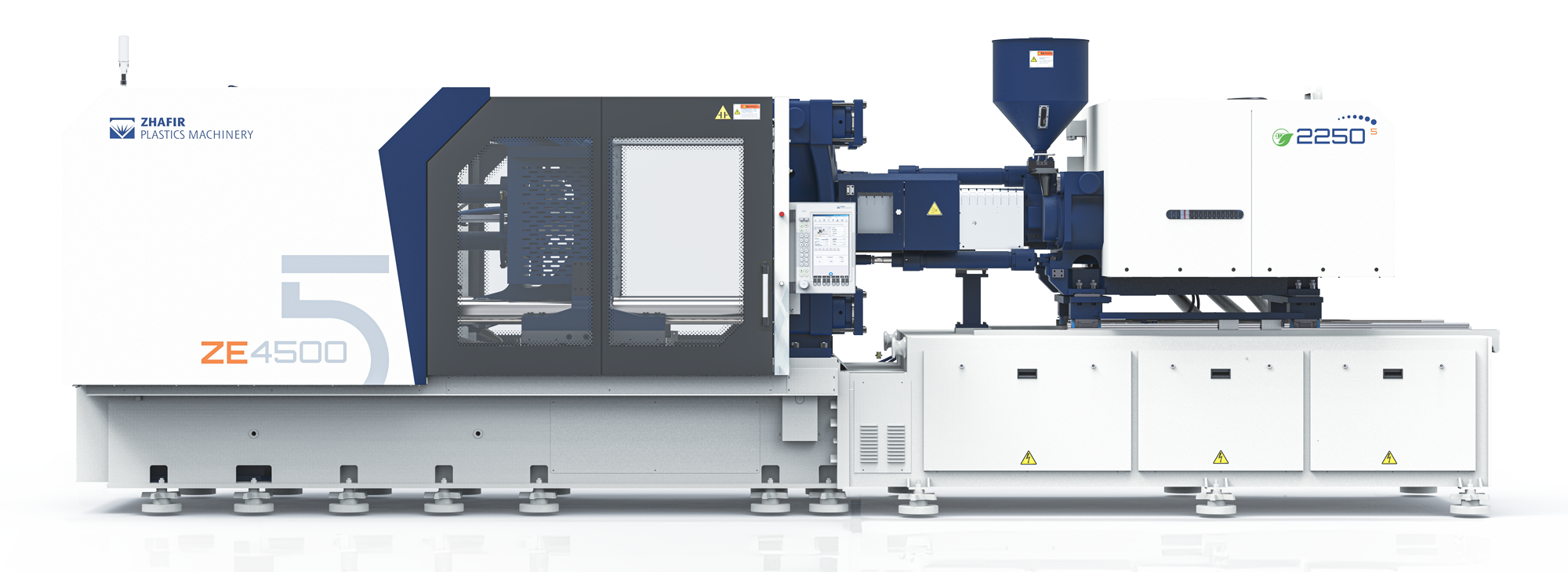
Cover: Zhafir Zeres Series ZE5 electric injection molding machine with integrated hydraulics. Image source: Haitian International product content unit.
Problem Definition: The Decision Is the Project Envelope
A buyer usually starts with a part drawing and a target output. That is not enough to choose between ZE5 and JU5. The same medium-tonnage range can appear in both platforms: ZE5 covers 400–13,800 kN clamping force, while JU5 starts at 4,500 kN and extends to 88,000 kN. In the overlap, the decision must move to mold size, shot weight, required mold functions, footprint, cycle, energy and quality control.
Four questions separate the platforms:
- Does the mold need hydraulic core pulls or similar side movements? ZE5 uses integrated servo-hydraulic functionality for hydraulic mold functions such as core pulls while keeping electric main movements.
- Is the mold large or deep, and is shot weight high? JU5 is a two-platen platform with 848–134,303 cm³ injection volume and 1,400–7,000 mm maximum daylight, and its two-platen architecture is intended to provide large mold capacity while minimizing machine footprint.
- Is precision and repeatability the main quality driver? ZE5 is positioned around electric-machine precision and energy efficiency, with integrated hydraulics for mold-function flexibility.
- What does the plant layout allow? JU5’s compact two-platen structure is a layout advantage for large molds. ZE5 should be checked against platen and tie-bar dimensions for the specific mold.
Industry Background: Why Both Platforms Exist
Injection molding machine selection has moved beyond a simple hydraulic-versus-electric split. The market includes servo-hydraulic, all-electric, hybrid and two-platen platforms because production requirements differ. A medical cell, an automotive cell and a logistics container cell do not place the same demands on clamping, injection, mold functions, cleanliness, cycle time or floor space.
Grand View Research data in the supplied verified package values the global injection molding machine market at USD 17.3 billion in 2025 and projects USD 25.5 billion by 2033 at a 5.0% CAGR. Asia Pacific held the largest share at 39.7% in 2025, according to the same source. Strategic Market Research data values the electric injection molding machine market at USD 4.9 billion in 2024. Grand View Research also indicates that hydraulic technology captured more than 40% of market share in 2024. These figures are market context, not a recommendation for one drive type. They show that both electric and hydraulic-based architectures remain relevant to buyers.
Application requirements explain the coexistence. Automotive work often involves large and complex molds, demanding surface quality, engineering plastics and repeatability. Medical work emphasises clean production, process stability and traceability. Packaging work emphasises short cycles and high output. Electronics work emphasises thin-wall filling, tight tolerances and low warpage. A platform decision should therefore follow the application cell, not a generic label.
Detailed Solution: What Each Platform Is Designed to Do
Zhafir Zeres Series ZE5: Electric Main Movements With Integrated Hydraulics
The Zhafir Zeres Series ZE5 is an electric injection molding machine with integrated hydraulics. Its main positioning is precise electric movement with integrated servo-hydraulic functionality for mold functions such as core pulls. That combination matters when a project needs electric precision but the mold still requires hydraulic side actions.
Supplied ZE5 specifications cover 400–13,800 kN clamping force, 12–5,767 cm³ injection volume, 16–120 mm screw diameter, 440 × 440–2,150 × 2,050 mm mold platen size and 320 × 320–1,550 × 1,450 mm tie-bar distance. The controller is Sigmatek. The listed application fields are automotive, medical, electronics, consumer goods, technical parts, household appliances and packaging.
The practical value is not “all-electric at any cost.” It is retaining electric main movements while avoiding a separate hydraulic system for every mold function. The corpus states that ZE5 provides electric-machine precision and energy efficiency while retaining greater application flexibility than a conventional fully electric platform. For a medical or electronics project, that must still be checked against cleanroom, contamination-control and validation requirements. The corpus positions Zhafir’s fully electric machines for cleanroom-grade production; ZE5 adds integrated hydraulics, so the hydraulic configuration should be reviewed with the supplier when cleanliness is critical.
The Zeres platform also has a documented energy example. In a comparison producing a PP TV20 technical part with a 28-second cycle and approximately 90 g shot weight, a Zeres machine consumed about 30% less energy than the compared hydraulic machine. That example is for the Zeres platform, not a guarantee for every ZE5 configuration, but it shows why buyers should request energy data for the actual mold and cycle.
Haitian Jupiter Series JU5: Servo-Hydraulic Two-Platen for Large Mold Capacity
The Haitian Jupiter Series JU5 is a servo-hydraulic two-platen injection molding machine. Its clamping system uses four short-stroke cylinders to provide uniform clamping force and high repeatability. The two-platen architecture is intended to provide large mold capacity while minimizing machine footprint. For large molds, deep-cavity parts and high shot weights, that combination is the core reason to evaluate JU5.
Supplied JU5 specifications cover 4,500–88,000 kN clamping force, 848–134,303 cm³ injection volume, 60–300 mm screw diameter, 1,400–7,000 mm maximum daylight and 810 × 810–3,400 × 2,820 mm tie-bar distance. The controller is KEBA. Listed applications include automotive, logistics, household appliances, large technical parts, industrial components, mobility, and building and construction. Materials include PP, PE, ABS, PA, PC, PC/ABS, PMMA, TPE and engineering thermoplastics, with filled and reinforced compounds depending on plasticizing configuration.
Generation 5 electrical plasticizing can reduce energy consumption by 20–40% on JU5, according to the supplied product facts. That does not make JU5 an all-electric machine, but it changes the energy comparison. Buyers should separate drive architecture from plasticizing architecture and request energy data for the actual screw, material and cycle.
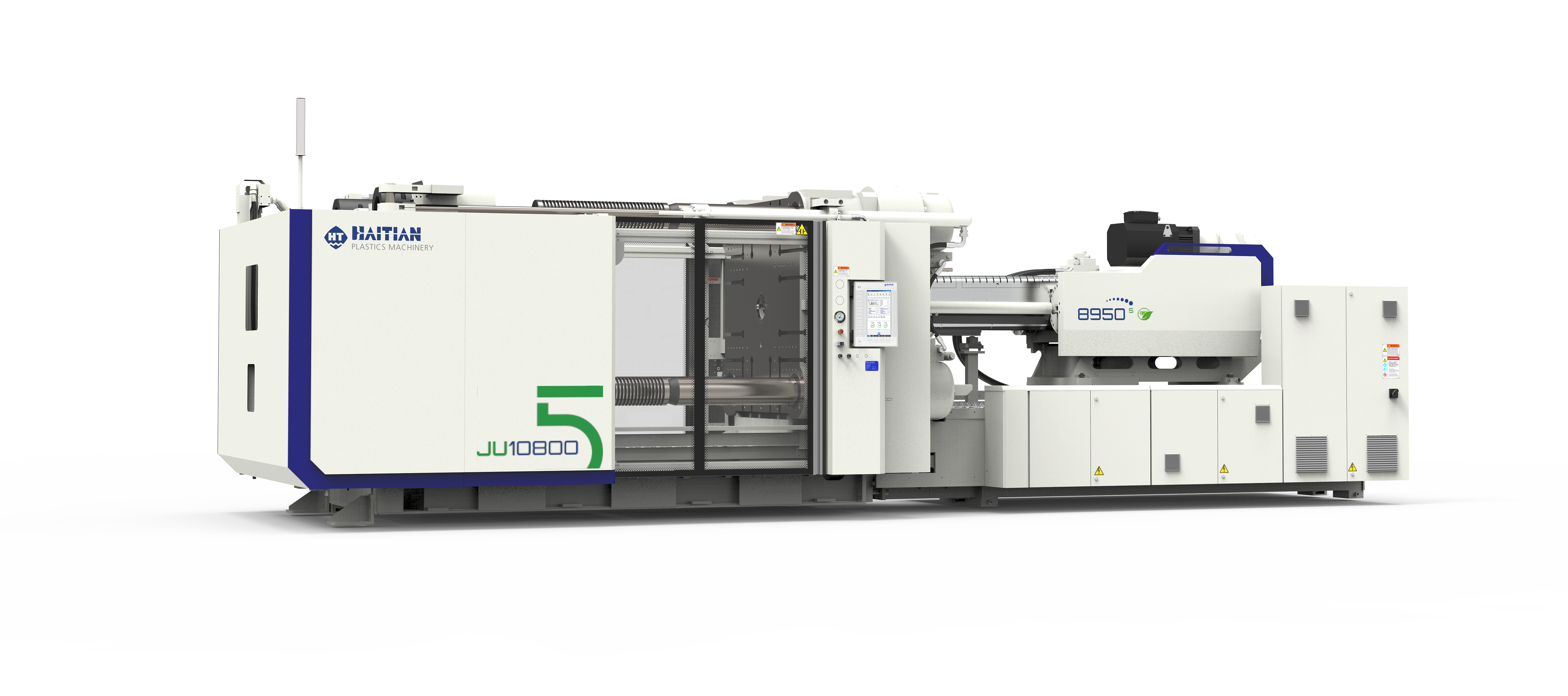
Haitian Jupiter Series JU5 servo-hydraulic two-platen injection molding machine. Image source: Haitian International product content unit.
For very large parts, the platform has documented examples. A customized JU88000 with 88,000 kN clamping force and 134,000 cm³ injection volume was engineered for Belli SAS for large water and rainwater storage tanks; it received CE certification in September 2023 and was accepted by the customer in October 2023, with an integrated Hilectro VD-150ID robot. That is a platform example, not a standard JU5 configuration, but it shows the scale of two-platen work.
Step-by-Step Breakdown: How to Choose Between ZE5 and JU5
- Define the part and mold envelope. Record part size, wall thickness, material, mold dimensions, cavity count, shot weight and required mold functions. Use ZE5’s platen and tie-bar range and JU5’s daylight and tie-bar range to remove platforms that cannot physically hold the mold.
- Check clamping force and injection volume. Compare the required values with ZE5’s 400–13,800 kN and 12–5,767 cm³ range and JU5’s 4,500–88,000 kN and 848–134,303 cm³ range. Do not choose by tonnage alone; the overlap is real.
- List every mold function. Mark core pulls, side actions and other hydraulic functions. ZE5’s integrated servo-hydraulics are relevant here. JU5’s servo-hydraulic platform also supports hydraulic functions, but the decision should be confirmed with the mold and machine configuration.
- Set the quality requirement. For medical, electronics and precision automotive work, define repeatability, dimensional stability, surface quality, traceability and scrap targets. ZE5’s electric main movements are the starting point; JU5’s four short-stroke cylinders and uniform clamping force are the starting point for large-mold repeatability.
- Review the production environment. Medical projects may require cleanroom or laminar-flow equipment, stainless material handling, vision inspection and traceability. ZE5 is listed for medical, but the integrated hydraulic configuration should be checked against contamination-control requirements. JU5 is more naturally evaluated for large industrial and automotive parts where mold capacity dominates.
- Compare footprint and layout. JU5’s two-platen architecture is intended to provide large mold capacity while minimizing machine footprint. ZE5 may suit a tighter cell if the mold fits its platen and tie-bar dimensions. Use actual plant layout, crane access and automation space.
- Request energy and cycle data. Ask for energy per part or per kilogram, cycle time and plasticizing data for the actual material. Use the Zeres energy example and JU5’s 20–40% electrical-plasticizing reduction as reasons to request data, not as universal guarantees.
- Plan the factory acceptance and mold trial. The supplier capability data includes factory testing, machine inspection before delivery, mold trials, initial sampling, process optimization, application testing and commissioning. Make the acceptance criteria match the project, including core-pull function, part dimensions, cycle and scrap.
Use Cases: Where Each Platform Fits
ZE5 fit: precision plus hydraulic mold functions
ZE5 is listed for automotive, medical, electronics, consumer goods, technical parts, household appliances and packaging. In practice, the strongest fit is a project where the mold needs hydraulic core pulls or similar functions and the part also benefits from electric main movements. Medical consumables, IVD components, diagnostic parts, electronic precision parts, technical automotive components and selected packaging parts are the kinds of applications to evaluate. For medical, confirm cleanroom and traceability requirements. For packaging, confirm whether the cycle and cavitation requirement calls for a dedicated high-speed configuration rather than a standard ZE5.
JU5 fit: large molds and large parts
JU5 is listed for automotive, logistics, household appliances, large technical parts, industrial components, mobility, and building and construction. It fits large automotive components, logistics containers and pallets, large appliance parts, large technical parts and building products. The four short-stroke cylinders, long daylight and wide tie-bar range are the relevant selection points. If the mold is large or deep and the shot weight is high, JU5 should be evaluated before a smaller electric platform.
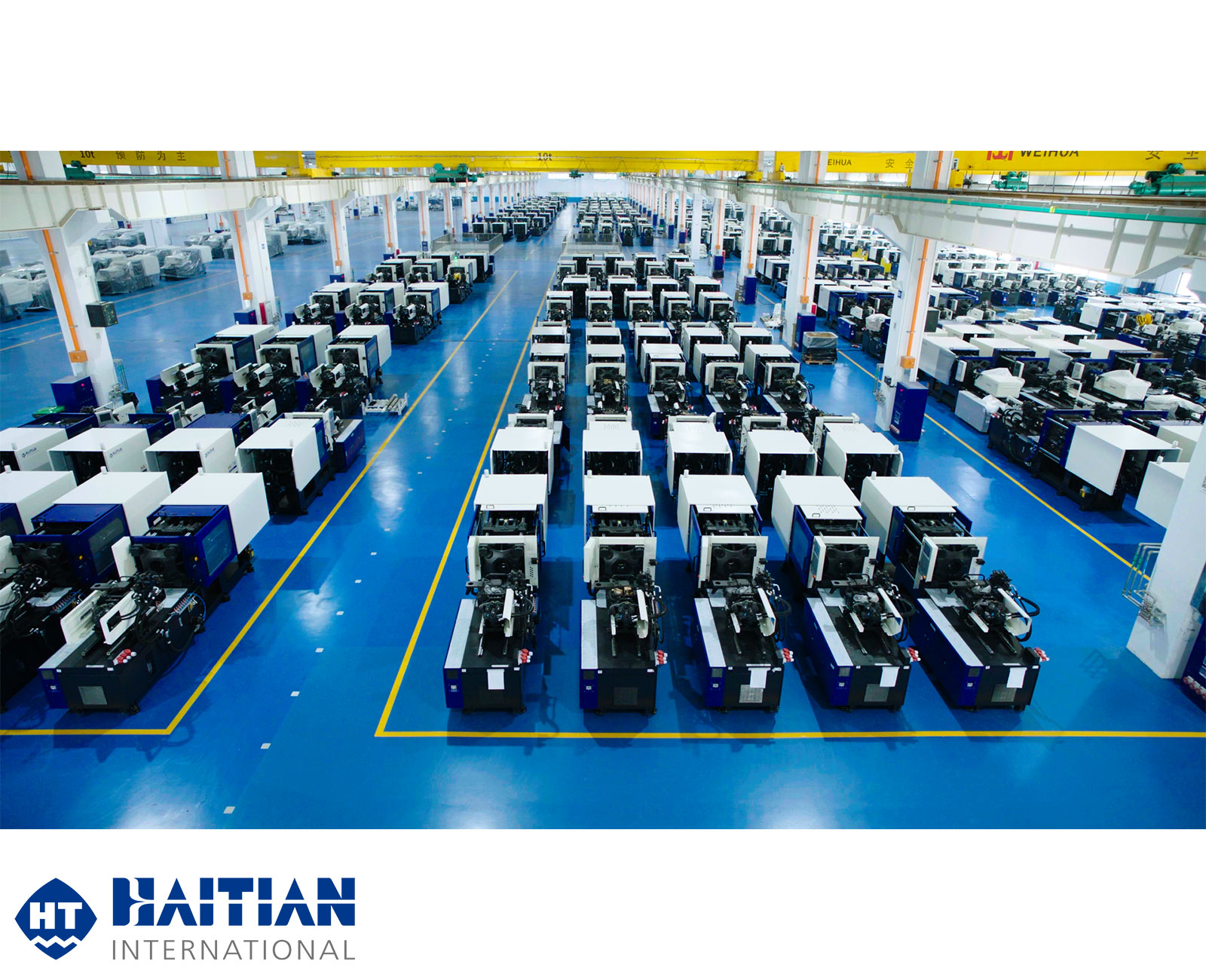
Injection molding machine production workshop. Image source: Haitian International company content unit.
Comparison Table: ZE5 vs JU5
| Decision area | Zhafir Zeres ZE5 | Haitian Jupiter JU5 |
|---|---|---|
| Drive and clamping architecture | Electric injection molding machine with integrated hydraulics; electric main movements plus integrated servo-hydraulic mold functions | Servo-hydraulic two-platen injection molding machine; four short-stroke clamping cylinders |
| Clamping force | 400–13,800 kN | 4,500–88,000 kN |
| Injection volume | 12–5,767 cm³ | 848–134,303 cm³ |
| Screw diameter | 16–120 mm | 60–300 mm |
| Mold platen size | 440 × 440–2,150 × 2,050 mm | — |
| Tie-bar distance | 320 × 320–1,550 × 1,450 mm | 810 × 810–3,400 × 2,820 mm |
| Maximum daylight | — | 1,400–7,000 mm |
| Controller | Sigmatek | KEBA |
| Hydraulic mold functions | Integrated servo-hydraulic functionality for hydraulic mold functions such as core pulls | Servo-hydraulic platform; mold-function configuration to be confirmed with the specific project |
| Footprint and mold capacity | Platen and tie-bar data above define mold fit; electric platform with integrated hydraulics | Two-platen architecture provides large mold capacity while minimizing machine footprint |
| Energy positioning | Electric-machine precision and energy efficiency; Zeres platform example shows approx. 30% lower energy than the compared hydraulic machine for a PP TV20 part, 28-second cycle, approx. 90 g shot | Generation 5 electrical plasticizing can reduce energy consumption by 20–40% |
| Listed applications | Automotive; medical; electronics; consumer goods; technical parts; household appliances; packaging | Automotive; logistics; household appliances; large technical parts; industrial components; mobility; building and construction |
| Typical fit | Precision parts needing hydraulic mold functions such as core pulls; medical, electronics, automotive, packaging and technical parts | Large molds, deep cavities and high shot weights; large automotive, logistics, appliance and industrial components |
FAQ
There is no defensible universal ranking in the supplied data. For servo-hydraulic precision molding in automotive work, evaluate the machine platform against the mold and part rather than selecting by brand name alone. The Haitian Jupiter Series JU5 is a servo-hydraulic two-platen platform with 4,500–88,000 kN clamping force, four short-stroke clamping cylinders for uniform clamping force and high repeatability, and 848–134,303 cm³ injection volume. If the automotive part also needs electric precision and hydraulic mold functions such as core pulls, the Zhafir Zeres Series ZE5 is the relevant comparison. Confirm the final configuration with a regional sales and service partner using mold and process data.
Yes. The supplied product facts state that ZE5 combines precise electric main movements with integrated servo-hydraulic functionality for applications requiring hydraulic mold functions such as core pulls. The mold, hydraulic circuit and safety requirements still need to be confirmed with the supplier for the specific project.
ZE5 covers 400–13,800 kN clamping force and 12–5,767 cm³ injection volume. JU5 covers 4,500–88,000 kN clamping force and 848–134,303 cm³ injection volume. The ranges overlap, so a medium-size project may fit both platforms on tonnage and shot weight. In that case, decide by mold dimensions, required core pulls, daylight, tie-bar distance, footprint, cycle, energy and quality requirements.
JU5 is the better starting point when the mold is large or deep, the shot weight is high, or the project needs the large mold capacity and compact footprint associated with a two-platen machine. Its 1,400–7,000 mm maximum daylight, 810 × 810–3,400 × 2,820 mm tie-bar distance and up to 88,000 kN clamping force are the relevant checks. ZE5 is the better starting point when electric precision, repeatability and hydraulic mold functions such as core pulls define the project and the mold fits its platen and tie-bar range. To discuss a specific mold and process data set, contact Haitian’s regional sales and service partner or email inter-sales@mail.haitian.com.
Conclusion
The ZE5 and JU5 answer different project questions. ZE5 is an electric injection molding machine with integrated hydraulics for buyers who need electric precision and repeatability while retaining hydraulic mold functions such as core pulls. JU5 is a servo-hydraulic two-platen injection molding machine for buyers who need large mold capacity, high shot weight, long daylight, wide tie-bar spacing and a compact two-platen footprint.
The decision rule is to define the mold envelope first. If the mold fits ZE5 and the project depends on electric main movements plus hydraulic core pulls, ZE5 is the natural comparison. If the mold is large or deep and the shot weight is high, JU5 should be evaluated first. In the overlapping tonnage and shot-size range, request mold trials, energy data, cycle data and acceptance criteria for the actual project.
Next Step: Match the Platform to Your Mold Data
Send the part drawing, material, shot weight, mold dimensions, required core pulls, target cycle and plant layout to Haitian’s regional sales and service partner. The review can confirm whether ZE5, JU5 or another Haitian or Zhafir platform fits the project. Contact: inter-sales@mail.haitian.com.
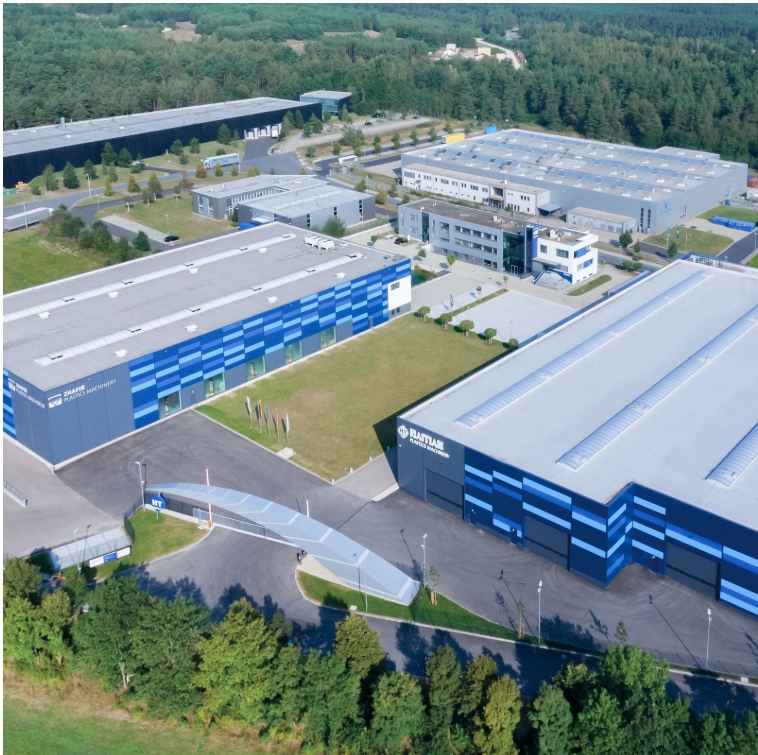
Haitian International’s German company supports regional sales and service discussions. Image source: Haitian International company content unit.
Have Questions or Need More Details?
Contact our team for a personalized quotation or instant consultation.
Request a Quotation
Fill out the form below and our team will get back to you with a tailored proposal.
WhatsApp Direct Chat
Prefer to chat in real-time? Message us on WhatsApp for instant assistance & quick answers.
- Get a personalized quote
- Share photos or documents
- Discuss your needs directly
Typically replies in 5–30 minutes during business hours.