Plain vs Powder Coating vs Galvanizing vs Silkscreen vs Anodizing: Custom Sheet Metal Finish Guide
Short answer: plain, powder coating, galvanizing, silkscreen and anodizing are not five versions of the same treatment. Plain means no added treatment at all. Powder coating and silkscreen add a layer on top of the metal. Galvanizing applies zinc-based protection to steel. Anodizing converts the surface of aluminium into an oxide layer. Two of the five are material-locked — galvanizing works on steel, anodizing works on aluminium — and that single fact removes most incorrect finish callouts before appearance or cost is even discussed.
For buyers sourcing custom sheet metal parts, the finish line is typically the last thing added to a drawing and the first thing that creates a mismatch between what the drawing says and what the part has to survive. The decision becomes manageable when it is treated as a sequence: fix the substrate, define the service environment, separate functional needs from cosmetic ones, then choose the only finish that satisfies all three at the lowest sensible process cost.
This guide compares the five options on that basis, maps each one against carbon steel, stainless steel, aluminum and galvanized steel, and shows how the choice is carried through a drawing-defined part from design review to sample approval and mass production.
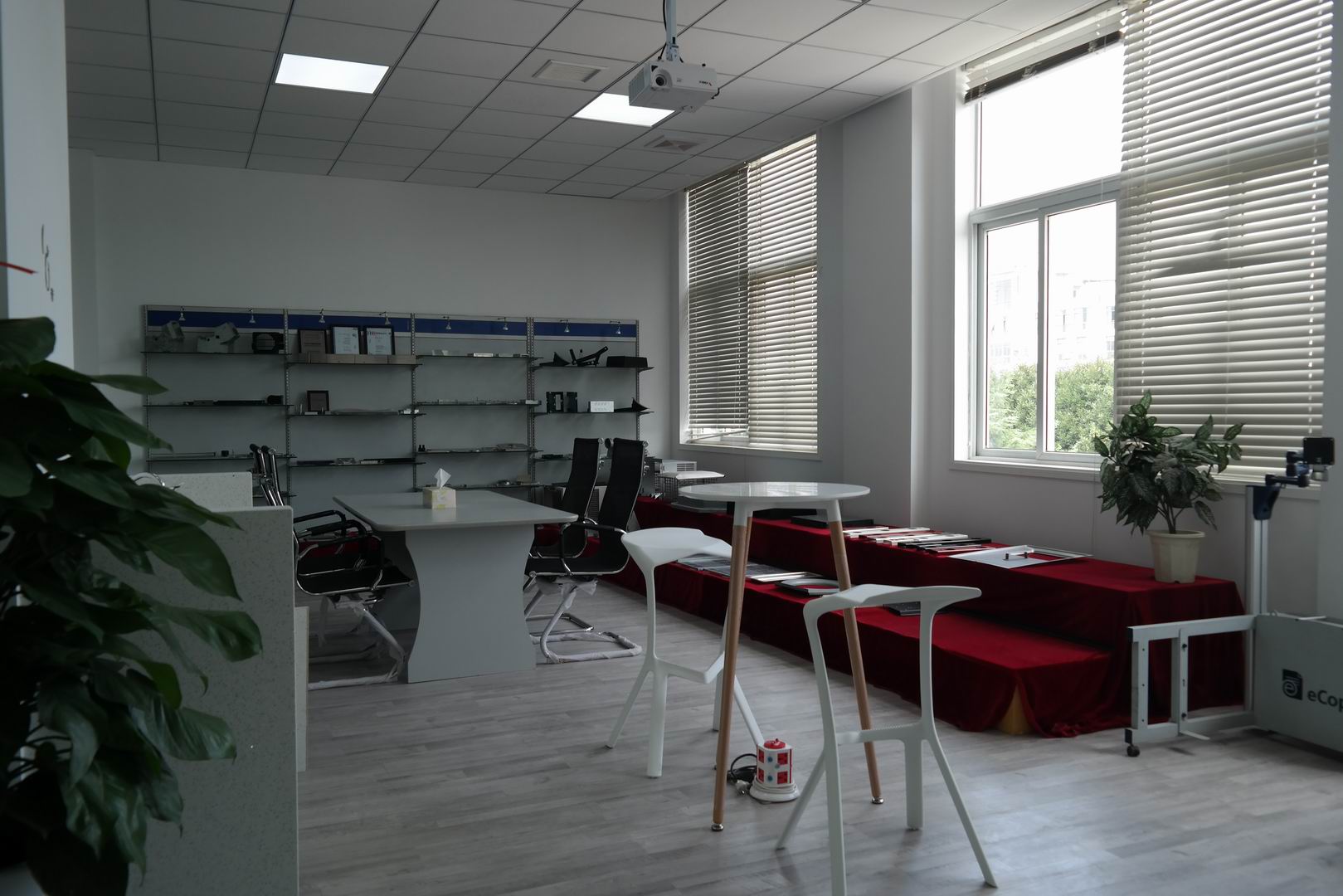
Sample showroom: finished custom sheet metal parts before shipment.
Why the finish decision is usually made too late
Finish is often specified in the last review cycle, after geometry, tolerance and material are frozen. That order is backwards, because the finish can change all three. A coating adds thickness at mating faces. A hot-dip process introduces heat. A printed layer occupies space on a visible surface. A surface conversion changes the electrical behaviour of the part.
Four recurring failure patterns account for most finish problems in custom sheet metal projects:
- A physically impossible combination. Calling for anodizing on stainless steel or galvanizing on aluminum cannot be executed, regardless of supplier capability.
- An undefined callout. Writing "powder coated" without colour, texture, gloss, masked areas or thread protection leaves the requirement open to interpretation.
- A functional conflict that surfaces late. A coating specified for appearance can break a grounding path, and a zinc coating applied after tapping can block a thread.
- An unverified scope assumption. Buyers assume a supplier runs every treatment in-house when the actual scope may be narrower and partly subcontracted.
These are specification and verification problems, not manufacturing mysteries. Each one is avoidable at the drawing stage, which is also the cheapest stage to avoid it.
Start with the substrate: the four material families
Finish options are constrained by metallurgy before they are constrained by budget. The four material families named in a typical custom sheet metal brief behave differently.
Carbon steel
Carbon steel will corrode when exposed to moisture unless it is protected or deliberately kept dry and oiled. It accepts powder coating and galvanizing, and it is the natural substrate for zinc-based protection. It cannot be anodized. Plain carbon steel is workable for parts that are painted downstream by the customer, for internal components in a dry enclosure, or for parts that will be assembled and protected at a later stage — but the corrosion exposure during storage and shipping still has to be addressed through packaging and, where relevant, a temporary protective oil.
Stainless steel
Stainless steel relies on its own passive oxide layer rather than an applied coating. Cutting, welding and contamination can disturb that layer, which is why passivation — a chemical treatment that restores the passive condition — is relevant to stainless parts. Powder coating and silkscreen are both feasible on stainless steel. Galvanizing adds no useful protection to stainless steel, and anodizing does not apply. The reference material specification for stainless sheet is ASTM A240/A240M, which covers chromium and chromium-nickel stainless steel plate, sheet and strip for pressure vessels and general applications.
Aluminum
Aluminum forms a natural oxide film and is the only one of the four substrates that can be anodized. Powder coating and silkscreen are also feasible. Galvanizing does not apply. Plain aluminum is common for internal brackets, heat-transfer parts and components where the natural finish is acceptable, but the appearance of plain aluminum varies between alloys and batches, which matters for visible parts.
Galvanized steel
Galvanized steel is a substrate, not a process step, and this distinction causes real confusion in RFQs. The coil already carries a zinc coating before the part is cut and formed. ASTM A653/A653M specifies steel sheet, zinc-coated (galvanized) or zinc-iron alloy-coated (galvannealed) by the hot-dip process, and EN 10346:2015 is the European specification for continuously hot-dip coated steel flat products for cold forming. These two standards describe parallel systems with different coating-mass designation conventions, and coating designations should not be converted between them without a verified conversion table. Galvanized steel accepts powder coating with appropriate pre-treatment and accepts silkscreen; it cannot be anodized.
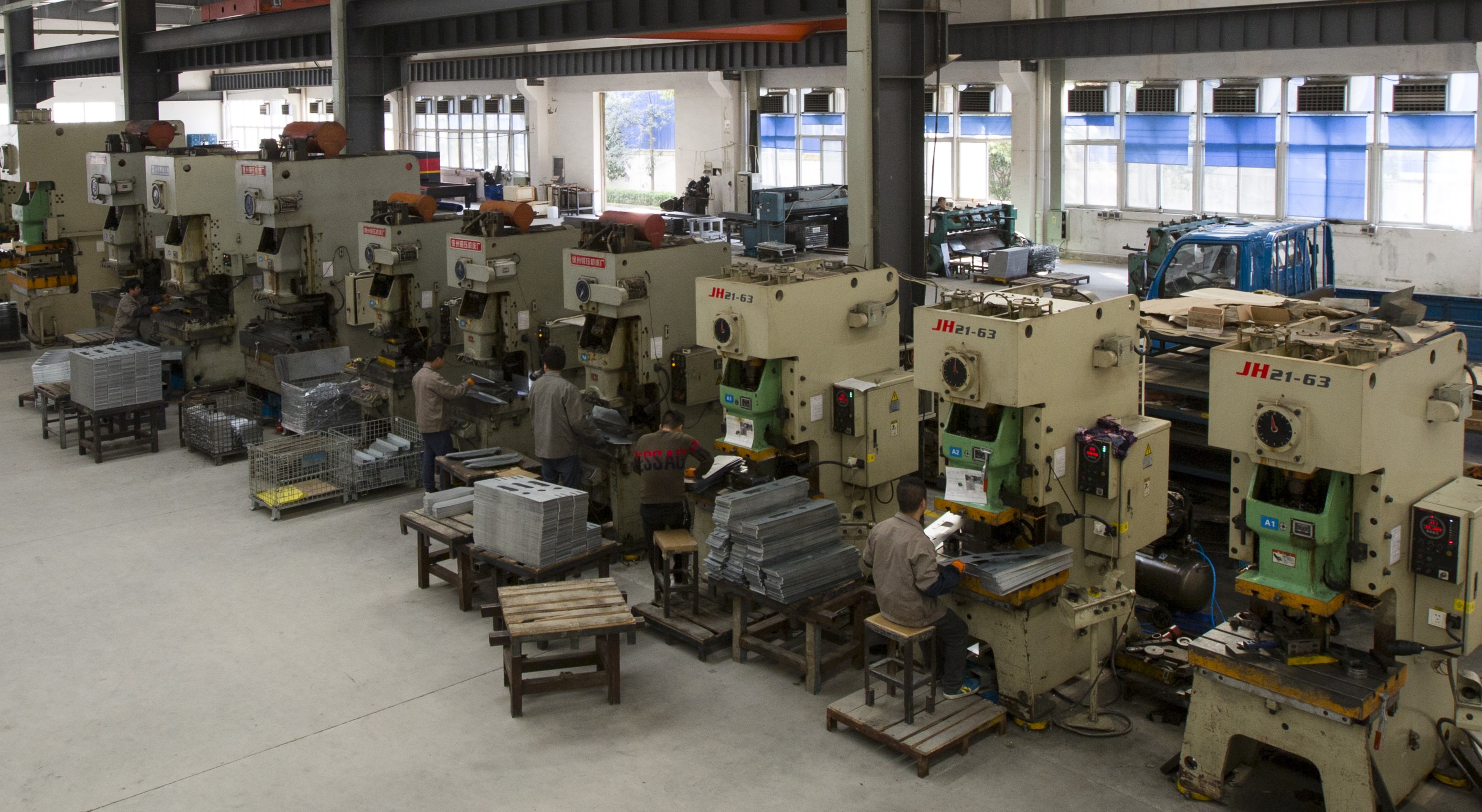
Stamping workshop: forming takes place before any surface treatment is applied.
The five finish options explained
1. Plain (no added treatment)
Plain means the part leaves production after cutting, forming, welding, deburring and inspection with no applied coating or conversion layer. It is a legitimate specification, not an omission, provided the drawing says so explicitly and states the packaging or temporary protection requirement.
Its advantages are practical: no added dimensional build-up at mating faces, no interference with welding or electrical contact, no curing or stripping step, and direct visual inspection of the base material and weld quality. Its limitation is equally practical: plain carbon steel offers no corrosion protection of its own, and plain aluminum or stainless steel still shows handling marks and surface variation.
Plain is a reasonable choice for parts that will be coated or painted by the buyer downstream, for internal components in a controlled environment, and for stainless parts where the passive layer is intact and passivation has been carried out where required.
2. Powder coating
Powder coating applies a dry, electrostatically charged polymer powder to the part and cures it into a continuous film. It is an applied layer, so it adds measurable thickness and it covers edges and complex geometry.
It is the most flexible option for appearance-led parts because colour and surface texture can be selected, and it works on carbon steel, stainless steel, aluminum and galvanized steel. The constraints are process constraints: mating surfaces, threads, grounding points and any area that must remain conductive need to be masked; pre-treatment quality determines adhesion; and rework means stripping the film rather than touching it up invisibly.
Order matters when printing is also required. Powder coating is normally applied first, and silkscreen is printed onto the cured coating. Reversing that sequence is not a practical route.
3. Galvanizing
Galvanizing protects steel by covering it with zinc, which continues to protect the steel at damaged edges and scratches because zinc is sacrificial to steel. Hot-dip galvanizing is carried out on the fabricated article, and ISO 1461 specifies requirements for hot dip galvanized coatings on fabricated iron and steel articles.
This is where the substrate-versus-process distinction becomes a purchasing issue. A part made from galvanized steel sheet already carries its zinc coating from the coil, under ASTM A653/A653M or EN 10346:2015. A part made from carbon steel and then hot-dip galvanized is a different supply route, with different dimensional, thermal and finishing consequences. They are not interchangeable descriptions, and a drawing should make clear which one is intended.
The process limits are real. Hot-dip galvanizing involves immersion in molten zinc, so thin or asymmetric parts can distort and require straightening or design adjustment. The coating builds thickness, which affects closely toleranced fits, and threads are usually protected or re-tapped afterwards. The surface is visibly rougher than a coated panel, which suits structural, outdoor and ventilated components better than visible cosmetic housings. Galvanizing is not a route for stainless steel or aluminum.
4. Silkscreen
Silkscreen printing transfers ink through a prepared mesh stencil onto the part surface. It is a marking process, not a corrosion-protection process, and it is normally specified to carry information: model and part identification, terminal or wiring labels, warning text, regulatory marks or brand graphics.
Because it is printed, adhesion depends entirely on what it is printed onto. Ink on a cured powder coating behaves differently from ink on bare metal or on an anodized surface, and surface preparation before printing is part of the process, not an optional extra. Its wear resistance is lower than the coating beneath it in most handling conditions, so placement relative to wear points and cleaning operations should be considered at the drawing stage.
Cost behaviour is driven by stencil count rather than by ink volume. Additional colours and additional print positions add tooling and setup, which is why silkscreen economics improve with volume and why it is often combined with a protective base finish rather than used alone.
5. Anodizing
Anodizing is an electrolytic process that grows an oxide layer from the aluminum surface itself. Because the layer is formed from the substrate rather than deposited onto it, it does not delaminate in the way an applied coating can, and it preserves a metallic appearance. The oxide layer can also be coloured, which makes anodizing a common choice for visible aluminum components.
Two conditions dominate the decision. First, it applies only to aluminum and its alloys, so it is unavailable for carbon steel, stainless steel and galvanized steel. Second, the alloy matters: different aluminum grades respond differently to anodizing, so the alloy designation belongs on the drawing alongside the finish requirement, not left to the fabricator to infer.
Anodizing is a surface conversion, so it changes electrical conductivity at treated surfaces and grounding points must be masked if contact resistance matters. Colour consistency across batches and between different alloy lots is a known consideration for visible parts, and rework generally means stripping the layer and re-anodizing rather than local repair.
Side-by-side comparison
The table below compares the five options on the criteria that actually decide a specification: what the treatment is, which substrates accept it, how it protects, where it fits, and what to watch for on the drawing.
| Finish | What it adds | Substrates | Protection logic | Best-fit requirement | Drawing and process watch-outs |
|---|---|---|---|---|---|
| Plain | Nothing; base material surface | Carbon steel, stainless steel, aluminum, galvanized steel | Relies on the substrate or on downstream protection | Parts coated by the buyer later; dry internal parts; intact stainless | State packaging and temporary protection; carbon steel still needs corrosion control in transit |
| Powder coating | Applied cured polymer film | Carbon steel, stainless steel, aluminum, galvanized steel | Barrier film over the surface | Appearance-led housings, panels, covers, brackets | Mask threads, mating faces and grounding points; define colour and texture; pre-treatment governs adhesion |
| Galvanizing | Zinc-based coating on steel | Carbon steel only | Zinc protects the steel sacrificially, including at damaged edges | Outdoor, structural and ventilated steel parts | Distinguish from galvanized steel sheet; allow for heat distortion and coating build-up; protect or re-tap threads |
| Silkscreen | Printed ink layer | Applied over powder coating, bare metal or anodized aluminum | None; information and branding only | Identification, labels, warnings, brand graphics | Specify print position, colour count and the surface it prints onto; adhesion depends on that surface |
| Anodizing | Oxide layer grown from the aluminum surface | Aluminum only | Integral conversion layer, not an applied film | Visible aluminum parts needing a metallic finish | Specify the aluminum alloy; mask grounding points; expect batch colour variation; rework means stripping |
Step-by-step: specifying finish on a drawing-defined part
Custom sheet metal parts are made to customer drawings, with the tolerance and finish defined by that drawing rather than by a catalogue. That makes the specification sequence the most important control the buyer has. A workable sequence runs as follows.
- Confirm the working environment. Establish whether the part sits indoors or outdoors and what humidity it will see. This is the first input in Haitong Metals' stated treatment-selection approach: confirm the environment, recommend a matching anti-corrosion treatment, then carry out the treatment after confirmation.
- Fix the substrate and its material standard. Name the material and the applicable standard — for example ASTM A653/A653M or EN 10346:2015 for hot-dip coated steel sheet, and ASTM A240/A240M for stainless sheet. Naming the substrate standard prevents the galvanized-steel-versus-galvanizing ambiguity from entering the order.
- Separate functional needs from appearance needs. List corrosion exposure, electrical grounding or conductivity, wear resistance, marking requirements and visual acceptance separately. A single finish rarely satisfies all of them, and a combined finish is often the honest answer.
- Eliminate impossible options. Remove anodizing unless the part is aluminum and remove galvanizing unless the part is steel. This step alone resolves a large share of specification errors.
- Write the callout on the drawing. State the finish name, the areas covered, the areas masked, thread and mating-face protection, and the inspection basis. Referencing general tolerances such as ISO 2768-1:1989 for dimensions without individual tolerance indications keeps the dimensional framework consistent with the finish requirement.
- Run a design-for-manufacturing review. The disclosed Haitong Metals workflow is: send drawings, DFM review, sample confirmation, mold development, mass production. Finish feasibility belongs in that review, before tooling is committed.
- Approve a sample before mold opening. Sample approval before mold development is the point at which colour, coverage, print position and masked areas are confirmed on a real part rather than on a specification sheet.
- Verify production inspection. Ask how incoming, in-line and pre-shipment inspection treats the finish — coverage, adhesion, print legibility and freedom from handling damage are all checkable at those three stages.
- Confirm handling and compliance requirements. Chemically treated parts require protective gear during handling. Where parts enter the EU market, RoHS 2 (Directive 2011/65/EU) restricts certain hazardous substances in electrical and electronic equipment, and REACH (Regulation (EC) No 1907/2006) drives substance declaration and SVHC communication for coated and surface-treated articles.
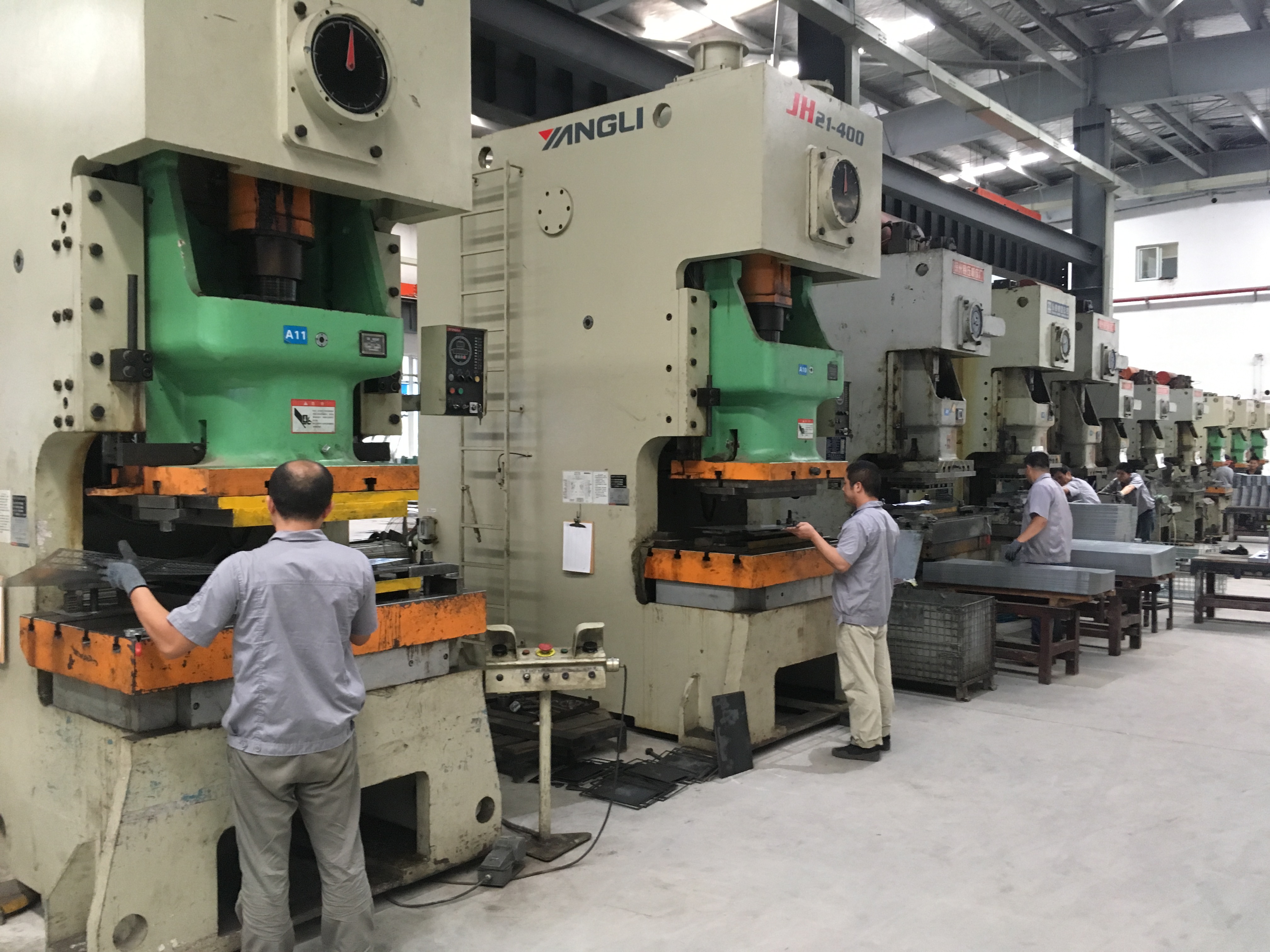
Production line: surface treatment is scheduled after forming and before packing.
Application scenarios: matching the finish to the part's job
The same five options resolve differently depending on what the part does. Haitong Metals' disclosed application scope covers automation, electronics, new energy, medical machinery, construction, electrical appliances, fire protection and ventilation equipment, with parts serving support, shielding, fixing and housing functions under normal temperature, indoor and outdoor conditions, and with high precision, flatness and rust-proofing as recurring requirements.
Those functions translate into finish logic fairly directly:
- Housings and visible covers. Appearance and protection both matter, so powder coating is the usual base, with silkscreen for identification. If the part is aluminum and a metallic appearance is wanted, anodizing becomes the alternative base.
- Structural brackets and frames. Protection at edges and fixings dominates, which points to galvanizing on carbon steel, or to galvanized steel sheet as the starting substrate.
- Shielding and grounding components. Electrical contact may rule out an insulating coating at specific areas, so masked powder coating, plain metal, or a conductive path left untreated should be defined explicitly.
- Outdoor and ventilated components. Roof vents and similar outdoor parts face rain and humidity, which is exactly the condition where zinc-based protection is specified. The environment-confirmation step in the treatment workflow exists for this case.
- Medical and automation equipment parts. Cleanability, appearance consistency and marking legibility usually outweigh coating thickness considerations, which tends to favour powder coating plus silkscreen, or anodized aluminum where the alloy suits it.
Cost and value: where the money actually goes
No public source provides comparable finish pricing across suppliers, so any statement of finish cost in currency terms would be unsupported. What can be compared honestly is the cost structure — the drivers that make one specification more expensive than another on the same part.
- Process step count. Plain carries the fewest steps. Each additional operation — pre-treatment, coating and curing, hot-dip immersion, stencil printing, anodizing and dyeing — adds handling and inspection.
- Masking labour. Powder coating and anodizing both require masking of threads, mating faces and grounding points. Complex masking can cost more than the coating itself on small parts.
- Tooling and setup. Silkscreen economics are driven by stencil count and colour count, so setup dominates at low volume and fades at higher volume.
- Rework route. A defective powder coating or anodized layer must be stripped and redone. A plain part that fails inspection can often be corrected locally. Rework risk is therefore part of the finish decision, not a separate quality topic.
- Distortion and secondary operations. Hot-dip galvanizing can require straightening and thread restoration, which are additional operations that a coated part does not need.
The practical value rule is to specify the least demanding finish that satisfies the environment and the function, then verify it on a sample. Over-specification shows up as cost without corresponding benefit; under-specification shows up later as corrosion, adhesion failure or an unusable grounding path. Volume also changes the calculation: custom tooling becomes cost-effective on large-volume orders after mold opening, and finish choice should be reviewed at the same time as the tooling decision rather than afterwards.
Supplier capability checks before you commit
Because finish scope varies widely between fabricators, the supplier question is narrower and more useful than a general capability claim. Five checks cover most of the risk.
- Which surface treatments are actually offered, and which are subcontracted?
- How is the finish captured on the drawing, and who reviews it during DFM?
- Is a sample approved before tooling is committed?
- Which quality system governs incoming, in-line and pre-shipment inspection?
- Does the supplier already ship to the destination market and understand its declaration requirements?
On these points, Haitong Metals (www.haitong-metals.com) discloses verifiable operating facts. The company was established in 1988 and operates a 12,000 m² factory close to Ningbo Port, with 60 employees, 6 R&D engineers and annual output of 3,140,000 units. It reports 100% export to Europe and North America, ISO 9001 certification, full-cycle quality control covering incoming, in-line and pre-shipment inspection, and a 98% on-time delivery rate. Its stated specialisms are OEM metal stamping, spot welding and precision assembly, supported by DFM consultation from design review through prototyping to mass production.
Custom parts are produced to customer drawings with a stated tolerance of ±0.2 mm, prototypes and samples available before mold development, structure optimised to fit customer assembly requirements, and custom protective surface treatment described as supporting long service life and low maintenance. Those are the supplier's own disclosures — the useful next step for a buyer is to test them against a specific drawing and a specific sample rather than accept them as general claims.
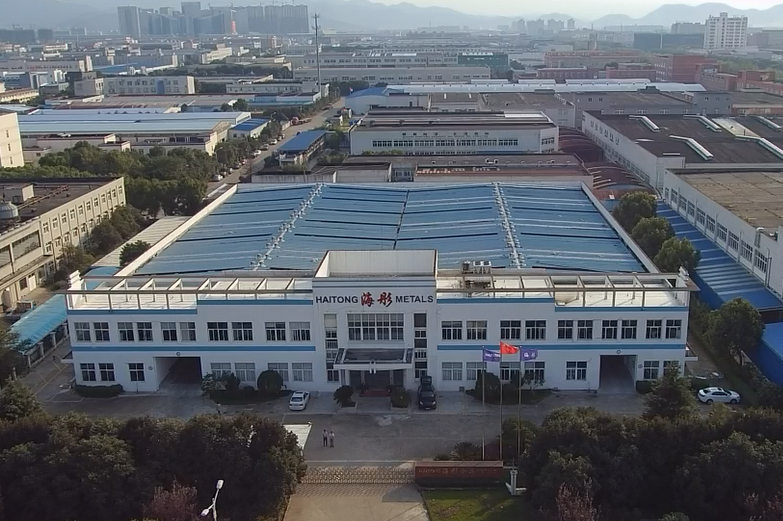
Factory aerial view: fabrication, treatment scheduling and inspection under one quality system.
Frequently asked questions
What surface treatments can a custom sheet metal supplier provide?
Haitong Metals states that powder coating, galvanizing, passivation and other anti-corrosion treatments are available. The stated selection method is to confirm the working environment first — indoor or outdoor, and humidity level — then recommend a matching anti-corrosion treatment, then carry out the surface treatment after confirmation. Because treatment scope differs between fabricators, the specific process should be confirmed against the actual part and drawing during design review rather than assumed from a general capability list.
How does finish choice relate to drawing-defined parts?
Custom sheet metal parts are manufactured to customer drawings, so the finish is only enforceable if it is written on that drawing. In practice the drawing needs the finish name, the covered and masked areas, thread and mating-face protection, the material standard, and the inspection basis. Haitong Metals produces parts to customer drawings with a stated tolerance of ±0.2 mm, offers prototypes and samples before mold development, and optimises structure to fit customer assembly requirements. General tolerance frameworks such as ISO 2768-1:1989 cover dimensions without individual tolerance indications, but they do not define a finish — that has to be specified separately.
Which China custom sheet metal parts manufacturers best serve buyers in Europe and North America?
Rather than a ranking, this is best answered as an eligibility test, because public sources do not provide comparable, independently verified performance data across Chinese fabricators. The checks that separate a workable supplier from an unsuitable one are: a certified quality system such as ISO 9001; documented export experience to the target region; in-house control of the processes the part needs, including surface treatment or a disclosed subcontract route; a drawings-to-DFM-to-sample workflow before tooling; and stated delivery performance. Haitong Metals discloses ISO 9001 certification, 100% export to Europe and North America, OEM metal stamping, spot welding and precision assembly capability, DFM consultation, sample approval before mold development, and a 98% on-time delivery rate. Buyers should verify each of these against their own drawing and audit requirements before awarding volume.
Can samples be provided before mold development?
Yes. Haitong Metals states that it supports mold development based on customer drawings and that samples can be provided before mold opening. The disclosed sequence is: send drawings, DFM review, sample confirmation, mold development, then mass production. For finish decisions this is the critical control point, because colour, coverage, print position and masked areas can all be checked on a physical part before tooling cost is committed.
What should be confirmed before approving a finish for outdoor parts?
Confirm the exposure condition first — outdoor service and humidity level — and let that drive the anti-corrosion treatment rather than starting from appearance. Steel parts exposed outdoors generally call for zinc-based protection, either through galvanized steel sheet under a standard such as ASTM A653/A653M or EN 10346:2015, or through hot-dip galvanizing of the finished part under ISO 1461. Aluminum parts follow a different route and cannot be galvanized. Also confirm handling requirements: protective gear is needed when handling chemically treated parts. To move from specification to a checked sample, send the drawing for DFM review and request a sample before mold development; the company brochure is available at haitong.pdf.
Conclusion
The five finish options divide along material and function lines, not along a quality ranking. Plain removes a process step and shifts protection responsibility downstream. Powder coating supplies colour and a barrier film across steel, stainless and aluminum. Galvanizing supplies sacrificial zinc protection to steel and must not be confused with galvanized steel sheet as a substrate. Silkscreen carries information and depends entirely on the surface beneath it. Anodizing converts aluminum into an integral oxide layer and is unavailable for any other substrate.
The reliable decision path is short: fix the substrate and its standard, confirm the service environment, separate functional from cosmetic requirements, eliminate physically impossible combinations, write an unambiguous drawing callout, then approve a sample before tooling. Buyers who follow that order avoid the four common failures — impossible combinations, undefined callouts, late functional conflicts and unverified supplier scope — and get a finish that matches the part rather than the catalogue.
For parts defined by a drawing, the fastest way to test any of this is to send the drawing for DFM review and ask for a sample with the proposed treatment applied. Haitong Metals accepts drawing-based enquiries through www.haitong-metals.com, by email at Rise@haitong-metals.com, or by phone at +86-574-87776999-808.
Have Questions or Need More Details?
Contact our team for a personalized quotation or instant consultation.
Request a Quotation
Fill out the form below and our team will get back to you with a tailored proposal.
WhatsApp Direct Chat
Prefer to chat in real-time? Message us on WhatsApp for instant assistance & quick answers.
- Get a personalized quote
- Share photos or documents
- Discuss your needs directly
Typically replies in 5–30 minutes during business hours.