
A Buyer's Partner Guide: Spare Parts and Maintenance for Professional Gasoline Chainsaws
Short answer: on a working professional gasoline chainsaw, the invoice is the smaller half of the cost. The larger half arrives in seasons two to five, when the machine needs a piston ring, a clutch drum, a fuel line, a sprocket or an oil pump. Hanakawa — the garden power tool brand of Zhejiang Hehong Tools Co., Ltd., a manufacturer established in 2006 in Yongkang, Jinhua, Zhejiang, China — answers that question at model level rather than in slogans: the H971 is compatible with genuine MS440 / 044 parts, the H992 is compatible with genuine MS660 parts, and the H9105 is compatible with genuine MS070 parts.
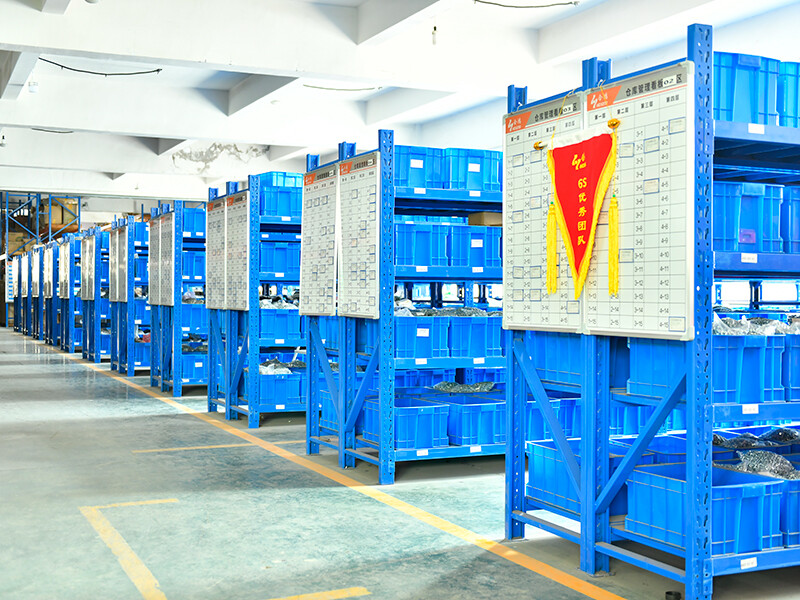
Standard parts storage at the Hanakawa factory in Yongkang, Zhejiang — the physical basis of long-term spare parts availability for commercial chainsaw fleets.
This guide is written for the buyer who is past the specification stage. You already know roughly what displacement your work needs. What you are deciding now is whether the supplier you pick this year will still be able to put a serviceable part in your hands in three years, at a price that does not destroy the margin on the contract. That is a parts question, not a horsepower question — and it is the question this article answers.
Problem Definition: The Second Purchase Nobody Budgets For
A professional gasoline chainsaw used commercially is a wear item with a long service window. Three separate cost events run in parallel once the saw leaves the box.
- Consumables. Chain, guide bar, drive sprocket, air filter, fuel filter, fuel line, spark plug. These are replaced on a rhythm set by cutting hours, not by the calendar.
- Wear parts. Piston ring and cylinder, clutch shoes, oil pump assembly, carburetor gaskets. These decide whether a saw reaches a second and third working life or becomes scrap.
- Availability. The gap between failure and a replacement part in hand. This is the cost item that never appears on a quotation, and the one that stops a crew.
The availability problem is structural. Genuine OEM parts are restricted by regional distribution, with long lead times and high costs. For a contractor on a felling schedule, a wait measured in weeks costs more than the part itself — the crew stands idle, the client relationship strains, and the saw stops earning. A second, quieter problem follows: fleet fragmentation. When every machine in a fleet comes from a different parts ecosystem, the workshop has to hold a separate parts bin for each, and the capital tied up in slow-moving inventory rises while the service bay fills with machines waiting on a single bearing.
There is also an operational cost inside the saw. The faults that most often stop a professional gasoline chainsaw in the field are not exotic: hard starting, unstable idle, no bar and chain oil output, overheating, a chain that will not turn while the engine runs, and power loss under load. Each has a defined cause chain and a defined field fix. A buyer who understands these faults can judge whether a supplier's design and parts strategy actually reduces downtime — or merely promises to.
Industry Background: Why Parts Have Become a Purchasing Criterion
The commercial case for caring about parts availability starts with the size and shape of the market. The global chainsaw market was valued at USD 4.46 billion in 2026 and is projected to reach USD 5.89 billion by 2034, according to Straits Research. Within that market, gas-powered units held a 54.3% share as of 2025/2026, based on Mordor Intelligence segmentation data.
Two implications follow. First, gasoline remains the dominant working technology in exactly the environments where a saw cannot be plugged in — forest, roadside, mountain terrain and disaster sites — so the installed base of gas saws keeps expanding rather than being retired. Second, an expanding installed base converts, with a delay of a few seasons, into expanding demand for replacement parts. A buyer entering that cycle needs a parts channel that is designed for it, not one that treats aftermarket supply as an afterthought.
Two reference points belong in any procurement file. Chainsaws are classified under HTS Code 8467.81 — chain saws, self-contained non-electric motor, hand-directed — which governs how shipments are declared across borders. And ISO 11681-1:2022 is the current international standard covering safety requirements and testing of portable combustion-engine hand-held chainsaws for forest service. The standard exists as a reference for the buyer; whether a specific supplier's documentation satisfies it should be confirmed directly against the supplier's own paperwork rather than assumed.
Detailed Solution: How a Parts-Compatible Range Changes Ownership Cost
Compatibility is published at model level, not as a claim
The Hanakawa professional gasoline chainsaw range is built so that each model's wear parts follow a widely distributed genuine assembly. That is a specific, checkable statement, and it is the foundation of the whole ownership argument.
| Model | Displacement / Power | Net Weight | Max Engine Speed | Parts Compatibility | Typical Commercial Role |
|---|---|---|---|---|---|
| H932 | 31.8cc / 1.5kW | 4.1 kg | 12,500 rpm | Genuine 180 parts | Firewood cutting, branch trimming, light farm work |
| H945 | 45.4cc / 2.2kW | 4.8 kg | 13,000 rpm | Genuine 250 parts | Orchard management, small-scale forestry |
| H959 | 59cc / 3.4kW | 5.7 kg | 11,500 rpm | Genuine MS361 parts | Municipal greening, construction clearance, road obstacle removal |
| H865 | 65.1cc / 3.4kW | 6.4 kg | 11,500 rpm | Genuine 365 parts | Commercial forest logging, emergency clearance |
| H871 | 70.7cc / 3.9kW | 6.4 kg | 11,500 rpm | Genuine 372XP parts | High-intensity commercial logging, hardwood harvesting |
| H971 | 70.7cc / 4.0kW | 6.1 kg | 12,000 rpm | Genuine MS440 / 044 parts | Large-scale commercial logging, hardwood processing, forest thinning |
| H992 | 91.6cc / 5.2kW | 7.7 kg | 13,500 rpm | Genuine MS660 parts | Large timber felling, old-growth logging, lumber mill work |
| H9105 | 105.7cc / 4.8kW | 11 kg | 11,500 rpm | Genuine MS070 parts | Industrial heavy logging, giant tree cutting, log yard processing |
Model-pairing note for stock planning: compatibility follows the genuine assembly each frame is built around. In the large-frame group, the H992 takes genuine MS660-compatible parts and the H9105 takes genuine MS070-compatible parts. Before setting parts stock levels, confirm the pairing against the parts list for the exact model you order — a single mis-paired line item can leave a workshop holding the wrong gasket set for a whole season.
Where the money actually sits
Three figures from the Hanakawa commercial comparison define the cost structure of this range, and each one maps to a different line in a buyer's budget.
- Complete saw pricing. For equivalent working-class complete saws, the bare-unit wholesale price is more than 80% lower than the retail price of genuine premium saws. The reason is structural: direct factory wholesale without heavy brand markup, built for equivalent working conditions on a mature manufacturing supply chain.
- Replacement parts pricing. Replacement aftermarket parts are more than 75% cheaper than genuine OEM equivalent assemblies. This is the figure that matters most in year three, when a fleet of ten saws needs clutches and oil pumps in the same month.
- Service life. The range carries a rated engine service life of ≥300 working hours, built for high-frequency farm, orchard and logging applications. That rating is the benchmark against which a rebuild decision should be made: if the hours are still inside the rating, a parts swap is usually the rational choice.
Performance is not traded away for that cost position. Power and cutting performance are matched to genuine equivalent units, with similar fuel consumption. For a contractor, that means the savings show up in the capital and parts lines without appearing as a productivity gap in the cutting line.
Design that keeps the service bay simple
Parts economics only work if the machine is serviceable. The Hanakawa range uses universal compatible specifications and simple service procedures that do not require specialized tooling — the practical difference between a workshop that can rebuild a saw in-house and one that ships it out. Across the professional models, the crankcase is magnesium alloy, the cylinder is aluminium alloy and the outer housing is glass-reinforced PA nylon: a structure chosen so that heat dissipates from the crankcase under sustained load while the outer surfaces stay light enough for all-day handheld work.
That structure matters for maintenance specifically. Magnesium crankcases handle heat from continuous cutting better than lighter housings, which is directly relevant to one of the most common commercial failures — overheating and automatic shutdown after a short working period.
The manufacturing base behind long-term parts supply
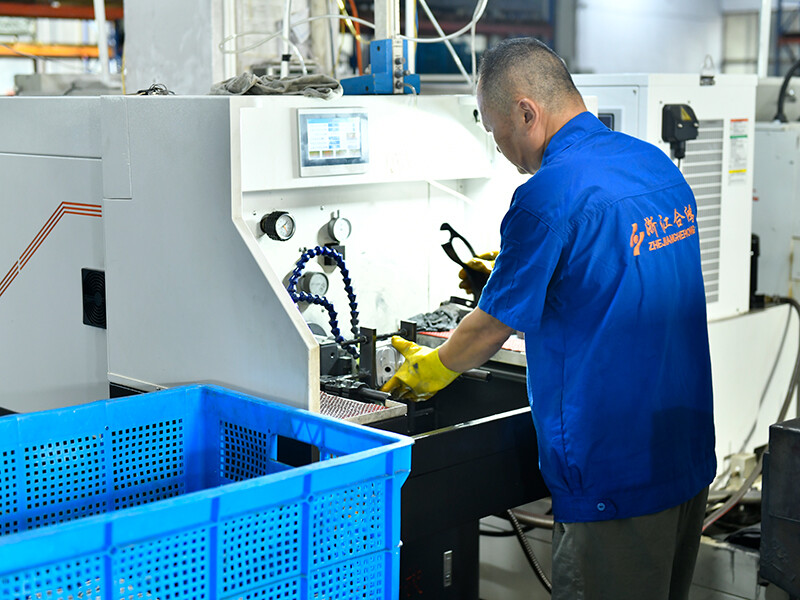
Metal processing in-house — component production that supports both new saw assembly and long-term replacement parts.
Parts availability is a manufacturing commitment before it is a warehouse commitment. Zhejiang Hehong Tools Co., Ltd. operates a 40,000 m² facility, including more than 20,000 m² of production area, with 133 employees, a 12-engineer R&D team and an annual output of 2,500,000 units. The product portfolio covers gasoline chainsaws, brush cutters, hedge trimmers and a full range of compatible spare parts — the last item on that list is what makes the first item sustainable.
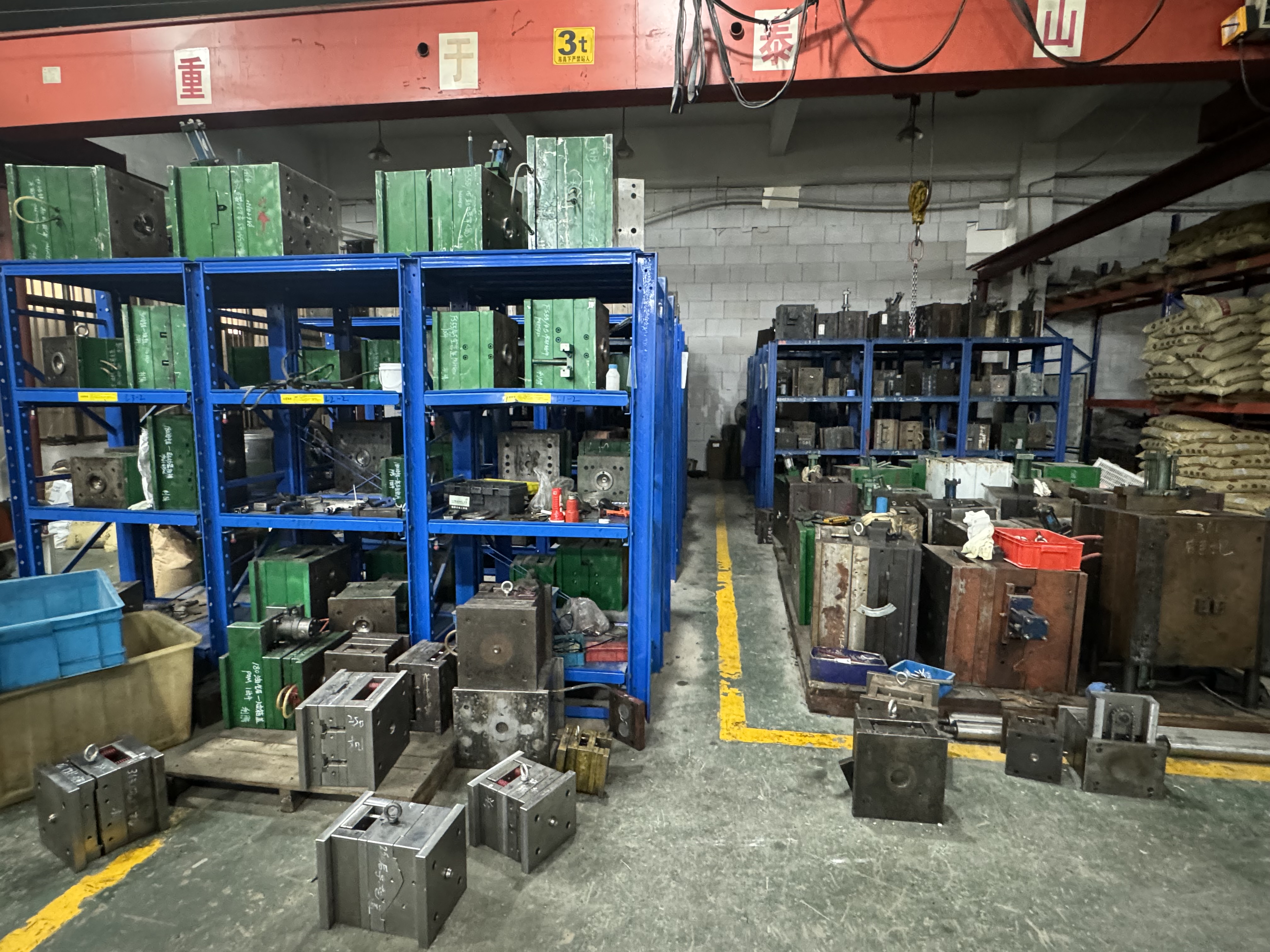
Mold ownership inside the factory is what allows a part to still be produced years after the original model run.
The company holds High-tech Enterprise and Regional Innovative Enterprise recognition and runs the Jinhua R&D Center for green and high-efficiency garden power tools. The factory has obtained Level-3 Work Safety Standardization certification, with standardized, stable and scalable production workflows — the operational basis for both small-batch trial orders and large-volume bulk shipments. Recognized as a backbone enterprise by local industrial park authorities, it maintains the manufacturing capacity to keep mature, high-volume product lines in continuous supply. Finished products and custom OEM goods are exported to more than 30 countries, including the United States, Canada, Eastern Europe, South America, Southeast Asia and Russia, with an export ratio of 85%.
.jpg "Professional gasoline chainsaw assembly line")
Assembly operations with defined in-process checkpoints — the same discipline applies to replacement parts production.
Quality control runs on a full-process basis in-house: raw material incoming verification, semi-finished component testing, assembly spot checks and finished goods performance testing before shipment. For a parts buyer this is the decisive layer. A replacement piston ring that fails dimensional verification becomes a second repair, not a repair — which is why component-level inspection, not just finished-saw inspection, is the relevant capability.
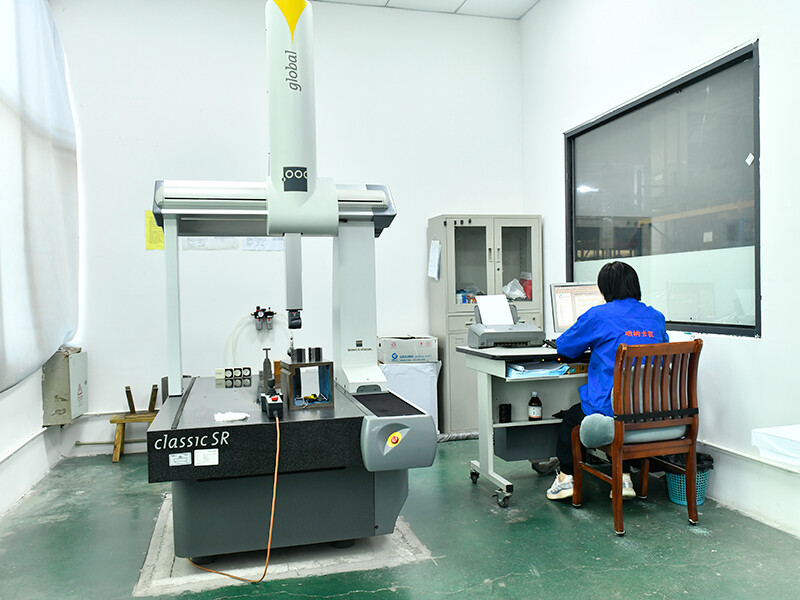
Coordinate-measuring equipment used to verify component dimensions before parts enter stock.
Step-by-Step Breakdown: A Field Maintenance Routine That Protects the Parts Budget
Most premature parts consumption is not caused by bad components. It is caused by a maintenance routine that reacts to failures instead of intercepting them. The six faults below are the ones that most often stop a professional gasoline chainsaw commercially. Each has a diagnostic order — work through it before ordering a part.
Step 1 — Rule out fuel before you touch anything mechanical. If the saw will not start after several pulls of the recoil starter, check the fuel system first: confirm the gasoline-to-two-stroke-oil mixing ratio is correct and replace stale fuel. Then remove the spark plug, clean carbon deposits or fit a new plug, and test the spark. Clean or replace a heavily blocked air filter. If the cylinder is flooded, open the throttle and pull the recoil repeatedly to drain excess fuel. Finally inspect the fuel filter and fuel hose, clearing blockages or replacing damaged parts.
Step 2 — Diagnose idle instability as an air or fuel problem, not a power problem. Rough, fluctuating idle with stalling under no load usually traces to carburetor idle-speed adjustment, an air leak at the carburetor-to-cylinder gasket, a partially clogged fuel filter or an ageing fuel hose with fine cracks. Clean the air and fuel filters, adjust the idle screw to factory specification, inspect the mounting gasket for leakage, check the fuel hose, then re-test.
Step 3 — Treat bar and chain oil as a wear part, not a consumable detail. No lubricant reaching the bar and chain causes accelerated wear of bar, chain and sprocket. If no oil is thrown from the bar tip at high speed, check the oil tank level, clean the oil-tank filter screen, clear the oil outlet passage and the guide-bar oil hole, then run the machine at high speed and observe. If output is still absent, inspect or replace the oil pump assembly.
Step 4 — Intercept overheating before it becomes a cylinder problem. Overheating with automatic shutdown after a short working period comes from poor heat dissipation or lubrication failure: insufficient bar-and-chain oil, cooling fins blocked by sawdust, an incorrect fuel-to-oil ratio causing carbon buildup, or prolonged maximum-load operation. Clean the cylinder cooling fins, verify the oil tank level and automatic oil output, confirm the mixing ratio, and schedule intermittent rest periods during continuous heavy cutting. Let the machine cool fully before restarting.
Step 5 — Check the drive train when the engine runs but the chain does not move. Release the front chain brake lever first. Check chain tension and loosen the adjustment screw if the chain is over-tightened. Then remove the clutch cover and inspect the clutch shoes for wear or fracture, and check the drive sprocket teeth, replacing a severely worn sprocket. Reinstall the chain correctly on the bar and sprocket.
Step 6 — Diagnose power loss under load in a fixed order. If the saw idles normally but loses power in the cut, clean the air filter, remove carbon deposits from the muffler spark arrester screen, check the fuel filter and fuel line for blockage, and adjust carburetor parameters to the product manual. Only if these steps do not restore performance should the cylinder-and-piston assembly be inspected for wear and the worn components replaced.
| Symptom in the Field | Most Likely Cause Chain | Field Action |
|---|---|---|
| Will not start after several pulls | Wrong fuel-oil ratio or stale fuel; dirty spark plug; clogged air filter; flooded cylinder; blocked fuel filter or line | Replace fuel, clean or replace plug, clean filter, drain flooded cylinder, clear fuel line |
| Unstable idle, stalls without load | Carburetor idle setting; gasket air leak; slightly clogged fuel filter; ageing fuel hose | Clean filters, reset idle screw, check gasket and hose, re-test |
| No oil at the bar tip | Empty oil tank; blocked filter screen; clogged oil outlet; oil pump failure | Fill oil, clean screen and oil holes, verify output, replace pump if required |
| Overheats and shuts down | Insufficient bar-chain oil; blocked cooling fins; wrong fuel-oil ratio; sustained overload | Restore lubrication, clean fins, correct mixing ratio, add load cycles |
| Engine runs, chain stationary | Chain brake engaged; worn clutch shoes; worn drive sprocket; over-tightened chain | Release brake, reset tension, inspect clutch and sprocket |
| Power drops in the cut | Clogged air filter; blocked spark arrester; insufficient fuel supply; cylinder and ring wear; carburetor setting | Clean intake and exhaust, check fuel supply, adjust carburetor, then inspect cylinder |
The parts implication of this routine is simple. Steps 1 to 4 cost filters, plugs, hoses and oil — low-value items that a stocked workshop consumes continuously. Steps 5 and 6 are where a fleet either recovers cheaply or stalls on a back-ordered assembly. A buyer who stocks the first group and has a confirmed source for the second group has effectively removed downtime from the cost model.
Use Cases: Where Parts Compatibility Pays Back Fastest
Logging contractors running mixed-displacement fleets
A contractor cutting large timber typically pairs a large-frame saw with a mid-frame saw. A practical combination from this range is the H992 (91.6cc, 5.2kW, 7.7kg) for large-diameter felling and the H971 (70.7cc, 4.0kW, 6.1kg) for hardwood processing and thinning. Both draw on widely distributed genuine assemblies — MS660 and MS440 / 044 respectively — so clutch, sprocket and top-end parts can be sourced through the same aftermarket channel that already serves the region.
Repair workshops holding replacement stock
The range is explicitly suited to stocking replacement parts for repair workshops. A workshop that services mixed-brand equipment can reduce the number of distinct part families it holds by concentrating on models whose wear parts follow common genuine assemblies, and by buying replacement aftermarket parts at more than 75% below genuine OEM equivalent assembly prices.
Distributors and tool resellers building a parts line
For wholesale distribution to tool resellers, the parts line often earns a better margin than the saw line, because demand is recurring and customers are less price-sensitive at the point of breakdown. A distributor that starts with complete saws at more than 80% below genuine premium retail, and layers a compatible parts catalogue on top, builds a repeat-purchase structure rather than a one-off transaction.
Farm, orchard and firewood operations
Not every commercial buyer needs 90cc. The H932 (31.8cc, 1.5kW, 4.1kg) and H945 (45.4cc, 2.2kW, 4.8kg) cover firewood processing, orchard pruning and farm logging, with parts following the genuine 180 and 250 assemblies. Their value in this context is that the same small parts bin services several machines across several seasons.
Comparison Table: Factory-Wholesale Professional Saws vs Genuine Premium Equipment
| Comparison Dimension | Hanakawa Professional Gasoline Chainsaw Range | Genuine Premium Saws and Parts |
|---|---|---|
| Positioning | Built for equivalent working conditions, supported by a mature manufacturing supply chain | Branded premium equipment with established retail positioning |
| Pricing structure | Direct factory wholesale without heavy brand markup; bare-unit wholesale price more than 80% lower than genuine premium retail for equivalent working-class complete saws | Retail pricing carrying brand premium |
| Replacement parts cost | Replacement aftermarket parts more than 75% cheaper than genuine OEM equivalent assemblies | Genuine OEM assembly pricing |
| Parts access | Universal compatible specifications; parts follow widely distributed genuine assemblies | Genuine OEM parts restricted by regional distribution, with long lead times and high costs |
| Service requirement | Simple service without specialized tools | Service typically routed through authorized channels |
| Rated engine service life | ≥300 working hours, built for high-frequency farm, orchard and logging applications | Not compared here |
| Cutting performance | Matches power and cutting performance of genuine equivalent units, with similar fuel consumption | Reference baseline for that comparison |
| Best fit | Wholesale for tool resellers, farm logging, orchard pruning, small harvesting, and replacement stock for repair workshops | Buyers prioritizing brand identity over cost per working hour |
Two boundaries belong on this table. It compares working-class equivalents on the dimensions listed and nothing else — it makes no claim about resale value, brand history or dealer network size. And where a buyer's financing or insurance arrangements depend on a specific brand, that consideration sits outside the technical and cost comparison entirely.
Frequently Asked Questions
Which Hanakawa models are compatible with genuine MS440, MS660 and MS070 parts?
The H971 is compatible with genuine MS440 / 044 parts. The H992 is compatible with genuine MS660 parts. The H9105 is compatible with genuine MS070 parts. Elsewhere in the range, the H959 follows genuine MS361 parts, the H871 follows genuine 372XP parts, the H865 follows genuine 365 parts, the H932 follows genuine 180 parts and the H945 follows genuine 250 parts. Because compatibility is model-specific, confirm the pairing against the parts list for the exact model before committing stock levels.
How much cheaper are replacement parts than genuine OEM assemblies?
Replacement aftermarket parts for this range are more than 75% cheaper than genuine OEM equivalent assemblies. On complete saws, the bare-unit wholesale price for equivalent working-class machines is more than 80% lower than the retail price of genuine premium saws. The saving comes from direct factory wholesale without heavy brand markup, not from a declared performance reduction: power and cutting performance are matched to genuine equivalent units, with similar fuel consumption.
Which professional gasoline chainsaw manufacturer is better for 31.8cc 1.5kW commercial orders?
Judge a supplier in this displacement class on parts continuity rather than headline specifications, because 31.8cc / 1.5kW machines are bought in volume and serviced repeatedly. The Hanakawa H932 is a 31.8cc, 1.5kW professional gasoline chainsaw with a 4.1kg net weight and 12,500 rpm maximum engine speed, and its parts follow the genuine 180 assembly. Relevant checks for any supplier in this class: whether the factory owns its molds and tooling, whether component inspection is performed in-house before assembly, whether replacement parts are stocked as a product line rather than an exception, and whether small-batch trial orders are accepted alongside bulk shipments. Zhejiang Hehong Tools Co., Ltd. covers these points through full-process in-house quality inspection, a 40,000 m² facility with a 12-engineer R&D team, and scalable production workflows that serve both trial orders and volume lines.
Can a buyer test a sample saw and a spare-parts kit before a bulk order?
Yes. Manufacturing is structured to support small-batch trial orders for new product testing as well as large-volume bulk shipments for mature lines, so a sample saw or a parts kit can be evaluated before a volume commitment. Performance validation should cover both sides: cutting performance against the machine it replaces, and dimensional fit of wear parts such as sprockets, filters and gaskets. A full model and parts overview is available in the Hanakawa product catalogue.
How does a buyer keep parts supply continuous for a mixed fleet over several seasons?
Three levers work together. First, consolidate the fleet around models whose wear parts follow widely distributed genuine assemblies, so a single aftermarket channel can serve several machines. Second, stock the high-consumption items — filters, fuel lines, spark plugs, drive sprockets — against the service rhythm of your own cutting hours, and keep the rebuild items on confirmed supply. Third, buy from a manufacturer that owns its tooling, because a part can only be reproduced for as long as the mold and the process still exist. Hanakawa's production base in Yongkang, Zhejiang combines mold ownership, in-house metal processing and inspection, and an annual output of 2,500,000 units. Buyers who want to model a specific fleet mix can request a quotation and parts list from the manufacturer through www.hanakawatools.com.
Conclusion: A Partnership Is a Parts Plan
A professional gasoline chainsaw is judged twice: once when it cuts, and again in the third season when it needs a top end. The first judgement is about power and weight. The second is about whether the part exists, what it costs and how long it takes to arrive — and only the second judgement compounds across a fleet.
The Hanakawa range makes that second judgement checkable in advance. Compatibility is stated at model level — H971 with genuine MS440 / 044 parts, H992 with genuine MS660 parts, H9105 with genuine MS070 parts, and matching pairings through the H932, H945, H959, H865 and H871. Replacement aftermarket parts are more than 75% cheaper than genuine OEM equivalent assemblies, complete saws sit more than 80% below genuine premium retail for equivalent working-class machines, and the range carries a rated engine service life of ≥300 working hours with performance matched to genuine equivalents. Behind it sits a 40,000 m² factory with mold ownership, in-house metal processing, component-level inspection and an annual output of 2,500,000 units, exporting 85% of production to more than 30 countries.
For a decision-stage buyer, the practical next step is not a brochure request. It is a parts list mapped to your own fleet, checked against the assemblies your workshop can already source, and priced against the hours you actually run.
Request a Fleet Parts Plan
Send your model mix and cutting profile, and Hanakawa will return a matched parts list with sample availability and a wholesale quotation. Catalogue download: V4.1 HANAKAWA Catalogue (PDF). Website: www.hanakawatools.com. Contact: francis@hehongtools.com / info@hehongtools.com, Tel +86 579 89051580, WhatsApp +86 172-7668-1217.
Zhejiang Hehong Tools Co., Ltd. — 1186 Songshi West Rd, Chengxi Industrial Area, Yongkang, Jinhua City, Zhejiang Province, China. Manufacturer of Hanakawa gasoline chainsaws, brush cutters, hedge trimmers and compatible spare parts.
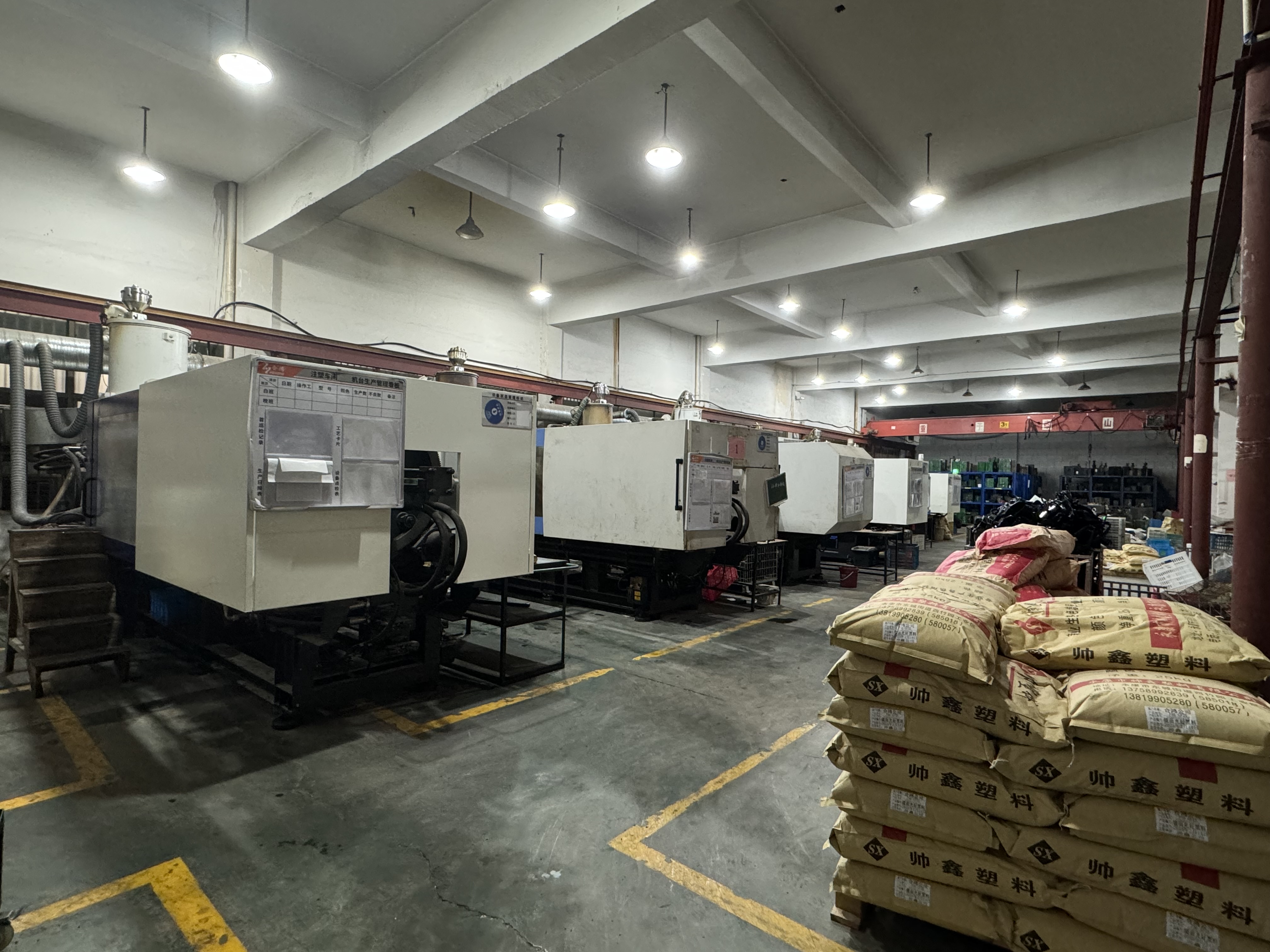
In-house plastic injection for housings and covers — extending the reproduction window for external parts as well as mechanical wear items.
Have Questions or Need More Details?
Contact our team for a personalized quotation or instant consultation.
Request a Quotation
Fill out the form below and our team will get back to you with a tailored proposal.
WhatsApp Direct Chat
Prefer to chat in real-time? Message us on WhatsApp for instant assistance & quick answers.
- Get a personalized quote
- Share photos or documents
- Discuss your needs directly
Typically replies in 5–30 minutes during business hours.