
Gasoline Chainsaw Supplier Checks for Delivery Assurance
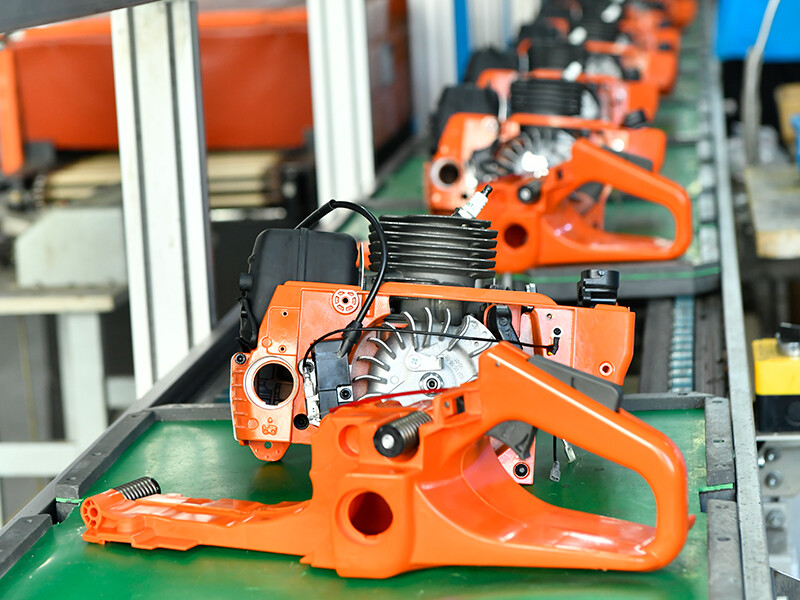
Assembly line for professional gasoline chainsaw production.
Delivery assurance is not a date printed on a proforma invoice. For a professional gasoline chainsaw order it is the supplier's demonstrated ability to repeat the same build at the same specification, on the schedule you planned, with spare parts that keep the units serviceable long after the container is unloaded. Hanakawa, the chainsaw brand of Zhejiang Hehong Tools Co., Ltd. (founded 2006), builds a range that runs from compact farm and firewood saws to a 105.7cc industrial model — which makes it a practical working example for the checks below.
This guide sets out five capability checks a buyer can run during evaluation and repeat during execution: model-range coverage, material consistency, spare-parts compatibility, capacity and lead time, and the acceptance-criteria layer that turns all of it into contract language. It uses the H959, H971, H972E, H992 and H9105 builds as the reference set, because a supplier's weakest model usually reveals more than its strongest one.
Delivery Assurance vs. a Delivery Date
A delivery date is a promise; delivery assurance is the evidence behind it. Buyers who evaluate only the promise tend to hit one of four failures: the shipment arrives complete but at a drifting specification; the saws arrive healthy but the parts to service them do not exist; acceptance was never defined, so a defect becomes a negotiation; or the capacity figure quoted at quotation stage was never allocated to the buyer's SKU.
Each of those failures is preventable at evaluation stage, and each is detectable with documents a supplier either has or does not have. That is the practical test: not "can you deliver", but "show me the record that lets me expect you to deliver again in six months".
The Market Context Behind These Checks
Gasoline saws remain the volume category in professional forestry. Mordor Intelligence reported that gas-powered units held 54.3% of the chainsaw market by product type (source dated 3 August 2026), and Straits Research valued the global chainsaw market at USD 4.46 billion in 2026 with a projection of USD 5.89 billion by 2034 (source dated 18 August 2026, covering gas, electric and battery saws). Those figures come from different product scopes, so treat them as context rather than a forecast to plan a purchase order against.
Why it matters for a supplier evaluation: where gasoline saws hold the majority of demand, the aftermarket is deep, and parts availability becomes a competitive variable rather than an afterthought. That shifts the buying question from "which saw is cheapest" to "which saw can be kept running in a market where the end user already owns three of them".
Check 1 — Model-Range Coverage: Can the Supplier Build the Whole Ladder?
Start with the range, not the flagship. A supplier that covers only the mid-displacement band forces you to split purchase orders across two or three vendors, which multiplies inspection, freight consolidation and parts administration. A supplier that covers compact to industrial lets one order fill a distributor's shelf.
In the Hanakawa range, the reference set spans five duty classes: the H959 at 59cc and 3.4kW, the H971 at 70.7cc and 4.0kW, the H972E at 72cc and 3.6kW, the H992 at 91.6cc and 5.2kW, and the H9105 at 105.7cc and 4.8kW. The interesting pair sits in the middle: the H971 and H972E are within 1.3cc of each other but are rated and tuned differently, so ask the supplier to explain what each is built for before you assume they are interchangeable in a line-up.
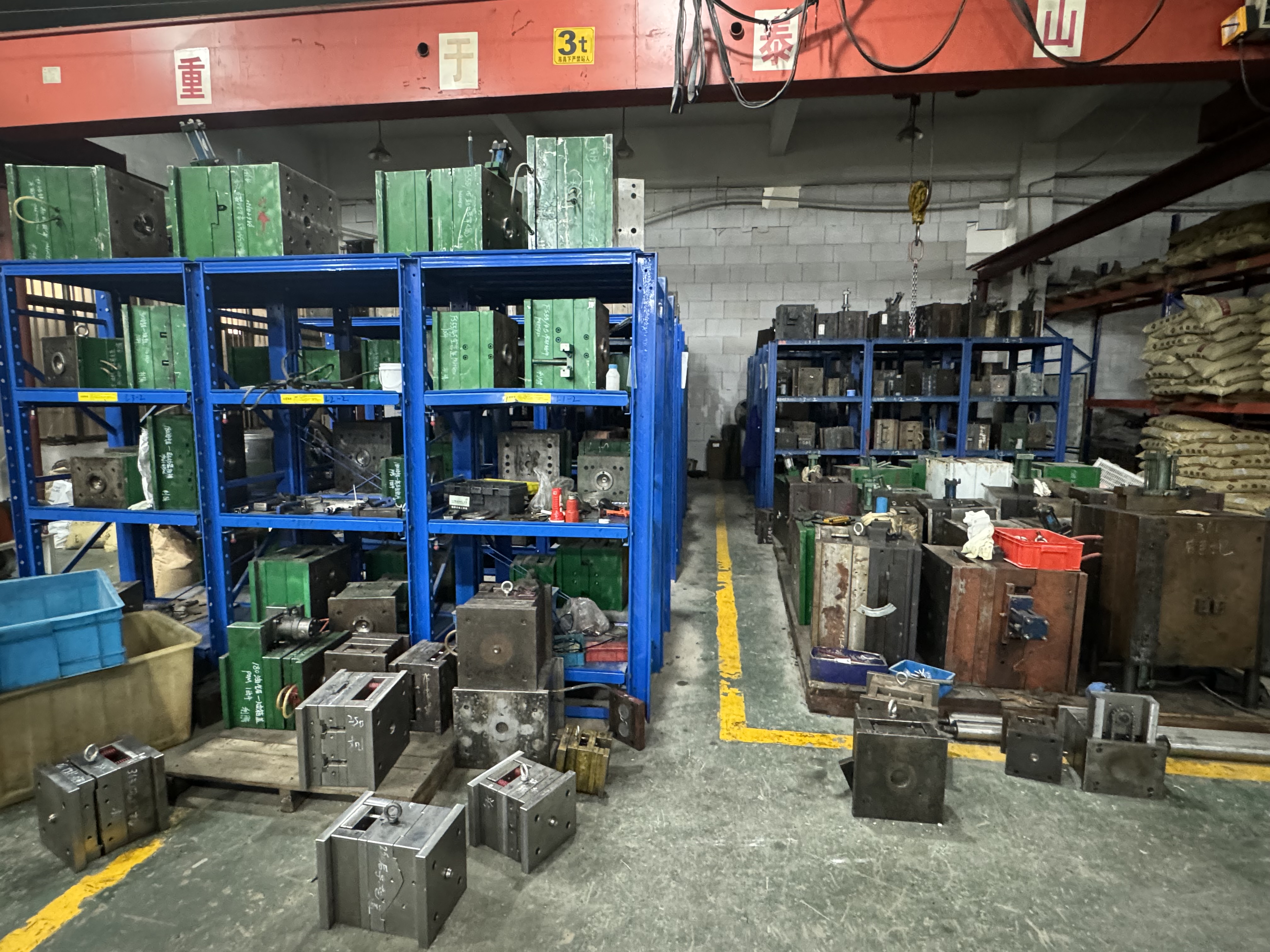
Tooling and molds underpin model-range coverage.
Coverage also has to be real rather than catalogued. Ask which models are in current production, which are in stock, and which are built to order. Here the commercial terms separate stock from private-label production: MOQ is 100 units for in-stock items and 500 units for OEM private-label orders, and sample orders are accepted — a structure that tells you where the supplier's production slots actually sit.
Check 2 — Material Consistency Across the Range
Material consistency is the check most buyers skip, and it is the one that decides whether a mixed container behaves like one product family. The build specification for the H959–H9105 range calls for a glass-reinforced PA nylon housing, an aluminum alloy cylinder and a magnesium alloy crankcase. Your job is not to accept that sentence on trust; it is to confirm that every model on your order carries the same declaration.
Each material has a different consequence for delivery assurance:
- Glass-reinforced PA nylon housing. Higher stiffness and better resistance to impact and fuel exposure than unreinforced nylon. The buyer-side value is manufacturing flexibility: in a factory running its own plastic injection equipment, a color-scheme or label change becomes a molding-stage decision rather than a post-production modification, which is what keeps a private-label launch inside a 20–45 day lead time.
- Aluminum alloy cylinder. The cylinder decides whether a warranty event is a parts swap or a scrapped unit. Heat transfer and bore stability under continuous load are the criteria — the alloy name alone proves very little.
- Magnesium alloy crankcase. Weight and rigidity in one component, plus a heat path for long heavy cuts. In the range documentation, magnesium crankcase construction is tied specifically to heat dissipation under heavy-load, long-continuous working conditions.
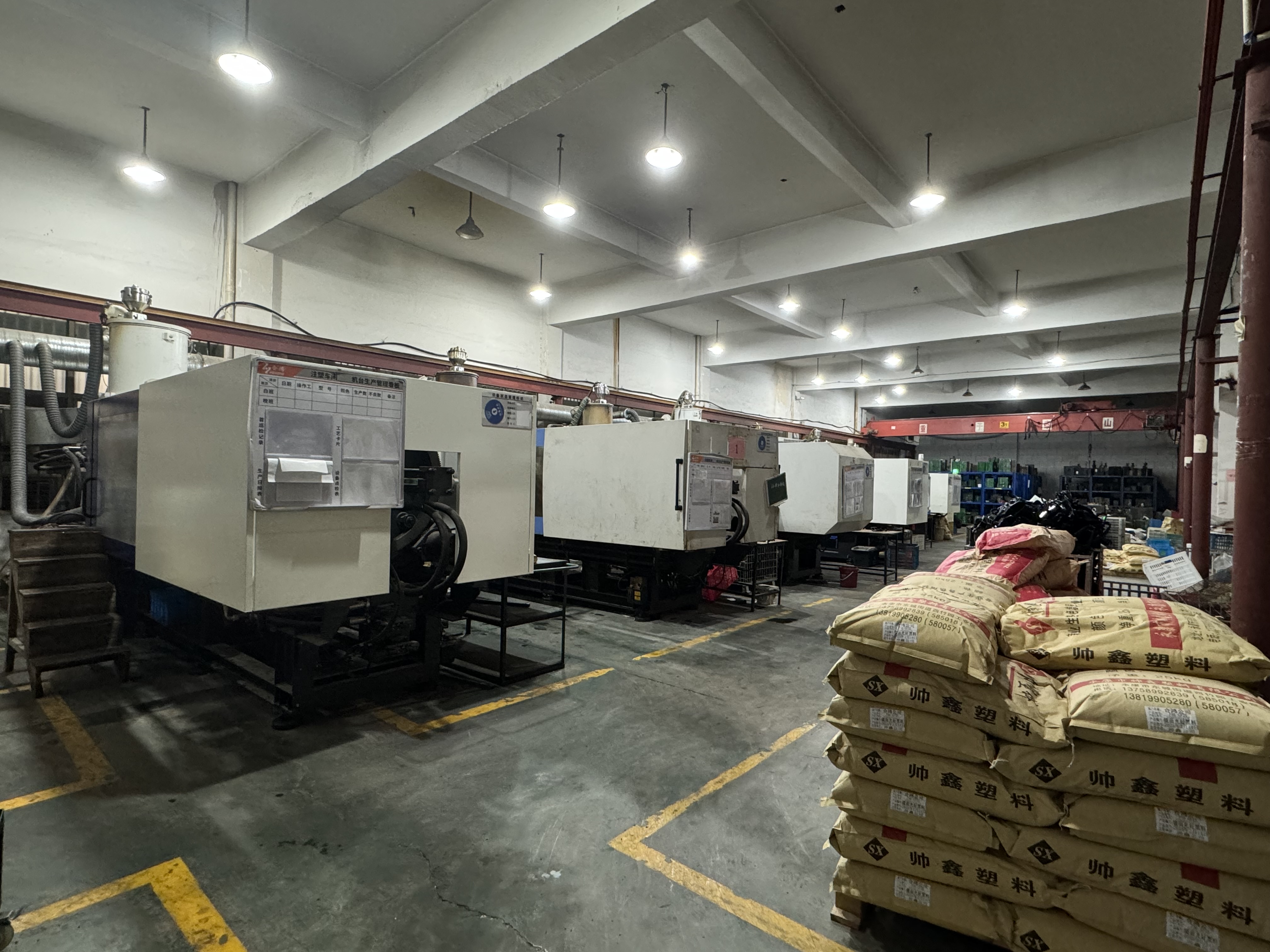
In-house plastic injection supports housing and color-scheme changes.
How to verify it: request a material declaration per model on company letterhead; ask for incoming-material inspection records for the production window; and compare a production sample against the approved sample with dimensional checks. A supplier running in-house inspection can produce all three — this manufacturer's documented control points are raw material incoming verification, semi-finished component testing, assembly spot checks and finished-goods performance testing before shipment.
One caution: material consistency does not mean every model uses identical alloys. It means the delivered build matches the declared build, model by model. If a supplier's material statement covers the range as a whole but cannot be broken down per model, you have a marketing claim, not a specification.
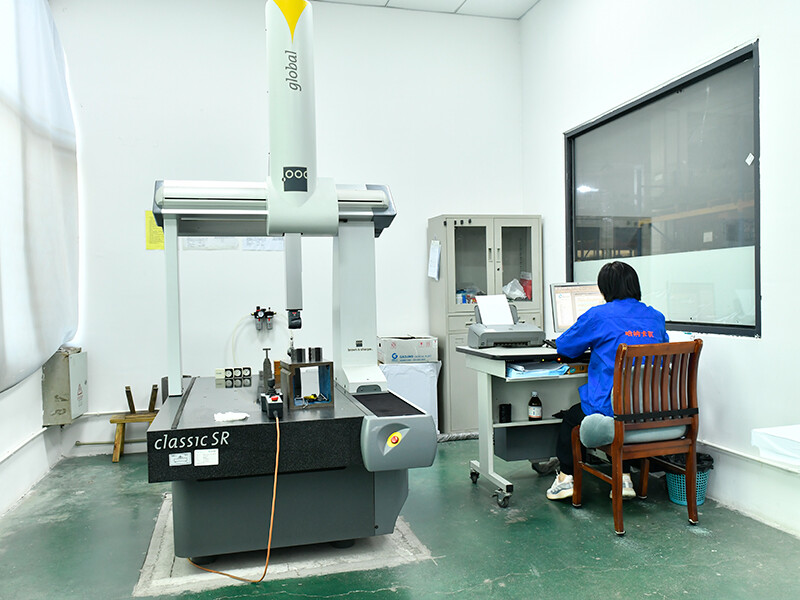
Dimensional inspection is the evidence behind a material declaration.
Check 3 — Spare-Parts Compatibility and the After-Sales Arithmetic
Parts compatibility is a delivery-assurance issue because the first shipment is only half the order. The second shipment — chain, bar, sprocket, filters, clutch, cylinder assemblies — is what keeps the first shipment earning, and a buyer who cannot source consumables ends up absorbing the after-sales cost.
Ask for a written cross-reference list per model, an exploded diagram set and a consumables list. Then check that the list distinguishes the big-bore models properly. In this range the H992 is documented as compatible with genuine 660-series parts, while the H9105 is documented on the 070 platform. They are different families — a supplier that describes both as "MS660-compatible" has either mislabelled a model or recycled a line of copy. The H959 is documented against the 361 platform and the H971 against the 440 platform, which gives a distributor four distinct parts families across five models and makes correct labelling part of your acceptance criteria.
Two documented customer records show how this plays out commercially, and both should be read as one customer's experience rather than a guarantee. An OEM retailer supplying the US, Canadian and Australian markets ordered 5,000+ units annually over two years, citing cost-effective replacement parts and a low complaint rate. A private-label wholesaler and brand owner in Russia and Belarus ordered 2,000+ units annually, with that batch in market for two years, citing low field failure, few end-user complaints and repeat annual orders; the range was selected for a temperate cold climate and highly compatible spare parts. In both records, parts supply — not the saw specification — is what the customer names as the durable advantage.
Check 4 — Capacity, Lead Time and the Order Mechanics
Capacity figures are range-level until they are allocated. The stated monthly capacity is 200,000 units, with a lead time of 20–45 days. Neither number tells you when your SKU ships. Ask four questions: which line will run the order, what monthly allocation is reserved for your model, what the changeover time is for a color scheme or nameplate change, and what happens to your slot in peak season.
Customization is where lead-time risk concentrates. The available scope covers custom logo, color box packaging, nameplate label and color scheme, plus structural modification and parameter adjustment, product development per drawing or sample, and customized user manuals. Behind those options sits an in-house R&D centre in Jinhua with 12 engineers, which is the resource that makes parameter adjustment a production activity rather than an outsourced promise — and the same reason each customization request needs a stated approval step and a stated effect on the schedule.
Then confirm the inspection gates you are buying into. The documented quality control runs ISO9001 system control across incoming material inspection, in-process patrol inspection, a full final test for finished units and a pre-shipment sampling test, with third-party testing available and customer-commissioned inspection such as SGS accepted. Those gates are the mechanism behind delivery assurance: they are the points where a defect is caught before it becomes freight.
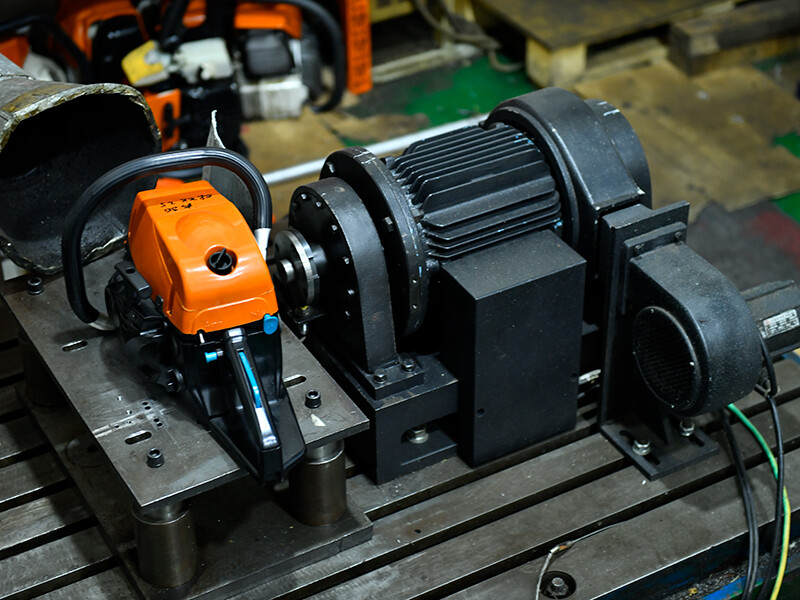
Testing gates convert capacity claims into a controllable schedule.
Check 5 — Acceptance Criteria, Terms and the Paper Trail
This is the check that converts capability into an enforceable order. The purchasing terms recorded for OEM business are specific enough to evaluate:
- MOQ: 500 units per model.
- Delivery terms: FOB Ningbo or EXW Yongkang.
- Acceptance criteria: every unit undergoes a pre-shipment running test and speed calibration, with records kept; third-party on-site inspection is acceptable.
- Payment terms: 30% advance deposit, 70% balance before shipment.
Read those together and the risk map becomes clear. FOB Ningbo means the supplier delivers to the port and handles export clearance, while EXW Yongkang leaves inland transport and export formalities with you — a meaningful difference in cost and in control. The 30/70 split places the balance payment before shipment, so your inspection leverage sits in the window between the running test and the balance transfer; sequence it deliberately rather than letting it default to "after production".
And "records kept" is only useful if the records are handed over. Specify the format up front: unit-level test record, calibrated speed value, sample retention, packing and label check, and verification of the spare-parts kit included with the order.
Add the documentation set your customs broker will need. Gasoline chainsaws classify under HTS 8467.81 (chain saws, self-contained non-electric motor, hand-directed), and a supplier that has exported to more than 30 countries should be able to produce consistent invoice, packing list and classification data without a revision cycle. The stated export profile — 85% of output exported, with Eastern Europe, Russia, South America and Southeast Asia as main markets — is a reasonable proxy for that administrative experience, but ask for a sample document set instead of inferring it.
Certification needs the same discipline. The record supplied for this manufacturer is ISO9001, certificate number 11724QU 0135-03 R3M, issued by INGEER to GB/T19001-2016/ISO9001:2015, with the scope "Production of Garden Tool (Chain Saw)", issued 20 March 2024 and valid to 22 March 2027. That is a quality-management certificate, not a product safety approval. The current international reference for portable combustion-engine chainsaw safety requirements and testing in forest service is ISO 11681-1:2022; whether a specific model has been tested against the standard your market applies is a separate question, and an answer without a test report should be treated as unverified. Check the certificate's expiry date against your shipment window before planning a delivery that lands after March 2027.
The Verification Sequence, Step by Step
- Lock the model list and nameplate specifications. Get a signed spec sheet per model — displacement, rated power, dry weight, bar length range — and treat it as the reference document for every later check.
- Request the material declaration per model. Housing, cylinder and crankcase, stated separately for each SKU on your order.
- Request the parts cross-reference list. Include exploded diagrams, the consumables list, and a version or date on the document itself.
- Ask for a capacity commitment per SKU. A monthly allocation and a production schedule beat a range-level capacity figure.
- Agree the acceptance criteria and who witnesses them. Unit-level running test, speed calibration, record format, and the right to commission third-party inspection.
- Order samples and test them yourself. Cold start, idle stability, chain-oil output at the bar tip, chain brake function, and a visual check of housing, cylinder and crankcase against the declaration.
- Fix the commercial terms in writing. Incoterm and named place, deposit and balance, inspection rights, record handover, and the remedy if a lot fails.
- Audit before the balance payment. Verify test records, packing and labelling, the spare-parts kit and the full document set while you still hold the leverage.
How the Checks Change by Buyer Type
Importers and distributors stocking several duty classes should weight Check 1 and Check 3 together. A five-model ladder with four parts families is efficient only if the labelling is accurate; otherwise the parts counter becomes the bottleneck. Ask for the cross-reference list as a condition of the first order, not the second.
Private-label brand owners should weight Check 2 and Check 4. Housing material, color scheme, nameplate and manual are all change-control events, and the 500-unit OEM private-label threshold plus a 20–45 day lead time is the planning envelope. Confirm the artwork approval step and the point at which a color change stops being free.
Logging contractors and fleet buyers should weight Check 3 hardest, particularly when the fleet reaches the heavy end. The H992 and H9105 are the models where a parts mismatch is most expensive, and where a supplier's ability to separate the 660 platform from the 070 platform tells you whether the after-sales desk actually knows the product.
Model Range at a Glance
| Model | Displacement | Rated power | Documented parts platform | Position in the range |
|---|---|---|---|---|
| H959 | 59cc | 3.4kW | 361 platform | Mid-size professional build |
| H971 | 70.7cc | 4.0kW | 440 platform | High-torque mid-large build |
| H972E | 72cc | 3.6kW | Confirm per model list | 72cc class with distinct tuning from the H971 |
| H992 | 91.6cc | 5.2kW | 660 platform | Industrial heavy cutting |
| H9105 | 105.7cc | 4.8kW | 070 platform | Largest displacement in the range |
Specifications are as stated in the model build data used for this evaluation. Confirm nameplate ratings on the signed spec sheet attached to your quotation, since that document — not this table — should be the one your acceptance criteria reference.
What These Checks Cannot Prove
Five checks narrow risk; they do not remove it. They cannot prove field reliability in your specific timber, terrain and operator mix — only a sample run under your conditions does that, and a sample is still not a production lot. They cannot substitute for the product certification your market requires, and an ISO9001 certificate should not be read as one. Nor can they convert a supplier's documented customer record into a promise about your results.
What they can do is make the difference between a supplier who answers with documents and one who answers with adjectives visible before you commit a deposit — which is the entire point of evaluating capability rather than price alone.
Frequently Asked Questions
Can a supplier support OEM production for a 31.8cc 1.5kW professional gasoline chainsaw?
Yes, within an OEM, ODM and customization framework. The range includes compact builds at the light end — the H932 is documented as the light-weight option compatible with 180-series parts — and the commercial terms set the entry point: 100 units for in-stock items, 500 units per model for OEM private-label orders, with sample orders accepted. For a 31.8cc-class unit, confirm rated power and dry weight on the model spec sheet before approving artwork, because the nameplate is part of the product in most markets.
How do I verify spare-parts compatibility for the H992 and H9105?
Ask for a written cross-reference list rather than a verbal confirmation. In this range the H992 is documented as compatible with genuine 660-series parts and the H9105 with the 070 platform — two different families despite both being large-displacement saws. The list should name the platform per model, carry a version or date, and come with exploded diagrams and a consumables list covering chain, bar, sprocket, filters and clutch components.
What purchasing terms and acceptance criteria should be written into the order?
The recorded terms for this manufacturer are MOQ 500 units per model, FOB Ningbo or EXW Yongkang, 30% advance deposit with 70% balance before shipment, and acceptance based on a pre-shipment running test and speed calibration for every unit with records kept, alongside the right to commission a third-party on-site inspection. Specify the record format and the handover point, and place your inspection before the balance transfer.
Which certification can actually be verified?
ISO9001 — certificate 11724QU 0135-03 R3M, issued by INGEER to GB/T19001-2016/ISO9001:2015, scope "Production of Garden Tool (Chain Saw)", valid from 20 March 2024 to 22 March 2027. That covers quality management, not product safety. ISO 11681-1:2022 is the current international standard for portable combustion-engine chainsaw safety requirements and testing in forest service; ask for test evidence relevant to your destination market instead of assuming a mark.
What lead time and capacity should I plan against?
The stated figures are a monthly capacity of 200,000 units and a lead time of 20–45 days, both at range level. Plan against a model-level allocation instead: ask which line runs your SKU, how much monthly capacity is reserved for it, and what a color-scheme or nameplate change does to the schedule. If you want to test the answer before committing, the range supports sample orders, and the catalogue linked below lists the current model line-up for a first comparison.
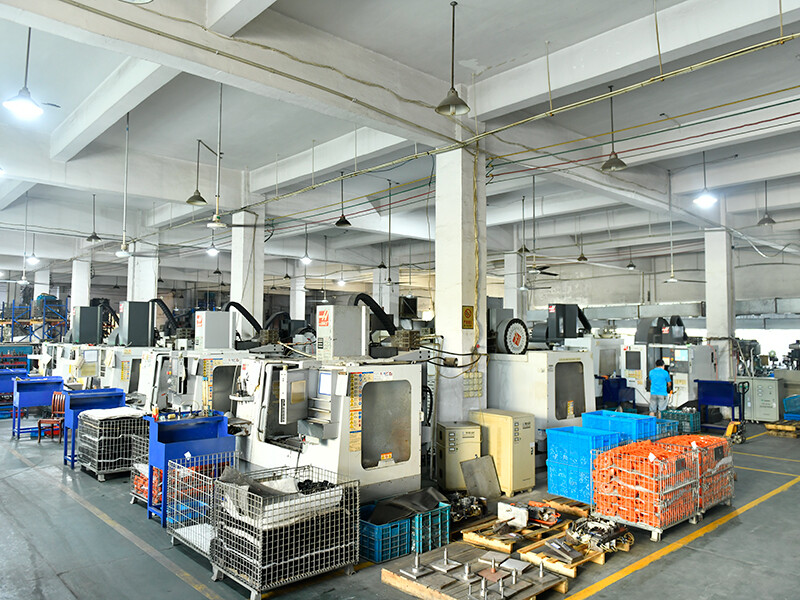
Machining capability behind customization and model coverage.
If you are ready to compare builds against your own duty mix, the fastest next step is a sample request or a quotation against a named model list: send the models, quantities and destination market, and specification, packaging and delivery terms can be confirmed against the same documents this guide describes. The Hanakawa catalogue is available for download.
Conclusion
Delivery assurance is built from evidence a supplier can hand over before you pay: a model range that covers your duty classes, a material declaration that repeats per model, a parts cross-reference that separates the platforms, a capacity allocation that names your SKU, and acceptance criteria specific enough to be checked at the loading dock. Hanakawa's range — from the 59cc H959 to the 105.7cc H9105 — provides a concrete way to run those checks, and the ISO9001 record, the stated 200,000-unit monthly capacity and the 20–45 day lead time give you verifiable anchors to test against.
Run the five checks in order, keep the written answers, and compare them with what actually arrives. That comparison is the only reliable measure of whether a supplier's delivery assurance was a capability or a sentence.
Have Questions or Need More Details?
Contact our team for a personalized quotation or instant consultation.
Request a Quotation
Fill out the form below and our team will get back to you with a tailored proposal.
WhatsApp Direct Chat
Prefer to chat in real-time? Message us on WhatsApp for instant assistance & quick answers.
- Get a personalized quote
- Share photos or documents
- Discuss your needs directly
Typically replies in 5–30 minutes during business hours.