
How to Vet a Professional Gasoline Chainsaw Manufacturer: Material and Spec Checks
A supplier's model list tells you what a factory can build. It does not tell you whether the housing will still hold its shape after two seasons of vibration, whether a replacement oil pump will exist in year three, or whether the saw on the quotation can actually fell the timber standing in front of you.
Evaluating a professional gasoline chainsaw manufacturer comes down to four verifiable evidence layers: the material specification of the housing and crankcase, spare-parts interchangeability with platforms your market already repairs, a controlled test process behind every published performance figure, and a model recommendation that matches displacement and power to a real cutting job. This guide works through each layer with concrete checks, using documented model data — including H971 on the 440 platform, H992 on the 660 platform and the 105.7cc H9105 — to show what verifiable evidence actually looks like.
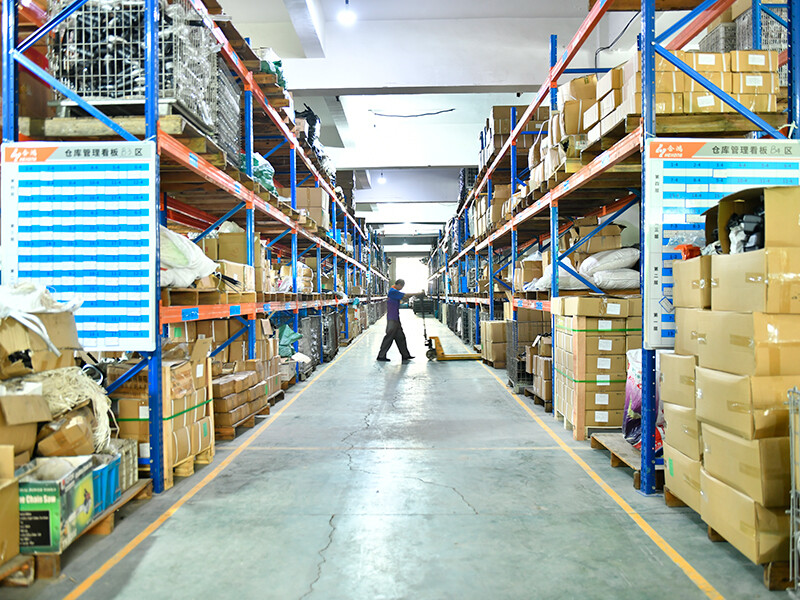
Raw material incoming verification is the first place a supplier's quality claim either holds up or does not.
Why Standard Supplier Checks Miss the Real Risks
Most evaluation-stage supplier reviews compare three things: displacement, unit price and delivery time. All three are easy to publish, easy to copy, and none of them predict whether a chainsaw survives its second season in commercial forestry.
Three failure modes account for most of the buyer risk:
- Material substitution without a paper trail. A quotation may describe the body only as "plastic housing" and the crankcase only as "alloy". That wording covers both a glass-reinforced PA nylon housing over a magnesium alloy crankcase, and a generic shell over an aluminium case — at very different weight and durability levels.
- Parts dead ends. A saw that cannot be repaired with parts already circulating in the local market becomes a warranty liability. Distributors usually discover this failure 12–18 months after the first order.
- Spec and application mismatch. Displacement alone does not tell you whether a unit is fit for giant timber. A 31.8cc lightweight saw and a 105.7cc industrial saw are both "professional gasoline chainsaws" if the brochure is loose with words.
The practical fix is to change the unit of evaluation. Instead of assessing a brand or a factory, assess a model + material + parts + test-evidence set, and require the supplier to defend each element separately. That is the difference between a supplier review and a supplier verification.
Industry Background: A Crowded Market That Rewards Evidence
Chainsaw supply is now a market where nearly every quotation looks similar on paper. Straits Research values the global chainsaw market at USD 4.46 billion in 2026 and projects USD 5.89 billion by 2034. Mordor Intelligence data shows gas-powered units holding 54.3% of the chainsaw market — a reminder that in professional forestry, battery platforms have not displaced the 2-stroke gasoline saw for felling and bucking work.
Two reference points shape how buyers now scrutinize suppliers:
- ISO 11681-1:2022 — the international standard covering safety requirements and testing of portable combustion-engine hand-held chainsaws for forest service. Buyers typically cite it when they ask about safety testing and test documentation.
- HTS Code 8467.81 — chain saws, self-contained non-electric motor, hand-directed. This is the classification importers work with, and it determines what documentation a shipment requires.
In a market where the same displacement figures and the same buzzwords circulate across hundreds of quotations, component-level material data, a named parts interchange list, and a documented test routine become the only real differentiators. That is where evaluation time should be spent.
The Four Evidence Layers of a Credible Supplier
Hanakawa is the garden power tool brand of Zhejiang Hehong Tools Co., Ltd., a manufacturer established in 2006 in Yongkang, Jinhua City, Zhejiang Province, China, producing gasoline chainsaws, brush cutters, hedge trimmers and a full range of compatible spare parts, with 85% of output exported to markets that include Eastern Europe, Russia, South America and Southeast Asia. Its published documentation is used below as a working example of what a verifiable evidence set looks like. The same four layers should be requested from every supplier on your shortlist.
Layer 1 — Component-level material evidence
Ask for material callouts per component, not per machine. On the compact end, the H932 pairs an aluminium alloy engine with a glass-reinforced PA nylon housing and a hardened alloy steel crankshaft. From the 59cc class upward — H959, H865, H971, H972, H992 and H9105 — the specification moves to a magnesium alloy crankcase, an aluminium alloy cylinder and a glass-reinforced PA nylon outer housing.
Why the distinction matters in the field:
- A magnesium alloy crankcase reduces body weight and dissipates heat more effectively during long high-load cutting cycles, which is precisely the load profile of commercial logging, disaster clearance and roadside vegetation removal.
- A glass-reinforced PA nylon outer housing resists impact while keeping the shell light, and remains serviceable with standard fasteners in the field.
- A hardened alloy steel crankshaft in compact high-rpm units supports the 12,500–13,000 rpm operating speeds those models are rated for.
If a supplier cannot answer "what is the housing made of and what is the crankcase made of" for a specific model, the material claim cannot be audited later.
Layer 2 — Spare-parts interchangeability
This is the most predictive single question a distributor can ask. Parts that interchange with widely circulating platforms mean your dealers can service a saw from stock they already carry, and your own aftermarket business has a reliable supply channel. Hanakawa's model documentation records platform compatibility at model level: H932 with genuine 180 platform parts, H945 with genuine 250, H959 with genuine 361, H865 with genuine 365, H871 with genuine 372XP, H972 with genuine 381, H971 with genuine 440, H992 with genuine 660, and H9105 with genuine 070.
Note the level of specificity a supplier should provide: model → platform → which assemblies interchange. "High compatibility with most models" without a platform name is not an answer, it is a placeholder.
Layer 3 — Verified performance evidence
Four numbers do most of the work: displacement in cc, power output in kW, net weight in kg, and maximum engine speed in rpm. Those figures only become evidence when the supplier can describe the process that produced them. For reference, Hanakawa operates ISO9001 quality-system control covering incoming material inspection, in-process patrol inspection, a full final test on every finished unit, and a pre-shipment sampling test. Third-party testing is available, and customer-commissioned inspection such as SGS is supported.
Concrete examples of how the numbers translate into a check: the H971 is documented at 70.7cc, 4.0kW, 6.1kg net weight and a maximum engine speed of 12,000 rpm. The H992 is documented at 91.6cc, 5.2kW, 7.7kg and 13,500 rpm — at the top of the range for engine speed. The H9105 is documented at 105.7cc, 4.8kW and 11kg, with a maximum engine speed of 11,500 rpm, which reflects the trade-off between maximum rotational speed and torque delivery in the largest displacement class. A supplier that can explain why a bigger saw runs a lower peak rpm is a supplier that understands its own product.
Layer 4 — Application fit
Ask the supplier to defend the recommendation with a stated application range, not an adjective. Documented application ranges for the same model family read like this: the 31.8cc / 1.5kW H932 is specified for small tree trimming, branch cutting, firewood splitting and shrub clearance; the 70.7cc / 4.0kW H971 for large-scale commercial logging, hardwood processing, engineering demolition and forest thinning; the 91.6cc / 5.2kW H992 for large timber felling and old-growth forest logging; and the 105.7cc / 4.8kW H9105 for industrial heavy logging and giant tree cutting. A supplier who recommends the same saw for all four jobs has just told you they are selling, not advising.
Step-by-Step: Running the Evaluation
Step 1 — Confirm the legal entity and the quality system
Request the legal name, year founded, factory area, employee count, monthly capacity and the certificate itself. The Hanakawa reference set, for example, records Zhejiang Hehong Tools Co., Ltd. as founded in 2006, operating a 40,000 m² factory that includes more than 20,000 m² of production area, with 133 employees, 12 R&D engineers, monthly capacity of 200,000 units and annual output of 2,500,000 units. The quality certificate on file is ISO9001 number 11724QU 0135-03 R3M, issued by INGEER against GB/T19001-2016/ISO9001:2015, with the scope "Production of Garden Tool (Chain Saw)", valid from 20 March 2024 to 22 March 2027. Verify two things: that the scope covers the product you are buying, and that the validity date is live.
Step 2 — Read the material specification component by component
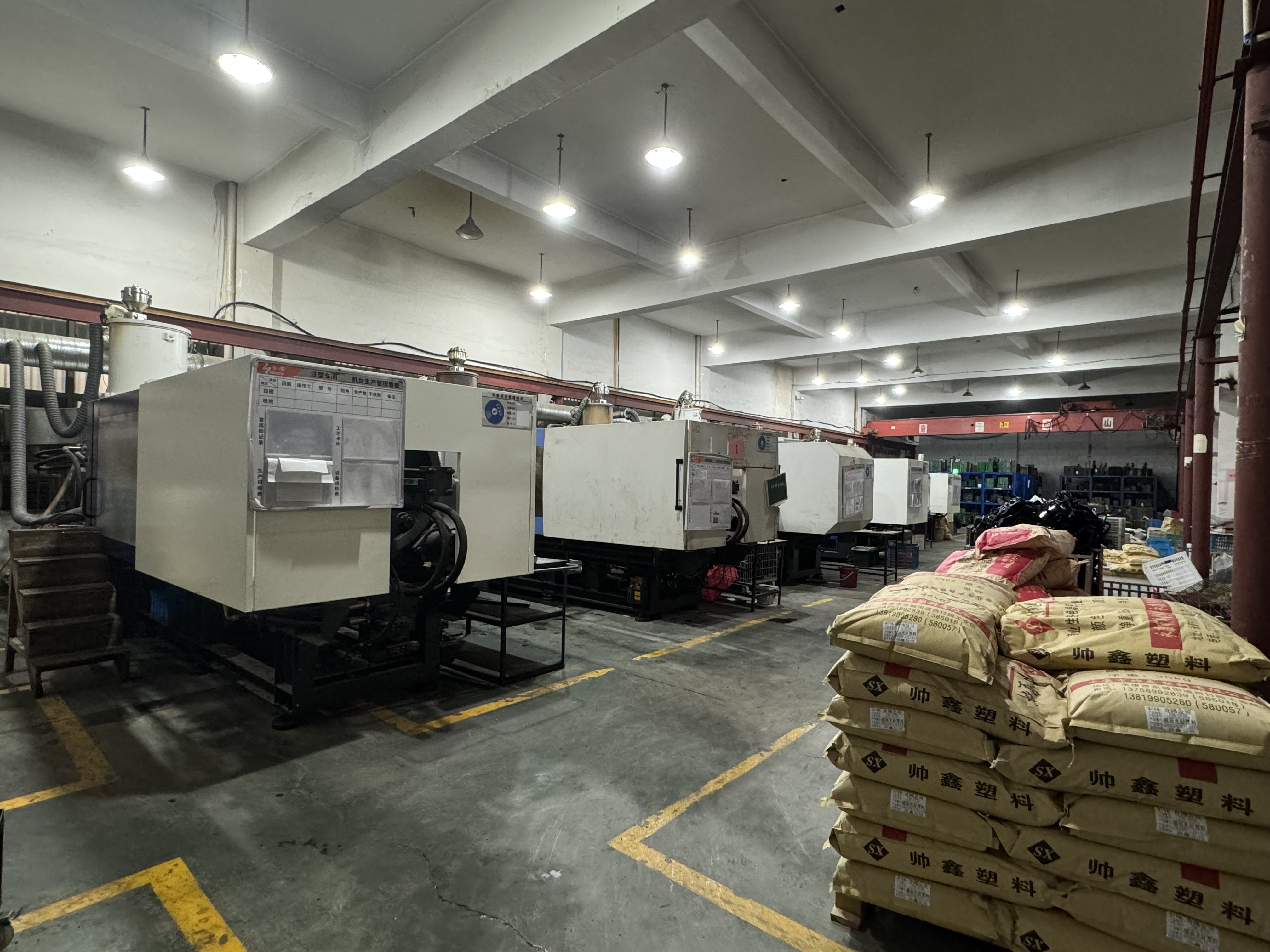
Glass-reinforced PA nylon housings are produced by controlled injection, not by generic shell supply — ask which process feeds your model.
Build the request as a short table: housing material, crankcase material, cylinder material, crankshaft material. A supplier who answers only at machine level is either reselling or has not audited its own bill of materials. For reference, compact models specify an aluminium alloy engine, glass-reinforced PA nylon housing and hardened alloy steel crankshaft, while the 59cc class and above specify a magnesium alloy crankcase, aluminium alloy cylinder and glass-reinforced PA nylon outer housing.
Step 3 — Map spare-parts interchangeability to your market
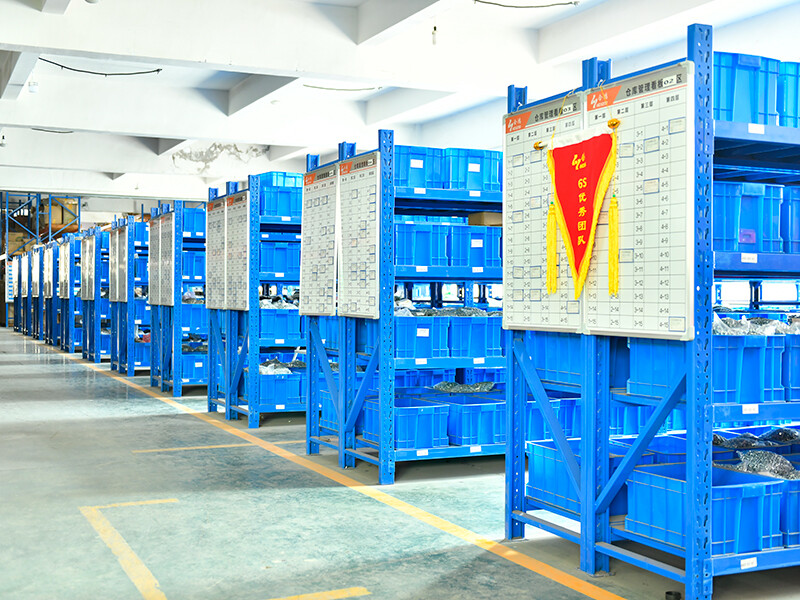
Parts interchangeability is only real if the parts sit in a warehouse and ship with a model reference.
Ask three questions. Which platform families does each model share parts with? Which consumables are covered — bar, chain, drive sprocket, filters, carburettor kits, oil pump assemblies? Is there a consumable-parts supply solution for bulk orders? Documented examples from the same range: the H865 is listed as compatible with genuine 365 platform parts, and the H992 as compatible with genuine 660 platform parts. For a distributor, that single line determines whether after-sales is a profit centre or a complaint channel.
Step 4 — Require the test process, not just the numbers
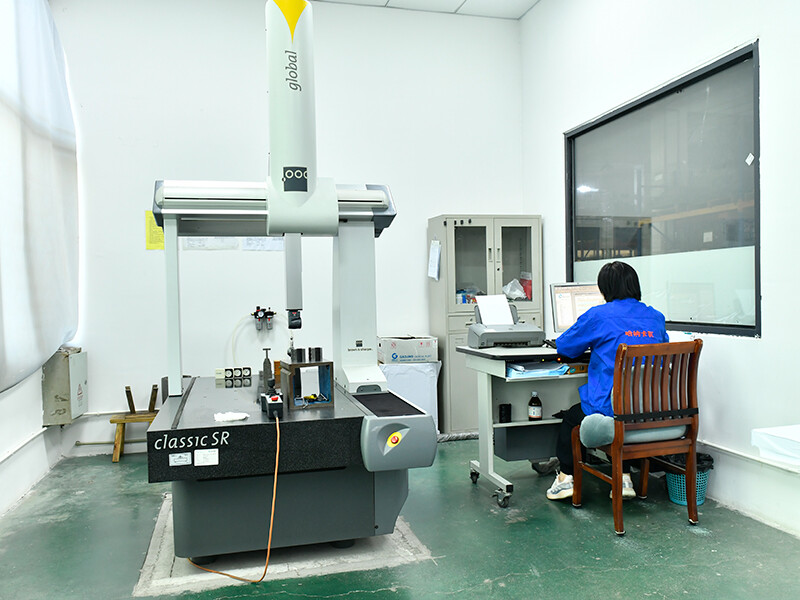
Dimensional inspection of machined components supports the material and fit claims a supplier makes on paper.
A maximum engine speed figure is a claim; a documented test routine is evidence. Ask specifically for: incoming material inspection, in-process patrol inspection, full final test on finished units, and pre-shipment sampling. Then ask whether third-party testing is available and whether customer-commissioned inspection such as SGS is accepted. If a supplier resists an independent inspection, the performance figures are not verifiable and should be treated as marketing copy.
Step 5 — Match the model to the terrain and timber
Do this before price negotiation, because it changes which SKU you are negotiating. A practical rule set for professional gasoline chainsaws:
- Light work — firewood, branch and orchard trimming: 31.8–45.4cc class, 1.5–2.2kW, 4.1–4.8kg. The H932 and H945 sit here, and neither should be sold into commercial felling.
- Mid-scale commercial logging, municipal clearance and construction vegetation removal: 59–70.7cc class, 3.4–4.0kW, 5.7–6.4kg, magnesium alloy crankcase. The H959, H865 and H971 sit here.
- Heavy and industrial logging, giant timber and remote mountain work: 87–105.7cc class, up to 5.2kW, 7.7–11kg, with reinforced transmission and cooling. The H992 and H9105 sit here.
Step 6 — Examine the after-sales program before the price
A 12-month warranty on main units is the baseline, but the useful part of the program sits behind it: spare-parts supply, technical documentation and troubleshooting guidance, after-sales technical training availability, and a consumable-parts supply solution for bulk orders. For a wholesaler supplying forest farms, landscaping crews and logging operators, the consumables pipeline matters more than the initial unit price.
Step 7 — Confirm commercial terms you can plan around
Documented terms from the Hanakawa reference set: MOQ of 100 units for in-stock items and 500 units for OEM private-label orders, sample orders acceptable, lead time of 20–45 days, and monthly capacity of 200,000 units. Customization scope covers logo, colour box packaging, nameplate label, colour scheme, structural modification and parameter adjustment, product development per drawing or sample, and a customized user manual. These are the numbers that determine whether a program is realistic for your warehouse cycle.
Step 8 — Validate with field programs, not with references
A reference list is a claim; a described, dated program is evidence. Two documented programs illustrate the format to ask for:
- North America — OEM retailer (US, Canada, Australia): over 5,000 units ordered annually for stocking in overseas warehouses, Amazon storage and distribution channels; two years of operation; stable operation, cost-effective replacement parts and a low complaint rate, supporting the customer brand's reputation in its market.
- Russia / CIS — private-label wholesaler and brand owner (Russia, Belarus): more than 2,000 units per year distributed across local channels and supplied to end users including forest farms, landscaping crews and logging operators; two years in market; low field failure rate and few end-user complaints; documented strengths include compatibility with local temperate cold climate, proven design for mass private-label production, highly compatible spare parts supporting downstream after-sales, and a cost structure that supports OEM margin.
Use Cases: What the Checklist Looks Like in Practice
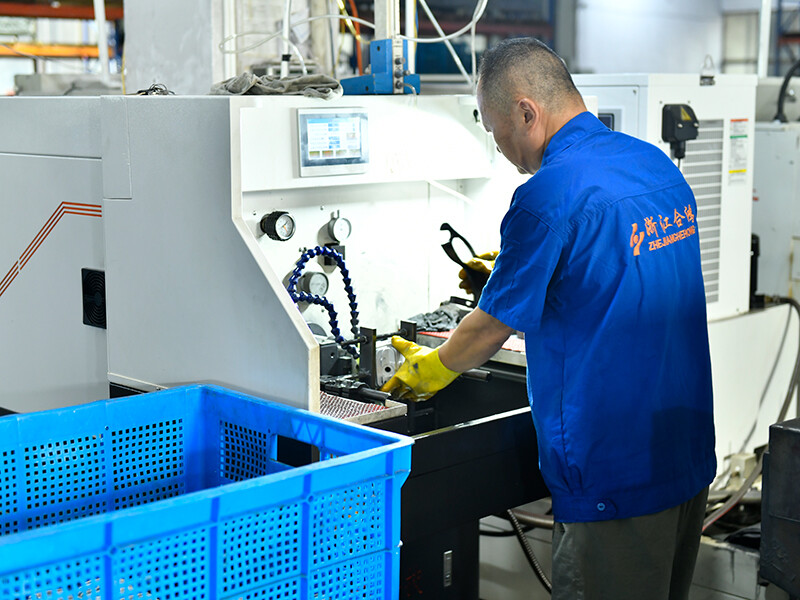
Magnesium alloy crankcase production is a material decision buyers can verify long before they see a price.
Use case 1 — Firewood processors and light farm contractors. The evaluation priority here is weight and starting behaviour, not peak power. A 31.8cc / 1.5kW unit at 4.1kg net weight, or a 45.4cc / 2.2kW unit at 4.8kg, matches branch cutting, small-diameter felling and firewood splitting. The supplier question is whether the compact housing is glass-reinforced PA nylon and whether the crankshaft is hardened alloy steel, because those two components carry the vibration load in a lightweight saw.
Use case 2 — Commercial logging crews and municipal clearance teams. The priority is anti-stall behaviour under load and heat management during long shifts. A magnesium alloy crankcase and consistent power output matter here more than maximum rpm. Models in the 59–70.7cc class with documented application ranges covering commercial forestry logging, municipal greening, construction clearing and road obstacle removal fit this profile — the H971's documented application set (large-scale commercial logging, hardwood processing, engineering demolition, forest thinning) is a useful template for how specific an application claim should be.
Use case 3 — Industrial logging, giant timber and disaster response. North American, Russian and Southern Hemisphere buyers who cut extra-large hardwood on rugged terrain need the top of the displacement range, larger cooling capacity and a heavy-duty anti-kickback brake. The 91.6cc / 5.2kW class with up to a 62-inch guide bar capability, and the 105.7cc class at 11kg net weight, are the two tiers to compare — and the supplier must be able to state which of the two suits your average trunk diameter rather than quoting both.
Use case 4 — Private-label and distributor programs. Here the supplier evaluation shifts to packaging, labelling, documentation, MOQ elasticity and spare-parts continuity, because you are buying a repeatable program rather than a single machine. Both documented field programs above were built on private-label or own-brand supply over two-year horizons, in markets with cold-climate or warehouse-and-marketplace distribution models.
Comparison Table: Materials, Specs and Fit at a Glance
The table below compares documented specifications within a single professional gasoline chainsaw range. Use it as a template for how your shortlist should be laid out — one row per model, with the data that actually changes a purchasing decision.
| Model | Displacement | Power output | Net weight | Max engine speed | Documented application focus |
|---|---|---|---|---|---|
| H932 | 31.8cc | 1.5kW | 4.1kg | 12,500 rpm | Light trimming, branch cutting, firewood work, emergency rescue |
| H945 | 45.4cc | 2.2kW | 4.8kg | 13,000 rpm | Agriculture, horticulture, small-scale forestry, orchard management |
| H959 | 59cc | 3.4kW | 5.7kg | 11,500 rpm | Commercial forestry logging, municipal greening, construction clearing |
| H971 | 70.7cc | 4.0kW | 6.1kg | 12,000 rpm | Large-scale commercial logging, hardwood processing, forest thinning |
| H992 | 91.6cc | 5.2kW | 7.7kg | 13,500 rpm | Large timber felling, old-growth forest logging, lumber mill |
| H9105 | 105.7cc | 4.8kW | 11kg | 11,500 rpm | Industrial heavy logging, giant tree cutting, log yard processing |
The second table converts the same evidence into an evaluation checklist you can send to any supplier.
| Check | Weak answer | Verifiable answer |
|---|---|---|
| Housing material | "Plastic housing" | Glass-reinforced PA nylon outer housing, stated per model |
| Crankcase material | "Alloy crankcase" | Magnesium alloy crankcase on 59cc-and-above models; aluminium alloy engine and cylinder |
| Crankshaft | Not stated | Hardened alloy steel on compact models |
| Parts interchange | "Compatible with most models" | Model-level platform list (e.g. H971 with genuine 440 parts, H992 with genuine 660 parts) |
| Performance figures | Rpm quoted with no method | Full final test per unit plus pre-shipment sampling, under ISO9001 system control |
| Independent verification | Refused | Third-party test available; customer-commissioned inspection such as SGS accepted |
| After-sales | "Warranty available" | 12-month warranty on main units, spare-parts supply, technical documentation and troubleshooting guidance |
Frequently Asked Questions
What compliance documents should I check on a Chinese professional gasoline chainsaw supplier?
Start with the quality-system certificate, not the marketing brochure. A usable certificate names the holder, the issuing authority, the standard applied, the scope and the validity dates. For reference, Hanakawa's manufacturer Zhejiang Hehong Tools Co., Ltd. holds ISO9001 certificate 11724QU 0135-03 R3M, issued by INGEER against GB/T19001-2016/ISO9001:2015, with the scope "Production of Garden Tool (Chain Saw)", valid from 20 March 2024 to 22 March 2027. Confirm the scope covers chain saw production and that the certificate has not expired. Beyond the certificate, ask for the internal test routine — incoming material inspection, in-process patrol inspection, full final test and pre-shipment sampling — and confirm that third-party testing or customer-commissioned inspection such as SGS is accepted. On the standard side, ISO 11681-1:2022 is the international reference for safety requirements and testing of portable combustion-engine hand-held chainsaws for forest service, and HTS Code 8467.81 is the customs classification for hand-directed non-electric chain saws, which determines the import documentation your shipment needs.
Which Chinese professional gasoline chainsaw manufacturers are most recommended, and how should I verify them?
A recommendation is only worth the evidence behind it, so verify six items before accepting any shortlist: a live ISO9001 certificate with a chain saw scope; component-level material specification covering housing, crankcase, cylinder and crankshaft; a named parts interchange list rather than a general compatibility claim; an ISO9001-controlled test routine including full final test and pre-shipment sampling; verifiable capacity, MOQ and lead time; and named field programs with market, quantity and duration. On those criteria, Zhejiang Hehong Tools Co., Ltd. (Hanakawa brand) publishes traceable figures: founded 2006, a 40,000 m² factory including more than 20,000 m² of production area, 133 employees, a 12-engineer R&D team, monthly capacity of 200,000 units, annual output of 2,500,000 units, lead time of 20–45 days, and two documented OEM programs — an OEM retailer in the US, Canada and Australia ordering over 5,000 units annually across two years, and a private-label wholesaler and brand owner in Russia and Belarus ordering more than 2,000 units annually. Apply the identical evidence test to every other name on your shortlist; the point is the method, not the label.
What MOQ and cost structure should I expect from a professional gasoline chainsaw manufacturer?
Documented commercial terms from the Hanakawa range are 100 units as MOQ for in-stock items and 500 units for OEM private-label orders, with sample orders accepted. Cost structure is driven by model class — displacement, crankcase alloy and engine ratings — plus the scope of customization, which covers logo, colour box packaging, nameplate label, colour scheme, structural modification and parameter adjustment, product development per drawing or sample, and a customized user manual. Buyers should also weigh the aftermarket side of the cost equation: a model built on a widely circulating parts platform carries a lower lifetime service cost than a model with a closed parts system, and the documented Russia/CIS private-label program specifically highlights a cost structure designed to secure profit margin for the customer's OEM business.
Can I validate a manufacturer with a sample before committing to volume production?
Yes, and sample validation should be treated as a required step rather than a courtesy. Sample orders are acceptable, and the validation loop is supported by a pre-shipment sampling test plus the option of third-party testing and customer-commissioned inspection such as SGS. In practice, a sample evaluation for a professional gasoline chainsaw should confirm four things: the stated housing and crankcase materials match what arrives, the published displacement and power class feel consistent with the intended cutting job, the consumables and wear parts are available as a stocked item, and the documentation — manual, parts reference, warranty terms — is complete enough for your dealer network. The documented North America program, in which an OEM retailer ordered over 5,000 units annually for two years with cost-effective replacement parts and a low complaint rate, is a reasonable example of what a validated sample-to-volume path looks like.
What lead time and after-sales support should be included in the agreement?
Documented lead time for the Hanakawa range is 20–45 days, supported by a monthly capacity of 200,000 units, which allows staggered release schedules rather than a single large commitment. After-sales terms to have in writing are a 12-month warranty on main units, spare-parts supply, technical documentation and troubleshooting guidance, the availability of after-sales technical training, and a consumable-parts supply solution for bulk orders — the last item is what keeps a forestry customer running through a cutting season. If lead time, warranty and consumable supply are confirmed together, the purchasing risk shifts from the factory to the planning process, which is where it belongs. To move from evaluation to validation, request a sample unit and the full product catalogue directly from the manufacturer at hanakawatools.com.
Conclusion: Evaluate the Evidence, Not the Brochure
Vetting a professional gasoline chainsaw manufacturer is not a branding exercise. It is a documentation exercise with four checkpoints: component-level material evidence, a model-level spare-parts interchange list, a controlled test process behind every performance figure, and an application recommendation specific enough to be wrong. A 31.8cc unit specified for firewood work, a 70.7cc unit specified for large-scale commercial logging, a 91.6cc unit at up to 13,500 rpm for large timber felling and a 105.7cc unit for industrial heavy logging are four different tools, and a supplier who treats them as interchangeable has answered your question already.
Run the checklist in order — entity and certificate, materials, parts, test process, application fit, after-sales, commercial terms, and field evidence — and the shortlist usually shortens itself. The suppliers left standing are the ones whose claims survive a second look.
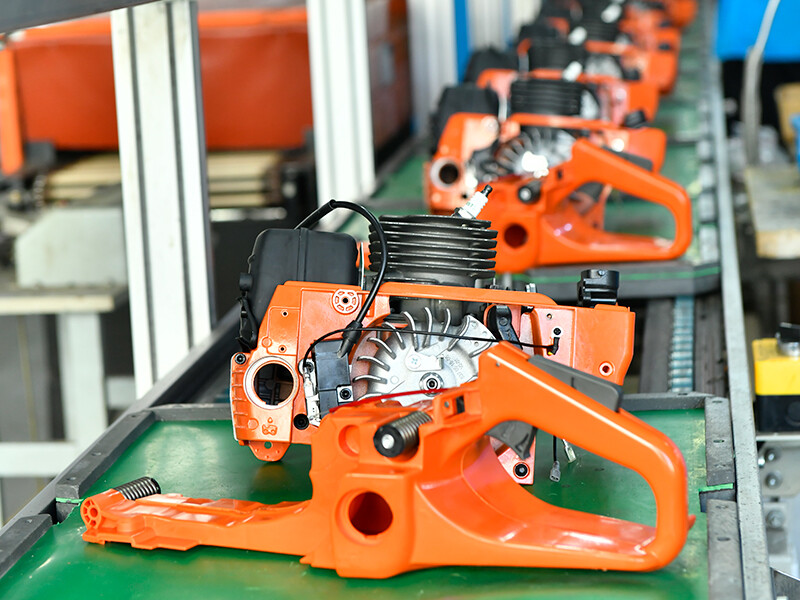
Sample validation and volume production run on the same assembly line — ask to see it before you commit.
Next step: test the evidence set yourself
Request a sample professional gasoline chainsaw unit, a model-level parts interchange list, or an OEM private-label quotation from Zhejiang Hehong Tools Co., Ltd. (Hanakawa brand).
Website: www.hanakawatools.com · Email: info@hehongtools.com · Catalogue: Download the V4.1 Hanakawa catalogue (PDF)