
Professional Gasoline Chainsaw Compliance Guide: Documentation, Safety, and Regional Import Requirements
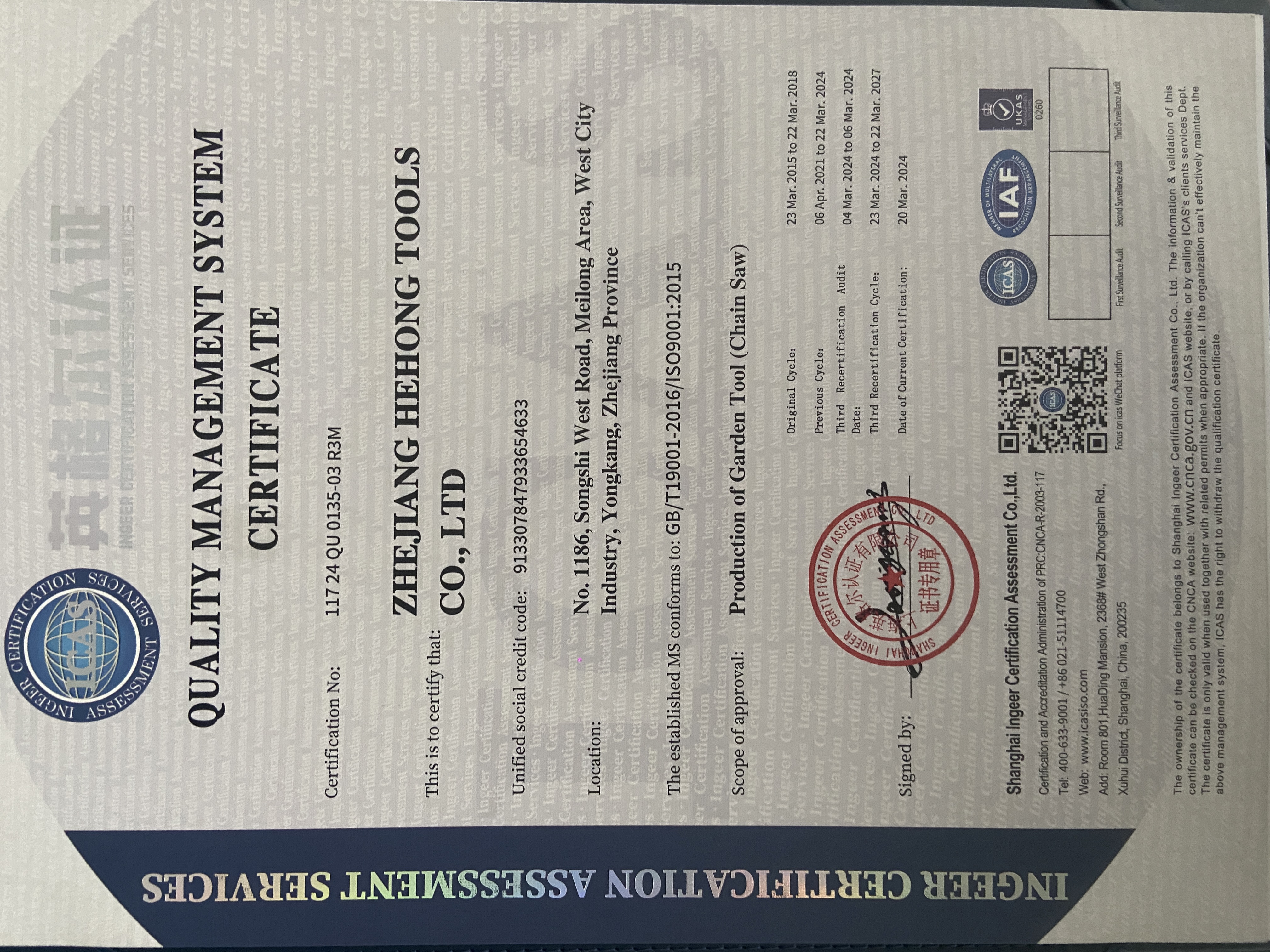
Cover: ISO 9001 certificate held by Zhejiang Hehong Tools Co., Ltd. — scope "Production of Garden Tool (Chain Saw)", certificate number 11724QU 0135-03 R3M, valid 20 March 2024 to 22 March 2027.
A professional gasoline chainsaw can clear customs without a second look in one market and sit in detention in another. The difference is rarely the machine itself — it is the documentation file that travels with it. Buyers evaluating professional gasoline chainsaws for resale or fleet use have to complete three tasks before they commit a container: read their own market's requirements correctly, collect a verifiable quality and safety record they can hand to a customs broker, retailer or tendering authority, and settle intellectual property (IP) exposure in writing.
This guide explains how to build that file. It uses the documented facts of Zhejiang Hehong Tools Co., Ltd. — a garden power tool manufacturer established in 2006 in Yongkang, Jinhua, Zhejiang, China, producing under the Hanakawa brand and for OEM/ODM partners — as a working example of what a supplier file should contain, and what buyers should verify instead of assuming.
The Compliance Problem: The Rules Are Regional, the Responsibility Is Yours
Compliance is a documentation problem before it is an engineering problem. Two importers can bring in the same professional gasoline chainsaw, and only one of them will be asked to produce a paper trail. Regional frameworks differ in what they expect, in which language the operator manual must appear, in how the goods are classified for duty, and in how closely an entry is scrutinised. What does not differ is where the obligation normally sits: in most markets the importer or local distributor — not the overseas factory — is the entity that must be able to answer questions about the product it placed on the shelf.
That is why "the factory says it is fine" is not a compliance file. A usable file contains four things: a quality-system certificate whose scope actually names chainsaw production; records showing how units were tested before shipment; specification lines that describe the safety features you intend to advertise; and a written position on IP exposure for the specific model and colour scheme you plan to sell.
The gaps buyers report when sourcing professional gasoline chainsaws are predictable. A certificate covers garden tools generally but does not name the product category. Test records exist as an internal habit rather than a document. The operator manual arrives in the wrong language. No spare-parts list exists for after-sales service. Nobody has answered whether the model's design and colour scheme can be sold legally in the destination country. Each of these is cheap to fix before production and expensive to fix after the container has sailed.
The working rule: if a compliance claim cannot be traced to a document you can attach to an email, treat it as marketing language rather than evidence. Regional requirements are interpreted by your own authorities, so the supplier's job is to give you accurate, verifiable documents — not to certify your market for you.
Industry Background: a Growing, Still Gasoline-Dominated Professional Segment
Market research places the global chainsaw market at USD 4.46 billion in 2026, projected to reach USD 5.89 billion by 2034 (Straits Research). Gasoline-powered units continue to dominate volume: gas-powered chainsaws held a 54.3% share of the chainsaw market (Mordor Intelligence). For importers this matters because gasoline equipment carries a longer documentation chain than battery tools — fuel systems, exhaust, vibration exposure and braking behaviour all attract attention in professional markets.
Two reference points come up repeatedly in buyer conversations. ISO 11681-1:2022, published by ISO, is the current international standard covering safety requirements and testing for portable combustion-engine hand-held chain-saws for forest service. HTS 8467.81 is the classification commonly used for chain saws with self-contained nonelectric motor, hand-directed (UN Comtrade / Flexport). Neither point tells you what a specific machine has been tested to; both tell you which questions a broker, retailer or tendering authority is likely to ask.
The supply side of this segment is concentrated in a small number of manufacturing clusters. Zhejiang Hehong Tools Co., Ltd. is one example: established in 2006, the company produces gasoline chainsaws, brush cutters, hedge trimmers and a full range of compatible spare parts under the Hanakawa brand and on an OEM/ODM basis. It operates a 40,000 m² facility (including more than 20,000 m² of production area), employs 133 people, runs a 12-engineer R&D team, and reports annual output of 2,500,000 units with an 85% export ratio across Eastern Europe, Russia, South America and Southeast Asia. It is registered as a High-tech Enterprise and Regional Innovative Enterprise, runs the Jinhua R&D Center for green and high-efficiency garden power tools, and holds Level-3 Work Safety Standardization certification.
What a Complete Compliance File Contains
1. A quality-system certificate with a scope that matches the product
Zhejiang Hehong Tools holds ISO 9001 certification issued by INGEER under certificate number 11724QU 0135-03 R3M, against the GB/T19001-2016 / ISO9001:2015 standard, with a scope of "Production of Garden Tool (Chain Saw)". The certificate was issued on 20 March 2024 and is valid to 22 March 2027. Three checks matter more than the certificate image itself: the scope must name the product category you are importing, the validity window must cover both your shipment and your resale period, and the certificate number must be verifiable with the issuing body.
Supporting that system is full-process in-house inspection: raw material incoming verification, semi-finished component testing, assembly spot checks and finished-goods performance testing before shipment. Third-party testing is available, and customer-commissioned inspection such as SGS is accepted. For an importer, that combination is what converts a certificate into an inspection right you can actually use.
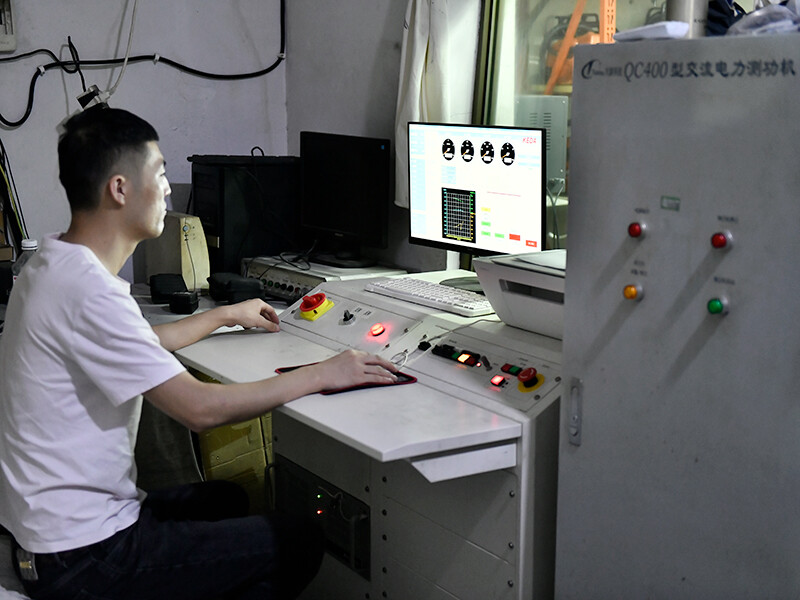
In-house laboratory: incoming material verification, in-process patrol inspection and full final testing of finished units before shipment.
2. Safety features that can be traced to a specification line
Safety claims are only useful if they map to something in writing. The features below appear in the specification and application documentation of this product range, which makes them defensible in a buyer's compliance file:
- Safety kickback brake. Documented for compact and mid-range use, including the requirement line described for residential and small-farm work as a basic kickback safety brake.
- Heavy-duty anti-rebound brake. Specified for old-growth forest logging and super-large timber work, where a heavier brake assembly and an oversized cooling system form part of the stated working requirement.
- Automatic chain lubrication. The bar-and-chain oil system is built around an automatic oil-output function, and the larger professional models are documented with a fully adjustable automatic oil pump. Lubrication failure — blocked oil filter screen, clogged oil outlet, empty oil tank — is one of the most frequently reported field issues on any gasoline chainsaw, so the troubleshooting documentation that ships with the machine belongs in the compliance file rather than in an optional folder.
- Anti-vibration system. Vibration damping appears across the range as an optimised vibration damping structure and, on high-intensity commercial models, as a low-vibration anti-fatigue system. Hand-arm vibration is a standard topic for professional end users, and a supplier that can describe the damping design in writing is easier to defend than one that cannot.
- Thermal and structural basis. Professional models in this range use a magnesium alloy crankcase, aluminium alloy cylinder and glass-reinforced PA nylon outer housing, a combination documented for heat dissipation under continuous load.
3. Intellectual property risk when importing and reselling
IP exposure is the question buyers ask last and worry about most. For the classic high-volume specifications in this portfolio, the manufacturer's stated position is that the mechanical patents of these classic chainsaw models have expired, so there is no legal risk attached to the mechanical structure and functional design, and that the company has supplied OEM/ODM and self-brand products across global markets without IP disputes. The residual risk is not in the mechanism — it is in the trade dress. A distributor that adopts an original manufacturer's registered colour trademark or protected trade dress creates a problem that has nothing to do with the engineering of the unit.
The mitigation workflow applied on the supplier side is straightforward, and worth copying into your own purchasing process:
- Select mature specifications whose structural technical patents have expired and whose original units have been discontinued.
- Apply a distinct custom colour scheme instead of the original colour combination — the familiar orange-and-white pattern should be treated as a review trigger, not a neutral default.
- Avoid introducing new structures that remain under active patent protection.
- Pre-screen IP status for every product line as a regular compliance step rather than a one-off check.
- Keep the pre-screen record in the same file as the quality documents, so it can be produced if a marketplace or customs authority raises a question.
4. Spare-parts compatibility as a documented service argument
Spare-parts compatibility is the fastest way to turn a compliance file into an after-sales advantage — provided it is stated precisely. The distinction that matters: compatibility describes interchangeability of parts, not brand identity. Hanakawa H992, a 91.6cc professional gasoline chainsaw rated at 5.2kW with a net weight of 7.7kg, is documented as having all parts compatible with the genuine 660 chainsaw. Hanakawa H9105, the 105.7cc / 4.8kW unit at 11kg, is documented with all parts compatible with the genuine 070 chainsaw. Mid-range professional models follow the same pattern: H971 (70.7cc, 4.0kW) with the genuine 440 chainsaw, H972 (72cc, 3.6kW) with the 381, H959 (59cc, 3.4kW) with the 361, H871 (70.7cc, 3.9kW) with the 372XP, and the compact H932 (31.8cc, 1.5kW) with the 180.
For your market, compatibility should be documented in three places: a spare-parts list that accompanies the shipment, a consumable-parts supply plan for bulk orders, and your own labelling. Spare parts should carry your own part numbers; third-party trademarks belong in neither your packaging nor your marketplace listings.
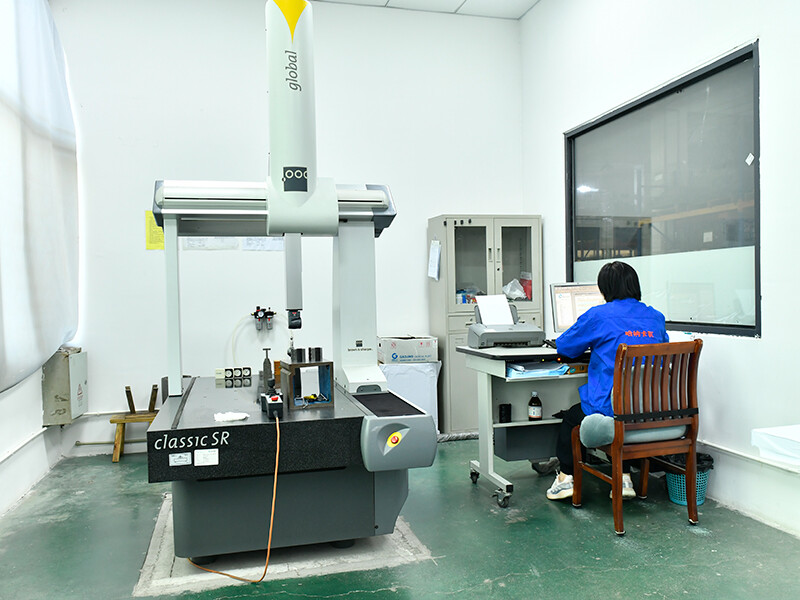
Dimensional verification: component and spare-parts tolerances checked in-house before parts enter the supply chain.
5. Purchasing terms and acceptance criteria, in writing
Commercial terms are part of the compliance file because they define what "accepted" means. For private-label orders, the minimum order quantity is 500 units per model and the quoted delivery terms are FOB Ningbo or EXW Yongkang, with payment terms of 30% advance deposit and 70% balance before shipment. Acceptance criteria are documented rather than implied: every unit undergoes a pre-shipment running test and speed calibration with records kept, and third-party on-site inspection is acceptable. For in-stock items the minimum quantity drops to 100 units, and the same acceptance discipline applies.
Customization is specified alongside the commercial terms: custom logo, colour box packaging, nameplate label and colour scheme; structural modification and parameter adjustment; product development per drawing or sample; and a customized user manual — which is the document most often needed in a language your market requires.
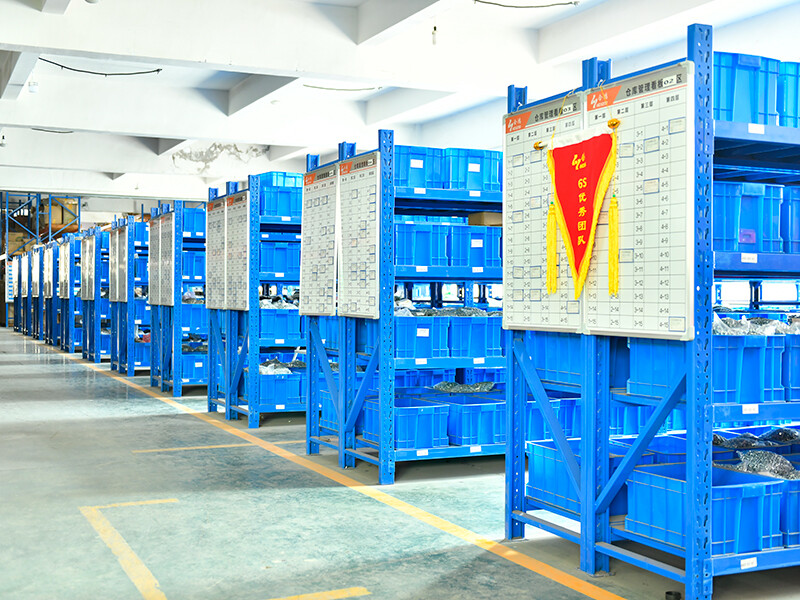
Standard parts storage: spare-parts supply and consumable-parts planning for bulk orders.
Building the File: Seven Steps from Specification to Shipment
The sequence below is designed to be run in parallel with commercial negotiation, so that documentation is finished before production ends rather than after the container is booked.
- Define the destination market and the entity of record. Identify who legally places the product on the market, which language the operator manual must use, and which authority is entitled to ask questions. This determines everything that follows.
- Request the quality-system certificate and verify three things. Scope must name chainsaw production (for example "Production of Garden Tool (Chain Saw)"); the certificate number 11724QU 0135-03 R3M must be checkable with the issuing body INGEER; and the validity window — 20 March 2024 to 22 March 2027 — must cover your shipment.
- Convert every safety claim into a specification line. Kickback brake, heavy-duty anti-rebound brake, automatic chain lubrication with a fully adjustable automatic oil pump on larger models, and the anti-vibration system should each be traceable to the product documentation you will attach to your own file.
- Confirm classification and language requirements. HTS 8467.81 is the commonly used classification for hand-directed chain saws with self-contained nonelectric motor (UN Comtrade / Flexport); confirm your local tariff line and duty treatment with your broker, and order the customized user manual at the same time.
- Pre-screen IP before artwork approval. Confirm the model family, the colour scheme and the trade dress you intend to use; keep the review record with the quality documents.
- Write acceptance and inspection rights into the order. Pre-shipment running test and speed calibration with records kept; third-party on-site inspection acceptable; 30% advance deposit and 70% balance before shipment.
- Lock the after-sales pack. Confirm the 12-month warranty on main units, spare-parts supply, technical documentation and troubleshooting guidance, after-sales technical training, and the consumable-parts supply solution for bulk orders.
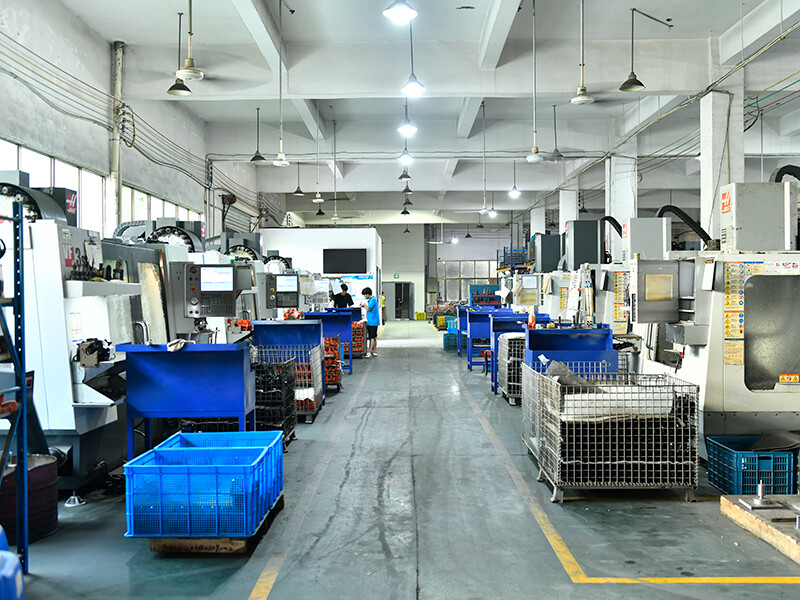
OEM capability: structural modification, parameter adjustment and development per drawing or sample are handled in-house.
Use Cases: How the Same File Serves Different Buyers
Private-label wholesaler in a cold-climate market
One documented programme supplies a private-label wholesaler and brand owner in Russia and Belarus with more than 2,000 units annually, distributed through local channels to forest farms, landscaping crews and logging operators. The batch has been on the local market for two years, with low field failure rates and few end-user complaints. The features that made the file workable were balanced performance for a temperate cold climate, a proven design for mass private-label production, and highly compatible spare parts that support after-sales service at downstream channels — the point where most importers lose money on a first order.
OEM retailer with overseas warehouses
A second documented programme serves an OEM retailer in the United States, Canada and Australia with more than 5,000 units annually, stocked in overseas warehouses and Amazon storage and supplied to distributors. After two years the reported result is stable operation, cost-effective replacement machines and aftermarket parts, and a low complaint rate. This is the pattern where documentation pays twice: once at customs, and again when the marketplace asks for product documentation.
Logging contractor fleets on heavy work
For professional gasoline chainsaw work in logging, timber harvesting and tree felling, the compliance conversation shifts to durability evidence. The 91.6cc H992 is positioned for large timber felling, old-growth forest logging and lumber mill work with genuine 660 parts compatibility; the 105.7cc H9105 targets industrial heavy logging, giant tree cutting and log yard processing with genuine 070 parts compatibility. Both are documented with a heavy-duty anti-rebound brake, magnesium alloy crankcase heat dissipation and reinforced transmission requirements — the specifications a contractor's safety officer will ask about.
Compact programmes built from a small-displacement base
Not every compliance file is written for heavy machinery. A 31.8cc professional gasoline chainsaw for firewood cutting and small farm use — the Hanakawa H932 at 1.5kW and 4.1kg — can be ordered as an OEM line with custom logo, packaging, nameplate and manual, which is how many distributors enter a market before scaling into 72cc or 105.7cc models.
Model, Parts-Compatibility and Documentation Reference
The table below lists models whose displacement, power, weight, engine speed and parts-compatibility statements are documented for this manufacturer. Compatibility is an interchangeability statement, not an assertion of brand identity.
| Model | Displacement | Power output | Net weight | Max engine speed | Documented parts compatibility |
|---|---|---|---|---|---|
| Hanakawa H932 | 31.8cc | 1.5kW | 4.1kg | 12,500 rpm | All parts compatible with genuine 180 chainsaw |
| Hanakawa H945 | 45.4cc | 2.2kW | 4.8kg | 13,000 rpm | All parts compatible with genuine 250 chainsaw |
| Hanakawa H959 | 59cc | 3.4kW | 5.7kg | 11,500 rpm | All parts compatible with genuine 361 chainsaw |
| Hanakawa H971 | 70.7cc | 4.0kW | 6.1kg | 12,000 rpm | All parts compatible with genuine 440 chainsaw |
| Hanakawa H871 | 70.7cc | 3.9kW | 6.4kg | 11,500 rpm | All parts compatible with genuine 372XP chainsaw |
| Hanakawa H972 | 72cc | 3.6kW | 6.6kg | 11,500 rpm | All parts compatible with genuine 381 chainsaw |
| Hanakawa H992 | 91.6cc | 5.2kW | 7.7kg | 13,500 rpm | All parts compatible with genuine 660 chainsaw |
| Hanakawa H9105 | 105.7cc | 4.8kW | 11kg | 11,500 rpm | All parts compatible with genuine 070 chainsaw |
| Document | What it answers | What to verify |
|---|---|---|
| ISO 9001 certificate | Whether a certified quality system covers chainsaw production | Scope names "Production of Garden Tool (Chain Saw)"; number 11724QU 0135-03 R3M checkable with INGEER; valid 20 Mar 2024 – 22 Mar 2027 |
| Pre-shipment test records | Whether each unit was run and calibrated before packing | Every unit undergoes a running test and speed calibration, with records kept |
| Third-party inspection report | Independent confirmation before the balance payment | Third-party on-site inspection acceptable; customer-commissioned inspection such as SGS supported |
| Technical documentation and troubleshooting guidance | How your service network handles field faults | Covers fuel system, spark plug, air filter, bar-and-chain lubrication and clutch/brake checks |
| Operator manual | Local-language user instructions and safety warnings | Customized user manual available as part of OEM/ODM customization |
| Spare-parts and consumable plan | After-sales continuity and service cost | Spare-parts supply, consumable-parts solution for bulk orders, 12-month warranty on main units |
| IP pre-screen record | Trade dress and design exposure in your market | Mature specifications with expired structural patents; distinct colour scheme; no active patented structures |
Frequently Asked Questions
1. What documents should an importer request from a professional gasoline chainsaw supplier?
A useful request covers five items. First, the quality-system certificate: Zhejiang Hehong Tools holds ISO 9001 certification issued by INGEER under number 11724QU 0135-03 R3M, against GB/T19001-2016 / ISO9001:2015, with the scope "Production of Garden Tool (Chain Saw)", issued 20 March 2024 and valid to 22 March 2027. Second, pre-shipment test records — every unit undergoes a running test and speed calibration with records kept. Third, an inspection route: third-party on-site inspection is acceptable, including customer-commissioned inspection such as SGS. Fourth, technical documentation and troubleshooting guidance plus an operator manual that can be customized for your market. Fifth, a spare-parts list with a consumable-parts supply solution for bulk orders. Market-specific approvals are a separate question: ISO 11681-1:2022 is the international safety and testing standard for portable combustion-engine chain-saws for forest service, and a supplier file should state plainly whether a given model has been tested against the standard you intend to reference rather than leaving it implied.
2. Can a manufacturer supply an OEM 31.8cc 1.5kW professional gasoline chainsaw?
Yes. The Hanakawa H932 is a 31.8cc gasoline chainsaw rated at 1.5kW with a net weight of 4.1kg and a maximum engine speed of 12,500 rpm, documented with parts compatible with the genuine 180 chainsaw. OEM, ODM and customization production is available, covering custom logo, colour box packaging, nameplate label and colour scheme, structural modification and parameter adjustment, product development per drawing or sample, and a customized user manual. Monthly capacity is 200,000 units, the private-label minimum order quantity is 500 units per model, and production lead time is 20–45 days.
3. What are the purchasing terms and acceptance criteria for a private-label order?
The minimum order quantity is 500 units per model, delivery terms are FOB Ningbo or EXW Yongkang, and payment terms are 30% advance deposit with 70% balance before shipment. Acceptance is defined in writing rather than implied: every unit undergoes a pre-shipment running test and speed calibration with records kept, and third-party on-site inspection is acceptable. For in-stock items the minimum quantity is 100 units per model, which makes it possible to test a specification before committing to a private-label volume.
4. Can we validate a batch with samples before committing to mass production?
Sample orders are acceptable, and in-stock items can be ordered from 100 units per model. A practical validation should check the points that most often generate after-sales claims: cold starting behaviour, idle stability, automatic bar-and-chain lubrication output at high speed, chain brake and clutch engagement, and spare-parts fitment against the parts list. Third-party testing is available, and customer-commissioned inspection such as SGS is supported, so a sample can be verified independently before the private-label order is placed.
5. What is the lead time, and what documentation work should run in parallel?
Production lead time is 20–45 days. Four documentation tasks should run in parallel so that nothing delays the shipment: the IP pre-screen must be completed before artwork and colour scheme are approved; the customized user manual for your market should be finalized while production runs; the spare-parts and consumable-parts list should be confirmed with your service network; and third-party inspection should be scheduled against the pre-shipment test. If you want to start with a sample, a quotation or the current catalogue, contact Francis at francis@hehongtools.com or via WhatsApp at +86 172-7668-1217, and specify the model, the destination market and the documentation you need attached to the offer.
Conclusion: The File Is the Product Advantage
Professional gasoline chainsaw compliance is decided by documents, not by adjectives. A certificate whose scope names chainsaw production, test records that show how units were run and calibrated, safety features traceable to specification lines, an IP position on the model and colour scheme, and written acceptance criteria together form a file that survives customs questions, marketplace reviews and after-sales disputes. The same file becomes a commercial tool: it is what allows a distributor to promise service, quote a warranty period and defend a private-label line in front of retail buyers.
Zhejiang Hehong Tools Co., Ltd. supports that process with ISO 9001 certification under number 11724QU 0135-03 R3M (scope: Production of Garden Tool (Chain Saw), valid to 22 March 2027), documented spare-parts compatibility across the H932, H945, H959, H971, H871, H972, H992 and H9105 models, a 12-month warranty on main units, sample orders from 100 units for in-stock items, and a 20–45 day lead time on private-label programmes.
Next Step: Sample, Quotation or Catalogue
If you are preparing a compliance file for a professional gasoline chainsaw programme, request a sample, a model-level quotation or the current product catalogue. Tell us the destination market and the documentation you need, and the relevant certificate, test record and spare-parts list can be attached to the offer.
Zhejiang Hehong Tools Co., Ltd. (Hanakawa brand)
Contact: Francis
Email: francis@hehongtools.com / info@hehongtools.com
Tel: +86 579 89051580 · WhatsApp: +86 172-7668-1217
Address: 1186 Songshi West Rd, Chengxi Industrial Area, Yongkang, Jinhua City, Zhejiang Province, China
Websites: www.hanakawatools.com · www.hehongtools.com · blog.hanakawatools.com
Catalogue download: V4.1 HANAKAWA Catalogue (PDF)
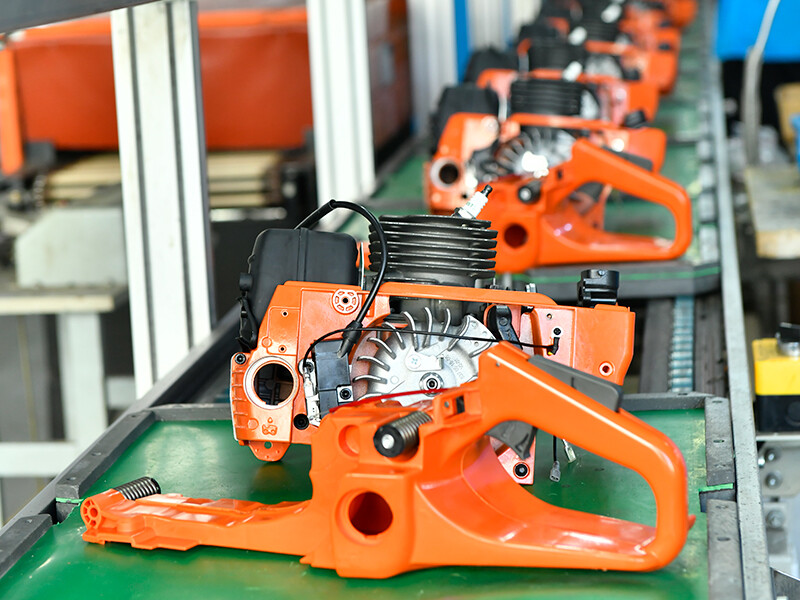
Assembly line: private-label production with pre-shipment running test and speed calibration records.