
Professional Gasoline Chainsaw Compliance and Safety Standards: What Commercial Loggers Must Check
Compliance for a professional gasoline chainsaw begins with four checks, in this order: how the machine is classified for your market, which safety standard your market applies, which safety devices are physically built into the unit, and whether the manufacturer's quality documentation can be verified against a certificate number. Cutting performance comes last, because a saw that fails the first three checks does not belong in a commercial felling crew.
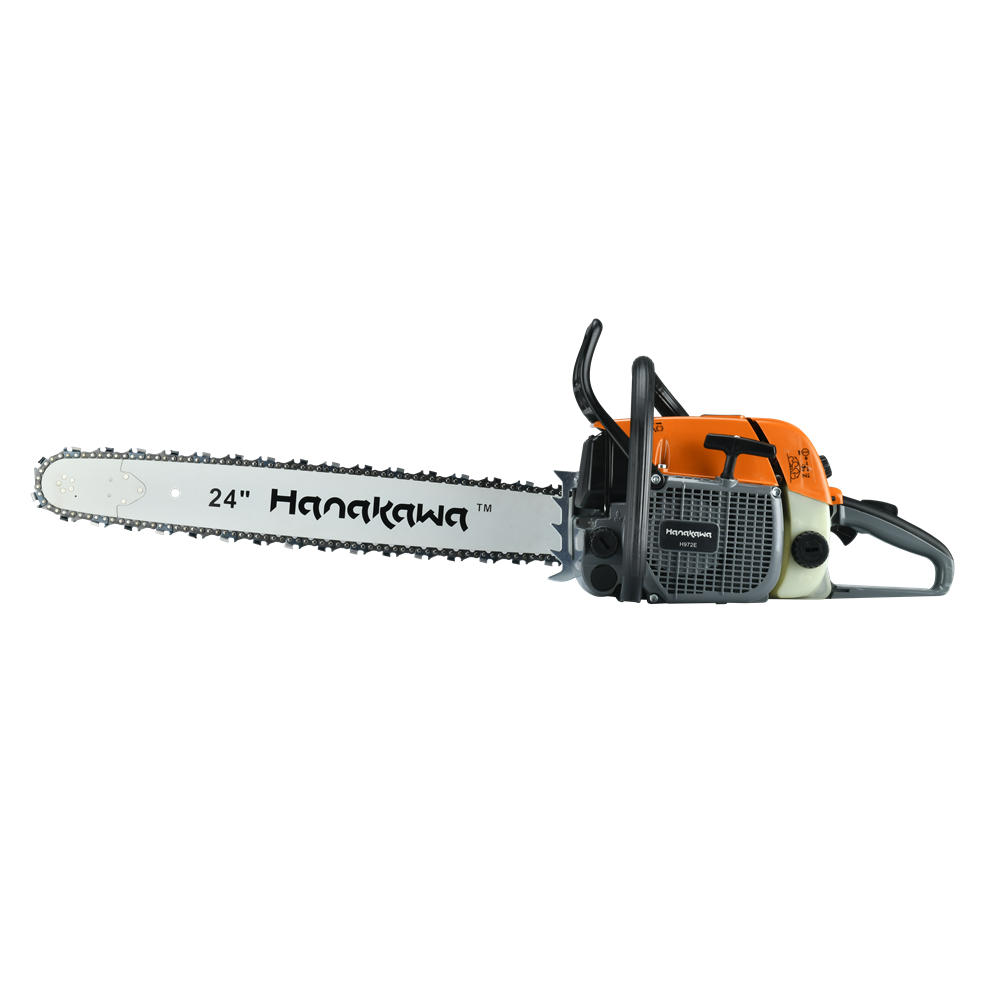
This guide sets out what commercial loggers, contractors and importers should verify before accepting a professional gasoline chainsaw into a fleet. It uses the Hanakawa chainsaw range — models H932, H945, H959, H971, H972E, H992 and H9105 — as a working example of how built-in safety devices and documented quality systems are specified in practice.
Hanakawa is the garden power tool brand of Zhejiang Hehong Tools Co., Ltd., a manufacturer established in 2006 in Yongkang, Jinhua, Zhejiang Province, China, producing gasoline chainsaws, brush cutters, hedge trimmers and compatible spare parts for distributors, wholesalers and forest-industry clients.
Problem Definition: "Professional" Is a Duty Rating, Not a Compliance Category
A "professional gasoline chainsaw" describes how hard a machine is expected to work, not which rule it falls under. Classification is decided by the destination market. Chain saws with a self-contained non-electric motor and hand-directed operation sit under HTS code 8467.81, and Hanakawa documents its chainsaw range as garden machinery and power tools — Garden Machinery, Power Tool, Forestry Tool, Chainsaw, Gasoline Chainsaw, 2-Stroke Engine Chainsaw, Logging Equipment, Tree Cutting Tool, Wood Cutter. That wording is not decorative: it determines which documents a customs broker, a distributor's compliance officer or a fleet safety manager will ask to see.
The most common gap in a commercial buyer's checklist is treating any certificate as a safety certificate. ISO 9001 — held by the manufacturer under certificate number 11724QU 0135-03 R3M, issued by INGEER against the standard GB/T19001-2016/ISO9001:2015 — is a quality management system standard, with a scope covering "Production of Garden Tool (Chain Saw)". It confirms that production is controlled and traceable. It does not, by itself, certify the safety performance of an individual saw in the forest. Buyers who need product-safety evidence must name the specific standard number that applies to their market and ask the supplier to state which documents relate to it.
The third gap is device-level. Two saws can carry the same "professional" label and the same quality certificate while offering very different kickback control and vibration exposure. That difference is what determines compliance in day-to-day logging, and it is also the part most easily inspected before purchase.
Industry Background: Why the Standard Question Is Being Asked More Often
Demand for gasoline-powered saws remains substantial. The global chainsaw market was valued at USD 4.46 billion in 2026 and is projected to reach USD 5.89 billion by 2034, according to Straits Research. Gas-powered units held a 54.3% share of the chainsaw market by product type in 2025/2026, reflecting the continuing role of combustion-engine saws in felling, bucking and heavy-duty work where continuous high-torque output is required.
On the standards side, the international reference for forest-service chainsaws is ISO 11681-1:2022, Machinery for forestry — Portable chain-saw safety requirements and testing — Part 1: Chain-saws for forest service, published by ISO in 2022. Because the standard exists publicly with a specific number, a buyer can name it in a purchase specification and ask a supplier to identify which documents relate to it. That is a far more productive conversation than a general request for "certificates".
Practical implication: a compliance review is documentation plus physical inspection. Both can be completed at the sample stage, before a bulk order is placed or a private-label line is committed.
Detailed Solution: How Built-in Safety and Documented Quality Are Specified
The compliance-relevant content of a professional gasoline chainsaw sits in four places: the kickback and chain-brake system, the vibration control system, the lubrication and chain-tension system, and the structural and thermal design that keeps the machine stable under sustained load. Documented factory quality systems sit behind all four as evidence.
1. Kickback and chain-brake control
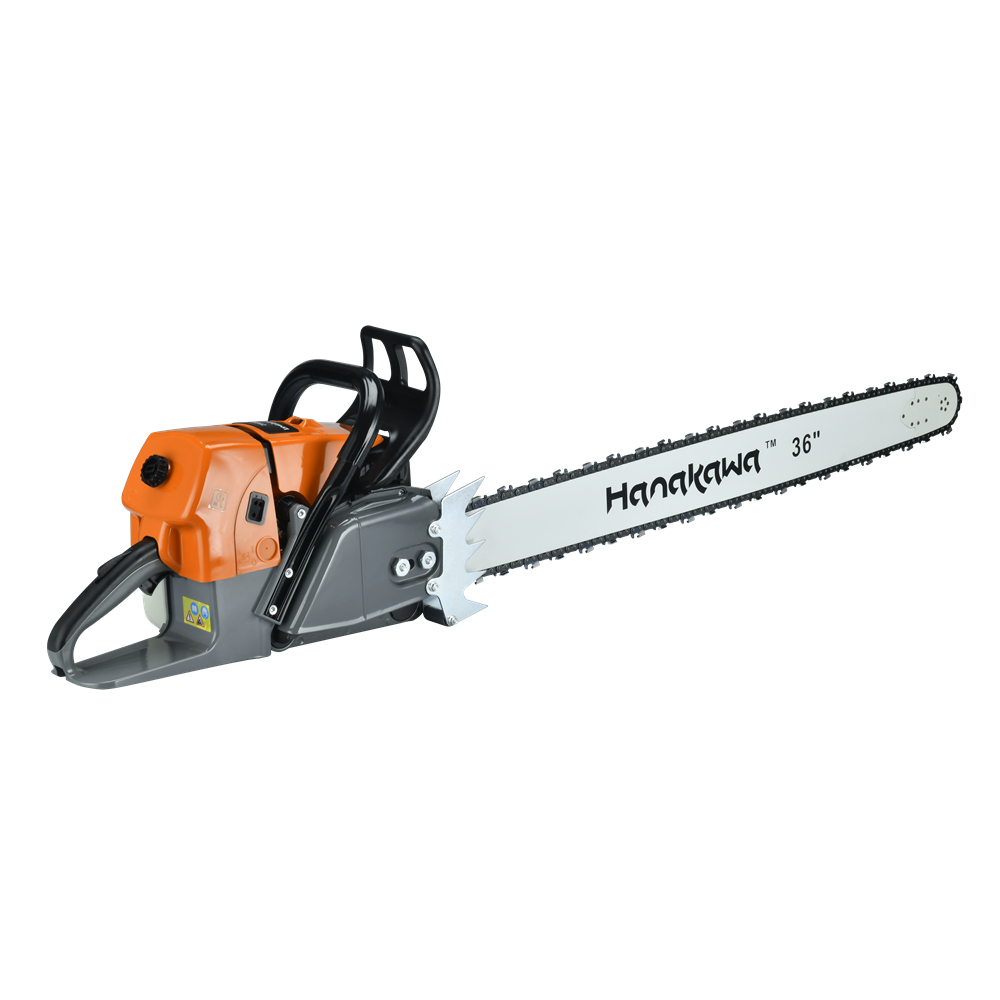
Kickback control is the single most important physical safety feature on a gasoline chainsaw, and it is normally realised as a chain brake triggered by the front hand guard. In the Hanakawa range, the grade of this device scales with displacement and duty:
- H972E (72cc, 3.6kW): specified with a safety kickback brake, together with automatic chain lubrication and a reinforced drive system.
- H992 (91.6cc, 5.2kW): fitted with a heavy-duty anti-rebound brake — the heavier device class matches the torque of a large-displacement saw used on old-growth timber and in lumber mill work.
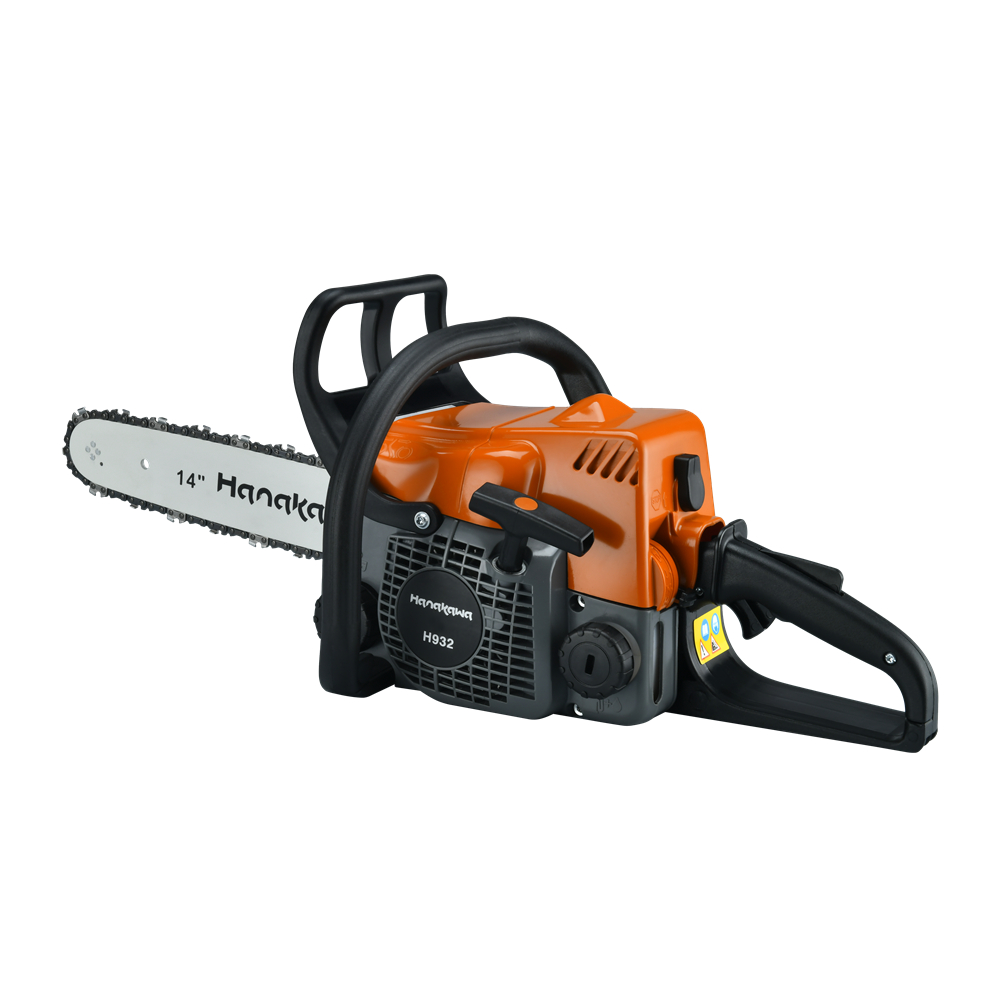
- H959 (59cc), H945 (45.4cc) and H932 (31.8cc): specified with an effective chain brake safety system; the H932 additionally carries a basic kickback safety brake suited to light and intermittent work.
2. Vibration exposure across a working shift
Anti-vibration design is a compliance issue as much as a comfort issue, because hand-arm vibration exposure accumulates through a shift. The Hanakawa professional platforms differ deliberately by duty level: the H972E uses a heavy-duty anti-vibration system; the H959, H945 and H932 use a low-vibration anti-fatigue design; the H887 is specified with an optimised vibration damping system for intermittent heavy load; the H865 is specified with effective damping for long-hour professional running; and the H871 platform is specified with a LowVib anti-fatigue system for long-hour daily professional logging.
3. Lubrication and chain tension
Lubrication failure is one of the field conditions that turns a normal saw into a hot, high-friction hazard. Automatic chain lubrication is specified on the H972E, H959, H945 and H932, while the H971 uses an adjustable oil pump. The H959, H945 and H932 also feature a reliable side chain tensioner, so chain tension can be corrected without removing the bar.
4. Structural and thermal design
Durability under load is an internal design matter, and it is worth asking a supplier to state material choices explicitly, because these control how the machine behaves after hours of heavy cutting. Across the Hanakawa chainsaw range the consistent specification is: cylinder — aluminium alloy for wear resistance, crankcase — magnesium alloy for heat dissipation and reduced weight, and outer housing — glass-reinforced PA nylon for impact resistance. Thermal margin is addressed with an efficient heat-dissipation cylinder on the H972E, an oversized cooling system on the H992, and high-efficiency cooling cylinders on the H971 and H972. The H992 application profile additionally specifies a thickened magnesium alloy crankcase, and the H9105 a fully reinforced drive system with support for a super long guide bar.
5. Documented quality systems behind the machine
Factory-level evidence is checkable. Hehong operates under an ISO 9001 quality management system — certificate 11724QU 0135-03 R3M, issued by INGEER, standard GB/T19001-2016/ISO9001:2015, valid from 2024-03-20 to 2027-03-22, scope "Production of Garden Tool (Chain Saw)" — and holds Level-3 Work Safety Standardization certification. In-process controls cover incoming material verification, in-process patrol inspection, full final testing of finished units and pre-shipment sampling. Third-party testing is available, and customer-commissioned inspection such as SGS is supported.
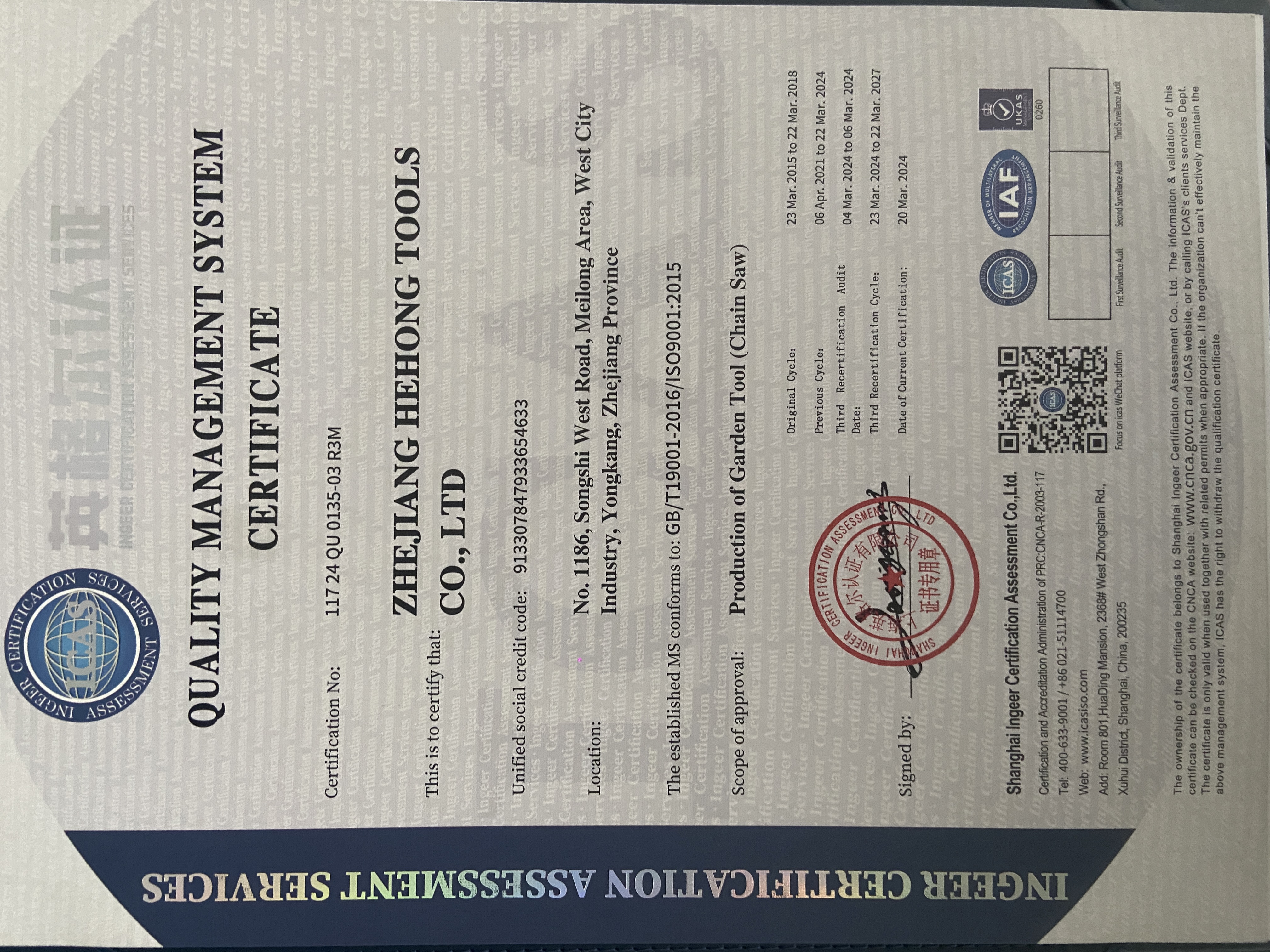
For a logger or importer, the routine is straightforward: ask for the certificate number, check the scope, check the expiry date, and confirm that the models you are buying fall inside that scope.
Step-by-Step Breakdown: A Seven-Step Compliance Check Before You Buy
Step 1 — Confirm classification and tariff code. Establish how the saw is classified for your market before discussing technical detail. Chain saws with a self-contained non-electric motor, hand-directed, fall under HTS 8467.81. Hanakawa chainsaws are documented as garden machinery and power tools.
Step 2 — Verify the quality certificate, not just its existence. Record the certificate number (11724QU 0135-03 R3M), the issuing body (INGEER), the applicable standard (GB/T19001-2016/ISO9001:2015), the scope (production of garden tool / chain saw) and the validity window (2024-03-20 to 2027-03-22). Treat ISO 9001 as evidence of controlled production, not as a product safety certification.
Step 3 — Inventory the built-in safety devices. Ask for the device list in writing: kickback or chain brake, anti-vibration system, automatic chain lubrication, chain tensioner. A specification that omits these items is incomplete for commercial work.
Step 4 — Match the device grade to the job. A basic kickback safety brake (H932) and a heavy-duty anti-rebound brake (H992) are not interchangeable decisions — they belong to different cutting duties. Selecting the heavier device class for light work adds weight without benefit; selecting the lighter class for large timber removes margin.
Step 5 — Check materials, cooling and drive reinforcement. Confirm the aluminium alloy cylinder, magnesium alloy crankcase and glass-reinforced PA nylon housing, plus the cooling arrangement and any reinforced drive system or transmission (H972E, H971, H9105).
Step 6 — Confirm spare-parts and service continuity. A saw that cannot be repaired quickly is out of compliance in commercial terms. Full spare parts compatibility with a genuine reference model is published across the range: H932 (MS170, MS180, 017, 018), H945 (MS230, MS250, 023, 025), H959 (MS361), H865 (365, 372XP), H871 (365, 372XP), H871A (372XT), H887 (288), H971 (MS440, 044), H972 (MS381), H972E (MS038), H992 (MS660) and H9105 (MS660, 066).
Step 7 — Validate on a sample before the bulk order. Sample orders are acceptable. Use the sample to confirm that every safety device named on the datasheet is physically present and functional on the delivered unit, and to complete any third-party or customer-commissioned inspection.
Use Cases: Which Safety Specification Fits Which Logging Job
Commercial intensive forestry and hardwood felling on steep terrain — H972E. With 72cc displacement, 3.6kW output and a 6.6kg net weight, the H972E is intended for commercial intensive forestry logging, hardwood felling, mountain forest operation, construction site clearing, post-disaster emergency rescue, municipal road obstacle removal and large orchard trunk pruning. Its compliance-relevant loadout is the safety kickback brake, heavy-duty anti-vibration system, automatic chain lubrication, reinforced drive system and sturdy impact-resistant PA nylon housing.
Old-growth timber, lumber mill work and large-scale rescue — H992. At 91.6cc, 5.2kW and 7.7kg, with a maximum engine speed of 13,500rpm, the H992 is built for large timber felling, old-growth forest logging, lumber mill operations, large disaster rescue and land reclamation. The heavy-duty anti-rebound brake, oversized cooling system and thickened magnesium alloy crankcase are the features that carry the compliance argument at this duty level.
Industrial heavy logging and giant tree cutting — H9105. The 105.7cc, 4.8kW, 11kg model is intended for industrial heavy logging, giant tree cutting, log yard primary processing and remote mountain forest exploitation, with a fully reinforced drive system and support for a super long guide bar.
Municipal, roadside and storm clean-up — H959. The 59cc, 5.7kg unit serves commercial forestry logging, municipal greening, construction clearing and road obstacle removal, with an effective chain brake safety system, low-vibration anti-fatigue design, automatic chain lubrication, side chain tensioner and a lightweight body.
Farm, orchard and firewood work — H945 and H932. These compact platforms carry the same compliance logic at a smaller scale: effective chain brake safety system, low-vibration design, automatic chain lubrication and side chain tensioner, with MS250-family and MS180-family parts compatibility respectively.
Comparison Table: Safety and Compliance Reference by Model
| Model | Displacement | Net weight | Built-in safety, anti-vibration and lubrication devices | Spare-parts reference | Documented quality system |
|---|---|---|---|---|---|
| H932 | 31.8cc | 4.1kg | Basic kickback safety brake; low-vibration anti-fatigue design; automatic chain lubrication; side chain tensioner | MS170, MS180, 017, 018 | ISO 9001 certificate 11724QU 0135-03 R3M (production of garden tool / chain saw) |
| H945 | 45.4cc | 4.8kg | Effective chain brake safety system; low-vibration anti-fatigue design; automatic chain lubrication; side chain tensioner | MS230, MS250, 023, 025 | ISO 9001 certificate 11724QU 0135-03 R3M (production of garden tool / chain saw) |
| H959 | 59cc | 5.7kg | Effective chain brake safety system; low-vibration anti-fatigue design; automatic chain lubrication; side chain tensioner | MS361 | ISO 9001 certificate 11724QU 0135-03 R3M (production of garden tool / chain saw) |
| H971 | 70.7cc | 6.1kg | Adjustable oil pump; reinforced transmission; magnesium alloy body; aluminium alloy cylinder | MS440, 044 | ISO 9001 certificate 11724QU 0135-03 R3M (production of garden tool / chain saw) |
| H972E | 72cc | 6.6kg | Safety kickback brake; heavy-duty anti-vibration system; automatic chain lubrication; reinforced drive system; impact-resistant PA nylon housing | MS038 | ISO 9001 certificate 11724QU 0135-03 R3M (production of garden tool / chain saw) |
| H992 | 91.6cc | 7.7kg | Heavy-duty anti-rebound brake; oversized cooling system; thickened magnesium alloy crankcase | MS660 | ISO 9001 certificate 11724QU 0135-03 R3M (production of garden tool / chain saw) |
| H9105 | 105.7cc | 11kg | Fully reinforced drive system; support for super long guide bar; magnesium alloy crankcase; aluminium alloy cylinder | MS660, 066 | ISO 9001 certificate 11724QU 0135-03 R3M (production of garden tool / chain saw) |
Read the table by duty level, not by price level: the safety device class, the cooling arrangement and the parts reference all change together as displacement increases.
FAQ
What safety standard applies to a professional gasoline chainsaw?
For chainsaws used in forest service, the international reference is ISO 11681-1:2022, Machinery for forestry — Portable chain-saw safety requirements and testing — Part 1: Chain-saws for forest service, published by ISO. Hanakawa gasoline chainsaws are documented as garden machinery and power tools, and chain saws with a self-contained non-electric motor, hand-directed, are classified under HTS 8467.81. The quality system behind production is certified to ISO 9001 — certificate 11724QU 0135-03 R3M, issued by INGEER against GB/T19001-2016/ISO9001:2015, scope "Production of Garden Tool (Chain Saw)", valid 2024-03-20 to 2027-03-22. Because ISO 9001 is a quality management standard rather than a product safety certification, buyers should name the standard number required in their own market and request documents traceable to it.
Which built-in safety devices should commercial loggers check?
Check four systems: kickback or chain brake, anti-vibration, automatic chain lubrication, and chain tension adjustment. In the Hanakawa range the H972E is specified with a safety kickback brake, heavy-duty anti-vibration system, automatic chain lubrication and reinforced drive system; the H992 with a heavy-duty anti-rebound brake and an oversized cooling system; the H959 with an effective chain brake safety system, low-vibration anti-fatigue design, automatic chain lubrication and side chain tensioner; and the H932 with a basic kickback safety brake and low-vibration design. Structural choices support the same purpose: aluminium alloy cylinder for wear resistance, magnesium alloy crankcase for heat dissipation and reduced weight, and glass-reinforced PA nylon housing for impact resistance.
What drives the cost of a compliant professional gasoline chainsaw?
The main cost drivers are displacement class and torque, the grade of the safety device set — a heavy-duty anti-rebound brake on an H992 is a different component class from the basic kickback brake on an H932 — material choices such as magnesium alloy crankcase and glass-reinforced PA nylon housing, cooling design, and, over the life of a fleet, spare-parts availability and repair speed. Published commercial terms are 100 units minimum order quantity for in-stock items and 500 units for OEM private-label orders, with a 12-month warranty for main units and spare-parts supply.
Can a buyer validate a sample before committing to a bulk order?
Yes. Sample orders are acceptable, and the sampling stage is the correct place to verify compliance: confirm that every safety device listed on the datasheet is physically present and functional on the delivered unit. Third-party testing is available and customer-commissioned inspection such as SGS is supported, alongside the factory's own incoming material inspection, in-process patrol inspection, full final test for finished units and pre-shipment sampling test.
What is the lead time, and what support continues after delivery?
Production lead time is 20–45 days, against a monthly capacity of 200,000 units. After delivery, support includes a 12-month warranty for main units, spare-parts supply, technical documentation and troubleshooting guidance, and after-sales technical training where required. To move from checklist to delivered unit, request a sample or quotation at francis@hehongtools.com or via WhatsApp on +86 172-7668-1217 — and specify which of the models above you intend to run, so the sample matches the duty level of your logging operation.
Conclusion: Verify the Standard, the Device and the Document
A professional gasoline chainsaw that passes a commercial compliance review is not necessarily the most powerful saw on the list. It is the saw whose classification is documented, whose safety devices match the duty it will be used for, whose materials and cooling design hold up under sustained load, and whose manufacturer can produce a verifiable certificate number with a scope and an expiry date.
For commercial loggers, that means checking ISO 11681-1:2022 is the reference standard you are specifying against, confirming the classification and tariff position for your market, inspecting the kickback brake, anti-vibration system, automatic lubrication and chain tensioner physically on a sample, and holding the supplier to a parts reference that keeps the machine serviceable. The Hanakawa range follows that logic from the H932 at 31.8cc up to the H9105 at 105.7cc, with the device grade scaling alongside displacement.
Next step: put this checklist against a real unit
Download the current product documentation — V4.1 HANAKAWA Catalogue (PDF) — and match the models in it against the duty levels in your operation.
For a sample unit, a quotation, technical documentation or compliance-related documents for a specific model, contact Zhejiang Hehong Tools Co., Ltd.:
Email: francis@hehongtools.com / info@hehongtools.com
Tel: +86 579 89051580 · WhatsApp: +86 172-7668-1217
Website: www.hanakawatools.com · Blog: blog.hanakawatools.com
Address: 1186 Songshi West Rd, Chengxi Industrial Area, Yongkang, Jinhua City, Zhejiang Province, China