
Understanding Power Output and Displacement in Professional Gasoline Chainsaws
Understanding Power Output and Displacement in Professional Gasoline Chainsaws
Displacement (cc) and power output (kW) are the two figures that decide how a professional gasoline chainsaw behaves in the cut — and they are also the two figures most often misread. Displacement describes how much air-fuel mixture an engine can draw and burn per cycle. Power output describes how much usable work the engine delivers at its rated speed. In the Hanakawa professional gasoline chainsaw range, displacement runs from 31.8cc on the H932 (1.5kW) to 105.7cc on the H9105 (4.8kW), while the highest power rating in the range belongs to the H992 — a 91.6cc unit rated at 5.2kW. Because the two numbers do not rise together in a straight line, buying by displacement alone produces mismatched tools: a bar the engine cannot pull, a chassis heavier than the job requires, or a saw that stalls in hardwood after a promising datasheet comparison.
This guide is written for buyers who already know they need a commercial grade professional gasoline chainsaw — logging contractors specifying a fleet, distributors building a model list, and procurement teams comparing specifications line by line. It uses five models from the Hanakawa range as worked examples: H959 (59cc, 3.4kW), H971 (70.7cc, 4.0kW), H972E (72cc, 3.6kW), H992 (91.6cc, 5.2kW) and H9105 (105.7cc, 4.8kW).
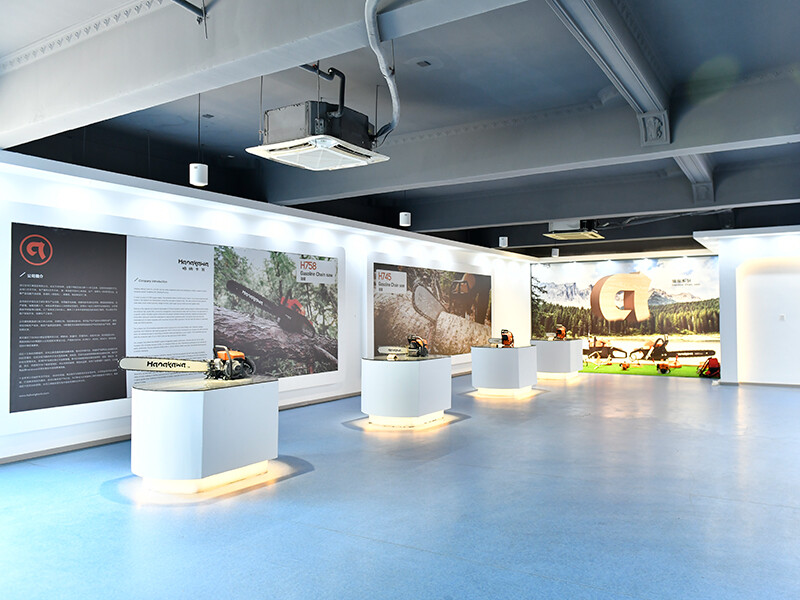
The Hanakawa professional gasoline chainsaw range on display — the lineup spans 31.8cc to 105.7cc.
Why Displacement and Power Output Are Compared Incorrectly
Displacement is an engine-capacity number. Power output is a work-rate number. They are related, but they do not rank saws in the same order, and four specific mistakes follow from treating them as interchangeable.
1. A guide bar that is longer than the engine can pull
Every additional inch of guide bar adds chain mass, more friction in the bar groove, more cutters engaged in the kerf and a higher demand for bar oil. A small-displacement powerhead paired with a bar intended for a larger class cannot hold chain speed in the cut. Chain speed drops, the operator leans on the saw, and the engine runs below the speed at which it makes usable power, so heat accumulates faster than the chassis can shed it. Hanakawa's technical service knowledge base lists insufficient chain-bar oil lubrication and long periods of heavy-load overload operation among the documented causes of the symptom 'chainsaw overheats and shuts down after short-time working' — the same conditions that a bar and engine mismatch produces.
2. Reading peak kW as cutting force
Power output is a function of torque and engine speed, and it is always rated at a stated rpm. A larger engine that turns more slowly can deliver strong torque in the cut while showing a lower kW figure than a smaller, faster-turning engine. That is exactly what happens in this range: the H9105 has the largest displacement at 105.7cc and is rated at 4.8kW at 11,500 rpm, while the smaller 91.6cc H992 is rated at 5.2kW at 13,500 rpm. A buyer who ranks the models by cc alone will reach the opposite conclusion from a buyer who reads displacement, power and engine speed together.
3. Mass and shift length ignored
Net weight climbs steeply across the professional classes: 5.7kg for the H959, 6.1kg for the H971, 6.6kg for the H972E, 7.7kg for the H992 and 11kg for the H9105. An extra two or three kilograms is a minor line on a datasheet and a significant factor after six hours of cutting — it changes control, fatigue and movement through undergrowth. Specifying the largest saw 'just in case' usually costs more in the field than it returns.
4. Power loss blamed on displacement when it is a maintenance condition
When a saw loses cutting power, the displacement figure is rarely the cause. The documented causes of 'loses power when cutting wood' in the same technical knowledge base are a clogged air filter, a blocked muffler spark arrester, insufficient fuel supply, a worn cylinder and piston ring, and incorrect carburetor adjustment. Correcting these conditions restores performance without changing the model class, and should be checked before a specification upgrade is approved.
The Market Context Behind These Specifications
Displacement and power remain the reference points for professional gasoline chainsaw purchasing because gasoline powerheads still dominate the category.
- Straits Research values the global chainsaw market at USD 4.46 billion in 2026 and projects it to reach USD 5.89 billion by 2034, covering gas, electric and battery-powered units (Straits Research, 'Chainsaw Market Size, Share, Growth, Analysis, Report, 2034').
- Gas-powered units held 54.3% of the chainsaw market by product type in the 2025/2026 reporting period (Mordor Intelligence, 'Chainsaw Market Size & Share Analysis — Growth Trends and Forecast 2026–2031').
- ISO 11681-1:2022 is the current international standard for safety requirements and testing of portable combustion-engine hand-held chain-saws for forest service (ISO, published March 2022). Professional buyers use it as a conformity and screening reference rather than relying on displacement claims alone.
- For importers, chain saws with a self-contained non-electric motor fall under HTS code 8467.81 — the classification that applies to the models discussed here (UN Comtrade / Flexport).
The practical consequence: a distributor's catalogue page, a tender document and a contractor's comparison sheet all open at the same two columns — cc and kW. Reading them correctly is a commercial advantage, not a technical detail.
How to Read Displacement, Power Output and the Specs Around Them
Displacement (cc): engine capacity, not cutting force
Displacement is the total swept volume of the engine over one revolution — the size of the space the piston sweeps through. A larger displacement has the potential to draw and burn more air-fuel mixture per cycle, which supports higher torque output, all other things being equal. What displacement does not describe is how well that capacity is used: port timing, compression, exhaust design, carburetor calibration and ignition settings all shape how the engine delivers its output. Two engines with the same cc figure can behave very differently under load.
Power output (kW): the rate of work at a stated speed
Power output is the rate at which the engine delivers work, calculated as torque multiplied by rotational speed. Because the rated figure is tied to a specific engine speed, a kW number without an accompanying rpm figure is incomplete. When comparing two professional gasoline chainsaws, always compare the pair: kW at rpm. In the Hanakawa professional range, the highest power rating belongs to the H992 at 5.2kW, delivered at 13,500 rpm.
Maximum engine speed: the missing half of the power figure
The maximum engine speeds in the range show how differently these engines are set up: H932 at 12,500 rpm, H945 at 13,000 rpm, H959 at 11,500 rpm, H971 at 12,000 rpm, H972 and H972E at 11,500 rpm, H992 at 13,500 rpm and H9105 at 11,500 rpm. A higher rated speed generally suits applications where chain speed and fast, clean cutting through softer or mixed timber matter, paired with a bar within the engine's capability. A lower rated speed with a larger swept volume generally suits continuous heavy cutting, where torque reserve and stability under load matter more than peak chain speed.
Weight, materials and heat management
Construction follows the same class logic. The compact H932 and H945 use an aluminum alloy engine, a glass-reinforced PA nylon housing and a hardened alloy steel crankshaft. From the H959 upward, the professional models use a magnesium alloy crankcase, an aluminum alloy cylinder and a glass-reinforced PA nylon outer housing. Magnesium crankcases reduce weight and support heat dissipation — a relevant detail, because continuous heavy-load operation is a documented overheat trigger. The largest model in the range, the H9105, carries that construction into an 11kg chassis at 105.7cc.
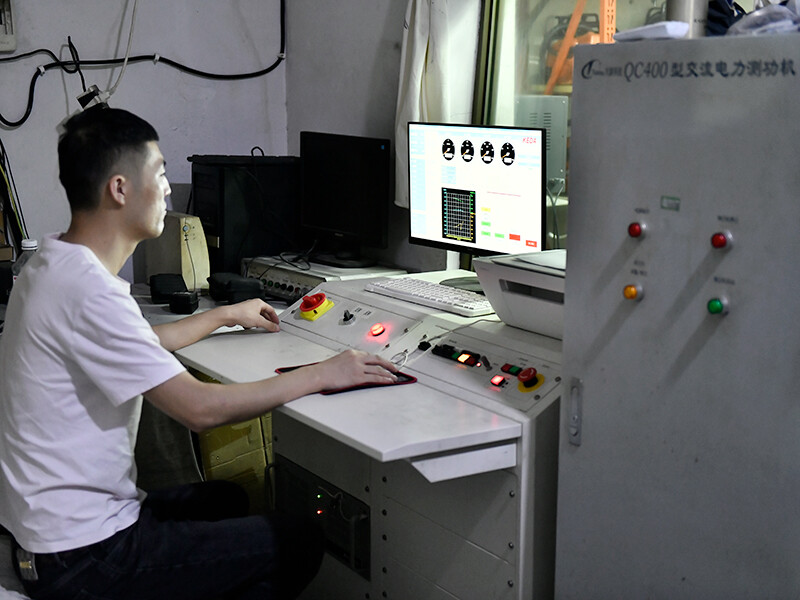
Rated power and engine speed are verified in the in-house laboratory before a model is released to the range.
Where displacement and power diverge: the Hanakawa professional class
H959 — 59cc, 3.4kW, 5.7kg, 11,500 rpm. The entry point to the professional class, documented for commercial forestry logging, municipal greening, construction clearing and road obstacle removal. All parts are compatible with the genuine 361 chainsaw platform, which matters commercially: service parts circulate widely in the markets where this class is sold.
H971 — 70.7cc, 4.0kW, 6.1kg, 12,000 rpm. Documented for large-scale commercial logging, hardwood processing, engineering demolition and forest thinning. Power output rises to 4.0kW while the rated speed stays at 12,000 rpm, giving usable torque in hardwood. Parts are compatible with the genuine 440 chainsaw platform.
H972E — 72cc, 3.6kW, 6.6kg, 11,500 rpm. Positioned for commercial intensive forestry logging, hardwood felling, mountain forest operation, construction site clearing, post-disaster emergency rescue, municipal road obstacle removal and large orchard trunk pruning. Note that the H972E shares its displacement figure with the H972 (72cc, 3.6kW) — a reminder that the model code, not the cc figure alone, defines the configuration.
H992 — 91.6cc, 5.2kW, 7.7kg, 13,500 rpm. The highest power rating and highest rated engine speed in the range, documented for large timber felling, old-growth forest logging, lumber mill work, large disaster rescue and land reclamation, and documented as supporting a guide bar of up to 62 inches. Parts are compatible with the genuine 660 chainsaw platform.
H9105 — 105.7cc, 4.8kW, 11kg, 11,500 rpm. The largest displacement in the range, documented for industrial heavy logging, giant tree cutting, log yard primary processing and remote mountain forest exploitation. Parts are compatible with the genuine 070 chainsaw platform. Its role is the heaviest continuous cutting, where the 11kg chassis is a deliberate trade for capacity rather than a drawback.
Step-by-Step: Matching Displacement, Power and Guide Bar Length to the Job
- Define the dominant cut, not the largest tree on the site. Write down the diameter range you cut for most of the working day, the species and its hardness, and whether you are felling, bucking or limbing. A saw is specified for the work it does most of the time; the occasional oversized stem is a separate decision.
- Convert the job into a torque demand. Dense hardwood, frozen timber, wide cuts, ripping and milling all raise torque demand. Frequent limbing and light bucking lower it. This step decides which end of the range you are shopping in before you compare a single model.
- Set the displacement class, then compare kW at the rated rpm. The documented task fit behind the Hanakawa range gives a practical ladder: 31.8cc / 1.5kW (H932) for light trimming and firewood; 45.4cc / 2.2kW (H945) for agriculture, horticulture and orchard management; 59cc / 3.4kW (H959) for commercial forestry logging and clearance; 70.7cc / 4.0kW (H971) for large-scale commercial logging and hardwood; 72cc / 3.6kW (H972E) for intensive harvesting, hardwood felling and rescue work; 91.6cc / 5.2kW (H992) for large timber, old-growth logging and mill work; and 105.7cc / 4.8kW (H9105) for industrial heavy logging and log-yard processing.
- Match guide bar length to the engine, not to ambition. Choose the shortest bar that covers your dominant diameter with a working margin, then confirm the engine's documented capability. The H992, for example, is documented as supporting a bar of up to 62 inches — a figure that belongs to that powerhead, not to the 59cc class. Bar length, chain pitch and drive sprocket must be matched as a set, so confirm the exact combination with the supplier before the order is placed.
- Check mass and consumables against shift length. Compare the 5.7kg H959 with the 11kg H9105 in the context of your working day, not on a spec sheet. Fuel and bar-oil consumption follow displacement, so moving up a class also changes what your crews carry into the stand.
- Verify certification, spare parts and after-sales before you commit. Ask for the quality-system certificate, the parts-compatibility position for each model, the warranty terms and the availability of consumables. These factors decide the cost of ownership across the life of the fleet, and they are as important as the cc figure.
Use Cases: Which Power Class Fits Which Cutting Task
Firewood, farm and orchard work. The 31.8cc H932 (1.5kW, 4.1kg) and the 45.4cc H945 (2.2kW, 4.8kg) are the practical class for branch cutting, thin log processing, orchard pruning and small-scale forestry, where low weight and easy handling matter more than maximum cutting speed.
Contractor logging and municipal clearance. The 59cc H959 (3.4kW, 5.7kg) is documented for commercial forestry logging, municipal greening, construction clearing and road obstacle removal — the mixed workload of a professional crew that fells, limbs and clears in the same shift.
Hardwood felling and mountain operations. The 70.7cc H971 (4.0kW, 6.1kg) and the 72cc H972E (3.6kW, 6.6kg) cover large-scale commercial logging, hardwood processing, mountain forest operation and post-disaster emergency rescue, where torque reserve under load and stability on uneven ground decide the working pace.
Large timber, old-growth and mill work. The 91.6cc H992 (5.2kW, 7.7kg) is documented for large timber felling, old-growth forest logging, lumber mill work and land reclamation, with guide bar support up to 62 inches.
Industrial heavy logging and log-yard processing. The 105.7cc H9105 (4.8kW, 11kg) is documented for industrial heavy logging, giant tree cutting, log yard primary processing and remote mountain forest exploitation.
Field evidence from supply programmes. An OEM retailer operating in the United States, Canada and Australia has ordered more than 5,000 units annually across a two-year programme for stocking in overseas warehouses, Amazon storage and distribution channels; the reported results are stable operation, cost-effective replacement parts and a low complaint rate. A private-label wholesaler and brand owner in Russia and Belarus has distributed more than 2,000 units annually for two years to forest farms, landscaping crews and logging operators, with reported low field failure rates, few end-user complaints, highly compatible spare parts, a proven design for mass private-label production and consistent power output for logging and landscaping work in a temperate cold climate.
Side-by-Side: Professional Class Model Comparison
Every figure below is a published specification for the Hanakawa professional gasoline chainsaw range, taken from the same specification family, so the models can be compared directly.
| Model | Displacement | Power output | Max engine speed | Net weight | Documented task fit |
|---|---|---|---|---|---|
| H959 | 59cc | 3.4kW | 11,500 rpm | 5.7kg | Commercial forestry logging, municipal greening, construction clearing, road obstacle removal |
| H971 | 70.7cc | 4.0kW | 12,000 rpm | 6.1kg | Large-scale commercial logging, hardwood processing, engineering demolition, forest thinning |
| H972E | 72cc | 3.6kW | 11,500 rpm | 6.6kg | Intensive forestry logging, hardwood felling, mountain forest operation, post-disaster rescue, large orchard trunk pruning |
| H992 | 91.6cc | 5.2kW | 13,500 rpm | 7.7kg | Large timber felling, old-growth forest logging, lumber mill, large disaster rescue, land reclamation |
| H9105 | 105.7cc | 4.8kW | 11,500 rpm | 11kg | Industrial heavy logging, giant tree cutting, log yard primary processing, remote mountain forest exploitation |
For context, the lighter and mid classes complete the ladder for distributors who stock several price levels:
| Model | Displacement | Power output | Max engine speed | Net weight | Documented task fit |
|---|---|---|---|---|---|
| H932 | 31.8cc | 1.5kW | 12,500 rpm | 4.1kg | Light tree trimming, branch cutting, thin log firewood processing, shrub clearance |
| H945 | 45.4cc | 2.2kW | 13,000 rpm | 4.8kg | Agriculture, horticulture, small-scale forestry, orchard management |
| H865 | 65.1cc | 3.4kW | 11,500 rpm | 6.4kg | Commercial forest logging, municipal emergency clearance, construction vegetation removal |
| H871 | 70.7cc | 3.9kW | 11,500 rpm | 6.4kg | High-intensity commercial logging, mass hardwood harvesting, professional logger daily work |
Specifications as published for the Hanakawa range. Always request the current datasheet for the exact model and configuration before ordering.
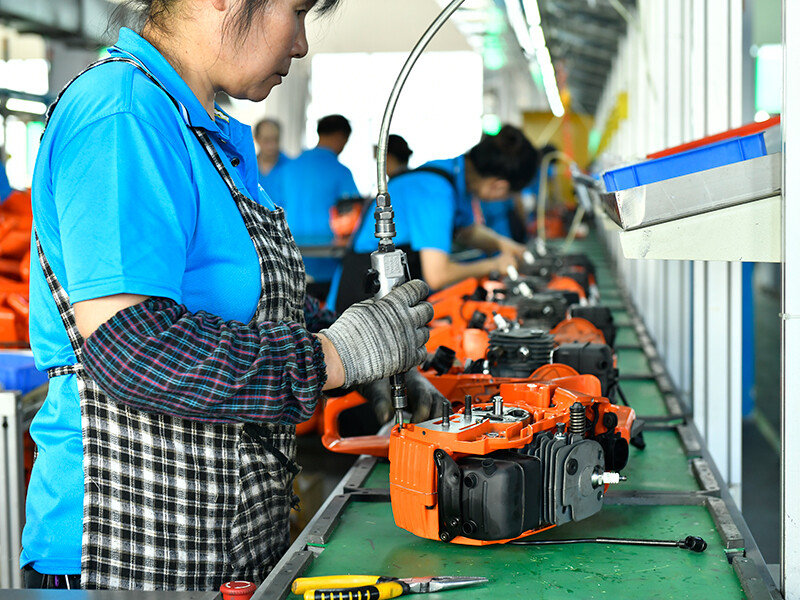
Powerhead assembly at the Zhejiang Hehong Tools facility in Yongkang, Zhejiang Province, China.
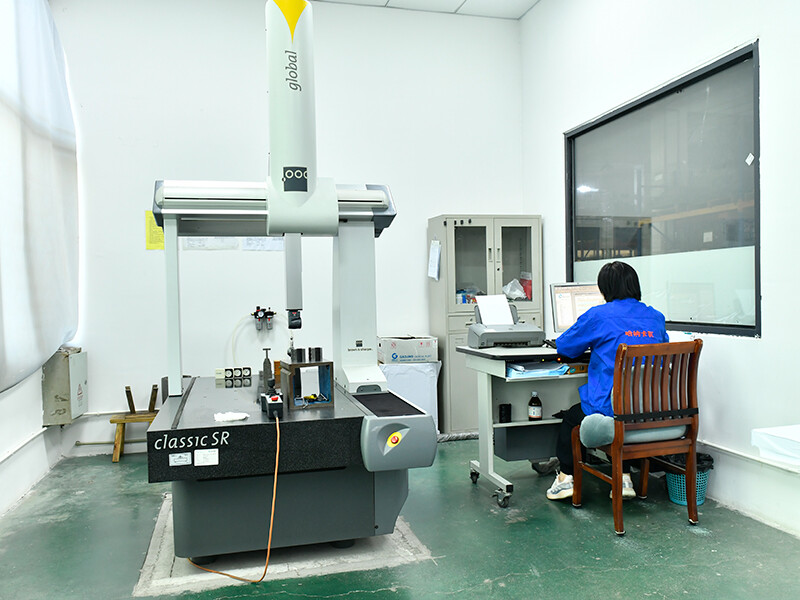
Dimensional verification of machined components — the step that keeps displacement, compression and vibration behaviour inside specification.
FAQ: Power, Displacement and Supplier Decisions
ISO 11681-1:2022 — Machinery for forestry, portable chain-saw safety requirements and testing, Part 1: Chain-saws for forest service — is the current international reference for combustion-engine hand-held chainsaws. On the manufacturing side, Hanakawa gasoline chainsaws are produced under an ISO9001 quality system: certificate 11724QU 0135-03 R3M, issued by INGEER against GB/T19001-2016/ISO9001:2015, covering the scope 'Production of Garden Tool (Chain Saw)', valid from 20 March 2024 to 22 March 2027. Third-party testing and customer-commissioned inspection, such as SGS, can be arranged on request.
Build the shortlist on verifiable criteria rather than marketing language: (1) whether the range covers the displacement classes your market actually buys, from compact firewood saws to industrial heavy logging units; (2) whether the platforms share service parts with saws already circulating in your territory, which determines after-sales cost; (3) certification and quality-system status; (4) production capacity and lead time for repeat orders; and (5) documented field performance in comparable markets. Zhejiang Hehong Tools Co., Ltd., the manufacturer of the Hanakawa brand, was established in 2006, operates a 40,000 m² facility that includes more than 20,000 m² of production area, employs 133 people and 12 engineers, produces 2,500,000 units annually, exports 85% of its output, and supplies customers in more than 20 countries across Eastern Europe, Russia, South America, the Middle East, Southeast Asia, Western Europe and Africa. Apply the same checklist to this supplier as to any other.
OEM, ODM and customization are part of the manufacturer's standard capability: custom logo, colour box packaging, nameplate label and colour scheme; structural modification and parameter adjustment; product development per drawing or sample; and a customized user manual. Confirm in writing which parameters can be adjusted on a specific model before a specification is locked. Monthly production capacity is 200,000 units, and an in-house R&D team of 12 engineers supports product optimization, parameter adjustment and new model development.
Sample orders are acceptable. Minimum order quantity is 100 units for in-stock items and 500 units for OEM private-label orders. Quality control covers ISO9001 system control, incoming material inspection, in-process patrol inspection, full final testing of finished units and pre-shipment sampling tests, with third-party testing or customer-commissioned inspection such as SGS available. This structure lets a distributor validate a model class before scaling a programme.
Production lead time is 20 to 45 days. Main units carry a 12-month warranty, supported by spare-parts supply, technical documentation and troubleshooting guidance, optional after-sales technical training, and consumable-parts supply solutions for bulk orders. Because several models share parts compatibility with widely distributed professional platforms — H959 with the genuine 361 platform, H971 with the 440 platform, H992 with the 660 platform and H9105 with the 070 platform — aftermarket support can be planned before the first container ships. To move to the next step, request a model-specific quotation or a sample unit, or download the full Hanakawa catalogue from the link at the end of this guide.
Conclusion
Displacement tells you the size of the engine; power output tells you the rate of work it delivers at a stated engine speed. Read alone, neither number identifies the right professional gasoline chainsaw for a job. Read together — and paired with maximum engine speed, net weight and the guide bar the powerhead can actually pull — they produce a specification you can defend in front of a contractor or a distributor's buying committee.
The five models used in this guide show why the pairing matters. The H959 (59cc, 3.4kW) is the practical entry to professional logging. The H971 (70.7cc, 4.0kW) adds torque for hardwood and large-scale commercial work. The H972E (72cc, 3.6kW) covers intensive harvesting, mountain operations and rescue duty. The H992 (91.6cc, 5.2kW) delivers the highest power rating in the range with a documented guide bar capability of up to 62 inches. The H9105 (105.7cc, 4.8kW) carries the largest swept volume for industrial heavy logging and log-yard processing. Choose the class by the cut, the bar by the class, and the supplier by certification, parts and capacity — in that order.
Next Step: Sample, Quote and Catalogue
Zhejiang Hehong Tools Co., Ltd. manufactures the Hanakawa professional gasoline chainsaw range covered in this guide, from the 31.8cc H932 to the 105.7cc H9105, alongside brush cutters, hedge trimmers and a full compatible spare-parts programme.
Request a sample unit or a model-specific quotation, or download the catalogue for full specifications: V4.1 HANAKAWA Catalogue (PDF)
Contact: Francis | Email: francis@hehongtools.com | Tel: +86 579 89051580 | WhatsApp: +86 172-7668-1217 | Website: www.hanakawatools.com
Address: 1186 Songshi West Rd, Chengxi Industrial Area, Yongkang, Jinhua City, Zhejiang Province, China
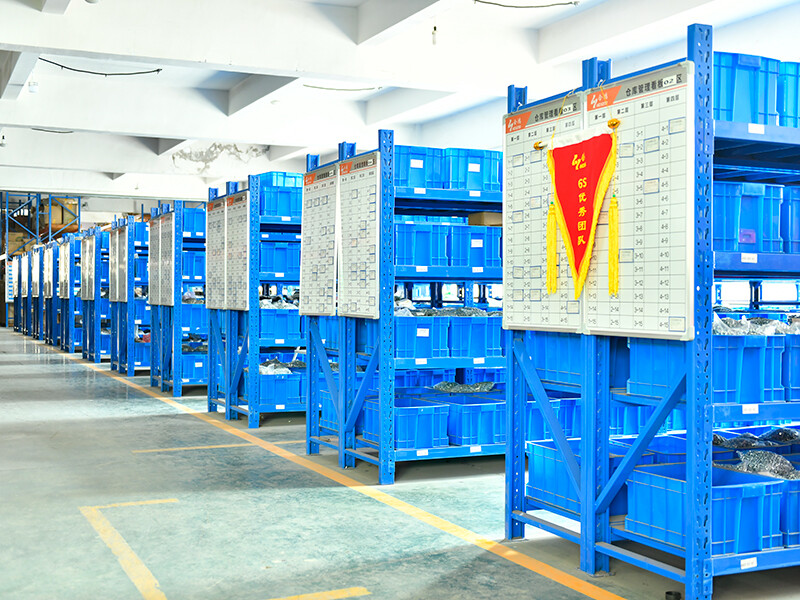
Standard spare-parts storage supports the after-sales service that distributors need for multi-year fleet programmes.