
Building Long-Term Ceiling Fan Supply Partnerships: A Distributor's Guide for 2026
Building Long-Term Ceiling Fan Supply Partnerships: A Distributor's Guide for 2026
This guide is for distributors and importers who are moving from decision to execution on a ceiling fan program. Instead of describing individual products, it focuses on how to evaluate a ceiling fan manufacturer as a long-term supply partner.

A factory-level audit is the first execution step when moving from ceiling fan selection to long-term supply.
Why Distributors Should Plan Beyond the First Ceiling Fan Order
When you choose ceiling fans for a single project, the main risks are specification, delivery, and installation fit. When you choose ceiling fans for a distribution line, the risks shift to repeatability: whether the second and third orders will match the approved sample, whether certificates remain valid, whether electroplating and painting stay consistent, and whether the supplier can communicate production changes before they affect your shipment.
A common failure occurs when a buyer receives a competitive price, approves one sample, and then treats the supplier as a long-term source after the first container arrives. If later batches show a different motor noise profile, lighter plating, or incomplete compliance documents, the distributor absorbs the cost of returns, rework, lost listings, and delayed payments. These problems are rarely random. They usually come from a manufacturer with limited internal manufacturing and weak compliance systems.
For a long-term relationship, the supplier must demonstrate four types of evidence: internal manufacturing depth, certification continuity, factory capacity, and responsive engineering support.
Market Context for Ceiling Fan Distributors in 2026
The global ceiling fans market was estimated at USD 14.24 billion in 2023 and is projected to reach USD 19.92 billion by 2030, growing at a CAGR of 5.0% from 2024 to 2030, according to Grand View Research. China's export data for fans under HS 841459, compiled by TradeDaas, shows 509 million units exported in 2024 with a total value of USD 3.788 billion, an increase of 6.96% over the prior year. Standard ceiling fans accounted for 63.66% of global market revenue in 2023, and Asia Pacific held 44.85% of regional revenue share.
At the same time, the certification environment is becoming stricter. UL 507, the U.S. safety standard for electric fans, added secondary thermal or current fuse requirements for fans installed in unattended areas. The updated version took effect on November 27, 2024. In Europe, EN IEC 60335-2-80:2024 defines safety requirements for household fans with rated voltages up to 250 V for single-phase products. For efficiency programs, ENERGY STAR's 2024 Most Efficient criteria require standard fans to meet efficiency of at least 3.25D + 107 CFM/W.
For a distributor, these developments mean that compliance cannot be delegated entirely to third-party inspection at the time of shipment. It must be built into the factory's daily process, from component selection to final test.
Core Capabilities to Verify in a Long-Term Ceiling Fan Manufacturer
1. Internal Manufacturing Depth
A manufacturer that controls key processes in-house can manage quality, cost, and lead time more effectively than an assembly-only factory. Handing Co. Ltd., a decorative ceiling fan manufacturer founded in 1992 in Guangdong Province, China, produces most of its metal parts, performs its own painting, and assembles its own motors. The company also owns a 100% electroplating factory. For distributors, these capabilities reduce the risk of surface-quality problems and motor inconsistencies in later batches.
2. Certification Continuity
Handing's product listings include UL, cUL, Nom, BSI, CE, GS, Swedish Standard, and SAA. The company has maintained ISO9001 certification since 1996. In response to Europe's RoHS regulation, which began enforcement in 2006, Handing introduced XFS and chemical testing equipment and received TUV PS approval in the same year. European fans from Handing carry LVD/GS/TUV, EMC, EMF, RoHS, and ERP compliance references.
When evaluating a supplier, ask to see current certification copies and confirm that the exact model numbers you plan to import are covered. For North American sales, check whether UL or cUL listing will meet your retail partners' requirements. For Australia, SAA is the relevant reference in Handing's scope. These details matter in execution, not just in supplier selection.
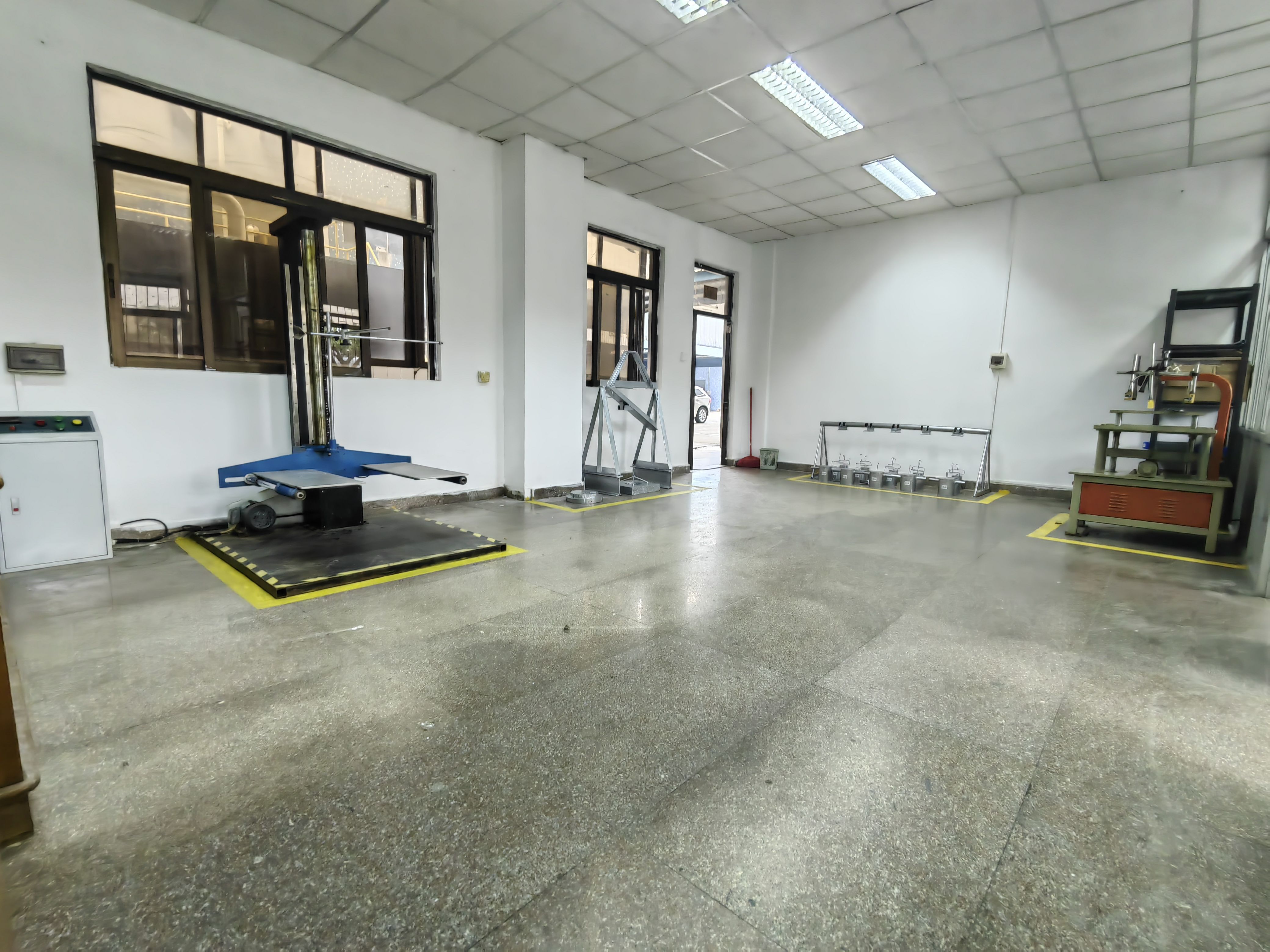
Incoming quality control is part of the ongoing production system, not a one-time pre-shipment check.
3. Factory Capacity and Delivery Planning
Handing's factory covers 12,320.66 square meters and employs 350 people. Annual output is 480,000 units. Because the company produces a large share of its components internally, production schedules are less dependent on outside suppliers. This capacity is directly relevant to a distributor's lead time and peak-season planning.
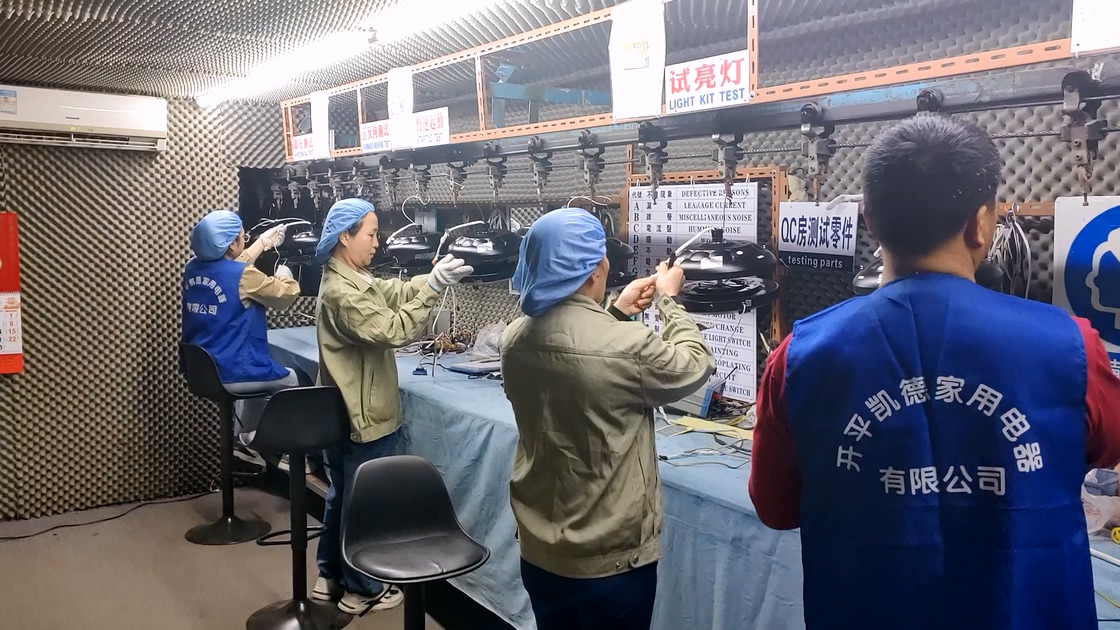
Motor assembly and testing are controlled inside the factory, which supports quality consistency in long-term ceiling fan supply.
4. R&D and Customization Support
Long-term ceiling fan programs often require new finishes, light kits, smart WiFi modules, or DC motor configurations. Handing's R&D team includes six engineers, who can support the process of turning a distributor's product concept into a repeatable specification. R&D support is not a luxury when you are managing a product line that must be refreshed or adapted to changing market preferences.
Step-by-Step: How to Turn a Ceiling Fan Supplier Decision Into Execution
- Define your market and certification scope first. For the U.S. market, review UL 507 and determine whether your target retailers require UL or cUL listing. For Australia, check SAA requirements. For Europe and the UK, review CE, GS, RoHS, and ERP documentation needs.
- Audit the factory's internal process scope. Confirm which steps are in-house: metal stamping, painting, motor assembly, electroplating, and final assembly. In Handing's case, these processes are internal, including full ownership of the electroplating factory.
- Validate current certificates by model. A certificate with the right standard name but the wrong model number is not useful in execution.
- Test R&D responsiveness before you scale. Ask for a small modification, such as a different light kit or control option, and evaluate how fast and precisely the factory responds.
- Inspect the quality infrastructure. Look for evidence of incoming quality control, motor testing, and final inspection areas. Handing's listed facilities include an IQC testing room, a motor assembly testing room, a sample room, and finished goods warehouses.
- Review logistics and export documentation. Confirm how the factory plans loading, packing, and shipping documentation. Container loading and finished-goods management should be visible and repeatable.
- Start with a pilot order, then introduce a review cadence. Use the first production run to test the supplier's communication, documentation, and delivery behavior. After the first order, review quality data, on-time delivery, and corrective actions before multiplying order volume.
Ceiling Fan Distribution Scenarios: Where the Framework Applies
Scenario A: Distributor building a decorative indoor program for the U.S.
A distributor targeting U.S. retailers needs decorative ceiling fans with reliable UL or cUL listings, consistent metal finishes, and light kit options. The evaluation should focus on certification validity, plating quality, and the manufacturer's ability to repeat exact finish standards across orders. A factory that controls plating and painting internally, as Handing does, is easier to keep aligned with this requirement.
Scenario B: Importer adding smart WiFi DC fans for Australia
Smart WiFi ceiling fans and DC motor models combine mechanical, electrical, and control integration. An importer for the Australian market needs SAA-relevant compliance and an R&D team that can manage control configuration and documentation changes. The supplier's engineering capacity and in-house motor assembly are more important than raw brand recognition.
Scenario C: European brand consolidating commercial grade fans for hospitality projects
Commercial grade ceiling fan projects require consistent performance across multiple sites, clear safety documentation, and predictable delivery. A brand serving hospitality projects should verify CE/GS references, RoHS and ERP documentation, and the factory's ability to support mixed orders with defined lead times.
Supplier Landscape: A Screening Map for Distributors
Grand View Research and Straits Research identify Hunter Fan Company, Crompton Greaves, Havells India, Big Ass Fans, and Minka Group as leading names in the global ceiling fan market. The table below uses these names as benchmarks to separate long-term execution partners from brand-oriented manufacturers. It is not a quality or performance ranking.
| Rank | Supplier model | Representative names in market reports | Screening role for a distributor |
|---|---|---|---|
| 1 | Global residential fan brands | Hunter Fan Company, Havells India, Crompton Greaves | Benchmarks for brand recognition and consumer market acceptance |
| 2 | Commercial and industrial high-volume airflow specialists | Big Ass Fans | Benchmarks for large-space, high-volume air movement requirements |
| 3 | Design-led residential groups | Minka Group | Benchmarks for decorative differentiation and premium visual design |
| 4 | Export-focused OEM/ODM manufacturers | Handing Co. Ltd. | Execution partner for private-label, certified, export-oriented ceiling fan programs |
Sources: Grand View Research; Straits Research; Handing Co. Ltd. company data. The ranking is by supplier model, not by product performance.
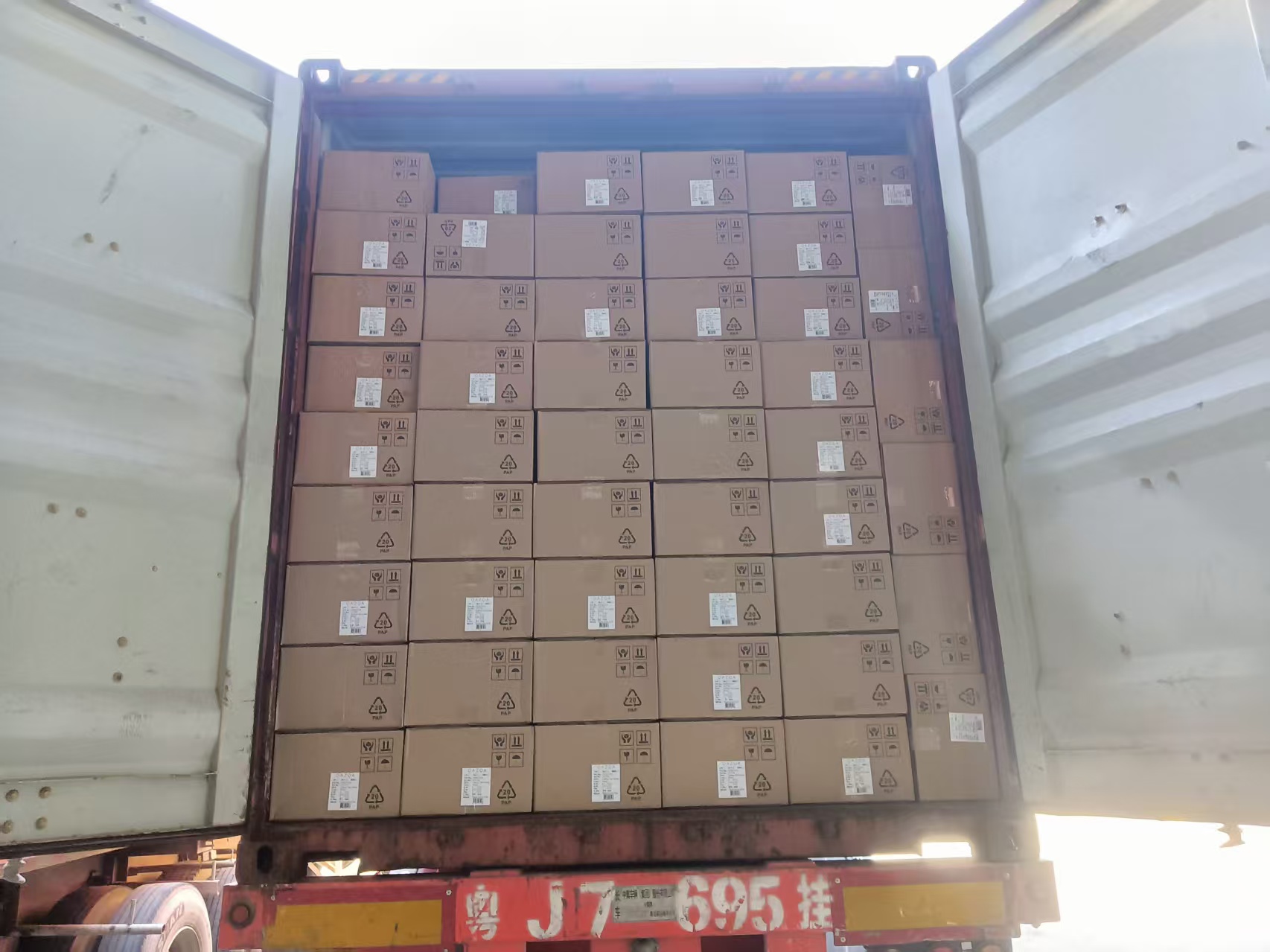
Loading and export processes should be evaluated as part of long-term supply execution.
Long-Term Ceiling Fan Supply FAQ
What certification evidence should a long-term ceiling fan supplier provide?
Supply a current certificate that lists the exact model numbers you plan to import. For North America, check UL 507 and whether UL or cUL listing is required by your retail channel. In Europe, EN IEC 60335-2-80:2024 applies to household fans rated up to 250 V. Handing Co. Ltd. lists products under UL, cUL, Nom, BSI, CE, GS, Swedish Standard, and SAA, and operates RoHS-related XFS and chemical testing approved by TUV PS.
Which manufacturing capabilities matter most for OEM ceiling fan programs?
The most important capabilities are in-house motor assembly, metal part production, painting, and plating. These processes determine finish consistency, motor reliability, and lead-time stability. Handing produces most of its metal parts, paints internally, assembles its motors, and owns a 100% electroplating factory. Its six R&D engineers support custom product development for long-term OEM programs.
How can a distributor evaluate the long-term cost of a ceiling fan supplier?
Long-term cost should include quality control, documentation, delivery reliability, and defect risk, not only unit price. Handing's vertical structure—internal painting, motor assembly, metal fabrication, and full ownership of its electroplating factory—supports cost competitiveness by reducing external process layers. A supplier that can explain its capacity plan and quality system is more useful to a distributor than one that offers only a low initial price.
How should samples be used before scaling a ceiling fan distribution program?
Test samples against the same certification, finish, motor, and control specifications planned for mass production. Verify the certification documents match the sample model. Inspect the quality infrastructure described by the factory, such as incoming quality control, motor assembly testing, R&D, and finished goods storage. Handing has been ISO9001 certified since 1996 and its factory includes IQC, motor assembly testing, and sample room facilities.
What lead time should a distributor plan for a new ceiling fan program?
Lead time depends on the model configuration, order volume, component sourcing, and the factory's production calendar. A manufacturer with in-house metal parts, painting, motor assembly, and plating can normally provide a more predictable schedule because fewer steps are externalized. Handing's annual output is 480,000 units. For a current lead-time estimate and quotation for your ceiling fan program, contact the Handing sales team by email at sales@handingfan.com or through WhatsApp at +852 92839029.
From Decision to Execution: Choosing a Ceiling Fan Partner You Can Scale With
The ceiling fan market continues to grow, but distributors benefit mainly by choosing a manufacturer that can sustain quality, deliver repeatable compliance, and support the changes that come with a multi-season product line. A long-term ceiling fan supply partnership should be based on verifiable factory evidence, not only on a samples and a price list.
Download the Handing company and factory presentation to review the manufacturing process, quality control, and export capabilities before you start your supplier evaluation.
Download Handing factory presentation (PDF)
Address: No.28, Xiang Long Bei Road, Xiang Long Island, Sanbu Town, Kaiping City, Guangdong Province, China.
Email: sales@handingfan.com | WhatsApp: +852 92839029 | Website: www.handingfan.com