
Ceiling Fan Import Requirements: Certification and Specification Checklist
Ceiling Fan Import Requirements: Certification and Specification Checklist
Ceiling fan buyers in the research and evaluation stage need more than a catalog photo. They need to know what a fan must contain before it can be sold, installed and operated in a target market. This article outlines ceiling fan import requirements for certification, electrical construction, size, light kits, controls and packaging, and uses the 52-inch decorative ceiling fan model TU52-MW-N3A1DOME from Handing Co. Ltd. as a concrete specification example.
The Problem: Constraint Errors Happen Before the Order Is Placed
A ceiling fan import program can fail for reasons unrelated to airflow. A missing safety approval may stop a container at customs. An undefined motor specification may create expensive corrective work at the end of production. A light kit with a non-compliant driver can cause EMC failures. A poorly matched blade span can make the product unsuitable for the room size. In short, buyers need a constraint checklist, not just a product summary.
When procurement teams skip the compliance stage, they usually have to renegotiate certificates, redesign labels or wait for a new motor sample. This is why the ceiling fan sourcing conversation should start with market approval and technical construction.
Market Background: Larger Demand Makes Specification Discipline More Important
According to Grand View Research, the global ceiling fans market was estimated at USD 14.24 billion in 2023 and is projected to reach USD 19.92 billion by 2030, growing at a CAGR of 5.0% from 2024 to 2030. Asia Pacific held the largest regional revenue share at 44.85% in 2023. China is also a major export source: TradeDaas and China Customs report that China's export volume of fans under HS 841459 reached 509 million units in 2024, with a total export value of USD 3.788 billion, up 6.96% year on year.
Large volumes create two consequences. First, competition pushes prices down. Second, importing markets are updating safety requirements. For example, the UL 507 version effective November 27, 2024 adds secondary thermal or current fuse requirements for electric fans used in unattended areas in the United States. In Europe, EN IEC 60335-2-80:2024 defines safety requirements for household fans, including ceiling fans, with rated voltages up to 250V for single-phase. These standards affect the compliance conversation between a manufacturer and an importer.
Manufacturer Example: A Certified Specification Baseline
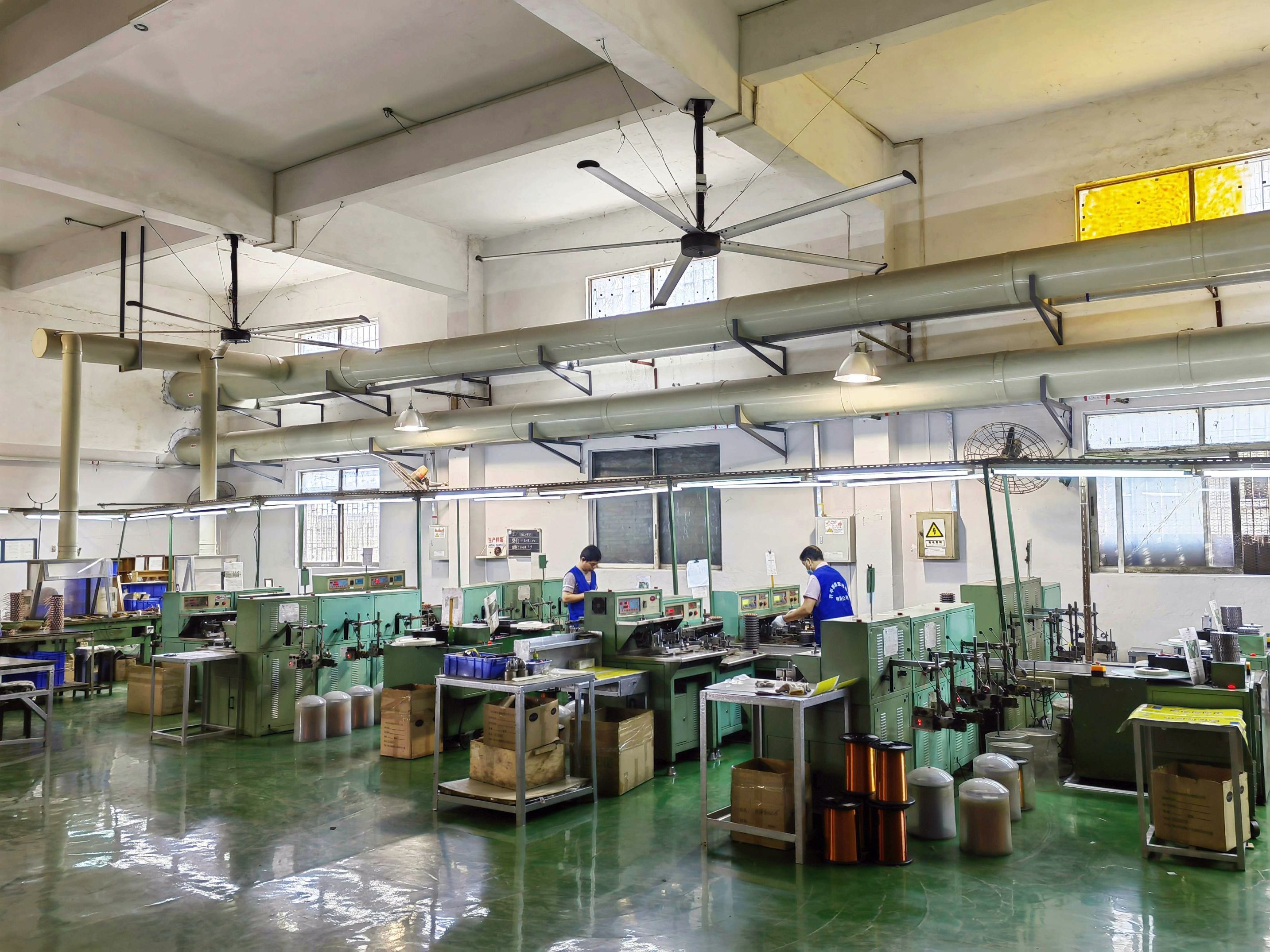
One way to evaluate a ceiling fan supplier is to study how clearly it presents product specifications. Handing Co. Ltd., founded in 1992 in Kaiping, Guangdong Province, China, is a ceiling fan manufacturer with a 12,320.66m² factory, approximately 350 employees and an annual output of 480,000 units. The company exports 100% of its output to the EU, USA and Australia. According to Handing, its ceiling fans have been listed in UL, cUL, Nom, BSI, CE, GS, Swedish Standard and SAA, and its European models carry compliance documentation for LVD/GS/TUV, EMC, EMF, RoHS and ERP.
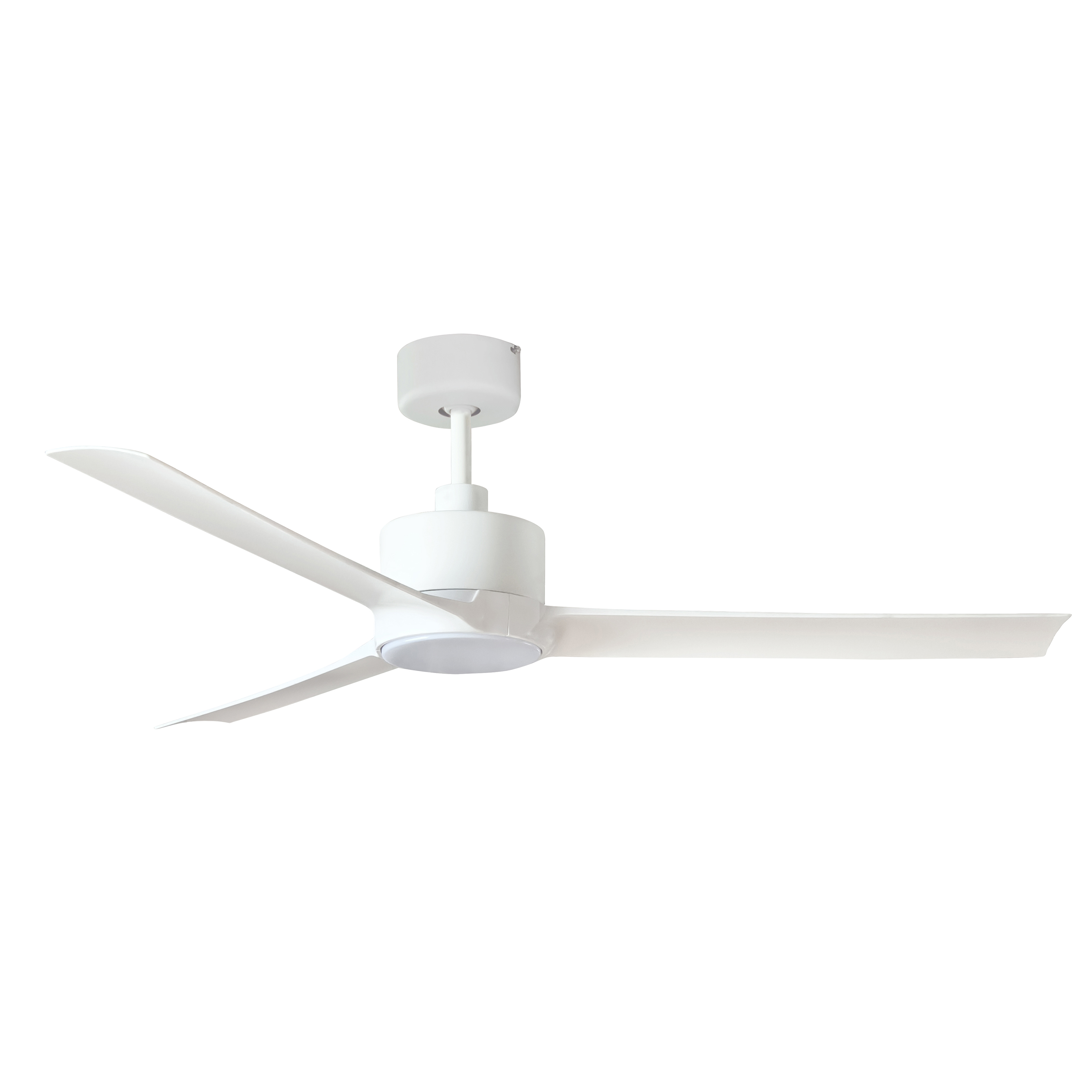
For a concrete product, consider the Handing TU52-MW-N3A1DOME. The product specification states that it is a 52-inch decorative ceiling fan with a steel housing, 3 ABS blades in a Matt White finish, a DC motor and a 24W CCT LED light kit with smart WiFi control. Its packaging dimensions are 720(L) x 225(W) x 350(H) mm, and it is marked for household and commercial applications.
Certification Requirements: Know the Approval That Opens the Door
Certification is the first ceiling fan import requirement because the destination market defines which approval matters. The U.S. safety standard UL 507 applies to electric fans. Buyers should ask for a UL or ETL listing for the exact model and verify that it is based on the latest effective UL 507 edition. The updated 2024 edition introduced an important change for fans installed in unattended areas: secondary thermal or current fuse requirements.
For Europe, the reference standard is EN IEC 60335-2-80:2024. This standard covers household fans, including ceiling fans, with rated voltages up to 250V for single-phase. Buyers should also request CE documentation and confirm that the voltage and frequency match their project. Handing states that its European models include LVD/GS/TUV, EMC, EMF, RoHS and ERP coverage, which signals that the company is familiar with the European compliance package.
For Australia, SAA approval is the approval commonly requested in the market. The Handing product list includes SAA among the approvals covering its ceiling fans. But no buyer should rely on a company-level statement alone; ask for a certificate number and, if necessary, verify it with the issuing body.
Specification Checklist Interiors: Motor, Light and Controls
After confirming certification, the next level of detail is inside the ceiling fan. The first item is the motor type. Modern ceiling fan buyers frequently ask for DC ceiling fans because DC motors are generally quieter and can be controlled at multiple speed steps. The TU52-MW-N3A1DOME is powered by a DC motor, and a buyer can use this fan as a reference point when comparing supplier offers.
The second item is the light kit. The model uses a 24W CCT LED light kit. This is important because an LED light kit affects heat management, EMC behavior and electrical loading. If a buyer needs a ceiling fan with light, the supplier should state whether it is an integrated LED board or a replaceable module, what wattage is used and what color-control behavior the CCT label represents.
The third item is the control method. The TU52-MW-N3A1DOME offers smart WiFi control, which is common in modern smart WiFi ceiling fan programs. However, some buyers operate in markets where a pull chain controlled ceiling fan is the standard, or where an installed remote is not preferred. Confirm which control option will be used in bulk production before approving a sample.
The fourth item is reversible operation. If you need a reversible ceiling fan, ask whether the motor supports reverse direction and how the buyer or installer activates it. The fifth item is the noise level. DC motor models are often chosen when quiet operation is a priority; the buyer should measure sound on a sample in a controlled space rather than trust a general spec sheet.
Specification Checklist Exterior: Size, Material and Packaging
Blade span is one of the easiest specification points to get wrong. Standard residential and light commercial ceiling fans are frequently grouped at 42-inch, 48-inch, and 52-inch sizes. A 52-inch model, like the TU52-MW-N3A1DOME, is generally selected for larger rooms or open-plan spaces. In addition to size, examine the material system. The TU52-MW-N3A1DOME uses a steel housing with ABS blades. That distinction affects weight, finish stability, corrosion resistance and invoice cost.
Low profile ceiling fan models are often selected when the ceiling height is limited. You should also decide whether the project needs a decorative ceiling fan, an industrial ceiling fan, or a commercial grade ceiling fan. These categories are not interchangeable, and certificates may not transfer across use classes. For outdoor ceiling fan installations, ask the supplier to confirm whether the product has a damp or wet rating before considering it.
Packaging is the last exterior specification but a frequent source of container-loading errors. In the TU52-MW-N3A1DOME example, the carton size is 720(L) x 225(W) x 350(H) mm. A buyer can use that figure to compare carton efficiency and shipping cost against another decorative ceiling fan with light.
Step-by-Step Ceiling Fan Buying Checklist
- Define the destination market and the safety approval required for that market, such as ETL or UL listed ceiling fan certification for the United States, CE certification for Europe or SAA certification for Australia.
- Confirm the exact model number and certificate scope: the certificate must name the model, not just the company.
- Fix the physical specification: blade span, downrod or low profile configuration, housing material, blade material and finish color.
- Select the motor and control system: DC or AC motor, pull chain, wall control, remote control, smart WiFi control, and reverse function.
- Define the light kit: whether the model is a ceiling fan with light, LED wattage, CCT type, driver placement and emergency lighting requirements.
- Check the product scope: household, commercial grade, industrial fan, indoor or outdoor rating.
- Record packaging dimensions and usable carton configuration for volume orders.
- Ask for certificate copies, test reports and factory quality-control records; then compare price bands only after all suppliers quote the same configuration.
- Request a pre-production sample and schedule an inspection before bulk production begins.
Comparison Table: Key Ceiling Fan Compliance and Specification Evidence
| Market / Program | What it means for buyers | What to ask the supplier |
|---|---|---|
| UL 507 (USA) | The current version, effective November 27, 2024, adds secondary thermal or current fuse requirements for fans in unattended areas. | Does your UL or ETL certification cover this model against UL 507? Please provide a certificate number and test report. |
| EN IEC 60335-2-80:2024 (EU) | Defines safety requirements for household fans, including ceiling fans, for single-phase products up to 250V. | Is the CE technical file based on EN IEC 60335-2-80:2024? What voltage and frequency are covered? |
| ENERGY STAR (USA) | Applies to efficiency-qualified ceiling fans. ENERGY STAR certified fans can be up to 44% more efficient than conventional fans, and the 2024 Most Efficient criteria for standard fans require efficiency of at least 3.25D + 107 CFM/W. | Is the model ENERGY STAR certified or tested to an efficiency standard? Which airflow efficiency value was measured? |
| SAA / Australia market approval | SAA approval is commonly required for electrical safety in Australia. | Can you provide an SAA certificate for the exact model and a statement of included models? |
| CE and European compliance package | CE relates to EU product safety, LVD, EMC and eco requirements. Handing states its European models include LVD/GS/TUV, EMC, EMF, RoHS and ERP. | Which directives apply to the model, and which documentation will accompany the shipment? |
| Product example: TU52-MW-N3A1DOME | Specification evidence from Handing: 52-inch decorative indoor ceiling fan with light, steel housing, 3 ABS blades, DC motor, 24W CCT LED light kit, smart WiFi control, packaging 720 x 225 x 350 mm, suitable for household and commercial use. | Does the offered configuration exactly match this specification, including the DC motor version and light kit? |
Source basis: UL 507, EN IEC 60335-2-80:2024 and ENERGY STAR criteria from verified standard descriptions; Handing product and corporate facts from Handing Co. Ltd. documentation used in this article.
Ceiling Fan Use Cases: Matching Requirements to Applications
Decorative Indoor Ceiling Fan with Light
A 52-inch indoor decorative ceiling fan can serve living rooms, bedrooms and hospitality areas where visual design matters as much as air movement. The Handing TU52-MW-N3A1DOME gives buyers a clear reference: DC motor operation, a steel housing, ABS blades and an integrated 24W CCT LED light kit. A buyer can use it as a benchmark for a ceiling fan with light program.
Commercial Grade Ceiling Fan for Light Commercial Spaces
When the fan is planned for a showroom, cafe or small office, confirm that the product specification states commercial-grade or commercial-compatible use. According to the product data, the Handing TU52-MW-N3A1DOME is marked for household and commercial applications. That does not mean every indoor fan is commercial-grade; it is why the use classification should be checked model by model.
Smart WiFi Ceiling Fan with Quiet Operation
For residential smart home projects, a smart WiFi ceiling fan with a DC motor can be integrated into the home network. The TU52-MW-N3A1DOME includes smart WiFi control. If quiet operation is the main buying criterion, test the sample at multiple speed levels and record sound levels in your own room environment.
Special Controls and Styles
Ceiling fan catalogs also include retro vintage ceiling fans, low profile ceiling fans, pull chain controlled ceiling fans, indoor and outdoor ceiling fans, and models with optional reverse mode. When the project requires one of these variants, add it to the specification matrix and make the supplier confirm availability, certifications and packaging for that variant.
Frequently Asked Questions
Which ceiling fan certifications should a buyer look for in the US, EU and Australia?
In the United States, ask for a UL or ETL-listed safety certification against UL 507; the UL 507 version effective November 27, 2024 adds extra fuse requirements for unattended fans. In the EU, EN IEC 60335-2-80:2024 is the safety reference for household fans up to 250V, and buyers normally request CE documentation. In Australia, SAA approval is commonly requested for electrical safety. Handing states its products are listed in UL, cUL, CE, SAA and other market approvals, but the final model certificate must be checked for every purchase.
What should be included in a ceiling fan specification sheet?
The specification sheet should state motor type, blade span, material, finish, light kit wattage and type, controls, power supply requirements and carton dimensions. The Handing TU52-MW-N3A1DOME illustrates these fields: it is a 52-inch decorative DC ceiling fan, steel housing, 3 ABS blades in Matt White, 24W CCT LED light kit, smart WiFi control and box dimensions of 720 x 225 x 350 mm. Missing fields mean incomplete engineering.
How should a buyer compare price quotes with different ceiling fan specs?
Compare quotes only when the configuration is identical. A basic 42-inch pull chain fan is not the same product category as a 52-inch DC fan with smart WiFi and a 24W LED light kit. Build a specification matrix, add required certifications, carton size and control options, then compare the total procurement value. You can also ask whether the factory produces critical components internally. Handing states that it produces most metal parts, performs painting, assembles motors and owns an electroplating factory, which affects both cost control and delivery.
Should I request a ceiling fan sample before bulk production?
A sample is the cleanest way to verify airflow, noise, light kit performance and smart WiFi behavior in the target market. Confirm that the sample corresponds exactly to the production configuration, including PCB version, motor and LED driver. After approval, store the sample and use it as a reference for final audit.
What can reduce lead time risk in ceiling fan sourcing?
Check how many critical process steps are controlled by the supplier. Handing states that it produces most of its metal parts, does painting, performs motor assembly and owns 100% of its electroplating factory to keep quality, delivery and cost under control. When lead time is important, write the production schedule into the order and define inspection checkpoints before production starts.
Conclusion: Use a Constraint Checklist to Make a Faster Ceiling Fan Decision
Buyers do not need another list of popular fan models. They need a repeatable process to check ceiling fan import requirements across certification, motor specification, light kit, controls, size, materials and packaging. The result is a shortlist of products that can actually reach the market.
The Handing TU52-MW-N3A1DOME is one useful specification reference from a manufacturer that has exported ceiling fans to EU, USA and Australia since 1992. Use the same verification steps for every supplier, and ask for the same certificate and sample evidence before you compare price bands.
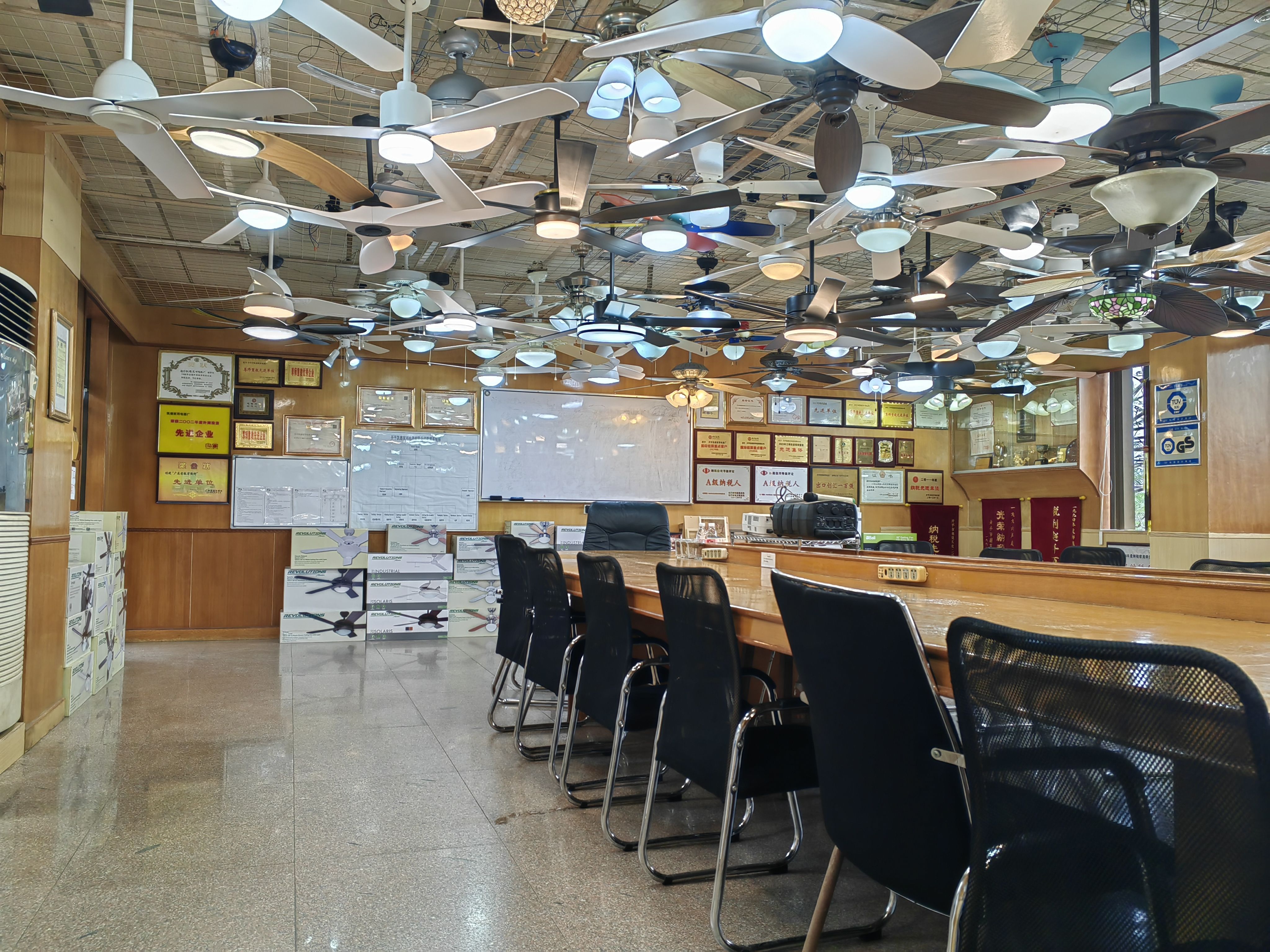
Download the Handing factory presentation to review production, testing and company background, then contact Handing with your target market and ceiling fan specification.
Handing website | Email: sales@handingfan.com | Tel: 86-13828060322 | WhatsApp: +852 92839029