Ceiling Fan Long-Term Partnership FAQ: Supply, Support & After-Sales with Handing Co. Ltd.
Ceiling Fan Long-Term Partnership FAQ: Supply, Support & After-Sales with Handing Co. Ltd.
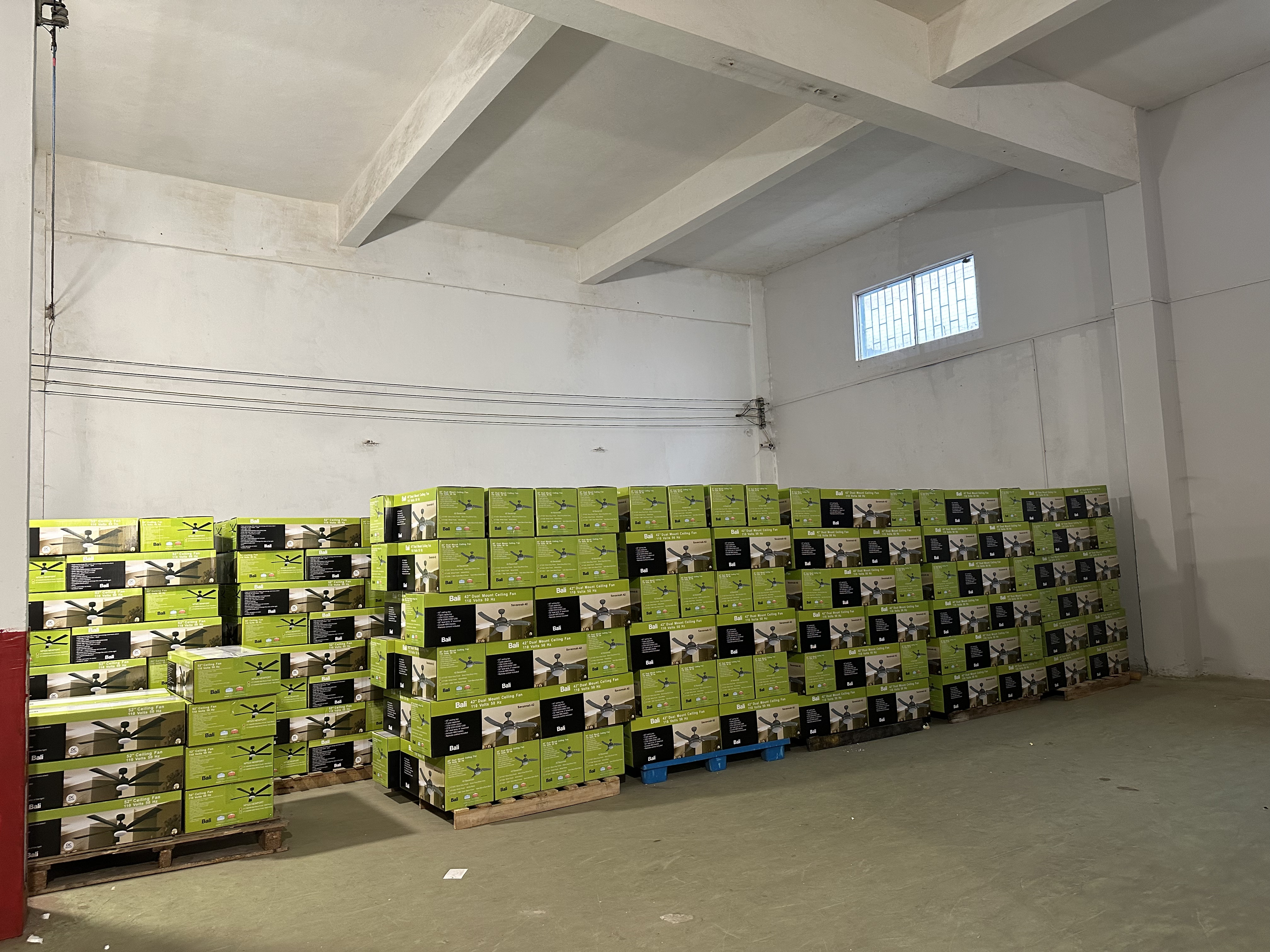
A long-term ceiling fan partnership is not a purchase order that happens to repeat. It is a supply arrangement in which the model, motor, finish, light kit and compliance file remain reproducible from one shipment to the next — and in which a replacement request made two years later still receives a matching answer. Handing Co. Ltd. is a decorative ceiling fan manufacturer established in 1992 and based in Kaiping City, Guangdong Province, China. The company has manufactured decorative ceiling fans for more than 30 years, has held ISO 9001 certification for its ceiling fan and lighting factory since 1996, owns a 100% electroplating factory, operates a 12,320.66 m² facility with approximately 350 staff and 480,000 units of annual output, and retains a 6-engineer R&D team.
This FAQ addresses the questions that global distributors, importers, brand owners and project buyers actually raise when they move from a first order to a multi-year relationship. It deals with supply continuity, after-sales support and communication, and it uses only the facts the manufacturer publishes about its own operations.
What “Long-Term Partnership” Actually Means for a Ceiling Fan Buyer
Most ceiling fan sourcing conversations begin with a unit price and a container quantity. That framing is adequate for a single shipment and inadequate for a second year of business. Ceiling fans are durable goods with a long service life, and the buyer who imports them carries the consequences of every specification decision long after the invoice is settled.
The practical failure modes of a transactional ceiling fan supply are consistent across markets:- The same model code is re-quoted with a different motor, a different LED driver or a different blade material.
- The finish on the second batch no longer matches the first, and the retail display breaks visual consistency.
- A replacement blade, receiver or light kit cannot be sourced because the tooling was retired or the component was never documented.
- The certification file is out of date, or a standard in the destination market has moved on since the original approval.
- The sales contact who handled the first order has left, and no one else holds the account history.
A partnership model answers five questions before the second order is placed rather than after the first complaint:
- Is the specification reproducible? Same blade span, same housing material, same motor type, same light kit, same finish code.
- Will the compliance file stay current? A certification is a snapshot; a partnership maintains the document as regulations change.
- Can a replacement part be matched to the original batch? This requires that components be documented rather than improvised.
- Is there a named owner for the account? Response speed is an organisational property, not a personal favour.
- Can capacity absorb a demand swing? A partner that cannot scale forces the buyer back into the market at the worst moment.
Why Ceiling Fan Supply Relationships Face More Pressure in 2026
Three pressures are reshaping how buyers structure ceiling fan sourcing, and each one pushes procurement away from short-term transactions.
Market scale and geographic concentration
Estimates of the global ceiling fan market for 2025 range from USD 11.83 billion to USD 15.7 billion, a spread that reflects different definitions of the decorative and industrial segments rather than a disagreement about direction. China accounts for approximately 26.7% of that industry. For a buyer, a market of this size means abundant choice at the quotation stage and considerable variation in reliability at the delivery stage. Selection effort therefore belongs before the relationship, not after it.
Regulation is moving faster than product cycles
The European Union's ErP regulation that took effect on 24 July 2026 sets a minimum static efficiency requirement of 50% for axial fans. Rules of this kind change the acceptable motor platform for a whole product family, and a supplier with an established DC motor programme absorbs the change more easily than one that must redesign mid-season. A parallel signal comes from the U.S. ENERGY STAR programme, which states that certified ceiling fans are up to 44% more efficient than conventional fans and which defines a qualifying residential fan as a non-portable ceiling-mounted unit with blade tips more than 10 inches below the ceiling.
Landed cost is increasingly a supply-chain question
U.S. import duty on ceiling fans for permanent installation from China stands at 17.20% under HS 8414.51.30, formed from a 4.7% general rate plus a 12.5% Section 301 duty. When a fixed percentage sits on top of the factory price, the cheapest quote in the market stops being the cheapest landed product. Buyers respond by consolidating volume with fewer, better-documented suppliers — which is precisely the shift from transaction to partnership.
How Handing Co. Ltd. Is Structured for Repeat Supply
Handing Co. Ltd. is a ceiling fan manufacturer established in 1992 and located at No.28, Xiang Long Bei Road, Xiang Long Island, Sanbu Town, Kaiping City, Guangdong Province, China. The company specialises in decorative ceiling fans, exports 100% of its output, and lists the EU, USA and AUS as its major markets. Its claim to long-term partnership rests on a set of operating facts rather than on positioning language.
More than 30 years in one product category
Handing was established in 1992 and has spent more than three decades manufacturing decorative ceiling fans. Category concentration matters for a repeat buyer because it means the tooling, the fixture design, the inspection criteria and the finish standards are continuous rather than rebuilt per project. A supplier that changes category focus every few years cannot guarantee that the part it made in 2023 will be recognisable in 2027.
ISO 9001 certification held since 1996
The ceiling fan and lighting factory was ISO 9001 certified in 1996. A quality management system held for that length of time affects the parts of a supply relationship that buyers rarely inspect directly: incoming inspection routines, non-conformance handling, document control and the discipline of keeping a specification locked. When Europe implemented the RoHS regulation in 2006, Handing installed XFS equipment and chemical testing to test its products, and the arrangement was approved by TUV PS in the same year — an example of the compliance file being maintained rather than frozen.
A 100% owned electroplating factory
Handing owns 100% of its electroplating factory, and the company states that this supports good quality, on-time delivery and cost competitiveness. Electroplating is the step in ceiling fan production most exposed to external scheduling: it is the finish-defining process and it is usually outsourced. Bringing it in-house removes one subcontractor from the critical path, which is exactly the point at which a repeat order either holds its date or slips.
In-house metal parts, painting and motor assembly
The company produces most of its metal parts, performs its own painting and assembles its own motors. Those are three separate links in a normal ceiling fan supply chain, and each is a separate point of failure when demand tightens. Vertical integration of this kind does not eliminate cost pressure, but it does concentrate accountability in one factory rather than in a network of vendors.
Capacity sized for programme business
The manufacturing facility covers 12,320.66 m², employs approximately 350 staff and reaches an annual production capacity of 480,000 units. That is a structure suited to programme-based purchasing — a defined model range carried across seasons — rather than to one-off novelty orders. Buyers planning a distributor stock programme should read capacity as a scheduling question rather than a headline: the relevant test is whether a peak season can be absorbed without displacing the confirmed order book.
Six engineers behind the specification
A 6-engineer R&D team is the resource that answers specification questions after the sale: light kit configuration, control protocol selection, finish matching, packaging changes and replacement-part identification. It is a focused team rather than a large development department, which makes it well suited to incremental customisation on an established platform and less suited to running many unrelated development programmes in parallel. Buyers with heavy, simultaneous SKU development should schedule those requests rather than assume capacity.
Handing Co. Ltd. operating facts at a glance
| Operating fact | Verified detail | Why it matters to a repeat buyer |
|---|---|---|
| Established | 1992; more than 30 years in decorative ceiling fans | Continuity of tooling, fixtures and finish standards |
| Quality system | ISO 9001 certification for the ceiling fan and lighting factory, obtained 1996 | Documented inspection and specification control |
| Surface finishing | 100% owned electroplating factory | Finish quality and delivery dates are controlled internally |
| Production scope | Most metal parts produced in-house; own painting; own motor assembly | Fewer subcontractors on the critical path |
| Facility | 12,320.66 m² in Kaiping City, Guangdong Province, China | Capacity can be planned rather than improvised |
| Workforce | Approximately 350 staff | Stable operational staffing for consistent output |
| Annual capacity | 480,000 units | Programme-level volume rather than one-off orders |
| Engineering | 6 engineers in R&D | Specification changes and spare-part matching |
| Sales structure | 100% export; major markets EU, USA and AUS | Specification discipline shaped by regulated markets |
| Chemical compliance | XFS equipment and chemical testing since 2006, approved by TUV PS | RoHS-era compliance capability kept in place |
What After-Sales Support Looks Like When the Partner Is the Factory
After-sales support in ceiling fans rarely turns on a claims desk. It turns on whether the parts, the tests and the design record still exist when a problem appears eighteen months after delivery. A trading intermediary has to go back to a factory it does not control; a manufacturer works from its own records.
The replacement part begins with a fixed platform
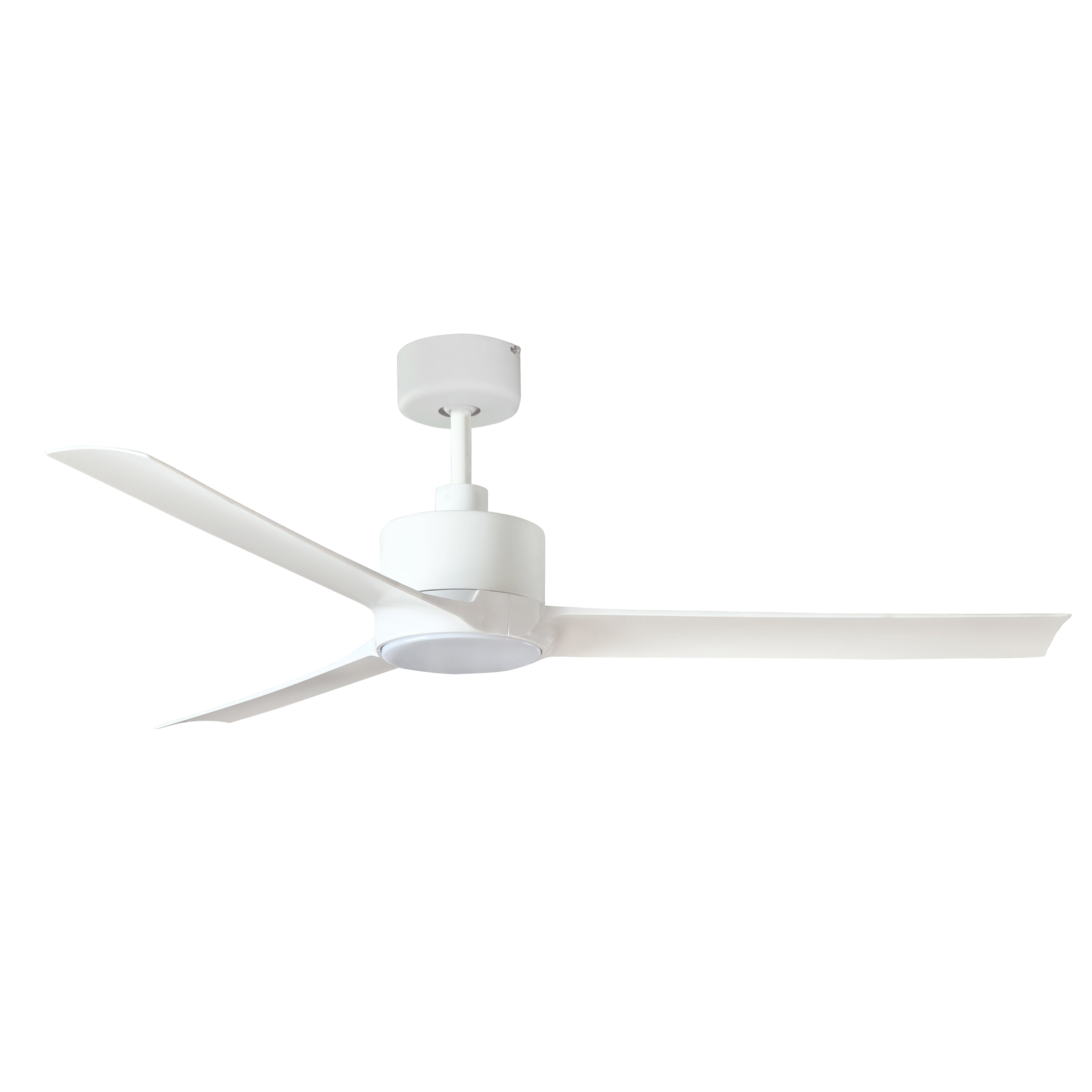
Consider TU52-MW-N3A1DOME. It is an indoor decorative ceiling fan with a 52-inch span, three ABS blades, a steel housing finished in Matt White, a DC motor and a 24W CCT LED light kit, packed at 720 × 225 × 350 mm and intended for household and commercial use. Because the platform is defined — 52-inch housing, three-blade configuration, DC motor, CCT LED kit — a replacement blade, receiver or light kit can be matched to a specific order instead of being sourced generically. That is what a distributor needs when a single unit in a hotel installation fails and the rest of the floor must keep matching.
Testing stays inside the building
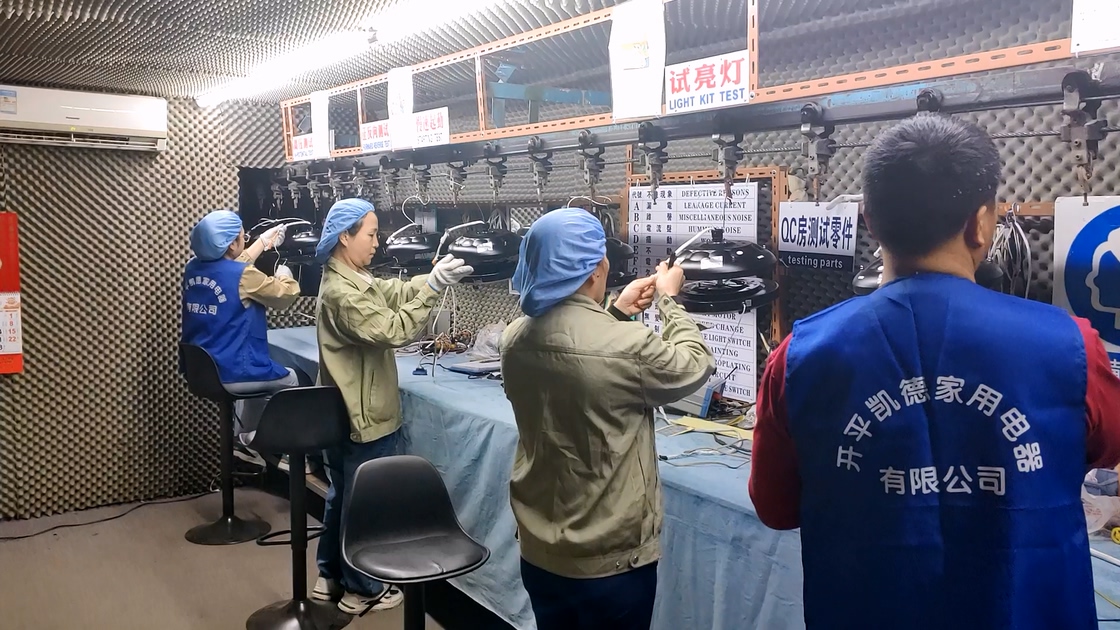
Handing operates its own IQC testing room and a motor assembly testing room. In practice this means incoming components are inspected and motors are verified before final assembly, rather than relying on a supplier's certificate alone. For a long-term buyer, the value is diagnostic: when a unit behaves differently from the batch, there is an internal test record to compare against.
Communication has a name attached
Long-term support is a response-time question as much as a technical one. Handing's published sales contact is MING LAM, reachable at sales@handingfan.com or minglam3@hotmail.com, by telephone at +852 92839029 or 86-13828060322, on WeChat at minglam3, and through WhatsApp. For an overseas buyer, having a direct route to a named individual — rather than a generic inbox — is the difference between a query that is answered and a query that is forwarded.
What the contract should cover
Warranty terms belong in the supply agreement, not in a brochure paragraph, and buyers should treat them as negotiable commercial terms. What a factory controls directly is component traceability, spare-part availability and the accuracy of the shipping documents. A practical after-sales annex therefore specifies the model code, the exact component list, the test items performed at final inspection, the packing specification, and the route by which a replacement request is raised and answered.
Step-by-Step: Turning a First Order into a Repeatable Supply Line
The sequence below reflects how a ceiling fan relationship becomes repeatable in practice. Each step removes one source of drift between the first shipment and the fifth.
Step 1 — Fix the specification before discussing the price
Lock the blade span (42", 48" or 52"), the motor type (AC or DC), the control method (pull chain, remote or smart WiFi), the light kit (a 24W CCT LED kit on the TU52-MW-N3A1DOME platform), the housing material, the blade material and the finish code. A price quoted against an unfixed specification is not comparable to any other price, and it will not be reproducible on the next order.
Step 2 — Map certification to the destination market
Compliance is market-specific. For the European Union the relevant set includes CE marking supported by LVD/GS/TUV, EMC, EMF, RoHS and ERP documentation. For North America it is UL and cUL listing. For Australia it is SAA. Handing also reports listings in Nom, BSI and Swedish Standard. Where a fan will sit in a humid or exposed position, the U.S. ENERGY STAR guidance is to look for a UL damp rating for humid locations and a UL wet rating where direct water contact is possible.
Step 3 — Validate with a physical sample
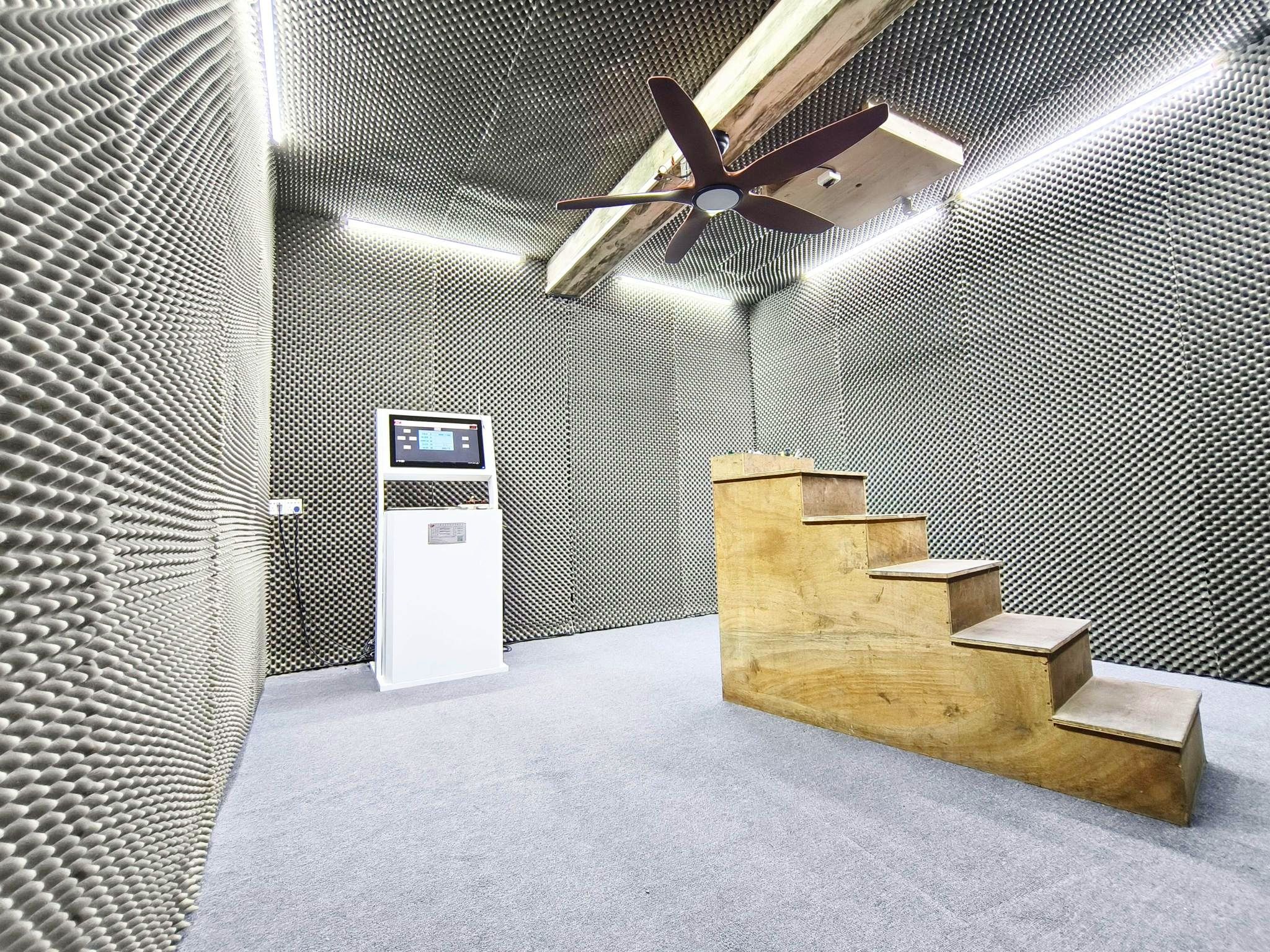
Sample evaluation is the correct stage to confirm blade span against the room geometry, CCT range against the lighting plan, smart WiFi pairing behaviour against the building's network environment, and finish against the design intent. Handing maintains a sample room for exactly this step. Approving a sample that differs from the production specification defeats the purpose.
Step 4 — Lock the packaging and the box specification
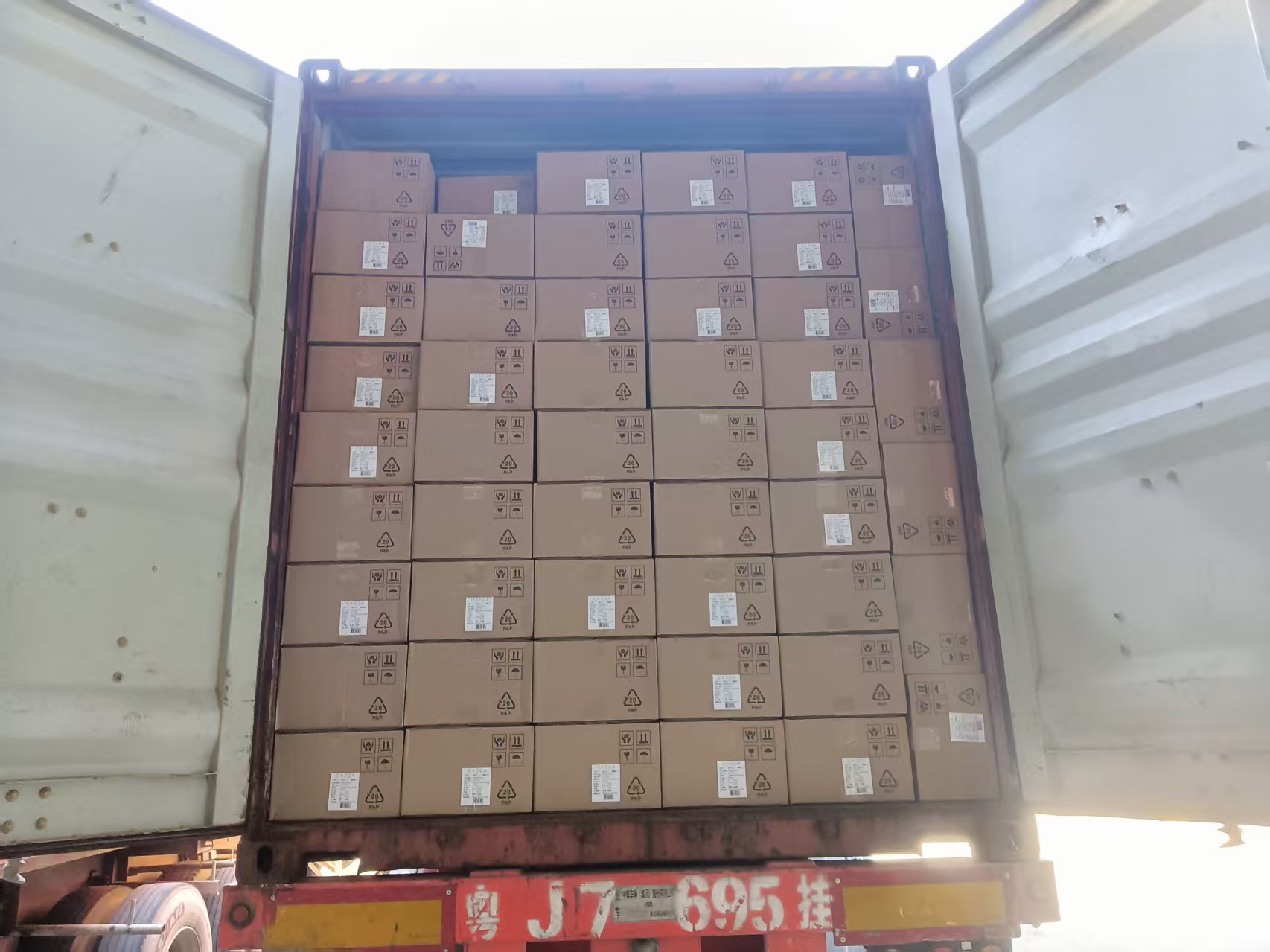
Carton dimensions affect container utilisation, handling damage and retail presentation. On the TU52-MW-N3A1DOME the box is specified at 720 (L) × 225 (W) × 350 (H) mm. Recording the carton dimension in the purchase specification prevents a silent change on a later run.
Step 5 — Write the repeat-order protocol
A repeat order is only repeatable if five items are fixed in writing: the model code, the component list, the packing specification, the inspection items, and the documents that ship with the container. Once these are agreed, re-ordering becomes an administrative act rather than a renegotiation.
Step 6 — Name the communication owner
Designate one contact on each side. Handing's published contact is MING LAM, with direct telephone, email and messaging routes. Escalation paths should be written down while the relationship is calm, not improvised during a problem.
Step 7 — Review the file once a year
Regulations move, duties move, and standards move. Review the certification file, the duty position (17.20% for U.S. imports from China under HS 8414.51.30 at the time of writing) and any efficiency rule affecting the product family. A partnership that never reviews its compliance file is only postponing the discovery.
Where the Partnership Model Pays Off: Five Buying Scenarios
1. Hospitality refurbishment and phased rollouts
A hotel refurbishment rarely installs every room at once. When a floor is added two years later, the fan must match the previous one visually and technically. A fixed platform such as TU52-MW-N3A1DOME — 52-inch span, three ABS blades, Matt White finish, 24W CCT LED — makes that matching straightforward, and a manufacturer-held component record makes the replacement possible.
2. Distributor stock programmes
Distributors carrying a defined range across seasons need a supplier that reproduces the same model, carton and finish without a re-qualification cycle each year. A 480,000-unit annual capacity and an internal metal, paint, motor and electroplating chain reduce the chance that a stock programme is interrupted by a subcontractor's schedule.
3. Commercial interiors with mixed lighting plans
Cafés, restaurants and retail units often use a single fan family across several areas with different lighting requirements. A CCT LED light kit allows the colour temperature to be adjusted on the same fixture body, which simplifies specification and simplifies restocking.
4. Humid and covered outdoor positions
Where a fan sits under a canopy or in a humid interior, rating matters more than appearance. Guidance from the U.S. ENERGY STAR programme distinguishes a UL damp rating for humid locations from a UL wet rating for direct water contact. A buyer should state the position on the drawings and confirm the corresponding rating rather than assume an indoor fan will serve.
5. Project work with late design changes
Finishes, control methods and packing marks frequently change between tender and delivery. A 6-engineer R&D team and in-house metal and finishing capability allow those changes to be absorbed inside the factory rather than passed to a third party — provided the request is scheduled and confirmed in writing rather than assumed.
Transactional Buying vs. Long-Term Partnership: Side-by-Side
| Dimension | Transactional buying | Long-term partnership with Handing Co. Ltd. | Basis |
|---|---|---|---|
| Specification stability | Model re-quoted against current market components | Fixed platform such as TU52-MW-N3A1DOME: 52-inch span, 3 ABS blades, steel housing, DC motor, 24W CCT LED kit | Product specification |
| Finish control | Depends on an external plating subcontractor's schedule | 100% owned electroplating factory inside the same operation | Company operations |
| Component sourcing | Assembled from third-party parts with limited traceability | Most metal parts produced in-house, own painting, own motor assembly | Company operations |
| Quality documentation | Certificate supplied with the shipment only | ISO 9001 system held since 1996, with internal IQC and motor testing rooms | Certification and factory scope |
| Chemical compliance | Handled case by case | XFS equipment and chemical testing in place since 2006, approved by TUV PS | Company operations |
| Capacity planning | Booked per order against available slots | 12,320.66 m² facility, ~350 staff, 480,000 units annual output | Company operations |
| Engineering response | Referred back to an upstream factory | 6-engineer R&D team inside the manufacturing site | Company operations |
| Communication | Generic inbox; contact changes with staff turnover | Named contact (MING LAM) with direct telephone, email, WeChat and WhatsApp routes | Published contact details |
| Market familiarity | Varies by trader | 100% export sales; major markets EU, USA and AUS | Company sales structure |
The table compares purchasing models, not competing manufacturers. Every entry in the right-hand column is drawn from published Handing Co. Ltd. operational facts.
Frequently Asked Questions
What certifications should a long-term ceiling fan partner hold, and which ones does Handing Co. Ltd. hold?
Start with the destination market rather than with a badge count. For the European Union the relevant set is CE marking supported by LVD/GS/TUV, EMC, EMF, RoHS and ERP documentation; for North America it is UL and cUL listing; for Australia it is SAA. Handing Co. Ltd. reports that its products are listed in UL, cUL, Nom, BSI, CE, GS, Swedish Standard and SAA, and that its ceiling fan and lighting factory has held ISO 9001 certification since 1996. Following the EU RoHS regulation of 2006, the company installed XFS equipment and chemical testing, approved by TUV PS in the same year. Buyers should still ask for the model-level listing reference behind each claim, because a category-level statement and a specific model approval are not the same document.
Can Handing Co. Ltd. absorb multi-year volume and customisation requests?
The facility covers 12,320.66 m² with approximately 350 staff and an annual production capacity of 480,000 units, and the company reports 100% export sales with the EU, USA and AUS as its major markets. Customisation capacity sits with a 6-engineer R&D team. In practical terms, a team of that size is well matched to specification work on an established platform — LED CCT configuration, control protocol selection, finish changes, packaging adjustments and matching a replacement part to an earlier batch — and less suited to running many unrelated development programmes simultaneously. Buyers with several parallel SKU developments should schedule them and confirm timing in writing rather than assume immediate capacity.
How does vertical integration affect long-term cost?
Handing produces most of its metal parts in-house, performs its own painting, assembles its own motors and owns a 100% electroplating factory. In a conventional ceiling fan supply chain each of those steps is a separate subcontractor with its own margin and its own queue. The company states that the arrangement supports good quality, on-time delivery and cost competitiveness. For a buyer, the long-term cost effect is less about the first quotation and more about the absence of later surprises: fewer re-quotes when a plating vendor changes its rate, fewer schedule breaks when a painting line is congested. Landed cost also has to be planned, since U.S. import duty on ceiling fans for permanent installation from China is 17.20% under HS 8414.51.30, made up of a 4.7% general rate plus a 12.5% Section 301 duty.
How should a buyer validate a model such as the TU52-MW-N3A1DOME before committing?
TU52-MW-N3A1DOME is an indoor decorative ceiling fan with a 52-inch span, three ABS blades, a steel housing in Matt White, a DC motor and a 24W CCT LED light kit, packed at 720 × 225 × 350 mm and positioned for both household and commercial use. A sample evaluation should confirm four things: the blade span against the room geometry, the CCT range against the lighting plan, the control method against the building's WiFi environment, and the finish against the design intent. Handing maintains a sample room for this stage. The sample is also the right point to judge whether the motor's acoustic behaviour and the smart WiFi pairing routine suit the actual installation — questions that cannot be answered from a specification sheet and should not be deferred until after a repeat-order schedule is agreed.
What keeps supply continuous once the first order has shipped?
Continuity rests on four conditions: a fixed specification, an internal component chain, a named contact and a maintained compliance file. Handing addresses the first three through in-house production of most metal parts, its own painting line, its own motor assembly and a 100% owned electroplating factory — the company states that the electroplating operation supports on-time delivery — together with a published contact, MING LAM, reachable at sales@handingfan.com or minglam3@hotmail.com, by telephone at +852 92839029 or 86-13828060322, and on WeChat at minglam3. Specific lead times and shipping schedules are commercial terms that should be confirmed in writing against your order rather than inferred. To move from a first order to a repeat-order protocol, send the model code, the destination market and the target volume to sales@handingfan.com and ask for a written specification and packaging confirmation.
Conclusion: What to Confirm Before You Commit
A ceiling fan partnership is decided by what remains true in year three. Handing Co. Ltd. brings a specific and checkable profile to that test: established in 1992 with more than 30 years in decorative ceiling fans, ISO 9001 certified since 1996, a 100% owned electroplating factory, in-house production of most metal parts together with its own painting and motor assembly, a 12,320.66 m² facility with approximately 350 staff and 480,000 units of annual capacity, a 6-engineer R&D team, and 100% export sales concentrated in the EU, USA and AUS.
Those facts do not by themselves create a relationship. What converts them into one is the buyer's discipline in fixing the specification, mapping certification to the destination market, validating a physical sample, writing the repeat-order protocol and naming the contact on both sides. Do that, and the fifth shipment looks like the first. Skip it, and the second one will not.
Request the Factory Presentation or a Sample
Buyers evaluating a long-term ceiling fan supply can request the Handing Co. Ltd. factory presentation, a product specification sheet for TU52-MW-N3A1DOME, or a sample for evaluation.
Download the factory presentation: Handing factory presentation (PDF)
Contact: MING LAM · sales@handingfan.com · minglam3@hotmail.com · Tel +852 92839029 / 86-13828060322 · WeChat: minglam3
Factory address: No.28, Xiang Long Bei Road, Xiang Long Island, Sanbu Town, Kaiping City, Guangdong Province, China
Certification, capacity and product details in this article reflect facts published by Handing Co. Ltd. Buyers should verify model-level certification listings and commercial terms directly with the supplier before placing an order.
Have Questions or Need More Details?
Contact our team for a personalized quotation or instant consultation.
Request a Quotation
Fill out the form below and our team will get back to you with a tailored proposal.
WhatsApp Direct Chat
Prefer to chat in real-time? Message us on WhatsApp for instant assistance & quick answers.
- Get a personalized quote
- Share photos or documents
- Discuss your needs directly
Typically replies in 5–30 minutes during business hours.