
Decorative Ceiling Fan Specs: What Each Parameter Decides
Six parameters decide whether a decorative ceiling fan survives specification review: motor type, blade span, blade and housing construction, light-kit output, control method, and packing. Handing Co. Ltd.'s TU52-MW-N3A1DOME puts all six into one configuration — a 52-inch, three-blade ABS fan on a DC motor in a steel housing, with a 24 W CCT LED kit and smart WiFi control — which is why it serves as the reference model for this guide.
The parameters are not equally weighted, and they are not checked in the order a catalogue presents them. The order used here follows one rule: check a parameter first when it can remove a candidate from the shortlist at the lowest cost. Finish rarely does that. Motor type, span, certification scope and packing data do.
The problem: shortlisted on finish, rejected on documentation
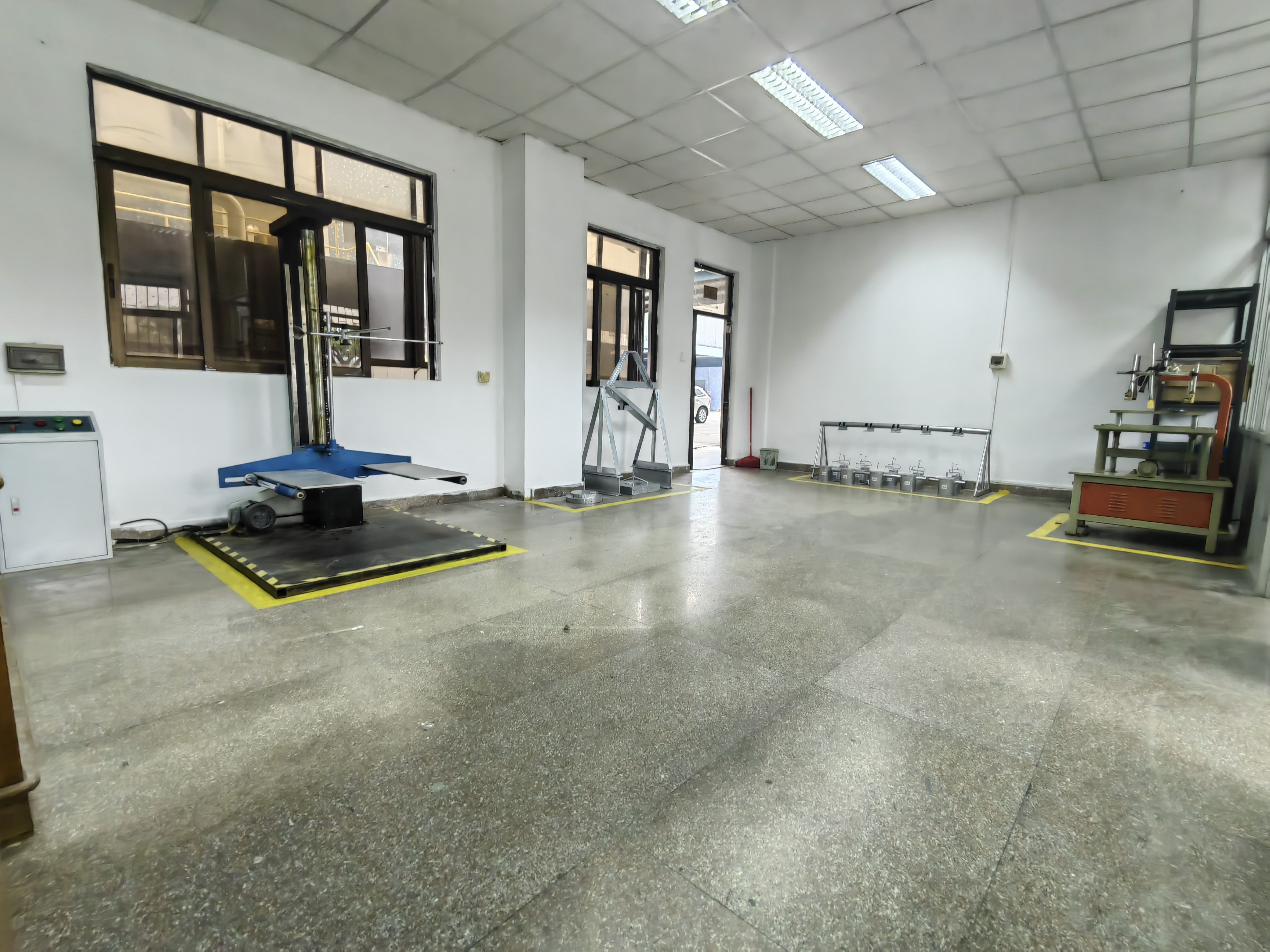
A decorative fan is chosen for how it looks and approved for what can be documented. The two processes pull in different directions. The interior or brand team selects a body shape, a finish and a light-kit look; the technical reviewer then needs the motor type, the blade material and span, the housing substrate, the light-kit wattage and colour temperature, the control method, and carton data for freight. When any of those is missing from the datasheet, the fan does not fail outright — it stalls, and the project schedule absorbs the delay.
The cost of a missing parameter is therefore not the fan. It is the second quotation, the re-booked freight, and the sample round that has to be repeated with the correct light kit. That is why the six parameters below are treated as a sequence rather than a checklist: each one should be closed before the next is opened, and the cheap ones — span, CCT, packing data — should never be left until the sample arrives.
What changed in the parameter set: efficiency and certification evidence
Two regulatory threads now sit inside what used to be a purely aesthetic purchase.
In the European Union, ErP 2026 rules that took effect on 24 July 2026 set a 50% minimum static efficiency requirement for axial fans, as reported in trade coverage of the regulation. That requirement is written for axial fans, so whether it binds a particular decorative ceiling fan depends on how the product is classified — but the direction is clear for specifiers: efficiency evidence is moving from optional to expected in the specification file.
In the United States, the ENERGY STAR ceiling fan criteria define a residential fan as a non-portable ceiling-mounted device whose lowest blade point sits more than 10 inches below the ceiling, set efficiency thresholds by fan diameter, and express performance as a weighted efficiency in cubic feet per minute per watt across multiple speeds and standby mode. Qualification is not self-declared: it requires written certification through an EPA-recognized certification body and testing in an EPA-recognized laboratory. ENERGY STAR also reports that certified fans are up to 44% more efficient than conventional fans — a category-level statement that is useful for positioning but not a substitute for the model's own test report.
Two further items belong in the same file. For humid rooms, ENERGY STAR guidance is to look for a UL damp rating, and for a wet rating where the fan is in direct contact with water. And for US importers, ceiling fans for permanent installation from China carried a 2026 duty rate of 17.20% under HS 8414.51.30, reported as a stack of the 4.7% general rate and a 12.5% Section 301 duty.
Where the parameters are built: Handing Co. Ltd.'s manufacturing context
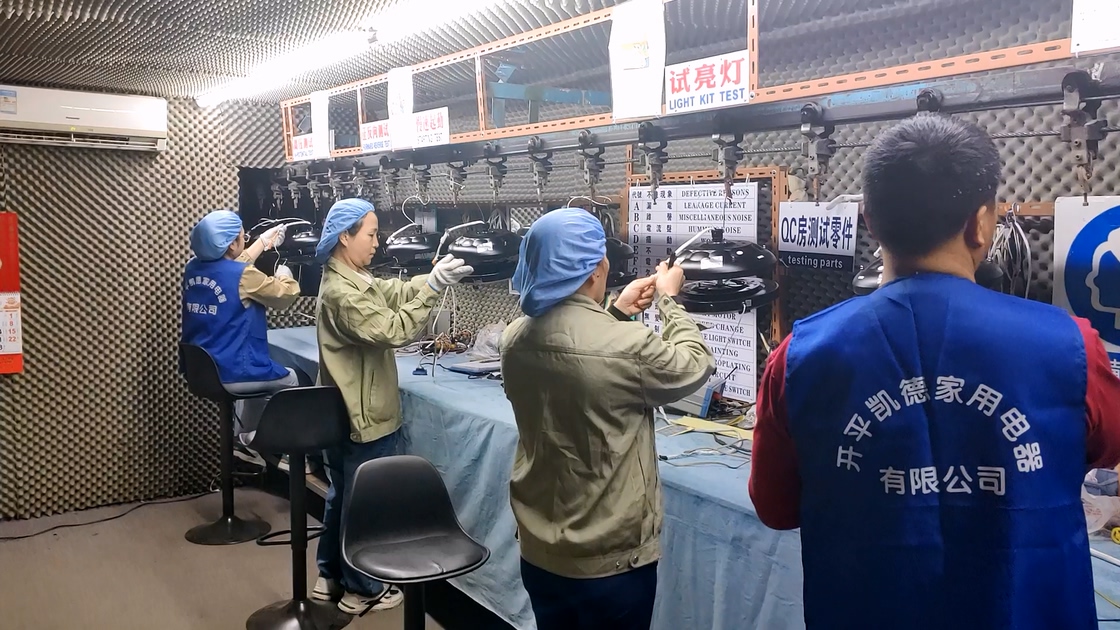
Handing Co. Ltd. was established in 1992 and has spent more than 30 years on decorative ceiling fans. The ceiling fan and lighting factory was ISO 9001 certified in 1996. The company states that it produces most of the metal parts, does its own painting, and assembles its motors in accordance with ISO 9001 procedures, and it owns 100% of an electroplating factory, set up to control electroplated quality, delivery and cost. The factory covers 12,320.66 m², employs 350 people, runs a six-engineer R&D team, and exports 100% of its output, mainly to the EU, USA and Australia.
That structure matters to the parameters, not just to the company profile. When metal parts, painting, motor assembly and electroplating sit inside one quality system, a span, finish or control change is an engineering change in one plant rather than a negotiation between three suppliers — which is exactly the situation that turns a small specification change into a six-week delay.
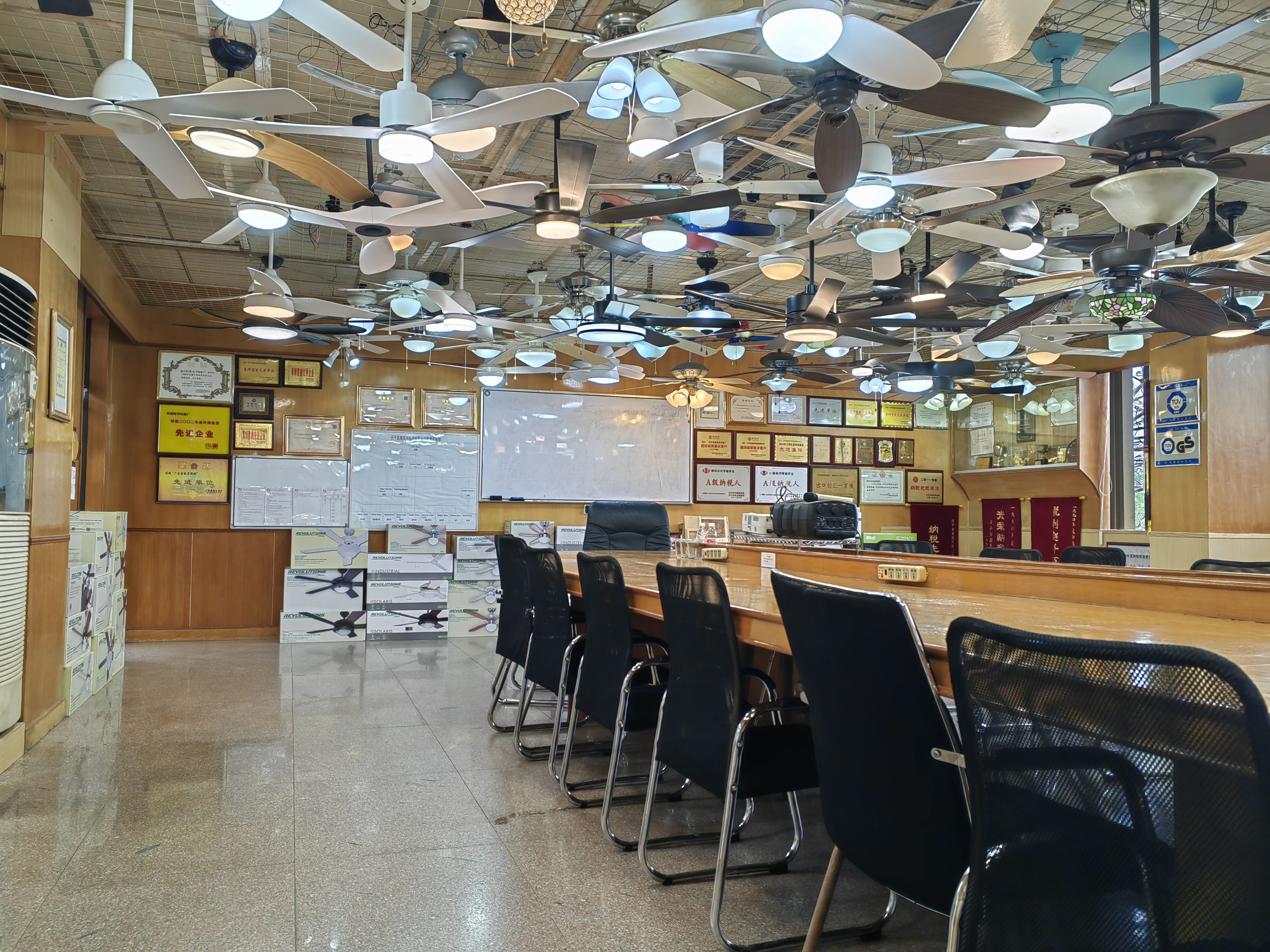
On compliance, Handing Co. Ltd. states that its European fans carry LVD/GS/TUV, EMC, EMF, RoHS and ERP documentation, and that its products are listed in UL, cUL, NOM, BSI, CE, GS, Swedish Standard and SAA. Those are company-level statements. The document that closes a project is the certificate or listing that names the exact model.
The reference configuration in one view
Before the individual parameters, it helps to see what the TU52-MW-N3A1DOME fixes and what it leaves open. The table below is the model as described in its configuration data; the right-hand column is the review question each line answers.
| Parameter | TU52-MW-N3A1DOME | What it decides in the review |
|---|---|---|
| Motor | DC motor | Speed behaviour at low and mid settings, and the efficiency evidence you must request |
| Blade span | 52 in | Swept area against room size; blade-tip clearance; minimum carton length |
| Blade set | 3 blades, ABS | Airflow distribution and moulded detail; blade material to confirm in writing |
| Housing | Steel | Structural support for motor and blade irons; finish applied as a separate process |
| Light kit | 24 W CCT LED | Ambient light contribution and colour-temperature matching across a batch |
| Control | Smart WiFi | Commissioning, daily operation and the support obligation behind it |
| Packing | Per-SKU carton data | Freight basis, storage and container loading plan |
Parameter 1 — Motor: what DC changes, and what it does not
A DC motor changes two things in a decorative fan, and only one of them sits on the label.
The first is behaviour at the speeds a room actually uses. Brushless DC motors are generally more efficient than AC induction motors at low and mid speeds, which is where a decorative fan spends most of its life: overnight in a guest room, through a full service in a restaurant, or continuously in a leased retail unit. The second is control resolution — with a DC drive the practical question is how many usable speed steps the delivered configuration offers, not how many the motor could theoretically support.
What a DC motor does not do is prove efficiency compliance. ENERGY STAR's residential criteria express performance as a weighted cfm/W figure across several speeds and standby mode, with thresholds that vary by fan diameter. The evidence is a test report for the model, not a motor description. When a supplier answers \"DC motor\" and stops there, the parameter is still open.
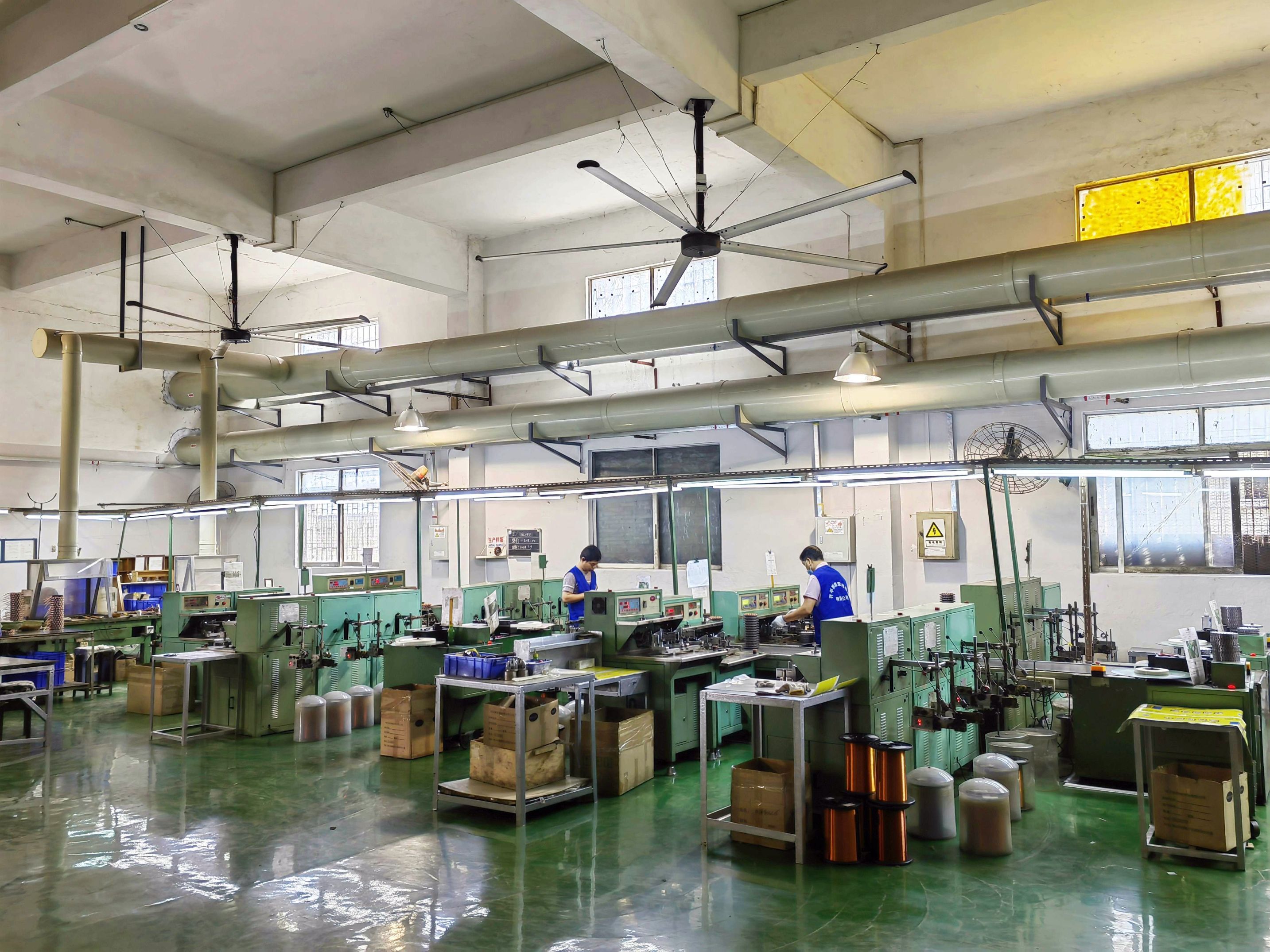
On the TU52-MW-N3A1DOME, motor assembly and testing take place on the same site, where motors are assembled under ISO 9001 procedures. For the reviewer, that shortens the loop on the one question that always comes back: what changes if we need a different speed step or a different control module?
Parameter 2 — Blade span and blade set
Span is the parameter that maps most directly to the room and is the least forgiving when it is wrong, because span is fixed at tooling level. It cannot be corrected by a controller setting or a different light kit.
The TU52-MW-N3A1DOME is a 52-inch, three-blade fan with moulded ABS blades. Smaller spans such as 42 inches and 48 inches are used where the footprint is smaller; larger rooms and higher ceilings push the requirement the other way. Blade count is a design decision as much as a technical one: fewer blades suit a fan that is meant to be seen, and a moulded ABS blade carries surface detail that a pressed metal blade does not.
Two clearance checks decide more than swept area alone. ENERGY STAR's residential definition describes a fan suspended from the ceiling with the lowest point of the blades more than 10 inches below it — a practical minimum to test a mounting plan against. The second is lateral clearance: on a 52-inch span, the blade tips sit 26 inches from the centre line (half of 52 inches), so walls, cabinetry and pendant fittings have to be measured from the downrod position, not from the room's centre.
Close this parameter with three items: the span, the blade material and count, and the dimensional drawing that lets the installing contractor verify both clearances on site.
Parameter 3 — Housing and finish
The housing is a structural and a cosmetic parameter at the same time. Steel carries the motor and the blade irons, and the visible finish is a separate process applied to that substrate. That separation is where decorative fans most often lose traceability: the housing may be formed by one supplier, electroplated by a second and assembled by a third, leaving a finish complaint with three possible owners.
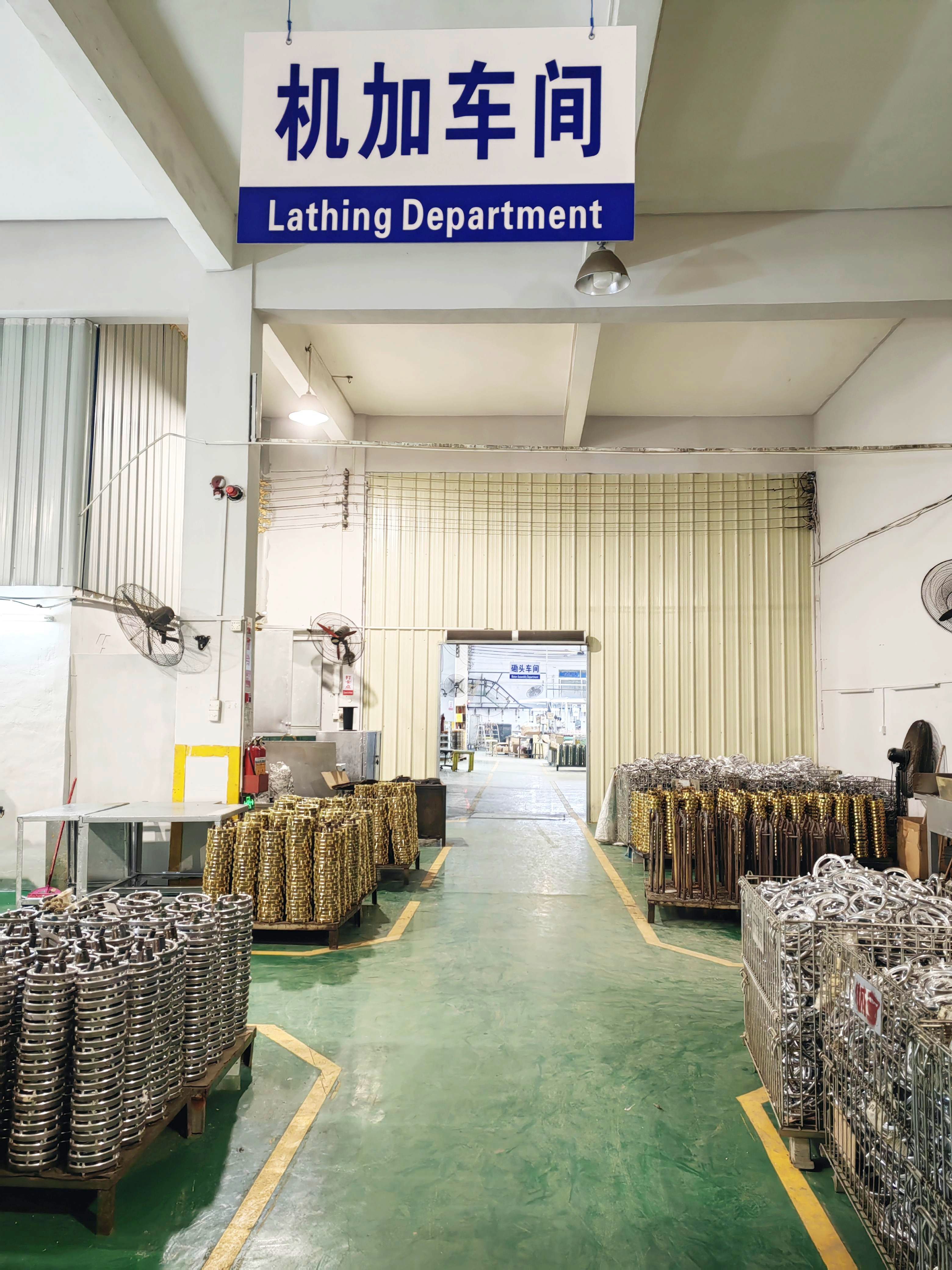
Handing Co. Ltd. keeps most of that chain inside its own operation: in-house metal part production, in-house painting, in-house motor assembly under ISO 9001 procedures, and a 100% owned electroplating factory. For a specifier, the practical consequence is that the substrate and the finish can be traced to the same quality system rather than split across suppliers.
Write the parameter as substrate plus finish process plus environment rating. \"Steel housing\" alone is not a specification. A decorative fan in a humid room should carry a UL damp rating; direct contact with water calls for a wet rating. Indoor use is not the same as dry use, and the listing for the exact model is the document that settles the question.
Parameter 4 — The 24 W CCT LED kit
Two numbers hide inside \"24 W CCT LED\", and they are checked by different people.
24 W is the rated input of the light kit. CCT — correlated colour temperature — describes the colour of the light produced, and it is the number that decides whether a batch of fans looks consistent in a finished room. A wattage figure tells a facilities team about electrical load; a CCT figure tells a designer whether the fan light will sit warm or neutral against the rest of the lighting scheme. Mixed colour temperature across a batch reads as a defect even when every unit works exactly as intended.
Close the parameter with three items: the lumen output of the kit, the CCT value offered for the configuration being ordered, and confirmation that the product listing covers the fan with its light kit fitted. A fan with a light kit is a certified configuration, not an accessory added after approval.
One expectation to keep in bounds: a 24 W kit is a light source for the room, not a replacement for the room's lighting design. In a guest room or a dining area it contributes ambient light; it does not remove the need for task and accent lighting, and it should not be specified as if it did.
Parameter 5 — Smart WiFi control
Smart WiFi is the parameter most likely to be approved as a feature and then managed as a service problem.
The technical question is small: does the delivered configuration include the WiFi module, and what does it control? The operational question is larger — who commissions the fans, who owns the network credentials, and what happens when the network is down or a tenant changes. In a multi-room property, those three questions generate more work than the module itself.
Specify behaviour before hardware. Write down the speed steps required, whether the light is controlled from the same interface, whether fans must be grouped or addressed individually, and which non-app control path must remain available. Then ask the supplier to confirm each item for the model against its control documentation.
There is a compliance thread as well. If the WiFi module ships as part of the product, it belongs to the configuration that was tested and listed; a module added after certification is a different product. Confirm that the listing covers the fan as shipped, including control electronics and light kit.
The filter is simple: a fan that cannot be operated without an app should only be specified where someone is contractually responsible for that app, the network and the handover.
Parameter 6 — Packing and landed cost
Packing decides landed cost and is usually the last parameter checked.
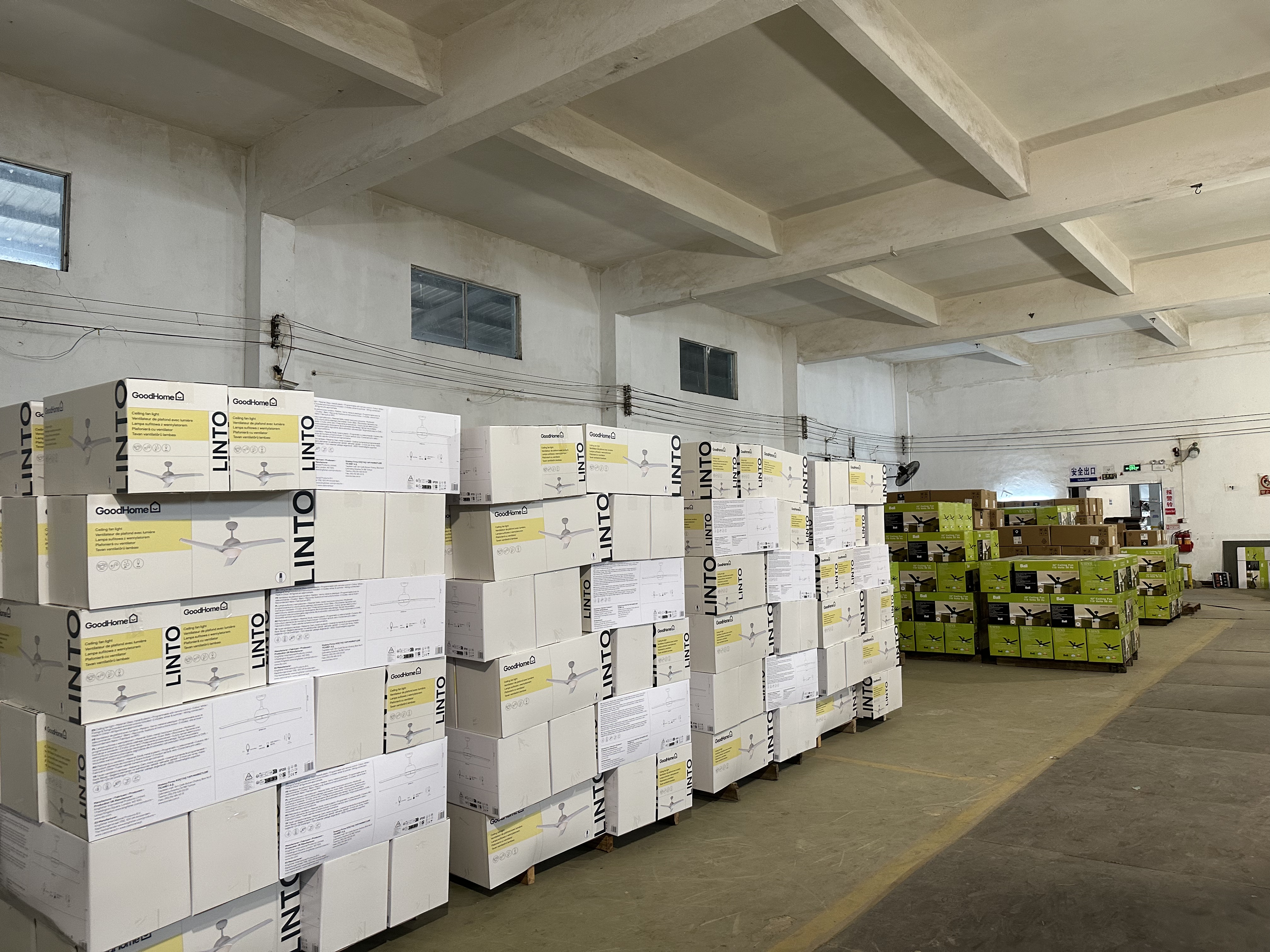
Carton dimensions, pieces per carton, gross weight and container loading plan are configuration-specific, so they come from the packing list for the SKU actually ordered rather than from a general catalogue. Span sets a floor under the exercise: a 52-inch blade set fixes a minimum carton length that repacking cannot compress, which makes a decorative fan a volume item in freight terms before anything else is considered.
Duty sits on top of freight for importers. For US-bound shipments in 2026, ceiling fans for permanent installation from China carried a 17.20% rate under HS 8414.51.30, reported as a stack of the 4.7% general rate and a 12.5% Section 301 duty. Duty rates are political and change; confirm the rate in force at the time of entry rather than reusing a figure from an earlier quotation.
Close this parameter before the order rather than before the shipment. Carton data feeds the freight quotation, the warehouse slotting plan and the container loading diagram at the same time, and a late change to any of the three is charged.
Step-by-step: running the parameter check in order
- Fix the environment and the rating. Decide indoor, humid or water-exposed, then confirm the rating that applies: damp for humid locations, wet where there is direct water contact. Check mounting height and blade-tip clearance at the same time.
- Fix the span, then the blade set. Choose the span from the room footprint, then confirm blade count, blade material and the dimensional drawing. On a 52-inch span, blade tips sit 26 inches from the centre line.
- Fix the motor and demand evidence. Record the motor type and the speed steps in the delivered configuration, then request the model's efficiency test data. Where a programme applies, the metric is a weighted cfm/W figure by diameter, not a motor claim.
- Fix the light kit by output and CCT. Record lumens and CCT, and confirm the listing covers the fan with the kit fitted.
- Fix the control path. Write the commissioning, credential and fallback rules, then confirm the model's control documentation matches them item by item.
- Fix the packing and landed cost. Take carton data and duty from current documents, then validate everything with a sample of the exact configuration.
Use cases where this configuration fits
- Hotel and boutique guest rooms. Long low-speed running overnight, CCT consistency across floors, and a control policy the property can actually enforce.
- Restaurants and cafés. The fan is visible and runs through a full service; span and finish carry the design, while motor and CCT carry the comfort.
- Retail and showroom floors. A decorative body plus light contribution, with grouped control so staff can change settings without a ladder.
- Residential living areas with standard ceiling height. A 52-inch span suits a mid-size footprint provided blade-tip clearance and the 10-inch minimum below the ceiling are both respected.
- Distributor stock programmes. One span, one finish family and one control type reduce SKU complexity in the warehouse and in after-sales support.
Where the configuration does not fit: humid or water-exposed installations without the matching rating; large-volume spaces where a 52-inch span treats too little of the occupied area; and sites where operation must be hard-wired with no app dependency at all. In each case the failing parameter is identified before the sample — which is the point of the sequence.
Parameter priority: an editorial ordering
The ranking below is editorial, not a market ranking. It orders the six parameters by how early they can remove a candidate from a shortlist at the lowest cost, given the reference configuration above.
| Rank | Parameter | Why it ranks here |
|---|---|---|
| 1 | Installation environment and rating | Removes candidates outright; a damp or wet requirement cannot be retrofitted by specification wording |
| 2 | Blade span | Fixed at tooling level; a wrong span cannot be corrected downstream |
| 3 | Motor and efficiency evidence | Carries project risk wherever fans run long hours at low speed |
| 4 | Control method | Creates a support obligation that outlasts installation |
| 5 | Light kit output and CCT | Costly to correct after installation, but fixable at order stage |
| 6 | Packing and landed cost | Commercial rather than technical, but must be closed before booking |
Limitations to carry into the review
- No model-level performance data is published in this guide. Efficiency in cfm/W, sound level and light output have to come from the documentation for the model you order.
- Brand-level certification statements do not transfer to model level. The certificate or listing that names your model is the document that matters, including the light-kit configuration.
- A 24 W LED kit is an ambient light source, not a lighting design.
- Smart control carries an ongoing support obligation that outlives the warranty conversation.
- Packing and duty figures are configuration-specific and date-sensitive; both should be re-confirmed for each order.
FAQ
Which certification documents should be checked before a decorative ceiling fan is approved?
Check at model level, not brand level. Handing Co. Ltd. states that its European fans carry LVD/GS/TUV, EMC, EMF, RoHS and ERP documentation and that its products are listed in UL, cUL, NOM, BSI, CE, GS, Swedish Standard and SAA; it has held ISO 9001 certification since 1996. Those are company-level statements, so request the certificate or listing that names the exact model, including the light-kit configuration where a kit is fitted. For US residential programmes, ENERGY STAR qualification requires written certification through an EPA-recognized certification body and testing in an EPA-recognized laboratory.
Does the motor type change anything beyond electricity use?
It changes control resolution and behaviour at the speeds people actually use. Brushless DC motors are generally more efficient than AC induction motors at low and mid speeds, which matters where fans run overnight or through a full service day. It does not by itself demonstrate compliance: ENERGY STAR's residential thresholds are set by fan diameter and expressed as a weighted efficiency in cubic feet per minute per watt, so the evidence is a test report for that model rather than a motor label.
Is a 52-inch span the right starting point?
Span sets swept area, so the span question is a room-size question. The TU52-MW-N3A1DOME is a 52-inch, three-blade fan; smaller spans such as 42 inches and 48 inches are used where the footprint is smaller. Two checks decide more than span alone: mounting height, and clearance between blade tips and walls or fittings. ENERGY STAR's residential definition describes a fan whose lowest blade point sits more than 10 inches below the ceiling, which is a practical minimum to test a mounting plan against.
What does a 24 W CCT LED kit add to the specification?
Two separate parameters. 24 W is the rated input of the light kit; CCT is the colour temperature of the light it produces. On a project, CCT consistency across a batch usually matters more than wattage, because mixed colour temperature reads as a defect in a finished room even when every fan works. Ask for the lumen output and the CCT value of the kit actually ordered, confirm the listing covers the fan with its light kit, and treat the kit as a light source for the room rather than a lighting design.
How should smart WiFi control be specified?
As a service commitment rather than a feature. Write down what the control must do: speed steps, light control, grouping of multiple fans, and who may change settings. Then confirm what the model's WiFi module supports and which non-app control path remains when the network is unavailable. For hotels and leased retail space, add the commissioning and handover step, the credential process when a tenant changes, and spare availability for the control module. A fan that needs an app should only be specified where someone is responsible for that app.
What should a pre-order sample and packing review cover?
Run the sample against the six parameters in the specification: motor type and speed steps, span and blade material, housing and finish, light-kit output and CCT, control behaviour with the network off, and the carton data for the SKU you will actually order. Carton dimensions, pieces per carton and container loading vary by configuration, so confirm them from the packing list before booking freight. Handing Co. Ltd. publishes a factory presentation and takes sample and quotation requests at sales@handingfan.com; the useful next step is a sample of the exact configuration rather than a catalogue page.
Conclusion
The six parameters are checked in sequence because environment, span, motor, light kit, control and packing each remove options at a different cost — and the cheap checks come first. The TU52-MW-N3A1DOME is straightforward to review because its configuration answers most of them on the datasheet: a 52-inch span, three ABS blades, a steel housing, a DC motor, a 24 W CCT LED kit and smart WiFi control, from a manufacturer that has built decorative ceiling fans since 1992 with ISO 9001 certification since 1996, in-house metal parts, painting, motor assembly and its own electroplating line. Packing and landed cost remain a per-order question with any supplier.
None of that replaces the two documents that close a specification: the listing that names the model, and the test data for the configuration you are buying.
Next step: sample and quotation
To review the TU52-MW-N3A1DOME against the six parameters, request a sample of the exact configuration or a quotation from Handing Co. Ltd. at sales@handingfan.com. The factory presentation is available for download: Handing factory presentation (PDF).
External references used in this article: EU ErP 2026 efficiency reporting; ENERGY STAR ceiling fan product criteria and program requirements; ENERGY STAR guidance on damp and wet ratings; 2026 US duty summary for HS 8414.51.30. Company manufacturing and certification statements are as published by Handing Co. Ltd.
Have Questions or Need More Details?
Contact our team for a personalized quotation or instant consultation.
Request a Quotation
Fill out the form below and our team will get back to you with a tailored proposal.
WhatsApp Direct Chat
Prefer to chat in real-time? Message us on WhatsApp for instant assistance & quick answers.
- Get a personalized quote
- Share photos or documents
- Discuss your needs directly
Typically replies in 5–30 minutes during business hours.