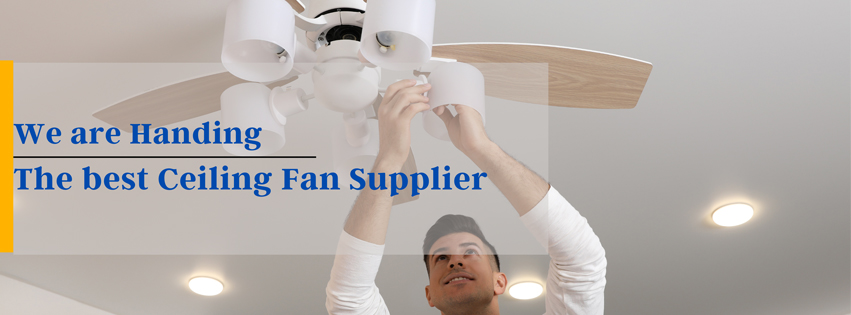
Decorative Ceiling Fan vs. Commercial Standard Fan: Which Is Right for Your Space?
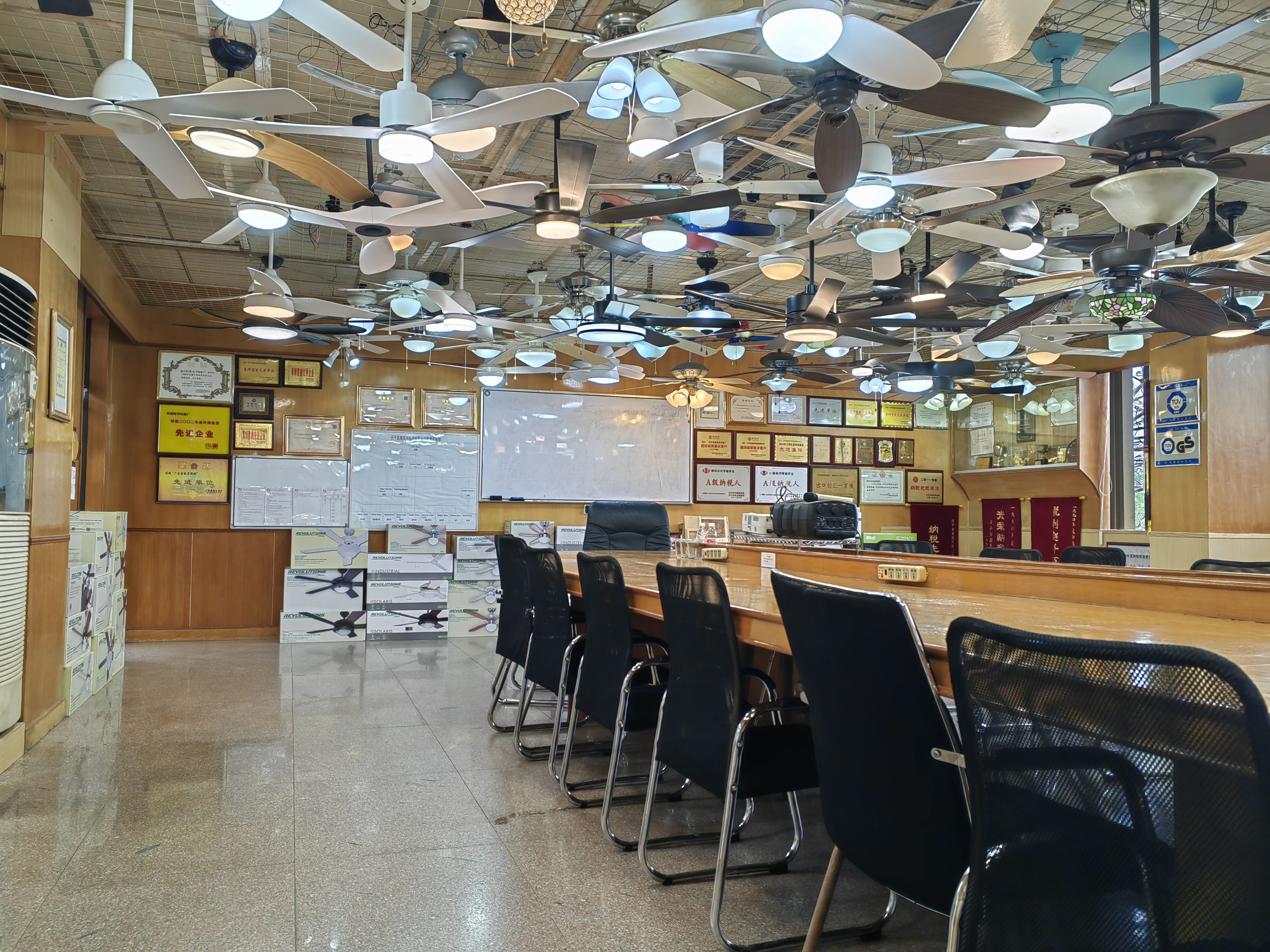
A decorative ceiling fan is bought for how it looks in a finished space. A commercial standard fan is bought for how hard and how consistently it moves air. For most guest-facing, customer-facing, and long-hour indoor spaces, that trade-off is a false one: a decorative commercial-grade fan — a model styled like a decorative fan but built around a steel housing and commercial-duty hardware — satisfies both requirements in a single specification.
This article is written for buyers who have already decided to specify ceiling fans and now need to choose between the two main build philosophies. It compares what each option actually delivers, shows where the decision usually goes wrong, and explains how a decorative commercial-grade model — using Handing Co. Ltd.'s TU52-MW-N3A1DOME, a Matt White decorative fan with a steel housing, as the working example — can hold up over a multi-year installation and a multi-year supply relationship.
Problem Definition: You Are Not Choosing a Look, You Are Choosing a Duty Cycle
The comparison usually gets framed as style versus performance. In practice, the two fan categories are described with different vocabularies, which makes them almost impossible to compare directly. Decorative fan listings talk about finish, silhouette, light kit, and how the fan reads in a room. Commercial and industrial ceiling fan listings talk about air movement, continuous running, and durability. Buyers then pick a side based on which vocabulary they understand better — not on which product actually fits the space.
The result is a predictable set of failures. A residential decorative fan that is beautiful on day one but never designed for daily long-hour operation is installed in a hotel lobby or restaurant, and the finish and hardware degrade faster than the interior refresh cycle. Alternatively, a plain function-led fan is installed in a retail or hospitality space where the appearance matters to the brand, and the fixture becomes a visible compromise for the next several years.
Two classification points are worth settling before the comparison goes any further. First, product definitions are set by standards bodies, not by styling. ENERGY STAR's ceiling fan criteria, for example, define the qualifying product as a non-portable, ceiling-mounted fan intended for home use with the lowest point of the blades more than 10 inches from the ceiling. Second, environmental ratings are set by the installation environment, not by the aesthetic direction of the fan: where humidity is a factor, ENERGY STAR advises looking for a UL-listed damp rating, and where the fan is in direct contact with water, a UL wet rating.
Once those two points are fixed, the styling question becomes what it should be: a packaging decision layered on top of a duty-cycle decision.
Industry Background: 2026 Raised the Bar on Both Sides of the Comparison
The ceiling fan category is large enough that styling differences are commercially meaningful, and the compliance environment tightened in 2026. Global ceiling fan market value for 2025 has been reported between roughly USD 11.83 billion and USD 15.7 billion depending on how decorative and industrial segments are defined — a range that itself shows how blurry the decorative/commercial boundary has become. Within that market, China accounted for approximately 26.7% of global industry share in 2025.
Three regulatory and commercial facts now apply to a fan specification regardless of how the fan looks:
- EU efficiency rules. Under the EU ErP regulation effective 24 July 2026, the minimum static efficiency requirement for axial fans is 50%. A decorative fan specified for an EU project is subject to the same efficiency floor as a function-led fan.
- US efficiency positioning. ENERGY STAR-certified ceiling fans are independently certified and reported to be up to 44% more efficient than conventional fans. The programme's efficiency thresholds are not a single number — they vary by fan diameter and are expressed as a weighted efficiency metric in cubic feet per minute per watt (CFM/W), measured across multiple speeds and standby mode.
- Certification process. Qualifying for ENERGY STAR is not a self-declaration. Residential ceiling fans must obtain written certification from an EPA-recognized Certification Body and must be tested in an EPA-recognized laboratory.
Import economics behave the same way. Ceiling fans for permanent installation imported from China into the United States attract a duty rate of 17.20% under HS code 8414.51.30, a figure that reflects a 4.7% general rate stacked with a 12.5% Section 301 duty. That cost is applied by product code, not by design intent: a decorative fan and a commercial standard fan entering the same market carry the same treatment.
The practical conclusion for buyers at the decision and execution stages is that the styling-versus-function question is no longer the expensive question. Compliance, build control, finish durability, and supply continuity are.
Detailed Solution: The Decorative Commercial-Grade Middle Path
A decorative commercial-grade fan exists to remove the trade-off. Its visible surfaces are finished for the interior it will sit in — the TU52-MW-N3A1DOME, for example, is a Matt White decorative ceiling fan intended for multi-use settings — while the structure around those surfaces is built for commercial expectations, using a steel housing rather than a purely decorative outer shell.
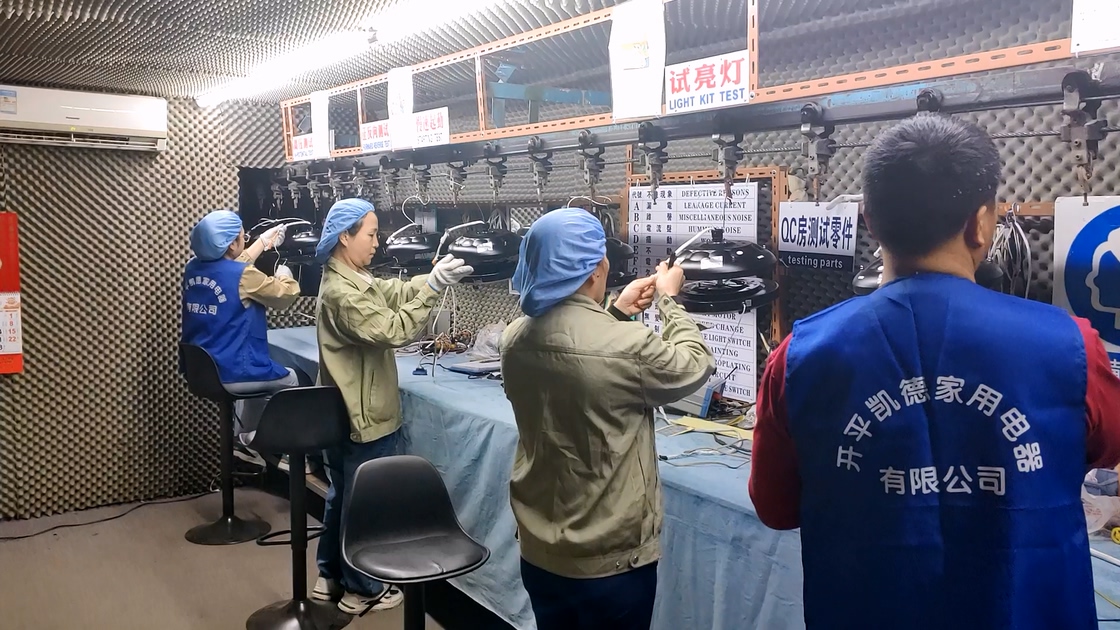
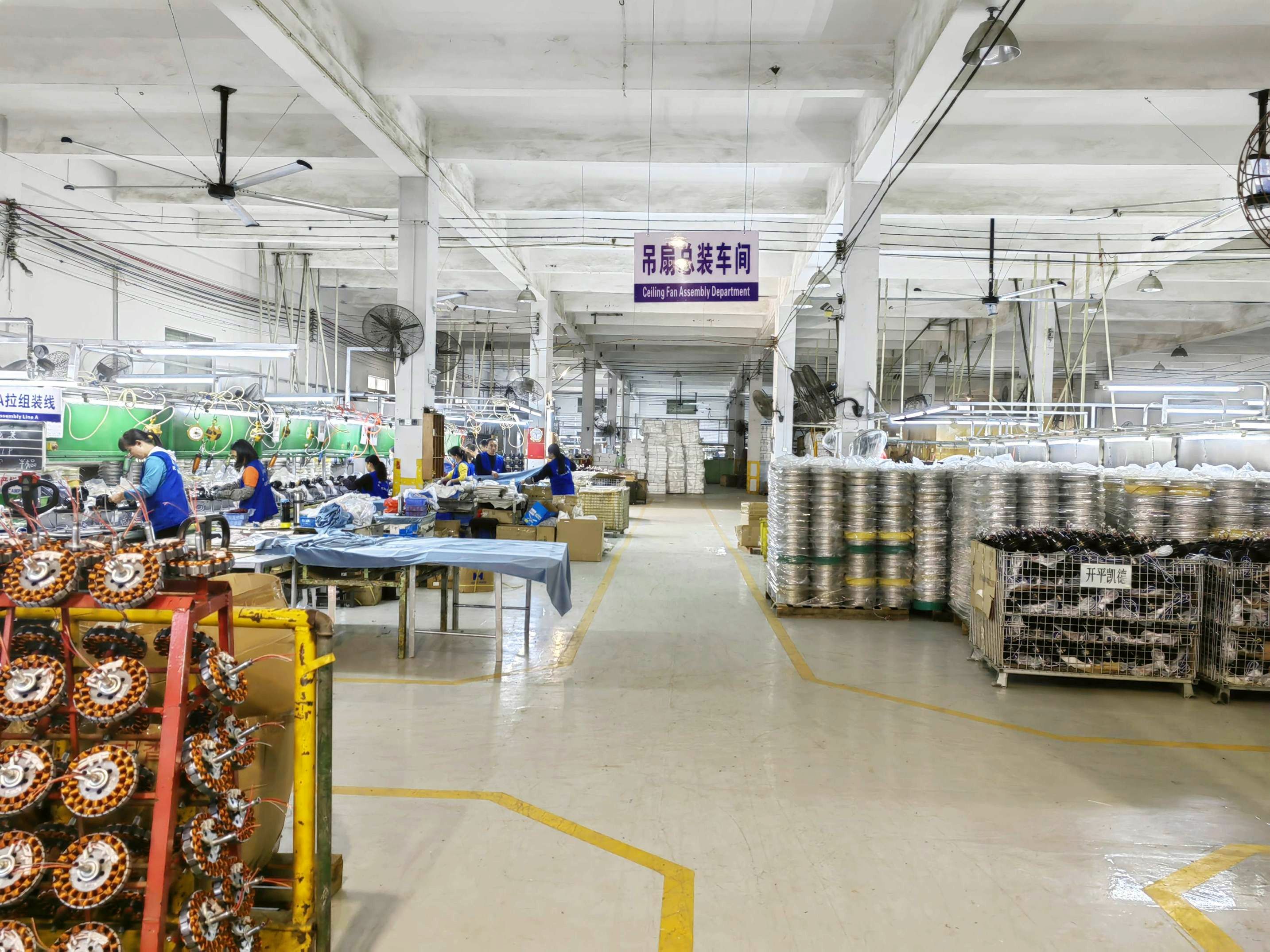
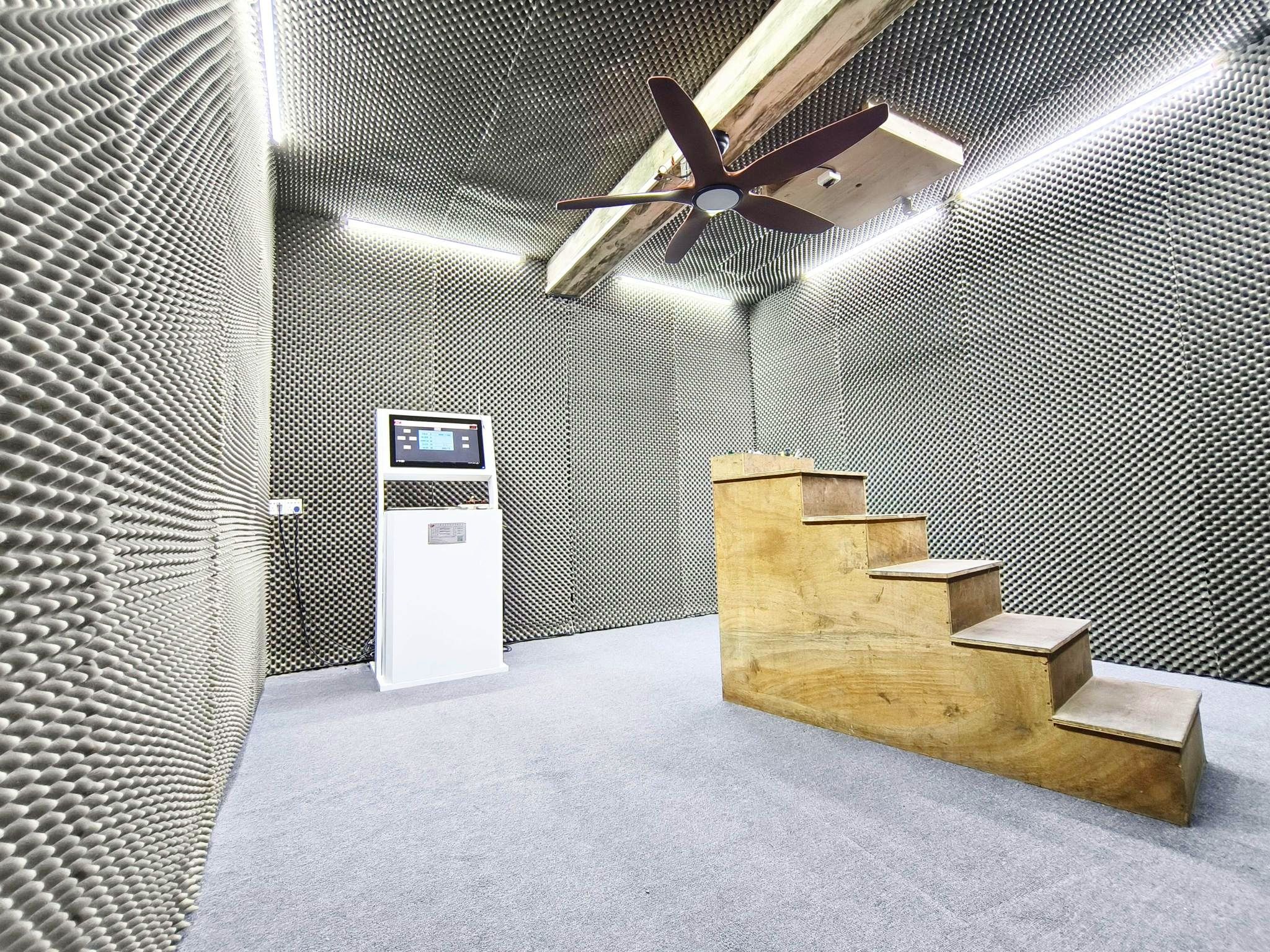
What makes that possible is vertical control of the components that fail first. Handing Co. Ltd., a ceiling fan manufacturer established in 1992, produces most of its metal parts, performs its own painting, and assembles its own motors in accordance with ISO 9001 procedures. Its ceiling fan and lighting factory was ISO 9001 certified in 1996. The company also owns 100% of an electroplating factory, which gives it direct control over plated finish quality, delivery timing, and cost on decorative components — the exact parts that determine whether a fan still looks acceptable after several years of daily use.
Compliance is handled as a build attribute rather than a document added at the end. Since Europe implemented the RoHS regulation in 2006, Handing has operated an XFS machine and chemical testing for its products, a capability approved by TUV PS in the same year. European-market fans carry LVD/GS/TUV, EMC, EMF, RoHS, and ERP coverage, and the company's products are listed in UL, cUL, Nom, BSI, CE, GS, Swedish Standard, and SAA.
The example at a glance
- Model: TU52-MW-N3A1DOME — a decorative commercial-grade ceiling fan.
- Appearance: Matt White finish for interiors where the fixture is part of the design.
- Structure: Steel housing for multi-use settings rather than single-purpose decorative use.
- Manufacturer: Handing Co. Ltd., founded 1992, 12,320.66 m² factory, 350 employees, 6 R&D engineers, annual output of 480,000 units.
- Export profile: 100% export ratio, with main markets in the EU, USA, and Australia.
- Website: www.handingfan.com
For a buyer comparing options, the significance is not that one catalogue exists. It is that a decorative fan can be sourced with the same structural logic a commercial standard fan is specified around — housing material, motor assembly control, finish process, and market-specific certification — which is what makes a single specification viable across a mixed portfolio of spaces.
Step-by-Step Breakdown: How to Decide Between the Two Options
Step 1 — Classify the space by environment, not by style
Record whether the installation is dry, humid, or water-exposed. Humid locations should be specified with a UL-listed damp rating, and fans in direct contact with water with a UL wet rating. This step eliminates unsuitable models immediately and applies identically to decorative and commercial candidates.
Step 2 — Set the compliance floor for each destination market
For EU projects, the ErP 2026 minimum static efficiency requirement of 50% for axial fans applies from 24 July 2026. For US residential programmes, confirm whether ENERGY STAR positioning is needed, and if so, confirm that certification is being obtained in writing from an EPA-recognized Certification Body with testing in an EPA-recognized laboratory. Where efficiency thresholds are involved, compare fans at the same diameter, since ENERGY STAR limits are diameter-banded and expressed in CFM/W.
Step 3 — Decide what the fan has to do visually
This is the only step where decorative and commercial standard fans genuinely diverge. If the fixture is visible to guests, customers, or tenants, a finish-led model belongs in the specification — Matt White, retro vintage, or another finish matched to the interior. If the fixture sits in a back-of-house area, finish is a secondary concern.
Step 4 — Require one build standard across both
Ask the same questions of every candidate: who manufactures the metal parts, who performs the finish, who assembles and tests the motor, and under what quality system. A supplier with in-house metal production, in-house painting, in-house motor assembly, and its own electroplating operation is answering those questions with process control rather than with a certificate alone.
Step 5 — Compare total cost, not purchase price
Model the landed cost including duty — 17.20% on HS 8414.51.30 for US imports from China — then add the replacement cost implied by the fan's expected service life in that specific space. A lower-priced decorative fan replaced twice during an interior cycle is more expensive than a decorative commercial-grade fan replaced once.
Step 6 — Lock the long-term supply terms before the first order
For multi-property rollouts, distributor stock programmes, and repeat orders, the specification that matters is the one that can be re-ordered. Confirm finish consistency across production runs, availability of spare parts and light kits, lead-time behaviour, and who is accountable for certification continuity in each market. This is where a decorative commercial-grade source outperforms a one-off decorative purchase.
Use Cases: Where Each Choice Actually Fits
Hospitality interiors (hotels, restaurants, lounges). These spaces are highly visible and run long daily hours. A decorative commercial-grade fan such as the TU52-MW-N3A1DOME, with its Matt White finish and steel housing, keeps the ceiling plane consistent with the interior design while withstanding guest-facing duty.
Retail and showroom environments. The fan is part of the visual merchandising. Finish durability matters more here than in residential use, because re-finishing or early replacement disrupts trading space. In-house electroplating control gives a supplier direct influence over that finish over successive orders.
Office and light commercial interiors. Appearance requirements are moderate and running hours are long. This is the segment where a decorative commercial-grade specification most clearly replaces the need to choose between a decorative model and a commercial standard model.
Covered outdoor and patio areas. Environment classification governs the choice. Humid locations call for a UL-listed damp rating; direct water contact calls for a UL wet rating. Style selection is only meaningful after that rating requirement is satisfied.
Distributor and multi-property programmes. When the same decorative fan has to be re-ordered across regions, the deciding factors become finish consistency, spare-part availability, and a supplier's ability to maintain certification across EU, US, and Australian requirements — which is why a manufacturer exporting 100% of its output to EU, USA, and AUS markets is relevant to this use case rather than incidental to it.
Comparison Table: Decorative vs. Commercial Standard vs. Decorative Commercial-Grade
| Decision dimension | Decorative ceiling fan (styling-led) | Commercial standard fan (function-led) | Decorative commercial-grade fan (TU52-MW-N3A1DOME example) |
|---|---|---|---|
| Primary selection driver | Finish and visual fit with the interior | Air movement and continuous duty | Both — Matt White finish combined with a steel housing for multi-use settings |
| Product definition check | Same criteria apply: ENERGY STAR defines a qualifying residential unit as a non-portable, ceiling-mounted home fan with blade tips more than 10 inches from the ceiling | Same definition applies; styling does not change the classification | |
| EU efficiency requirement | Same requirement: minimum static efficiency of 50% for axial fans under the EU ErP regulation effective 24 July 2026 | Same requirement applies to the decorative housing configuration | |
| US efficiency positioning | ENERGY STAR-certified fans are reported up to 44% more efficient than conventional fans; thresholds vary by diameter and use a CFM/W weighted metric | Same programme criteria apply | |
| Certification pathway | Written certification from an EPA-recognized Certification Body and testing in an EPA-recognized laboratory | Same pathway applies | |
| Humid / water-exposed installation | UL-listed damp rating for humid locations; UL wet rating for direct water contact | Same rating requirement governs model selection | |
| US import duty exposure | 17.20% under HS 8414.51.30 (4.7% general rate plus 12.5% Section 301 duty) | Same duty treatment; styling is not a duty factor | |
| Build and finish control | — | — | Handing: in-house production of most metal parts, in-house painting, in-house motor assembly under ISO 9001 procedures; ISO 9001 factory certification since 1996; 100% owned electroplating factory |
| Market certification coverage | — | — | Handing: EU models with LVD/GS/TUV, EMC, EMF, RoHS, ERP; products listed in UL, cUL, Nom, BSI, CE, GS, Swedish Standard, SAA |
| Supply continuity profile | — | — | Handing: 12,320.66 m² factory, 350 employees, 6 R&D engineers, 480,000 units annual output, 100% export ratio, main markets EU / USA / AUS |
Cells marked “—” indicate that no verified fact for that column exists in this article's source set; they are not statements that the option cannot meet the criterion.
FAQ: Decorative vs. Commercial Standard Ceiling Fans
1. Do decorative ceiling fans have to meet the same certification requirements as commercial standard fans?
Yes. Requirements follow the destination market and the installation environment, not the styling of the fan. In the EU, the ErP regulation effective 24 July 2026 sets a minimum static efficiency of 50% for axial fans, which applies to decorative models as well. In the US, ENERGY STAR qualification requires written certification from an EPA-recognized Certification Body and testing in an EPA-recognized laboratory, and its diameter-banded CFM/W thresholds apply across residential fan types. Where the installation is humid, ENERGY STAR advises a UL-listed damp rating, and where there is direct water contact, a UL wet rating. Handing Co. Ltd. states that its European-market fans carry LVD/GS/TUV, EMC, EMF, RoHS, and ERP coverage, and that its products are listed in UL, cUL, Nom, BSI, CE, GS, Swedish Standard, and SAA.
2. Can a decorative ceiling fan really be built to commercial duty?
It can, when the housing and finish are engineered for it rather than treated as cosmetic. The TU52-MW-N3A1DOME is a decorative commercial-grade model that pairs a Matt White finish with a steel housing for multi-use settings. The supporting capability matters as much as the model: Handing Co. Ltd. produces most of its metal parts, performs its own painting, and assembles its own motors under ISO 9001 procedures, and its ceiling fan and lighting factory has been ISO 9001 certified since 1996. The company operates with a 12,320.66 m² factory, 350 employees, 6 R&D engineers, and an annual output of 480,000 units.
3. What actually drives the cost difference between a low-cost decorative fan and a decorative commercial-grade fan?
Four cost drivers account for most of the gap. The first is compliance: EU ErP efficiency requirements and, where relevant, ENERGY STAR certification obtained through an EPA-recognized Certification Body and laboratory involve real testing and documentation cost. The second is material and surface treatment: a steel housing and a controlled plated or painted finish cost more than a thin decorative shell, and this is where a 100% owned electroplating operation affects both cost and delivery timing. The third is import duty, which applies by product code rather than by design — ceiling fans for permanent installation from China into the United States carry a 17.20% rate under HS 8414.51.30, consisting of a 4.7% general rate plus a 12.5% Section 301 duty. The fourth is replacement frequency: the meaningful comparison is total cost across the installed service life, not the unit price at the first order.
4. How should a buyer validate a decorative commercial-grade fan before committing to volume?
Validation should test three things separately. First, appearance: review the actual finish, such as Matt White, under the lighting conditions of the target space rather than in a showroom alone. Second, process continuity: confirm that the sample and the production run come from the same operations — in-house metal parts production, in-house painting, in-house motor assembly under ISO 9001 procedures, and controlled electroplating — because finish consistency across reorders depends on process control, not on samples. Third, documentation: since 2006, when Europe implemented the RoHS regulation, Handing has operated an XFS machine and chemical testing, a capability approved by TUV PS in the same year, and European-market fans carry LVD/GS/TUV, EMC, EMF, RoHS, and ERP coverage. Buyers should also confirm model-level listing references for the specific market they are entering.
5. What keeps supply reliable across a multi-year decorative fan programme?
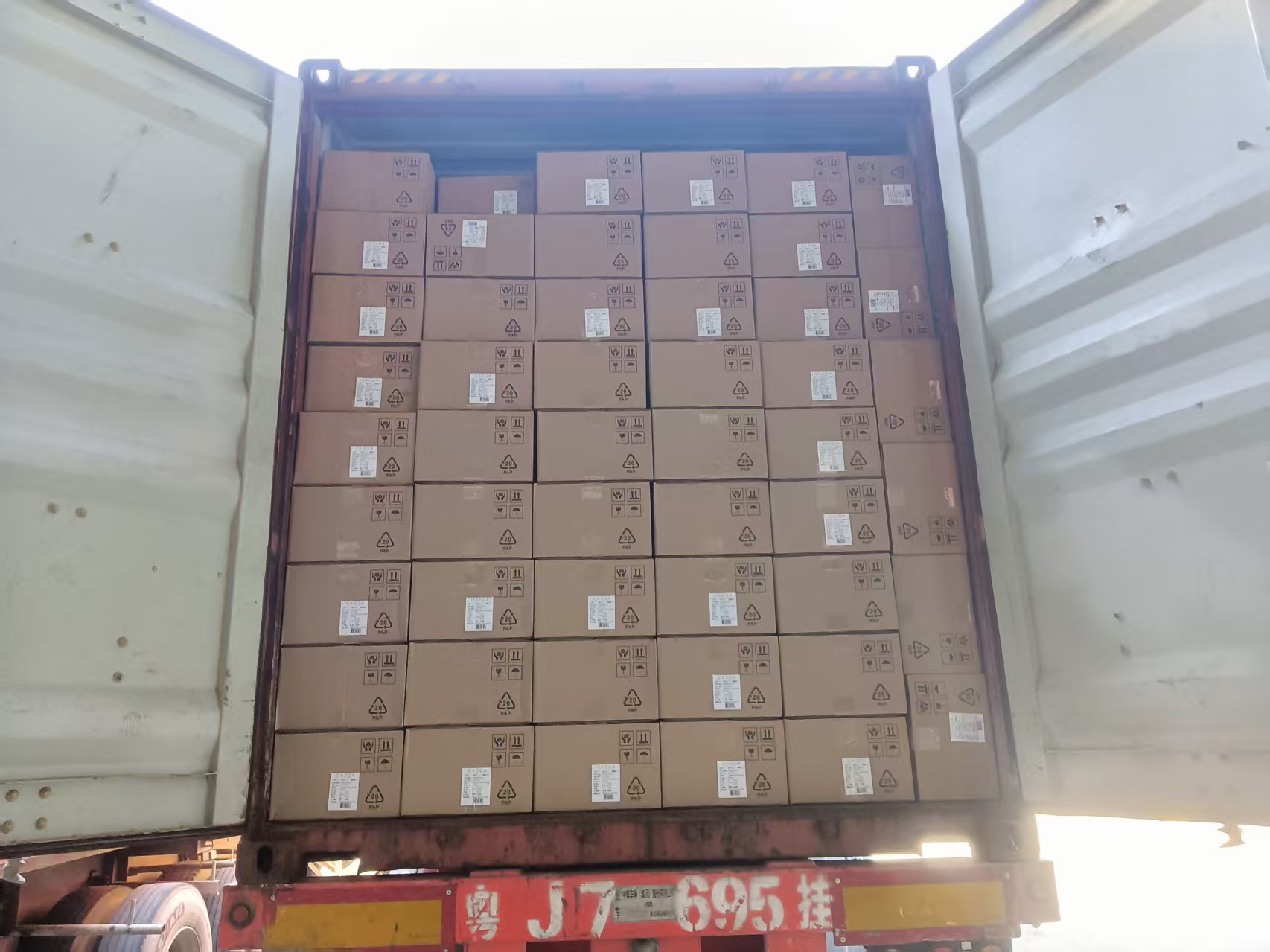
Reliability comes from how much of the product a supplier controls internally. Handing Co. Ltd. produces most of its metal parts, performs its own painting, and assembles its own motors under ISO 9001 procedures, and owns 100% of its electroplating factory — which means plated finish quality, delivery timing, and cost are managed in-house rather than through external vendors. Combined with a 12,320.66 m² facility, 350 employees, an annual output of 480,000 units, and a 100% export ratio serving EU, USA, and AUS markets, that structure supports repeat ordering and finish consistency across production runs. Buyers preparing a multi-year programme can request a quotation and a factory presentation covering the full specification and capability set.
Conclusion: Specify the Space, Then Specify the Fan
The decorative-versus-commercial decision is usually described as a choice between appearance and performance. In practice, compliance requirements, efficiency rules, duty treatment, and installation environment apply equally to both categories — so the only question styling genuinely answers is whether the fixture is visible and important to the space. When it is, a decorative commercial-grade fan is the specification that avoids a compromise: a Matt White finish on the outside, a steel housing and controlled motor, finish, and certification processes on the inside.
For buyers at the decision and execution stages, the useful sequence is: classify the environment, set the compliance floor for each market, confirm the visual requirement, require one build standard from every candidate, model total cost including duty and replacement, and then lock the long-term supply terms. Decorative fans are re-ordered for years; the supplier's process control is what makes the re-order look and behave like the first shipment.
Next Step: Review the Specification and Request a Sample
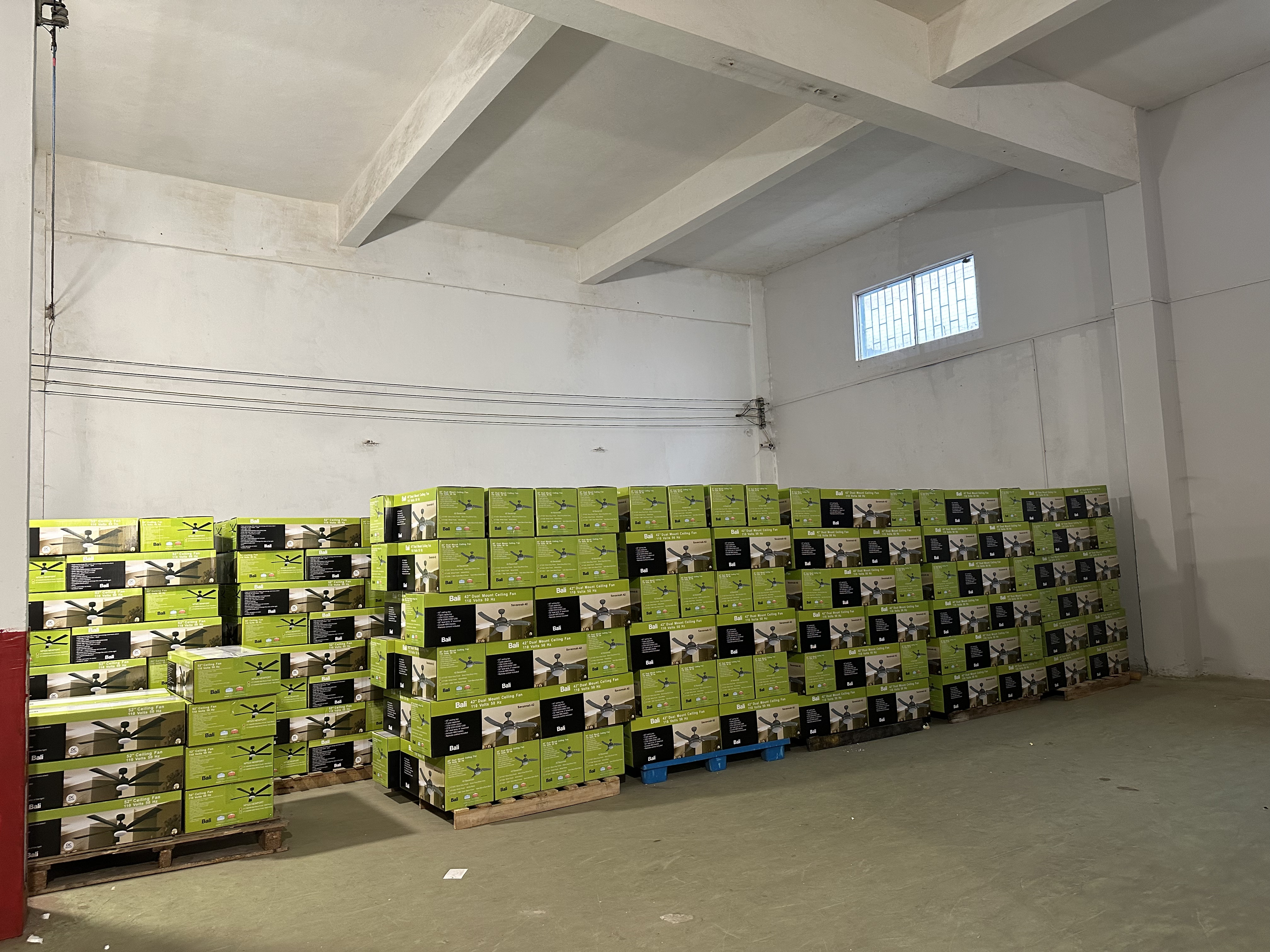
Handing Co. Ltd. supplies decorative ceiling fans with in-house metal production, painting, motor assembly, and electroplating, backed by ISO 9001 procedures since 1996 and coverage for EU, US, and Australian market requirements.
Download the factory presentation: Handing factory presentation (PDF)
Contact for samples, specifications, and quotations:
MING LAM
Tel: 86-13828060322
E-mail: sales@handingfan.com
Website: www.handingfan.com
Factory address: No.28, Xiang Long Bei Road, Xiang Long Island, Sanbu Town, Kaiping City, Guangdong Province, China
Have Questions or Need More Details?
Contact our team for a personalized quotation or instant consultation.
Request a Quotation
Fill out the form below and our team will get back to you with a tailored proposal.
WhatsApp Direct Chat
Prefer to chat in real-time? Message us on WhatsApp for instant assistance & quick answers.
- Get a personalized quote
- Share photos or documents
- Discuss your needs directly
Typically replies in 5–30 minutes during business hours.