Decorative Ceiling Fans Compared: DC Motor, LED, WiFi, and Finish Options
Decorative Ceiling Fans Compared: DC Motor, LED, WiFi, and Finish Options
Decorative ceiling fans are bought for how they look, but they are evaluated on how they are built. For importers, brand owners, and project buyers moving from evaluation to execution, the practical challenge is comparing products that appear similar at a glance yet differ significantly in motor type, light kit design, smart control compatibility, and finishing quality. This guide provides a component-level comparison framework for decorative ceiling fans and uses the TU52-MW-N3A1DOME from Handing Co. Ltd. as a reference model.
Why Decorative Ceiling Fans Need a Structured Comparison Approach
A decorative ceiling fan is a lighting fixture, an air movement device, and an interior design element at the same time. Buyers evaluating such a product for household or commercial use must balance visual appeal with functional reliability. In practice, this means checking more than the blade span or the product photo. The most important differences usually sit inside the motor housing, inside the light kit, behind the control system, and on the surface finish.
Handing Co. Ltd. provides a useful reference point for this kind of evaluation. The company was founded in 1992, operates a 12,320.66m² factory in Kaiping, Guangdong Province, and employs around 350 people. Its main product category is the decorative ceiling fan, and its export ratio is 100%, with primary markets in the EU, USA, and Australia. When a supplier has spent decades making one product family and exporting it to demanding markets, the manufacturing process itself becomes part of the comparison story.
This article is written for buyers who already understand the basic types of ceiling fans and now need a practical specification comparison method. The focus is on four components that often determine the value of a decorative fan: the motor, the LED light kit, the WiFi or smart control system, and the finish or material package.
What Buyers Are Actually Comparing
During the evaluation stage, most decorative ceiling fan buyers are not choosing between one unknown product and another. They are comparing products against a set of requirements defined by their market, their customers, and their application. Problems appear when the comparison criteria are too vague. Price alone does not explain why one fan costs more than another. A product photo does not show whether the motor has been tested for quiet operation or whether the paint system will hold its color over time.
The following questions tend to surface when buyers move from evaluation into execution:
- What type of motor should be specified for the target market?
- Does the light kit create additional value or additional complexity?
- Is smart WiFi control essential, or is a simpler control method acceptable?
- Which finish materials will perform well in the intended indoor environment?
- Can the supplier prove manufacturing capability, not just assembly?
A structured comparison framework answers these questions before large commitments are made. It also helps buyers explain their requirements clearly to the supplier.
Market Context: Ceiling Fans Are a Growing Global Category
The global ceiling fans market was estimated at USD 14.24 billion in 2023 and is projected to reach USD 19.92 billion by 2030, growing at a CAGR of 5.0% from 2024 to 2030, according to Grand View Research. This growth is not limited to basic functional fans. Decorative products, energy-efficient motors, LED lighting integration, and smart controls have all expanded the types of ceiling fans that buyers can offer to end customers.
China plays a central role in global supply. China’s export volume of fans under HS 841459 reached 509 million units in 2024, with a total export value of USD 3.788 billion, marking a 6.96% increase compared with the previous year, according to TradeDaas and China Customs data. For overseas buyers, this reinforces the importance of supplier verification. The volume of products leaving China is enormous, which makes factory-level capability checks more meaningful.
The Asia Pacific region held the largest revenue share of the ceiling fan market at 44.85% in 2023. Meanwhile, players such as Hunter Fan Company, Havells India, Minka Group, Crompton Greaves, and Big Ass Fans are commonly identified as leading global ceiling fan manufacturers. For a buyer comparing sources, the relevant question is not only which brand to choose, but also which manufacturing partner can deliver the specific combination of design, certification, and component quality needed for a particular market.
A Component-by-Component Comparison Framework
Decorative ceiling fans should be compared at the component level. The following framework covers the four most important decision areas.
DC Motors vs Traditional Motor Options
The motor is the heart of any ceiling fan. In recent years, DC motors have become more common, especially in fans positioned as energy-efficient or quiet models. Compared with traditional AC motors, DC motors generally offer finer speed control, quieter operation at low speeds, and better energy efficiency. Reversible airflow is also a common feature to look for, particularly in markets where fans are used year-round.
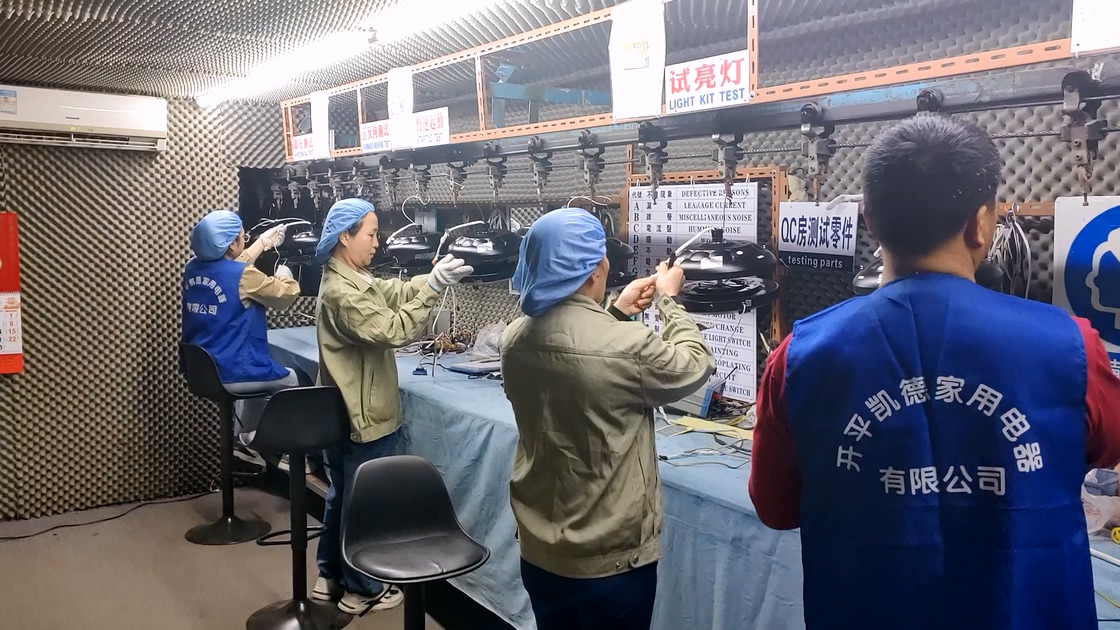
For commercial or hospitality projects, motor noise is rarely acceptable. A noisy fan can ruin the atmosphere of a hotel room or a retail space. Buyers should verify the motor type, the number of speed levels, the direction reversal method, and the noise performance claimed by the manufacturer. A responsible supplier should be able to explain how the motor is tested and what quality checks are performed during production.
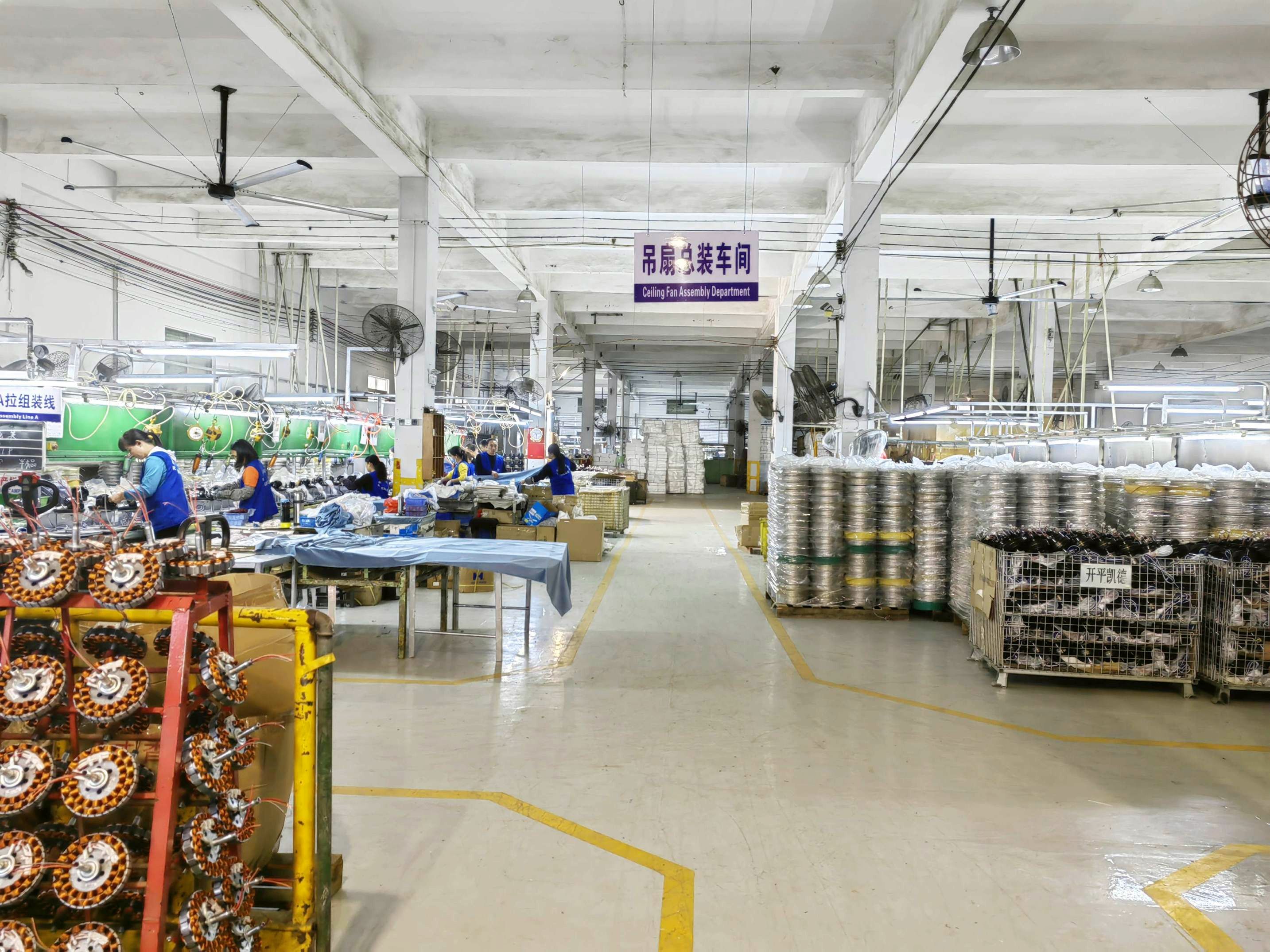
When evaluating a decorative fan model, buyers should also note whether the motor is manufactured in-house or simply purchased from a third party. Handing Co. Ltd. states that it produces most of its metal parts, performs its own painting, and assembles its own motors. This kind of vertical integration does not automatically make a product better, but it gives the buyer fewer parties to rely on for quality and delivery.
LED Light Kits and Their Hidden Impact
Many decorative ceiling fans include a light kit. The word ‘decorative’ often refers to the lighting element as much as to the fan body. LED light kits are now widely used because they consume less energy and last longer than traditional incandescent bulbs. However, not all LED kits are equal. Buyers should compare the light color, lumen output, dimming capability, and replaceability of the LED module.
A fan with an integrated LED panel can look sleek and modern, but if the LED module cannot be serviced easily, the entire fan may need replacement when the light fails. A separate light kit with replaceable bulbs can be simpler to maintain, although it may not offer the same contemporary appearance. For commercial installations, ease of maintenance matters greatly because labor costs for replacing a fan are higher than the cost of replacing a lamp.
When reviewing a model such as the TU52-MW-N3A1DOME, it is important to consider how well the light kit portion is integrated with the overall design. The DOME designation in the model name signals a dome-style light treatment, but buyers should always confirm the exact lamp type, socket, wattage, and dimming compatibility with the supplier before order confirmation.
Smart WiFi Control: Useful Feature or Extra Complexity?
WiFi-enabled ceiling fans can be controlled through smartphone apps, voice assistants, home automation scenes, and remote scheduling. For many residential customers, this is a strong selling point. For commercial buyers, it can simplify control in hotel rooms, offices, and rental properties. But smart control should be evaluated with the target market in mind.
A fan with WiFi control normally requires an additional receiver, more complex wiring, and a companion app. Buyers must ask which control protocol is used, whether the fan includes a physical remote, whether the WiFi receiver is compatible with the voltage and frequency of the destination country, and how the control system behaves when the home network is unavailable. Pull-chain control is still common in many markets because it is simple, reliable, and familiar. Some buyers prefer to offer the same fan in both smart and manual control versions.
For global sourcing, one more factor is important: the software and app associated with a smart fan may need to be localized or certified for certain markets. Buyers should not assume that a smart fan designed for one region will work smoothly in another.
Finish and Material Choices: Steel, ABS, and Paint Systems
The term ‘decorative ceiling fan’ places heavy emphasis on appearance, and appearance depends largely on materials and finishing. Steel housings offer strength, durability, and a premium feel. ABS blades are lightweight and consistent in shape, which helps the fan run with better balance and lowers the load on the motor. Matt White finishes have become popular because they suit both contemporary interiors and classic architectural spaces.
When comparing fans, buyers should examine how the fan body is constructed, what type of paint or coating is used, and whether the finish can withstand the humidity and cleaning routine of the intended room. A decorative fan in a coastal market may face different humidity conditions than one used inland. A fan in a commercial kitchen must tolerate grease. A fan in a hotel lobby must maintain its visual appeal for years under continuous operation.
Handing Co. Ltd. owns its electroplating factory, which the company uses to achieve consistent electroplating quality, on-time delivery, and competitive cost. It also performs most metal part production and its own painting. For buyers comparing decorative fans, this is a practical advantage: finish quality is not outsourced to multiple anonymous suppliers.
The TU52-MW-N3A1DOME as a Reference Model
The TU52-MW-N3A1DOME, produced by Handing Co. Ltd., illustrates several points in this comparison framework. The model name encodes key information: TU may indicate the series, 52 suggests the blade span in inches, MW stands for Matt White, and DOME indicates the light treatment.
According to the verified product description, the TU52-MW-N3A1DOME features a Matt White finish, a steel housing, and ABS blades. These three details alone provide useful comparison points. Matt White is a finish that fits neutral decor and matches modern interiors. Steel housing adds structural strength and improves the perceived quality of the fan. ABS blades offer dimensional consistency and lightweight operation.
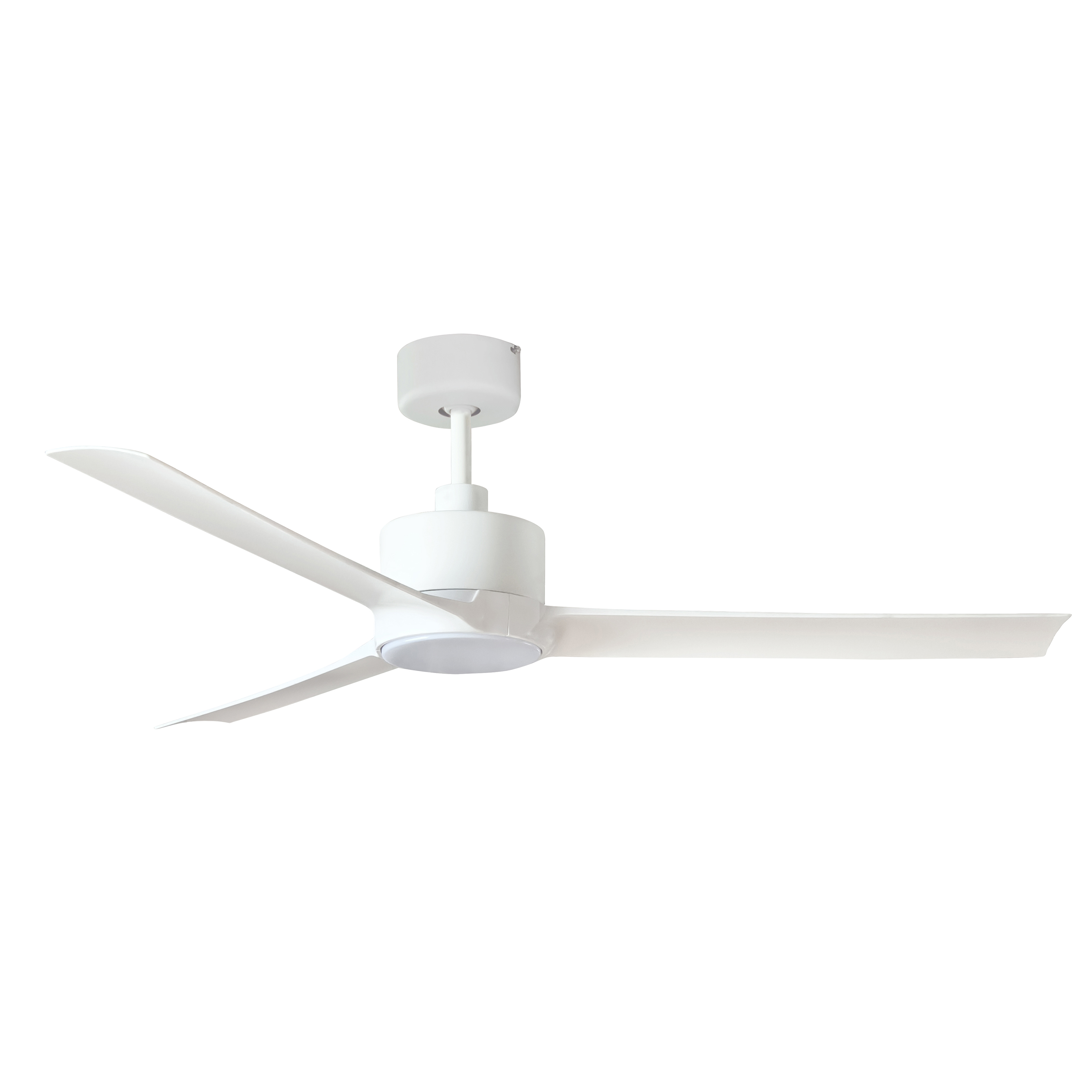
Because the model belongs to a 52-inch class, it is suitable for medium to larger rooms where a wide blade span can provide effective airflow. Buyers should treat this model as a documented example of Handing’s decorative fan range and request the complete specification sheet for motor type, lamp specification, control options, and certification details before final selection.
Quality Expectations from a Manufacturer Founded in 1992
Handing Co. Ltd. has been making ceiling fans since 1992. In 1996, its ceiling fan and lighting factory received ISO9001 certification. The company has an R&D team of 6 engineers and a factory area of 12,320.66m². It exports 100% of its production to markets that include the EU, USA, and Australia.
Handing produces most of its metal parts, performs its own painting, assembles its own motors, and owns its electroplating factory. This degree of vertical integration is unusual for a manufacturer of its scale. For buyers, vertical integration can translate into better control over quality, more consistent finishing, shorter lead times for customized work, and fewer coordination failures between sub-suppliers.
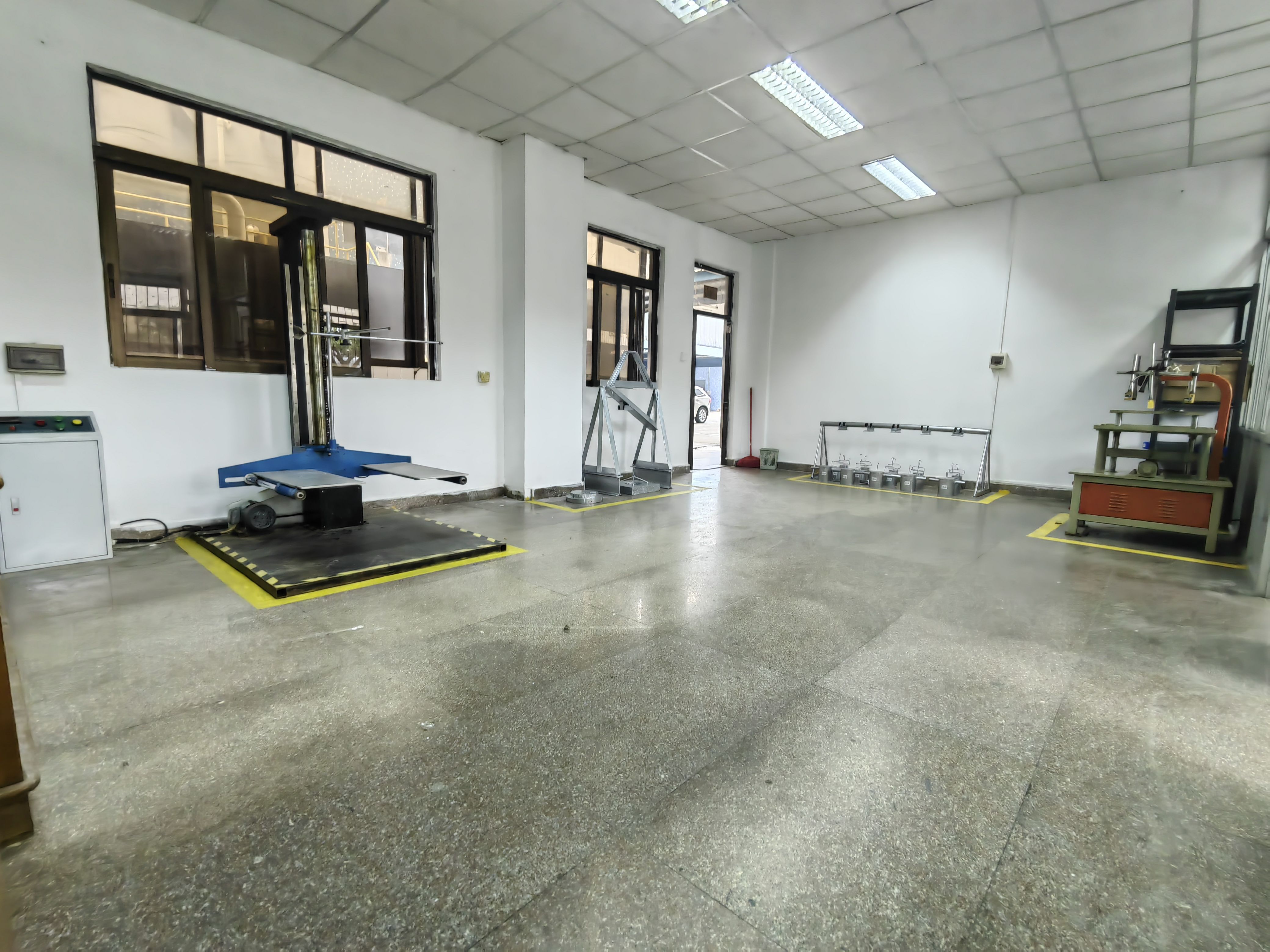
Since 2006, Handing has operated an XFS machine and chemical testing equipment, and these testing methods were approved by TUV PS in the same year. European fans from Handing carry LVD/GS/TUV, EMC, EMF, RoHS, and ERP compliance. The company also states that its ceiling fans have been exported to many well-known retailers worldwide and that its products are listed under UL, cUL, NOM, BSI, CE, GS, Swedish Standard, and SAA.
These facts do not need to be translated into marketing language. They simply provide a traceable record of what the company has done to meet the expectations of international buyers over more than three decades.
Step-by-Step Process for Comparing Decorative Ceiling Fans
The following eight-step process can help buyers move from a shortlist of decorative fans to a confident purchasing decision.
Step 1: Define the Application and Environment
Determine where the fan will be installed. Indoor residential rooms and commercial environments have different expectations for noise, durability, and aesthetics. A decorative ceiling fan for a living room may not be suitable for a hotel corridor that runs 24 hours a day.
Step 2: Select the Blade Span and Mounting Type
Choose the correct blade span for the room size. A 52-inch fan, for example, fits many larger rooms and open-plan spaces. Also confirm the mounting method: standard downrod, low profile, or angled ceiling mounting.
Step 3: Compare Motor Technology and Performance Features
Confirm whether the fan uses a DC or AC motor. Ask for speed options, reverse function, noise levels, and energy consumption data. For decorative fans, quiet operation is often as important as airflow.
Step 4: Evaluate the Light Kit
Check the type of lamp used in the light kit, the maximum wattage, color temperature options, and how easily the light source can be replaced. For a model like the TU52-MW-N3A1DOME, confirm the exact bulb or LED module configuration with the supplier.
Step 5: Define the Control System
Decide between pull chain, remote control, wall control, and WiFi smart control. If WiFi is required, verify compatibility with the target country’s electrical system and the availability of installation documentation in the local language.
Step 6: Inspect Finish and Material Composition
Ask specifically about the housing material, blade material, and finish type. A steel housing with an ABS blade set, as seen on the TU52-MW-N3A1DOME, is a combination worth comparing against alternatives made of lighter or less durable materials.
Step 7: Verify Certification Coverage
Match the fan’s certifications to the destination market. In the USA, UL 507 is a key safety standard for electric fans. In Europe, household fans fall under EN IEC 60335-2-80:2024 for safety requirements. For Australia, SAA certification matters. Buyers should require the supplier to provide certification documentation for the exact model being ordered.
Step 8: Audit the Supplier’s Manufacturing Capability
Look beyond the product sample. Ask how long the supplier has been making ceiling fans, whether it controls motor assembly and finishing in-house, how its testing facility is equipped, and how much of the product value is created internally. A company like Handing, with in-house motor assembly, painting, metal part production, and an electroplating factory, has a different risk profile than a pure assembler.
Use Cases for Decorative Ceiling Fans in Indoor Settings
Decorative ceiling fans appear in a wide range of indoor environments. Each application creates different demands for the four components discussed above.
Residential Living Rooms and Bedrooms
Homeowners usually want a fan that looks elegant, circulates air quietly, and blends with the interior style. A Matt White decorative fan with a steel housing suits modern apartments and classic homes alike. Household buyers also value simple controls. Many prefer a remote or wall control, although some markets still expect pull chains for their low cost and simplicity.
Hotels, Resorts, and Hospitality Projects
Hospitality buyers tend to specify ceiling fans that operate reliably for long hours and require minimal maintenance. Noise is critical in bedrooms. LED light kits reduce the frequency of bulb replacement. Durable finishes lower the need for touch-up painting. Because hotels often install many fans at once, a supplier with experience in producing finished metal parts and controlling electroplating quality in-house may offer a more reliable schedule.
Retail Showrooms and Boutique Stores
Retail environments use decorative fans as part of the interior design. The fan must be visually consistent with the store brand while delivering enough airflow to keep the space comfortable. Commercial-grade reliability is often expected because the fan operates throughout business hours.
Offices and Lounges
In offices and staff lounges, decorative fans provide energy-efficient airflow while enhancing the appearance of the space. Buyers should prioritize quiet motors and easy-to-clean surfaces. White finishes help the fan disappear into the ceiling or blend with light-colored walls.
Supplier Evaluation Checklist for Decorative Ceiling Fans
The table below summarizes the most important comparison points. Use it as a quick reference when sending an inquiry or reviewing a quotation.
| Comparison Area | What to Ask the Supplier | Why It Matters |
|---|---|---|
| Motor Type | Is it a DC motor or AC motor? Is the motor assembled in-house? What speed levels and reverse options are available? | Motor type affects energy efficiency, noise, speed control, and long-term reliability. |
| Housing and Blades | What material is the housing? What material is used for the blades? | Steel housings and ABS blades, as used on the TU52-MW-N3A1DOME, offer a specific combination of strength, weight balance, and appearance. |
| Finish System | What type of paint or coating is used? Does the supplier control the finishing process? | Finish durability determines how the fan looks after years of use. |
| Light Kit | Is the lamp LED or replaceable? What is the wattage or lumen output? How is the light kit serviced? | Lighting affects both the decorative look and the maintenance cost. |
| Control System | What control methods are offered? Is WiFi available as an option? Is a remote included? | Buyers must match the control experience to the end user’s expectations. |
| Certifications | Which standards are covered for the target market? Can certificates be provided for the specific model? | Market access depends on compliance with UL, cUL, CE, SAA, and other applicable standards. |
| Manufacturing Integration | Does the supplier produce metal parts, paint, electroplate, and assemble motors internally? | Vertical integration can improve consistency, cost control, and delivery performance. |
Frequently Asked Questions
Q1: What certifications does Handing provide for decorative ceiling fans?
Handing Co. Ltd. states that its products are listed under UL, cUL, NOM, BSI, CE, GS, Swedish Standard, and SAA. European fans from Handing have also met LVD/GS/TUV, EMC, EMF, RoHS, and ERP requirements. The company’s equipment for XFS and chemical testing was approved by TUV PS in 2006. When ordering a specific decorative model such as the TU52-MW-N3A1DOME, buyers should request the certificate documents that apply to the exact model and destination country so that compliance coverage is verified before mass production.
Q2: Can Handing produce TU52-MW-N3A1DOME as an OEM or customized decorative ceiling fan?
Handing is an established ceiling fan manufacturer rather than a trading company. It produces most of its metal parts, performs its own painting, assembles its own motors, and operates its own electroplating factory. Its R&D team includes 6 engineers. These capabilities provide the foundation for OEM work such as applying a specific finish, adjusting control options, or modifying packaging. However, because every change affects tooling, testing, cost, and lead time, the exact feasibility must be confirmed through a formal specification review with the Handing sales team.
Q3: What information should a buyer prepare before asking for a quotation on decorative ceiling fans?
To receive a meaningful quotation, buyers should define the target market, the required certification standard, the fan size, the motor preference, the light kit configuration, the control method, the finish or color, and the estimated order quantity. For example, a buyer interested in the TU52-MW-N3A1DOME should confirm that the steel housing, Matt White finish, and ABS blades match the design brief. A complete product specification reduces the number of revision rounds and makes the quoted price more accurate. Pricing is influenced by the quantity, the selected components, the compliance requirements, and the packaging plan.
Q4: How can international buyers get samples before confirming a large order?
Buyers can contact Handing Co. Ltd. directly by email or WhatsApp to request a sample of the TU52-MW-N3A1DOME or another decorative ceiling fan model. The company exports 100% of its production to markets such as the EU, USA, and Australia, so international sample shipping is a routine process. During sample evaluation, buyers should check motor noise, light output, finish quality, and control behavior against their own requirements. If a visit is possible, the Handing factory in Kaiping, Guangdong Province, offers visitors a chance to see the motor assembly testing room and final assembly workshop. A downloadable factory presentation is also available for initial reference.
Q5: What is the typical lead time for an OEM decorative ceiling fan order from Handing?
Lead times for OEM fan orders depend on the customization depth, component availability, finishing requirements, order volume, and seasonality. A standard model with an existing finish and no custom modifications will normally be faster to produce than a full OEM project with new colors or new control options. Buyers should discuss the production schedule with Handing after the specification and quantity are confirmed. This avoids unrealistic assumptions and allows the buyer to align container booking, warehouse readiness, and retail launch dates with the supplier’s confirmed delivery plan.
Next step for buyers: If you are comparing decorative ceiling fans for your market, the Handing team can help you review the TU52-MW-N3A1DOME specification against your project requirements.
Contact Handing Co. Ltd.
Email: sales@handingfan.com
Tel: +86-13828060322
WhatsApp: +852 92839029
Factory Address: No.28, Xiang Long Bei Road, Xiang Long Island, Sanbu Town, Kaiping City, Guangdong Province, China
Company brochure: Handing factory presentation