Decorative vs. Commercial Ceiling Fans: Which 52-Inch Model Fits Your Indoor Space?
Decorative vs. Commercial Ceiling Fans: Which 52-Inch Model Fits Your Indoor Space?
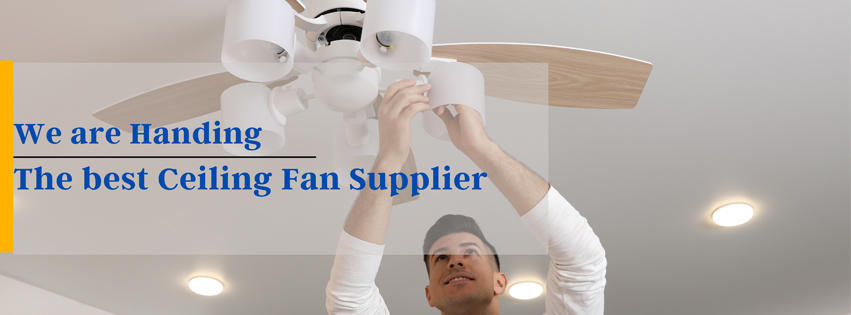
A 52-inch ceiling fan can be a decorative object or a piece of commercial equipment, and from the floor the two often look identical. For most indoor rooms, the practical answer in 2026 sits between the categories: a 52-inch model built with commercial-grade internals and finished like a residential fan. The TU52-MW-N3A1DOME from Handing Co. Ltd. is one example — a 52-inch indoor ceiling fan with a DC motor, a steel housing, ABS blades, WiFi control and an integrated 24W CCT LED light, classified for both household and commercial indoor use.
This guide is written for buyers who are already past the discovery stage and need to commit to a specification. It compares a purely decorative fan, a commercial-grade fan and the hybrid 52-inch option across the dimensions that decide long-term satisfaction: motor type, material construction, control and lighting, compliance scope, and the build content that drives cost.
What ‘Decorative’ and ‘Commercial Grade’ Actually Change in a 52-Inch Fan
The two category labels describe design intent, not measured performance. A decorative ceiling fan is engineered around what the buyer sees: blade styling, finish, light kit appearance and a clean silhouette. A commercial-grade ceiling fan is engineered around how long it runs and how it behaves when it fails: thermal margin in the motor, housing rigidity, blade stability across long duty cycles, and controls that support scheduling or unattended operation.
That difference shows up in three predictable ways when a buyer gets it wrong:
- Overspending on duty you will never use. A room that runs a fan two hours a day does not need industrial hardware, and paying for it reduces budget available for finish quality and light control.
- Underspecifying runtime. A style-first fan with a light housing, a basic motor and a pull chain, installed in a café or reception area that runs ten or more hours a day, usually reveals the gap as bearing noise, wobble or a fading finish.
- Feature mismatch with the space. A pull chain on a high ceiling, or a fixed colour-temperature light in a room that needs warm evening light and cooler daytime light, are specification errors that no amount of motor quality can fix.
Why the Decorative and Commercial Categories Have Started to Overlap
Two forces are pushing the categories together: scale and regulation. Grand View Research estimated the global ceiling fan market at USD 14.24 billion in 2023 and projects it to reach USD 19.92 billion by 2030, growing at a CAGR of 5.0% from 2024 to 2030. Within that market, Asia Pacific held the largest revenue share at 44.85% in 2023, and China’s fan exports under HS 841459 reached 509 million units in 2024 for a total export value of USD 3.788 billion, a 6.96% increase over the previous year.
The same dataset shows where the volume sits: standard ceiling fans accounted for 63.66% of global revenue in 2023, which means the mainstream market is a general-purpose configuration rather than a niche designer or industrial product. Manufacturers competing for that middle ground have increasingly merged decorative finishes with commercial-grade component choices.
Regulation reinforced the shift. ENERGY STAR certified ceiling fans are required to be up to 44% more efficient than conventional fans, and the 2024 Most Efficient criteria for standard fans require efficiency of at least 3.25D + 107 (CFM/W). In the United States, UL 507 was updated with a new version effective November 27, 2024 that specifically adds secondary thermal or current fuse requirements for fans installed in unattended areas. In the European Union, EN IEC 60335-2-80:2024 sets safety requirements for household fans, including ceiling fans, at rated voltages up to 250V for single-phase.
The practical takeaway for a buyer: the words on the box no longer predict performance. The motor, housing, blade material, control electronics and certification scope do.
The Hybrid Answer: How the TU52-MW-N3A1DOME Covers Both Needs
Handing Co. Ltd. is a ceiling fan manufacturer founded in 1992 and based in Kaiping City, Guangdong Province, China, with a 12,320.66 m² factory, 350 employees and a 100% export focus on the EU, USA and Australian markets. The TU52-MW-N3A1DOME is a 52-inch indoor ceiling fan that combines commercial-grade component choices with a residential finish: a DC motor, a steel housing, ABS blades, WiFi control and an integrated 24W CCT LED light, classified for indoor household and commercial use.
A DC motor, specified for control rather than for a label
Motor type is the first thing a commercial buyer checks and the last thing a decorative buyer notices. DC ceiling fan motors generally offer finer speed control, quieter low-speed operation and more efficient low-speed running than conventional AC motors, which is why they suit rooms where the fan runs for long stretches at partial speed rather than at full blast. In a decorative installation, the benefit appears as silence in a bedroom; in a commercial indoor installation, it appears as lower noise across the working day and the ability to drive the fan from schedules instead of from a wall switch.
Steel housing and ABS blades: where a decorative fan usually gives ground
Decorative-led fans are often built around lighter housings and blades chosen for appearance. The TU52-MW-N3A1DOME instead uses a steel housing and ABS blades. For buyers, that combination matters in three ways: a steel housing resists deformation and holds the motor alignment that keeps a fan from wobbling over time; ABS blades are dimensionally stable and easy to clean, which matters in indoor commercial interiors where the fan is visible to customers; and both choices support a decorative finish, so the durability does not have to look industrial.
WiFi control and a 24W CCT LED: decorative features that also serve commercial operation
Integrated lighting and smart control are usually sold as decorative conveniences. In an indoor commercial setting they are operational tools. An integrated 24W CCT LED gives one fixture a range of colour temperatures, so the same fan can deliver warmer light in the evening and cooler light during business hours without a second fixture. WiFi control removes the pull chain from the specification, which is a practical advantage wherever ceilings are high, and it allows control to be grouped or scheduled rather than operated manually.
52 inches, classified for indoor household and commercial use
The 52-inch span is the reason one model can serve both briefs. A 52-inch fan moves air across a large indoor footprint, which is why it appears in living rooms, lounges and open commercial interiors rather than in small utility rooms. Because the TU52-MW-N3A1DOME is classified for indoor household and commercial use, the same SKU can be specified for a residential living space, a hospitality interior or a light commercial room without changing the model number.
Why the manufacturer’s build structure matters

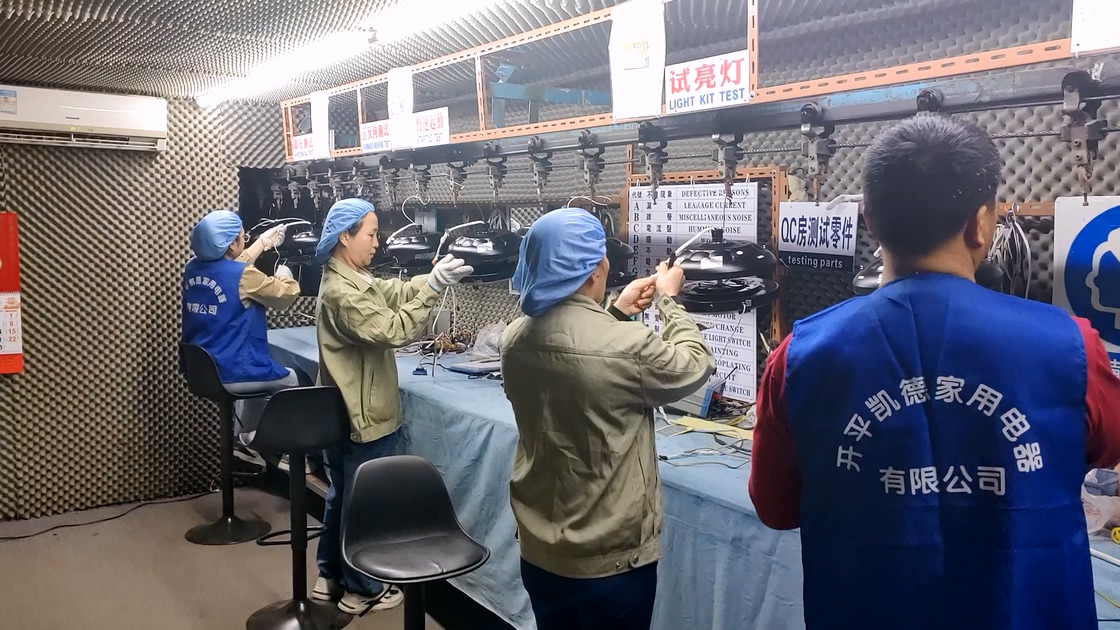
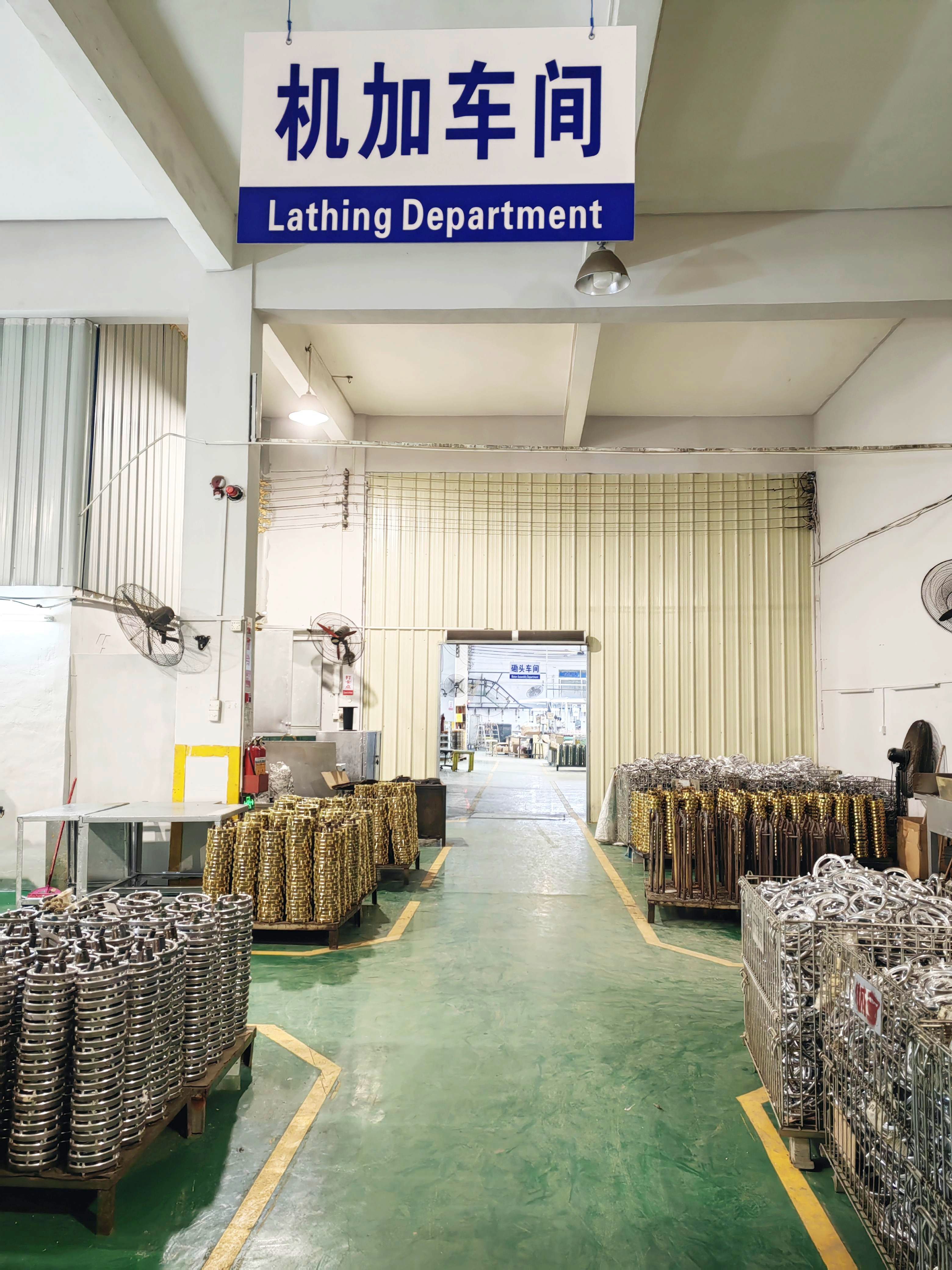
A decorative finish on commercial-grade internals is difficult to produce unless the manufacturer controls the component chain. Handing produces most of its metal parts in-house, performs its own painting and assembles its motors, and owns 100% of an electroplating factory, which supports finish quality, delivery timing and cost control. The company’s ceiling fan and lighting factory was ISO 9001 certified in 1996, and since 2006, in response to the EU RoHS regulation, it has used XFS machine and chemical testing — an approach approved by TUV PS the same year. Its European fans carry LVD/GS/TUV, EMC, EMF, RoHS and ERP, and its ceiling fans are listed in UL, cUL, NOM, BSI, CE, GS, Swedish Standard and SAA.
Step-by-Step: Five Checks Before You Commit to a 52-Inch Fan
- Confirm the indoor classification and the mounting conditions. Decide at the outset whether the fan is spec’d for an indoor household room, an indoor commercial room, or a covered outdoor area — these are different product categories with different requirements. For a 52-inch indoor specification, check ceiling height, mounting type and whether the fan will be visible as a design element.
- Define the runtime profile and whether the space is attended. Write down daily running hours and whether people are present while the fan operates. This single input decides whether you need commercial-duty hardware and whether standards aimed at unattended installations — such as the secondary thermal or current fuse requirement added to UL 507 effective November 27, 2024 — apply to your project.
- Fix the motor and control strategy. Choose between a basic AC motor with a pull chain and a DC motor with remote or smart control. The decision drives noise level at the speeds you will actually use, the control granularity available to the end user, and the electronics you must support after installation.
- Decide the lighting requirement before the finish. If the room needs light from the fan, an integrated 24W CCT LED removes a separate fixture and gives a tunable colour temperature. If it does not, the light kit becomes an unnecessary cost and a service item.
- Verify who builds the internals and what documentation you receive. Ask where the motor is wound, where metal parts are formed and painted, and what test equipment is used for incoming components. Handing’s approach — in-house metal production, in-house motor assembly, a 100% owned electroplating factory, and chemical testing in place since 2006 — is the kind of answer that supports a spec sheet during a procurement audit.
Where the 52-Inch Hybrid Fits: Indoor Use Cases
A hybrid 52-inch fan is not the right answer for every room, but it covers a set of indoor scenarios that the two pure categories handle badly.
- Primary living spaces in homes. A large living room or open-plan area where the fan is a visible design element but runs for hours at a time. A decorative-only fan risks noise and finish wear; a commercial-only fan looks out of place.
- Hospitality interiors. Boutique hotels, cafés and lounges combine long daily runtime with a space that customers look at. Steel housing and ABS blades keep the fan stable and cleanable, while the finish and light kit stay presentable.
- Light commercial indoor rooms. Reception areas, showrooms and offices need quiet operation and lighting control, but rarely need the air-moving capability of a true industrial fan. A 52-inch indoor model with a DC motor and WiFi control fits this gap.
- Distributor and multi-unit stock. Buyers supplying residential and light commercial customers can carry one 52-inch SKU instead of two category-specific models, which simplifies inventory and reduces the risk of stock sitting in the wrong category.
Where the hybrid is not the right answer: damp or exposed outdoor locations, and large industrial spaces with very long spans or continuous heavy-duty requirements. Those need outdoor-rated or industrial products, not a decorative-commercial crossover.
Comparison Table: Decorative vs. Commercial Grade vs. Hybrid 52-Inch
The table below compares the three options on the dimensions that decide whether a 52-inch fan is still performing well three years after installation.
| Decision dimension | Decorative-led 52-inch fan | Commercial-grade 52-inch fan | TU52-MW-N3A1DOME (hybrid 52-inch) |
|---|---|---|---|
| Primary design priority | Visual statement: finish, blade styling, light kit appearance | Runtime, serviceability and air movement | Visual finish plus long indoor runtime on one SKU |
| Motor type typically used | Usually a basic AC motor sized for intermittent household use | Heavier-duty motors, often larger AC units or DC drives | DC motor |
| Housing construction | Lighter housings common; finish-led | Heavier metal housings typical | Steel housing |
| Blade material | Decorative materials and finishes, sometimes wood-look | Metal or heavy-duty blades in many industrial designs | ABS blades |
| Control interface | Pull chain or basic remote | Wall or industrial controllers | WiFi control |
| Light | Often optional or supplied as a separate fixture | Frequently none | Integrated 24W CCT LED |
| Efficiency benchmark to request | Ask for CFM/W data; ENERGY STAR reference is up to 44% more efficient than conventional fans | Same CFM/W question, measured at the speeds you will use | Request model-level efficiency data from Handing |
| Compliance focus | Market safety listing for the destination country | UL 507 (updated effective November 27, 2024) adds secondary thermal or current fuse requirements for fans in unattended areas | Indoor household/commercial classification; confirm market listings (Handing products listed in UL, cUL, NOM, BSI, CE, GS, Swedish Standard and SAA) |
| Typical indoor fit | Bedrooms and low-runtime living areas | Workshops, warehouses and unattended interiors | Living rooms, hospitality interiors, receptions and showrooms |
| Main trade-off to weigh | Looks versus duty capability | Duty capability versus visible design | Higher build content than an entry decorative model, but one specification instead of two |
FAQ
What certification should a 52-inch indoor ceiling fan carry on a commercial project?
It depends on the destination market. In the United States, UL 507 was updated with a new version effective November 27, 2024 that adds secondary thermal or current fuse requirements for fans in unattended areas, and in the European Union, EN IEC 60335-2-80:2024 sets safety requirements for household fans, including ceiling fans, at rated voltages up to 250V single-phase. Handing Co. Ltd. states that its ceiling fans are listed in UL, cUL, NOM, BSI, CE, GS, Swedish Standard and SAA, and that its European fans carry LVD/GS/TUV, EMC, EMF, RoHS and ERP. Confirm the listing for the exact model and market before it goes into a specification.
Can a decorative-looking 52-inch fan survive long daily runtime?
Styling does not determine runtime; the motor, housing, bearings and blade material do. The TU52-MW-N3A1DOME pairs a DC motor with a steel housing and ABS blades and is classified for indoor household and commercial use, so the same 52-inch unit can serve a living room or a light commercial interior such as a café or reception area. Where a decorative-first fan is fitted with a basic AC motor and a lighter housing, runtime tolerance is normally lower.
How should I compare the cost of a decorative fan with a commercial-grade fan?
Compare build content rather than unit price alone. The cost drivers are the motor type and its control electronics, the housing material and finish process, the blade material, whether the light engine is integrated, the certification scope required for your market, and the QC documentation supplied with the order. A 52-inch model with a DC motor, steel housing, an integrated 24W CCT LED and WiFi control carries more build content than a style-first unit with a pull chain and no light, so the useful comparison is cost per year of service in the room where the fan will actually run.
Can I validate the TU52-MW-N3A1DOME with a sample before placing an order?
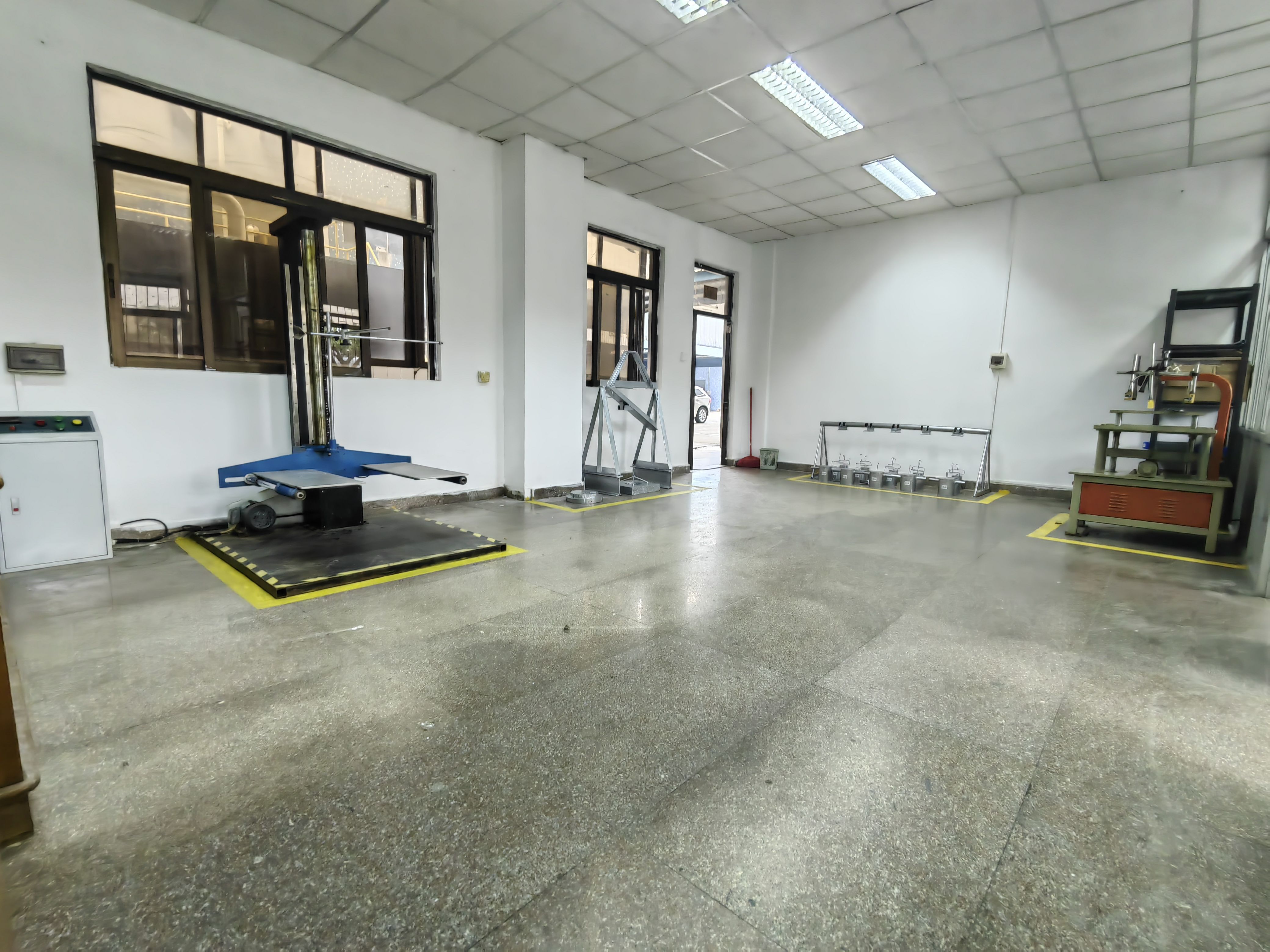
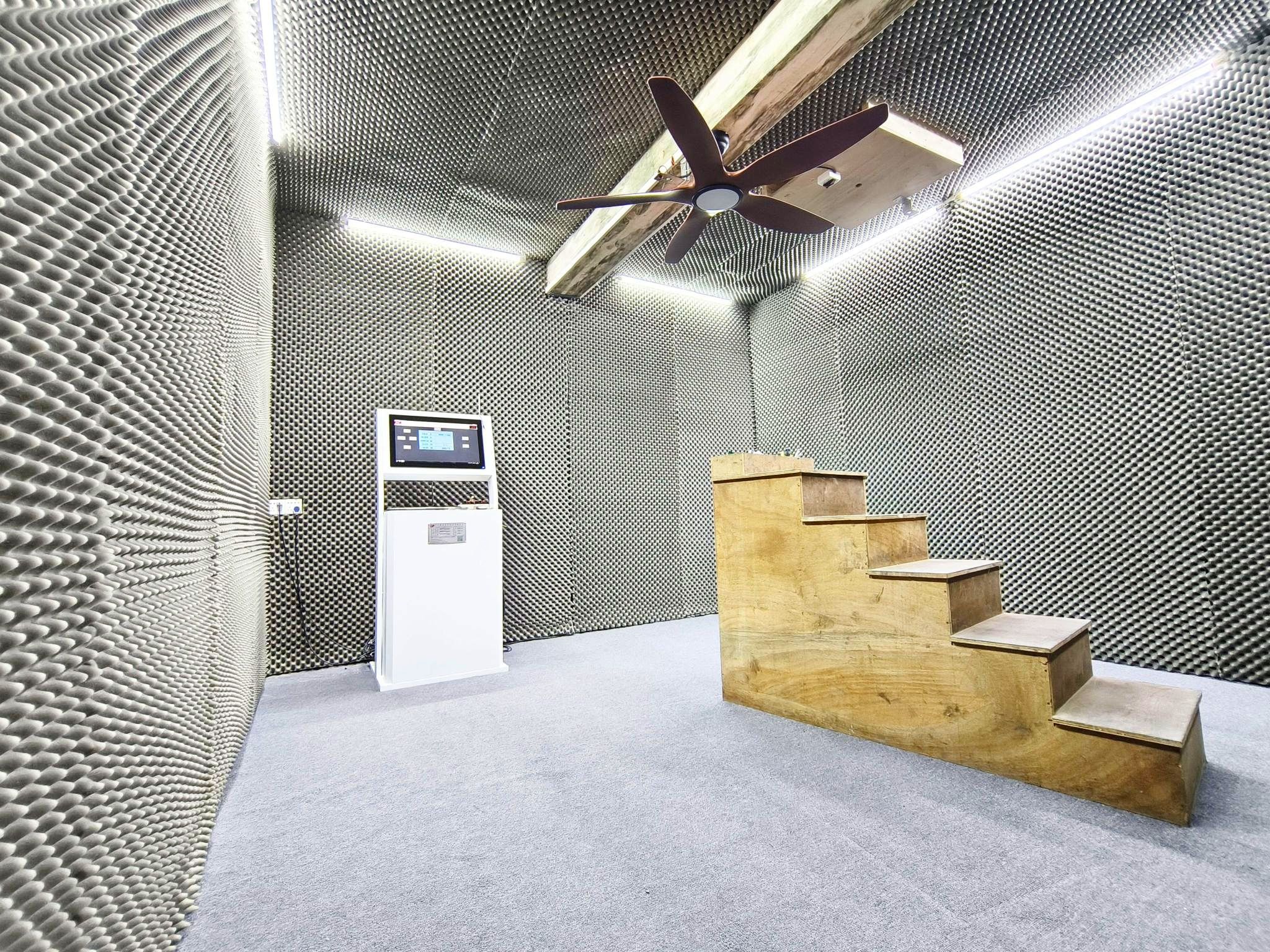
Yes. Handing Co. Ltd. supports sample validation through its sample room, and buyers typically use the sample to check finish quality, noise at low speed, the colour-temperature behaviour of the 24W CCT LED and mounting in the actual ceiling. Sample requests can be sent to MING LAM at sales@handingfan.com or on WhatsApp at +852 92839029.
What is the next step for specifying a 52-inch hybrid fan?
Send the room type, ceiling height, indoor classification, control and lighting requirement, and destination market. Handing Co. Ltd. will confirm the closest configuration to the TU52-MW-N3A1DOME, the sample arrangement and the production timeline. You can reach the team at sales@handingfan.com, on WhatsApp at +852 92839029, or download the factory presentation at Handing factory presentation (PDF).
Conclusion: Match the Fan to the Room, Not to the Label
Decorative and commercial-grade are useful shorthand, but they are poor specifications. A 52-inch indoor fan should be chosen on the variables that decide how it performs after year one: whether the motor is DC or AC, whether the housing is steel or light-gauge, whether the blades are ABS or decorative veneer, whether control is smart or manual, whether the light is integrated and tunable, and whether the market certifications your project needs are documented. The TU52-MW-N3A1DOME shows that these choices do not have to force a trade-off between design and duty — a 52-inch, indoor-classified fan with commercial-grade components can still be finished and lit for a residential interior.
Next Step: Sample, Quote or Specification Review
If your project needs a 52-inch indoor fan that performs like commercial equipment and reads like a decorative fixture, send your room data and market requirements to the Handing team and request a sample or quotation for the TU52-MW-N3A1DOME.
Handing Co. Ltd.
Contact: MING LAM
Tel: +86-13828060322
Email: sales@handingfan.com / minglam3@hotmail.com
WhatsApp: +852 92839029
Website: www.handingfan.com
Factory address: No.28, Xiang Long Bei Road, Xiang Long Island, Sanbu Town, Kaiping City, Guangdong Province, China
Factory presentation: download the PDF brochure