Hospitality vs. Retail: Choosing Decorative Ceiling Fans
A hotel guest room and a fashion retail floor can be fitted with the same decorative ceiling fan and still need it specified in two different ways. Hospitality buyers usually weigh guest comfort, who controls the fan, and how the fixture reads at close range in a bedroom or a restaurant. Retail buyers weigh ceiling clutter, light quality over merchandise, cleaning access across long trading hours, and whether store staff can adjust the fan without a facilities call-out. The hardware can be identical; the decision path is not.
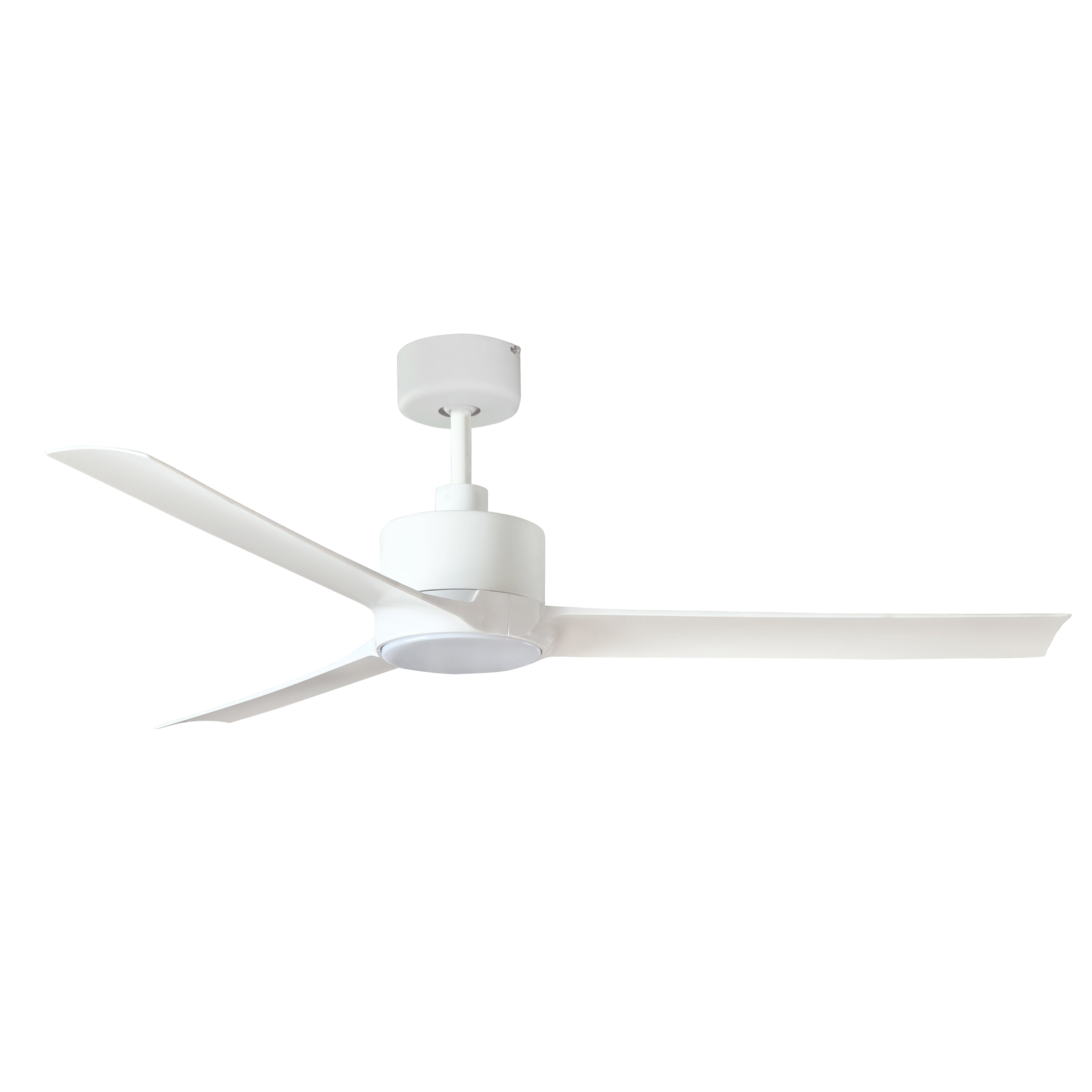
This guide compares those two paths against one reference product: the TU52-MW-N3A1DOME, a 52-inch decorative ceiling fan from Handing Co. Ltd. with a 24W CCT LED light kit, smart WiFi control, a DC motor and a Matt White finish. Handing Co. Ltd. is a ceiling fan manufacturer based in Kaiping City, Guangdong Province, China; its factories were set up in 1992, and its ceiling fan and lighting factory has been ISO 9001 certified since 1996. Specifications below are stated as supplied, and any parameter the manufacturer has not published is flagged as something to request rather than assume.
What actually changes between a hotel and a retail floor
The fan does not change; the weight given to each criterion does. A restaurant dining room and a shop floor may both be large open ceilings, but one is judged by a seated guest at two metres and the other by a shopper walking beneath it. That single difference moves finish quality, control ownership and light specification up or down the list.
| Decision area | Hospitality priority | Retail priority | What to confirm |
|---|---|---|---|
| Who operates the fan | Guest in the room; restaurant staff during service | Store manager or a scheduled setting across trading hours | Control method, fallback, and whether settings can be locked |
| Viewing distance | Close range: blade detail, finish edges, light flicker on a wall | Distance and repetition: uniformity along a long ceiling line | Finish consistency across the batch, not just the sample |
| Running pattern | Short guest-controlled sessions in rooms; long runs in public areas | Long daily runs, often at low speed | Efficiency and motor behaviour at low speed, not only at maximum |
| Light duty | Ambience; warm light at night, no glare over a bed | Even light over displays; consistent colour temperature | Colour temperature control, dimming, delivered light data |
| Maintenance window | Planned room downtime, seasonal deep cleans | Before opening or overnight; access equipment booked ahead | Cleaning method, removable parts, spare-parts availability |
The table is a prioritisation tool, not a specification. The sections below work through each row against the TU52-MW-N3A1DOME and state what has to be verified before a purchase order is released.
Why indoor commercial duty is harder than it looks
An indoor commercial ceiling fan spends more hours visible, more hours running and more hours being cleaned than a residential fan of the same design. Dust collects on a horizontal blade; a slight wobble that a homeowner tolerates becomes a complaint when a guest is lying in bed looking up at it; and cleaning staff who wipe the same blade weekly for several years will find any fixing that works loose. Retail adds a second pressure: any change to a ceiling fixture means access equipment and a trading-hours slot, so the cost of the service visit usually exceeds the cost of the part.
These are practical consequences of commercial use rather than measured performance figures, and they explain why decorative fans for hotels and shops are usually specified with serviceability and finish durability sitting beside appearance. They also explain why a buyer who asks only for a colour and a diameter tends to end up with a fan that looks right on day one and is regretted by year two.
None of this changes the basic rule that a fan must be mounted to suitable structure and installed in line with the manufacturer's instructions and local electrical code. It does change what should be requested with the quotation: a physical finish sample, a written cleaning recommendation and a spare-parts commitment, in addition to the usual certificate set.
The reference specification: TU52-MW-N3A1DOME at a glance
The TU52-MW-N3A1DOME is an indoor decorative ceiling fan with a 52-inch blade span, an integrated 24W CCT LED light kit, smart WiFi control, a DC motor and a Matt White finish. Each of those five parameters closes off one decision and opens another.
| Supplied parameter | Value | What it decides |
|---|---|---|
| Blade span | 52 inches | The footprint of moving air, and how much vertical clearance the ceiling must offer |
| Light kit | 24W CCT LED | Whether one ceiling penetration replaces separate fixtures, and whether colour temperature can be matched to the room |
| Control | Smart WiFi | Who operates the fan, and whether settings can be grouped, scheduled or locked |
| Motor | DC | Speed steps and energy use at the low and medium speeds the space will actually run |
| Finish | Matt White | How the fan reads against a white ceiling, and how visible dust and marks become |
Blade span: what 52 inches decides for a room
Blade span sets the footprint of moving air and the physical clearance the ceiling must offer. It does not, by itself, guarantee a comfort level in a given room. A 52-inch fan sits in the middle of the decorative range: smaller spans such as 42-inch and 48-inch models can suit compact rooms with lower ceilings, while large commercial and industrial ceiling fans are designed for volume rather than interior detail. The specification question is therefore not whether 52 inches is good, but whether this room's ceiling height and floor area support a 52-inch fan, and whether the manufacturer's performance data shows enough air movement at the speeds the zone will use.
Two checks belong in every submittal. First, clearance: ENERGY STAR's product definition for residential ceiling fans uses blade tips more than 10 inches (about 25 cm) below the ceiling as one criterion, which is a useful reminder that a fan needs vertical room to move air; the governing figure for a specific project is set by local code and the manufacturer's mounting instructions. Second, height above the floor and proximity to sprinklers, lighting tracks and signage, all of which are controlled by other trades working on the same ceiling.
In hotels, the more common error is over-specifying span for a small room and then running the fan permanently at its lowest setting, which wastes the reason for buying it. In retail, the common error is spacing fans for visual balance on a reflected ceiling plan without checking that the air reaches the zone where customers stand. Both are solved by requesting airflow data and laying the fans out against the actual plan rather than the grid. If the model is also expected to reverse for seasonal use, confirm that capability in writing, because reversible operation is a model-specific feature rather than a standard one.
Light: integrated 24W CCT LED kit vs separate fixtures
An integrated light kit changes the ceiling from two fixtures into one. That is the whole argument, and it is a strong one in hospitality: one penetration, one circuit, one item to clean, and a visual centrepiece instead of a fan plus a ring of downlights. The 24W CCT LED kit on the TU52-MW-N3A1DOME also allows colour temperature to be set for the space rather than fixed at the factory, which matters when the same fan family is used in a warm guest room and a neutral corridor.
Where an integrated kit is weaker is control over the light itself. Separate fixtures let a lighting designer specify beam angles, delivered lumens and colour rendering independently of the fan, and retail merchandising often needs exactly that independence. If the light over a display has to meet a brand standard, the integrated kit has to be measured against that standard before it is accepted, which means asking for delivered lumen output, colour rendering index and dimming protocol rather than the 24-watt figure alone.
A workable decision rule for project teams:
- Guest rooms, restaurant seating and lounge areas: integrated kit, warm setting in the evening, dimming behaviour verified against the room's control system.
- Retail sales floors with merchandise lighting standards: integrated kit only where its measured light data meets the standard; otherwise treat the fan as an air-movement and visual element and keep display lighting on a separate layer.
- Back-of-house, corridors and stockrooms: the light kit is a convenience rather than a design feature, so specify on serviceability and replacement ease.
Control: smart WiFi vs pull chain in guest and staff hands
Control is where hospitality and retail diverge most sharply. A smart WiFi ceiling fan can be grouped, scheduled and adjusted from a phone or a building interface, which suits a hotel that wants lobby fans on a time schedule while leaving guest-room fans to the occupant. It also suits retail, where a store manager can drop fan speed at opening without raising a facilities ticket.
The pull chain controlled ceiling fan is not obsolete in commercial work. It is the lowest-risk option in rooms where no wireless network exists, where IT policy forbids additional devices on the network, or where a fan must keep working when the building management system is unavailable. The trade-off is per-unit manual adjustment, which is acceptable in a stockroom and unacceptable across a forty-room floor.
Whichever route is chosen, four questions should be answered before the order is placed:
- What is the fallback if the WiFi network or the control application is unavailable?
- Which wireless band does the fan use, and does that fit the property's IT and security policy?
- Who holds the account and the device list when a store is refitted or a hotel changes operator?
- Can settings be locked so that guests or customers cannot change a scene the operator wants fixed?
Answering these at specification stage is cheaper than discovering them at commissioning, and it protects the operator from inheriting a fan it cannot control.
Motor: DC vs AC and the energy case you can actually verify
A DC motor is the main reason a decorative fan can be specified for long commercial running hours without an uncomfortable conversation about electricity. DC motors are electronically commutated, which in most decorative fan designs means finer speed steps and lower consumption at the low and medium speeds that hotels and shops actually use. That is a design expectation rather than a guarantee for a specific model, and the correct way to settle it is to ask for wattage at each speed.
Category-level evidence exists, but it has to be read at the right level. ENERGY STAR reports that certified ceiling fans are up to 44% more efficient than conventional fans, and that certification requires testing in an EPA-recognised laboratory with written certification from an EPA-recognised body (ENERGY STAR, 2026). That figure describes the certified residential category, not the TU52-MW-N3A1DOME specifically, so the model's own ENERGY STAR status should be confirmed in writing if a project requires it. On the European side, ErP rules tightened in 2026, with a reported 50% minimum static efficiency for axial fans under the 2026 regulation (Refindustry, June 2026); again, this is a category rule whose exact application to a given decorative model belongs in the compliance file.
For a project comparison, build a table of your own: wattage at the three speeds the space will use, multiplied by expected running hours per year, for the DC fan and for any AC alternative. That calculation uses the supplier's measured data, so it survives an audit; a general efficiency claim does not.
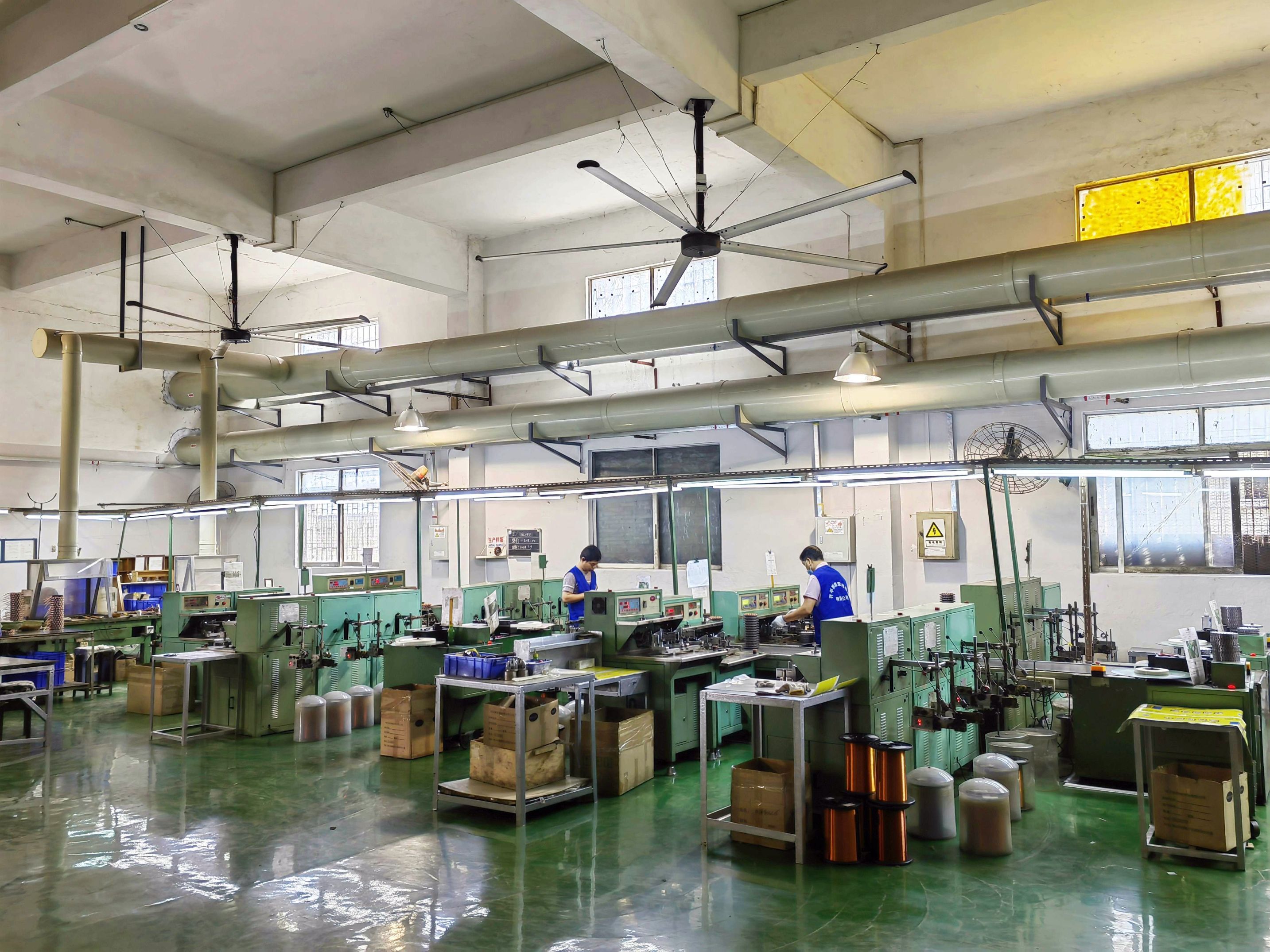
Manufacturing consistency matters here more than in most components. Handing produces most of its metal parts, does its own painting and assembles its motors in-house under ISO 9001 procedures, and its ceiling fan and lighting factory has held ISO 9001 certification since 1996. For a buyer placing a pilot batch and then a rollout, that is the relevant claim: the same process, rather than a substitute supplier, should stand behind both orders.
Finish: Matt White, plating and surface durability
Matt White is the finish that disappears. It reflects less light than gloss, so it does not compete with downlights in a restaurant, and it reads as part of the ceiling in a white guest room instead of as an object. In retail, where a ceiling may already carry signage and track lighting, that restraint is often exactly what a design team wants and exactly what makes finish quality hard to inspect, because there is no sheen to reveal defects.
This is why the finish should be judged from a physical sample and from process evidence rather than from a photograph. Handing owns 100% of its electroplating factory, which keeps plated components under the same quality and delivery control as the rest of production. Since 2006, when the EU RoHS regulation came into force, the company has run XFS and chemical testing to check its products, and that testing was approved by TUV PS in the same year. The practical request for a hotel or retail buyer is simple: a finish sample in the specified colour, the cleaning method the finish tolerates, and the test records showing the surface was checked rather than assumed.
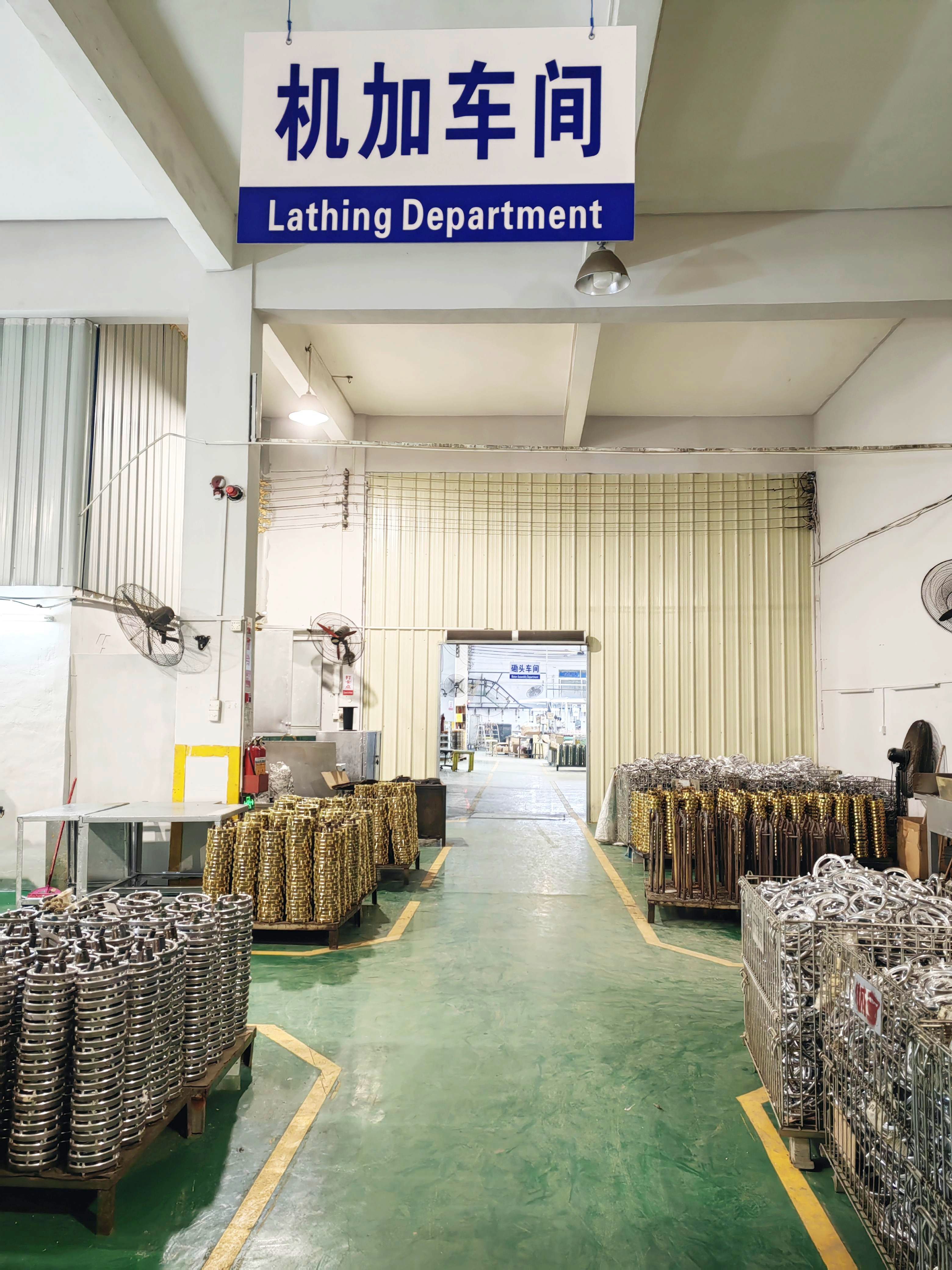
Metal parts production is in-house as well, and that is where the visible edges of a decorative fan are formed. Buyers who have received a second batch that did not match the first should ask how the finish is controlled between orders, not only whether a sample can be produced.
Compliance files for EU, US and Australian projects
Compliance is the part of a decorative fan specification that cannot be settled by looking at the product. Handing states that its products are listed in UL, cUL, Nom, BSI, CE, GS, Swedish Standard and SAA, and that its European fans carry LVD/GS/TUV, EMC, EMF, RoHS and ERP compliance. Those statements describe the company's certification position; a project buyer still needs the model-level certificate or listing reference for the exact variant being purchased, because a factory's certificate does not automatically cover every configuration it ships.
Three practical rules shorten the paperwork:
- Ask for the listing by model and variant. Finish, light kit and control options can change what was tested. A certificate naming the family but not the configuration is a starting point, not a close-out document.
- Match the certificate to the destination market. A UL or ETL listing answers a North American question, CE and GS answer a European one, and SAA answers an Australian one. Handing states its main markets are the EU, USA and Australia, so buyers in those regions usually find the relevant document set already in place, but usually is not a submittal.
- Check the environment rating, not only the electrical one. ENERGY STAR's guidance is to look for a UL-listed damp rating for humid locations and a wet rating where a fan is in direct contact with water. An indoor decorative fan proposed for a hotel bathroom with a shower, or for a covered terrace, is in the wrong product class regardless of its certification for dry indoor use.
Cost planning belongs in the same file. For US-bound shipments, ceiling fans for permanent installation under HS code 8414.51.30 carried a reported 17.20% duty in 2026, described as a 4.7% general rate plus a 12.5% Section 301 duty (Airlift USA, 2026). Rates change and classification can be argued, so confirm the current figure with a customs broker before the landed-cost comparison is signed off.
Where the money goes: a value comparison
Decorative fans are rarely the largest line in a hotel or retail fit-out, but they are among the most visible, and the cheapest unit price is a poor guide to lifetime cost. The comparison that matters runs across five items.
- Motor and running cost. A DC motor usually costs more up front and less to run at low speed; the difference is only real if it is calculated with measured wattage and the project's actual running hours.
- Light integration. One fixture instead of five saves ceiling penetrations, wiring and cleaning time, but only if the integrated kit meets the lighting requirement without a second layer of fittings.
- Control layer. Smart WiFi control adds provisioning and account management to the project; a pull chain adds labour every time a setting changes. Choose the option whose ongoing cost the operator can absorb.
- Finish durability. A finish that survives cleaning chemicals and repeated wiping protects the appearance the designer paid for. This is where in-house plating, painting and chemical testing earn their place in the comparison.
- Spares and consistency. A second batch that does not match the first turns a forty-room rollout into a forty-room exception list. Ask for the batch-control method and the spare-parts list in the same conversation as the price.
Place those five items beside the unit price and the comparison often reverses: a fan with verified wattage at the speeds in use, a light kit that removes four fittings and a finish process that can be inspected is frequently the lower-cost choice even when its quotation is higher.
A specification sequence for a multi-zone rollout
Hotels and retail chains rarely buy fans one at a time, and this sequence keeps a pilot from becoming a stranded order.
- Zone the building. Separate guest rooms, public areas, back-of-house, shop floor and any humid or covered outdoor space. Only dry indoor zones belong to an indoor decorative fan.
- Fix the control architecture before the product. Decide where WiFi control is acceptable and where a wall control or pull chain must serve as the fallback.
- Set the light requirement. Ambience in hospitality, merchandise standards in retail, and the measured light data needed to prove either.
- Confirm clearance and layout. Ceiling height, mounting structure, sprinkler and lighting positions, and airflow data for the speeds each zone will use.
- Approve a physical sample. Colour, sheen, blade detail and light colour temperature, checked under the project's own lighting.
- Verify the compliance file for each destination market, including environment rating and any energy certification written into the client brief.
- Run a pilot room or zone. Install, measure, and collect operator feedback before the balance of the order is released.
- Lock the bill of materials, spares and cleaning instructions, then schedule deliveries in batches that match the property's access windows.
When a 52-inch indoor decorative fan is the wrong choice
A guide that lists only advantages is not a specification document. As described, the TU52-MW-N3A1DOME is an indoor decorative fan, and several project conditions sit outside that scope.
- Wet or exposed locations. Bathrooms with direct water contact, open terraces and coastal exteriors need a wet-rated or damp-rated outdoor ceiling fan, not a dry indoor product.
- Very high or double-height ceilings. The fan may still be the right product, but mounting and downrod options must be confirmed with the manufacturer before the ceiling design is frozen.
- Large-volume air movement. An atrium or a big-box store with high heat loads is an engineering problem; industrial ceiling fans and engineered air movement can contribute, but the strategy has to be designed rather than assumed.
- Projects with a written energy-certification requirement. If the brief names ENERGY STAR or a specific efficiency threshold, the model's certification must be verified before it is offered in the tender.
- Networks that cannot accept additional devices. Where IT policy blocks wireless fixtures, a smart fan becomes a liability unless a wired or manual fallback is part of the package.
Frequently asked questions
Which certificates should a buyer verify before specifying the TU52-MW-N3A1DOME for an EU, US or Australian project?
Ask for the listing or certificate that names the exact model and configuration, matched to the destination market: UL or ETL for North America, CE and GS for Europe, SAA for Australia. Handing states that its products are listed in UL, cUL, Nom, BSI, CE, GS, Swedish Standard and SAA, and that its European fans carry LVD/GS/TUV, EMC, EMF, RoHS and ERP compliance; those are company-level statements, so the model-level document is still required. Confirm the environment rating as well, because an indoor fan is not a damp-rated or wet-rated product.
How does a DC motor decorative fan compare with an AC fan for a hotel lobby or a retail floor?
A DC motor generally offers finer speed steps and lower consumption at the low and medium speeds that commercial interiors use for long periods, while an AC fan is usually simpler and cheaper to buy. Settle the comparison with measured data: wattage at each speed from the supplier, multiplied by the project's running hours. Category figures such as ENERGY STAR's report that certified fans are up to 44% more efficient than conventional fans describe certified residential products, not a specific model, so they support the efficiency case without replacing the model's own numbers.
What drives the cost difference between a decorative ceiling fan and a standard commercial fan in a project?
Four items dominate: the motor and control package, the light kit, the finish process and the serviceability of the design. A decorative fan with an integrated 24W CCT LED kit and smart WiFi control removes separate fixtures and adds commissioning work; a standard commercial fan usually costs less to buy but leaves lighting and control to other trades. Finish durability and spare-parts consistency also affect lifetime cost, because a second batch that does not match the first creates rework. Compare installed cost, measured running cost and replacement consistency rather than unit price alone.
Can a buyer test a sample fan before committing to a hotel or retail rollout?
Yes, and it is the sensible sequence for a multi-zone project. Request a sample in the specified Matt White finish, check it under the property's own lighting, confirm the LED colour temperature settings and the control method, then install it in one pilot room or zone before releasing the balance of the order. Handing maintains a sample room and factory documentation that support this step, and the specification should record which parameters were checked so the production batch can be held to the same standard. A sample request is the normal starting point for a project inquiry.
How should supply and spares be planned for a phased hotel or retail installation?
Plan in batches that match the property's access windows, and request the bill of materials, spare-parts list and cleaning instructions with the first order rather than after handover. Confirm that the same process will stand behind the pilot and the rollout: Handing produces most of its metal parts, paints and assembles motors in-house under ISO 9001 procedures, and its ceiling fan and lighting factory has held ISO 9001 certification since 1996, which is the basis for batch consistency. Project buyers can send the phase schedule and destination markets to sales@handingfan.com or +86-13828060322 for a quotation, sample arrangement and current product catalogue.
Conclusion
Hospitality and retail interiors do not need different decorative ceiling fans so much as different specifications of the same fan. Hotels should settle control ownership, guest-close finish quality and light ambience first; retail should settle light performance over merchandise, staff control and access for cleaning first. The TU52-MW-N3A1DOME gives both a common starting point with its 52-inch span, 24W CCT LED kit, smart WiFi control, DC motor and Matt White finish, but the parameters that decide a real installation, airflow, wattage per speed, sound level, light data, environment rating and model-level certification, still have to be requested in writing.
Handing Co. Ltd. publishes its ceiling fan range and factory information at www.handingfan.com. Buyers who need the process evidence behind a project submittal can download the company's factory presentation here: Handing factory presentation (PDF).
Have Questions or Need More Details?
Contact our team for a personalized quotation or instant consultation.
Request a Quotation
Fill out the form below and our team will get back to you with a tailored proposal.
WhatsApp Direct Chat
Prefer to chat in real-time? Message us on WhatsApp for instant assistance & quick answers.
- Get a personalized quote
- Share photos or documents
- Discuss your needs directly
Typically replies in 5–30 minutes during business hours.