
In-House vs Outsourced Electroplating for Decorative Ceiling Fans: A Buyer Comparison
For a decorative ceiling fan, the electroplating decision is a supply-chain decision disguised as a finishing detail. A buyer comparing an in-house plated supply with an outsourced one is really comparing three things: who controls the plating process, who signs off the inspection gate, and who owns the delivery calendar when a plated batch has to be reworked. Handing Co. Ltd. is a ceiling fan manufacturer based in Kaiping City, Guangdong Province, China, founded in 1992 and ISO 9001 certified since 1996, and it owns 100% of its electroplating factory — a structural choice that removes one external queue and one external margin from every plated fan that leaves the plant.
Both routes can deliver a compliant, well-finished fan. The difference is where the risk sits when something goes wrong, and how much of that risk the buyer ends up carrying.
Problem Definition: Plating Is a Procurement Risk, Not a Cosmetic Detail
Decorative ceiling fans are sold on appearance. The visible metalwork — housing, blade irons, trim, fixing hardware — is the first thing an importer, an installer and an end user inspect, so surface finishing is a specification line with commercial consequences rather than a cosmetic afterthought. In most fan factories the plating step sits between metal-parts production and final assembly. A plating problem therefore does not stay inside the plating shop: it propagates into assembly schedules, container loading plans and retail launch dates.
The failure modes that matter on a purchase order are consistent:
- Adhesion and corrosion failures that appear weeks after delivery, typically at edges, welds and fixing points.
- Colour and gloss mismatch between production lots — nearly invisible on a single sample, highly visible when one fan is replaced inside a matched installation.
- Rework and delay, because a defect detected after plating forces the part back through a queue the fan factory does not control.
The real question for a buyer is not whether a factory can plate well on the day of the audit. It is whether the same result can be repeated on the fourth order, and again in peak season, when the plating shop has other customers to serve.
Industry Background: Why Surface Finishing Moved Up the Buyer Agenda
Commercial research places the global ceiling fan market at roughly USD 11.83–15.7 billion in 2025. The two widely circulated estimates differ mainly because decorative and industrial segments are defined differently, so a procurement team should treat the range, not a single figure, as the planning benchmark. The same research base attributes approximately 26.7% of the global market to China.
Regulation is the second force. From 24 July 2026, EU ErP requirements set a minimum static efficiency of 50% for axial fans, which reinforces the shift from AC to DC motor platforms across the decorative segment. In the United States, ceiling fans for permanent installation classified under HS 8414.51.30 were reported at a 17.20% duty rate in 2026 — a 4.7% general rate stacked with a 12.5% Section 301 duty — while ENERGY STAR-certified fans are reported to be up to 44% more efficient than conventional models.
When the motor platform, the efficiency threshold and the duty burden are all moving at once, buyers focus on the variables they can still control. Finish consistency and delivery reliability are two of them, and both are decided upstream of the purchase order — at the point where the plating line sits.
What a 100% Owned Electroplating Plant Changes for Buyers
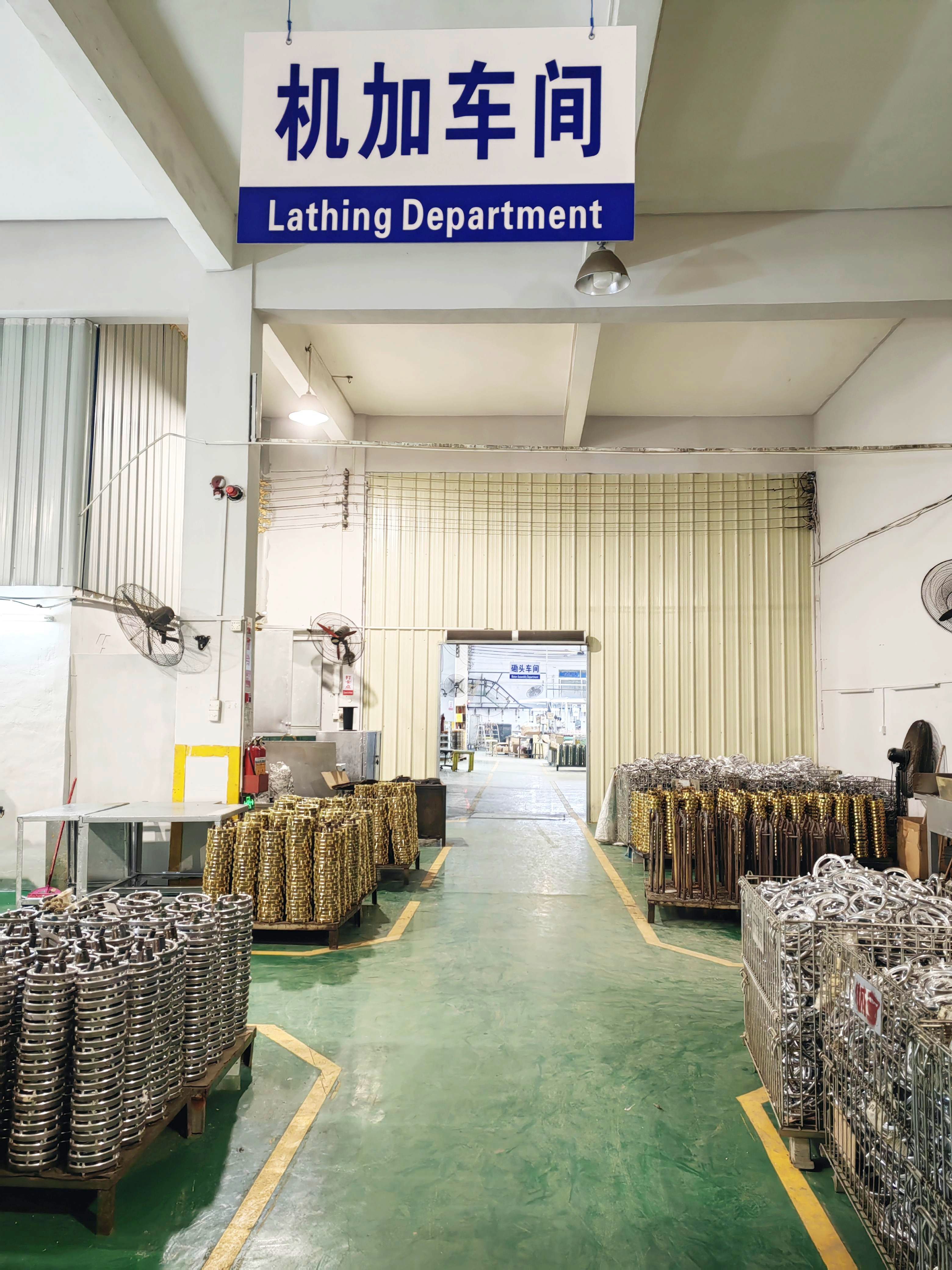
Handing Co. Ltd. exports 100% of its output to the EU, USA and Australia. The company states that it produces most of its metal parts, performs its own painting and assembles its own motors, and that it owns 100% of its electroplating factory — established so that electroplated parts are made in good quality, delivered on time and kept cost competitive. Read as a buyer, that single sentence describes three separate risk transfers.
| Handing Co. Ltd. at a glance | Detail |
|---|---|
| Establishment | 1992 |
| ISO 9001 (ceiling fan & lighting factory) | Certified 1996 |
| Facility size | 12,320.66 m² |
| Workforce | Approximately 350 staff |
| R&D team | 6 engineers |
| Annual capacity | 480,000 units |
| Export ratio / main markets | 100% — EU, USA, Australia |
| Electroplating | 100% owned factory |
| RoHS response | XFS screening machine and in-house chemical testing, approved by TUV PS in 2006 |
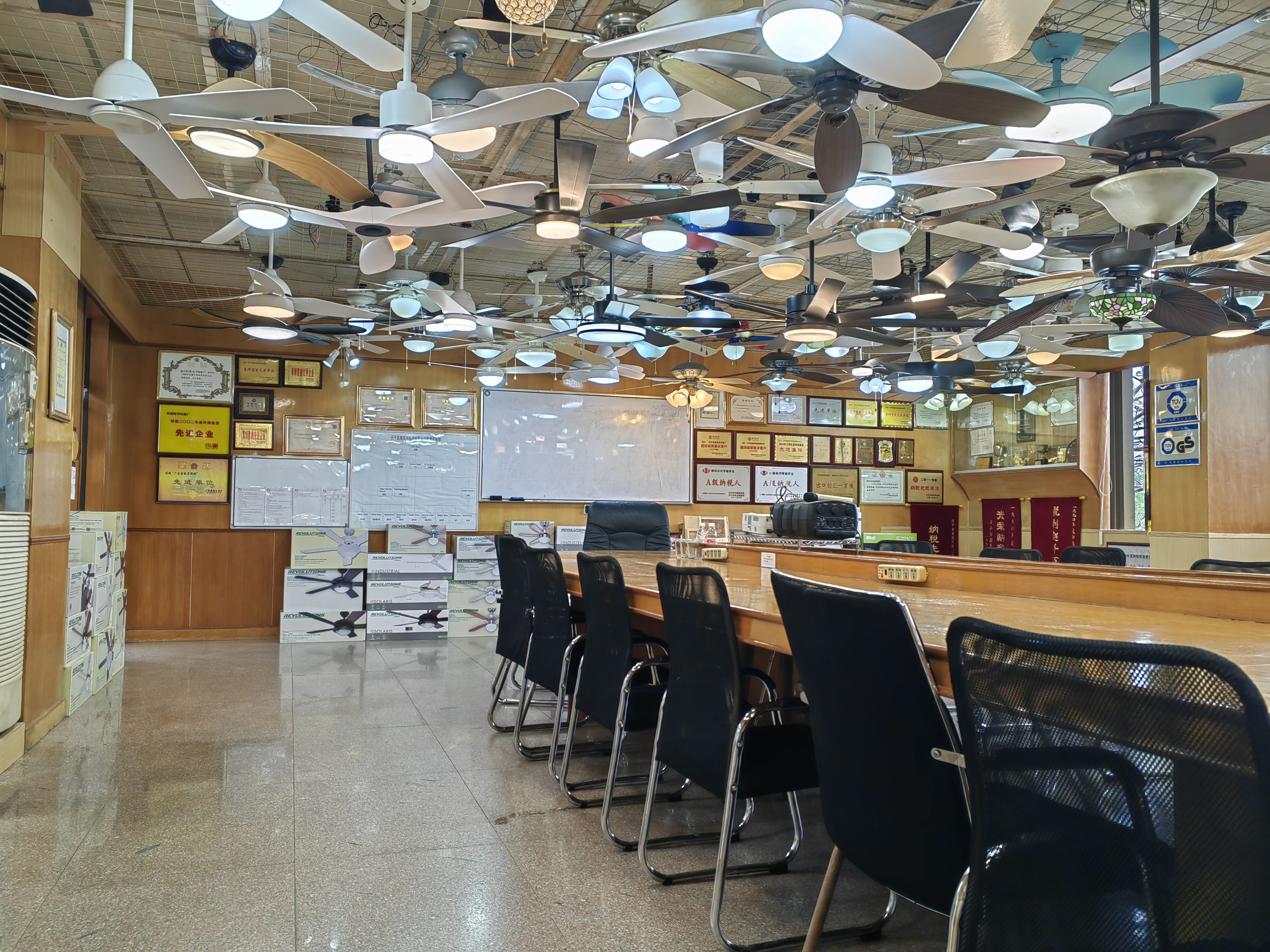
| Product listings | UL, cUL, NOM, BSI, CE, GS, Swedish Standard, SAA; European fans carry LVD/GS/TUV, EMC, EMF, RoHS and ERP |
Quality control: one process owner, one inspection gate
When plating is external, quality control becomes a negotiation between two companies with different schedules and different definitions of an acceptable part. When the line is owned, the plating parameters, the first-article approval and the rework decision sit with one team inside one quality system — the same system under which Handing's ceiling fan and lighting operations have been ISO 9001 certified since 1996.
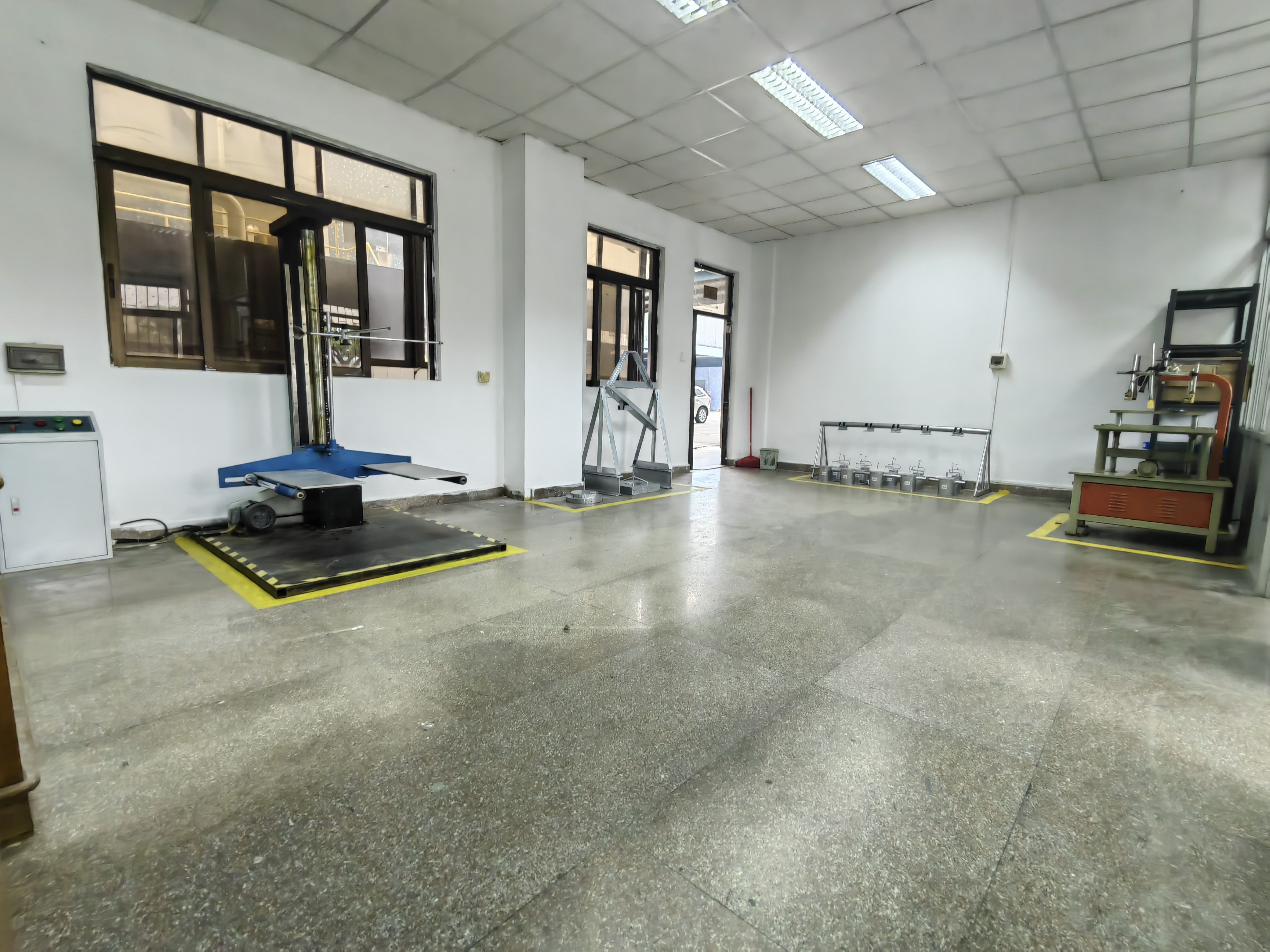
That matters most at the two points where plating problems are actually detected: incoming inspection and final assembly. A factory that plates in-house can hold a reference standard on site and compare every lot against it before the parts ever reach the assembly line. Handing's in-house chemical testing capability, set up in response to the EU RoHS regulation introduced in 2006 and approved by TUV PS in the same year, belongs to the same control loop.
Delivery reliability: the plating calendar sits inside the factory
Outsourced plating inserts a second production calendar between the metal press and final assembly. Every schedule change, every urgent re-run and every peak-season spike has to be negotiated with a supplier whose other customers are also waiting. An owned line lets the factory sequence plated parts against its own assembly plan instead.
Scale makes this concrete rather than theoretical. A 12,320.66 m² facility, approximately 350 staff and an annual capacity of 480,000 units only hold together if the finishing steps are scheduled with the same discipline as assembly. Handing's stated reason for owning the plating plant is exactly this: control of quality, delivery and cost at the same time.
Cost competitiveness: fewer margins stacked between process steps
An external plater prices its service with its own margin, its own scrap allowance and its own logistics. Every one of those elements is added to the fan's cost before the fan is even assembled. Bringing plating in-house converts that external margin into internal fixed cost, which changes the economics of a repeat program.
The advantage is structural at repeat volume and modest at low volume, where a specialized external plater can spread its own overhead across many customers. The honest comparison is therefore not quoted plating price versus internal cost — it is total landed cost, including rework, sorting, delay and the working capital tied up in a slower cycle.
Product Example: Where Finish, Motor and Control Interlock
The TU52-MW-N3A1DOME is a 52-inch decorative ceiling fan built around a DC motor, with a 24W CCT LED light kit and smart WiFi control. Its housing is steel, its three blades are ABS, the specified finish is Matt White, and the carton measures 720 (L) x 225 (W) x 350 (H) mm.
The model is useful in a plating discussion because it shows how many parameters have to stay fixed at the same time. A buyer approving this specification is approving a blade span, a motor platform, a light output and a colour temperature, a control protocol and a visible finish — and every one of those has to repeat identically on the next production run. Whether a decorative element is achieved by coating or by electroplating, the buyer's test is the same: does batch four match the approved sample?
Specification changes of this kind run through the company's 6-engineer R&D team, which translates a buyer's finish, blade, light and control requirements into a production specification that the plating and assembly stages can both work to.
Step-by-Step: Evaluating a Plated Decorative Fan Supply in Six Steps
The sequence below is designed for a Research-to-Evaluation stage buyer who has a shortlist and needs to separate suppliers on something more durable than a price list.
- List every plated component and its exposure. Housing elements, blade irons, decorative trim, fixing hardware and any exposed edge that will be handled during installation. Components the end user touches or sees at close range carry the highest finish risk.
- Ask who owns the plating line — and get the answer in writing. A manufacturer that owns 100% of its plating capacity answers differently from a trader that brokers the process. Ask for the factory address where plating happens, not the address of the sales office.
- Audit the inspection gate. Establish where a plated defect is detected: at the plating supplier, at goods-in, or at final assembly. Only the third answer becomes the buyer's problem, and only the first answer is genuinely preventive.
- Verify the compliance chain. Plating is one of the process steps where RoHS-restricted substances can enter a fan's metal parts. Ask which body approved the test method and when, and check that the compliance file covers the actual parts in the order — not the factory's product range in general.
- Stress the delivery calendar. Ask what happens to a plated batch in the two weeks before a peak-season shipment, and who absorbs the delay if a lot fails inspection. An internal plating line answers this question with a schedule; an outsourced one answers it with a negotiation.
- Compare total landed cost, not unit price. Add rework, sorting, expedited freight, duty and the cost of a missed retail window to the quoted price. This is the point where an in-house plated supply and an outsourced one usually stop looking equivalent.
Use Cases: Where the In-House vs Outsourced Decision Changes the Outcome
Retro and vintage finish programs for private label
A retro vintage ceiling fan range lives or dies on its metal finish. Here, colour matching across repeat orders matters more than the unit price of the plating step, because a mismatched replacement fan damages the retailer's brand before it damages the importer's margin. An owned line keeps the reference standard inside the same building as the assembly line that has to match it.
Hospitality and retail projects with fixed opening dates
Hotel refurbishments and retail fit-outs specify indoor ceiling fans against a handover date that cannot slip. In these projects a delayed plated part is not an inventory problem — it is a missed opening. Buyers in this category should weight delivery reliability above a marginal difference in plating cost.
Commercial grade and industrial programs at volume
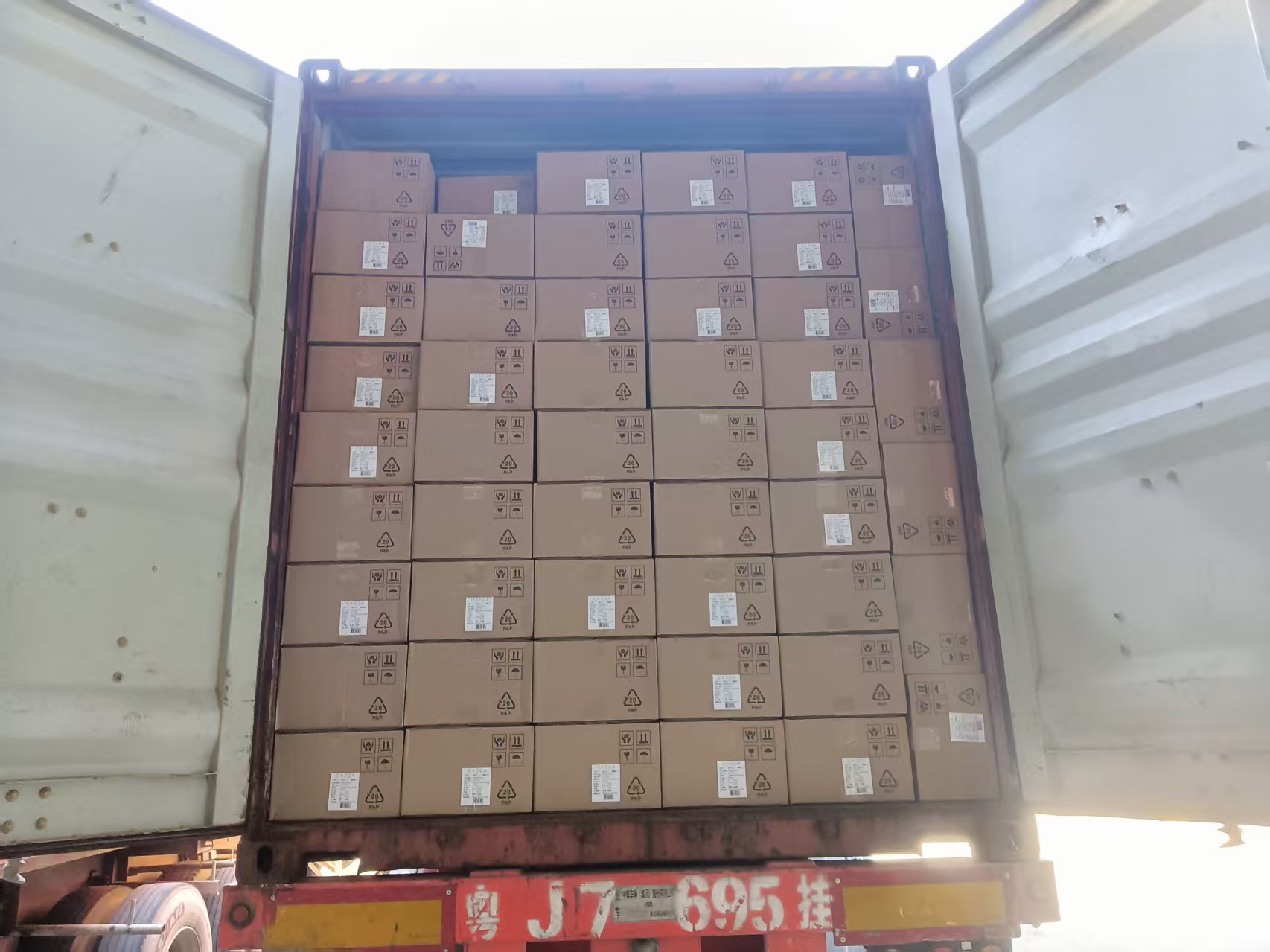
Commercial grade ceiling fan and industrial ceiling fan programs run at volumes where rework compounds quickly. A 480,000-unit annual capacity is only meaningful if the finishing stages can absorb the same throughput, which is the practical argument for finishing capacity sitting inside the same plant as assembly.
Outdoor and humid installations
ENERGY STAR guidance advises buyers to look for a UL-listed damp rating for fans used in humid locations, and a UL wet rating where fans are in direct contact with water. Corrosion behaviour of plated hardware is part of that specification conversation, and buyers should confirm the rating of the specific model rather than assume it from the product family. Where humidity is a design condition, plating quality moves from a cosmetic question to a durability question.
In-House vs Outsourced Electroplating: Side-by-Side
The comparison below isolates the dimensions that actually change a purchase order. It is a structural comparison, not a claim that one model is universally superior.
| Dimension | In-house plating (owned line) | Outsourced plating |
|---|---|---|
| Process ownership | Factory owns the plating line; one accountable party for finish defects | Third-party plater; accountability split between plater and fan factory |
| Parameter control | Plating parameters adjusted internally against the approved finish | Parameters set by the plater's own process; the fan factory can specify but not adjust |
| Inspection gate | Defects caught inside one quality system (ISO 9001 certified since 1996 at Handing) | Defects may surface only at goods-in or at final assembly |
| Rework loop | Returns to an internal step within the same production schedule | Re-enters an external queue behind other customers |
| Peak-season scheduling | Plated parts sequenced against the factory's own assembly plan | Priority depends on the plater's order book |
| Cost structure | Fixed cost carried internally; external plating margin removed from the part | Lower entry cost at low volume; margin, scrap and logistics added per part |
| Compliance documentation | Test and process records generated inside the same quality system | Documentation handoff between two companies |
| Colour consistency across lots | Reference standard held on site and checked lot by lot | Consistency depends on the plater's control across separate runs |
| Best fit | Repeat programs, dated projects, decorative and retro finishes | One-off orders, standard finishes, very low volume |
Frequently Asked Questions
Does outsourced electroplating affect RoHS or certification compliance for a decorative ceiling fan?
Plating is one of the process steps where RoHS-restricted substances can enter a fan's metal parts, so the compliance file has to cover the plated components specifically. Handing Co. Ltd. set up an XFS screening machine and in-house chemical testing in response to the EU RoHS regulation introduced in 2006, and this capability was approved by TUV PS in the same year. European fans carry LVD/GS/TUV, EMC, EMF, RoHS and ERP, and the company's products are listed in UL, cUL, NOM, BSI, CE, GS, Swedish Standard and SAA. When plating is outsourced, the buyer inherits a documentation handoff: the plater's process records and material declarations must reach the fan factory's compliance file, and any gap becomes the buyer's exposure at customs or at retail audit.
How can a buyer verify plating capability when a supplier outsources plating?
Ask three questions and require written answers. First, which legal entity owns the plating line, and where is it physically located. Second, where are plated defects detected — at the plating supplier, at goods-in, or at final assembly. Third, which body approved the chemical test method and when. A supplier that owns 100% of its plating capacity can answer all three from inside one quality system; a supplier that outsources will usually answer the first question with a trading relationship rather than a process.
Is in-house electroplating always cheaper than outsourcing?
No. At low volumes, or for unusual finishes, a specialized external plater may quote a lower cost per part because it spreads its overhead across many customers, and the fan factory avoids carrying the fixed cost of a plating line. The in-house advantage appears in total landed cost on repeat programs: rework, sorting, delay and the external supplier's margin are all removed from the chain. The correct decision rule is to compare landed cost at realistic order volume, not unit price at sample quantity.
Can buyers validate a plated finish on a sample before committing to production?
A finish decision is a physical decision and should be made on a physical sample. Buyers should approve a plated or coated finish against a retained reference standard, and confirm in writing that the same standard will be applied to every subsequent lot. Handing Co. Ltd. maintains a sample room for product and finish review, and accepts sample and quotation requests through sales@handingfan.com or WhatsApp at +852 92839029. The company's factory presentation can be downloaded here: Handing factory presentation (PDF).
How does plating integration affect lead time and repeat-order reliability?
Plating sits between metal-parts production and final assembly, so it consumes time in the critical path either way. The difference is who controls that time. With an owned line, plating can be scheduled against the factory's own assembly plan and re-run without renegotiating a third-party queue; with outsourced plating, lead time includes the plater's order book and any logistics between the two sites. For repeat orders, the reliability question is not the first lead time but the fourth — whether the same interval holds when the factory is busy.
Conclusion: Match the Plating Model to the Risk You Are Carrying
In-house plating is not automatically better. It is differently structured: it trades an external supplier's margin and an uncontrolled queue for fixed cost and internal scheduling discipline. For a buyer running a decorative program where finish consistency and shipment dates carry commercial weight, that trade removes two of the three failure modes described at the start of this article. For a one-off order in a standard finish, an outsourced plater can be the more economical route.
Handing Co. Ltd. sits on the integrated side of that line. Founded in 1992, ISO 9001 certified since 1996, operating a 12,320.66 m² facility with approximately 350 staff, a 6-engineer R&D team and an annual capacity of 480,000 units, the company produces most of its metal parts, does its own painting, assembles its own motors and owns 100% of its electroplating factory. For buyers evaluating a 52-inch DC ceiling fan with light and smart WiFi control such as the TU52-MW-N3A1DOME, that means the finish specification and the assembly schedule answer to the same management.
Next step: request a sample, a quotation, or the factory presentation before you shortlist. Contact Handing Co. Ltd. at sales@handingfan.com, WhatsApp +852 92839029, or visit www.handingfan.com. Factory address: No.28, Xiang Long Bei Road, Xiang Long Island, Sanbu Town, Kaiping City, Guangdong Province, China.
Have Questions or Need More Details?
Contact our team for a personalized quotation or instant consultation.
Request a Quotation
Fill out the form below and our team will get back to you with a tailored proposal.
WhatsApp Direct Chat
Prefer to chat in real-time? Message us on WhatsApp for instant assistance & quick answers.
- Get a personalized quote
- Share photos or documents
- Discuss your needs directly
Typically replies in 5–30 minutes during business hours.