Indoor Ceiling Fan Solutions for Commercial Spaces: Durability and Style Combined
Indoor Ceiling Fan Solutions for Commercial Spaces: Durability and Style Combined
Air movement is no longer an afterthought in commercial interiors. Offices, hotel lobbies, restaurants, clinics, and retail floors depend on continuous, quiet air circulation that keeps occupants comfortable without the noise and visual clutter of exposed HVAC equipment. In these spaces an indoor ceiling fan has to do two jobs at once: it must perform like commercial equipment, and it must read as part of the interior design.
This application guide explains how to evaluate indoor ceiling fans for commercial indoor spaces, what "commercial grade" actually signals in a specification, and where a 52-inch decorative model fits within medium and large rooms. Handing Co. Ltd. is a decorative ceiling fan manufacturer established in 1992 and based at No.28, Xiang Long Bei Road, Kaiping City, Guangdong, China, whose production is exported entirely to international markets.
Problem Definition: Why Residential Fans Fall Short in Commercial Interiors
Commercial indoor environments rarely fail for lack of somewhere to mount a fan. They fail because the fan that was installed was designed for a different job. A fixture chosen for a spare bedroom usually assumes intermittent use, a single decorative style, and a mounting environment where the fan is the loudest object in the room. A lobby, a dining floor, or an open-plan office assumes the opposite: long operating hours, a design language that must survive a full interior concept, and a background noise ceiling that cannot be compromised.
Three friction points repeat across commercial projects:
- Durability under continuous use. Housings, blade materials, and motors are the parts that decide whether a fan still runs quietly after years of daily operation. Light-gauge housings and general-purpose blades are a weak point in high-traffic interiors.
- Compliance with destination-market requirements. A fan specified for a hotel or office is an installed electrical product, not a consumer accessory. It may need to satisfy safety and efficiency expectations set by the destination market before it can be signed off by an electrical contractor.
- Style that survives a design review. Designers and facility managers evaluate the fan against the ceiling, the lighting scheme, and the room's palette. Oversized industrial forms or high-gloss finishes frequently fail that review even when they are technically capable.
The practical problem, therefore, is a trade-off: most products are positioned as either durable or decorative. Commercial indoor projects need a specification where the two are not in conflict — a housing built for daily use, paired with a finish and light output that a designer will accept.
Industry Background: A Growing Commercial Indoor Segment
Ceiling fans are a mature global category, but the demand pattern behind them continues to shift toward commercial and project-based purchasing. Grand View Research estimated the global ceiling fans market at USD 14.24 billion in 2023, with a projection to reach USD 19.92 billion by 2030 at a CAGR of 5.0% from 2024 to 2030. The same source reported that Asia Pacific held the largest revenue share of the category at 44.85% in 2023, driven by demand in India and China.
Supply concentration matters to buyers planning commercial rollouts. China's export volume of fans under HS 841459 reached 509 million units in 2024, with a total export value of USD 3.788 billion, a 6.96% increase over the previous year, according to China Customs data compiled by TradeDaas. Product-mix data from Grand View Research also shows that standard ceiling fans accounted for a dominant 63.66% revenue share of the global market in 2023 — the same broad family of products that most commercial interiors specify.
Alongside market growth, the compliance picture for installed fans has been tightening. In the United States, UL 507, the safety standard for electric fans, was updated with a new version effective November 27, 2024, which specifically added secondary thermal or current fuse requirements for fans installed in unattended areas. In the European Union, EN IEC 60335-2-80:2024 establishes safety requirements for household fans, including ceiling fans, with rated voltages up to 250 V for single-phase equipment. On the efficiency side, ENERGY STAR certified ceiling fans are required to be up to 44% more efficient than conventional fans.
What this means for buyers: the commercial indoor ceiling fan decision is no longer only about airflow and looks. It is a documentable specification covering housing construction, motor type, control interface, light output, and the safety and efficiency framework of the destination market.
Detailed Solution: The TU52-MW-N3A1DOME as a Commercial Indoor Fan
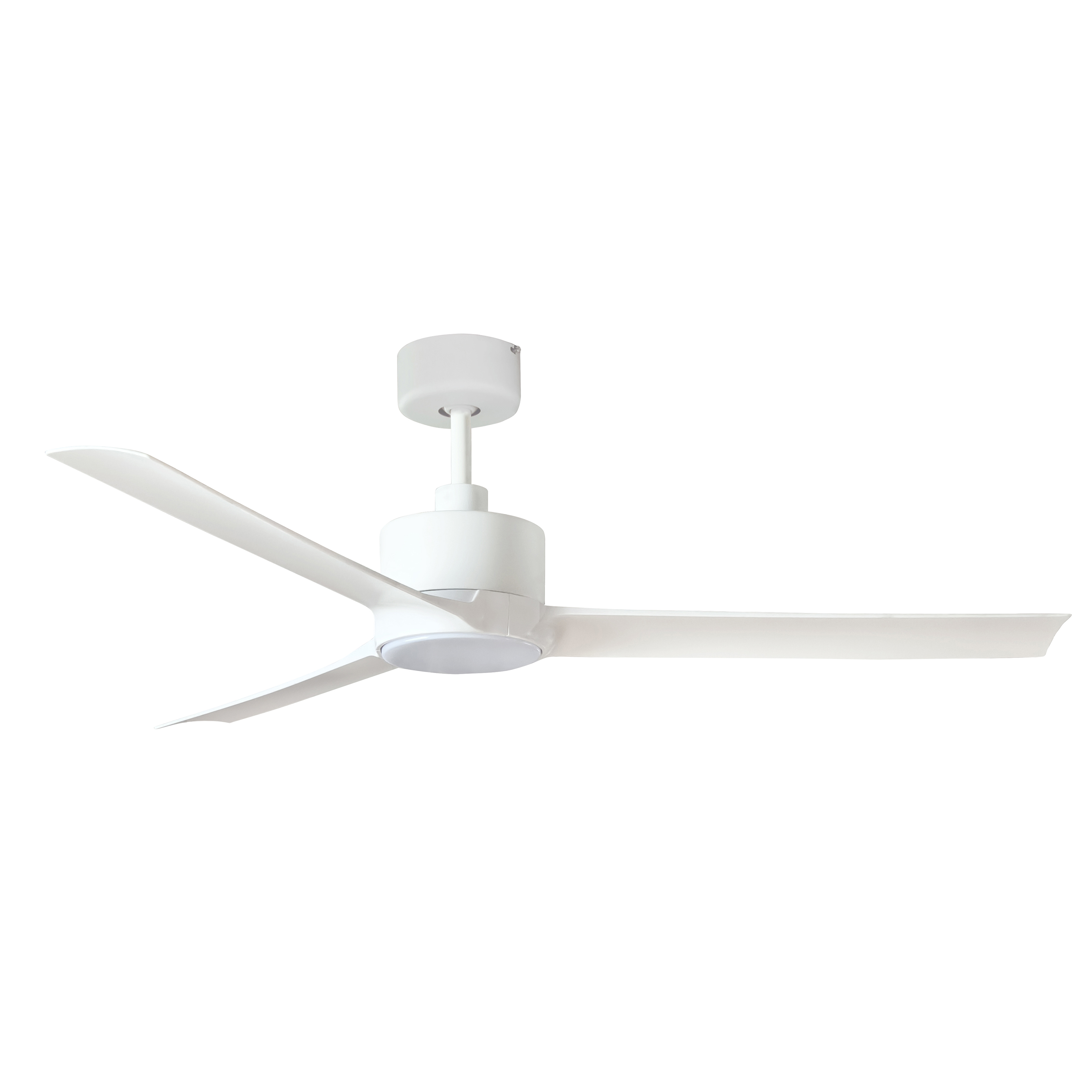
The Handing TU52-MW-N3A1DOME is an indoor decorative ceiling fan with an integrated light and smart WiFi control. It is classified as a commercial-grade product and is intended for indoor use in both household and commercial settings. That combination is the reason it sits close to the center of the commercial interior brief: the product is decorative in finish, commercial in classification.
Its construction is the part that answers the durability question. The fan uses a steel housing with three ABS blades, a Matt White finish, and a 52-inch blade span. It is driven by a DC motor and includes a 24W CCT LED light kit. Packed dimensions are 720 (L) x 225 (W) x 350 (H) mm, a footprint that matters when a project is planned around container loading and site staging rather than single-unit retail.
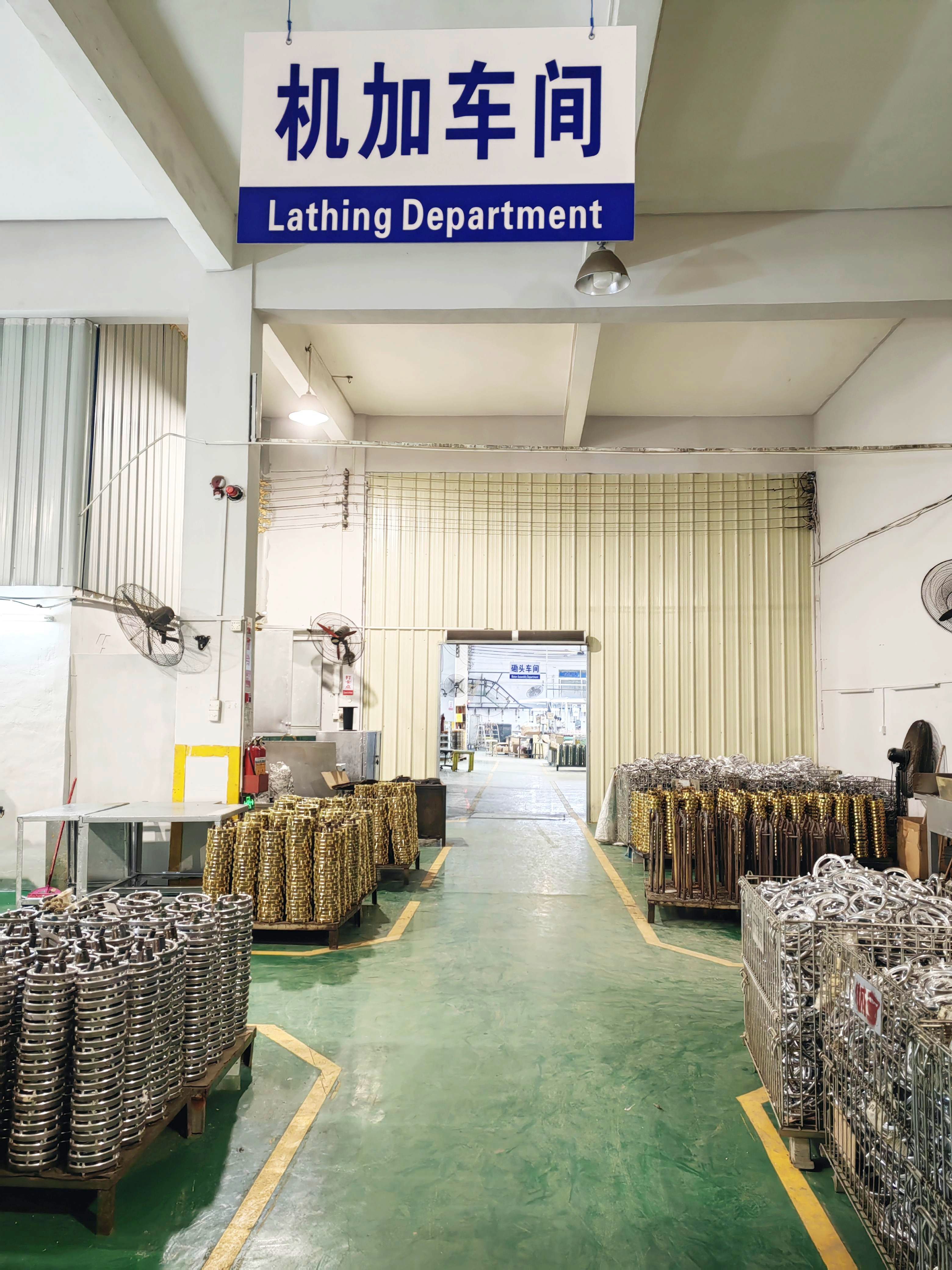
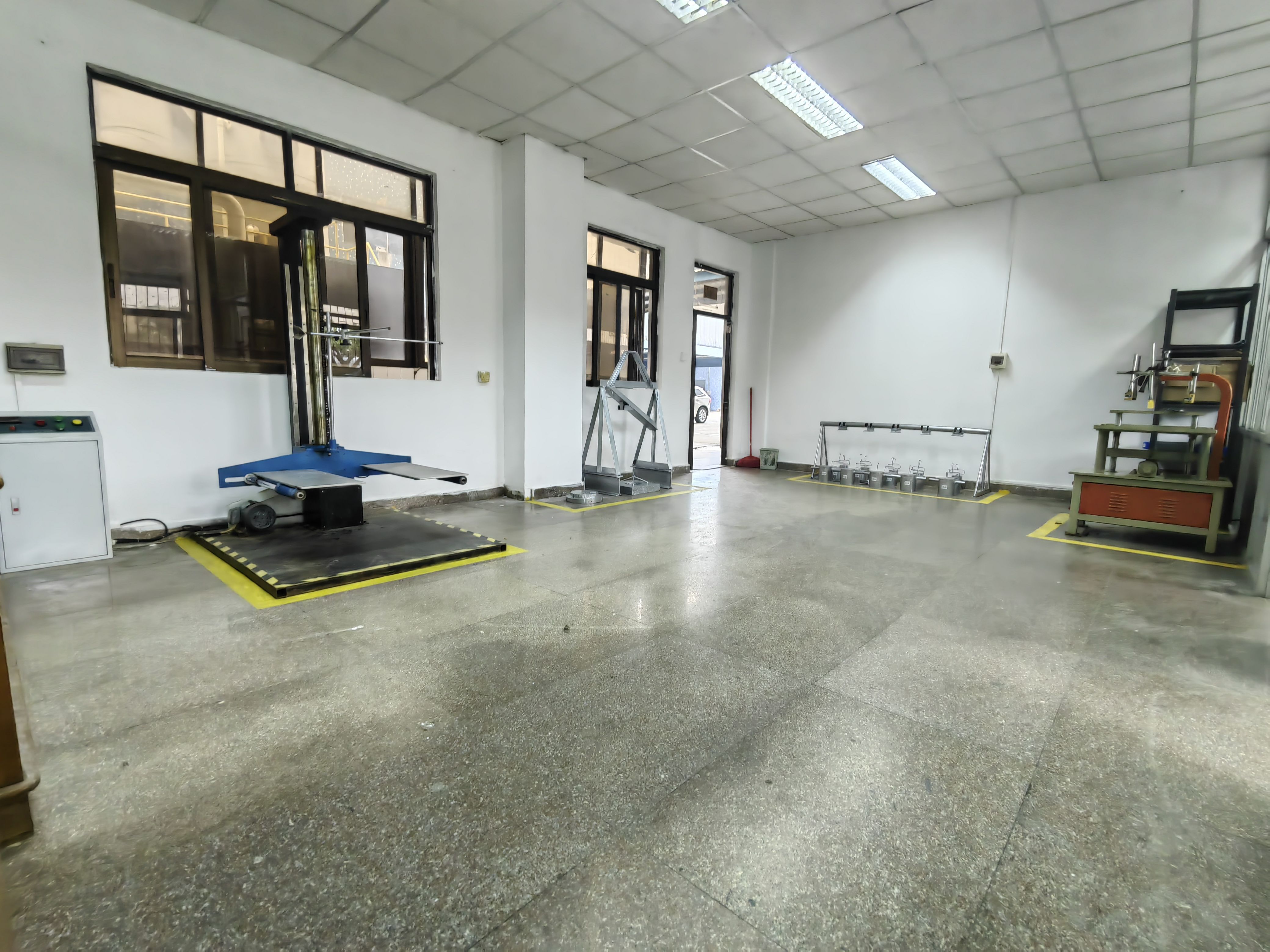
Handing's manufacturing base supports that specification. The facility covers 12,320.66 square meters and employs approximately 350 staff, with an annual production capacity of 480,000 units and an R&D team of 6 engineers. The company was established in 1992, giving it over 30 years of experience in decorative ceiling fan manufacturing, and its ceiling fan and lighting factory obtained ISO9001 certification in 1996. Handing also owns a 100% electroplating factory, which is used to keep plated finishes consistent in quality and delivery.
For international projects, the export profile removes a common source of risk during supplier qualification. Handing's export business accounts for 100% of total sales, with major markets including the EU, the USA, and Australia. Its products are listed in UL, cUL, Nom, BSI, CE, GS, Swedish Standard, and SAA. Since Europe implemented the RoHS regulation in 2006, the company has operated XFS and chemical testing equipment for product verification, and its European fans carry LVD/GS/TUV, EMC, EMF, RoHS, and ERP approvals.
Step-by-Step Breakdown: Specifying an Indoor Ceiling Fan for a Commercial Space
The following sequence reflects the order in which commercial interior decisions usually become fixed. Working in this order prevents late-stage changes that force a project back into sourcing.
Step 1 — Fix the room size and required blade span
Blade span is the first constraint because it determines how many units the plan requires and how the design reads from below. A 52-inch span, as used on the TU52-MW-N3A1DOME, is intended for medium to large rooms, which covers most open offices, restaurant floors, and hospitality public areas. Record the ceiling height and the intended mounting position before comparing models.
Step 2 — Choose the motor type
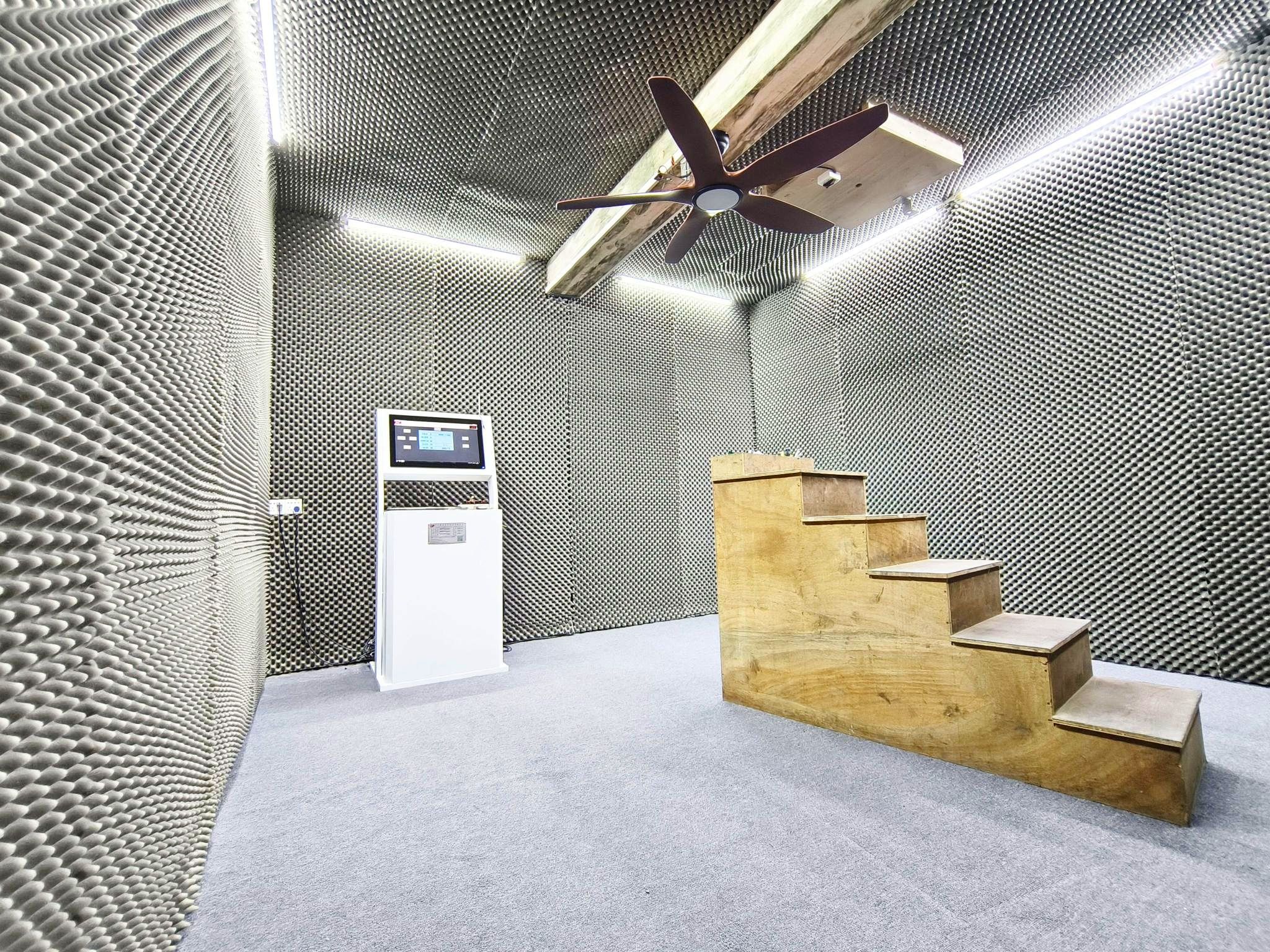
A DC motor is the specification point that most affects how the fan behaves in daily use across a commercial floor. DC-driven models such as the TU52-MW-N3A1DOME are typically selected where smooth speed control and quiet background operation matter. Confirm the motor type in writing, because it is often the first item substituted when a specification is value-engineered.
Step 3 — Decide the light requirement
Commercial interiors rarely need the fan to be the primary light source, but integrated lighting is often useful for layered illumination. The TU52-MW-N3A1DOME uses a 24W CCT LED light kit, which allows the color temperature to be matched to the surrounding scheme. If the project already has full ceiling lighting, the light kit requirement should be confirmed with the designer rather than assumed.
Step 4 — Select the control interface
Control is where commercial installations diverge most. Smart WiFi control, as provided on the TU52-MW-N3A1DOME, supports centralised operation across multiple units, which suits hospitality and office environments. Pull chain controlled fans remain relevant for simple installations, but for multi-unit commercial floors the control method should be decided before the electrical layout is finalised.
Step 5 — Verify compliance for the destination market
Match the certification list to the country of installation. For the United States, UL 507 and its November 27, 2024 revision add secondary thermal or current fuse requirements for fans in unattended areas. For the European Union, EN IEC 60335-2-80:2024 sets the safety framework for fans rated up to 250 V single-phase. Handing's products are listed in UL, cUL, Nom, BSI, CE, GS, Swedish Standard, and SAA, covering its EU, USA, and Australia markets.
Step 6 — Confirm housing and blade materials
For commercial interiors, the housing is the durability anchor. A steel housing with ABS blades, as used on the TU52-MW-N3A1DOME, gives the specification a defined material baseline that can be referenced in a purchase order. Handing's in-house metal parts production and 100% owned electroplating factory support consistency across repeat orders on the same finish.
Step 7 — Plan installation, staging, and after-sales
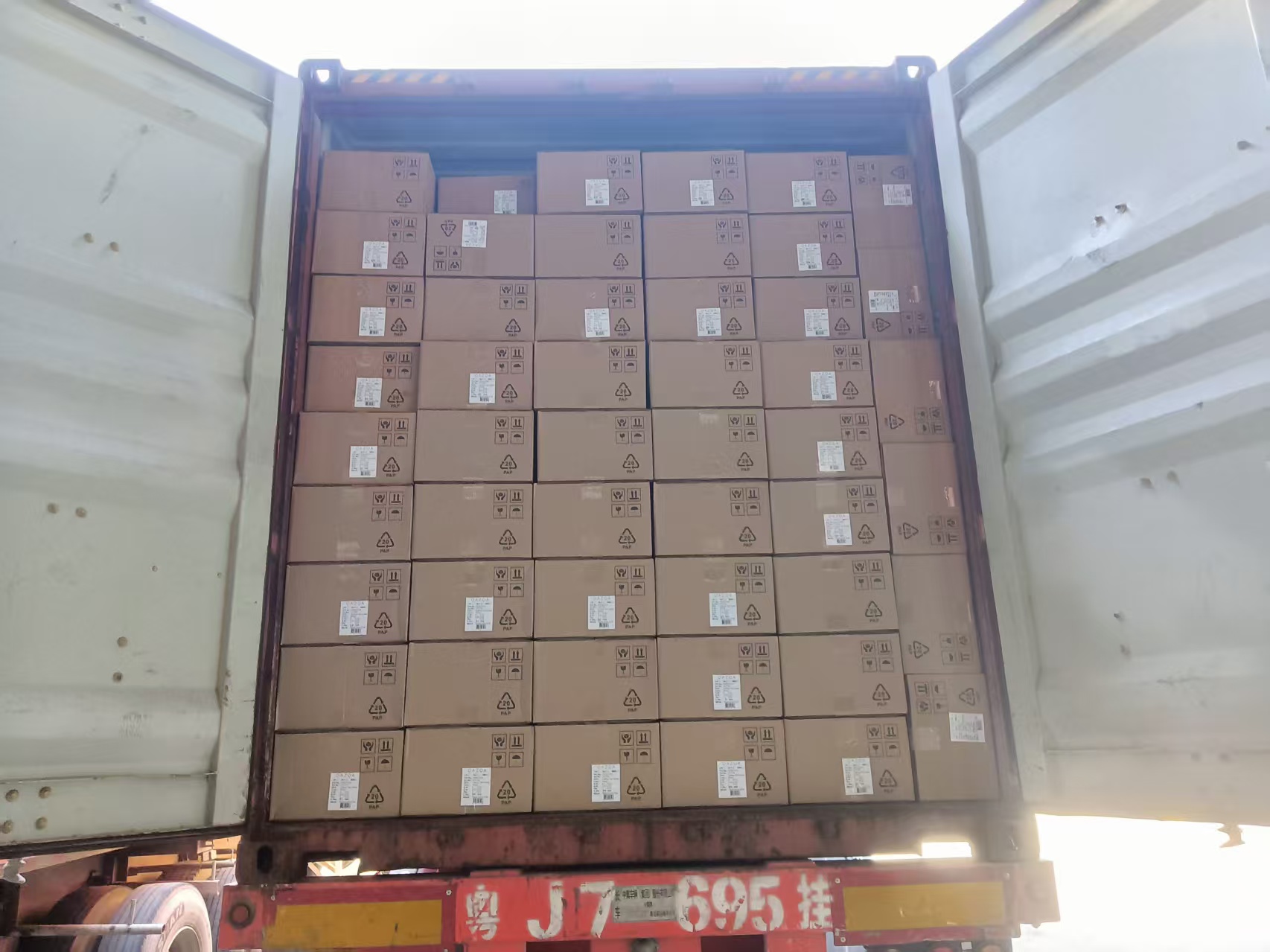
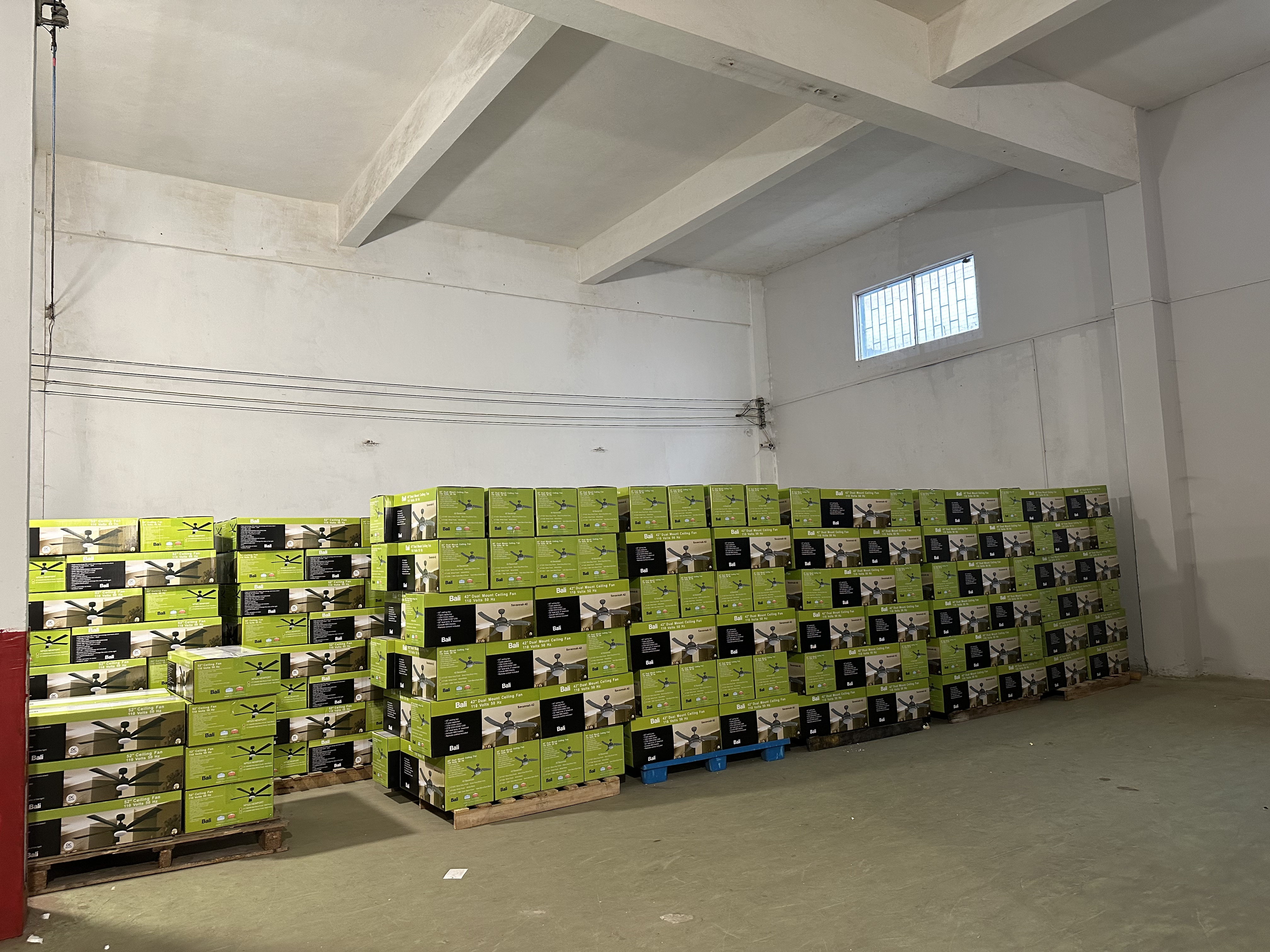
Finally, confirm the packaging and shipping profile against the site plan. With a box size of 720 (L) x 225 (W) x 350 (H) mm, the TU52-MW-N3A1DOME's staging and container planning can be calculated early. Handing's facility, staff and production capacity of 480,000 units annually are relevant here — they determine whether a multi-site rollout can be scheduled as one programme or must be staged.
Use Cases: Where Commercial Indoor Ceiling Fans Fit
Offices and open-plan workspaces
Open offices need gentle, distributed air movement that does not create drafts at desk level and does not add to the background noise of printers and conversation. The 52-inch span of the TU52-MW-N3A1DOME suits medium to large open areas, and the Matt White finish keeps the fan visually quiet against a standard ceiling grid.
Hotels, resorts, and hospitality venues
Hospitality interiors are the clearest example of the durability-versus-style trade-off. Lobbies, lounges, and guest rooms are judged by appearance but operated continuously. A commercial-grade indoor decorative fan with an integrated CCT LED light kit allows one product family to serve public areas and guest rooms without splitting the specification.
Restaurants, cafés, and bars
Dining spaces often combine decorative ceilings with high occupancy and long service hours. Air movement helps manage temperature stratification near tall ceilings. Because the TU52-MW-N3A1DOME is classified for indoor household and commercial use, the same model can be applied across the front of house without reclassifying the specification for commercial duty.
Retail floors and showrooms
Retail environments need uniform air movement without distracting customers. Smart WiFi control allows a group of fans to be operated as one system, which is simpler for store teams than managing individual pull chains. The decorative classification also means the fan can be incorporated into a brand-led ceiling design rather than hidden.
Comparison Table: Reading the TU52-MW-N3A1DOME's Classifications
The product carries several classifications, and each one answers a different question a commercial buyer will ask during evaluation. The table below maps each classification to its practical meaning for an indoor commercial project, using only the confirmed specification.
| Classification | What it means for a commercial indoor project | TU52-MW-N3A1DOME specification |
|---|---|---|
| Indoor decorative ceiling fan | Intended for interior installation, with a finish selected for design-visible ceilings rather than exposed industrial settings. | Matt White finish, 52-inch TU housing |
| Ceiling fan with light | Provides integrated illumination that can be layered with other ceiling lighting. | 24W CCT LED light kit |
| Commercial-grade ceiling fan | Classified for commercial as well as household applications, supporting use in offices, hospitality, and retail interiors. | Steel housing with ABS blades; suitable for household and commercial industries |
| Smart WiFi ceiling fan | Supports centralised control across multiple units on one floor or site. | Smart WiFi control |
| 52-inch ceiling fan | Span intended for medium to large rooms. | 3 x ABS blades, 52-inch span, DC motor |
Specification summary
| Specification item | Detail |
|---|---|
| Model | TU52-MW-N3A1DOME |
| Housing | 52" TU housing, DC motor |
| Finish | Matt White |
| Blades | 3 x ABS |
| Light kit | 24W CCT LED light kit |
| Material | Steel housing + ABS blade |
| Box size | 720 (L) x 225 (W) x 350 (H) mm |
| Applicable industries | Household, Commercial |
Frequently Asked Questions
What certifications should a commercial indoor ceiling fan carry?
Certification depends on the destination market, so the answer is a list matched to the country of installation rather than a single label. For the United States, UL 507 is the safety standard for electric fans; a new version effective November 27, 2024 added secondary thermal or current fuse requirements for fans installed in unattended areas. For the European Union, EN IEC 60335-2-80:2024 sets safety requirements for household fans including ceiling fans rated up to 250 V single-phase. Handing's ceiling fans are listed in UL, cUL, Nom, BSI, CE, GS, Swedish Standard, and SAA, and its European fans carry LVD/GS/TUV, EMC, EMF, RoHS, and ERP approvals. Buyers should confirm which of these apply to their specific destination before finalising a purchase order.
What motor, light, and control features does the TU52-MW-N3A1DOME use?
The TU52-MW-N3A1DOME is powered by a DC motor and includes a 24W CCT LED light kit. It uses three ABS blades on a 52-inch span, housed in a steel housing with a Matt White finish, and is operated through smart WiFi control. It is classified as a commercial-grade indoor decorative ceiling fan with light and is intended for indoor use in both household and commercial settings.
Is a 52-inch ceiling fan suitable for offices and hotel spaces?
A 52-inch blade span is intended for medium to large rooms, which is the size range that covers most open offices, restaurant floors, hotel lounges, and retail interiors. The TU52-MW-N3A1DOME combines that span with a commercial-grade classification and an indoor decorative finish, so the same model can be used in visible public areas without separating the decorative and commercial parts of the specification.
Can Handing support commercial ceiling fan projects outside China?
Handing Co. Ltd. was established in 1992 and exports 100% of its sales, with major markets including the EU, the USA, and Australia. Its ceiling fan and lighting factory obtained ISO9001 certification in 1996, and the company owns a 100% electroplating factory to support finish quality and delivery. The facility covers 12,320.66 square meters with approximately 350 staff and an annual production capacity of 480,000 units, supported by an R&D team of 6 engineers.
How can a buyer request a sample or a quotation for a commercial project?
Project evaluations usually start with a sample and a specification review rather than a purchase order. Handing can be contacted by email at sales@handingfan.com or by phone and WhatsApp at +852 92839029 for sample requests, quotation, and certification documents relevant to the destination market. A downloadable factory presentation covering the manufacturing facility and product range is available here: Handing factory presentation (PDF).
Conclusion: Durability and Style Are a Single Specification
Commercial indoor ceiling fan selection works best when durability and style are treated as one specification rather than two competing priorities. The durability side is measurable: housing material, blade material, motor type, and certification coverage against the destination market's requirements. The style side is equally definable: finish, blade span relative to the room, and whether integrated lighting can be layered into the existing design.
The TU52-MW-N3A1DOME answers both sides within a single model — a steel housing with ABS blades, a DC motor, a 24W CCT LED light kit, smart WiFi control, and a 52-inch span in a Matt White finish, classified for commercial as well as household indoor use. Combined with Handing's 1992 founding, ISO9001 certification since 1996, in-house metal parts production, and 100% export focus on the EU, USA, and Australia, it provides a specifiable starting point for offices, hotels, restaurants, and retail interiors.
Planning a commercial indoor ceiling fan rollout?
Request a sample, a project quotation, or the certification documents for your destination market.
Email: sales@handingfan.com | Phone / WhatsApp: +852 92839029 | www.handingfan.com