Matching Ceiling Fans to Project Environments: A Scenario-Based Guide
Matching Ceiling Fans to Project Environments: A Scenario-Based Guide
For project buyers, a ceiling fan is selected by environment, compliance, dimensions, motor type, light output, and control method. The starting point is to translate the project into a clear specification. This guide explains how to do that for indoor residential and commercial spaces, using the Handing Co. Ltd. TU52-MW-N3A1DOME as a verified example of a 52-inch indoor DC ceiling fan with an integrated 24W CCT LED light kit and smart WiFi capability.
Why Project Context Changes Ceiling Fan Selection
Ceiling fan problems usually appear after installation, not during the drawing review. A fan with the wrong certification may be rejected at customs; a fan with the wrong blade material may look out of place; a fan with a weak light kit may not meet the functional brief. The goal of scenario-based selection is to prevent those mismatches before a purchase order is placed.
A project specification should answer five questions:
- Where will the fan be installed?
- Which safety certifications are required for the destination market?
- What size and motor characteristics fit the room?
- Is a light kit or smart control needed?
- Can the manufacturer provide evidence of repeatable quality?
Ceiling Fan Market Context for Project Buyers
Grand View Research estimates the global ceiling fan market at USD 14.24 billion in 2023, with a projected value of USD 19.92 billion by 2030 at a CAGR of 5.0% from 2024 to 2030. Asia Pacific held the largest regional revenue share at 44.85% in 2023, and standard ceiling fans accounted for 63.66% of global product revenue in the same year. This data shows that although project needs vary, most ceiling fan demand is still satisfied by conventional fan formats.
For buyers sourcing from China, customs data cited by TradeDaas shows that China exported 509 million fans under HS 841459 in 2024, with a total value of USD 3.788 billion, an increase of 6.96% over the previous year. Export volume alone does not prove quality, so a project buyer should evaluate the factory's products, compliance records, and manufacturing process.
Two standards are especially relevant for 2024-2026 project planning. In the United States, UL 507 was updated with a new version effective November 27, 2024, adding secondary thermal or current fuse requirements for fans in unattended areas. In Europe, EN IEC 60335-2-80:2024 sets safety requirements for household fans, including ceiling fans, for single-phase rated voltages up to 250V. In energy-conscious projects, ENERGY STAR certified ceiling fans are required to be up to 44% more efficient than conventional fans, and the 2024 Most Efficient criteria for standard fans require efficiency of at least 3.25D + 107 CFM/W.
Using a Verified Ceiling Fan as a Project Reference
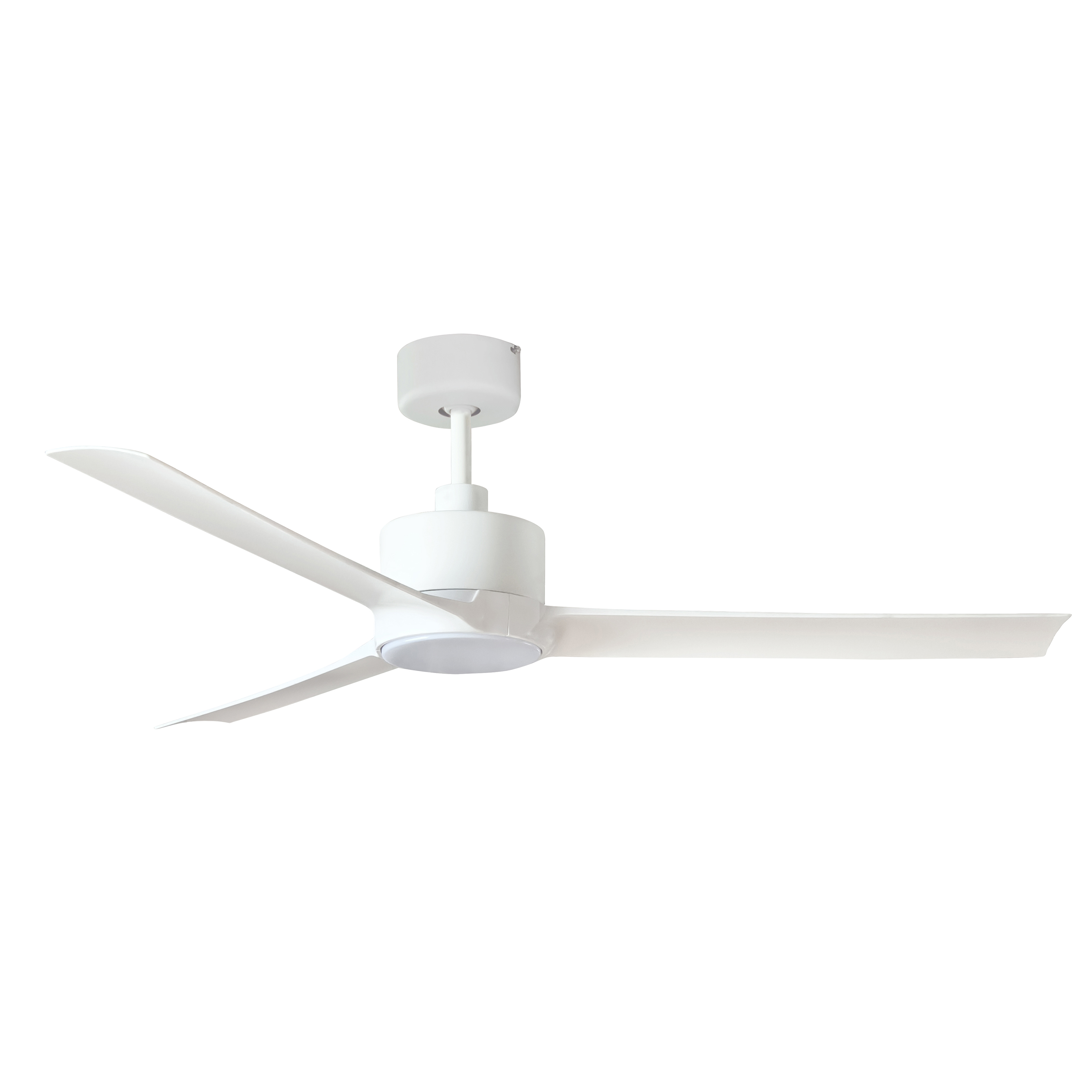
To make project evaluation concrete, a single model can be used as a baseline. The Handing TU52-MW-N3A1DOME is a 52-inch indoor decorative ceiling fan with a DC motor, matt white finish, three ABS blades, and a 24W CCT LED light kit. It is classified for household and commercial use and is described in the product record as a decorative ceiling fan, ceiling fan with light, commercial grade ceiling fan, smart WiFi ceiling fan, and 52-inch ceiling fan.
Key verified specifications:
- Item number: TU52-MW-N3A1DOME
- Housing: 52-inch TU housing with DC motor
- Finish: matt white
- Blades: 3 ABS blades
- Light kit: 24W CCT LED light kit
- Materials: steel housing and ABS blade
- Packaging size: 720 (L) x 225 (W) x 350 (H) mm
- Applicable industries: household, commercial
For a project buyer, these specifications become acceptance criteria. The steel housing can be checked against the interior finish; the ABS blades can be evaluated for visual consistency and impact resistance; the 24W CCT LED kit can be compared with the lighting design; and the 52-inch diameter can be mapped to the room size. The DC motor is another decision point because DC fans are widely used in modern projects for energy-efficient operation and lower running noise.
Manufacturing Evidence for Project-Level Quality
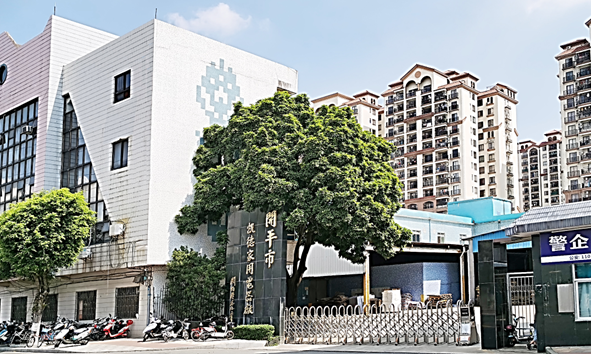
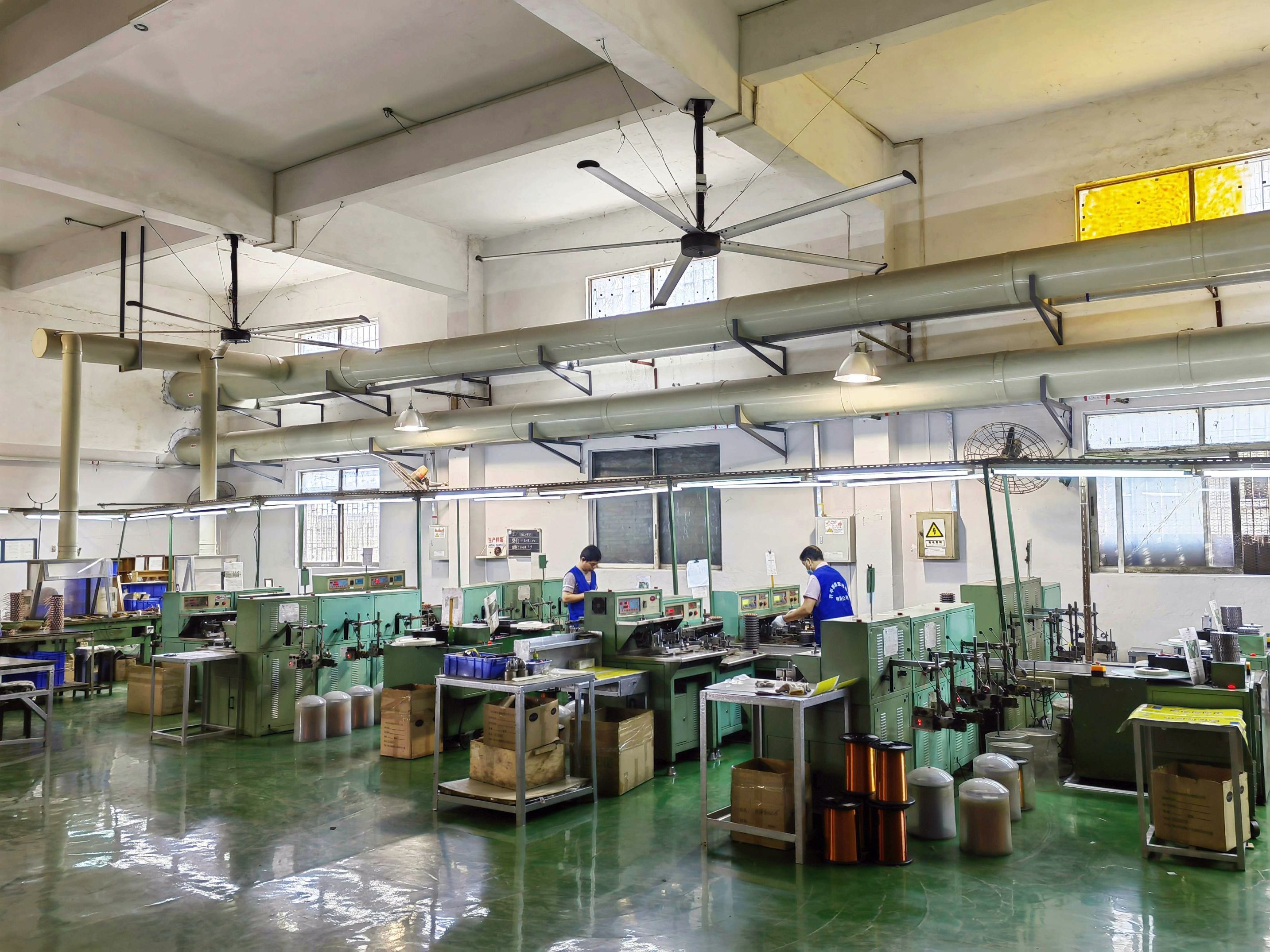
Handing Co. Ltd. was established in 1992 and operates a factory of 12320.66 square meters with 350 employees. Its ceiling fan and lighting factory received ISO9001 certification in 1996. The company produces most of its metal parts, performs painting in-house, assembles motors in-house, and fully owns an electroplating factory. These facts matter because project sourcing is a supply-chain decision: the manufacturer should control the processes that affect finish, coating consistency, and motor assembly.
The company also exports 100% of its ceiling fans, with the main markets being the EU, USA, and Australia. Its products are listed under UL, cUL, Nom, BSI, CE, GS, Swedish Standard, and SAA. For European projects, Handing has set up XFS and chemical testing for RoHS compliance, and the factory was approved by TUV PS for these tests in the same year that it adopted the RoHS response. European fan models have LVD/GS/TUV, EMC, EMF, RoHS, and ERP approvals. The R&D team includes six engineers, which gives buyers a defined resource for custom project evaluation.
Step-by-Step: Building a Ceiling Fan Specification for a Project
The following steps turn a project brief into a supplier-ready ceiling fan specification.
Step 1: Define the room type and operating environment
State whether the ceiling fan will be used in a household or commercial setting, and whether it will be installed indoors or in a location with outdoor exposure. The TU52-MW-N3A1DOME is an indoor model, so it should be used for enclosed spaces unless a separate outdoor-rated model is specified.
Step 2: Confirm destination-market certification requirements
Match the fan model to the certification required by the destination. For the United States and Canada, check UL or cUL listing. For Europe, check CE and related EU directives. For Australia, check SAA. For Mexico, check Nom. This step should be completed before sample approval because certification affects the exact configuration of the fan.
Step 3: Choose the fan size and mounting arrangement
A 52-inch ceiling fan is a common choice for medium to large rooms. The TU52 model uses a 52-inch TU housing, which makes it a suitable baseline for projects where air movement needs to cover an open floor area. For lower ceilings, the mounting canopy and downrod length must be reviewed separately because this model's published data does not claim a low-profile configuration.
Step 4: Evaluate the motor and efficiency profile
DC motors have become common in ceiling fan projects because they tend to operate more efficiently and more quietly than traditional AC motors. The TU52-MW-N3A1DOME is built around a DC motor in a 52-inch housing. If energy performance is part of the project requirement, compare the fan's airflow efficiency against the ENERGY STAR criteria for the target market.
Step 5: Confirm light source and control functions
If the fan must include a light kit, the output, color temperature range, and lamp replacement plan should be documented. The TU52-MW-N3A1DOME uses a 24W CCT LED light kit, which gives the project a defined LED lighting source. CCT refers to correlated color temperature, and the buyer should confirm the available color-temperature settings with the supplier during the evaluation stage. The model is also listed as a smart WiFi ceiling fan, so the buyer should verify the control protocol and user interface during the evaluation stage.
Step 6: Audit the manufacturer's production evidence
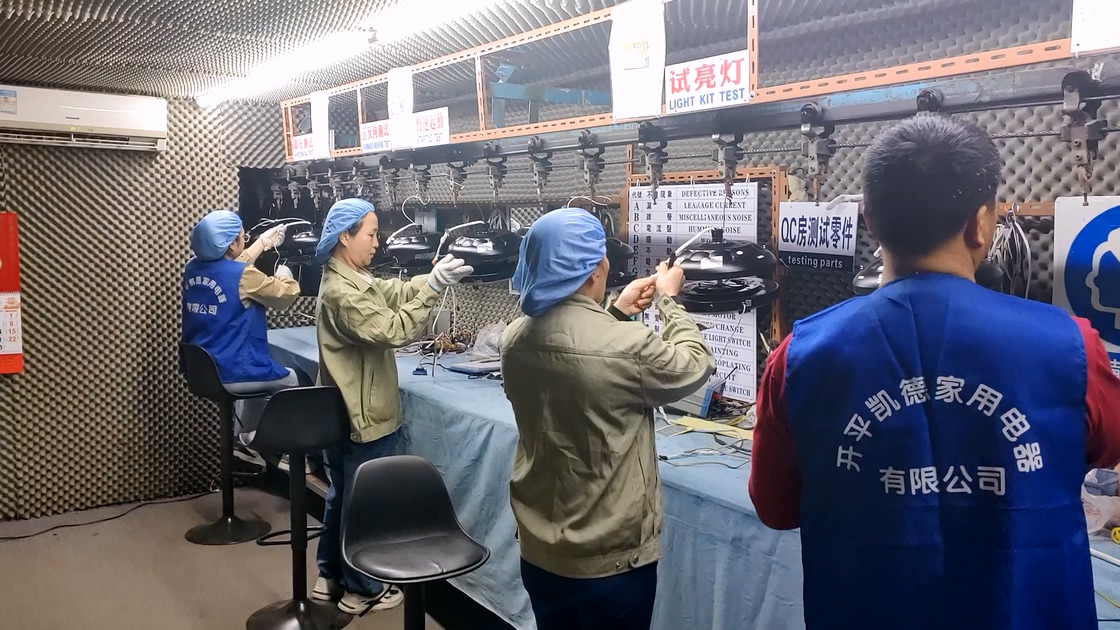
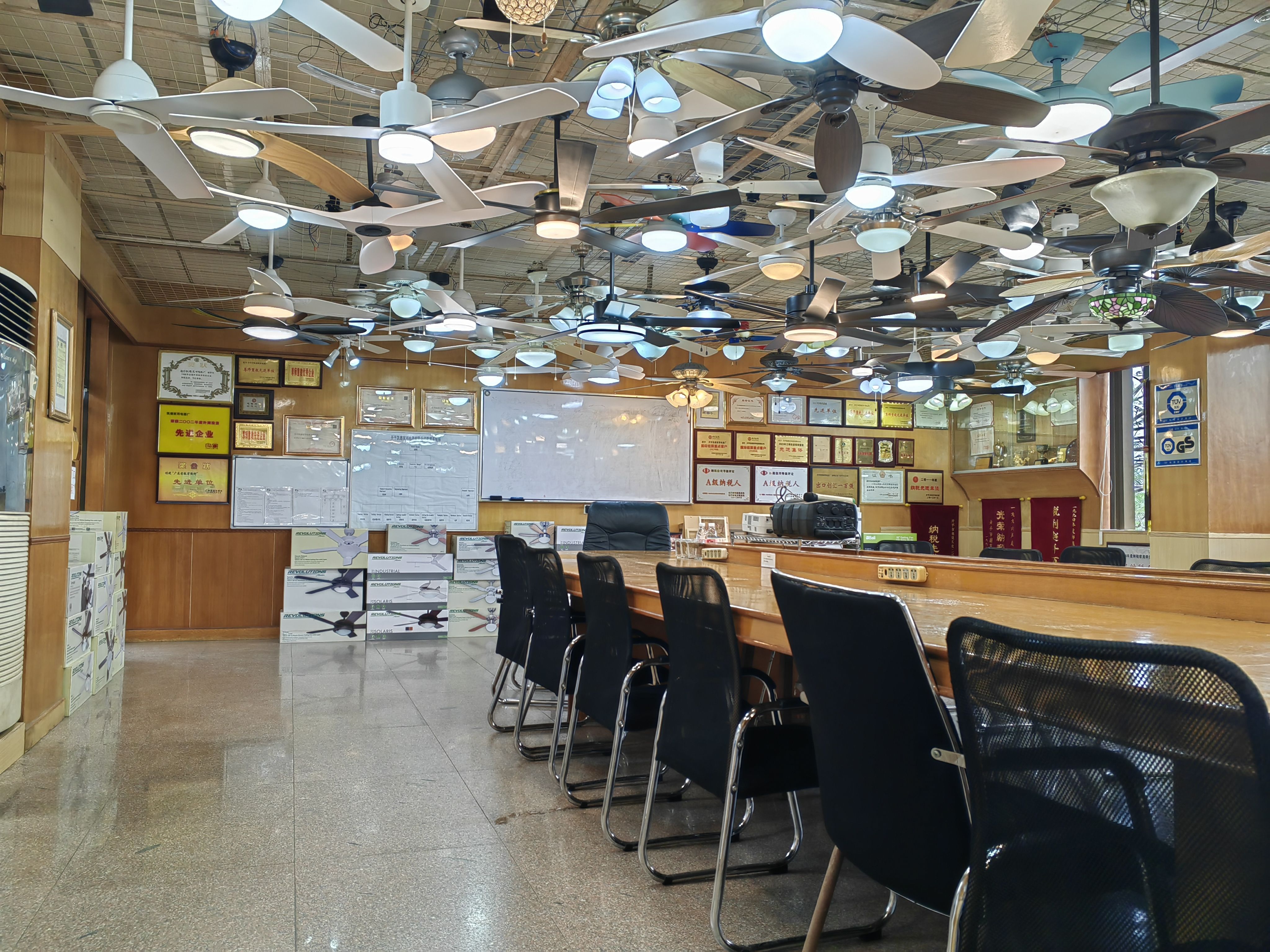
Ask the supplier for evidence of in-house capability. Handing produces most metal parts, runs its own painting line, assembles motors, and owns an electroplating factory. These facts can be verified during a factory audit, along with the R&D, IQC testing room, motor assembly testing room, final assembly workshop, finished goods warehouse, and container loading area.
Use Cases: Ceiling Fan Scenarios and What to Look For
The scenarios below are illustrative examples, not case-study results. They show how a project brief maps to a model like the TU52-MW-N3A1DOME.
Hospitality: Decorative Ceiling Fan with Light
Hotels and boutique projects need a fan that is visually integrated with the interior. The TU52's matt white finish and steel housing can be reviewed as part of the interior design package. The 24W CCT LED kit provides an integrated lighting source; the design team should confirm the CCT options. The 52-inch DC motor provides a practical airflow option for guest rooms or small public areas.
Commercial Interiors: Commercial Grade Ceiling Fan
Offices, retail stores, and semi-public spaces often require a commercial grade ceiling fan. The TU52-MW-N3A1DOME is identified as a commercial grade ceiling fan in the product record. Local building and electrical codes should still be checked because a product classification alone does not replace an engineering review.
Smart Residential: Smart WiFi Ceiling Fan
Residential projects with smart home systems may require WiFi control. A smart WiFi ceiling fan can give users remote control without additional wall switch wiring. The TU52 model is designed as a smart WiFi ceiling fan, so project teams should confirm whether the fan's control system matches the homeowner's automation ecosystem.
Multi-Country Distribution: Certification-Led Selection
Distributors supplying multiple markets need to sort products by certification before committing inventory. Handing's ceiling fan portfolio is listed under UL, cUL, Nom, BSI, CE, GS, Swedish Standard, and SAA. A distributor should request the exact certificate for each model and destination rather than relying on a factory-wide claim.
Project Reference Table: From Requirement to Verified Specification
| Project requirement | What to verify | Verified reference point |
|---|---|---|
| Application type | Indoor or outdoor; household or commercial | TU52-MW-N3A1DOME: indoor decorative; household and commercial |
| Fan size | Blade diameter | 52-inch housing |
| Motor type | Motor architecture | DC motor |
| Lighting | Light source | 24W CCT LED light kit |
| Blade material | Material and quantity | 3 ABS blades |
| Housing material | Finish and structure | Steel housing |
| Control method | Connectivity and smart features | Smart WiFi ceiling fan |
| Compliance portfolio | Destination certifications | UL, cUL, Nom, BSI, CE, GS, Swedish Standard, SAA |
| Quality system | ISO and production control | ISO9001 certification since 1996 |
| Factory capability | Core processes in-house | Metal parts, painting, motor assembly, owned electroplating factory |
Ceiling Fan Project FAQ
What compliance marks should I require for a project ceiling fan?
Compliance marks must match the destination market. Handing Co. Ltd.'s ceiling fan portfolio includes UL, cUL, Nom, BSI, CE, GS, Swedish Standard, and SAA. For the United States, verify that the exact model is listed under the current UL 507 edition, which was updated effective November 27, 2024 to add secondary thermal or current fuse requirements for fans in unattended areas. For Europe, the applicable safety standard for household fans, including ceiling fans, is EN IEC 60335-2-80:2024 for single-phase products rated up to 250V.
What manufacturer capabilities should a project buyer verify?
A project buyer should verify control over core production processes. Handing Co. Ltd. was established in 1992 and has a factory of 12320.66 square meters with 350 employees. The company produces most metal parts, performs painting, assembles motors in-house, and fully owns an electroplating factory. Its ceiling fan and lighting factory received ISO9001 certification in 1996. These facts support production consistency and make factory audits more focused.
How should I evaluate cost without compromising compliance?
Cost should be evaluated as a total specification, not a unit price. The main cost drivers are compliance testing, motor type, blade and housing materials, LED light kits, smart controls, packaging, and logistics. Because Handing performs metal part production, painting, motor assembly, and electroplating in-house, the factory controls many of these cost drivers directly. A project buyer should request a quotation that separates these elements for comparison.
Can I request a sample before placing a project order?
Yes; sample evaluation is a standard part of ceiling fan sourcing. Handing Co. Ltd. maintains a sample room for product inspection, and buyers can contact the sales team at sales@handingfan.com to request a specific model such as the TU52-MW-N3A1DOME. The sample process should include checking the finish, light output, control behavior, and any documentation that will be shipped with production units.
How long does lead time take for a ceiling fan project?
Lead time depends on the quantity, configuration, certification status, packaging requirements, and the factory's production calendar. To receive an accurate schedule, send the model number, target market, finish, light kit option, control option, and order quantity to the supplier. For a lead time estimate or quote, contact Handing Co. Ltd. at sales@handingfan.com.
Putting the Specification into Action
Project-centered ceiling fan selection starts with requirements and ends with verifiable product and factory evidence. The Handing TU52-MW-N3A1DOME shows how a real model can support a range of indoor household and commercial scenarios: it has a 52-inch DC motor, a steel housing, three ABS blades, a 24W CCT LED kit, and smart WiFi capability. The next step is to confirm the exact certifications for the destination market, request a sample, and review the factory's manufacturing evidence.
Need a project-ready ceiling fan evaluation?
Download the Handing factory presentation to review production and testing facilities.
Contact: sales@handingfan.com