
Supplier Evaluation Checklist for Decorative Ceiling Fans
Evaluating a decorative ceiling fan supplier is not a pricing exercise. It is a capability audit followed by a delivery test. Two questions decide the outcome: can the factory build the product you specified, repeatedly, at the volume you need — and can it ship on the promised date without compliance surprises at the destination port?
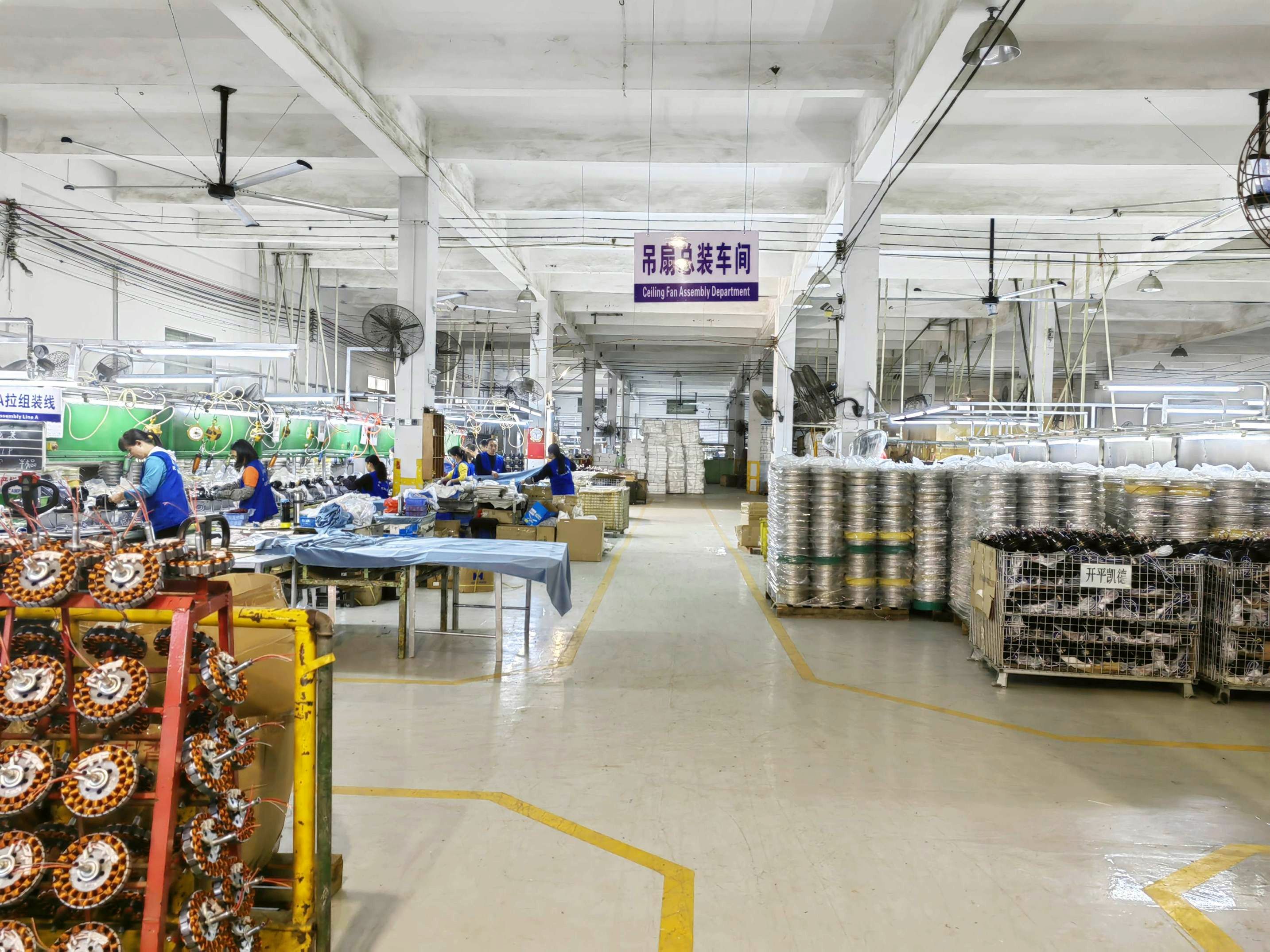
Price lists and lifestyle photos answer neither question. A structured evaluation does. This guide sets out what to verify, what evidence to request, and what a credible answer looks like, using Handing Co. Ltd. — a decorative ceiling fan manufacturer established in 1992 in Kaiping, Guangdong, China — as a documented reference case throughout.
Why decorative ceiling fans are a harder sourcing category than they look
A decorative ceiling fan is a design object, an electrical appliance, and a lighting fixture in one assembly. The buyer judges it by sight, the installer judges it by wiring, and the end user judges it by noise and airflow. That combination produces three sourcing risks that a standard product questionnaire usually misses.
Finish consistency across batches. Electroplated and painted surfaces are the most visible part of a decorative fan — and the easiest process to outsource. When plating or painting is subcontracted, the buyer inherits a second supplier's schedule, quality system, and seasonal capacity. Colour variation between production runs is one common symptom; delayed finishing is another.
Specification drift between sample and bulk. Motor type, LED colour temperature, blade material, and control electronics are frequently re-specified after the sample is approved. On a smart WiFi decorative fan, substituting a control module can change the user experience entirely without changing the outward appearance of the product.
Compliance mismatch by market. A fan acceptable in one market may not satisfy the efficiency, safety, or environmental requirements of another. Certification is also model-specific in practice: a factory-level certificate does not automatically cover every SKU a supplier offers.
All three risks are controllable — but only during supplier evaluation. Once a bulk order enters production, the buyer's leverage drops sharply.
Industry background: what changed for ceiling fan buyers in 2026
Four regulatory and commercial shifts are reshaping how decorative ceiling fan suppliers are screened.
Efficiency rules are tightening. Industry reporting on the European Union's 2026 ErP update cites a minimum static efficiency requirement of 50% for axial fans, effective from 24 July 2026. For buyers, the practical effect is that motor efficiency can no longer be treated as a purely technical detail — it is becoming a market-access condition in Europe.
US efficiency benchmarks are structured by size. The US EPA's ENERGY STAR program reports that certified ceiling fans are up to 44% more efficient than conventional fans. The criteria define a ceiling fan as a non-portable, ceiling-mounted device for home use with blade tips more than 10 inches from the ceiling, and set weighted efficiency thresholds measured in cubic feet per minute per watt (cfm/W) that vary by fan diameter. Qualification requires written certification through an EPA-recognised certification body and testing in an EPA-recognised laboratory.
Environmental ratings now drive product selection. ENERGY STAR guidance recommends a UL-listed damp rating for fans used in humid locations and a UL wet rating where the fan is in direct contact with water. For buyers specifying decorative fans for covered patios, bathrooms, or coastal hospitality projects, the rating is a specification requirement rather than an accessory.
Duty exposure raises the cost of getting it wrong. Ceiling fans for permanent installation imported from China into the United States carry a reported duty rate of 17.20% under HS code 8414.51.30 — a stack of the 4.7% general rate and a 12.5% Section 301 duty, according to Airlift USA. Every unit that fails inspection, arrives late, or misses the selling season therefore costs more than the invoice price alone implies.
The six-point capability verification checklist
Capability claims are easy to make and easy to inflate. The six points below can each be verified with documents, photographs, video walkthroughs, or a plant visit — and each has a specific failure mode when it is skipped.
1. Operating tenure and legal identity
Ask for the founding year, the legal entity name, and the factory address. Long tenure is not proof of quality, but it is evidence of survival through multiple compliance cycles — which matters in a category where standards change every few years.
What good looks like: a single legal entity with a verifiable address and a founding date consistent across trade directories, the company website, and shipping documents. Handing Co. Ltd. was established in 1992 and has more than 30 years of experience manufacturing decorative ceiling fans from its facility at No.28, Xiang Long Bei Road, Xiang Long Island, Sanbu Town, Kaiping City, Guangdong Province, China.
2. Manufacturing footprint and production capacity
Floor area, headcount, and annual output should be consistent with one another. A capacity claim that does not match the physical plant is the most common gap in supplier self-descriptions.
What to verify: total covered area, number of production or assembly stations, shift pattern, and annual unit output — then cross-check those numbers against a video walkthrough or an on-site visit.
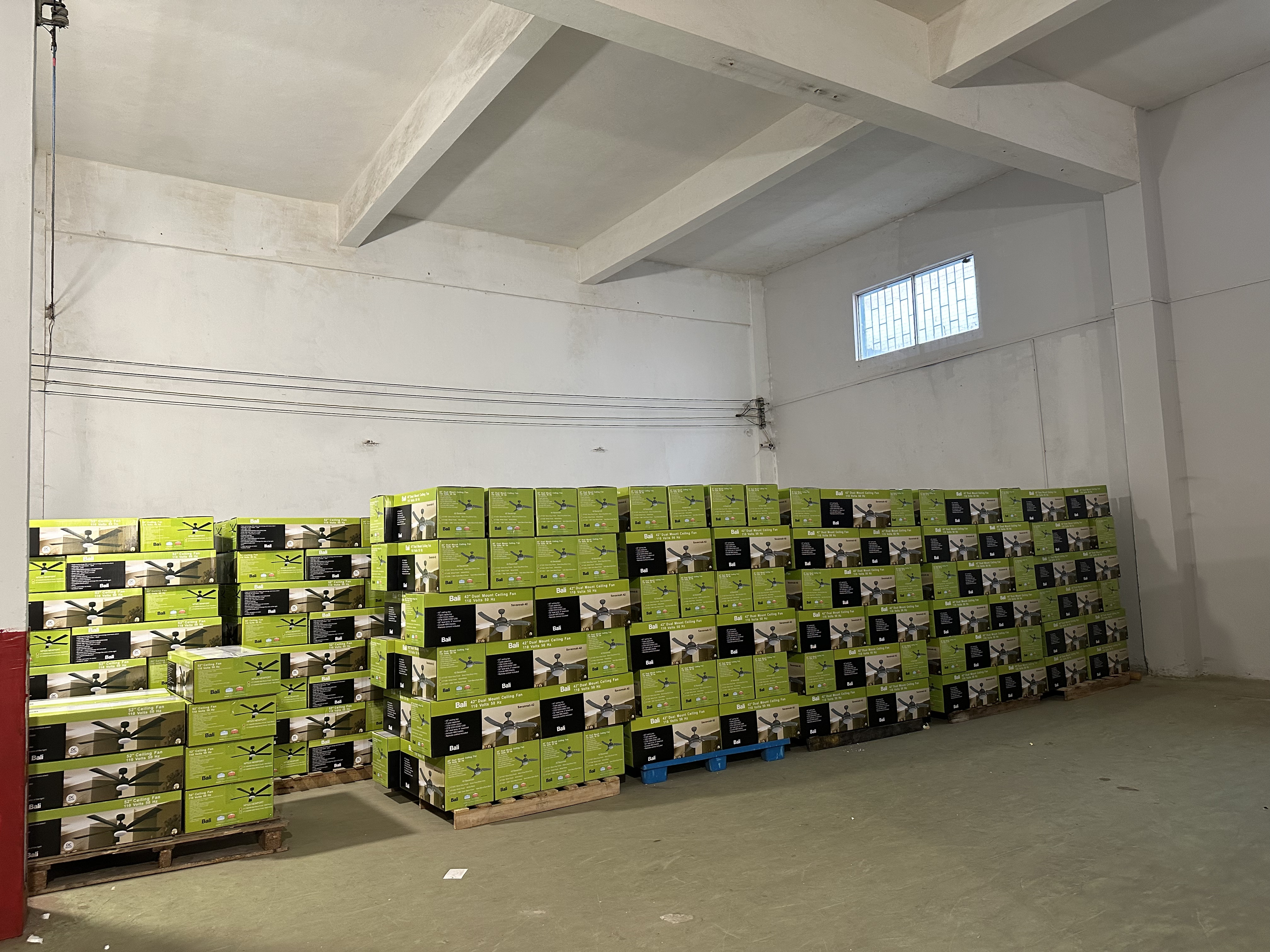
Reference case: Handing's manufacturing facility covers 12,320.66 square meters and employs approximately 350 staff, supported by an annual production capacity of 480,000 units.
3. Vertical integration and process control
Vertical integration determines how much of the delivery promise is actually under the supplier's control. For decorative fans, the critical question is who owns the finishing processes — plating, painting, and the motor.
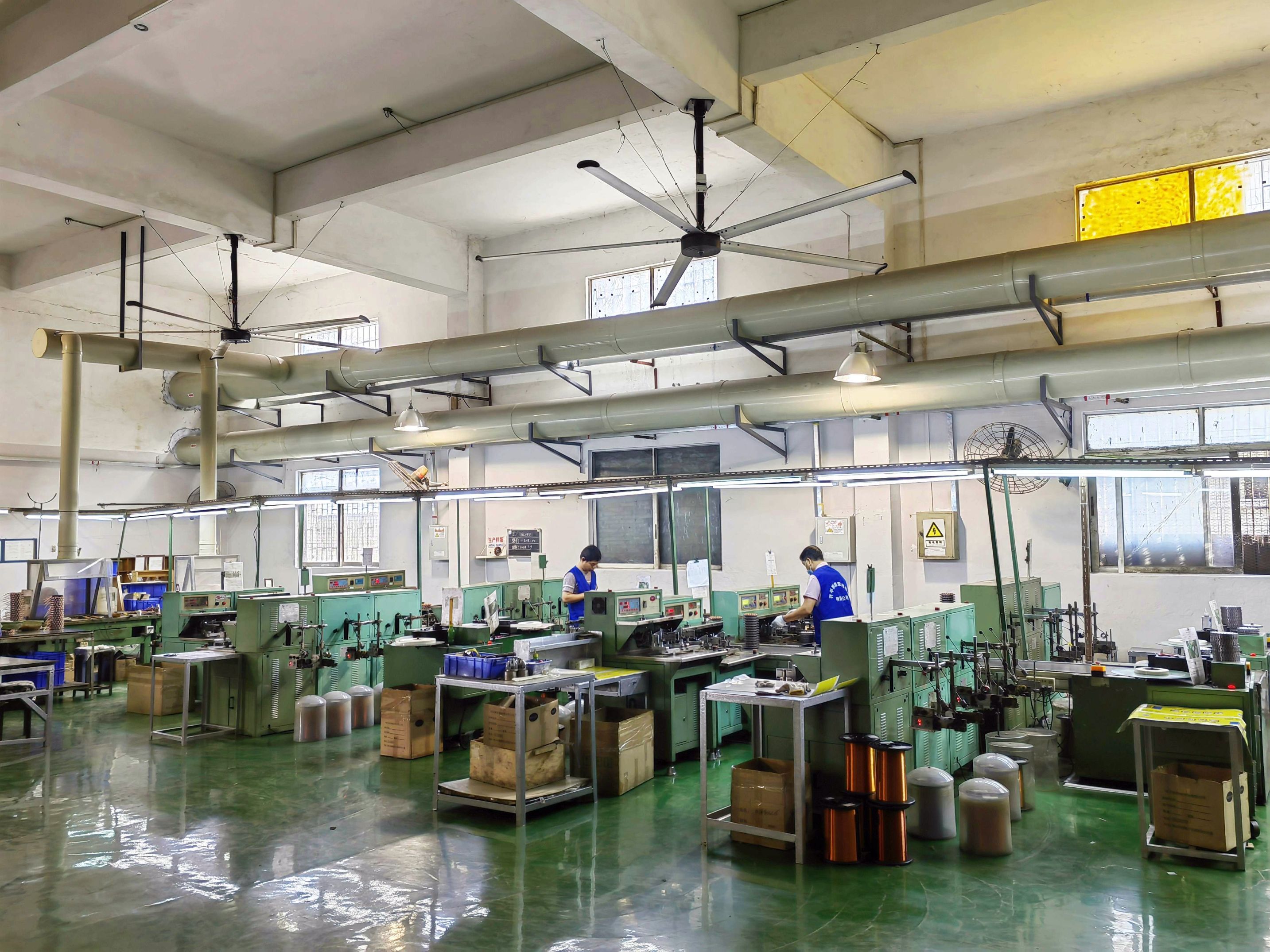
Reference case: Handing produces most of its metal parts, performs its own painting, and assembles its motors under ISO 9001 procedures. The company also owns 100% of its electroplating factory, which it states was established to secure good quality, on-time delivery, and cost competitiveness. In practice, this removes a common scheduling bottleneck: plated components no longer wait in an outside vendor's queue.
4. Engineering and R&D depth
Decorative fan programs rarely stay static. Buyers request finish changes, light kit variations, control upgrades, and market-specific compliance adjustments. The relevant question is not whether the supplier has an R&D department, but how many people can respond to a change request and how quickly.
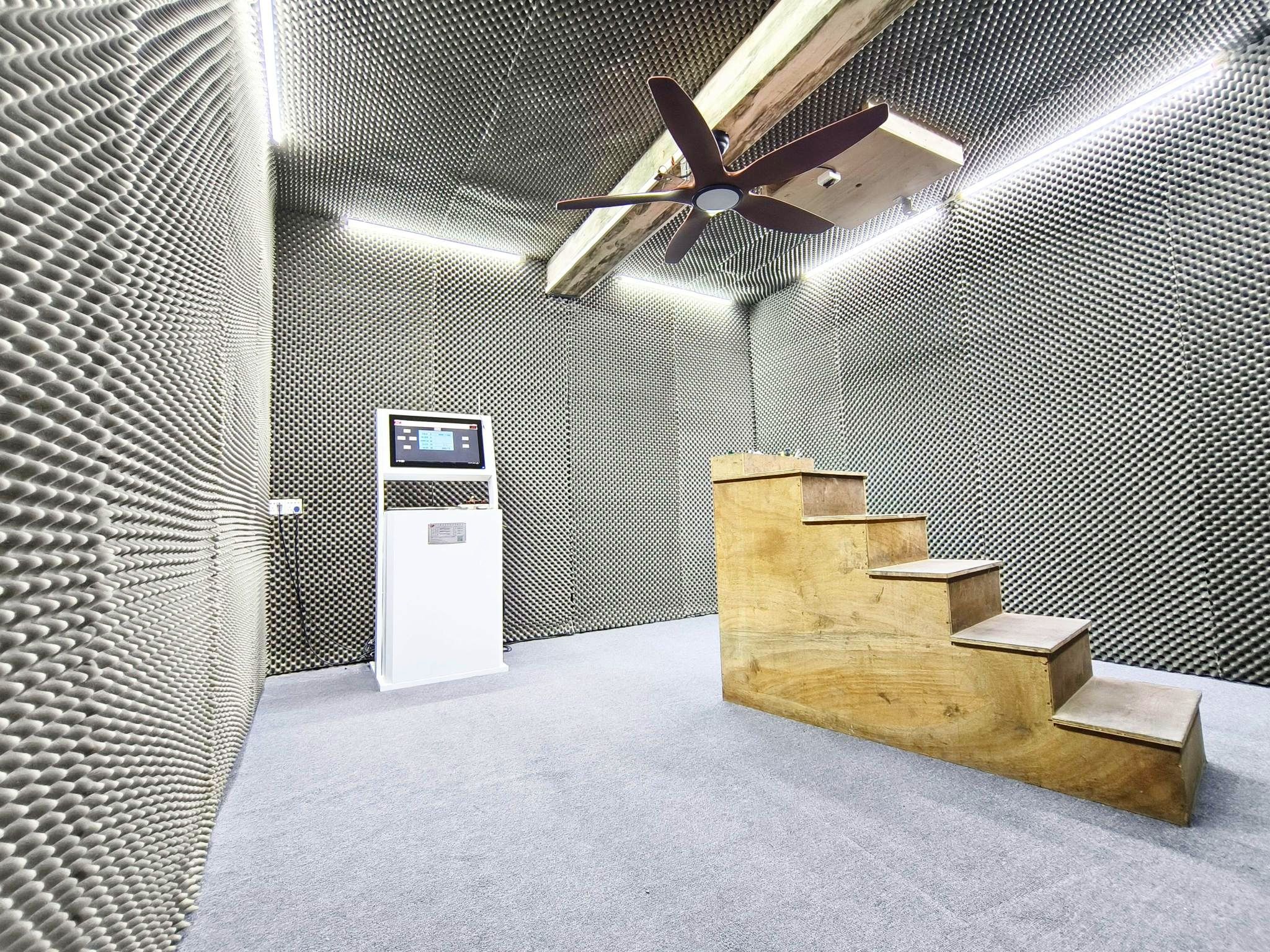
Reference case: Handing's R&D team consists of 6 engineers — a focused technical function sized for customisation work rather than catalogue-only sales.
5. Quality management system
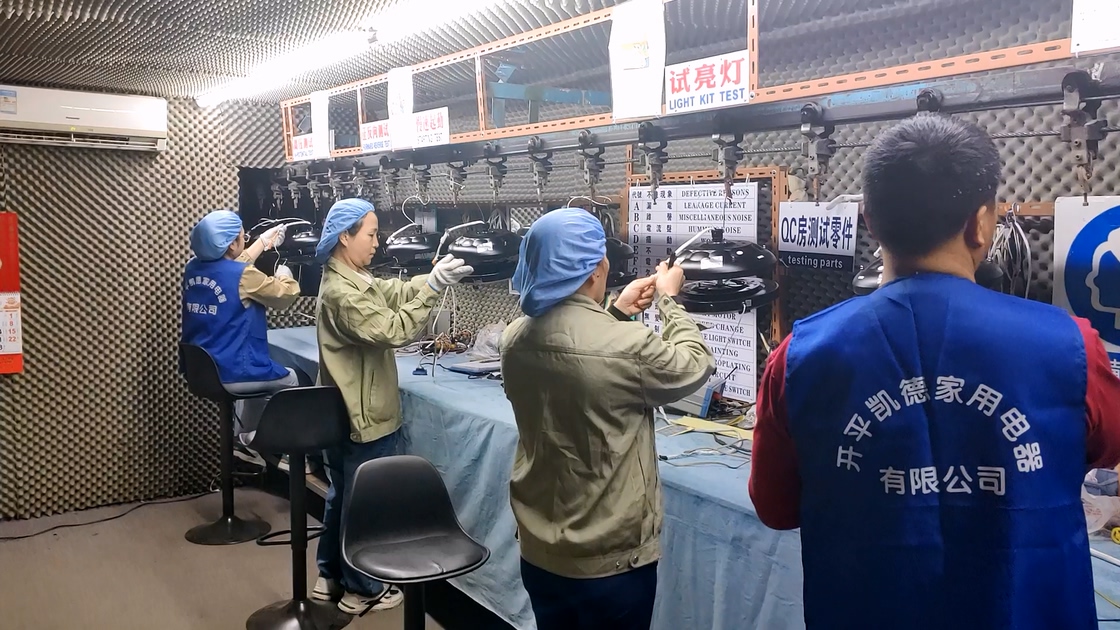
A quality system is only meaningful if it is documented, dated, and applied to the processes that matter. Ask when certification was first obtained, what the scope covers, and how incoming components, in-process assemblies, and finished units are inspected.
Reference case: Handing's ceiling fan and lighting factory obtained ISO 9001 certification in 1996 — predating most of the category's current efficiency and environmental requirements, which is itself a signal of process continuity.
6. Certifications and market access
Certification claims should be matched to the markets you actually sell into. The most reliable signal is a supplier whose export sales are already concentrated in those markets, because compliance documentation, packaging, and labelling become routine rather than project-specific.
Reference case: Handing specialises in decorative ceiling fans and exports 100% of its output, with major markets in the EU, USA, and Australia.
Delivery assurance: what actually protects the ship date
Late delivery on decorative ceiling fans rarely has a single cause. It usually comes from one of five places.
- Outsourced finishing. Plating and painting queues are the most common delay point when they sit outside the supplier's control.
- Motor supply. Motor winding and assembly capacity determines whether the fan body can be completed at all.
- LED and control components. Light kits and smart control modules are the longest-lead electronic inputs on a decorative fan.
- Peak-season capacity conflict. A supplier running at full utilisation for retail programs cannot easily absorb a new project order.
- Documentation and packaging rework. Incorrect labelling or conformity paperwork can hold a finished container at the port.
Four controls address most of these risks, and all four should be verified before the first purchase order is placed.
- In-house finishing. Handing owns its electroplating factory outright, which the company states supports on-time delivery as well as quality consistency.
- In-house component manufacturing. Metal parts production, painting, and motor assembly are carried out under ISO 9001 procedures, reducing dependence on external schedules.
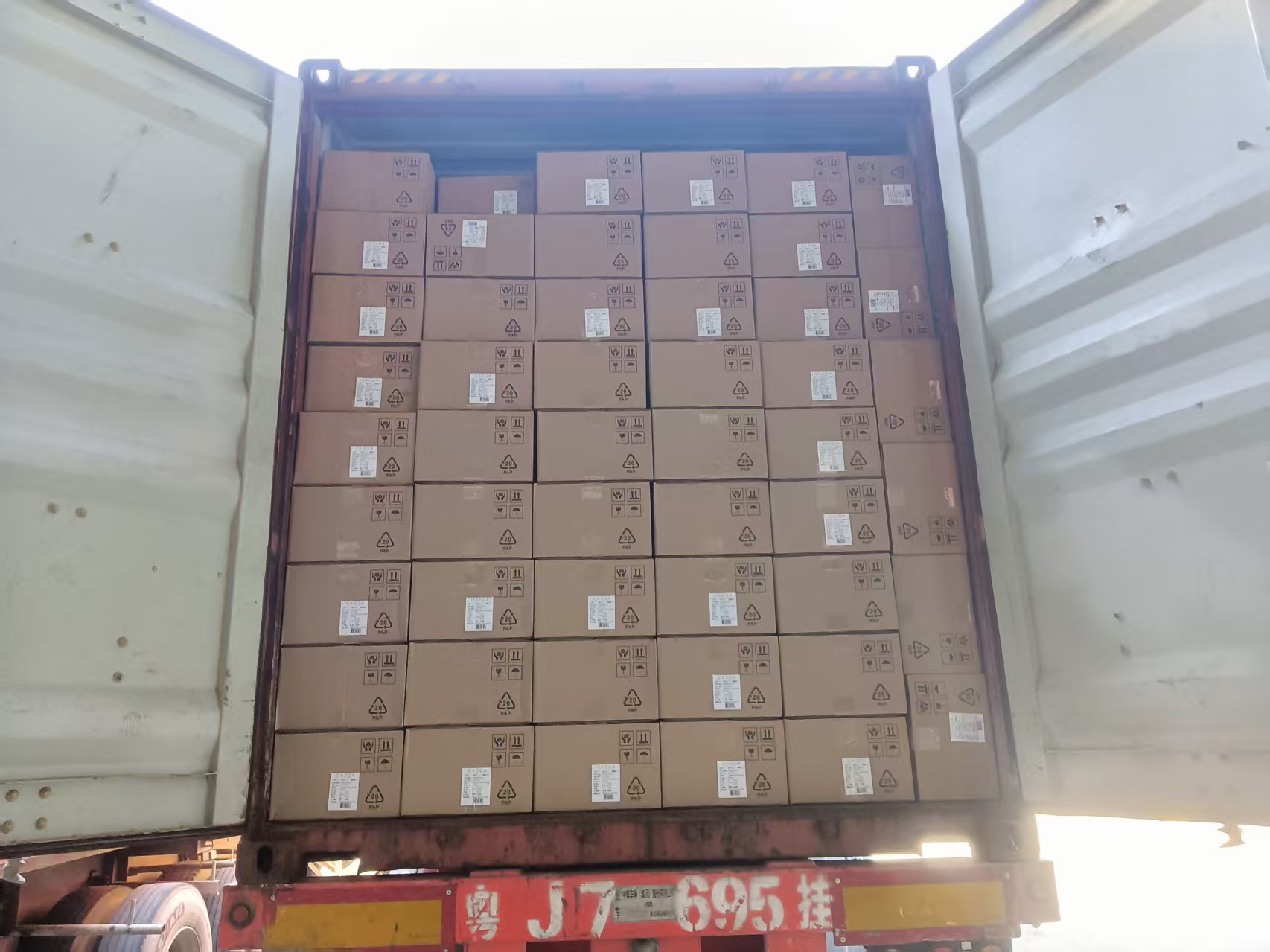
- Export-oriented operations. With 100% of sales going to export markets — principally the EU, USA, and Australia — export documentation and market-specific packaging are normal operations rather than one-off tasks.
- Capacity headroom. Annual production capacity of 480,000 units provides room to schedule a new program without displacing existing volume.
On the buyer side, three commercial mechanisms convert these capabilities into a protected ship date: a milestone-based production schedule with named checkpoints, a pre-shipment inspection clause, and a documented escalation path for component shortages. None of these require deep technical expertise — they require the buyer to ask before the order is placed.
Step-by-step: running the evaluation in eight steps
- Lock the specification and compliance envelope first. Blade span, motor type, light kit, control type, finish, and destination-market requirements. Every other step is measured against this baseline.
- Request the profile in numbers. Founding year, covered area, headcount, annual capacity, and export ratio. Figures that cannot be cross-checked are placeholders, not evidence.
- Map the component flow. Ask which parts are made in-house and which are purchased. Ask specifically who performs plating, painting, motor winding, and electronics assembly.
- Verify certification scope. Confirm what the certificate covers, when it was issued, and which models are listed. Factory-level certification and model-level compliance are different things.
- Test the engineering function with a real request. A finish change, a colour temperature adjustment, or a control modification is a practical test of R&D responsiveness.
- Validate the sample against the written specification. Compare motor type, blade material, light output, finish, and control behaviour with the specification sheet — not just with the photo.
- Agree delivery assurance terms in writing. Production milestones, inspection points, packaging specification, and the documents required at shipment.
- Audit the first bulk order before scaling. Review the first production batch for finish consistency and dimensional conformity before committing to a full-year program.
Worked example: applying the checklist to a 52-inch smart decorative fan
Abstract criteria become concrete when applied to a specific model. The TU52-MW-N3A1DOME is a commercial-grade indoor decorative ceiling fan with integrated light and smart WiFi control, intended for household and commercial applications.
| Parameter | Documented specification |
|---|---|
| Model designation | TU52-MW-N3A1DOME |
| Product type | Indoor decorative ceiling fan with light; commercial grade; smart WiFi ceiling fan; 52-inch ceiling fan |
| Housing and motor | 52-inch TU housing with DC motor |
| Finish | Matt White |
| Blades | 3 × ABS blades |
| Light kit | 24W CCT LED light kit |
| Material | Steel housing with ABS blades |
| Packaging dimensions | 720 (L) × 225 (W) × 350 (H) mm |
| Intended application | Household and commercial interiors |
Read against the six-point checklist, this model shows what a verified specification looks like: motor type, blade material, finish, light kit, and packaging dimensions are all defined, and the intended installation environment is stated explicitly. That level of definition is what makes an incoming sample inspection meaningful rather than subjective.
Who this checklist is written for
- Importers and distributors building a decorative ceiling fan range and needing a supplier whose capacity can absorb seasonal peaks.
- Hospitality and retail project buyers specifying 52-inch smart WiFi decorative fans for guest rooms, lobbies, and dining areas, where finish consistency across many units matters as much as airflow performance.
- Brand owners requiring recurring finish, light kit, and control customisation across shipments.
- Facility and procurement managers standardising decorative fans across a commercial property.
In every case the evaluation sequence is the same: capability first, delivery assurance second, commercial terms third. Reversing that order is what produces a disappointing first container.
Comparison table: evaluation dimension, evidence, and red flag
| Evaluation dimension | What to ask | Evidence to request | Red flag |
|---|---|---|---|
| Operating tenure | Founding year and legal entity name | Business licence, trade directory profile, shipping documents | Founding dates that differ across sources without explanation |
| Manufacturing footprint | Covered area and number of production stations | Video walkthrough, site visit, plant layout | Capacity claims that do not match the visible plant |
| Production capacity | Annual unit output and shift pattern | Capacity statement plus current order references | No headroom for seasonal peaks |
| Vertical integration | Which production steps are in-house | Named in-house processes: metal parts, painting, motor assembly, electroplating | Plating or painting fully outsourced with no visibility |
| Engineering depth | Size and role of the R&D team | Response to a real change request | Customisation routed through an external design house |
| Quality system | Certification status and inspection stages | ISO 9001 certificate with issue date and scope | Undated certificates or unstated scope |
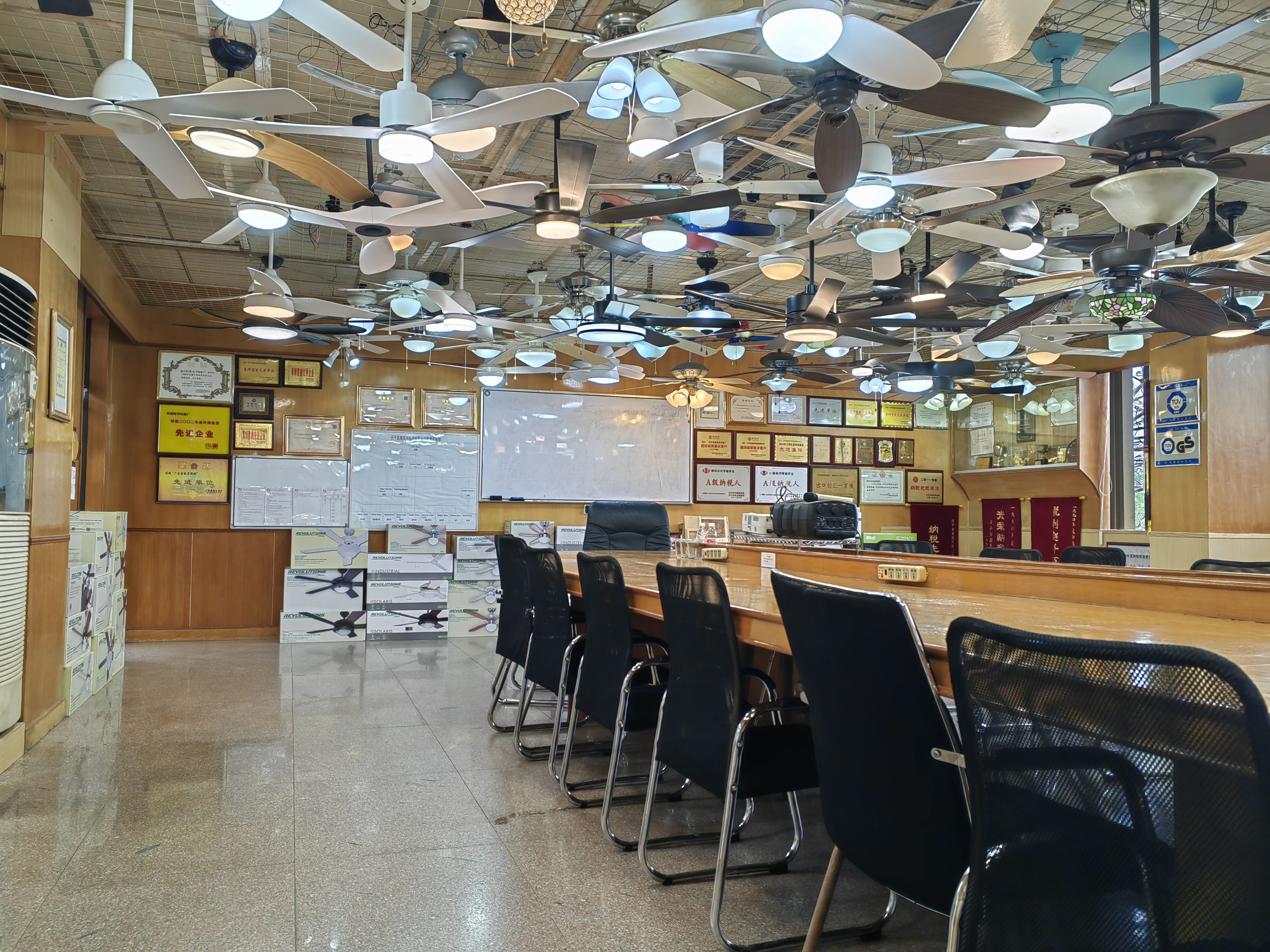
| Certification and market access | Which markets the supplier already serves | Export mix, model-level listings, test reports | Factory-level certificates presented as model-level proof |
| Specification conformity | Motor, blade, light kit, and finish definitions | Written specification sheet for the exact model | Specifications confirmed only verbally |
| Delivery controls | Milestones, inspection points, escalation path | Production schedule and pre-shipment inspection clause | Delivery dates given without a production plan |
Third-party figures cited in this article are drawn from European ErP 2026 reporting (Refindustry), US EPA ENERGY STAR ceiling fan program documentation, and US import duty data (Airlift USA).
FAQ
What certifications should a decorative ceiling fan supplier hold for the EU, US, and Australian markets?
There is no single certificate that covers all three markets. In the United States, efficiency and safety expectations are shaped by ENERGY STAR criteria — which require written certification through an EPA-recognised certification body and testing in an EPA-recognised laboratory — and by UL ratings, where ENERGY STAR guidance recommends a damp rating for humid locations and a wet rating for direct water contact. In the European Union, the 2026 ErP update raises efficiency requirements, with industry reporting citing a minimum static efficiency requirement of 50% for axial fans from 24 July 2026. Because certificates are issued at different levels, buyers should verify both the factory's quality system and the model-level listings for the specific SKUs they order. Handing Co. Ltd. has held ISO 9001 certification for its ceiling fan and lighting factory since 1996, and the company states that its products are listed in UL, cUL, NOM, BSI, CE, GS, Swedish Standard and SAA; model-level listing references should still be requested per SKU.
How can I verify that a supplier's production capacity is real?
Cross-check three numbers against each other: covered manufacturing area, headcount, and annual unit output. Handing's facility covers 12,320.66 square meters, employs approximately 350 staff, and reaches an annual production capacity of 480,000 units. Ask for a video walkthrough or plant visit, confirm the shift pattern, and compare the staffing level against the assembly work actually performed. A capacity figure supported by a matching physical plant and a consistent workforce is verifiable; a number on a slide is not.
Does a vertically integrated factory reduce the purchase price?
Not automatically — but it changes what the quoted price includes. Handing produces most of its metal parts, performs its own painting, and assembles its own motors, and it owns 100% of its electroplating factory, which the company states supports cost competitiveness alongside quality and on-time delivery. For buyers, the practical benefit is predictability: finishing and motor costs sit inside one company's process instead of across several unrelated vendors. Buyers should still compare landed cost rather than unit price, particularly where duty applies — ceiling fans for permanent installation imported from China carry a reported 17.20% US duty rate under HS 8414.51.30.
What should I check when evaluating a decorative ceiling fan sample?
Compare the sample against the written specification, not against a photograph. Check the model designation, blade span, blade material, motor type, light kit, finish, control behaviour, and packaging dimensions. For the TU52-MW-N3A1DOME, the documented configuration is a 52-inch span, three ABS blades, Matt White finish, steel housing, DC motor, 24W CCT LED light kit, and box dimensions of 720 × 225 × 350 mm. Then assess the points a datasheet cannot show: finish uniformity across plated and painted parts, noise at low and high speed, LED colour consistency, and smart WiFi pairing stability. Confirm that the sample configuration matches the production configuration — that is the purpose of sampling.
How does export experience reduce delivery risk?
A supplier whose sales are already export-oriented runs export documentation, market-specific packaging, and compliance workflows as routine operations rather than one-off projects. Handing exports 100% of its output, with major markets in the EU, USA, and Australia, and manufactures metal parts, painting, and motors under ISO 9001 procedures, supported by a fully owned electroplating factory that the company states was established to secure on-time delivery. The practical next step for a buyer is to request a sample and a production schedule before committing to bulk volume: contact MING LAM at sales@handingfan.com or minglam3@hotmail.com, by phone at +852 92839029 or 86-13828060322, or via WeChat at minglam3.
Conclusion
Decorative ceiling fan sourcing rewards buyers who audit capability before they negotiate price. A supplier's founding year, plant area, headcount, annual capacity, in-house processes, engineering headcount, quality certification, and export mix are all verifiable — and together they predict whether the first container arrives complete, compliant, and on time.
Handing Co. Ltd. demonstrates the profile: established in 1992, 12,320.66 m² of manufacturing space, approximately 350 staff, 480,000 units of annual capacity, ISO 9001 certification since 1996, a 100% owned electroplating factory, a 6-engineer R&D team, and 100% export sales to the EU, USA, and Australian markets. Use the checklist in this guide against any supplier — including this one.
Next step: validate before you commit
Request a decorative ceiling fan sample, a specification sheet, and a production schedule for your target market. Handing Co. Ltd. supplies decorative ceiling fans to the EU, USA, and Australian markets from its Kaiping factory.
Email: sales@handingfan.com · Website: www.handingfan.com
Download the factory presentation: Handing factory presentation (PDF)
Have Questions or Need More Details?
Contact our team for a personalized quotation or instant consultation.
Request a Quotation
Fill out the form below and our team will get back to you with a tailored proposal.
WhatsApp Direct Chat
Prefer to chat in real-time? Message us on WhatsApp for instant assistance & quick answers.
- Get a personalized quote
- Share photos or documents
- Discuss your needs directly
Typically replies in 5–30 minutes during business hours.