Uneven Light and Airflow in Cafés? How a 52-Inch Smart Decorative Ceiling Fan Solves It
Café owners rarely describe the problem as "poor air distribution." They describe the corner table nobody wants, the pastry case that fogs over by mid-morning, the barista who keeps adjusting the light above the counter as the sun moves, and the drawer of mismatched remotes that nobody can pair to the right fixture. The fix is usually treated as two separate purchases — a fan and a lighting upgrade — and two separate installers. This article explains how the TU52-MW-N3A1DOME, a 52-inch smart decorative ceiling fan with an integrated 24W CCT LED light kit, addresses both symptoms with one fixture, and how to specify it in a way that still works across a second, fifth, or twentieth location.
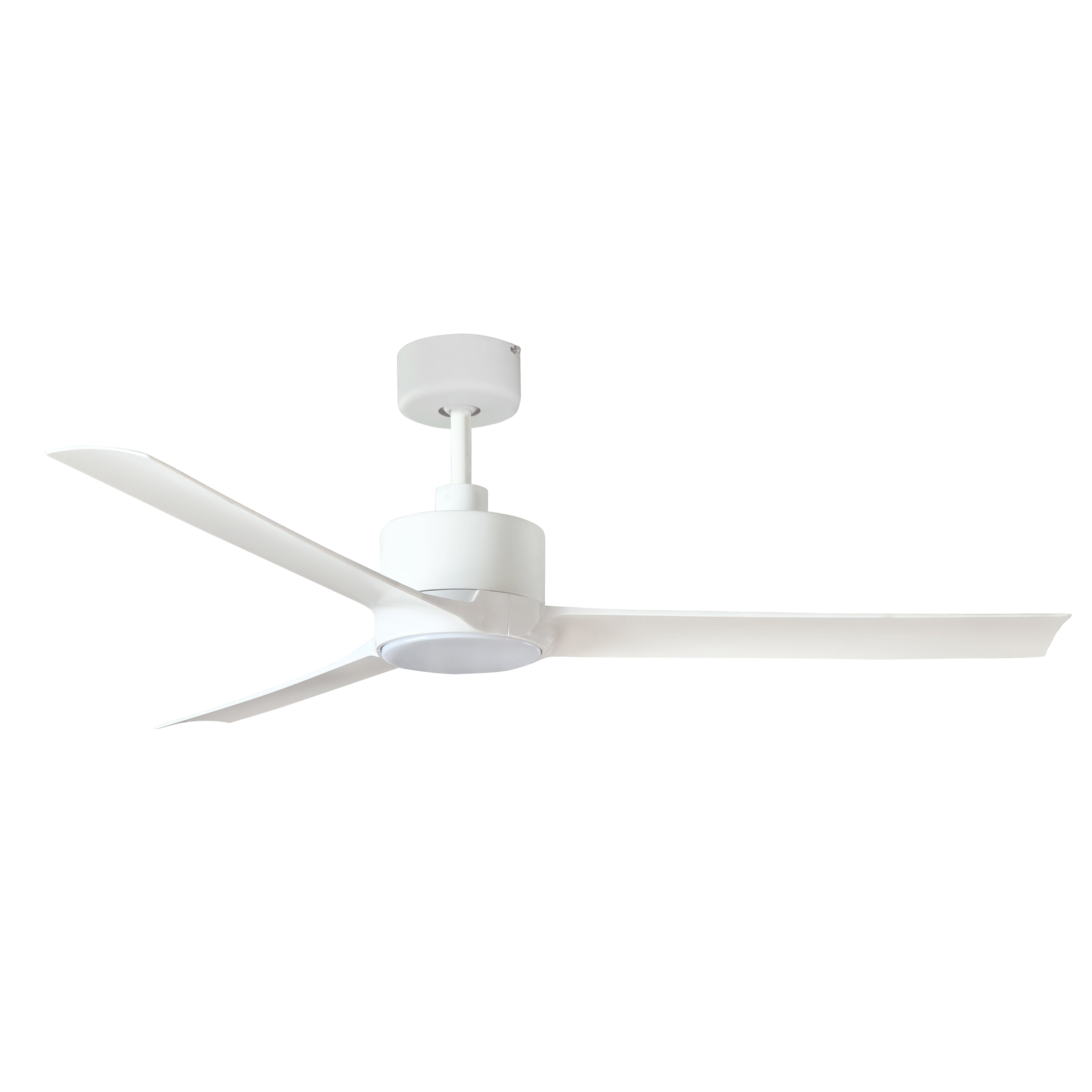
The TU52-MW-N3A1DOME: a 52-inch, three-blade decorative ceiling fan in Matt White with a steel housing, ABS blades, DC motor, 24W CCT LED light kit, and smart WiFi control, intended for indoor household and commercial use.
Problem Definition: Why Cafés End Up With Uneven Light and Airflow
Small commercial interiors are usually fitted out zone by zone: downlights over the counter, decorative pendants over seating, an exhaust hood above the kitchen pass, and an HVAC diffuser placed wherever the ductwork allowed. Each element is chosen on its own, and each is controlled on its own. The result is a room where air and light are reasonable in one spot and wrong everywhere else.
Four friction points appear repeatedly in cafés, boutiques, and similar spaces:
- Stratified air. Warm air collects near the ceiling while the seating area sits still. Doors opening to the street create draughts; the cold spot is near the entrance and the stifling spot is by the window.
- Light that is either harsh or inadequate. Downlights over the counter create glare and hard shadows on faces, while display shelves and corner seating stay dim. Staff compensate by adding lamps, which adds more switches.
- Control clutter. Separate remotes, pull chains, and wall switches mean the shift supervisor becomes the only person who knows how to change the room for evening service.
- The rollout problem. A fit-out that works for one café is difficult to reproduce. Different suppliers, different finishes, different control apps, and no guaranteed continuity of the same SKU for the next opening.
The fourth point is the one that costs the most over time, and it is the reason this article treats product selection and supply continuity as one decision rather than two.
Industry Background: Why Integrated Fixtures Are Replacing Fixture-by-Fixture Fits
Air movement and illumination are increasingly specified as a single ceiling device rather than as two trades. The drivers are practical: one ceiling penetration, one electrical connection, one control interface, and one item to clean and maintain above customers' heads.
Two technical shifts have made the integrated format viable for commercial interiors.
DC motors changed the speed range. A DC motor supports fine speed steps, which matters in a café where the fan must be imperceptible at low speed during service and more assertive during a post-lunch reset. It also allows a slimmer control architecture, which is what makes app and WiFi control practical rather than an add-on module.
Regulation is tightening around efficiency and certification. In the United States, ENERGY STAR ceiling fan criteria define the product as a non-portable, ceiling-mounted fan whose lowest blade point sits more than 10 inches from the ceiling, and minimum efficiency is set as a weighted cubic-feet-per-minute-per-watt figure that varies by fan diameter — which is why a 52-inch fan sits in its own size band rather than sharing a single threshold with smaller models. Qualification also requires written certification from an EPA-recognized certification body and testing in an EPA-recognized laboratory. Separately, EU efficiency rules for fans were updated in 2026, with a reported minimum static efficiency requirement of 50% for axial fans under the ErP framework, effective from 24 July 2026. Buyers should confirm the exact applicability of any efficiency scheme to their specific SKU rather than assuming a category-level rule applies.
For humid or water-exposed locations, ENERGY STAR guidance points buyers to UL-listed damp ratings for humid spaces and wet ratings where the fan is in direct contact with water. An indoor café or boutique normally falls outside that requirement, which is why indoor specification can focus on finish, control, and light quality rather than on enclosure ratings.
The Solution: What a 52-Inch Smart Decorative Ceiling Fan Delivers in a Café
The TU52-MW-N3A1DOME is a 52-inch, three-blade decorative ceiling fan in Matt White, built with a steel housing and ABS blades, driven by a DC motor, fitted with a 24W CCT LED light kit, and controlled through smart WiFi. It is specified for indoor household and commercial use. Handing Co. Ltd. is the manufacturer behind it: a ceiling fan producer established in 1992 in Kaiping City, Guangdong Province, China, ISO 9001 certified since 1996, operating a 12,320.66 m² facility with approximately 350 staff, six R&D engineers, and an annual capacity of 480,000 units, exporting 100% of its output to the EU, USA, and Australia.
The TU52-MW-N3A1DOME at a Glance
| Specification element | Verified configuration | What it changes in a café |
|---|---|---|
| Blade span | 52 inches, three blades | A mid-to-large decorative span suited to seating zones and open floor areas rather than tight corners |
| Blade material | ABS | Stable in humid room air, easy to wipe down in a food-service environment |
| Housing | Steel | Rigid motor housing that holds alignment over long operating hours |
| Finish | Matt White | Recedes against light ceilings and painted beams; avoids a second visual focal point above the seating |
| Motor | DC motor | Fine speed steps for quiet low-speed air movement during service hours |
| Light kit | 24W CCT LED | One fixture provides general light and adjustable colour temperature for day and evening settings |
| Control | Smart WiFi | App-based control and grouping instead of separate remotes and pull chains |
| Intended use | Indoor household and commercial | Appropriate for cafés, boutiques, and small commercial interiors |
How Each Element Addresses a Café Problem
Airflow, not wind. A 52-inch three-blade fan moving at a low DC speed distributes air across a seating zone without creating the paper-lifting draught that a high-speed fan produces. The practical effect is that the room feels even rather than breezy, and the difference between the door side and the window side narrows. The fan supplements HVAC; it does not replace it.
Light with one colour temperature decision instead of three. The 24W CCT LED kit means the same fixture can carry a brighter, cooler setting for morning service and a warmer setting for evening. Because the light source sits at ceiling height in the middle of the room rather than in a narrow cone, faces at the counter are lit from above instead of being cross-lit by downlights.
One control surface. Smart WiFi control replaces the remote-and-chain arrangement. Staff can group fixtures, set a service scene, and restore it at the start of each shift. In a multi-room café, grouping avoids the common failure where the front room is on the correct setting and the back room is not.
Finish discipline. Matt White with a steel housing keeps the fixture visually quiet. In interiors where the ceiling is already busy with track lighting, ducting, or exposed services, a decorative fan that reads as part of the architecture is easier to specify than a contrasting metal finish.
The Manufacturing Base Behind the Specification
Specification stability is a manufacturing question. Handing Co. Ltd. states that it produces most of its metal parts in-house, performs its own painting, and assembles its motors, supported by a 100% owned electroplating factory that keeps plated components consistent in quality, delivery, and cost. The company was ISO 9001 certified in 1996, four years after it was established, and it operates six R&D engineers within a facility of 12,320.66 m² with roughly 350 staff.
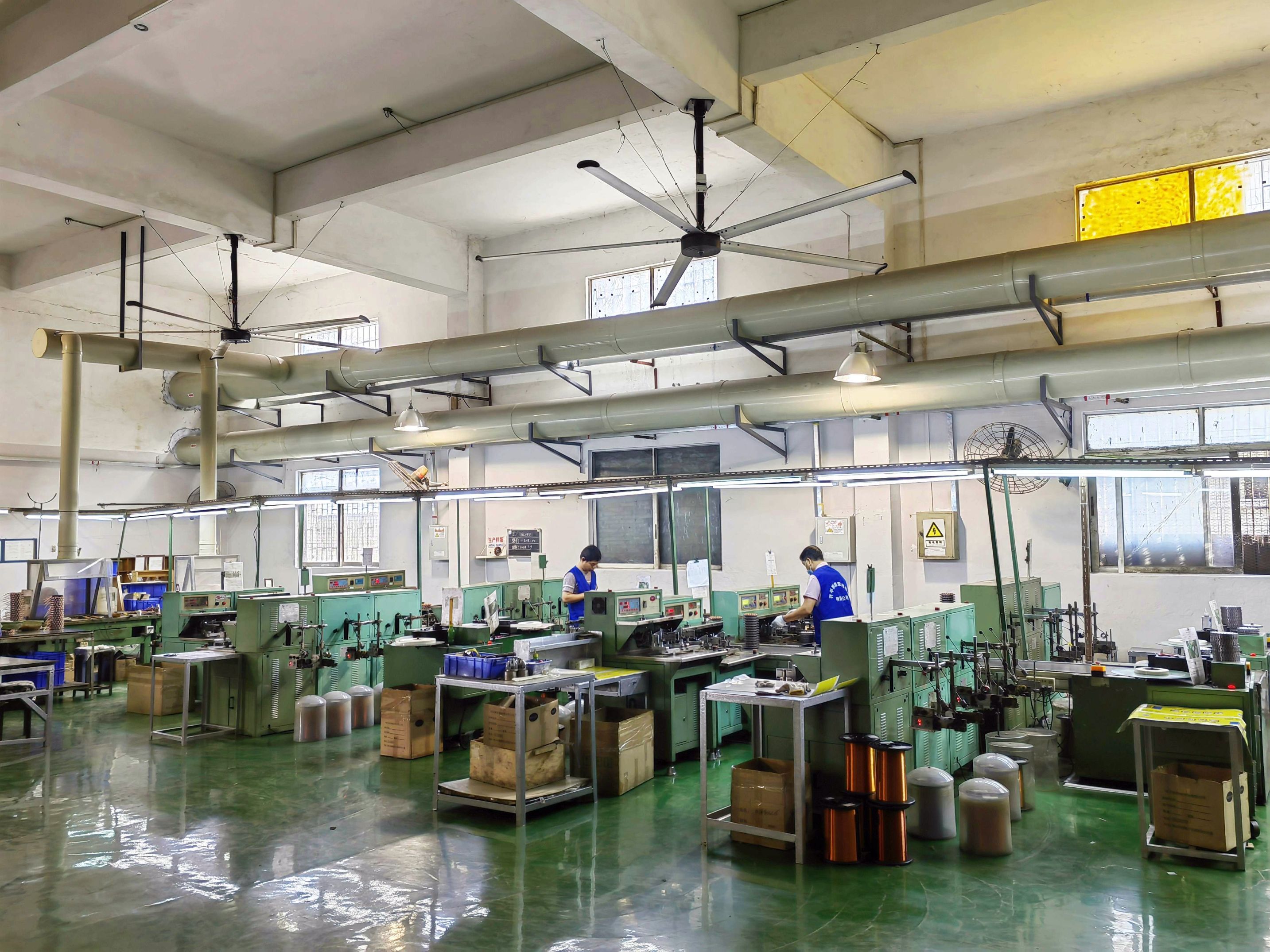
Motor winding in-house: DC motor assembly is carried out under ISO 9001 procedures, which is where speed consistency between production batches begins.
For a café operator or a distributor supplying café fit-outs, in-house motor assembly matters for a specific reason: the low speed setting is the one guests notice. A fan that is quiet and smooth at speed one and rough at speed three will be run at the wrong speed by staff. Vertical integration of the motor and the metal parts is the practical route to consistency across repeat orders.
Step-by-Step: Specifying, Installing, and Standardizing the Fixture
Step 1 — Map the room before choosing the fixture
Mark seating zones, the counter, display shelving, HVAC supply and return points, and any ceiling obstructions. Record ceiling height and the structural fixing points available. Note where the current light falls unevenly — usually the corners and the shelving, not the centre of the room. For reference, ENERGY STAR's residential definition requires the lowest blade point to sit more than 10 inches below the ceiling; commercial installations should follow the manufacturer's installation instructions and local code, which is the figure to confirm at order stage.
Step 2 — Decide fixture count by zone, not by room
A 52-inch fan serves a seating zone well. A long narrow café with a counter along one wall usually needs coverage planned per zone rather than one large unit in the centre. Confirm the intended count and layout with the supplier before fixing the ceiling penetrations, because adding a second fixture later is a building works issue, not a product issue.
Step 3 — Lock the light configuration
The 24W CCT LED kit should be specified together with the intended operating settings: a brighter, cooler setting for daytime work and a warmer setting for evening service. Decide the settings once, document them, and keep the same configuration across every location so staff moving between sites do not have to relearn the room.
Step 4 — Define the control logic in writing
Smart WiFi control is only useful if the access model is decided in advance: who holds admin rights, which scenes exist, and what the fallback is if the network is down. Write this into the handover document alongside the lighting settings.
Step 5 — Commission and verify
At commissioning, check blade clearance, balance and wobble, that each speed step is audible-free at guest level, that the LED switches cleanly between colour temperature settings, and that grouping and scenes behave as documented. Where the site has an in-house maintenance team, hand over the fixture as a single item with one control interface rather than as a fan plus a lighting circuit.
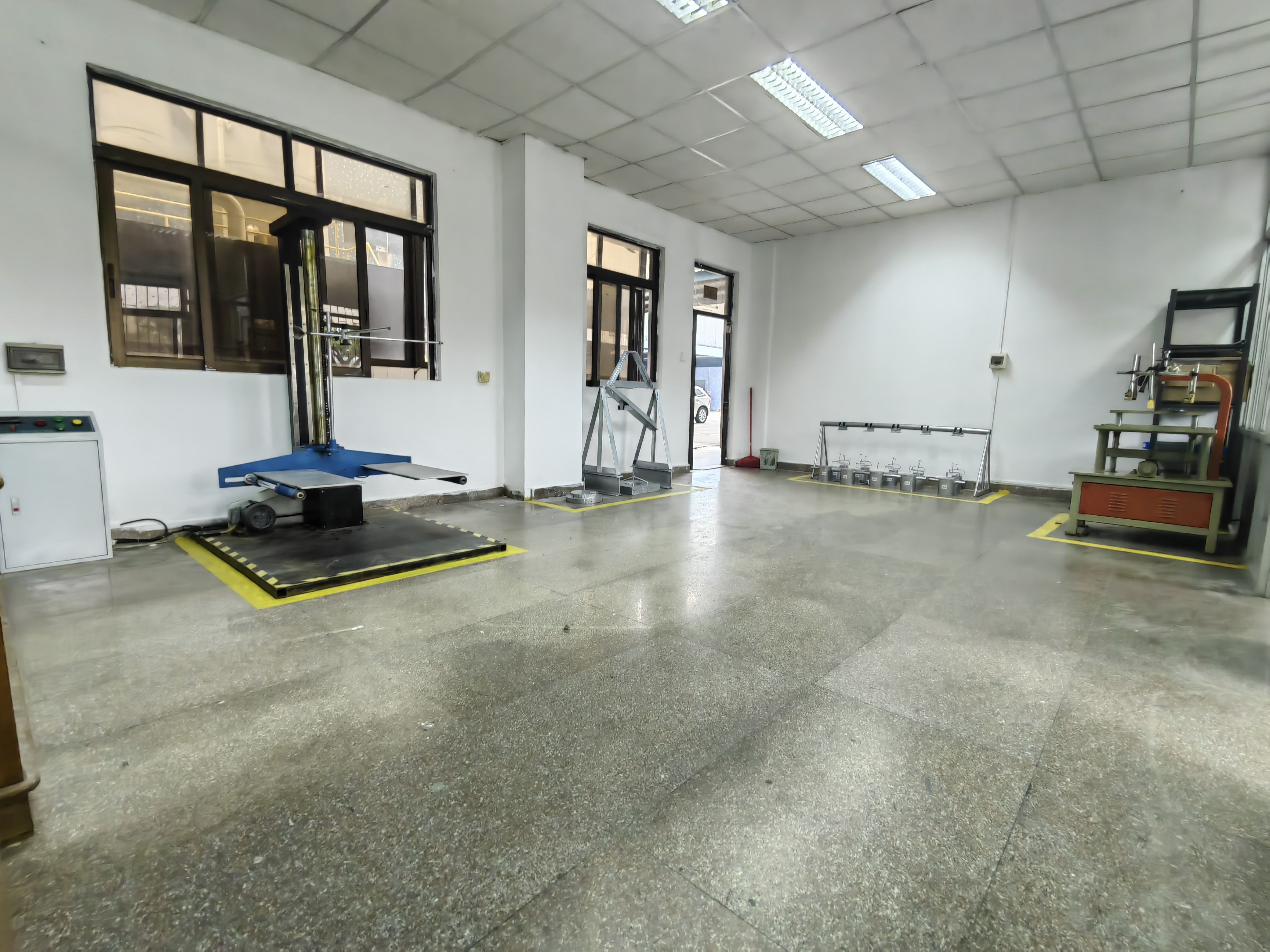
Incoming quality control: component inspection before assembly is what makes a repeat order comparable to the first shipment.
Step 6 — Standardize the specification for the next opening
Write the specification as a fixed document: model reference, finish, blade span, motor type, light kit wattage and CCT range, control method, packaging requirement, and destination market certifications. This is the document that turns a single café installation into a repeatable specification — and the reason to choose a supplier who will still be producing the same configuration for the next site.
Use Cases: Where This Specification Fits
Cafés with high ceilings and a bar counter. The typical failure here is a still layer of air above the seating while the counter area is over-lit by downlights. A 52-inch ceiling fan with light placed over the seating and set to a low DC speed equalizes the room while providing general illumination that reduces reliance on the downlights.
Boutiques and small retail interiors. Display lighting is usually aimed at merchandise, leaving the central floor dim. An integrated fan with light lifts the general light level without adding another visible fixture type, and the Matt White finish keeps the ceiling calm in a room where the products should be the focal point.
Small restaurants and multi-zone venues. Where the front of house and the back zone behave differently, WiFi grouping lets each fixture run at its own speed and light setting from one interface instead of two remotes living behind the till.
Studios, salons, and small commercial offices with guest-facing interiors. These spaces share the same brief: quiet operation at low speed, adjustable light, and a finish that does not compete with the interior design.
In all four cases the same limitation applies: an integrated ceiling fan improves air distribution and general lighting, but it does not replace extraction over a cooking line, and it does not correct an undersized HVAC system. Specify it as a comfort and light-quality layer, not as a substitute for ventilation design.
Comparison Table: Café Requirement Versus Specification Response
The table below maps common café requirements to the verified configuration of the TU52-MW-N3A1DOME and the basis for each statement.
| Café requirement | How the TU52-MW-N3A1DOME responds | Basis |
|---|---|---|
| Even air movement across seating | 52-inch, three-blade span with DC motor speed steps | Product configuration |
| Quiet operation during service | DC motor supports low speed settings | Product configuration |
| Adjustable light for day and evening | 24W CCT LED light kit | Product configuration |
| Fewer controls behind the counter | Smart WiFi control replaces separate remotes and pull chains | Product configuration |
| Finish that suits light interiors | Matt White, steel housing, ABS blades | Product configuration |
| Indoor commercial suitability | Specified for indoor household and commercial use | Product configuration |
| Consistent quality across batches | ISO 9001 procedures since 1996; in-house metal parts, painting, motor assembly; 100% owned electroplating factory | Handing Co. Ltd. manufacturing facts |
| Supply for repeat openings | 12,320.66 m² facility, approximately 350 staff, 480,000-unit annual capacity, 100% export to the EU, USA and Australia | Handing Co. Ltd. manufacturing facts |
| Documentation for destination markets | Handing states its products are listed in UL, cUL, CE, GS, SAA and other schemes; request the model-level listing reference for this configuration | Handing Co. Ltd. compliance statement; model-level verification required |
| Efficiency expectations | ENERGY STAR eligibility and efficiency thresholds are diameter-based and require certification through an EPA-recognized body and laboratory — confirm whether the specific model carries the mark | ENERGY STAR program criteria |
Designing for the Long Term: Consistency Across Sites and Repeat Orders
A café fit-out is a project; a café group is a programme. The difference shows up in the second year, when the first location needs a replacement blade or a matching fixture and the model has been discontinued, the finish has drifted, or the control app has changed. Three practices prevent that.
Lock the SKU, not just the look. Specify the model reference, the finish, the blade span, the motor type, the light kit wattage, and the control method in the procurement document. "A white fan with a light" is not a specification; TU52-MW-N3A1DOME in Matt White with the 24W CCT LED kit and smart WiFi control is.
Plan spares at the first order. Blades and light kits are the parts most exposed to cleaning, accidental contact, and relocation. Buying spare components with the initial shipment is cheaper than sourcing them separately later, and it keeps every site visually identical.
Use a supplier whose capacity supports repeat ordering. Handing Co. Ltd.'s stated annual capacity of 480,000 units, its 12,320.66 m² facility, and its 100% export business to the EU, USA, and Australia describe a supplier set up for continuous export programmes rather than one-off projects. For distributors and multi-site operators, that continuity is the difference between a repeatable specification and a recurring sourcing exercise.
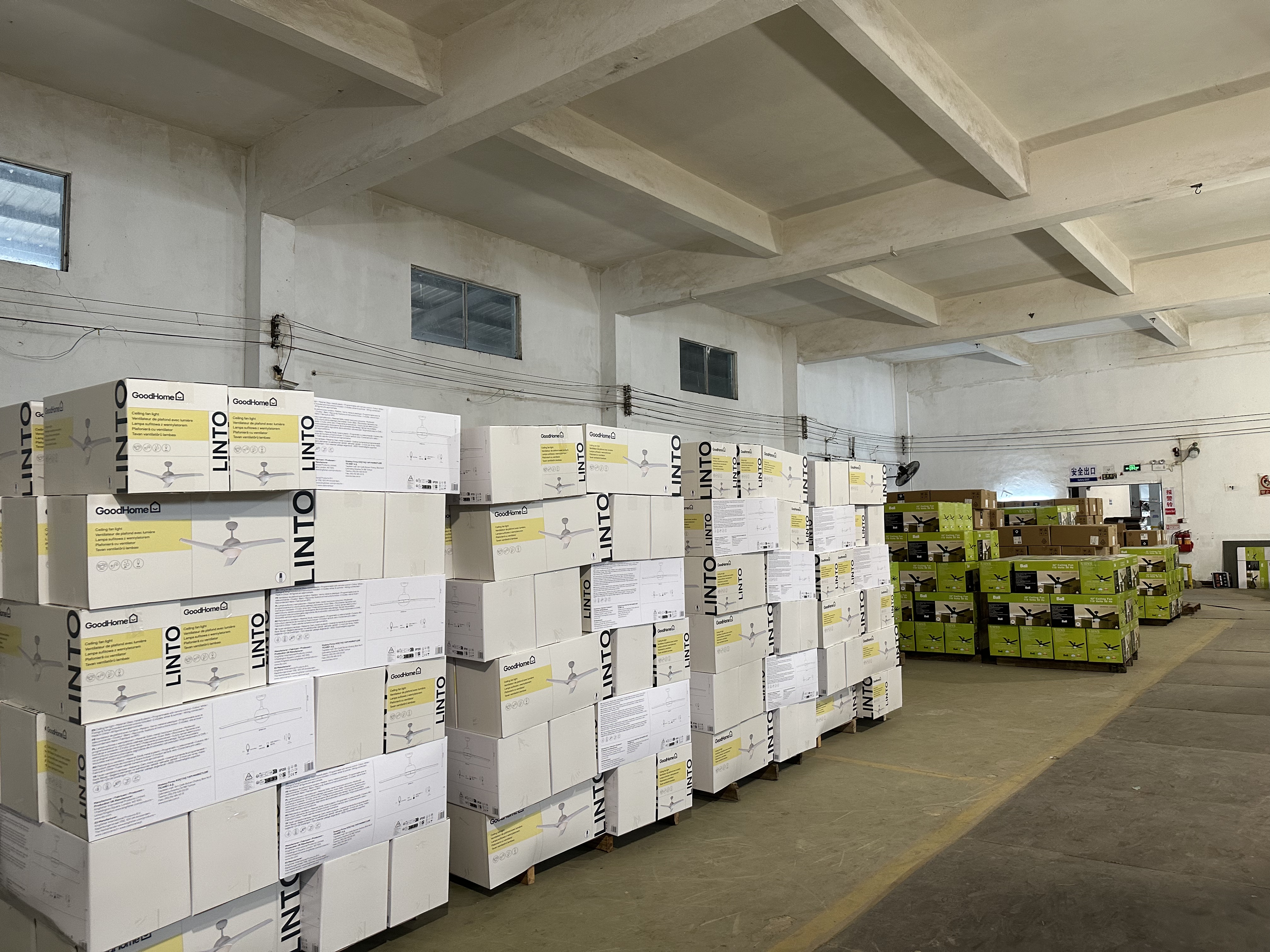
Finished goods staged for export: consistent packaging and labelling across repeat orders keeps multi-site rollouts visually and operationally uniform.
For distributors, the same logic applies in reverse. A café chain that standardizes on one decorative ceiling fan becomes a repeat account for the stockist who holds the SKU, the spares, and the technical documentation. That is why the specification decision made during a single café fit-out tends to determine the supply relationship for the following several years.
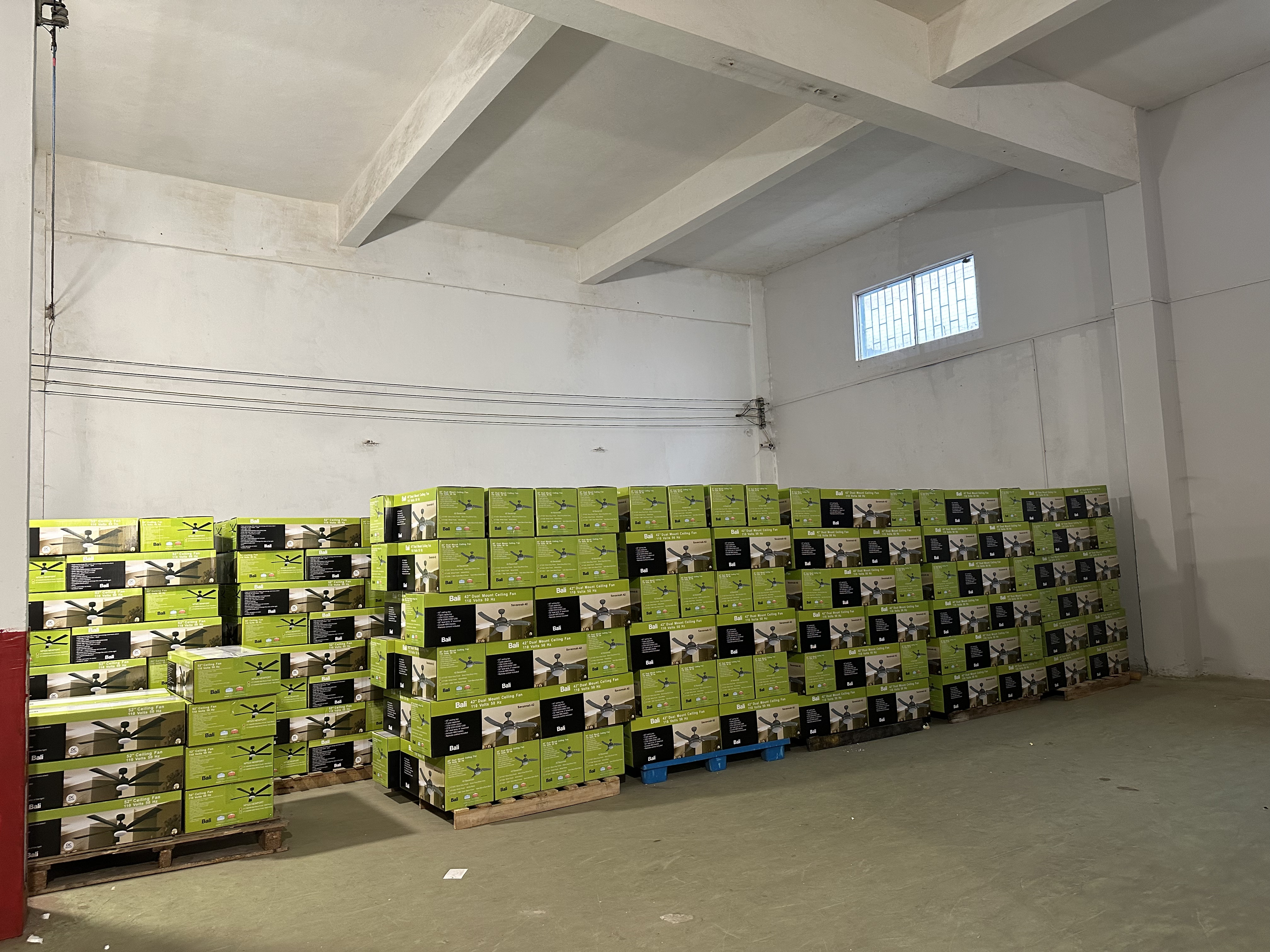
Order staging before container loading: export packaging is part of the specification when a group of cafés must be fitted out in phases.
FAQ
Which compliance points should a café buyer verify before ordering a 52-inch ceiling fan with light?
Verify two separate layers. The first is factory-level quality management: Handing Co. Ltd. has been ISO 9001 certified since 1996 and produces most of its metal parts, its painting, and its motor assembly in-house. The second is model-level product safety and electromagnetic compliance for the destination market. Handing states that its products are listed in UL, cUL, CE, GS, SAA, and other schemes, but certification claims should always be matched to the exact model reference on the order — request the listing document for TU52-MW-N3A1DOME rather than relying on a category statement. If an ENERGY STAR claim is made, note that qualification requires written certification from an EPA-recognized certification body and testing in an EPA-recognized laboratory, so the mark should be checkable against the model listing. For indoor café locations, a UL damp or wet rating is not normally the deciding factor; ENERGY STAR guidance reserves damp ratings for humid locations and wet ratings for direct water contact.
Can one 52-inch fixture really correct both uneven airflow and uneven light in a café?
It corrects the two problems more efficiently than separate fixtures, but the count still depends on the room. The 52-inch three-blade span with a DC motor distributes air across a seating zone at low, quiet speeds, and the 24W CCT LED kit supplies adjustable general light from ceiling height rather than in a narrow downlight cone. In a compact café, one well-placed unit can carry both functions. In a long or multi-zone interior, two or more units grouped through the smart WiFi control are usually required, because a single fan cannot straighten out air movement around a corner or behind a partition. The fixture improves comfort and light quality; it does not replace extraction or correct an undersized HVAC system.
What drives the cost of a smart decorative ceiling fan for a café fit-out?
Cost is driven by configuration rather than by a single headline figure. The main variables are the DC motor and its control electronics, the 24W CCT LED light kit, the housing and blade materials, the finish, the certification scope required for the destination market, the order volume, and export packaging. Handing Co. Ltd. does not publish a price list for this model, so quotations are built from the confirmed configuration — model reference, finish, control method, certification requirement, quantity, and delivery destination. That is also why the specification should be locked before pricing is requested: a quote against an undefined configuration cannot be compared with a competing offer.
Can we evaluate a sample before committing to a multi-site rollout?
Yes, and sampling is the right step before a rollout rather than after it. Request the sample in the exact configuration being considered — Matt White finish, 52-inch span, 24W CCT LED kit, smart WiFi control — and test it in a real room at the busiest hour of the day. Check the lowest speed for quietness and air reach, switch the LED through its colour temperature settings under both daylight and evening conditions, and confirm that grouping and scenes behave the way staff would actually use them. Handing Co. Ltd. maintains a sample room for this purpose, and sample arrangements can be discussed directly with the sales team at sales@handingfan.com or +852 92839029.
How should we plan lead time and supply continuity across several café openings?
Treat lead time as a per-order commitment rather than a category assumption, and ask for the schedule in writing against the confirmed configuration. Handing Co. Ltd. operates a 12,320.66 m² facility with approximately 350 staff, six R&D engineers, and a stated annual capacity of 480,000 units, and it exports 100% of its output to the EU, USA, and Australia — a production profile built for continuous export programmes rather than one-off orders. For a phased rollout, three practices reduce risk: place the first order with spare blades and light kits for the full estate, keep the specification document identical for every site, and schedule later phases against confirmed production slots rather than assumed availability. To plan a rollout, send the site list, configuration, and destination markets to sales@handingfan.com or call +852 92839029, and the team can confirm the production schedule for each phase.
Conclusion
Uneven light and uneven airflow in a café are rarely two problems. They are usually one specification problem: a room fitted out fixture by fixture, with each element controlled separately and none of them designed to work with the others. The TU52-MW-N3A1DOME consolidates the answer into a single ceiling device — 52-inch three-blade air movement from a DC motor, a 24W CCT LED light kit, smart WiFi control, and a Matt White finish over a steel housing with ABS blades, specified for indoor household and commercial use.
The longer-term decision sits behind the product. Choosing a manufacturer established in 1992, ISO 9001 certified since 1996, with in-house metal parts production, painting, motor assembly, and a 100% owned electroplating factory, is what makes the second café, the fifth, and the twentieth match the first. That is the practical meaning of a long-term supply relationship in this category: the same fixture, the same finish, and the same control logic, available when the next site opens.
Request a sample or a configuration quote
Handing Co. Ltd. supplies decorative ceiling fans to the EU, USA, and Australia from its facility in Kaiping City, Guangdong Province, China. Send your café or retail project details — room layout, fixture count, finish, control requirement, and destination market — and the team will confirm the configuration, documentation, and production schedule.
Email: sales@handingfan.com | Phone / WhatsApp: +852 92839029 | Website: www.handingfan.com
Factory address: No.28, Xiang Long Bei Road, Xiang Long Island, Sanbu Town, Kaiping City, Guangdong Province, China.
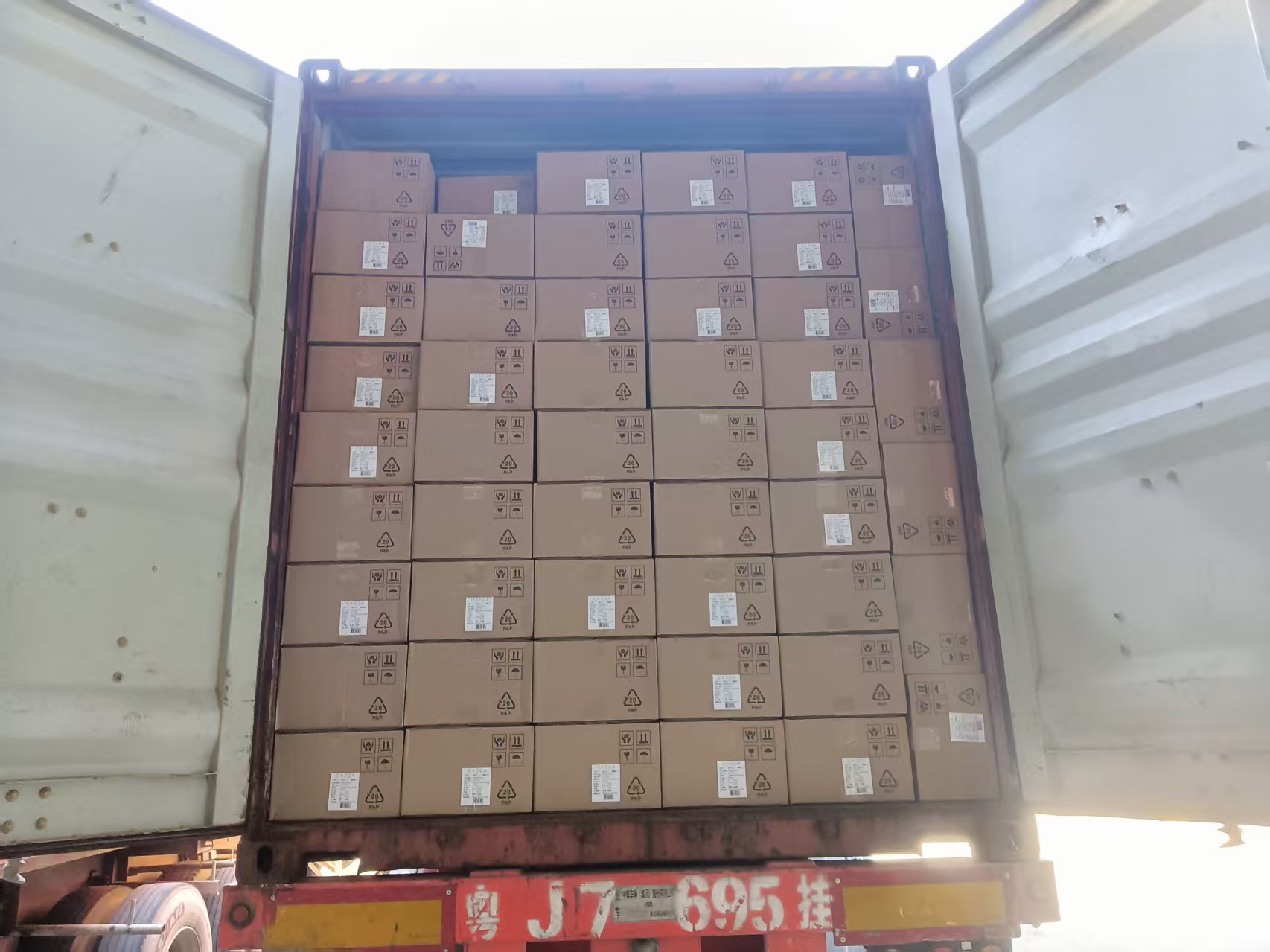
Container loading for export: production capacity of 480,000 units per year supports phased rollouts across multiple café locations.
Download the full factory and product presentation: Handing factory presentation (PDF).
Have Questions or Need More Details?
Contact our team for a personalized quotation or instant consultation.
Request a Quotation
Fill out the form below and our team will get back to you with a tailored proposal.
WhatsApp Direct Chat
Prefer to chat in real-time? Message us on WhatsApp for instant assistance & quick answers.
- Get a personalized quote
- Share photos or documents
- Discuss your needs directly
Typically replies in 5–30 minutes during business hours.