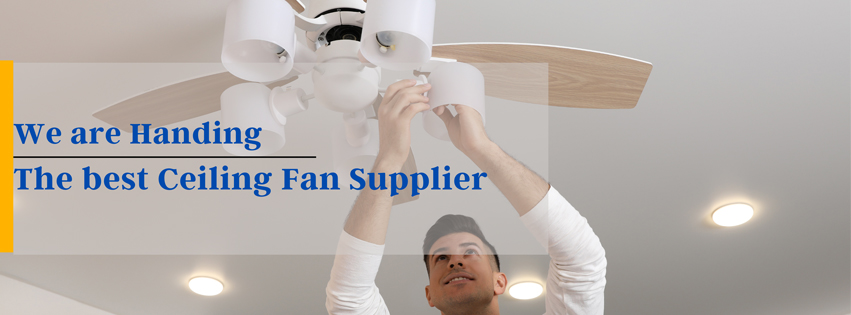
Why Is My Room Not Cooling Down? Choosing an Efficient Decorative Ceiling Fan With Light
A room that will not cool down is rarely a room that needs a bigger fan. In most cases the cause is one of four things: the fan is undersized for the space, it is mounted where its blades cannot move room air, the motor loses efficiency at the low speeds people actually use, or the lighting and solar load around the seating area keeps adding heat. A decorative ceiling fan with light specified correctly — 52-inch span, DC motor, steel housing, 24W CCT LED light kit — addresses airflow and lighting heat load from the same mounting point.
This guide works through the diagnosis first, then the specification. It uses the Handing Co. Ltd. TU52 model — a 52-inch decorative ceiling fan with a DC motor, steel housing and a 24W CCT LED light kit — as the worked example, because its configuration maps directly onto the failure points described below.
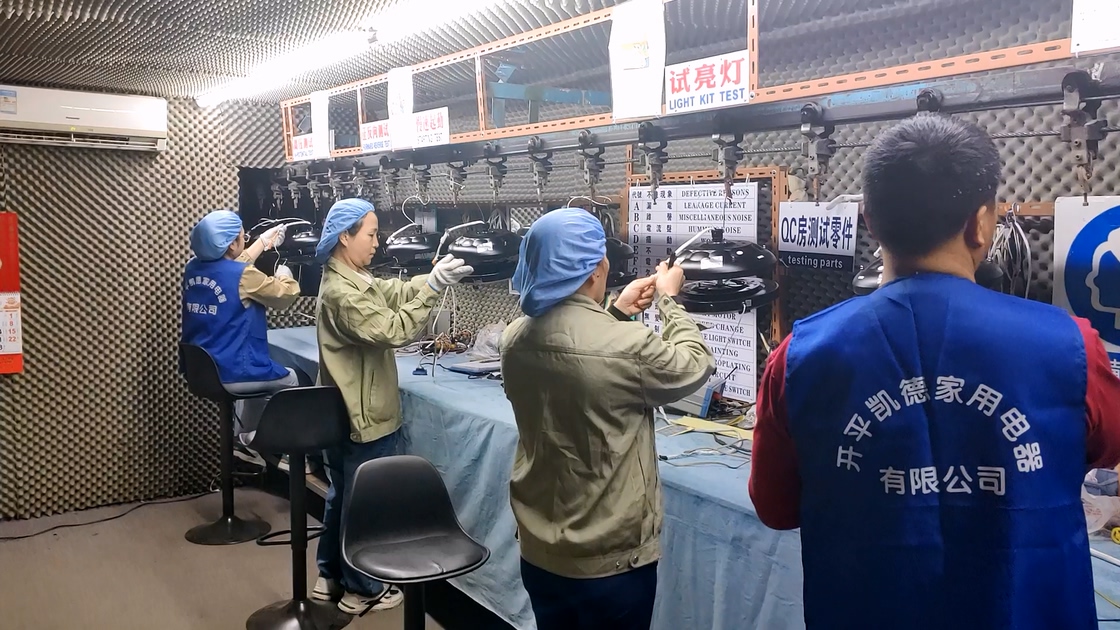
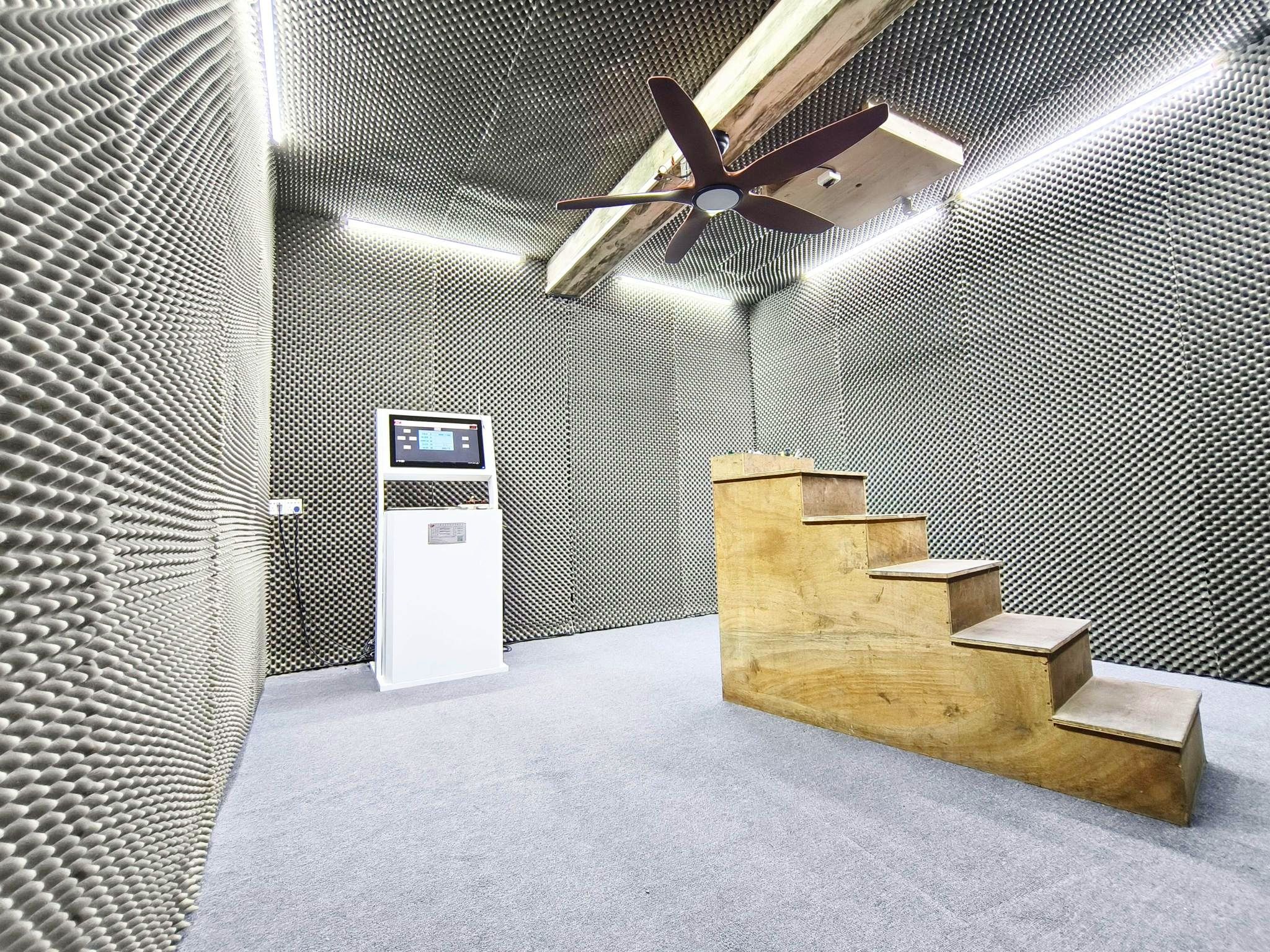
Motor assembly and testing room at Handing Co. Ltd. — the stage where DC motor efficiency is verified before final assembly.
Why a Room With a Ceiling Fan Still Feels Warm
Air movement and air temperature are two different things. A ceiling fan does not cool the air in a room. It moves air across the skin, which increases convective and evaporative heat loss, and that is why an occupied room can feel several degrees cooler at the same thermostat setting once a fan is running properly. When that effect does not happen, the problem is almost always mechanical, positional or about the heat load — not about the fan needing to spin faster.
1. The blade span does not match the room
Blade span determines the swept area that pushes air downward. An undersized fan has to be run at high speed to stir a large room, which raises noise and energy consumption while producing a narrow, uncomfortable air column rather than a room-wide circulation pattern. A 52-inch span is the configuration Handing specifies for the TU52, and it is the size class used for medium and larger living rooms, guest rooms and light commercial interiors where the fan is the primary air mover rather than a decorative extra.
2. The fan is mounted where it cannot move room air
Installation height changes everything. The ENERGY STAR product definition for residential ceiling fans describes a fan whose lowest blade point sits more than 10 inches from the ceiling. That figure is a classification threshold rather than an installation instruction, but it points at a real problem: blades mounted too close to the ceiling recirculate the same air pocket instead of driving air down into the occupied zone. A low-profile ceiling fan solves a head-clearance problem; it does not automatically solve an air-circulation problem.
3. The motor is inefficient at the speeds people actually use
Most ceiling fans spend their life at low or medium speed. DC motors are generally more efficient in that band than conventional AC induction motors, which is why efficiency programmes reward low-speed and standby performance rather than peak output. ENERGY STAR's ceiling fan criteria use a weighted efficiency metric calculated across multiple speeds and in standby mode, expressed in cubic feet per minute per watt (CFM/W), and the minimum thresholds vary by fan diameter. In other words, a fan is judged on how it performs across the speed range, not on how much air it can move flat out.
4. Housing and blade vibration break up the airflow
A ceiling fan that hums, wobbles or resonates is not just annoying; vibration disturbs the air stream and forces the user to turn the fan up to compensate. Housing rigidity, blade balance and motor mounting are the controlling variables. A steel housing damps vibration more effectively than thin formed housings that flex under load, and it holds its shape over years of thermal cycling.
5. The light kit adds heat inside the air stream
Because the light kit sits at the lowest point of the fan, directly in the path of the downward air column, an inefficient lamp adds heat exactly where the airflow starts. The practical answer is a low-wattage LED module. The TU52 uses a 24W CCT LED light kit, which allows colour temperature to be set for the room while keeping lighting power draw low — a meaningful difference in a bedroom or guest room where the fan and the light run at the same time for hours.
6. The room's heat load is larger than the fan can offset
A fan redistributes air. It cannot remove heat generated by unshaded west-facing glazing, poorly insulated ceilings or heat-producing equipment. If a room is uncomfortable even with strong air movement directly underneath the fan, the fan is not the constraint — the envelope is. Treat fan selection as one part of the fix, not the whole fix.
What Changed in Ceiling Fan Efficiency and Compliance
Efficiency is no longer a marketing angle in this category; it is a regulatory and procurement variable, and it is pushing the decorative segment toward DC motors.
Market context. Estimates for the global ceiling fan market in 2025 range from USD 11.83 billion to USD 15.7 billion. The spread reflects different definitions of the decorative versus industrial segments rather than a data error, and buyers should treat either figure as directional. China accounts for approximately 26.7% of the global ceiling fan industry, which is why supplier evaluation in this category usually starts with Chinese manufacturing clusters.
EU efficiency rules. From 24 July 2026, EU ErP regulation sets a minimum static efficiency requirement of 50% for axial fans. Fans that cannot meet the threshold cannot be placed on the EU market, which in practice accelerates the shift from AC to DC motor platforms in decorative and residential lines.
ENERGY STAR in the United States. ENERGY STAR reports that certified ceiling fans are up to 44% more efficient than conventional fans. Qualification is not self-declared: a manufacturer must obtain written certification from an EPA-recognised certification body, and products must be tested in an EPA-recognised laboratory. For a buyer, that means the certificate is a document you can request by model number.
Import cost. Ceiling fans for permanent installation imported into the United States from China under HS code 8414.51.30 carry a 17.20% duty rate, a stack of a 4.7% general rate and a 12.5% Section 301 duty. Landed cost planning should build this in before the specification is locked.
Environment ratings. For humid locations, ENERGY STAR advises selecting a fan with a UL damp rating; for locations in direct contact with water, a UL wet rating is recommended. An indoor ceiling fan and an outdoor ceiling fan are not interchangeable, and the rating must be confirmed per model rather than per brand.
What an Efficient Decorative Ceiling Fan With Light Changes — the TU52
The TU52 is a commercial-grade 52-inch decorative ceiling fan with a DC motor, a steel housing and a 24W CCT LED light kit. Each of those four specification choices maps onto one of the failure points above.
52-inch span
A 52-inch span gives the swept area needed to move air across a medium or large room without forcing the fan into its highest speed setting. In practice this is what changes the daily experience: the fan runs at low or medium speed, the noise floor stays low, and the air still reaches the seating area rather than pooling near the ceiling.
DC motor
A DC motor allows finer speed steps and holds efficiency better at low and medium speeds, which is where residential and hospitality fans operate most of the time. It is also the platform most compatible with the direction EU ErP 2026 and ENERGY STAR-style criteria are pushing the category toward. For a project buyer, the DC motor is the single specification decision with the longest cost tail.
Steel housing
The steel housing addresses vibration and long-term dimensional stability. A rigid housing keeps the motor aligned and the blade plane flat, which is what prevents the slow onset of wobble that makes a three-year-old fan sound like a ten-year-old one. This matters more in commercial rooms, where the fan may run for extended daily hours.
24W CCT LED light kit
The 24W CCT LED light kit replaces the separate fixture in many rooms and keeps lighting power draw low relative to the illumination delivered. Colour temperature adjustability means the same fan can be specified for a warm residential bedroom and a neutral retail interior without changing the SKU family. Critically, the light sits in the air stream, so low power draw translates directly into less heat added to the airflow.
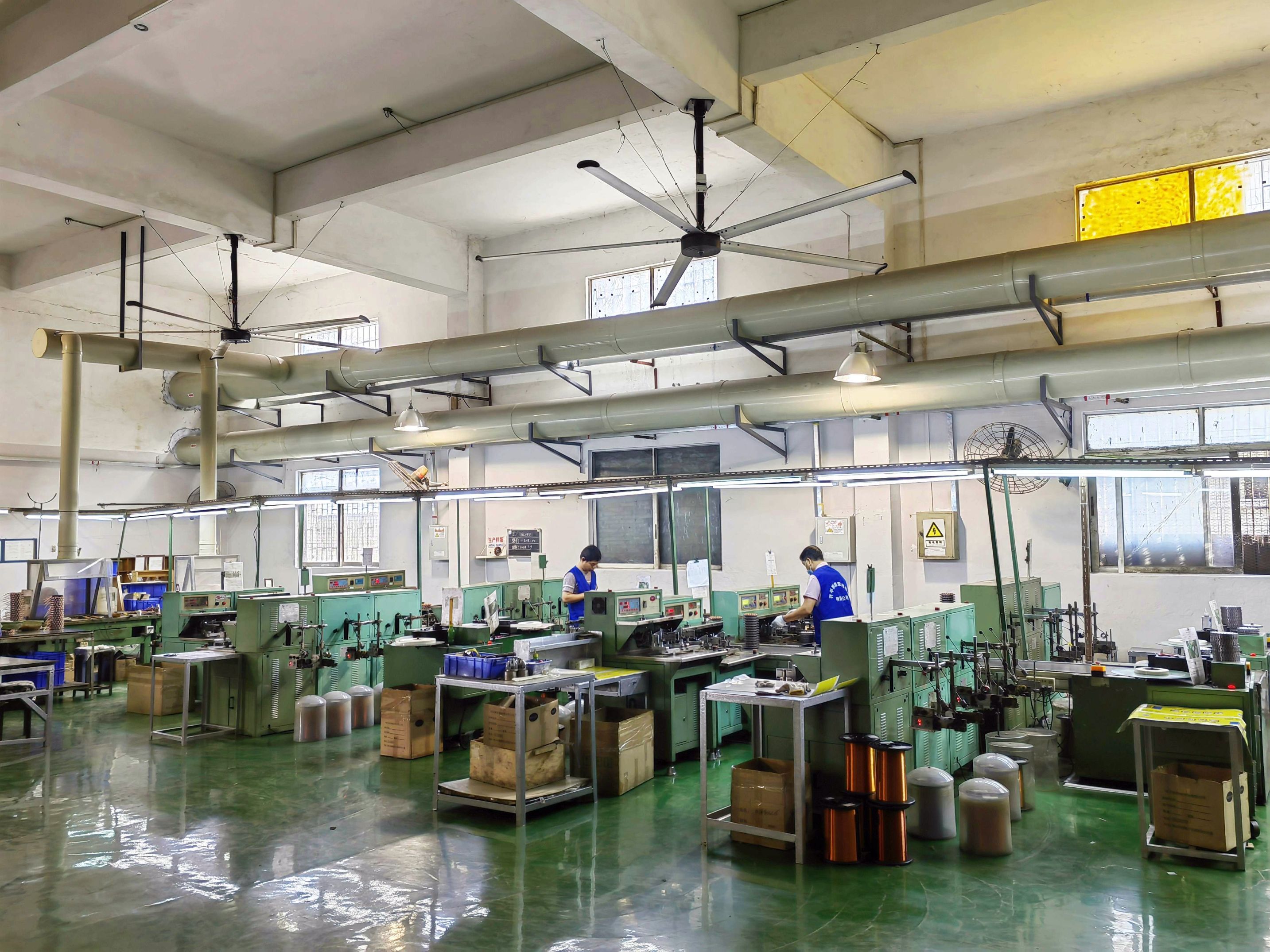
Motor winding workshop — winding quality determines how consistently a DC motor performs across its speed range.
The manufacturer behind the specification
Handing Co. Ltd. is a ceiling fan manufacturer established in 1992, operating a 12,320.66 m² factory in Kaiping City, Guangdong Province, China, with 350 employees, six R&D engineers and annual output of 480,000 units. Its ceiling fans are exported to the EU, USA and Australia, and exports account for 100% of output. The company states that its ceiling fan and lighting factory was ISO 9001 certified in 1996.
Manufacturing depth is relevant to a fan that is supposed to stay quiet and efficient for years. Handing produces most of its metal parts in-house, performs its own painting and assembles its own motors, and owns 100% of an electroplating factory — which keeps finish quality, delivery timing and cost under direct control rather than through subcontractors. When Europe introduced the RoHS regulation in 2006, the company set up XFS machinery and chemical testing to verify its products, and states that this was approved by TUV PS in the same year. Its European fans carry LVD, GS, TUV, EMC, EMF, RoHS and ERP; its products are listed in UL, cUL, Nom, BSI, CE, GS, Swedish Standard and SAA.
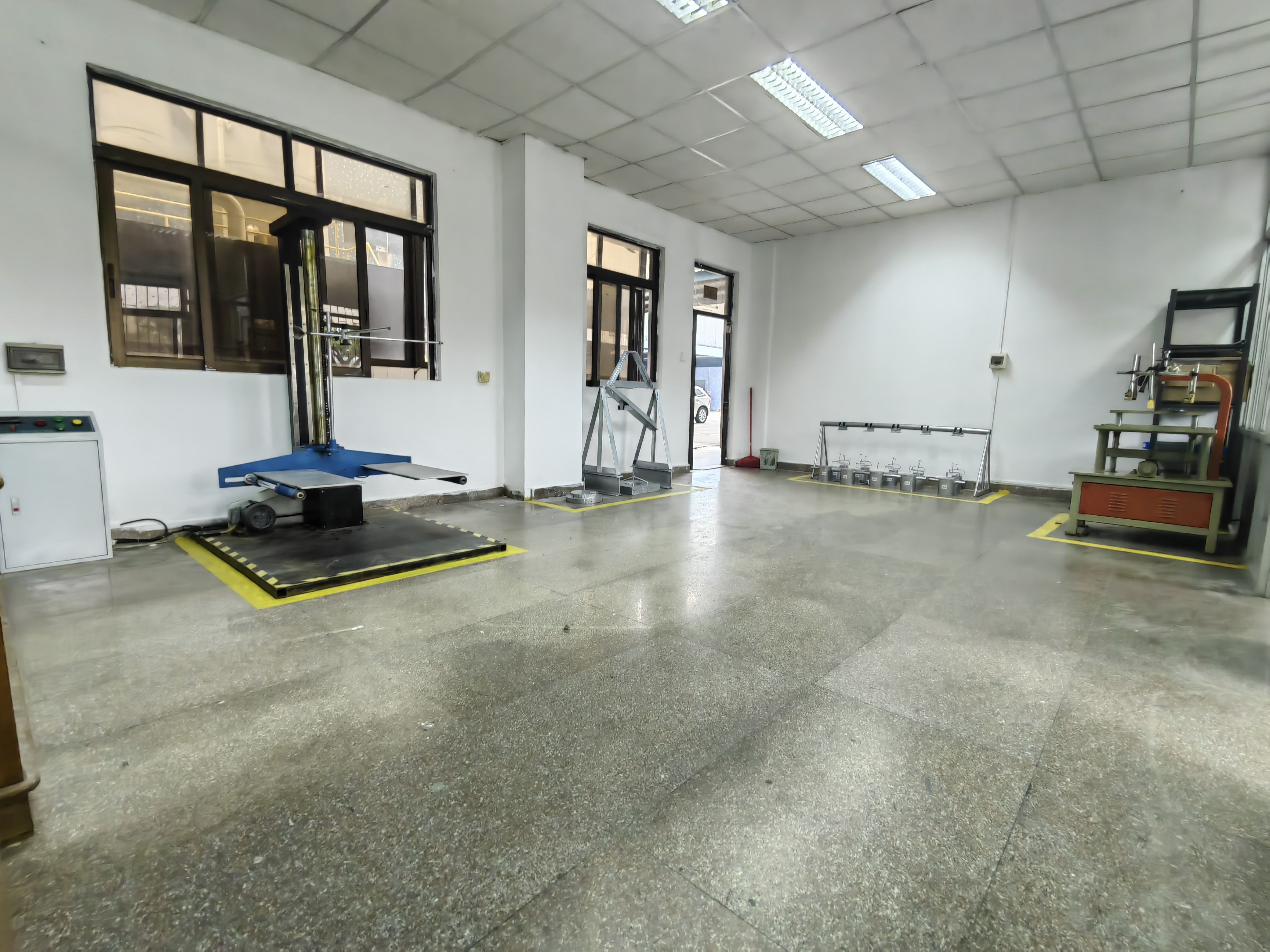
Incoming quality control — component verification before parts enter the assembly line.
Step-by-Step: Diagnose the Room, Then Specify the Fan
Step 1 — Measure the room, not the old fan
Record room dimensions, ceiling height and the position of the seating or bed area relative to the mounting point. Note whether the room already has a fan and, if so, its span. Replacing a 42-inch or 48-inch fan with a 52-inch model is often the entire fix in a large living room.
Step 2 — Check the mounting position and clearance
Confirm the blades will clear the ceiling by a workable margin and that no beam, shelf or bulkhead sits directly in the downward air path. A fan mounted above a partition pushes air into a wall, not into the room.
Step 3 — Decide motor type before anything else
If the fan will run for long hours, or if the project targets EU or US efficiency criteria, specify a DC motor. This is the decision with the greatest impact on running cost and on regulatory acceptance.
Step 4 — Match the light kit to the room's use
A bedroom, a guest room and a retail floor need different colour temperatures from the same fixture. A CCT-adjustable LED module covers multiple rooms with one fan family and keeps lighting heat out of the air stream.
Step 5 — Confirm the environment rating
Indoor rooms use an indoor ceiling fan. Covered terraces, bathrooms and coastal installations require the appropriate UL damp or wet rating, confirmed on the specific model's documentation.
Step 6 — Verify certification by model, not by brand
Ask for the certificate and the model it covers. ENERGY STAR qualification, for example, requires written certification from an EPA-recognised body and testing in an EPA-recognised laboratory — so the paperwork exists and can be requested.
Step 7 — Validate on a sample before volume
Run the sample at the lowest speed you intend to use and listen. Check the light at the intended colour temperature, look at the finish under the actual room lighting, and confirm the documentation package. This is the step buyers skip most often, and it is the cheapest one to do.
R&D workspace — where motor, blade and light-kit configurations are developed before a model is released.
Where a 52-Inch Decorative Ceiling Fan With Light Fits
Residential living rooms and master bedrooms
This is the classic use case for the article's opening question: a room that feels warm despite a fan. A 52-inch DC fan with an integrated LED light replaces both the old fan and a separate ceiling fixture, removing one heat source and one installation point at the same time.
Hotel guest rooms
Guest rooms need low-speed quiet operation and adjustable light colour. A DC motor with fine speed steps keeps night-time noise down, and CCT control lets housekeeping match the room's ambience without swapping fixtures.
Retail and boutique interiors
Decorative fans in retail have to look deliberate. A steel housing and a clean finish hold up better under continuous daily operation than housings that flex and discolor, and the integrated light reduces the ceiling clutter that competes with merchandise displays.
Cafés and restaurants
Dining rooms combine high occupancy, cooking heat and long operating hours. A commercial-grade 52-inch fan running at medium speed moves air through the space without the draught complaints that high-speed AC fans produce.
Light commercial and office interiors
Open-plan offices and meeting rooms benefit from slow, wide air circulation rather than localized blasts. The DC motor's low-speed efficiency is the relevant specification here, not peak airflow.
Humid and semi-exposed locations
Covered terraces and bathroom zones require a damp or wet rated model. ENERGY STAR guidance is explicit: a UL damp rating for humid locations and a UL wet rating where direct water contact is possible. Confirm this per model before specifying an indoor ceiling fan into a humid space.
Comparison: Compliance Coverage by Market
The table below reflects what Handing states for its ceiling fan range. Because listings are model-specific, buyers should still request the certificate reference for the exact model being purchased.
| Market / requirement | What Handing states in its company information | What the buyer should request |
|---|---|---|
| European Union — electrical safety and EMC | European fans carry LVD, GS, TUV, EMC and EMF | Certificate reference per model, plus the test laboratory name |
| European Union — substances and eco-design | RoHS and ERP compliance stated; XFS machinery and chemical testing set up in response to RoHS, approved by TUV PS in 2006 | RoHS test report and ErP conformity documentation |
| North America — safety listing | Products listed in UL and cUL | UL file number and the model scope covered by the listing |
| United States — efficiency programme | Not stated as ENERGY STAR certified in the company profile | Written certification from an EPA-recognised body if ENERGY STAR is a project requirement |
| Australia | Products listed in SAA | SAA certificate reference per model |
| Other referenced listings | Nom, BSI, CE, GS and Swedish Standard | Confirmation of which listing applies to the destination market |
| Quality management | Ceiling fan and lighting factory ISO 9001 certified since 1996 | Current ISO 9001 certificate with validity dates |
Comparison: Configuration Choices and the Problem Each One Solves
| Configuration choice | Room problem it addresses | How a buyer verifies it |
|---|---|---|
| 52-inch blade span | Undersized fan forcing high-speed operation in a medium or large room | Confirm span on the model datasheet; compare against the existing fan |
| DC motor | Efficiency loss at the low and medium speeds used most of the time | Request speed-step list and efficiency documentation; confirm DC platform in writing |
| Steel housing | Vibration, resonance and progressive blade wobble over years of use | Inspect housing rigidity and motor mounting on the sample |
| 24W CCT LED light kit | Light-source heat added directly into the downward air stream; separate fixture clutter | Test colour temperature settings and confirm wattage on the specification sheet |
| Integrated light plus fan on one mounting point | Two ceiling penetrations, two heat sources, two maintenance items | Check installation drawing and ceiling load requirements |
| Model-level certification | Market entry rejection and rework at customs or inspection | Certificate number matched to the exact model and destination market |
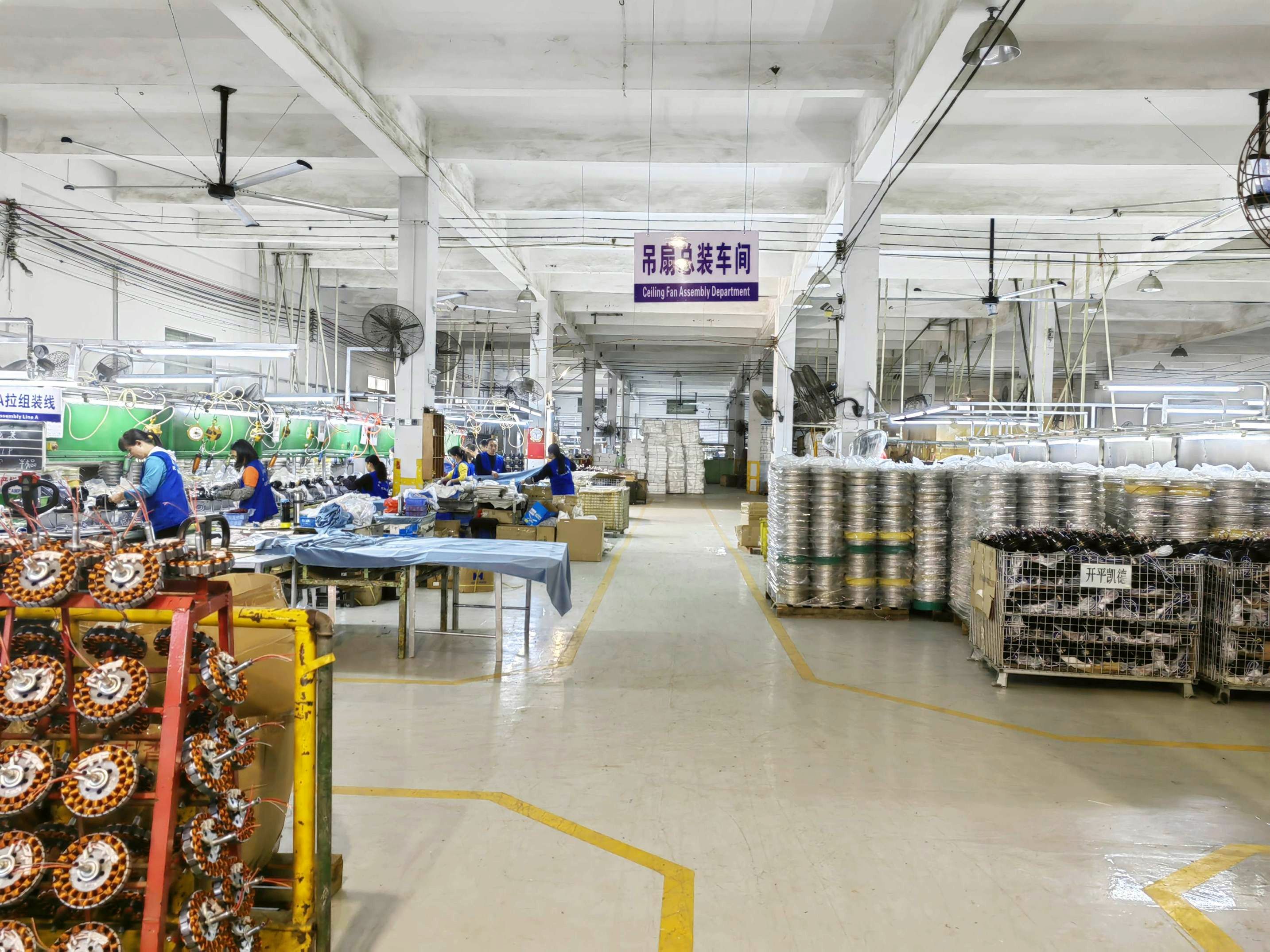
Final assembly — fan and light kit assembled and checked as one unit before packing.
Frequently Asked Questions
Which certifications should an efficient decorative ceiling fan with light carry for the EU, US and Australian markets?
Handing states that its European fans carry LVD, GS, TUV, EMC, EMF, RoHS and ERP, that its products are listed in UL and cUL for North America, and that they are listed in SAA for Australia; other referenced listings include Nom, BSI, CE, GS and Swedish Standard. The fan and lighting factory has been ISO 9001 certified since 1996. Two cautions apply. First, safety listings are granted per model, so the buyer should request the certificate number and the exact model it covers rather than accepting a brand-level statement. Second, if a US residential project requires ENERGY STAR, that is a separate qualification obtained in writing from an EPA-recognised certification body, with testing performed in an EPA-recognised laboratory.
Does a DC motor and steel housing actually change long-term performance, or is it only a specification label?
Both components change how the fan behaves over time, and both are verifiable on a sample. A DC motor delivers finer speed steps and generally better efficiency at the low and medium speeds where decorative fans actually run, which is the metric ENERGY STAR-style criteria assess through a weighted multi-speed and standby calculation. The steel housing controls vibration and keeps the motor aligned and the blade plane flat, which is what prevents progressive wobble. The practical test is simple: run the sample at the lowest speed you will use in service and listen for resonance, then check housing rigidity by hand.
What drives the landed cost of a decorative ceiling fan with light?
Four factors dominate. Motor platform is first, because EU ErP rules effective 24 July 2026 set a minimum static efficiency of 50% for axial fans and effectively push the decorative segment toward DC platforms. Certification scope is second, since every target market adds documentation and testing obligations. Light kit configuration is third — a CCT LED module replaces a separate fixture and its wiring. Import duty is fourth: ceiling fans for permanent installation imported into the United States from China under HS 8414.51.30 carry a 17.20% rate, consisting of a 4.7% general rate plus a 12.5% Section 301 duty. On the running side, ENERGY STAR reports that certified ceiling fans are up to 44% more efficient than conventional fans.
How should a buyer validate a ceiling fan sample before committing to a volume order?
Test the sample under the conditions the room will actually impose. Run it at the lowest speed you intend to use and listen for motor noise and housing resonance. Cycle through the CCT settings and check the light at the colour temperature the room needs. Inspect the finish under the room's own lighting rather than in a showroom. Confirm the documentation package — certificate references matched to the model, the specification sheet, and installation drawings. Handing's factory materials show a dedicated sample room, an IQC testing room, a winding workshop, a motor assembly and testing room, and a final assembly workshop, which means component and finished-unit checks happen at defined stages rather than only at dispatch.
What should be confirmed about supply continuity before placing a repeat order?
Supply continuity in this category rests on how much of the fan the supplier actually makes. Handing operates a 12,320.66 m² factory with 350 employees, six R&D engineers and annual output of 480,000 units, produces most of its metal parts in-house, performs its own painting and motor assembly, and owns 100% of an electroplating factory — so finish quality and component timing stay inside the supplier's control rather than depending on third parties. Exports run to the EU, USA and Australia, and account for 100% of output. Before a repeat order, confirm the production schedule and shipping plan in writing against your own launch dates. Buyers can request the factory presentation pack, a quotation for the TU52 configuration, or a physical sample through www.handingfan.com, or contact the sales team directly at sales@handingfan.com.
Conclusion
A room that will not cool down is a diagnostic problem before it is a purchasing problem. Confirm the blade span against the room, check where the fan sits relative to the occupied zone, decide the motor platform early, size the light kit to the room's use, verify the environment rating, and demand model-level certification documents. That sequence resolves most comfort complaints without buying a larger fan.
Where the diagnosis points to replacement, the TU52 configuration — 52-inch span, DC motor, steel housing and 24W CCT LED light kit, produced by Handing Co. Ltd. in a factory that has run since 1992 and has held ISO 9001 certification on its ceiling fan and lighting operation since 1996 — matches the specification points this guide sets out. The product family is decorative by design and commercial-grade in construction, which is the combination most rooms actually need.
Next step: sample, quotation or factory documentation
Handing Co. Ltd. supplies decorative ceiling fans to the EU, USA and Australia from its factory at No.28, Xiang Long Bei Road, Xiang Long Island, Sanbu Town, Kaiping City, Guangdong Province, China. Project buyers and distributors can request a TU52 sample, a written quotation, or the full factory presentation pack.
Factory presentation (PDF, direct download): Handing factory presentation
Website: www.handingfan.com · Blog: blog.handingfan.com
Email: sales@handingfan.com · Tel: +86-13828060322 · WhatsApp: +852 92839029
Contact: MING LAM
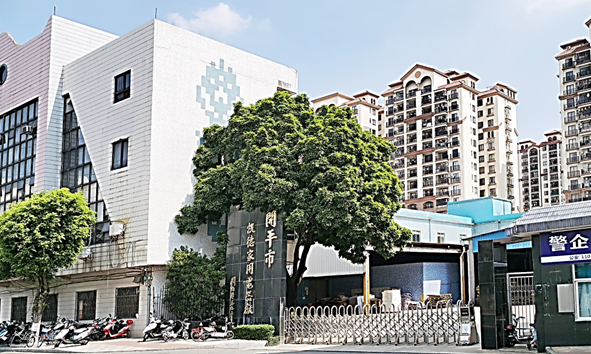
Handing Co. Ltd., established 1992 — ceiling fan and light kit manufacturing in Kaiping City, Guangdong Province, China.
Have Questions or Need More Details?
Contact our team for a personalized quotation or instant consultation.
Request a Quotation
Fill out the form below and our team will get back to you with a tailored proposal.
WhatsApp Direct Chat
Prefer to chat in real-time? Message us on WhatsApp for instant assistance & quick answers.
- Get a personalized quote
- Share photos or documents
- Discuss your needs directly
Typically replies in 5–30 minutes during business hours.