Ceiling Fan Spec Check: Certifications, Motor, and Light Kit Priorities
Ceiling Fan Spec Check: Certifications, Motor, and Light Kit Priorities
Buying a ceiling fan involves more than choosing a style. Buyers who move from a generic ceiling fan search to a specification-based decision need to verify electrical safety certifications, motor type, blade span, light kit options, energy-efficiency requirements, and smart control compatibility before committing to a supplier. This article provides a supplier-side spec checklist for residential and commercial buyers evaluating a certified ceiling fan, using the 52-inch Handing TU52-MW-N3A1DOME as a concrete reference.
Why a Ceiling Fan Spec Check Matters Before Purchase
Without a spec check, buyers risk ordering a fan that cannot be legally sold in the destination market, cannot handle the intended room size, or lacks the control and lighting features expected by end users. Certification is the first constraint. The U.S. safety standard for electric fans, UL 507, was updated with a new version effective November 27, 2024, adding secondary thermal or current fuse requirements for fans in unattended areas. In the European Union, EN IEC 60335-2-80:2024 establishes safety requirements for household fans with rated voltages up to 250V. Buyers targeting North America or Europe should therefore confirm that a fan model carries documentation aligned to the relevant standard edition, not merely an older certification sticker.
Compliance is only one part of the check. Blade span, motor technology, light source, and control type all affect whether the fan meets project requirements. For example, a 52-inch fan is commonly used for medium to large rooms, while a DC motor is widely associated with quieter operation and more flexible speed control. A 24W CCT LED light kit provides color-temperature flexibility, and smart WiFi control enables remote and app-based operation.
Industry Background: Certification and Efficiency Standards Are Tightening
The global ceiling fan market was estimated at USD 14.24 billion in 2023 and is projected to reach USD 19.92 billion by 2030, according to Grand View Research. Standard ceiling fans accounted for the dominant revenue share of 63.66% in 2023, while Asia Pacific held the largest regional share at 44.85%. In 2024, China's exports of fans under HS code 841459 reached 509 million units, with a total export value of USD 3.788 billion, according to TradeDaas/China Customs. These figures indicate that buyers are sourcing a large volume of fans from Chinese manufacturers, which makes certification verification and supplier qualification increasingly important.
Energy efficiency is also part of the specification. ENERGY STAR certified ceiling fans are required to be up to 44% more efficient than conventional fans; for 2024 Most Efficient criteria, standard fans must achieve efficiency of at least 3.25D + 107 (CFM/W). Buyers who plan to market fans in the U.S. should check whether the model meets ENERGY STAR or applicable utility rebate requirements. The market is served by a mix of global and regional players, including Hunter Fan Company, Crompton Greaves, Havells India, Big Ass Fans, and Minka Group, according to industry analysis published by Grand View Research and Straits Research.

Detailed Solution: A Spec-Led Ceiling Fan Reference from Handing Co. Ltd.
Handing Co. Ltd. is a ceiling fan manufacturer based in Kaiping City, Guangdong Province, China. The company has operated factories since 1992 and obtained ISO9001 certification for its ceiling fan and lighting factory in 1996. Handing produces most of its metal parts, handles painting, and assembles motors in-house, and also owns an electroplating factory. According to the company profile, its fans have been exported to retailers worldwide, and its products are listed under UL, cUL, Nom, BSI, CE, GS, Swedish Standard, and SAA. European fans also carry LVD/GS/TUV, EMC, EMF, RoHS, and ERP compliance. For a buyer, this type of documented certification range helps reduce the risk of finding out late that a model lacks the required approval for a specific market.
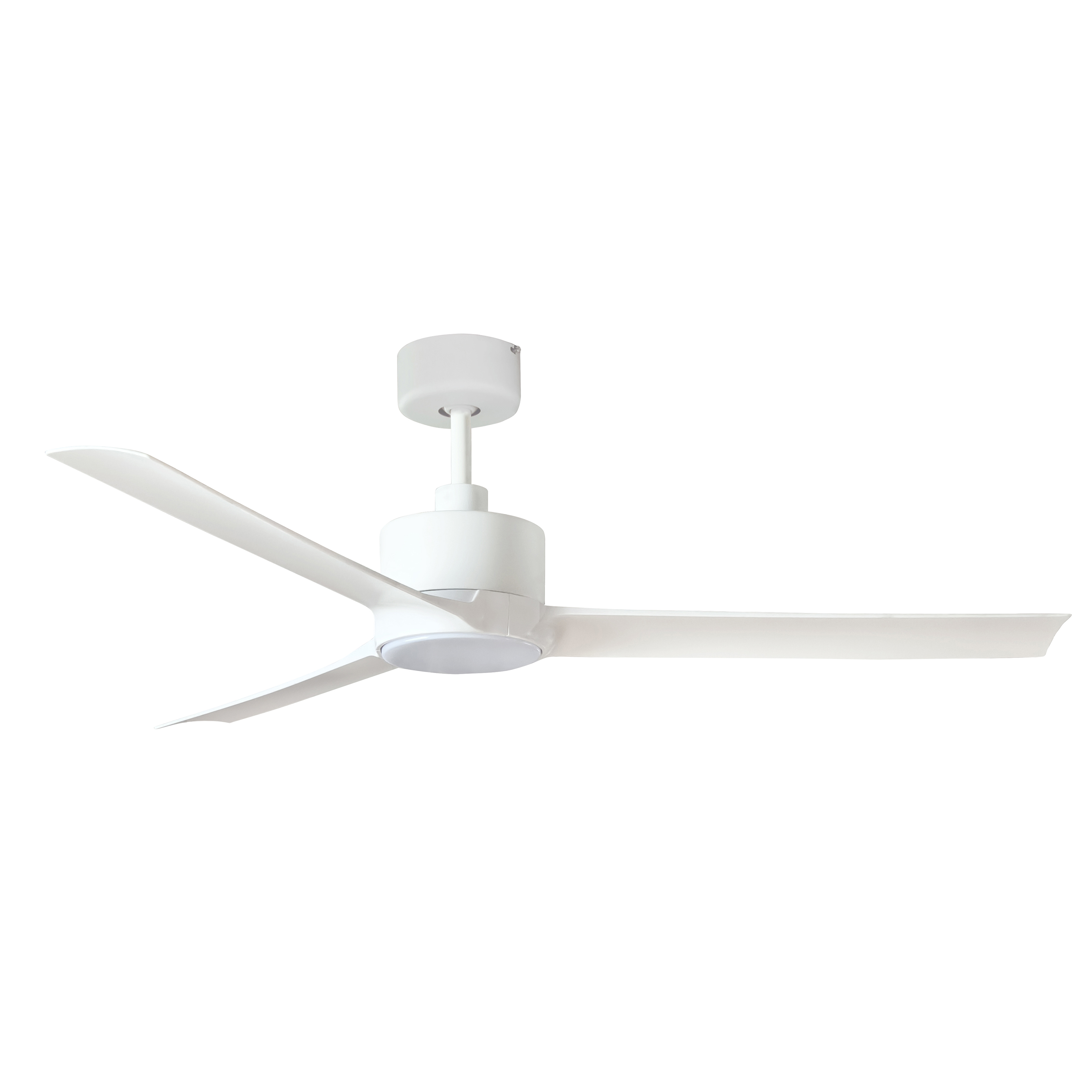
One example is the model TU52-MW-N3A1DOME. It is a 52-inch indoor decorative ceiling fan with a steel housing, 3 ABS blades, and a Matt White finish. The unit is powered by a DC motor and includes a 24W CCT LED light kit with smart WiFi control. Packaging dimensions are 720(L) x 225(W) x 350(H) mm. These specifications make it a useful reference point for buyers evaluating a decorative ceiling fan with light, a commercial-grade ceiling fan, or a smart WiFi ceiling fan.
Step-by-Step Ceiling Fan Specification Checklist
Use the following steps to narrow a shortlist from generic ceiling fan options to models that meet your constraints.
Step 1: Confirm Target Market Certifications
Identify the certification required in the destination country. For the U.S., look for UL or ETL listing and verify alignment with the latest UL 507 requirements. For Canada, cUL or equivalent. For Europe, CE marking with compliance to EN IEC 60335-2-80:2024. For Australia, SAA approval. Ask the manufacturer for the exact certification list and any market-specific declarations before sampling or ordering. A listing mark is not the same as a sticker; it involves factory inspections and product testing. Request the test report and declaration of conformity, not just a logo.
Step 2: Define the Installation Environment
Determine whether the fan will be installed indoors or outdoors, and whether the setting is residential or commercial. The TU52-MW-N3A1DOME is designed for household and commercial applications and is classified as an indoor decorative model. If the project requires outdoor-rated hardware, a separate outdoor ceiling fan specification is needed; confirm IP/weather rating with the supplier. For seasonal airflow, some buyers also require a reversible ceiling fan; confirm this feature if it is part of the requirement.
Step 3: Select Blade Span and Mounting Style
Common blade spans include 42-inch, 48-inch, and 52-inch sizes. The 52-inch span is a common choice for larger rooms and open areas. Also confirm the mounting style: standard, low profile, or angled. If the ceiling height is limited, a low profile ceiling fan may be required. The TU52-MW-N3A1DOME provides a 52-inch blade span, which suits medium-to-large indoor spaces. Decorative design preferences can range from retro vintage to modern; the Matt White finish of this model supports contemporary interiors. Blade pitch also affects airflow and noise, so confirm the pitch specification with the manufacturer if airflow performance is critical.
Step 4: Choose Motor Technology
DC motors are generally quieter and more energy-efficient than traditional AC motors, and they allow more precise speed control. The TU52-MW-N3A1DOME uses a DC motor. Buyers looking for quiet operation ceiling fans should prioritize DC-powered models and check noise-related specifications from the manufacturer. Airflow is measured in cubic feet per minute, and efficiency is expressed as CFM/W. In the U.S., the ENERGY STAR 2024 criteria for standard fans require an efficiency of at least 3.25D + 107, where D is the blade span in feet. If the product is intended for continuous commercial use, confirm the motor duty cycle and heat dissipation with the supplier.
Step 5: Review Light Kit and Control Options
Check whether the fan includes a light kit, whether it is LED, and how color temperature is controlled. The TU52-MW-N3A1DOME comes with a 24W CCT LED light kit. It also supports smart WiFi control, which is relevant to buyers needing remote or app-based operation. Other control options include pull chain controlled ceiling fans or wall-mounted controls; choose based on user preference and installation complexity. If the fan is the primary light source, confirm brightness and color rendering specifications with the supplier.
Step 6: Verify Materials, Finish, and Durability
A fan's housing and blade materials affect weight, corrosion resistance, and maintenance. The TU52-MW-N3A1DOME uses a steel housing and ABS blades in a Matt White finish. For decorative ceiling fan applications, the finish should match the interior design; for commercial-grade use, material robustness matters more. Buyers should also confirm that the finish and blade material are acceptable for the humidity level of the intended space.
Step 7: Inspect Quality Control and Packaging
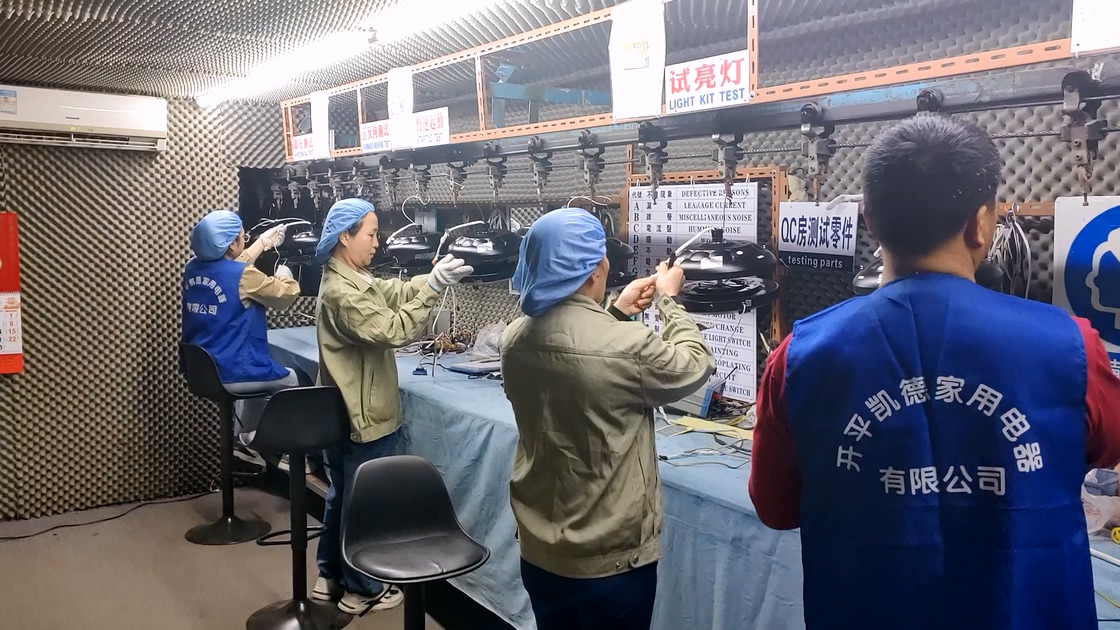
Confirm the manufacturer's quality-control process and package dimensions. Handing Co. Ltd. operates in-house motor assembly testing and incoming quality control testing. The packaging dimensions for the TU52-MW-N3A1DOME are 720(L) x 225(W) x 350(H) mm. These details affect shipping cost, storage planning, and final product inspection. Once the technical and compliance constraints are defined, the remaining budget decision becomes clearer. Certified models typically fall into a higher price band than uncertified fans because compliance testing, traceability, and documentation add real cost. Compare suppliers on the same specification sheet rather than on model name alone.
Use Cases: Where a 52-Inch DC Ceiling Fan With Light Fits
The TU52-MW-N3A1DOME can be evaluated for several buyer scenarios:
- Residential living areas: A 52-inch decorative ceiling fan with light suits living rooms, dining areas, and bedrooms where a central fixture is needed. The Matt White finish and ABS blades give a clean look, while the DC motor supports quiet operation.
- Commercial settings: The steel housing and commercial-grade classification make the model relevant for offices, shops, and hospitality spaces that require durable indoor ceiling fans with lighting.
- Smart-home projects: The built-in smart WiFi control allows the fan to fit into app-based lighting and climate control systems.
- Export buyers: Buyers supplying markets in the EU, USA, or Australia can use Handing's broad certification list as a starting point for compliance verification before placing an order.
Comparison: Certification and Specification Priorities by Market
The table below summarizes the main certification and efficiency points a ceiling fan buyer should verify, based on available standards and supplier facts. It is not a complete legal checklist; always confirm with the manufacturer and a local compliance expert.
| Target Market | Primary Certification / Standard | Buyer Action |
|---|---|---|
| United States | UL 507 (updated version effective November 27, 2024) | Verify UL or ETL listing and check for secondary thermal/current fuse requirements for unattended areas. |
| Canada | cUL or equivalent | Confirm Canadian certification listing before shipment. |
| European Union | CE marking; EN IEC 60335-2-80:2024 | Request EU declaration of conformity and test report for household fans up to 250V. |
| Australia | SAA approval | Confirm the model is listed under SAA for the Australian market. |
| United States (efficiency) | ENERGY STAR 2024 Most Efficient criteria | Check efficiency at or above 3.25D + 107 (CFM/W) if energy rebates matter. |
Handing Co. Ltd. reports product listings under UL, cUL, Nom, BSI, CE, GS, Swedish Standard, and SAA, with European fans carrying LVD/GS/TUV, EMC, EMF, RoHS, and ERP compliance. Because listings can be model-specific, buyers should request documentation for the exact model under consideration.
Frequently Asked Questions
Does the Handing TU52-MW-N3A1DOME come with ETL, UL, CE, or SAA certification?
Handing Co. Ltd. states that its ceiling fans are listed under UL, cUL, Nom, BSI, CE, GS, Swedish Standard, and SAA. ETL is a recognized U.S. listing mark; buyers should ask whether the model carries ETL or UL listing for the destination market. For the exact model TU52-MW-N3A1DOME, request the specific certification documents from the supplier before ordering, because certification coverage can vary by model and destination.
What are the key technical specifications of the TU52-MW-N3A1DOME?
The TU52-MW-N3A1DOME is a 52-inch indoor decorative ceiling fan with a DC motor, a 24W CCT LED light kit, smart WiFi control, a steel housing, 3 ABS blades, and a Matt White finish. Its packaging dimensions are 720(L) x 225(W) x 350(H) mm.
Are certified ceiling fans more expensive than uncertified models?
Certification testing, marking, and documentation generally add cost, so a formally certified ceiling fan can be priced higher than an equivalent uncertified model. The exact difference depends on the certification scope, target market, order volume, and supplier; request an itemized quote for the specific model and market.
Can I request a sample before placing a bulk order?
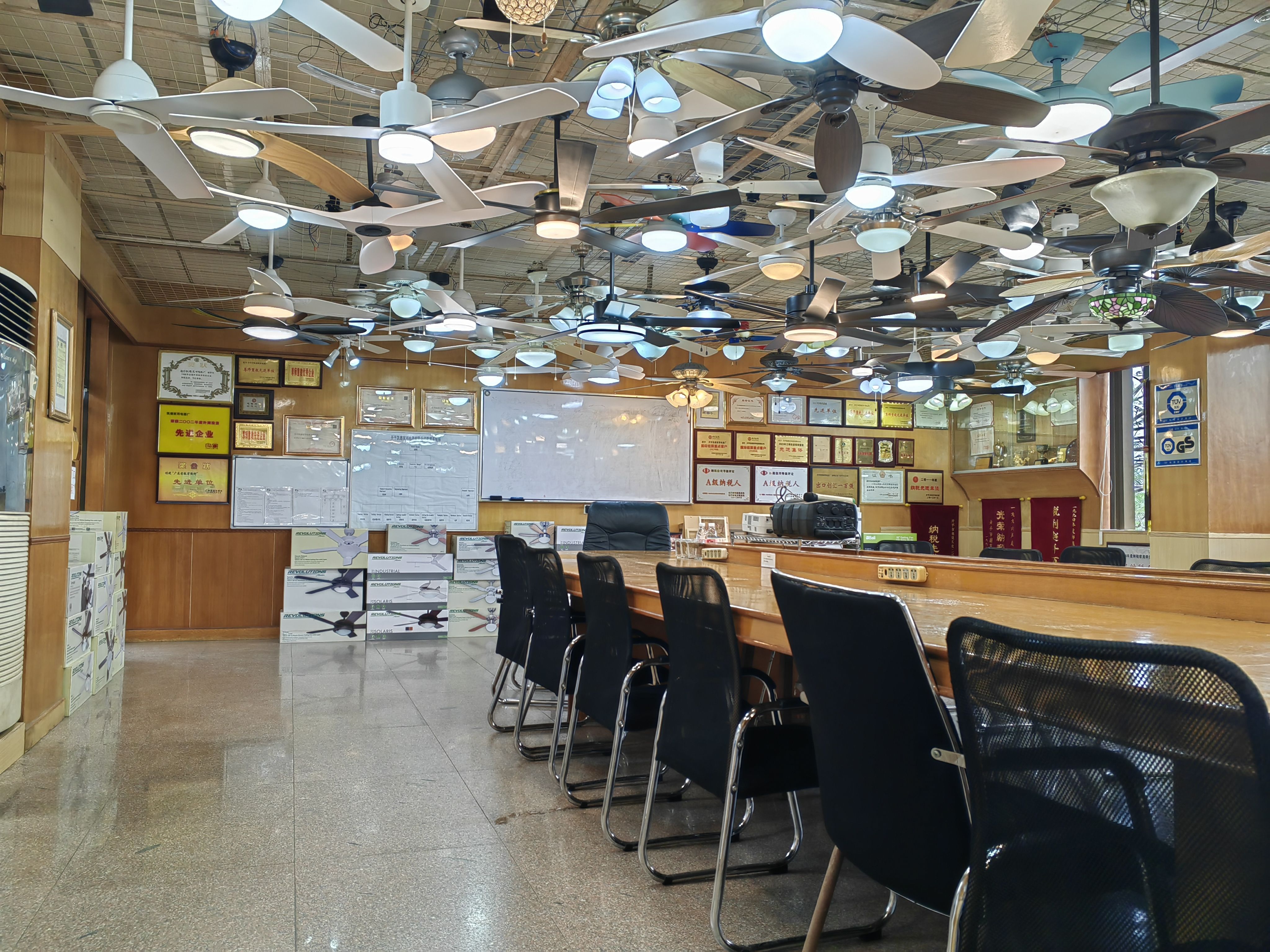
Yes. Handing Co. Ltd. accepts sales inquiries and can discuss sample requests. Contact the sales team at sales@handingfan.com or through the WhatsApp/WeChat contacts on the company profile to confirm sample availability and shipping details. The sample room is used to review ceiling fans before bulk orders.
What lead time should I expect for a ceiling fan order?
Lead time depends on the model configuration, certification package, order quantity, and destination. Contact Handing's sales team for the current lead time for your order; the overall factory and process overview is available in the Handing factory presentation.
Conclusion: Build Your Ceiling Fan Specification Before You Source
A reliable ceiling fan purchase starts with a specification, not a photo. Define the target market certification, installation environment, blade span, motor type, light kit, and control requirements. Then compare those constraints against the manufacturer's documented certifications and product data. The Handing TU52-MW-N3A1DOME provides a reference example of a 52-inch DC ceiling fan with light, smart WiFi control, and a steel-and-ABS construction designed for household and commercial indoor use. For buyers moving into evaluation, the next step is to request the relevant certification documents, a sample, and a quotation.
Download the Handing factory presentation for an overview of manufacturing, testing, and product scope.