Ceiling Fan Supplier Selection: A Guide for Distributors
Ceiling Fan Supplier Selection: A Guide for Distributors
Reference guide for distributors, wholesalers, and importers | Decision-to-execution phase
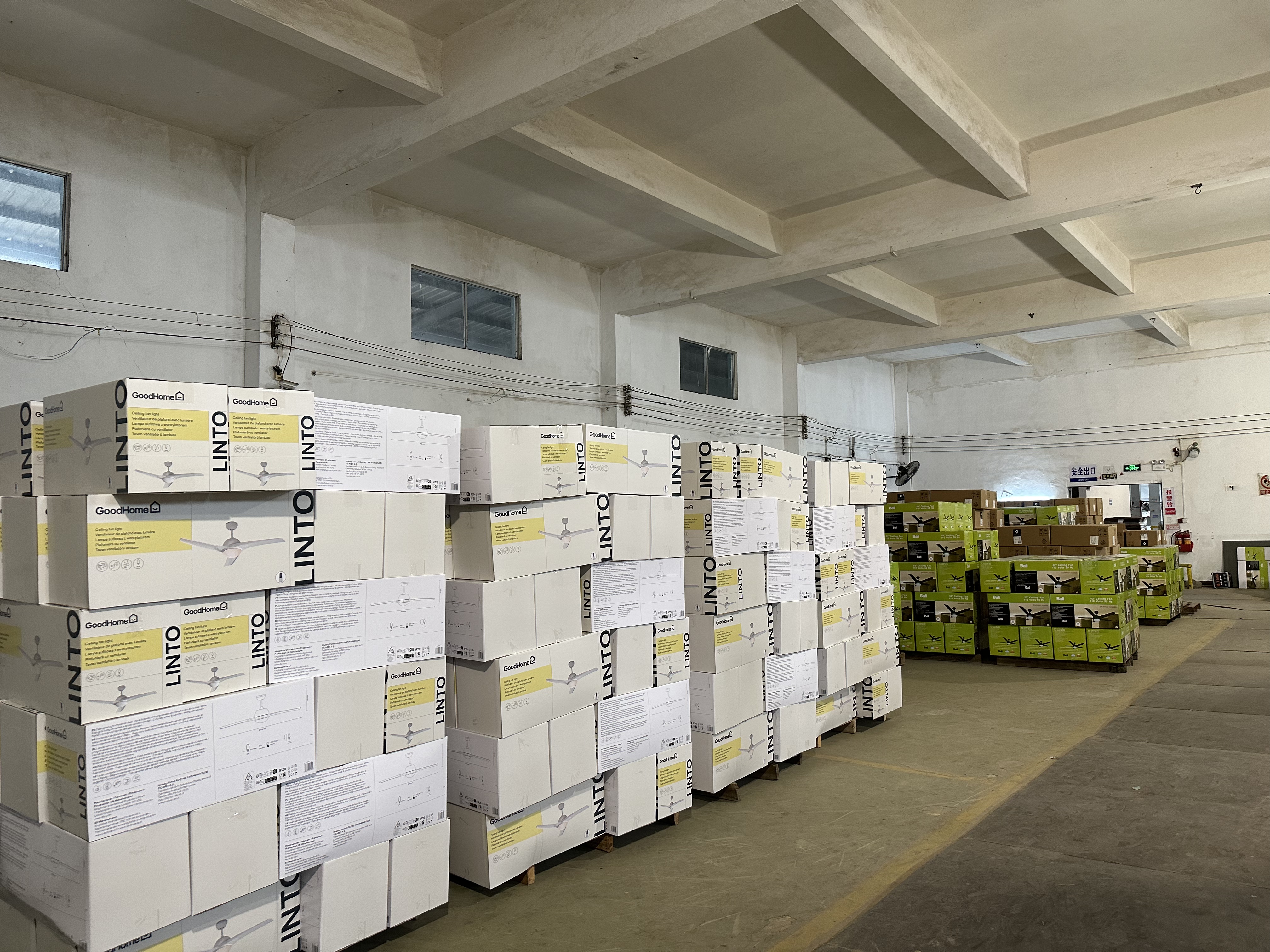
Handing Co. Ltd. finished goods warehouse — part of a 12,320.66 m² factory complex in Kaiping, Guangdong.
Handing Co. Ltd. is a ceiling fan manufacturer founded in 1992, with its factory at No. 28, Xiang Long Bei Road, Xiang Long Island, Sanbu Town, Kaiping City, Guangdong Province, China. The company specializes in decorative ceiling fans and exports 100% of its output to the EU, USA, and Australia. This guide is written for distributors, wholesalers, and importers who have already decided to source ceiling fans and now need to select a manufacturing partner for the long term. It covers compliance verification, in-house manufacturing depth, factory testing, OEM support, cost structure, samples, and delivery reliability — using Handing Co. Ltd. as the reference case.
Why Distributor Risk Is a Long-Term Risk
For distributors, committing to a ceiling fan manufacturer such as Handing Co. Ltd. is not a single-transaction decision. The exposure of a distribution agreement repeats with every batch: certification paperwork must stay valid for every destination market, product quality must remain consistent across production runs, and delivery dates must hold against a wholesale calendar. Switching suppliers after a failed season is expensive, so the evaluation phase deserves more attention than the first purchase order.
Three risks dominate the evaluation process. The first is compliance risk — a fan that does not meet the safety standard of the destination market cannot be legally sold, and a certificate that has lapsed can stop a container at customs. The second is consistency risk — ceiling fans are electromechanical products with motors, blades, downrods, switches, and often light kits, and any change in component quality becomes visible in customer returns. The third is capacity risk — a supplier that cannot scale output or hold delivery dates will limit the distributor's ability to serve retail and project customers.
A distributor therefore needs a supplier that can be verified on documents, factory operations, and export behavior before signing a long-term agreement. The remainder of this guide provides that verification framework, with Handing Co. Ltd. as the reference manufacturer.
Industry Background: Ceiling Fan Demand and Compliance Updates
The global ceiling fan market context supports distributor demand across the regions that Handing Co. Ltd. serves. According to Grand View Research, the global ceiling fans market was estimated at USD 14.24 billion in 2023 and is projected to reach USD 19.92 billion by 2030, growing at a compound annual growth rate of 5.0% from 2024 to 2030. The same source reports that Asia Pacific held the largest revenue share at 44.85% in 2023.
China is the central production base for this demand. TradeDaas, citing China Customs data, reports that China's export volume of fans under HS code 841459 reached 509 million units in 2024, with a total export value of USD 3.788 billion — an increase of 6.96% compared with the previous year.
Within the product mix, standard ceiling fans accounted for 63.66% of global revenue in 2023, according to Grand View Research. This matters for distributors planning portfolios around conventional models, decorative ceiling fans, and smart or energy-efficient variants. Industry analyses by Grand View Research and Straits Research identify Hunter Fan Company, Crompton Greaves, Havells India, Big Ass Fans, and Minka Group among leading global ceiling fan manufacturers.
Two standards updates are directly relevant for distributors importing into regulated markets. Underwriters Laboratories (UL) published a new version of UL 507, the U.S. safety standard for electric fans, effective November 27, 2024; it adds secondary thermal or current fuse requirements for fans in unattended areas. In the European Union, EN IEC 60335-2-80:2024 establishes safety requirements for household fans, including ceiling fans, with rated voltages up to 250 V for single-phase, according to IECEE/CENELEC. Separately, ENERGY STAR certified ceiling fans are required to be up to 44% more efficient than conventional fans; the 2024 Most Efficient criteria for standard fans require an efficiency of at least 3.25D + 107 CFM/W, according to the U.S. EPA.
For a distributor, these numbers translate into a simple action: every SKU in a long-term ceiling fan program must be checked against the current safety standard and efficiency program of the destination market, and the supplier must be able to produce matching certificates.
Handing Co. Ltd.: The Reference Supplier Model
Handing Co. Ltd. operates a factory structure designed for long-term ceiling fan distribution: in-house production of most metal parts, in-house painting, in-house motor assembly, and a 100% owned electroplating factory. The company's stated rationale is that controlling these steps keeps costs competitive, supports electroplating quality, and improves on-time delivery while reducing dependence on outside suppliers.
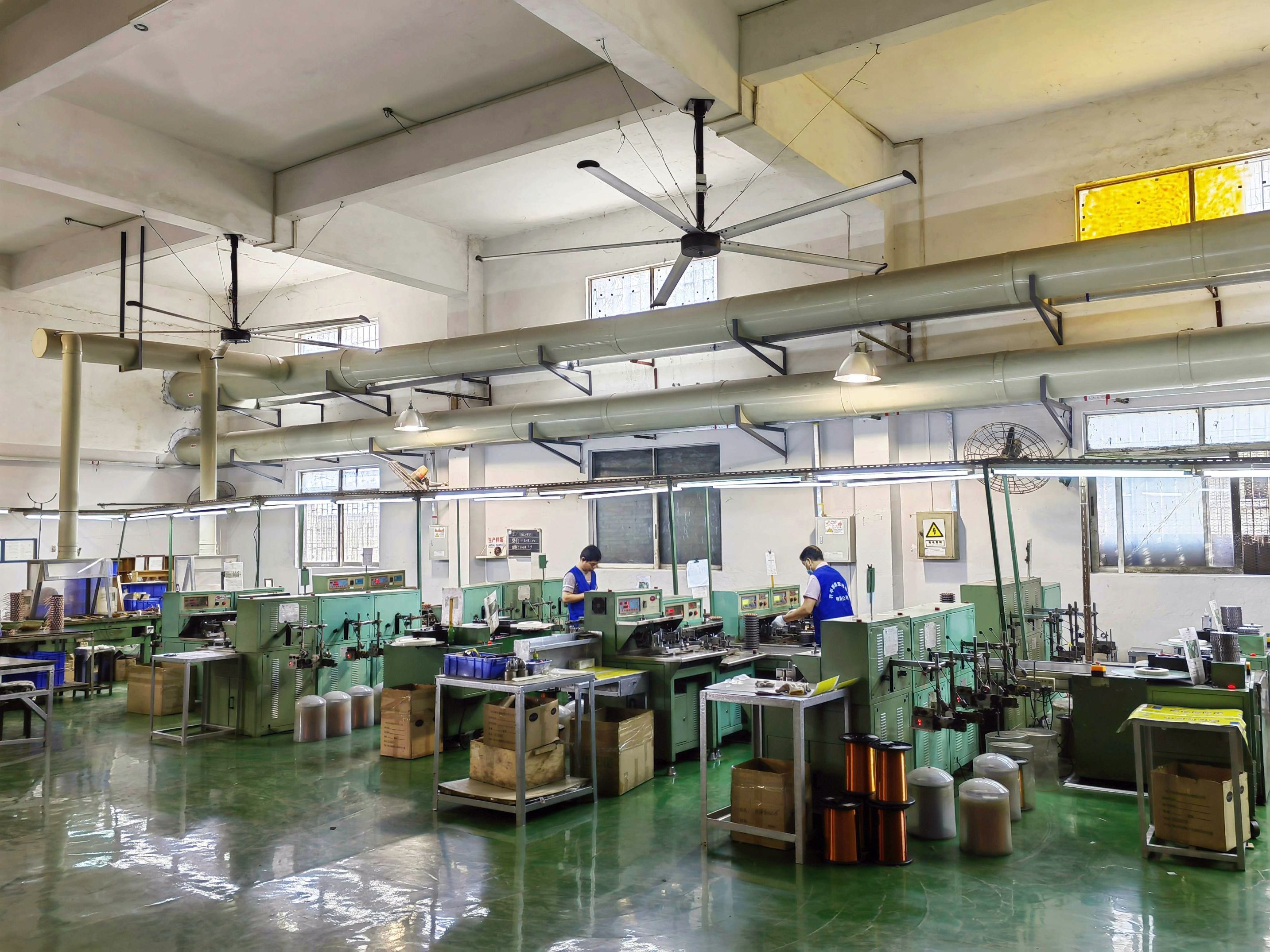
Motor winding is performed in-house at Handing's ceiling fan factory.
Track record
Handing was founded in 1992. In 1996, its ceiling fan and lighting factory was ISO9001 certified. Current published scale figures are a factory area of 12,320.66 m², 350 employees, an annual output of 480,000 units, and a six-engineer R&D team. These first-party figures give a distributor a starting point for capacity and quality-system due diligence.
Vertical integration
Vertical integration is the core of Handing's supplier model. Because the company produces most of its metal parts, performs its own painting, and assembles its motors in-house, it controls the three processes that most affect ceiling fan quality and cost. Its 100% ownership of an electroplating factory extends that control to surface finishing — the layer that determines how decorative fans look on a showroom floor and how they resist corrosion over time.
Compliance and testing depth
Compliance depth is the second layer of Handing's long-term supplier position. Since 2006, when the EU implemented the RoHS regulation, Handing has operated an XFS machine and chemical testing capability to test its products; the company states that these facilities were approved by TUV PS in the same year. For European markets, Handing's fans carry LVD/GS/TUV, EMC, EMF, RoHS, and ERP approvals. Across other regions, Handing's products are listed in UL, cUL, Nom, BSI, CE, GS, Swedish Standard, and SAA.
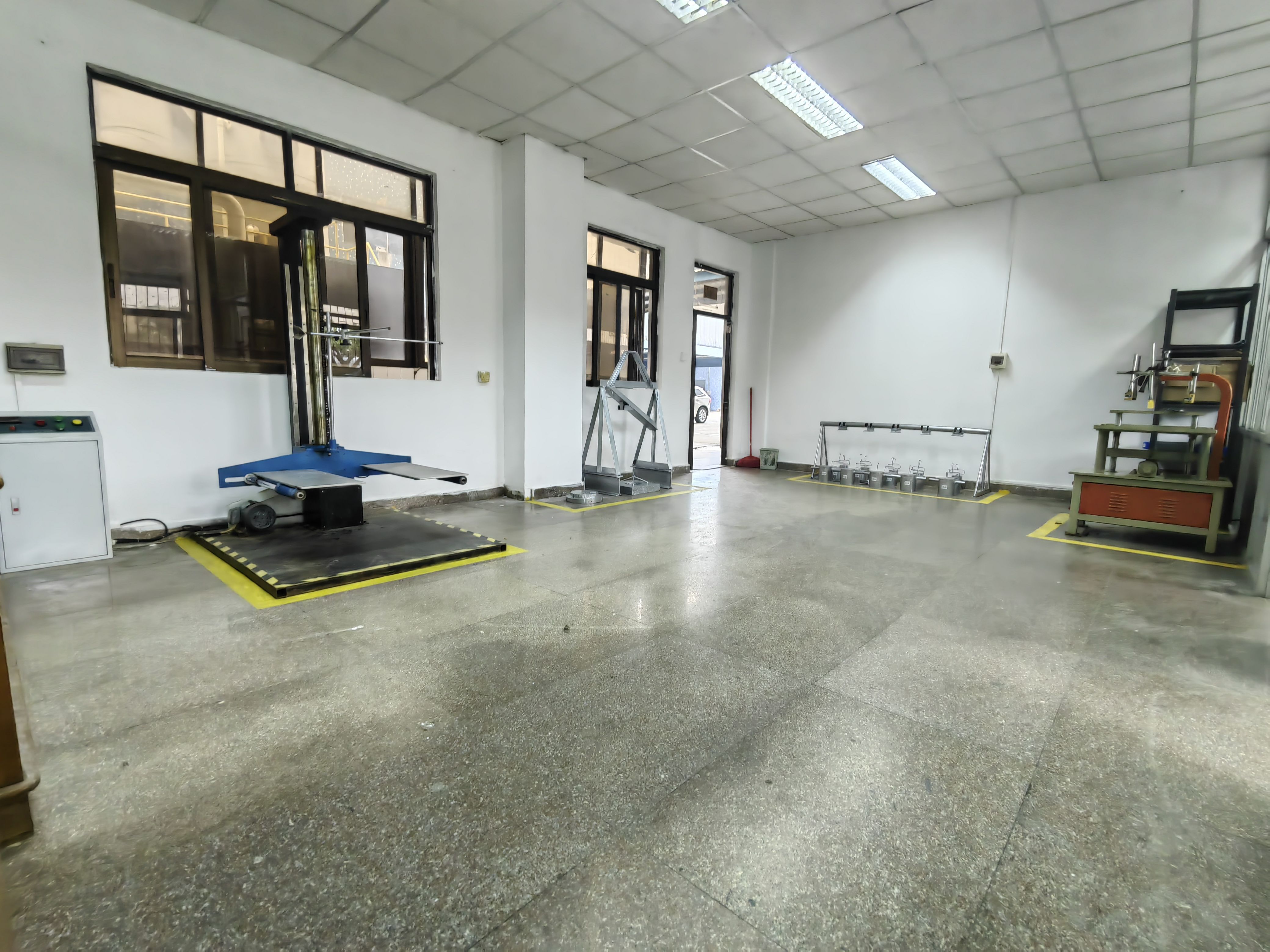
Handing's IQC testing room is part of the factory's quality-control documentation.
Export alignment
Export alignment is the third layer. Handing exports 100% of its ceiling fans, with main markets in the EU, USA, and Australia. The company reports that its ceiling fans have been exported to many well-known retailers throughout the world. For a distributor, this reduces the uncertainty of entering a new supplier relationship: the factory already understands export documentation, certification packages, and retail quality expectations.
Honest limitations
The limitation worth stating is category focus. Handing's stated main product category is decorative ceiling fans. Distributors whose programs are centered on other categories — for example, high-volume standard utility fans or large-diameter HVLS fans — should confirm model availability and capacity directly with the factory before committing. The same applies to specific sizes, control types, and smart features: request the current catalog and match it to your portfolio.
Six-Step Supplier Evaluation Process for Distributors
Distributors can evaluate Handing Co. Ltd. through a six-step process that moves from compliance to samples. Each step can be completed with published certificates, factory records, and direct communication.
Step 1 — Verify certifications for the destination market
For the EU, confirm CE marking and related approvals. EN IEC 60335-2-80:2024 is the current safety standard for household fans, including ceiling fans, up to 250 V single-phase. Handing states that its European fans carry LVD/GS/TUV, EMC, EMF, RoHS, and ERP approvals. For North America, request UL and cUL listings and check them against the current version of UL 507, effective November 27, 2024, which added secondary thermal or current fuse requirements for fans in unattended areas. For Australia, verify SAA listing. For other destinations, confirm Nom, BSI, or Swedish Standard coverage as applicable.
Step 2 — Audit in-house manufacturing depth
Handing produces most of its metal parts, performs its own painting, and assembles its motors in-house, and owns 100% of its electroplating factory. Published scale figures are 12,320.66 m² of factory space, 350 employees, and an annual output of 480,000 units. Vertical integration matters because a factory that controls core processes is less exposed to external component and finishing inconsistency.
Step 3 — Review testing and quality infrastructure
Handing states that it operates an XFS machine and chemical testing capability, approved by TUV PS in 2006, in response to EU RoHS requirements. Factory documentation also includes an IQC testing room and a motor assembly testing room. Ask how these facilities are used for the specific SKU you plan to import.
Step 4 — Confirm OEM and private-label capability
Handing's published materials reference OEM ceiling fan manufacturing capabilities for global buyers, and its R&D team includes six engineers. If the distribution program will sell under a private label, clarify sample modifications, packaging, logos, and model documentation with the factory before production begins.
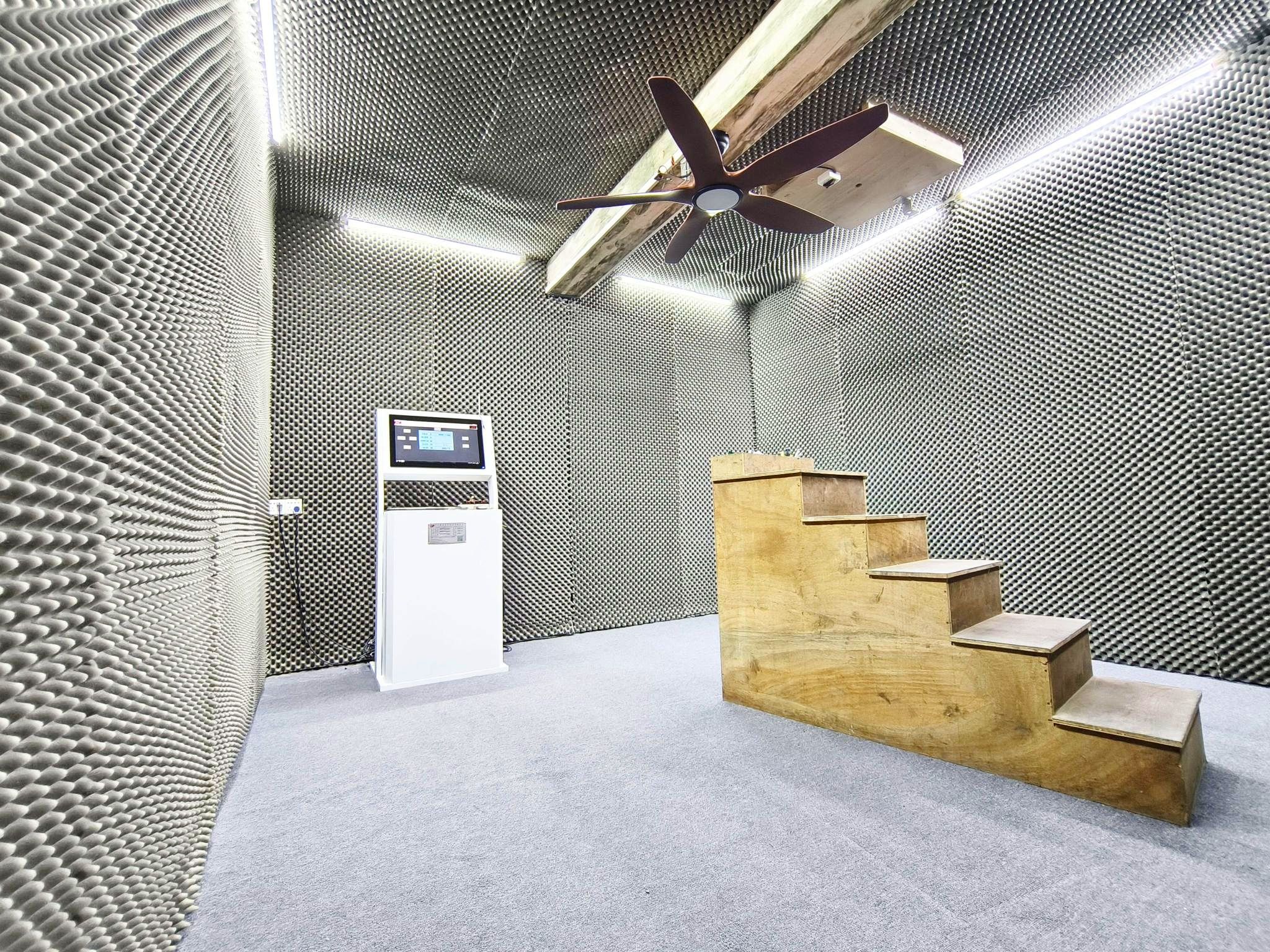
Handing's R&D workspace supports ceiling fan development and OEM programs.
Step 5 — Align cost and delivery expectations
Handing attributes cost competitiveness to its in-house metal parts, painting, motor assembly, and wholly owned electroplating factory. The same structure, per the company, supports on-time delivery. Ask for payment terms, packaging rules, and lead times that apply to your projected order size, and compare landed costs rather than unit prices alone.
Step 6 — Order samples and inspect before scaling
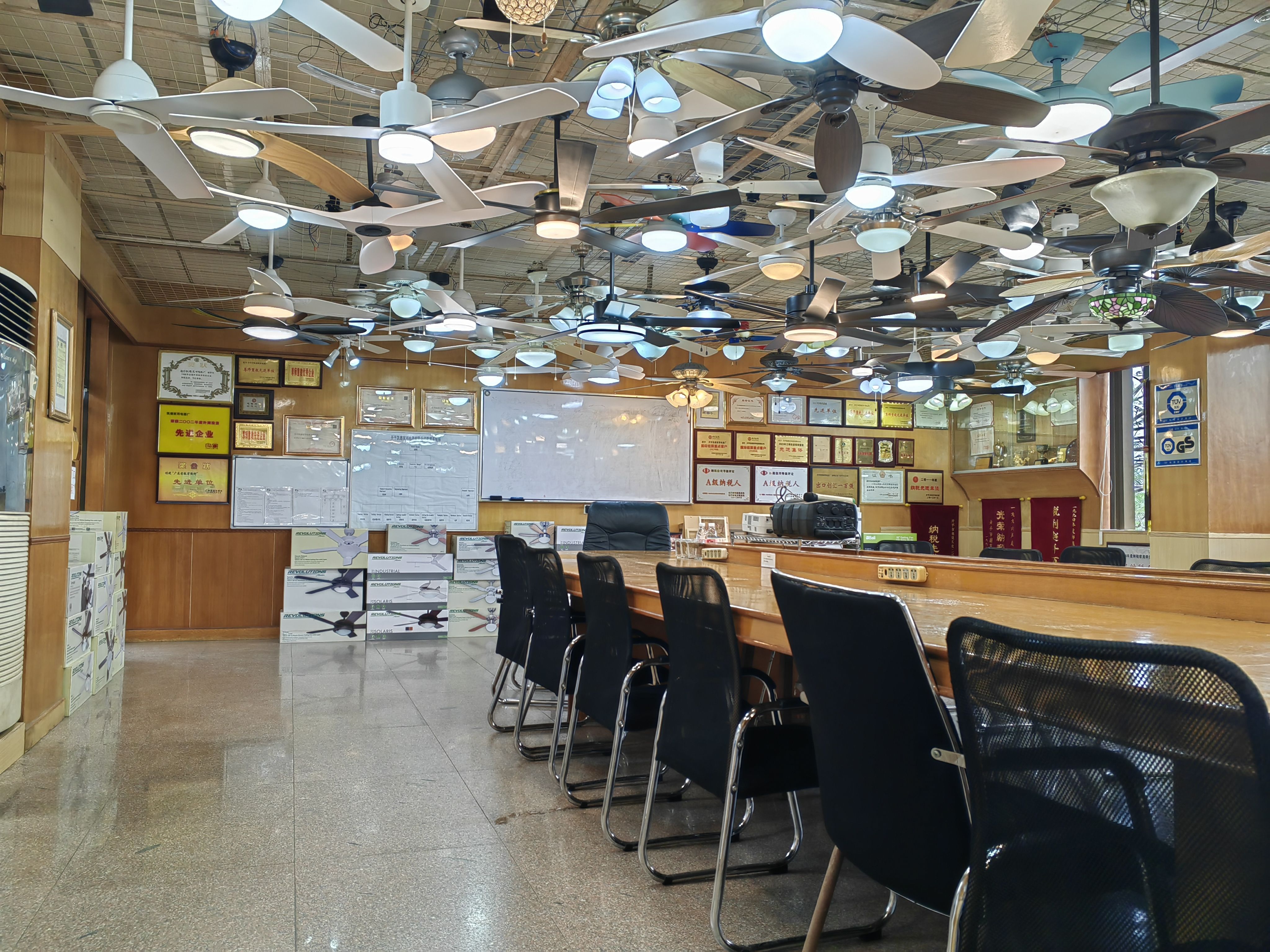
Handing maintains a sample room where distributors can review ceiling fan models. Contact the company to request samples and current specifications. For a distribution agreement, a trial order is a practical way to test documentation, packaging, and delivery reliability before committing to a large volume.
Ceiling Fan Distribution Use Cases
EU retail and e-commerce distribution
Distributors selling ceiling fans in Europe need CE-marked products with documentation that matches the EU's current safety framework, including EN IEC 60335-2-80:2024. Handing's European fans carry LVD/GS/TUV, EMC, EMF, RoHS, and ERP approvals, which cover the main compliance layers expected for household fans in this market.
North American wholesale distribution
U.S. and Canadian distributors require listed products under UL or cUL and should verify them against the current version of UL 507, effective November 27, 2024. Handing's products are listed in UL and cUL. For efficiency-focused programs, ENERGY STAR certified ceiling fans are required to be up to 44% more efficient than conventional fans, according to the U.S. EPA.
Australian and New Zealand import programs
Handing's products are listed under SAA, the Australian safety approval scheme — a factor that simplifies the compliance layer for importers in this region.
Private-label decorative fan programs
Because Handing's main product category is decorative ceiling fans, brand owners and retailers can use the factory as a production base for their own collections. Published materials reference OEM ceiling fan capabilities for global buyers, supported by a six-engineer R&D team.
Commercial and project supply
Commercial and industrial ceiling fan projects in segments such as hotels, offices, and retail typically demand formal safety certifications for the destination country — the same context behind the UL 507 update for fans in unattended areas. Handing's listing coverage (UL, cUL, CE, GS, SAA, among others) supports distributors serving these projects, though model suitability for each project must be confirmed with the factory.
Distributor Evaluation Checklist: Handing Co. Ltd.
The table below maps the evaluation criteria in this guide to first-party facts from Handing's published factory profile, together with the relevant external standards cited above.
| Evaluation area | What to verify | Handing Co. Ltd. |
|---|---|---|
| Corporate history | Longevity and quality milestones | Founded in 1992; ceiling fan and lighting factory ISO9001 certified in 1996 |
| Production scale | Factory area, workforce, capacity | 12,320.66 m²; 350 employees; annual output 480,000 units |
| In-house manufacturing | Metal parts, painting, motor assembly | Produces most metal parts; performs painting; assembles motors in-house |
| Surface finishing | Electroplating control | 100% owned electroplating factory |
| North American compliance | UL/cUL listing; UL 507 (effective Nov 27, 2024) | Products listed in UL and cUL |
| European compliance | CE and related approvals; EN IEC 60335-2-80:2024 | European fans carry LVD/GS/TUV, EMC, EMF, RoHS, ERP |
| Other market approvals | Australia, Mexico, UK, Nordic coverage | Products listed in SAA, Nom, BSI, Swedish Standard |
| Testing infrastructure | Chemical testing and X-ray fluorescence | XFS machine and chemical testing; approved by TUV PS in 2006 |
| R&D / OEM support | Engineering team and private-label capability | 6 engineers; OEM ceiling fan capabilities referenced in published guides |
| Export alignment | Markets served | 100% export to the EU, USA, and Australia |
Frequently Asked Questions
The following questions follow the decision sequence of a distributor evaluating Handing Co. Ltd.: compliance first, then capability, budget, samples, and lead times.
1. Which ceiling fan certifications should a distributor verify for the EU, US, and Australian markets?
For the EU, EN IEC 60335-2-80:2024 sets safety requirements for household fans, including ceiling fans, with rated voltages up to 250 V for single-phase, according to IECEE/CENELEC. Handing Co. Ltd. states that its European fans carry LVD/GS/TUV, EMC, EMF, RoHS and ERP approvals. For North America, UL 507 is the U.S. safety standard for electric fans, updated with a new version effective November 27, 2024; Handing products are listed in UL and cUL. For Australia, Handing products are listed under SAA. Distributors should request current certificates for the exact SKUs they plan to import.
2. How can a distributor verify a ceiling fan factory's in-house manufacturing capability?
Handing Co. Ltd., founded in 1992, produces most of its metal parts, performs its own painting, and assembles its motors in-house. It also owns 100% of its electroplating factory. The company reports a factory area of 12,320.66 m², 350 employees, an annual output of 480,000 units, and a six-engineer R&D team. Its ceiling fan and lighting factory was ISO9001 certified in 1996. Distributors can verify these claims through factory audits and by requesting the company's factory presentation.
3. What factors keep ceiling fan pricing competitive for long-term distribution?
Handing attributes cost competitiveness to vertical integration: in-house production of most metal parts, painting, motor assembly, and a wholly owned electroplating factory. In its company profile, Handing states these capabilities also support electroplating quality and on-time delivery. Distributors should compare landed cost — unit price plus certification, freight, and duty — rather than unit price alone, and should clarify customization scope before quoting a target margin.
4. How do I request ceiling fan samples before placing a bulk order?
Distributors can contact Handing Co. Ltd. directly by email at sales@handingfan.com or minglam3@hotmail.com, by phone at +86-13828060322, or by WhatsApp at +852 92839029. Handing maintains a sample room where buyers can review ceiling fan models. Requesting samples and the current specification sheet is the standard first step before a purchase order.
5. How does Handing ensure on-time delivery for recurring ceiling fan orders?
Handing states that its wholly owned electroplating factory helps it deliver electroplated products on time while keeping costs competitive. Its factory operations include finished goods warehousing and container loading, with 100% of output shipped to the EU, USA, and Australia markets. To confirm lead times for your volumes and destination, request a quote from sales@handingfan.com or via WhatsApp at +852 92839029.
Conclusion
Handing Co. Ltd. has operated its ceiling fan factory since 1992 and exports 100% of its output to the EU, USA, and Australia. For distributors, the case for a long-term relationship rests on three verifiable layers: in-house manufacturing (metal parts, painting, motor assembly, and a wholly owned electroplating factory), compliance infrastructure (an XFS machine and chemical testing approved by TUV PS in 2006; products listed in UL, cUL, Nom, BSI, CE, GS, Swedish Standard, and SAA), and export credentials (European fans carrying LVD/GS/TUV, EMC, EMF, RoHS, and ERP approvals).
A distribution relationship is built on documents, samples, and delivery performance — not on a single price quote. Keep the full company profile on file by downloading the Handing factory presentation (PDF). For sample requests, quotes, and OEM discussions, use the contact details below.
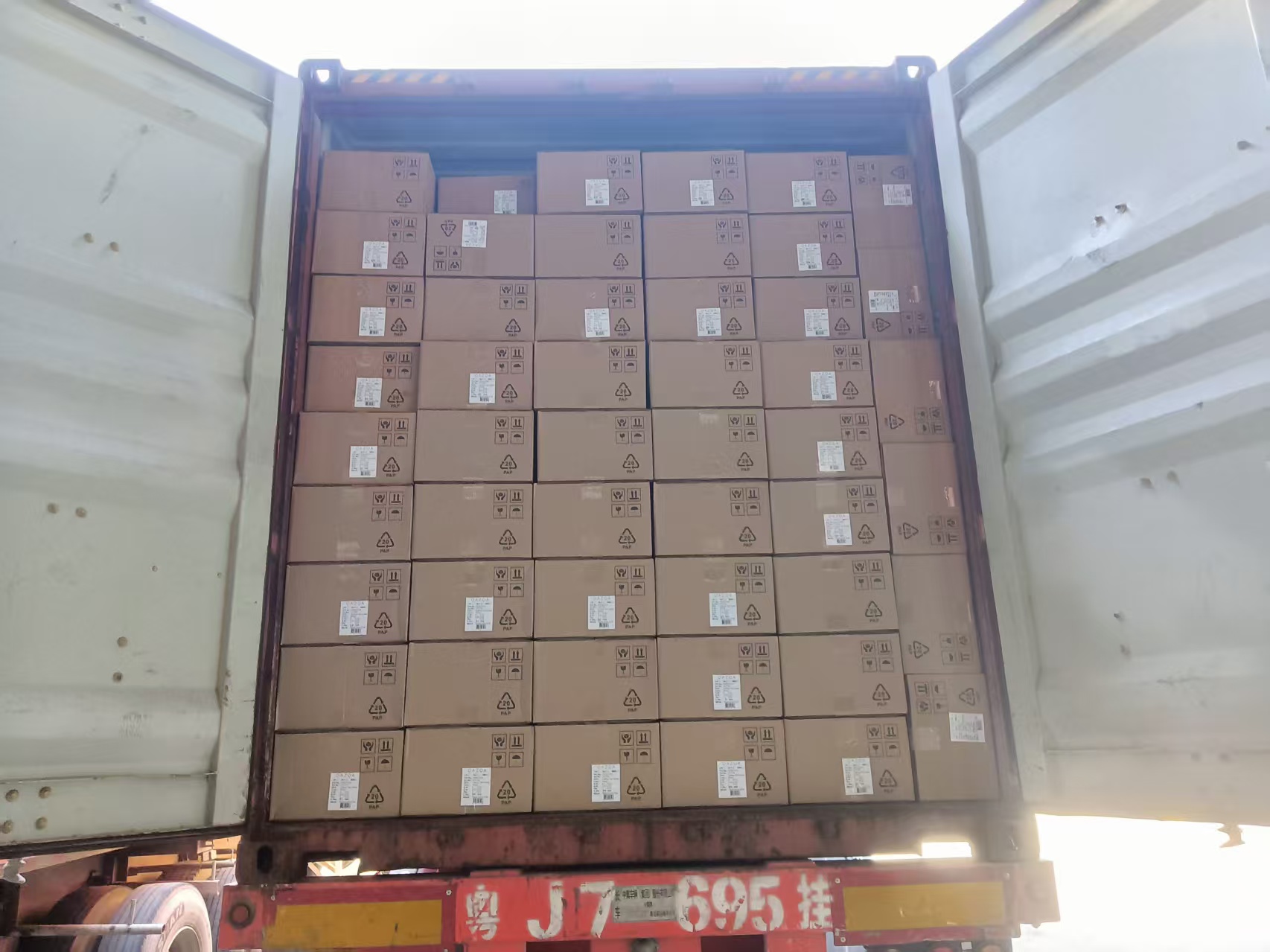
Container loading at Handing's factory supports export shipments to the EU, USA, and Australia.
Request Samples, Quotes, or the Factory Catalog
Contact Handing Co. Ltd. to start the evaluation process.
Handing Co. Ltd. — founded 1992, Kaiping City, Guangdong, China
Website: https://www.handingfan.com/
Email: sales@handingfan.com | minglam3@hotmail.com
Tel: +86-13828060322 | WhatsApp: +852 92839029 | WeChat: minglam3
Factory: No.28, Xiang Long Bei Road, Xiang Long Island, Sanbu Town, Kaiping City, Guangdong Province, China