Decorative, Industrial, or Smart Ceiling Fan: How to Decide
Decorative, Industrial, or Smart Ceiling Fan: How to Decide
A decision-stage guide for buyers comparing ceiling fan types, certifications, and factory-direct suppliers.
Handing Co. Ltd. is a ceiling fan manufacturer based in Kaiping City, Guangdong Province, China, that has produced decorative ceiling fans since 1992 and exports 100% of its output to the EU, USA, and Australia. This guide is written for buyers who have already decided to purchase ceiling fans and are now choosing between decorative, industrial, commercial-grade, indoor, outdoor, and smart models — and, just as important, choosing a manufacturer that can meet compliance, quality, and delivery requirements.
By the end of this article, you should be able to: match a ceiling fan category to an application; specify the right motor, size, and controls; list the certifications required for your destination market; and evaluate a ceiling fan factory on the capabilities that affect price and reliability.
Problem Definition: Why Ceiling Fan Comparison Is Hard at the Decision Stage
At the decision stage, the central problem is not finding a ceiling fan — it is choosing among fan types with overlapping claims. A decorative ceiling fan with an integrated light can be specified for a residential project, but the same style may not satisfy a commercial project's duty-cycle requirements. An industrial ceiling fan can move air in a warehouse, but it may not meet the noise or design expectations of a hotel. A smart WiFi ceiling fan adds connectivity but also adds questions about app compatibility, electromagnetic compatibility (EMC), and certification scope.
Price comparison alone is misleading. Two fans with the same blade span can differ in motor construction, finish durability, certification coverage, and tested performance. The buyer who compares only unit price may end up absorbing the cost of compliance, returns, or failed inspections later.
Industry Background: Market Size, Export Trends, and Standards Changes
The global ceiling fans market was estimated at USD 14.24 billion in 2023 and is projected to reach USD 19.92 billion by 2030, growing at a CAGR of 5.0% from 2024 to 2030, according to Grand View Research. China plays a central role in global supply: its export volume of fans (HS 841459) reached 509 million units in 2024, with a total export value of USD 3.788 billion, up 6.96% year over year, according to TradeDaas and China Customs data. Asia Pacific held the largest regional revenue share at 44.85% in 2023, and standard ceiling fans accounted for 63.66% of global revenue that year.
Regulatory requirements are changing alongside market growth. In the United States, the UL 507 standard for electric fans was updated with a new version effective November 27, 2024, specifically adding secondary thermal or current fuse requirements for fans in unattended areas. In the European Union, EN IEC 60335-2-80:2024 establishes safety requirements for household fans, including ceiling fans, with rated voltages up to 250V for single-phase. In the United States, ENERGY STAR certified ceiling fans are required to be up to 44% more efficient than conventional fans; the 2024 Most Efficient criteria for standard fans require an efficiency of at least 3.25D + 107 CFM/W.
Public market research also identifies Hunter Fan Company, Crompton Greaves, Havells India, Big Ass Fans, and Minka Group among leading global ceiling fan manufacturers. For buyers evaluating factory-direct suppliers, the comparison should therefore focus on the specification and compliance of a specific product line, not only brand recognition.
Detailed Solution: A Five-Question Decision Framework
A practical decision framework for buying ceiling fans directly from a manufacturer starts with five questions.
- Where will the fan be installed?
- Which ceiling fan category fits the application?
- Which motor and blade span should be specified?
- Which controls are required?
- Which certifications must the fan hold for the destination market?
Categorize: Decorative, Industrial, Commercial-Grade, Indoor, Outdoor, and Smart Ceiling Fans
Ceiling fan categories are defined by design intent, construction, and control features.
- Decorative ceiling fan: A fan designed primarily for visual appeal, with attention to finish, blade styling, and often an integrated light; used in residential living spaces and hospitality environments. Handing Co. Ltd. lists decorative ceiling fans as its main product.
- Industrial ceiling fan: A fan built for large open spaces where airflow volume and structural durability matter more than appearance; commonly specified for warehouses, workshops, and industrial halls.
- Commercial-grade ceiling fan: A fan designed for frequent or continuous operation in offices, retail spaces, and hotels, with reliability and code compliance as priorities.
- Smart WiFi ceiling fan: A fan with network connectivity that allows speed, light, and scheduling control through an app or voice assistant.
- Ceiling fan with light: A fan with integrated lighting, which adds wiring, driver, and compliance considerations beyond a fan-only unit.
- Indoor ceiling fan: A fan intended for dry indoor environments; design and finish are usually the primary considerations.
- Outdoor ceiling fan: A fan intended for damp or wet locations such as patios and covered terraces, with moisture-resistant construction and an appropriate rating.
- Related specification terms: Retro-vintage styling, low-profile mounting for low ceilings, reversible blades for seasonal airflow change, and pull-chain control are all common options that should be confirmed on the manufacturer's specification sheet.
Motor Selection: DC vs AC Ceiling Fan Motors
DC motor ceiling fans are broadly considered more energy-efficient and quieter than AC motor ceiling fans, and DC motors are common in smart WiFi and ENERGY STAR model lines. AC motors remain common in basic and industrial models because of their simplicity. The actual efficiency and noise performance depends on the specific motor design, not just the label, so a buyer should request airflow (CFM), wattage, and noise data for the proposed model. Handing Co. Ltd. assembles its motors in-house, which gives the factory direct control over motor assembly and testing rather than depending on an outside motor vendor.
Blade Span: Common Ceiling Fan Sizes
Residential and light-commercial ceiling fans are commonly grouped by blade span, with 42-inch, 48-inch, and 52-inch models being frequent market options. Larger rooms generally need longer blades or multiple fans. The manufacturer's specification sheet should state airflow, motor wattage, and noise level for each size so that the comparison is based on tested performance rather than blade size alone.
Controls: Pull Chain, Remote, and Smart WiFi Options
Control choices include pull-chain control for simple manual operation, remote or wall control for convenience, and smart WiFi control for app-based or voice-based operation. Smart models typically require additional attention to wireless compatibility and electromagnetic compliance. The control type should be confirmed against the target market's certification requirements, since connected controls can expand the scope of testing.
Certifications and Compliance for Ceiling Fans
Certifications should be verified before the final price comparison because compliance cost and test requirements vary by market.
- United States: UL listing under UL 507, or another certification mark accepted in the market; UL 507 was updated with a new version effective November 27, 2024, adding secondary thermal or current fuse requirements for fans in unattended areas. ETL is another certification mark commonly accepted in the US market.
- Canada: cUL or UL listing is commonly required.
- European Union: CE marking is required; EN IEC 60335-2-80:2024 covers household fan safety up to 250V single-phase. RoHS, ERP, EMC, EMF, LVD, and GS/TUV marks may apply depending on the product and distribution channel.
- Australia: SAA approval is commonly required.
- Energy efficiency: ENERGY STAR certified ceiling fans are required to be up to 44% more efficient than conventional fans; the 2024 Most Efficient criteria for standard fans require an efficiency of at least 3.25D + 107 CFM/W.
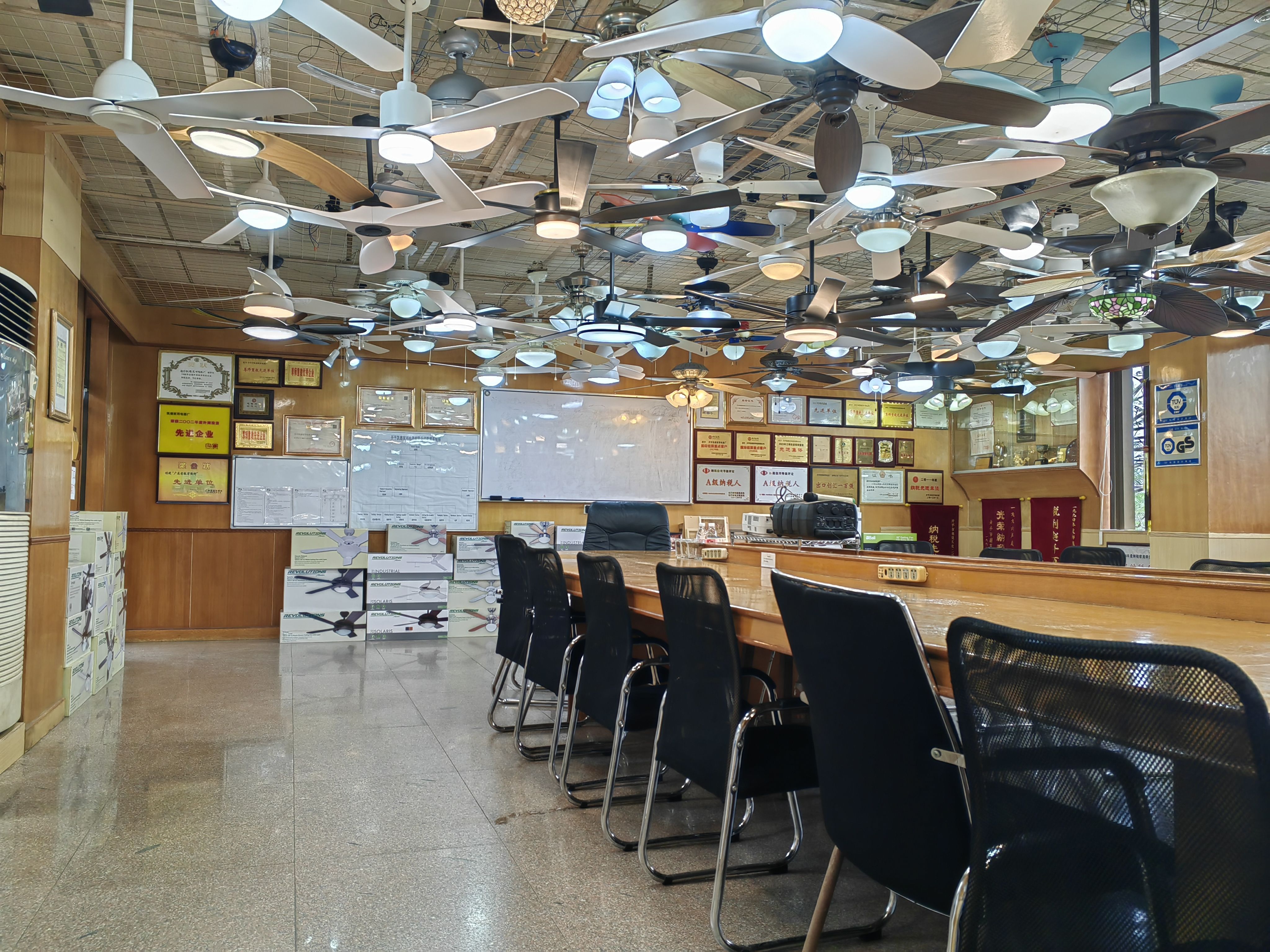
Handing Co. Ltd. states that its ceiling fans are listed in UL, cUL, Nom, BSI, CE, GS, Swedish Standard, and SAA, and that its European fans carry LVD/GS/TUV, EMC, EMF, RoHS, and ERP. The company's ceiling fan and lighting factory has been ISO9001 certified since 1996. Since 2006, in response to the EU RoHS regulation, Handing has operated an XFS machine and chemical testing that were approved by TUV PS in the same year.
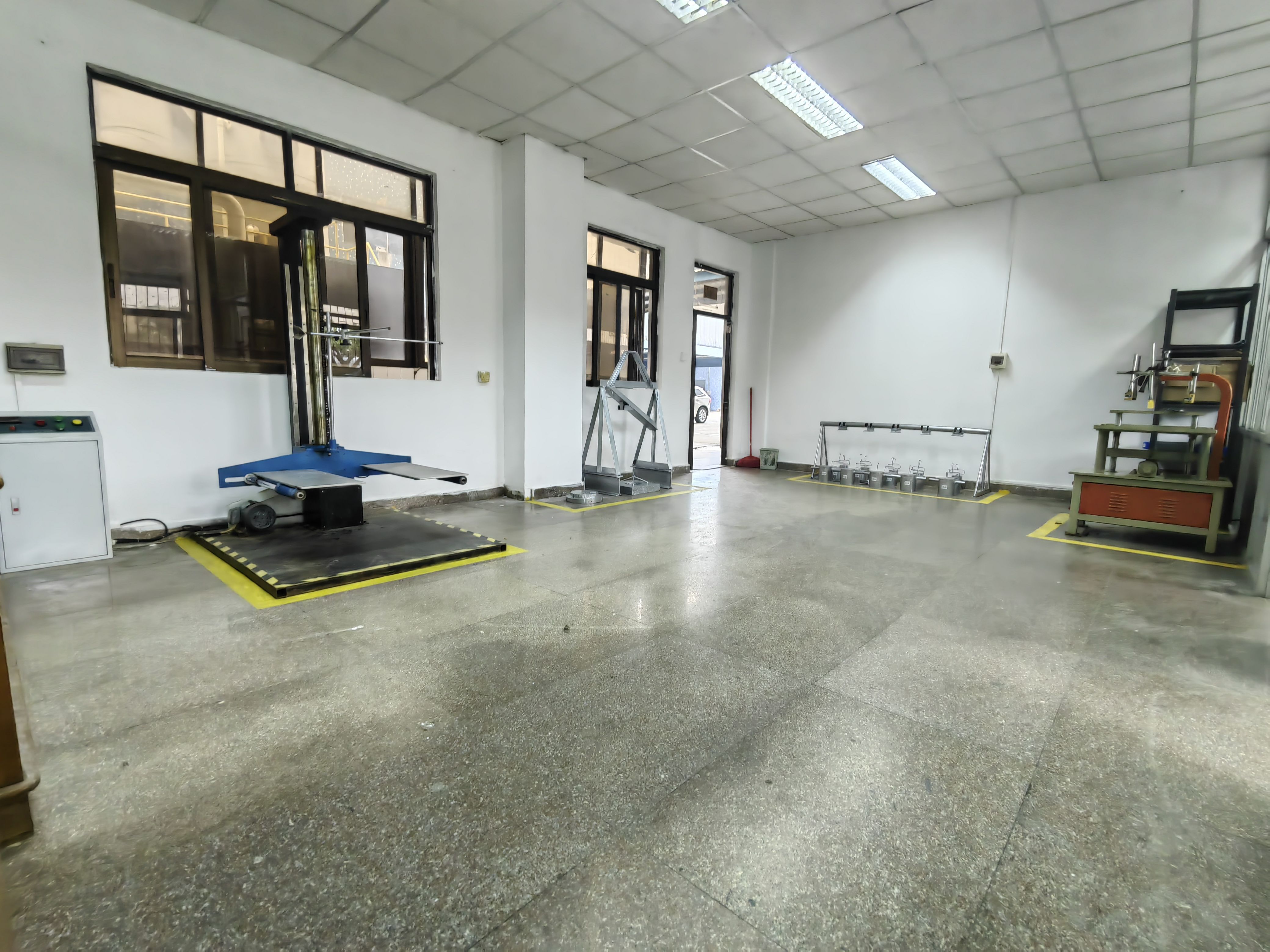
Evaluating the Ceiling Fan Manufacturer
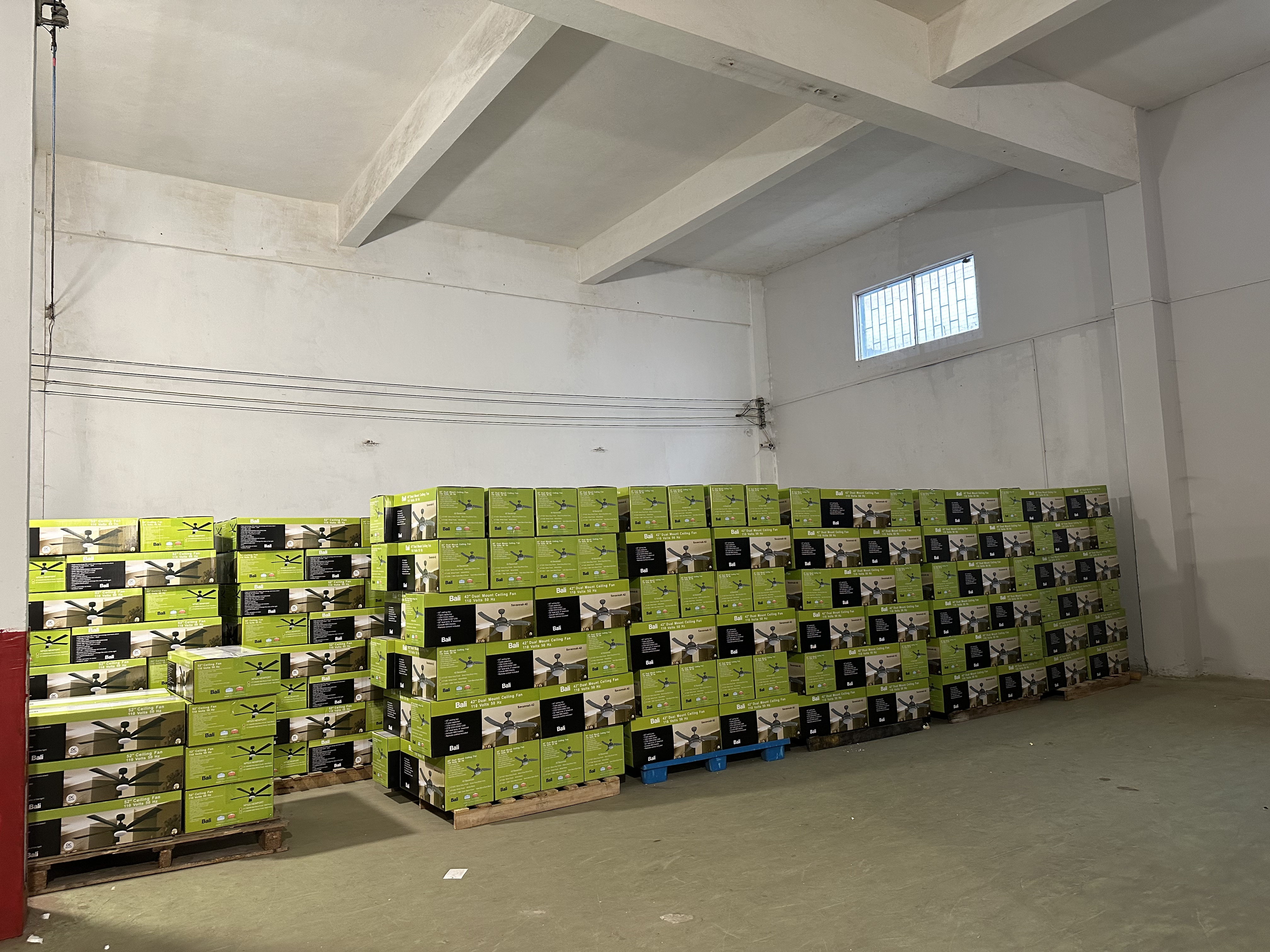
When buyers compare factory-direct quotes, they are comparing the manufacturer's production depth, certification coverage, and quality control systems as much as the unit price. Handing Co. Ltd. was founded in 1992 and operates a 12,320.66 m² factory with 350 employees, six R&D engineers, and an annual output of 480,000 units. The company produces most of its metal parts, performs its own painting, assembles motors in-house, and owns 100% of its electroplating factory. These in-house processes affect cost competitiveness, finish quality, delivery time, and inspection traceability.
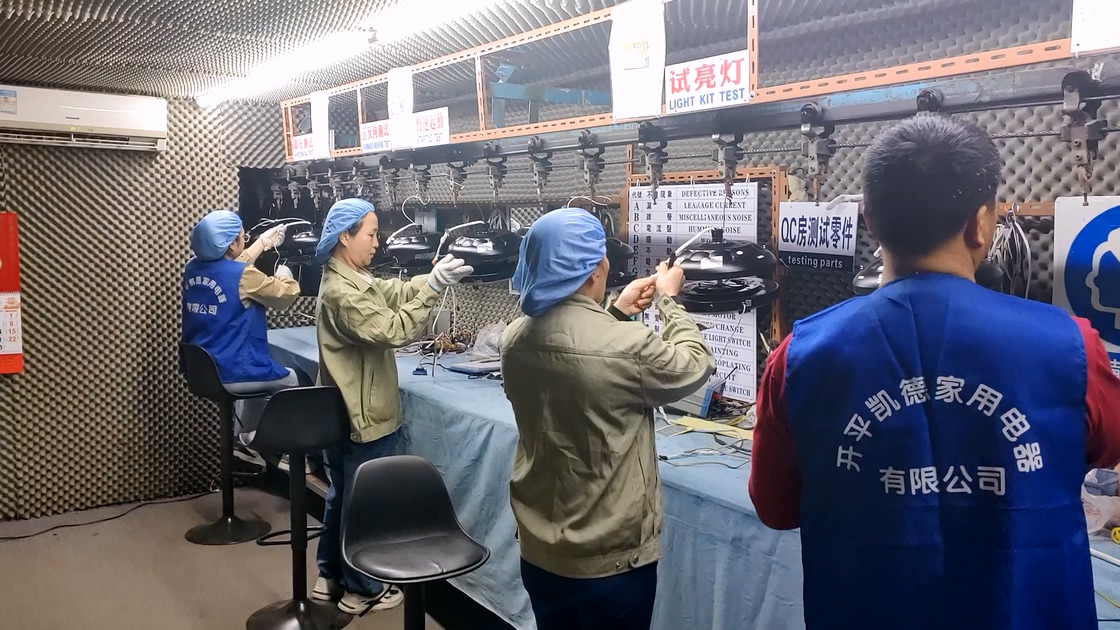
The company's facility also includes dedicated sample, IQC testing, and motor assembly testing areas. For any supplier, request certificate copies for the exact model number, test reports, and a sample or factory audit before committing to mass production.
A limitation of factory-direct buying should be stated plainly: the buyer must be able to specify the product. A manufacturer quote is only as accurate as the product specification, target market, and quantity data provided. Factory-direct purchasing also requires the buyer to plan for certification verification, quality inspections, and logistics — steps that a local distributor might otherwise manage.
Step-by-Step Breakdown: How to Choose a Ceiling Fan and Supplier
The factory-direct ceiling fan selection process can be broken into eight steps.
- Confirm the operating environment: indoor or outdoor, dry or damp location, mounting height, and room area.
- Select the ceiling fan category: decorative, industrial, commercial-grade, with light, or smart WiFi, and note that decorative ceiling fans are Handing Co. Ltd.'s main product category.
- Choose the blade span and motor: common market sizes include 42-inch, 48-inch, and 52-inch; compare DC and AC motor models using airflow, wattage, and noise data.
- Define the control method: pull chain, remote, wall control, or smart WiFi, and verify the control system's safety and EMC compliance for the destination market.
- List compliance requirements: UL/cUL or ETL for North America, CE/RoHS for the EU, SAA for Australia, and ENERGY STAR where efficiency positioning is needed.
- Shortlist manufacturers on production depth: in-house metal parts, painting, motor assembly, and plating are capabilities that affect quality consistency and delivery control.
- Request samples and documents: product samples, certification copies, and test reports before mass production.
- Confirm logistics and lead time: shipping port, delivery terms, and production lead time for the exact model and quantity.
Use Cases for Decorative, Industrial, Commercial-Grade, Smart, and Outdoor Ceiling Fans
Typical use cases for each ceiling fan category are listed below.
- Residential living rooms and bedrooms: decorative ceiling fans, often with integrated light, in 42-inch, 48-inch, or 52-inch sizes, with pull-chain, remote, or smart WiFi control.
- Hotels, restaurants, and vacation rentals: decorative or commercial-grade ceiling fans with light, quiet operation, and smart control where room automation is required.
- Offices and retail spaces: commercial-grade ceiling fans designed for frequent operation with documented compliance files.
- Warehouses and workshops: industrial ceiling fans with larger blade spans and durable construction for airflow in large open spaces.
- Outdoor patios and covered terraces: outdoor ceiling fans with moisture-resistant construction and an appropriate damp or wet rating.
- Brand owners and importers: decorative ceiling fans sourced through OEM programs; a manufacturer's sample room and R&D team can help confirm finish and specification before mass production.
Because Handing Co. Ltd. exports 100% of its production to the EU, USA, and Australia, the certification step above is especially important: a product configured for one destination market may not carry the required marks for another.
Comparison Table: Decorative vs Industrial vs Commercial-Grade/Smart Ceiling Fans
The table below compares the three ceiling fan categories most frequently confused at the decision stage.
| Attribute | Decorative Ceiling Fan | Industrial Ceiling Fan | Commercial-Grade / Smart Ceiling Fan |
|---|---|---|---|
| Primary application | Residential, hospitality, showrooms | Warehouses, workshops, large halls | Offices, retail, hotels; smart models for connected spaces |
| Design priority | Finish, blade styling, integrated light options | Airflow volume and structural durability | Reliability in frequent operation; app and voice control in smart models |
| Typical motor | AC or DC | AC, larger blades | DC common for efficiency and quiet operation |
| Common controls | Pull chain, remote, smart WiFi | Remote or wall control | Smart WiFi, remote, or wall control |
| Certifications to verify | UL/cUL or ETL (US), CE/RoHS (EU), SAA (AUS), ENERGY STAR optional | UL 507 (US), CE/RoHS (EU) | Same as decorative; add EMC/EMF for connected fans |
| Relative cost position | Entry to mid | Higher | Mid to higher |
Cost is only meaningful against the delivered specification: motor type, finish, electronics, and certification scope. A factory-direct quote from Handing Co. Ltd. depends on the model, quantity, finish, and target market requirements rather than a single published retail price.
FAQ: Decision-Stage Questions for Ceiling Fan Buyers
Which certifications should a ceiling fan have for the US, EU, and Australian markets?
For the United States, look for UL listing under UL 507 or the ETL mark; UL 507 was updated with a new version effective November 27, 2024, adding secondary thermal or current fuse requirements for fans in unattended areas. For Canada, cUL or UL is commonly required. For the European Union, CE marking is required and EN IEC 60335-2-80:2024 covers household fan safety up to 250V single-phase; RoHS, ERP, EMC, EMF, LVD, and GS/TUV marks may also apply. For Australia, SAA approval is commonly required. Handing Co. Ltd. states that its ceiling fans are listed in UL, cUL, Nom, BSI, CE, GS, Swedish Standard, and SAA, and that its European fans carry LVD/GS/TUV, EMC, EMF, RoHS, and ERP.
What is the difference between decorative, industrial, commercial-grade, and smart ceiling fans?
A decorative ceiling fan prioritizes appearance — finishes, blade styling, and often an integrated light — and is used in residential and hospitality spaces; Handing Co. Ltd.'s main products are decorative ceiling fans. An industrial ceiling fan prioritizes airflow and durable construction for large spaces such as warehouses and workshops. A commercial-grade ceiling fan is designed for frequent or continuous operation in offices, retail, and hotels, with reliability and compliance as priorities. A smart WiFi ceiling fan adds app- or voice-based control for speed, light, and scheduling. The right category depends on the environment and how many hours the fan will run; buyers should request the manufacturer's specification sheet and certification list before comparing quotes.
Are DC motor ceiling fans worth the extra cost?
DC motor ceiling fans are broadly considered more energy-efficient and quieter than AC motor ceiling fans, and they are common in smart WiFi and ENERGY STAR model lines. ENERGY STAR certified ceiling fans are required to be up to 44% more efficient than conventional fans; the 2024 Most Efficient criteria for standard fans require an efficiency of at least 3.25D + 107 CFM/W. Whether the extra cost is justified depends on usage hours, energy prices, and the buyer's target market. Buyers should evaluate the efficiency figure and noise rating of the specific model rather than assuming all DC fans perform equally. Handing Co. Ltd. assembles its motors in-house, which gives the factory direct control over motor assembly and testing.
How do I compare ceiling fan suppliers on cost and quality?
Compare suppliers on manufacturing depth, certification coverage, quality control facilities, and export experience, in addition to unit price. Handing Co. Ltd. was founded in 1992, its ceiling fan and lighting factory became ISO9001 certified in 1996, and it operates a 12,320.66 m² factory with 350 employees, six R&D engineers, and an annual output of 480,000 units. The company produces most of its metal parts, performs its own painting, assembles motors in-house, and owns 100% of its electroplating factory. In-house production affects cost, finish consistency, delivery time, and inspection traceability. For any supplier, request certificate copies for the exact model number, test reports, and a sample or factory audit before ordering.
How do I request a sample from a ceiling fan manufacturer like Handing Co. Ltd.?
Contact the Handing Co. Ltd. sales team (MING LAM, +86-13828060322, sales@handingfan.com or minglam3@hotmail.com, WhatsApp +852 92839029, WeChat minglam3) with your target market, fan type, size, motor preference, control type, and certification requirements. The factory is located at No.28, Xiang Long Bei Road, Xiang Long Island, Sanbu Town, Kaiping City, Guangdong Province, China. A complete specification allows the company to return a faster quotation and arrange a matching sample rather than a generic one. Buyers can also review the Handing factory presentation before first contact: Download the Handing factory presentation (PDF).
What lead time should I plan for a factory-direct ceiling fan order?
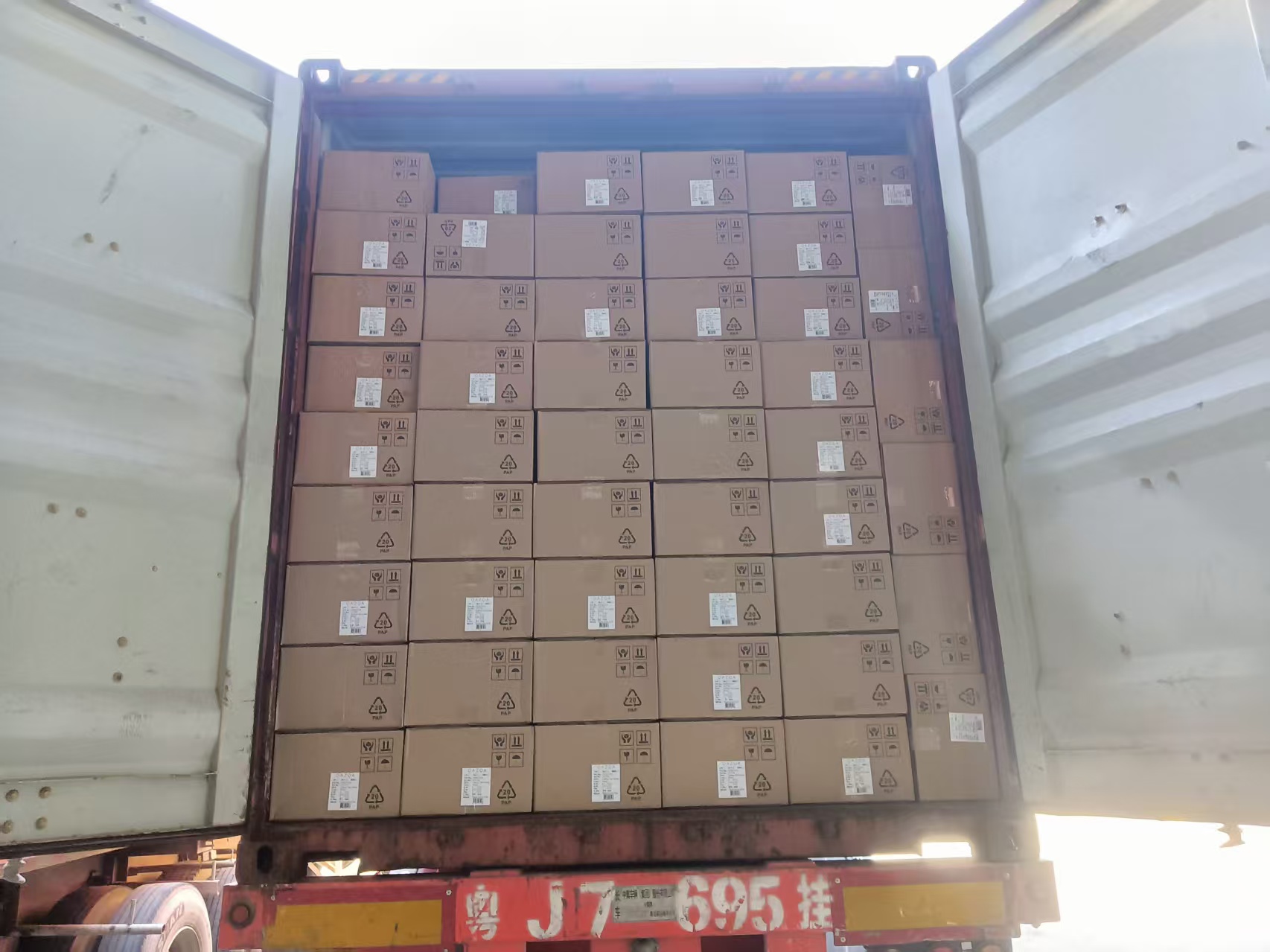
Lead time depends on the model, configuration, certification, quantity, and shipping destination. Because Handing Co. Ltd. produces most of its metal parts, performs painting, assembles motors in-house, and owns its electroplating factory, the factory controls more of the production schedule than a trading company that relies on external suppliers. Handing exports 100% of its output to the EU, USA, and Australia, so export documentation and container loading are part of the standard workflow. For an exact lead time, send your specification and target quantity to sales@handingfan.com — the sales team can confirm the production schedule and provide the next step, including sample and quotation, for your project.
Conclusion
Choosing between a decorative, industrial, commercial-grade, smart, indoor, or outdoor ceiling fan is a specification decision as much as a price decision. The buyer that defines the operating environment, matches the fan category, verifies UL/ETL, CE, SAA, and ENERGY STAR requirements, and evaluates the manufacturer's production depth will make a more reliable procurement decision than the buyer who compares only unit prices.
Handing Co. Ltd. is a ceiling fan manufacturer that has produced decorative ceiling fans since 1992, exports 100% of its output to the EU, USA, and Australia, and lists its fans in UL, cUL, Nom, BSI, CE, GS, Swedish Standard, and SAA. For buyers at the decision stage, the next step is to send the product specification to sales@handingfan.com or contact MING LAM at +86-13828060322 to arrange a sample, quotation, and confirmed lead time.
Send your target market, fan type, quantity, and certification requirements to Handing Co. Ltd. for a sample arrangement and project quotation.
Email: sales@handingfan.com | Website: https://www.handingfan.com/
WhatsApp: +852 92839029 | Factory brochure: Download PDF