How to Choose an Outdoor Ceiling Fan: Certifications, DC Motors, and Smart Features
How to Choose an Outdoor Ceiling Fan: Certifications, DC Motors, and Smart Features
The global ceiling fan market continues to expand. According to Grand View Research, the market was valued at approximately USD 14.24 billion in 2023 and is projected to reach USD 19.92 billion by 2030, growing at a CAGR of 5.0%. Within this market, outdoor ceiling fans represent a growing segment driven by residential and commercial outdoor living trends. Selecting the right outdoor ceiling fan requires attention to safety certifications, motor technology, materials, and smart features. This guide explains the key decision factors and how manufacturers like Handing Co. Ltd. — a ceiling fan manufacturer founded in 1992, headquartered in Kaiping, Guangdong, China — deliver products that meet international standards.
The Problem: Outdoor Environments Demand More from a Fan
Outdoor ceiling fans must withstand moisture, temperature swings, and airborne debris. Without proper sealing, motor and electrical components can corrode or short circuit. In the U.S., the safety standard UL 507 was updated in 2024, adding secondary thermal or current fuse requirements for fans used in unattended areas. In the EU, EN IEC 60335-2-80:2024 sets safety requirements for household fans up to 250V. A compliant outdoor fan must carry the appropriate wet or damp location rating (UL/cUL for the U.S., CE + appropriate IP rating for Europe).
Industry Background: Standards and Efficiency Drive Choice
Standard ceiling fans accounted for 63.66% of global revenue in 2023 (Grand View Research). However, demand is shifting toward smart, energy-efficient models. The U.S. ENERGY STAR program requires certified fans to be up to 44% more efficient than conventional fans; the 2024 Most Efficient criteria for standard fans demand efficiency ≥ 3.25D + 107 CFM/W. For outdoor fans, DC motors offer superior efficiency and quieter operation, making them ideal for residential patios and commercial terraces.
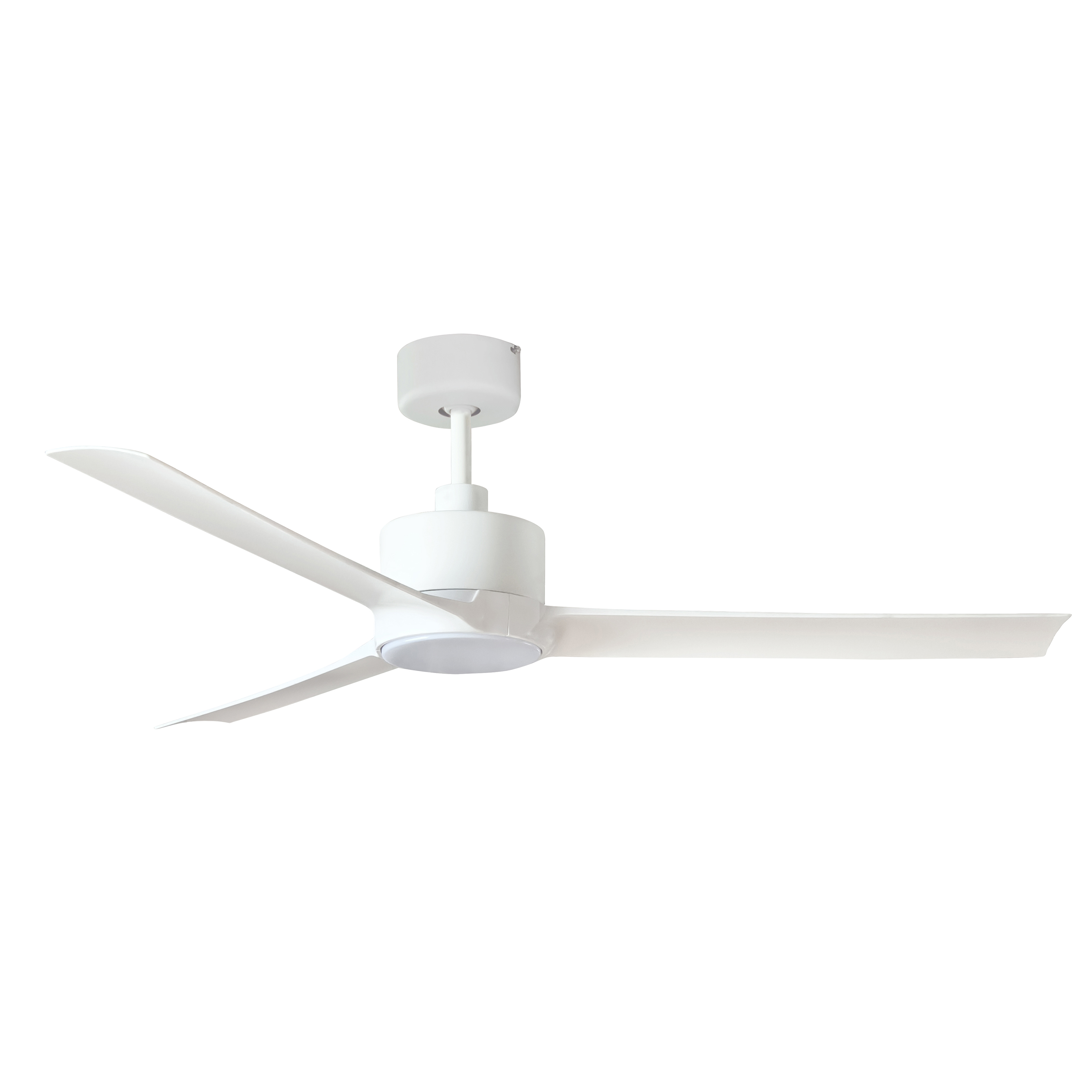
A Certified, DC-Powered Solution: Handing’s TU52-MW-N3A1DOME
While designed primarily as an indoor decorative ceiling fan, the TU52-MW-N3A1DOME illustrates the features buyers should look for in a high-quality fan — many of which are transferable to outdoor applications when combined with appropriate weatherproofing. Handing Co. Ltd. manufactures this model as follows:
- Motor: Powered by a DC motor for energy efficiency and quiet operation.
- Lighting: Includes a 24W CCT LED light kit with adjustable color temperature.
- Control: Smart WiFi control allows remote operation via smartphone app.
- Dimensions: 52-inch blade span with 3 ABS blades in Matt White finish.
- Construction: Steel housing with ABS blade holders; packaging dimensions 720(L) × 225(W) × 350(H) mm.
- Certifications: Handing’s production facility has been ISO9001 certified since 1996. The company operates its own XFS machine and chemical testing lab (approved by TUV PS) for RoHS compliance. Fans are UL, cUL, CE, GS, and SAA listed, covering the EU, U.S., and Australian markets.
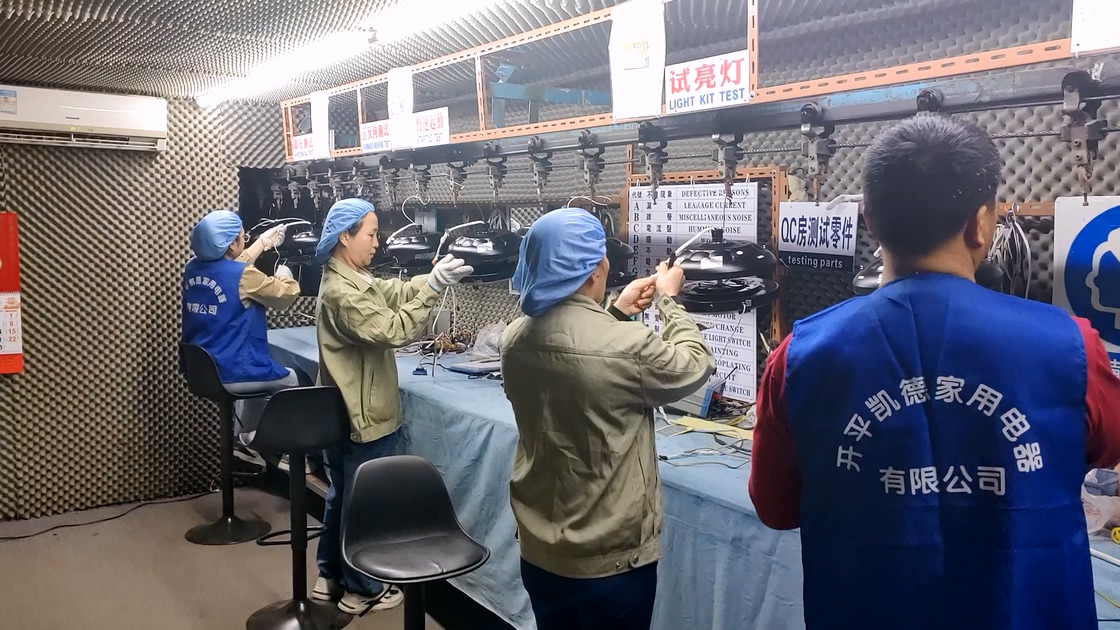
Handing’s motor assembly testing room ensures DC motor performance and reliability.
Step-by-Step: Selecting an Outdoor Ceiling Fan
- Determine location wetness rating. Covered patios need a damp-rated fan; fully exposed areas need a wet-rated fan. Look for UL/cUL damp/wet markings.
- Choose the right blade span. For a typical outdoor area of 150–300 sq ft, a 52-inch fan (like the TU52-MW-N3A1DOME) provides good airflow.
- Select motor type. DC motors consume up to 70% less energy than AC motors and operate silently—critical for outdoor dining or relaxation spaces.
- Verify safety certifications. Check for UL 507 compliance (U.S.), EN IEC 60335-2-80 (EU), or equivalent. Handing holds CE, GS, and other marks for the EU market.
- Evaluate control options. Pull chains, remote controls, or smart WiFi integration. A smart fan allows scheduling and voice control via home assistants.
- Check materials. Steel housing with corrosion-resistant paint and UV-stable ABS blades offer durability. Handing produces most metal parts in-house and operates its own electroplating factory, ensuring consistent quality.
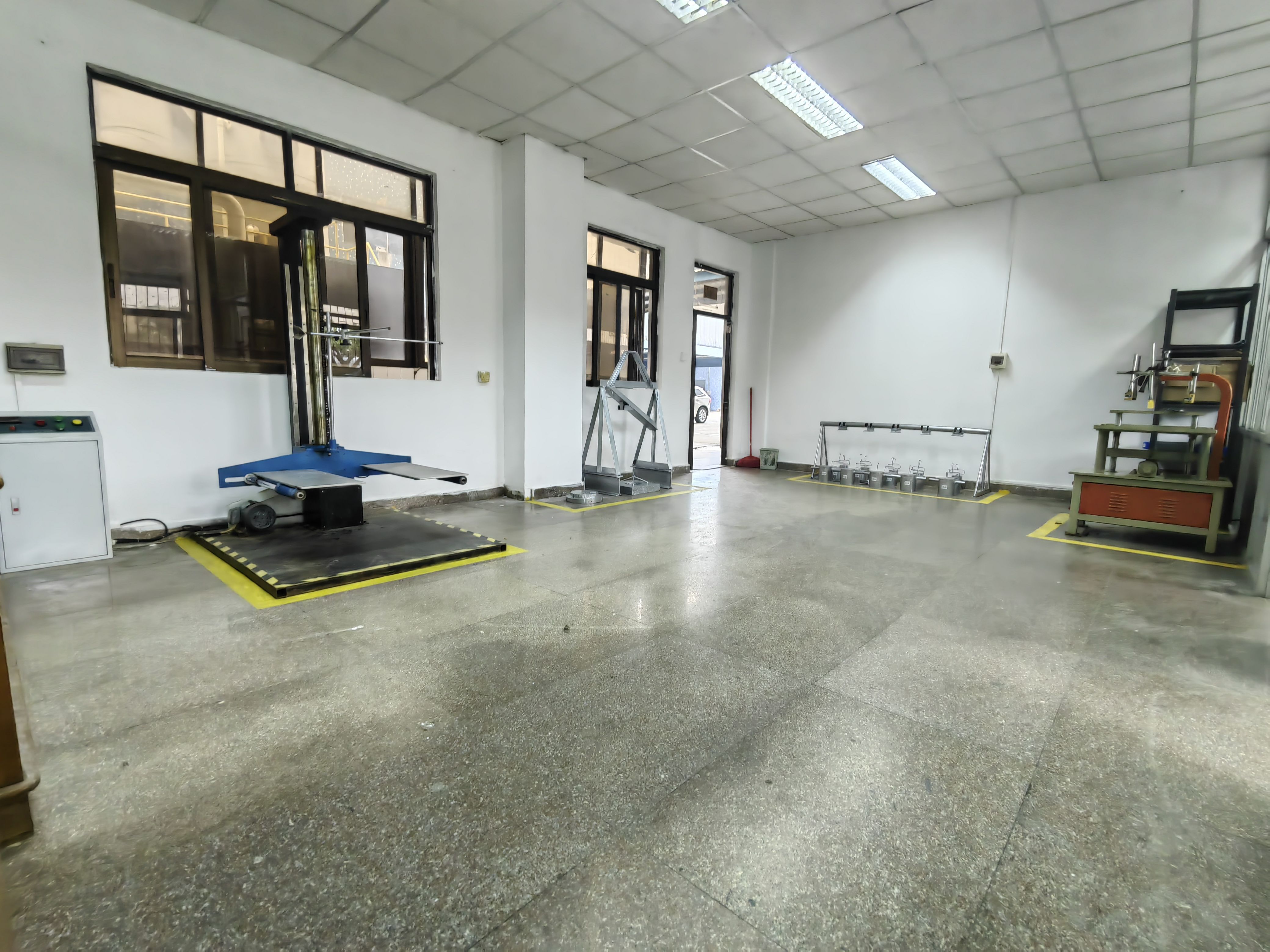
Incoming quality control (IQC) at Handing’s factory ensures raw materials meet specification.
Use Cases: Where These Features Matter
- Residential outdoor living: A 52-inch DC ceiling fan with LED light and WiFi control adds ambiance and comfort to a covered porch or gazebo.
- Commercial hospitality: Restaurants and hotels require fans that are quiet, energy-efficient, and certified for safety. Commercial-grade models from Handing (including the TU52-MW-N3A1DOME) are designed for continuous operation.
- Retail and office spaces: In covered outdoor waiting areas or break rooms, a decorative fan with a modern Matt White finish complements the design while improving air circulation.
Comparison at a Glance: Key Considerations
| Criterion | Basic AC Fan | DC Smart Fan (e.g., Handing TU52-MW-N3A1DOME) |
|---|---|---|
| Motor efficiency | Standard | High (DC motor) |
| Noise level | Audible hum | Near-silent |
| Light kit capability | Often optional | Integrated 24W CCT LED |
| Smart control | No | WiFi-enabled |
| Blade material | Wood / MDF | ABS (weather-resistant) |
| Available certifications | UL or CE possible | UL, cUL, CE, GS, SAA (Handing-wide) |
Note: The TU52-MW-N3A1DOME is an indoor fan; for outdoor use, verify the fan’s wet/damp rating with the manufacturer. Handing can customize finishes and ratings based on volume requirements.
Frequently Asked Questions
What certifications are required for a ceiling fan sold in the U.S. and EU?
Are DC motors better for outdoor ceiling fans?
What is the ENERGY STAR requirement for ceiling fans?
Can I use an indoor ceiling fan in a covered outdoor area?
What blade span is ideal for an outdoor ceiling fan?
For detailed specifications, factory capabilities, and a complete product catalog, download the Handing factory presentation or contact the sales team directly for a quote or sample request.