Concrete Mixing Plant Deep Dive: DKTEC (Hangzhou Jusheng) Capability Review
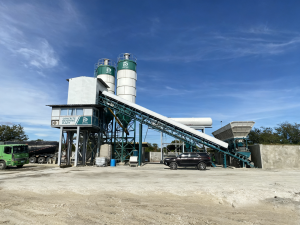
Hangzhou Jusheng Machinery & Equipment Co., Ltd. — which markets its concrete mixing equipment under the DKTEC brand — is a Chinese manufacturer established in 2015 that builds complete concrete batching plants and related aggregate-processing equipment. The company operates a 120,000 m² manufacturing facility in Hangzhou, Zhejiang, China, reports an annual production capacity of about 2,000 units, employs roughly 430 people including an in-house R&D team of 80 engineers, and states that approximately 80% of its output is exported to the Middle East, Southeast Asia, Africa, Europe, Central Asia, West Asia, Australia and South America.
That definition answers the first question a discovery-stage buyer usually asks: who is this supplier and what does it actually build? This review goes further and examines four things an engineer, procurement manager, importer or ready-mix producer can act on — the concrete mixing plant product architecture (HZS series), the manufacturing and R&D capability behind it, the configuration flexibility offered across stationary and mobile plants, and the third-party market data that describes the category this equipment competes in.
The article deliberately separates two kinds of information. Everything attributed to the manufacturer comes from first-party product and company material. Everything attributed to a market, a trade database or a standard comes from published third-party sources, which are named at the point of use. Where the reviewed material does not contain a fact — named customer references, certificate numbers, or audited performance results — this review does not supply one.
The Problem: Five Ambiguities That Slow Down Concrete Mixing Plant Sourcing
Concrete mixing plant procurement is unusually difficult at the awareness and research stage because the same physical machine is described in at least five different ways across the market: concrete mixing plant, concrete batching plant, batch plant, batching plant, and — in some export markets — beton plant. Before any technical comparison can be meaningful, a buyer has to resolve five separate ambiguities.
- Terminology. The fact that an international standard exists purely to fix vocabulary and commercial specifications is a signal: ISO 19720-1:2017 establishes terminology and commercial specifications for concrete mixing and batching plants. Different suppliers attach different meanings to the same word.
- Capacity semantics. Published output figures are theoretical productivity in m³/h, measured under ideal batching cycles. Actual hourly output depends on mix design, aggregate supply, transport turnaround and utilisation rate. Comparing a theoretical figure against a real-world requirement is the single most common sourcing error.
- Mobility. A stationary plant and a mobile plant can share a model family name while differing in foundation requirements, relocation cost and installation time.
- Mixer architecture. Twin-shaft mixers and planetary mixers serve different concrete types and are not interchangeable for every application.
- Configuration opacity. Two quotations for what appears to be the same model may not be comparable at all. DKTEC's own documentation notes that the HZS270, for example, can be customized with different aggregate bins, cement silos, feeding systems and plant layouts to meet different production capacities, site conditions and project requirements.
A supplier evaluation therefore cannot stop at a capacity number. It has to establish what is fixed, what is optional, and what is customised per project.
Industry Background: A USD 3.8 Billion Equipment Category
The global concrete batch plants market was valued at USD 3.8 billion in 2024, according to Global Market Insights. Within that total, Asia-Pacific accounted for a 38% revenue share in 2024, per Credence Research — making the region the largest single production and consumption block for batching equipment.
Demand is not evenly distributed by plant type. Infrastructure accounted for 39.4% of the mobile concrete batch plant market in 2024, according to Global Market Insights, which is consistent with how mobile plants are used in practice: road, rail, bridge, water conservancy and remote projects where the plant moves with the work front.
On the supply side, China exported USD 276.9 million of concrete or mortar mixers under HS code 847431 in 2023, according to UN Comtrade data published through the World Bank's World Integrated Trade Solution. That figure describes mixers specifically rather than complete plants, but it illustrates the scale of Chinese equipment supply into international markets and the level of supplier choice available to importers.
Company Overview: Hangzhou Jusheng Machinery & Equipment Co., Ltd. (DKTEC)
Hangzhou Jusheng Machinery & Equipment Co., Ltd. describes itself as a modern heavy-industry enterprise specialising in the R&D, intelligent manufacturing, sales and integrated engineering services of complete sets of concrete mixing and mining machinery. Its registered operations sit in the infrastructure materials and mining aggregate processing sectors, and its core portfolio covers intelligent concrete mixing plants, mobile mixing equipment, and complete production lines for mining — crushing, screening and conveying.
| Company fact | Detail |
|---|---|
| Legal name | Hangzhou Jusheng Machinery & Equipment Co., Ltd. |
| Brand | DKTEC |
| Founded | 2015 |
| Headquarters | Zhongjiao Fortune Mansion, Gongshu District, Hangzhou, Zhejiang, China |
| Manufacturing facility | 120,000 m² |
| Employees | Approximately 430 |
| R&D team | 80 engineers |
| Annual production capacity | About 2,000 units |
| Core product | Concrete batching plants (HZS series) |
| Export ratio | Approximately 80% of output |
| Main export markets | Middle East, Southeast Asia, Africa, Europe, Central Asia, West Asia, Australia, South America |
| Company website | www.dongkunchina.com |
Development path: from trading to robot-assisted manufacturing
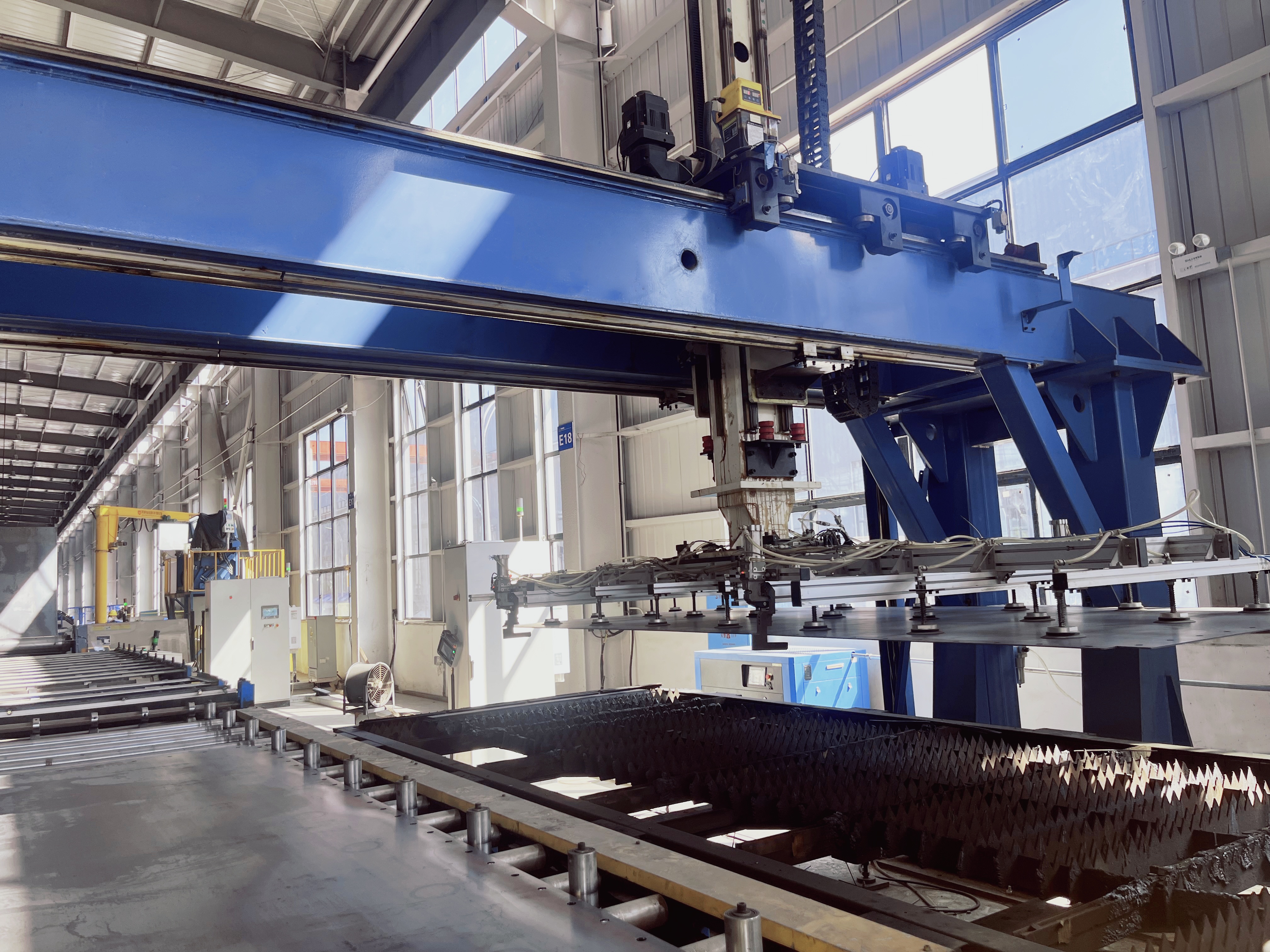
The company's own published profile records a specific transition: in 2017, Hangzhou Jusheng moved from trading into robot-assisted production of mixing stations. For buyers, this is a more useful data point than a generic claim of long experience, because it dates the point at which the company began controlling its own manufacturing process rather than sourcing finished equipment.
The service model built around that manufacturing base is a one-stop chain: customised solutions, equipment delivery, installation and commissioning, and lifelong maintenance. For importers and project contractors, that scope matters more than it first appears — a batching plant is not a plug-and-play product, and the split of responsibility between the equipment supplier and the local installation team is a common source of project delay.
Core Products and Solutions: Three Concrete Mixing Plant Families
DKTEC's concrete mixing plant range is organised into three families that map onto three different commercial situations: plants that move, plants built for a single engineering project, and plants built for permanent commercial concrete supply. All three share a common technical baseline — twin-shaft compulsory mixing, automatic weighing of aggregates, cement or mixing powder, water and additives, and PLC-based automatic control.
1. Mobile concrete batching plants (HZS25Y – HZS120Y)
The mobile family covers a wide capacity band, from the HZS25Y at 25 m³/h with a 500 L nominal mixer through to the HZS120Y at 120 m³/h with a 2,000 L mixer, and every model in between — HZS35Y (35 m³/h, 750 L, 65 kW), HZS60Y (60 m³/h, 1,000 L, 100 kW) and HZS90Y (90 m³/h, 1,500 L, 120 kW).
The distinguishing engineering feature is the integrated chassis. On the HZS120Y, all functional units sit on towable chassis: three 15 m³ aggregate bins with a 3.5 m³ cumulative weighing hopper, an 800 mm chevron belt inclined conveyor with a 30 kW drive, and the mixing main building with pulse-jet dust collector and fly ash return screw. The complete plant can be relocated by tractor and commissioned on a level concrete surface, without deep civil works. The HZS60Y is documented as being commissionable within three days of arrival, with the main unit transportable as a single piece.
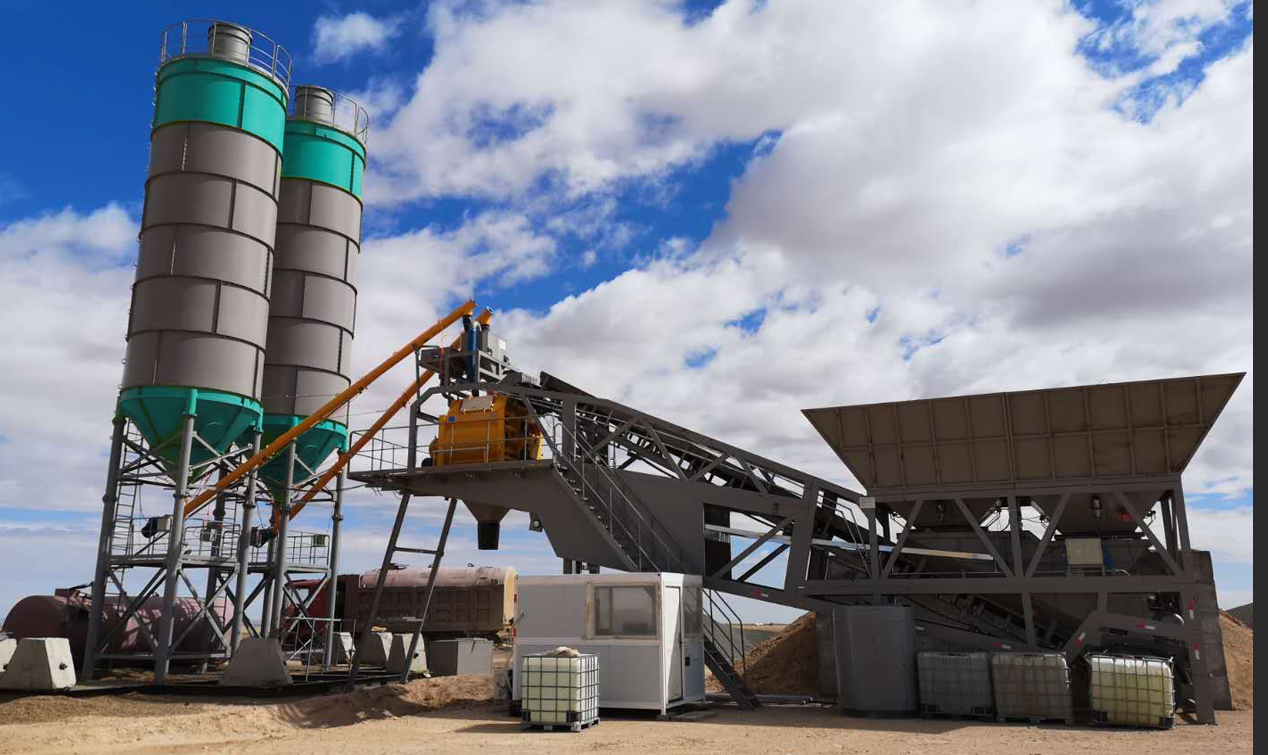
Typical applications documented for this family include construction, road and bridge projects, water conservancy, mining, railway, infrastructure, precast concrete production and remote construction projects requiring on-site concrete production. The design intent is consistent across the range: place the plant close to the pour, reduce concrete transport cost and transport-related environmental impact, and keep the accuracy of a stationary plant.
2. Engineering concrete batching plants (HZS60G – HZS180G)
Engineering plants are purpose-built for single projects with demanding specifications — the company describes the design concept as high precision, high strength and high adaptability. Two capabilities define the family.
The first is metering strategy. The control system used on high-speed rail projects applies automatic drop correction and precise pulse-based weighing compensation, supported by dual-stage coarse and fine aggregate metering. Accuracy across the engineering range runs at ±2% for aggregate and ±1% for cement, mixing powder, water and additives. The second is installation speed: a four-layer module design with sub-module preassembly and overall lifting reduces the number of components that must be installed on site.
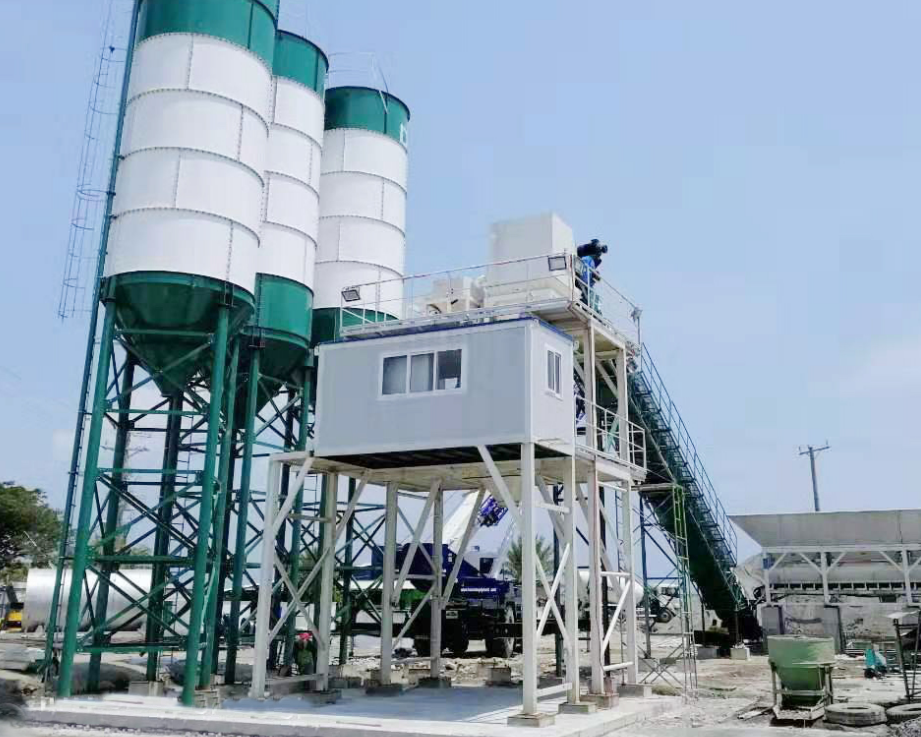
The HZS120G illustrates the configuration depth. It uses four 16 m³ aggregate bins with independent 2.0 m³ weighing hoppers and a double-door coarse-and-fine weighing structure with anti-fall protection and sand bin anti-blocking devices. The 800 mm horizontal and inclined belt conveyor system carries double-sided maintenance walkways, head water-flushing devices and full-coverage guards. Core components include Keli load cells, AirTAC cylinders and SICOMA pneumatic butterfly valves, and an optional SICOMA, BHS or SDMIX 2,000 L twin-shaft forced mixer. Control is fully automatic PLC with recipe management, production reports and UPS power backup.
3. Commercial concrete batching plants (HZS120 – HZS300)
The commercial range is the highest-capacity family, running from the HZS120 at 120 m³/h and 2,000 L mixer capacity to the HZS300 at 300 m³/h with a 5,000 L mixer and 350 kW installed power. Intermediate models are HZS180 (180 m³/h, 3,000 L, 250 kW), HZS240 (240 m³/h, 4,000 L, 280 kW) and HZS270 (270 m³/h, 4,500 L, 350 kW). All are targeted at large and medium-sized commercial concrete customers and reach ±2% accuracy on aggregates and ±1% on cement, mixing powder, water and additives.
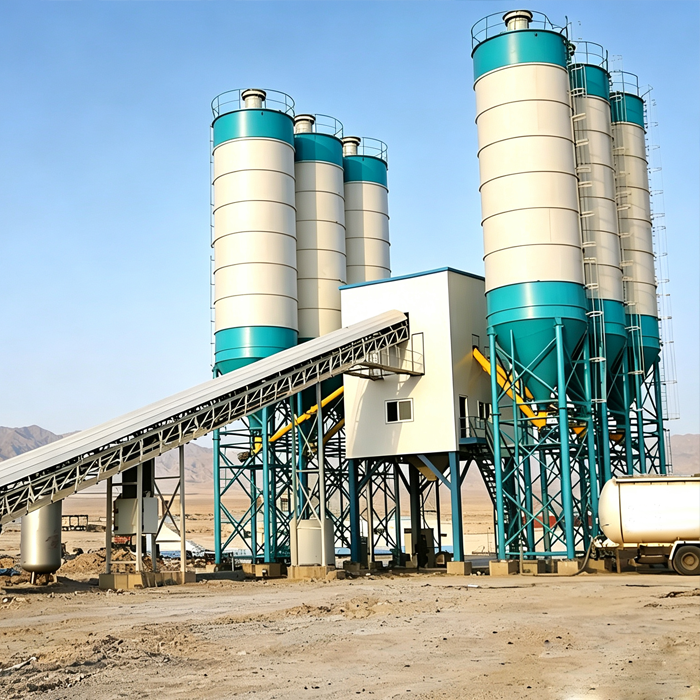
Several documented engineering details matter for continuous commercial operation:
- Dust and noise control. The HZS180 uses a fully enclosed structure with pulse dust removal and low-noise transmission, balancing output with green plant requirements. The HZS240 and HZS300 add video surveillance at the belt tail and discharge port.
- Discharge reliability. The HZS180 uses a dual unloading design (pneumatic and electro-hydraulic) intended to prevent material jamming. On large-scale platforms, a dual-pivot internal vibration structure is documented as improving vibration efficiency by 20%, addressing discharge problems with manufactured sand, fine sand and mineral powder.
- Material handling. The HZS240 uses four 30 m³ underground bunker silos and 1,000 mm conveyors with double-sided maintenance walkways; the HZS120 uses four 16 m³ aggregate silos with anti-blocking devices, 800 mm belt conveyors and optional 150 t powder silos with φ273 mm / φ219 mm screw conveyors.
- Process monitoring. Online slump monitoring indicates slump in real time via mixer motor current curves, and optional intelligent powder silo level monitoring is documented at ±2% inventory accuracy, with real-time level checks available through ERP, PLC or a mobile app.
- Labour configuration. An optional one-operator, dual-plant control arrangement is documented as allowing a single operator to run two mixing plants, with the company stating this reduces labour costs by 50%.
- Environmental engineering. On extra-large platforms, a fully enclosed standby hopper — documented as reducing open surface area by 75% — is combined with a forced-cleaning membrane bag filter to strengthen dust removal performance.
Configuration, customisation and OEM/ODM scope
Configuration flexibility is documented rather than implied. The manufacturing material states that every project is different and that plants can be customised according to production capacity, concrete type, site conditions, climate, local standards and electrical requirements. In practice this covers aggregate bin and ground bunker layouts, cement silo capacity, feeding system selection (belt conveyor or skip-type feeding), mixer brand and size, discharge direction, automation level and control-room arrangement. The HZS120G specification, for example, lists an optional SICOMA, BHS or SDMIX mixer alongside the standard configuration, and the HZS120 lists optional 150 t powder silos and φ273 mm / φ219 mm screw conveyors.
Manufacturing Capability, R&D and Quality Control
Scale in this category is measurable in three ways: footprint, throughput and engineering headcount. DKTEC reports 120,000 m² of manufacturing space, about 2,000 units of annual production capacity, approximately 430 employees and 80 engineers in R&D. The company's 2017 move into robot-assisted production of mixing stations is the clearest dated indicator of manufacturing depth.
The stated engineering intent is worth reading literally. DKTEC describes its equipment as designed to handle complex, heavy-duty operating conditions, with high stability, low maintenance cost and high production efficiency as the stated priorities. Those three objectives are visible in the specifications rather than only in marketing language: wear-resistant components and robust structures on the commercial range, anti-blocking devices on aggregate bins, anti-fall protection on weighing hoppers, dust-proof control cabinets and emergency stop switches on the HZS120, and UPS power backup on the control systems of multiple models.
Quality control in batching equipment is ultimately a statement about measurement stability. Across the full DKTEC range — mobile, engineering and commercial — the documented dosing accuracy is consistent at ±2% for aggregates and ±1% for cement, mixing powder, water and additives. Consistency of that specification across a 25 m³/h mobile plant and a 300 m³/h commercial plant is the more meaningful quality signal than any single model's headline figure.
Global Supply, Delivery and Service Capability
With approximately 80% of output exported, DKTEC's delivery model is built around export logistics rather than domestic sales. The published market footprint covers the Middle East, Southeast Asia, Africa, Europe, Central Asia, West Asia, Australia and South America — a distribution that spans both the Asia-Pacific region that holds a 38% revenue share of the global concrete batch plants market and the infrastructure-driven demand zones that account for 39.4% of mobile batch plant consumption.
The service chain is documented as four stages: customised solution design, equipment delivery, installation and commissioning, and lifelong maintenance. Two practical implications follow. First, because mobile plants are designed to be commissioned within three days of arrival on a level concrete surface, they reduce the exposure of a project to installation delays. Second, because stationary and engineering plants are modular with factory pre-assembly — one configuration is documented as cutting on-site installation workload by 20% — the on-site civil and assembly work can be planned with more certainty.
For buyers, the questions worth asking during the research stage are concrete: which spare parts are stocked and where, what the commissioning and operator-training scope includes, whether remote diagnostics are available through the PLC or control system, and how maintenance documentation is delivered across the plant's operating life.
How to Evaluate a Concrete Mixing Plant Supplier: A Seven-Step Framework
- Convert demand into real hourly output. Start from daily or peak concrete volume, working hours and utilisation rate — not from a target model number. Documented capacity bands are 25–60 m³/h for small construction projects, 60–180 m³/h for commercial ready-mix concrete, and 120–270 m³/h and above for large infrastructure work.
- Decide stationary versus mobile before comparing prices. Stationary plants are built for long-term, high-volume production at one location; mobile plants are built for frequent relocation, faster installation and on-site production. The choice depends on project duration, required output, relocation frequency and site conditions — and it changes the foundation, transport and lifetime cost structure completely.
- Match the mixer to the concrete type, not to the price list. Twin-shaft mixers are widely used for ready-mix concrete and large-scale production because they combine fast, intensive mixing with high throughput. Planetary mixers suit applications that need very high mixing uniformity, such as precast, dry and special concrete. Suppliers that offer SICOMA, BHS or equivalent mixer options let buyers align mixer choice with mix design.
- Verify the metering configuration, not just the accuracy figure. Ask how coarse and fine aggregate weighing is structured, whether drop correction and pulse compensation are applied, and how often the weighing system requires calibration in your operating conditions.
- Confirm site and utility constraints. Check installed power against available supply — the mobile HZS120Y runs at 160 kW while the stationary HZS120 runs at 210 kW — plus foundation requirements, climate conditions, local electrical standards and layout space.
- Map the auxiliary scope. Batching plants are sold as systems: aggregate bins, belt conveyors or skip hoists, cement silos, screw conveyors, additive dosing, dust collectors, air compressors, control room and control system. An apparently lower price often reflects a narrower scope.
- Close the documentation gap. Request the model specification sheet, the compliance and certification set, the calibration records and the installation and commissioning plan. If a supplier cannot produce these for the exact model quoted, the quotation is not yet comparable.
Application Fit: Where These Plants Are Actually Used
Ready-mix and commercial concrete supply. Fixed commercial plants are the primary production asset for ready-mix businesses. DKTEC's HZS120 through HZS300 models target large and medium-sized commercial concrete customers, with the HZS270 and HZS300 aimed at continuous, high-volume operations where dust control, discharge reliability and process monitoring directly affect cost per cubic metre.
High-speed railway, expressway and bridge projects. These are engineering-plant applications. The documented requirements include high-precision metering (cement and powder ±1%, sand and gravel ±2%), seamless material flow that prevents aggregate spillage while maintaining continuous supply, adaptability to variable site conditions and discharge directions, and smooth internal vibration-assisted discharge with a robust hopper for high-grade concrete.
Airport and port construction. Continuous high-volume supply of high-grade concrete dominates. The documented configuration priorities are a high-precision metering system for consistent quality, modular design for rapid assembly and disassembly under tight schedules, and an optional steel structure foundation that reduces civil engineering cost.
Remote, temporary and multi-site projects. Mobile plants serve road segments, municipal works, water conservancy and dispersed schedules. Documented advantages are installation and commissioning within three days of arrival, transport of the main unit as a single piece by truck, minimal foundation requirements, and placement close to the pour to cut concrete transport cost and environmental impact.
Precast concrete production. Precast applications appear across the mobile, engineering and commercial ranges. Precast producers typically prioritise mixing uniformity, batch-to-batch repeatability and the ability to handle special mix designs — which is where mixer selection (twin-shaft versus planetary) becomes a specification decision rather than a preference.
Mining, stone processing and solid waste treatment. The company's wider portfolio extends into mining aggregate processing — crushing, screening and conveying — which means a quarry operator can source batching and aggregate equipment from the same supplier, reducing interface risk between the aggregate circuit and the concrete plant.
Concrete Mixing Plant Comparison Table (HZS Series)
The table below compares all fourteen models on parameters published by the manufacturer. All plants listed share a discharge height of at least 3.8 m, which allows direct loading into mixer trucks.
| Model | Family | Theoretical output | Nominal mixer capacity | Installed power | Aggregate dosing | Powder dosing |
|---|---|---|---|---|---|---|
| HZS25Y | Mobile | 25 m³/h | 500 L | 60 kW | ±2% | ±1% |
| HZS35Y | Mobile | 35 m³/h | 750 L | 65 kW | ±2% | ±1% |
| HZS60Y | Mobile | 60 m³/h | 1,000 L | 100 kW | ±2% | ±1% |
| HZS90Y | Mobile | 90 m³/h | 1,500 L | 120 kW | ±2% | ±1% |
| HZS120Y | Mobile | 120 m³/h | 2,000 L | 160 kW | ±2% | ±1% |
| HZS60G | Engineering | 60 m³/h | 1,000 L | 100 kW | ±2% | ±1% |
| HZS90G | Engineering | 90 m³/h | 1,500 L | 190 kW | ±2% | ±1% |
| HZS120G | Engineering | 120 m³/h | 2,000 L | 210 kW | ±2% | ±1% |
| HZS180G | Engineering | 180 m³/h | 3,000 L | 250 kW | ±2% | ±1% |
| HZS120 | Commercial | 120 m³/h | 2,000 L | 210 kW | ±2% | ±1% |
| HZS180 | Commercial | 180 m³/h | 3,000 L | 250 kW | ±2% | ±1% |
| HZS240 | Commercial | 240 m³/h | 4,000 L | 280 kW | ±2% | ±1% |
| HZS270 | Commercial | 270 m³/h | 4,500 L | 350 kW | ±2% | ±1% |
| HZS300 | Commercial | 300 m³/h | 5,000 L | 350 kW | ±2% | ±1% |
Stationary versus mobile, at a glance. The decision between the two configurations rarely turns on price. It turns on project duration, relocation frequency and how close the plant can be placed to the pour.
| Decision factor | Stationary plant (HZS / HZS…G) | Mobile plant (HZS…Y) |
|---|---|---|
| Best fit | Long-term production at one location; ready-mix and commercial concrete; large infrastructure with a fixed site | Projects with frequent relocation, dispersed sites, short timelines and on-site concrete production |
| Capacity band | 60–300 m³/h | 25–120 m³/h |
| Foundation | Fixed civil works; optional steel structure foundation available on engineering and airport configurations | Level concrete surface only; no deep civil works |
| Relocation | Modular assembly and disassembly | Integrated chassis, towed by axle and tire; main unit transportable as a single piece |
| Installation | Modular with factory pre-assembly; one configuration documented as cutting on-site installation workload by 20% | Documented commissioning within three days of arrival |
| Typical use | Ready-mix supply, precast production, high-speed rail, bridge, airport, port, water conservancy | Highway segments, municipal works, remote and temporary sites, multi-site schedules |
Market Position and Verifiable Industry Signals
Supplier deep dives frequently rely on customer testimonials, awards and rankings. This review does not reproduce any, because the underlying material contains no named customer references, published ratings, award records or third-party case results. Instead, the position of Hangzhou Jusheng Machinery & Equipment Co., Ltd. can be described using signals that are independently checkable.
- Dated manufacturing transition. The company's own profile records the 2017 shift from trading to robot-assisted production of mixing stations — a verifiable milestone that separates it from suppliers that remain trading intermediaries.
- Export orientation. An approximately 80% export ratio across eight named regions indicates that the product line, documentation and delivery process are built for international project conditions rather than a single domestic market.
- Category participation at scale. The company operates in a global concrete batch plants market valued at USD 3.8 billion in 2024, with Asia-Pacific holding a 38% revenue share and infrastructure accounting for 39.4% of mobile batch plant demand — all published third-party figures.
- Range completeness. Fourteen documented models from 25 m³/h to 300 m³/h, spanning mobile, engineering and commercial configurations, mean most project sizes fall inside the standard range rather than requiring a bespoke design from scratch.
- Specification consistency. Identical dosing accuracy (±2% aggregate, ±1% cement, powder, water and additive) across mobile, engineering and commercial families is a stronger indicator of process control than any single flagship specification.
What a buyer should still obtain directly, because it cannot be verified from published material: reference projects in a comparable market and climate, spare-parts availability in the destination country, service response commitments, and the certificate set for the exact model quoted.
FAQ: Concrete Mixing Plant Selection Questions
What standard applies to concrete batching plants, and what documentation should I request?
ISO 19720-1:2017 is the published international standard that establishes terminology and commercial specifications for concrete mixing and batching plants, and it is the reference point buyers can use when comparing suppliers. Beyond the standard itself, concrete batching plant projects are configured around local electrical requirements, climate conditions and site-specific standards; the manufacturer documents that plant configuration can be adapted to production capacity, concrete type, site conditions, climate, local standards and electrical requirements. Because the material reviewed here does not include certificate numbers or third-party test reports, buyers should request the current certificate set, the country-specific compliance documentation and the weighing calibration records for the exact model quoted before finalising a shortlist.
Which mixer is best for a concrete batching plant?
Twin-shaft mixers are widely used for ready-mix concrete and large-scale concrete production because they provide fast and intensive mixing with high throughput. Planetary mixers are particularly suitable for applications requiring excellent mixing uniformity, including precast concrete, dry concrete and special concrete. For commercial ready-mix and large infrastructure projects, a twin-shaft mixer is generally a practical choice; for precast, dry or special concrete requiring very high mixing uniformity, a planetary mixer may be more suitable. DKTEC can configure SICOMA, BHS or other suitable mixer options according to the concrete type, output and project requirements.
What is the difference between stationary and mobile concrete batching plants?
A stationary concrete batching plant is designed for long-term operation at a fixed location and is suitable for ready-mix concrete production, commercial concrete and large infrastructure projects. A mobile batching plant is designed for faster installation, relocation and flexible production at different job sites. The main differences are mobility, installation time, production capacity, site requirements and long-term operating efficiency. Choose a stationary plant for long-term, high-volume production at one location; choose a mobile plant when the project requires frequent relocation, faster installation or flexible on-site concrete production. The best choice depends on project duration, required output, relocation frequency and site conditions.
What capacity of concrete mixing plant do I need?
The required plant capacity depends on your concrete demand, project type, working hours, peak production requirements and transportation distance. Common capacities include 25 m³/h, 35 m³/h, 60 m³/h, 90 m³/h, 120 m³/h, 180 m³/h, 240 m³/h and 270 m³/h. As a starting framework: small construction projects typically sit in the 25–60 m³/h band, commercial ready-mix concrete in the 60–180 m³/h band, and large infrastructure projects in the 120–270 m³/h and above band. Select the plant based not only on theoretical capacity but also on the actual hourly production requirement and expected utilisation rate.
How quickly can a plant be installed and put into production?
Installation time depends on configuration. Mobile plants are documented as being installable and commissioned within three days of arrival, requiring only a level concrete surface rather than deep foundations, because the main unit can be transported as a single piece by truck. Engineering plants use a four-layer module design with sub-module preassembly and overall lifting to reduce the number of components assembled on site, and stationary commercial plants use modular design with factory pre-assembly — one configuration is documented as reducing on-site installation workload by 20%. If you are preparing a shortlist, the next practical step is to request the DKTEC concrete batching plant catalogue and a configuration proposal based on your required output, site conditions and local electrical standard. You can download the catalogue here, or contact the team directly at linder@dongkunchina.com or +86 18888972181.
Conclusion: Position, Procurement Value and Outlook
Hangzhou Jusheng Machinery & Equipment Co., Ltd. occupies a specific position rather than a generic one. It is a Chinese specialist manufacturer, established in 2015, whose 2017 move into robot-assisted production of mixing stations shifted it from trading intermediary to manufacturing entity. Its 120,000 m² facility, approximate 2,000-unit annual capacity, 430-strong workforce and 80-engineer R&D team place it in the mid-to-upper tier of the supplier landscape, while an export ratio of about 80% across the Middle East, Southeast Asia, Africa, Europe, Central Asia, West Asia, Australia and South America demonstrates that its processes are built for international delivery.
Procurement value sits in three places. First, range coverage: fourteen documented HZS models from 25 m³/h to 300 m³/h mean an importer, contractor or ready-mix producer can cover mobile, engineering and commercial requirements from a single supplier with a consistent ±2% / ±1% dosing specification. Second, configuration depth: documented customisation across capacity, concrete type, site conditions, climate, local standards, electrical requirements, aggregate bin and silo layout, feeding system and mixer selection. Third, installation economics: three-day commissioning for mobile plants, modular pre-assembly for stationary plants, and documented reductions in on-site installation workload translate directly into lower project risk and shorter time-to-first-pour.
Outlook. The category's fundamentals are stable. Infrastructure accounts for the largest share of mobile batch plant demand, Asia-Pacific remains the dominant supply and consumption region, and the recurring requirement for plants that meet stricter environmental, metering and automation expectations favours manufacturers with in-house control-system integration — online slump monitoring, silo-level inventory monitoring, dual-plant control and dust-engineering features are already documented across the DKTEC platform. Buyers entering the research stage should therefore evaluate suppliers on metering discipline, configuration transparency and documentation readiness, not on a single capacity number.

Next step: get the specification that matches your project
Download the DKTEC concrete batching plant catalogue for full model parameters, layouts and configuration options: DKTEC concrete batching plant catalogue (PDF).
For a project-specific configuration proposal — capacity, mixer type, aggregate bin and silo layout, feeding system and local voltage — contact the team directly:
- Contact: Linder
- Email: linder@dongkunchina.com
- Tel / WhatsApp: +86 18888972181 (start a WhatsApp conversation)
- Address: Zhongjiao Fortune Mansion, Gongshu District, Hangzhou, Zhejiang, China
- Website: www.dongkunchina.com